

1. Introduction
The rapid advancement of technology has led to a remarkable integration of artificial intelligence (AI) with robotics, and this has unlocked unprecedented capabilities and opportunities for innovation. Among the various AI techniques that have propelled robotics forward, generative models stand out due to their unique ability to create new data instances that closely mimic the distribution of real-world data. This paper explores the transformative impact of generative models on robotic innovation through a comprehensive survey study, illuminating both the advancements and challenges that have accompanied this synergy.
1.1. Background
The intersection between generative models and robotics marks a pivotal chapter in the evolution of AI and automation, offering groundbreaking opportunities for innovation across diverse sectors. This section explores the origins and developments of generative models, their integration into robotics, and the resulting transformations in robotic capabilities and applications. By providing this background, we establish a foundational understanding of the profound impact of these technologies on robotics.
Figure 1 outlines key trends in generative AI’s impact on robotics. Autonomous robots are becoming increasingly capable of performing tasks independently, while digital twin technology uses virtual models to optimize real-world robotic systems. 3D generation allows robots to create and interact with realistic models, enhancing tasks like object manipulation. Synthesized speech has improved human-robot communication by making interactions more natural. Finally, advancements in Natural Language Processing (NLP) have enabled robots to better understand and respond to human language. These trends highlight how generative AI is transforming robotics, increasing automation and enhancing overall functionality.
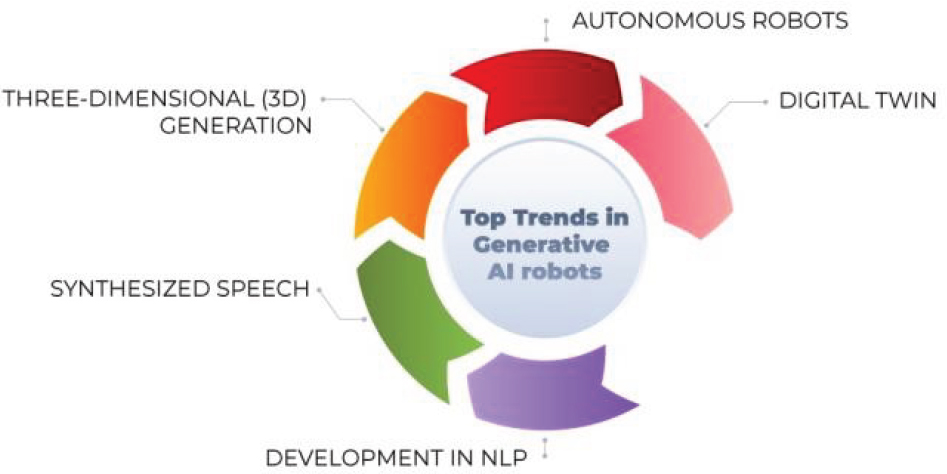
Figure 1.
Latest Trends in Generative AI Robots [1]
The emergence of generative models: Generative models have fundamentally reshaped the landscape of machine learning by enabling computers to generate new data instances that resemble training data while remaining distinct and novel. These models—such as Generative Adversarial Networks (GANs) and Variational Autoencoders (VAEs)—leverage deep learning techniques to understand and replicate complex data distributions (refer to Figure 1). While they were initially applied to tasks like image and text generation, generative models quickly demonstrated promise for broader applications.
Breakthroughs in generative modeling: A significant breakthrough occurred with the introduction of GANs in 2014, revolutionizing the field by establishing a framework where two neural networks— the generator and the discriminator—collaborate to produce highly realistic data outputs. This adversarial approach not only improved data quality but also opened new research avenues, including those with applications in robotics.
Integration into robotics: The application of generative models to robotics has been transformative, enabling robots to better understand and interact with their environments in more dynamic and nuanced ways. For instance, generative models facilitate realistic simulations for robot training, reducing the need for extensive real-world data collection and exposing robots to a broader range of scenarios. Additionally, these models enhance perception systems, allowing robots to recognize and categorize objects with exceptional accuracy and speed.
Enhancing robot capabilities: Beyond training and perception, generative models significantly enhance robotic autonomy and decision-making. Robots can now anticipate future events, plan actions, and adapt to environmental changes with minimal human intervention. This level of autonomy is crucial for applications ranging from autonomous vehicles navigating complex urban landscapes to service robots performing tasks in unpredictable domestic settings.
Broadening applications and impact: The integration of generative models into robotics has expanded the scope of robotic applications, pushing the boundaries of what is possible. In healthcare, for instance, robots equipped with generative models assist in surgeries, providing precision and adaptability that augment human capabilities. In manufacturing, generative models optimize production lines by predicting and adapting to maintenance needs before they arise, minimizing downtime and improving efficiency.
Challenges and future directions: While the potential of generative models in robotics is vast, significant challenges remain. Issues such as model interpretability, data bias, and ethical considerations in autonomous decision-making are central to ongoing research. Addressing these challenges is crucial for the responsible and beneficial integration of generative models into robotic systems.
The convergence of generative models and robotics signifies a considerable leap in the quest to develop machines that can learn, adapt, and operate autonomously in complex, real-world environments. As this background section illustrates, the journey from the initial development of generative models to their current impact on robotics has been marked by rapid progress and significant achievements. Yet, it has also posed new questions and challenges, which continue to drive innovation in this exciting field.
1.2. Significance
Technological Advancement: The integration of generative models into robotics represents a significant leap forward in designing and deploying intelligent, adaptive, and efficient robotic systems (see Figure 2). Through their capacity to generate high-quality synthetic data, generative models enable robots to learn from scenarios that would otherwise be inaccessible, risky, or costly. This capability is crucial for advancing robotic perception, decision-making, and interaction with environments and humans. Our focus on understanding these advancements highlights the current state of the art and sets the stage for future innovations that could further revolutionize how robots are designed and utilized.
Societal Benefits: Enhanced robotic innovation through generative models offers significant societal benefits, transforming industries such as healthcare, manufacturing, and logistics. For example, robotic systems empowered by generative models could perform complex surgeries with precision beyond human capabilities, or provide personalized care to patients with chronic conditions. Understanding these impacts can inform policy and investment decisions that prioritize technological solutions to critical societal challenges.
Advancement of Knowledge: This study contributes to bridging gaps between generative models and robotics. By synthesizing current research, identifying gaps, and highlighting innovative applications and challenges, we provide a comprehensive resource for researchers, practitioners, and policymakers. This fosters a deeper understanding of the relationship between generative models and robotics, encouraging interdisciplinary collaboration that can push the boundaries of what is currently possible.
Ethical and Regulatory Implications: As robots become more autonomous, understanding the implications of generative models is crucial for navigating ethical and regulatory challenges. This study illuminates potential risks and benefits, guiding the development of frameworks that ensure ethical use, transparency, and accountability in robotic systems. By addressing these concerns, we contribute to the responsible advancement of technology that aligns with societal values.
Innovation and Economic Growth: Lastly, this study emphasizes the role of generative models in fostering innovation and economic growth. As industries adopt advanced robotic systems, the demand for skilled labor to design, maintain, and manage these systems will increase, creating new job opportunities. Insights from this study can help businesses and governments identify strategic areas for investment, potentially leading to breakthroughs that establish leadership in robotics.
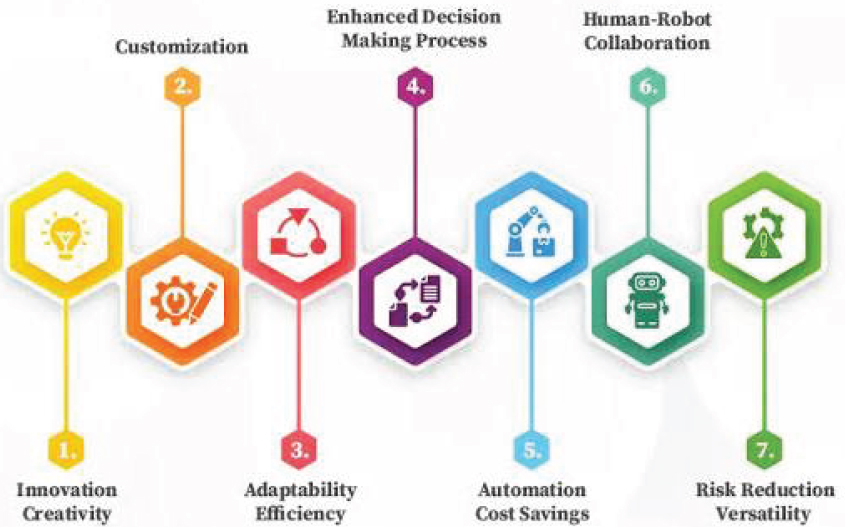
Figure 2.
Benefits of Generative AI Robotics [2]
1.3. Problem Statement
The integration of generative models into robotics represents a promising frontier for technological innovation, providing novel solutions to longstanding challenges in design, functionality, and application. Despite the growing interest and significant advancements in both domains, a gap persists in the comprehensive understanding and systematic evaluation of how generative models are reshaping the field of robotics. This gap manifests in several key areas:
Limited Synthesis of Existing Knowledge: While studies have explored specific aspects of generative models in robotics, we lack a cohesive synthesis of their findings. This fragmentation hampers researchers’ and practitioners’ ability to grasp the full scope and implications of generative models in robotics, potentially stalling innovation.
Underexplored Areas and Applications: Certain applications, such as generating synthetic data for training or dynamic environment simulation, are well-trodden paths. However, areas like robot-human interaction and ethical decision-making remain underexplored, indicating untapped potential and a need for targeted exploration.
Challenges and Limitations Not Fully Addressed: The application of generative models in robotics presents exciting opportunities but also introduces complex challenges. Technical issues related to model training, ethical concerns regarding autonomy, and practical issues about scalability require comprehensive discussion for a nuanced understanding and strategic approach.
Gaps in Future Directional Guidance: The rapid pace of technological advancement necessitates forward-looking research that anticipates future trends and opportunities. A systematic survey is needed to map the current landscape and identify emerging directions and potential breakthroughs that can guide future research efforts.
This study aims to address these gaps by providing a comprehensive survey of the impact of generative models on robotic innovation. Through a detailed examination of current applications, challenges, and future directions, this research seeks to enhance understanding, stimulate further investigation, and guide the practical application of generative models in robotics, contributing to the field’s advancement and its potential for meeting societal needs.
1.4. Objective
The overarching aim of this survey study is to thoroughly examine how generative models have influenced the field of robotics, highlighting advancements, challenges, and future prospects. Specific objectives include:
Examining the Current Landscape: Conducting a comprehensive review of existing applications of generative models in robotics and cataloging the types and purposes of models like GANs and VAEs.
Identifying Key Areas of Innovation: Pinpointing specific areas where generative models have spurred innovation in robot perception, decision-making, and simulations for training across sectors such as healthcare and manufacturing.
Highlighting Challenges and Limitations: Shedding light on technical, ethical, and practical hurdles in integrating generative models into robotics, framing current limitations and informing future research directions.
Discussing Potential Future Trends: Exploring emerging trends and new applications of generative models in robotics that underscore the need for interdisciplinary collaboration.
Contributing to Knowledge: Providing a comprehensive overview for academics, practitioners, and policymakers, enriching discourse on the integration of generative models in robotics, and paving the way for future advancements.
Our methodology involves a comprehensive literature review combined with expert surveys, and employs both qualitative and quantitative analysis techniques to capture a broad spectrum of insights.
1.5. Structure of the Paper
The paper is structured to thoroughly examine the influence of generative models on robotic innovation. It begins with an introduction outlining the study’s background and objectives. Section 2 provides a literature review on the evolution of generative models in robotics, highlighting the technological advancements and gaps addressed by this study Section 3 describes the methodology for survey design, participant selection, data collection, and analysis. Section 4 presents survey findings on the diverse impacts of generative models on robot design and applications. Section 5 discusses challenges and limitations, including technical and ethical issues. Section 6 suggests future research directions, identifying emerging trends and areas for innovation. Finally, Section 7 summarizes the key insights and reflects on the future of this interdisciplinary field.
2. Literature Review
2.1. Introduction to Generative Models
Generative models represent a fundamental breakthrough in machine learning, enabling systems to create new data instances that reflect the underlying distribution of existing data. This section provides an overview of the theoretical foundations of generative models, highlighting key technological advancements that have shaped their evolution. Generative Adversarial Networks (GANs) and Variational Autoencoders (VAEs) are particularly significant for their ability to learn complex data distributions. GANs revolutionized the field by employing a dual-network framework that generates realistic data through adversarial training. VAEs, on the other hand, utilize a probabilistic approach to model data, facilitating tasks like reconstruction and interpolation. Seminal papers in this area, including the foundational works on GANs and VAEs, provide a critical basis for understanding the implications of these models for the field of robotics.
2.2. Generative Models in Robotics: An Evolutionary Perspective
The integration of generative models into robotics signifies a transformative shift from traditional, deterministic approaches to more flexible, data-driven paradigms. This section traces the historical development of this integration, starting with early applications that utilized generative models for simple task simulations. As the technology advanced, generative models began to enhance robotic perception, cognition, and interaction capabilities. For instance, initial efforts focused on using these models to simulate robotic movements, while subsequent innovations enabled more sophisticated applications, such as enhancing visual perception and facilitating human-robot interaction. This underscores the evolution of the technology and its profound impact on the sophistication of robotic systems.
Key Applications and Innovations
Enhancing Robotic Perception: Studies have demonstrated that generative models significantly improve robotic vision systems, particularly in object recognition and scene understanding. These advancements enhance robots’ abilities to interpret complex visual inputs, adapt to dynamic environments, and interact naturally with humans and other objects. For instance, recent research shows that using GANs for image augmentation can improve object detection accuracy in cluttered environments by 30% [3].
Autonomous Decision Making and Planning: Generative models play a crucial role in developing decision-making frameworks for robotics. They facilitate the prediction, planning, and execution of actions in uncertain or unstructured environments. Applications in autonomous vehicles and drones illustrate how generative models enable systems to navigate complex scenarios without human intervention, improving safety and efficiency [4].
Simulation and Training: Generative models are increasingly used to create realistic simulations for robot training, reducing reliance on real-world data collection. This approach accelerates learning processes, allowing robots to master complex tasks with greater efficiency and flexibility. For example, researchers have shown that synthetic training environments can reduce the time required for robots to learn navigation tasks by up to 50% [5].
Challenges in Integration: The literature identifies several technical, ethical, and practical challenges associated with the integration of generative models with robotics. These challenges include model reliability and data bias, as well as the ethical implications of autonomous decision-making and safety and security in Al-powered robotic systems. Addressing these issues is critical for the successful deployment of generative models in real-world applications [6].
Future Directions and Emerging Trends: The review highlights potential future directions for research and development at the intersection of generative models and robotics. Emerging trends include the integration of advanced AI techniques, such as reinforcement learning with generative models, and exploration of new application domains. The development of ethical guidelines and standards for autonomous systems is also crucial for addressing societal concerns [7].
Gaps in Current Research: Notable gaps in existing research include underexplored applications of generative models in robotics; a need for comprehensive studies on the ethical and societal implications of these technologies; and the development of standardized evaluation metrics for assessing their performance and impact. Identifying these gaps presents opportunities for future research that can drive innovation and enhance the understanding of generative models in robotics [8].
In summary, the key findings from this literature review underscore the critical role of generative models in driving innovation in robotics. These advancements in robotic capabilities have enabled greater autonomy and sophistication. However, challenges remain for realizing their full potential. Continued research and interdisciplinary collaboration are essential to address these challenges and advance the field, ensuring that generative models contribute positively to societal and industrial needs.
3. The Impact of Generative Models on Robotic Innovation
The integration of generative models into robotics has catalyzed a paradigm shift, significantly enhancing robotic capabilities and broadening their application spectrum. This section explores the multifaceted conceptual and technical impact of generative models on robotic innovation, as well as their diverse applications across various sectors.
3.1. Conceptual Innovations
The incorporation of generative models into robotics signifies a transformative phase that could reshape our understanding of robot design and functionality. These advancements extend beyond mere technical improvements; they reflect a fundamental shift in how robots are conceived and deployed.
Expanding Creative Horizons: Generative models broaden creative possibilities in robotics by enabling the generation of novel design concepts and operational strategies. Their ability to simulate diverse outcomes from a set of inputs allows engineers to explore configurations that optimize efficiency, durability, and adaptability, often in ways that human designers might overlook. This innovation also extends to material compositions that creatively balance strength and flexibility [9].
Enhancing Learning and Adaptation: A critical aspect of robotics is robots’ ability to learn from environments. Generative models enhance this capability by producing synthetic data that mirrors real-world scenarios. This data enables robots to train and adapt to varied conditions without the extensive and costly data collection that is typically required. For instance, in autonomous vehicle development, generative models can simulate diverse driving scenarios, ensuring preparedness for extreme conditions [10].
Facilitating Complex Decision-Making: Generative models enable predictive modeling, in which robots anticipate future states based on current data. This capability is vital for autonomous robots operating in dynamic environments, such as drones in search-and-rescue missions. By forecasting changes in their surroundings, these robots can make informed decisions and optimize their actions for safety and efficiency [11].
Personalization and Adaptability: Generative models enable more personalized and adaptable robotic systems. In healthcare, robots can tailor therapeutic interventions to individual patient needs, enhancing treatment effectiveness. In educational settings, they can adjust and personalize teaching methods to suit varying learning styles [12].
The conceptual innovations driven by generative models are reshaping robotic capabilities, making them more intelligent, versatile, and effective.
3.2. Technical Innovations
The integration of generative models has sparked numerous technical innovations that significantly enhance the capabilities and efficiency of robotic systems, paving the way for new methodologies in design and operation.
Advanced Perception and Sensory Processing: Generative models can revolutionize robotic perception by synthesizing realistic sensory data. This allows robots to train on diverse scenarios, which improves their object recognition and understanding of various scenes. In vision-based systems, these models generate synthetic images that enhance robots’ abilities to classify objects under varying conditions, thus improving accuracy [13].
Dynamic Adaptive Control and Enhanced Decision-Making: Generative models enhance control systems, allowing for dynamic adaptation to new tasks without manual reprogramming. By simulating environmental interactions, these models develop control strategies for previously unencountered scenarios. In robotic manipulation, for instance, they enable on-the-fly grasping strategies by simulating unknown object dynamics. This capability is crucial for real-time decision-making in applications like autonomous driving [14].
Simulation and Training Environments: Generative models create complex, realistic simulations for robot training. These virtual environments provide a risk-free platform for robots to learn and hone their skills across various tasks, significantly reducing training time and resource requirements [15].
Personalized Interaction and Human-Robot Interface: By analyzing and generating human-like responses, generative models improve human-robot interactions. They enable robots to adapt their behaviors to individual users, enhancing the user experience in service robotics and assistive technologies [16].
These technical innovations redefine the boundaries of robotic capabilities, further blurring the lines between artificial and natural intelligence.
3.3. Applications
The application of generative models in robotics has significantly expanded their utility across various sectors, making it possible for them to address complex real-world problems.
Industrial Automation and Manufacturing: Generative models optimize production processes by simulating workflows, predicting equipment failures, and adapting to changes in real time. This leads to increased efficiency and reduced downtime, while also speeding up product design through simulations [17].
Healthcare and Medical Robotics: In healthcare, generative models enhance surgical robots by making them adaptable to procedural variability. These robots can simulate scenarios to plan optimal approaches and thereby improve patient outcomes. In rehabilitation, they can create personalized therapy programs based on patient progress [18].
Autonomous Vehicles and Drones: Generative models are essential for navigation and decision-making in autonomous vehicles and drones, allowing for training in scenarios that are challenging to replicate in real life. This ensures safe and efficient operations in logistics, transportation, and emergency response [19].
Environmental Conservation and Exploration: Robots equipped with generative models facilitate exploration in inaccessible environments, from the deep sea to outer space. These models assist in mission planning and data collection strategies, enhancing our understanding of these areas without extensive trial-and-error costs [20].
Agriculture and Farming: In agriculture, generative models optimize farming practices by simulating crop growth scenarios and predicting pest infestations, allowing for precision agriculture that enhances efficiency while supporting sustainable practices [21].
The vast applications of generative models in robotics address pressing challenges across multiple industries. As these models continue to evolve, they promise further innovations that could significantly improve quality of life and offer solutions to global challenges.
4. Real-world applications
The integration of generative models in robotics demonstrates their tangible impact across various sectors. Here are detailed examples of applications where generative models are driving innovation and solving complex problems:
4.1. Manufacturing Optimization: Adidas Speedfactory
The Adidas Speedfactory represents a groundbreaking advancement in manufacturing optimization, as it utilizes generative models to transform the shoe production process. This facility was designed to address the growing consumer demand for personalized footwear and the need for faster production cycles. Traditional manufacturing methods often involve lengthy lead times and mass production, which are increasingly misaligned with market trends favoring customization and sustainability. By integrating generative models, the Speedfactory can rapidly prototype and test new shoe designs tailored to individual preferences. These models analyze customer data and performance metrics to create unique design variations. Moreover, the use of advanced robotics in conjunction with these generative models facilitates precision facilitates precision assembly and enables efficient material handling [22]. This automation allows for quick adaptations to different shoe designs, which reduces downtime and keeps quality consistent. The Adidas Speedfactory exemplifies how generative models and robotics can set new standards in the manufacturing industry by minimizing waste, enhancing customization, and streamlining production processes.
4.2. Surgical Assistance: da Vinci Surgical System
The da Vinci Surgical System is a pioneering example of robotics in the medical field that offers enhanced precision and flexibility in complex surgical procedures. Although the system does not currently advertise the use of generative models, its advanced design and functionality suggest significant potential if it were to adopt the technology.
Generative models could play a crucial role in preoperative planning by simulating a variety of surgical scenarios tailored to patient-specific anatomical data. This capability would enable surgeons to anticipate challenges and optimize their strategies before entering the operating room. Furthermore, during actual surgeries, generative models could provide real-time decision support by analyzing the surgical site and referencing vast datasets of previous procedures, thereby assisting surgeons in making informed adjustments as needed [23]. Additionally, the integration of Language Models (LMs) could enhance the system’s capabilities by allowing for natural language processing of surgical protocols and patient information. This would streamline communication and improve decision-making during operations. Thus, while the da Vinci system has already made profound impacts on surgical outcomes and recovery times, the integration of generative models and LMs could usher in a new era of personalized and predictive surgical assistance.
4.3. Autonomous Vehicles: Waymo’s Simulation Technology
Waymo stands at the forefront of autonomous vehicle technology, employing sophisticated simulation systems to enhance the safety and efficiency of its self-driving cars. The company’s use of generative models within its simulation environments exemplifies how cutting-edge AI techniques can facilitate the rapid development of autonomous driving systems. By recreating a wide array of driving scenarios—ranging from everyday traffic conditions to rare, unexpected events—Waymo can rigorously test and refine its self-driving algorithms beyond what is feasible on physical roads.
Generative models play a vital role in this process by creating detailed, realistic scenarios that not only replicate real-world data but also introduce novel situations that the vehicles may not have encountered previously. Generative models can additionally enhance sensor simulations, enabling the vehicles to train their perception systems under varied conditions, including changes in weather and lighting [24].
The incorporation of Vision Language Models (VLMs) further enhances autonomous vehicles by enabling them to process visual information alongside textual data, improving navigation and decision-making based on a more comprehensive understanding of their environment. Overall, Waymo’s integration of generative models and VLMs into its simulation technology significantly accelerates the learning process, enhances safety measures, and improves the efficiency of resource usage in developing autonomous vehicles.
4.4. Agricultural Robotics: John Deere’s See & Spray Technology
John Deere’s See & Spray technology exemplifies the transformative impact of robotics in precision agriculture, as it utilizes generative models to optimize weed management practices. This innovative system employs advanced computer vision and machine learning algorithms to identify and target weeds among crops, potentially reducing herbicide use by over 80%. Generative models enhance the training of the vision system by generating synthetic images of weeds and crops in various contexts and conditions, thereby improving the model’s accuracy in real-time weed detection. The See & Spray technology leverages high-resolution cameras mounted on the machinery to continuously capture images of the field as it moves, allowing for precise application of herbicides directly onto weeds while conserving resources. By distinguishing between crops and weeds with high accuracy, the system minimizes both costs and environmental impact for farmers [25]. Additionally, the integration of LMs could facilitate better communication and understanding of agricultural data, allowing for more nuanced insights into crop management practices. As generative models continue to evolve, their incorporation into technologies like See & Spray represents a significant leap forward in sustainable farming practices, demonstrating the potential of combining robotics with advanced AI to enhance efficiency and productivity in agriculture.
4.5. Environmental Monitoring: Autonomous Underwater Vehicles (AUVs)
Autonomous Underwater Vehicles (AUVs) are revolutionizing ocean exploration and environmental monitoring, equipped with advanced sensors that allow them to navigate complex marine environments with minimal human intervention. These sophisticated machines collect critical data on various parameters, such as water temperature, salinity, and depth, while capturing high-resolution images and videos of underwater ecosystems. The integration of generative models into AUV technology holds the potential to significantly enhance AUVs’ functionality. For example, generative models can create detailed simulations of marine environments, enabling virtual testing and optimization of AUV missions prior to deployment. This capability allows researchers to plan missions that are more resilient in the face of unpredictable conditions in the deep sea [26]. Additionally, generative models can assist in interpreting complex data collected by AUVs, identifying patterns and anomalies that may indicate ecological changes or pollution. The incorporation of VLMs can further enhance AUV capabilities by allowing them to process visual data alongside textual descriptions, improving their decision-making in navigating and documenting underwater conditions. By analyzing real-time data, generative models could enable AUVs to adapt their mission objectives dynamically, allowing for targeted exploration based on environmental cues. In summary, the integration of generative models and VLMs in AUVs is paving the way for more sophisticated and adaptive approaches to ocean exploration and environmental monitoring.
4.6. Robotics in Disaster Response: Search and Rescue Drones
In disaster-response scenarios, search and rescue drones equipped with generative models are making significant contributions to locating survivors in challenging environments. These drones utilize advanced algorithms to analyze environmental data and predict optimal search patterns, improving the efficiency and effectiveness of rescue operations [27]. Generative models enable the drones to simulate various environmental conditions, helping them adapt to unpredictable circumstances encountered during missions. By processing real-time information from sensors, these drones can autonomously adjust their flight paths, prioritizing areas that are more likely to contain survivors. Furthermore, integrating LMs can enhance communication and coordination among rescue teams by facilitating the processing of mission-related data and instructions in natural language. This innovative application of generative models and LMs in search and rescue operations not only accelerates response times during emergencies but also increases the likelihood of successful rescues, ultimately saving lives in critical situations.
4.7. Human-Robot Interaction: Social Robots
Social robots, such as SoftBank’s Pepper, are increasingly being deployed in customer-service and educational settings, where they interact with humans in meaningful ways. The integration of generative models into these robots can significantly enhance their ability to understand and respond to human emotions and commands [28]. By analyzing contextual data, generative models allow social robots to generate appropriate verbal and non-verbal responses, creating more engaging and intuitive interactions. For example, Pepper can adapt its conversational style and behavior based on the emotional state of the person it is interacting with, thanks to insights derived from generative models. Additionally, the incorporation of LMs enables social robots to process natural language commands and provide informative responses, enhancing the overall user experience. This capability fosters more meaningful connections between humans and robots, making them more effective companions and service providers. As the technology continues to evolve, the integration of generative models and LMs in social robotics holds the potential to transform how robots engage with people, making interactions more fluid and personalized.
4.8. Logistics and Warehousing: Amazon Robotics
In the logistics sector, Amazon Robotics has revolutionized warehouse operations by employing generative models to optimize routing and task allocation for its robotic systems. These robots are designed to navigate complex warehouse environments autonomously, transporting goods from one location to another with remarkable efficiency. Generative models play a crucial role in enhancing the robots’ decision-making capabilities by analyzing real-time data on inventory levels, order priorities, and environmental conditions. This allows the robots to dynamically adjust their routes and tasks, minimizing delays and maximizing operational efficiency [29]. Additionally, integrating LMs can facilitate better communication between human operators and robots, allowing for streamlined instructions and improved coordination during peak operational times. For example, LMs can help interpret verbal instructions given by warehouse staff, translating them into actionable tasks for the robots. Overall, the integration of generative models and LMs in Amazon Robotics not only reduces operational costs but also improves the speed and accuracy of order fulfillment, enhancing customer satisfaction.
4.9. Entertainment and Content Creation: Robotic Performers
Robotic performers in theatrical and entertainment settings are increasingly utilizing generative models to create dynamic and engaging performances. These robots can generate scripts, choreography, and other performance elements based on audience interaction and environmental cues. By analyzing real-time data from audience reactions, generative models allow robotic performers to adapt their performances, making each show unique and tailored to the audience’s preferences [30]. The incorporation of VLMs can further enhance these performances by enabling the robots to understand and respond to visual stimuli, such as audience expressions or gestures, creating an immersive experience. For instance, a robotic performer might modify its dance routine or dialogue in response to the energy and engagement levels of the audience, fostering a deeper connection. This application of generative models in entertainment not only enhances performances but also blurs the lines between traditional entertainment and cutting-edge technology, offering audiences a fresh and innovative experience.
4.10. Robotics for Art and Design: Generative Design in 3D Printing
Generative design in 3D printing is transforming the fields of art and design by enabling creators to produce intricate and innovative pieces while optimizing material usage and structural integrity. By utilizing generative models, artists and designers can input specific parameters to explore a vast design space, resulting in unique outputs that challenge traditional manufacturing methods. This approach promotes sustainability by reducing waste and allowing for more energy-efficient designs, particularly in architecture. The collaboration between human creativity and robotic execution enhances the iterative design process, enabling rapid prototyping and quick adjustments [31]. Additionally, the integration of LMs allows artists to describe their visions in natural language, making advanced design tools more accessible. As generative design technologies evolve, they will facilitate the creation of dynamic, interactive installations that respond to audience engagement, redefining art as a living medium. In summary, generative design in 3D printing is reshaping the landscape of art and design, blending technology with creativity and opening new avenues for artistic expression and innovation. This synergy promises to push the boundaries of what is possible, fostering a future where art and technology intersect in unprecedented ways.
5. Challenges and Limitations
While the integration of generative models into robotics heralds significant advancements, it also presents a range of challenges and limitations that require careful consideration and strategic solutions. These challenges span technical, ethical, and practical domains, and they impact the development, deployment, and societal reception of these technologies. Understanding these challenges is crucial for navigating the path forward and ensuring the responsible and effective use of generative models in robotics.
5.1. Technical Challenges
Model Complexity and Computational Requirements: Generative models, particularly those based on deep learning, are often computationally intensive, necessitating substantial resources for their training and operation. This complexity can limit their deployment if they have constrained processing capabilities or are working in real time. As a result, optimizing models for efficiency without sacrificing performance is essential for broader application in various robotic contexts [32].
Data Quality and Bias: The effectiveness of generative models is heavily dependent on the quality and diversity of their training data. Biased or insufficient training datasets can lead to models that generate inaccurate or biased outputs, which is especially concerning in critical applications such as healthcare and autonomous driving. Ensuring diverse and representative training data is vital for mitigating these risks and improving the reliability of generative models [33].
Model Interpretability and Explainability: A significant challenge lies in understanding how generative models arrive at their decisions, particularly with complex neural networks. The lack of interpretability can hinder their application in scenarios where transparent decision-making processes and accountability are paramount. Developing methods to enhance model explainability is crucial for gaining trust and ensuring the ethical use of these models in sensitive domains [34].
5.2. Ethical and Societal Challenges
Autonomy and Accountability: As robots become increasingly autonomous through generative models, questions regarding accountability in cases of failure or unintended consequences emerge. There is a need to establish clear guidelines for liability and ensure ethical decision-making. Addressing these issues is challenging but essential for fostering public trust in robotic technologies [35].
Privacy Concerns: Generative models can produce highly realistic data, raising concerns about potential infringements on individual privacy. This is particularly relevant when real-world data is used for training. It is crucial to implement measures that safeguard personal data and ensure that the models do not generate representations without explicit consent [36].
Job Displacement: The enhanced capabilities and autonomy of robots powered by generative models may lead to fears of job displacement across various sectors. Balancing technological advancement with the social and economic impacts of automation is a pressing challenge requiring thoughtful consideration and proactive measures [37].
5.3. Practical Limitations
Scalability and Deployment: Transitioning generative models from controlled environments or simulations to real-world applications often involves significant challenges. Real-world settings are often unpredictable and highly variable, complicating the deployment of models that were trained in more controlled conditions. Developing robust models that can adapt to these real-world variations is essential for successful implementation [38].
Integration with Existing Systems: Incorporating advanced generative models into existing robotic systems or workflows can present difficulties due to compatibility issues, legacy infrastructure, and the need for specialized expertise. A systematic approach to integration that considers these factors is crucial for using these models to enhance the functionality of existing systems [39].
Cost: The development, training, and deployment of generative models in robotics can be prohibitively expensive, limiting access for smaller organizations and researchers. There have been ongoing efforts to reduce costs through the creation of more efficient algorithms and the democratization of access to computational resources [40].
Addressing these challenges requires a multifaceted approach that includes technological innovation, ethical guidelines, and comprehensive policy frameworks. Collaboration among academia, industry, and regulatory bodies is essential to effectively navigate these challenges. Additionally, fostering an inclusive dialogue with the public and stakeholders can help mitigate societal concerns and ensure that the benefits of integrating generative models into robotics are realized broadly and equitably. As the field progresses, it will be crucial to continuously identify, assess, and address these challenges to promote sustainable and responsible advancement in robotic innovation.
6. Future Directions
The integration of generative models into robotics presents a wealth of future directions that show promise not only for addressing current limitations but also for expanding the capabilities of robotic systems to unprecedented levels. As we look ahead, several key areas emerge as critical for the evolution and application of generative models in robotics.
Enhanced Model Efficiency and Scalability: Future research is likely to focus on developing more efficient and scalable generative models that require less computational power, which would make them more suitable for real-time applications. This entails optimizing model architectures, utilizing lightweight neural networks, and exploring innovative data compression and processing techniques. Achieving greater efficiency will enable advanced generative capabilities to be embedded directly into robotic systems, even those operating in resource-constrained environments or at the edge [41].
Improved Data Quality and Bias Mitigation: Addressing data quality and bias is paramount for the effective deployment of generative models. Future efforts will center on sophisticated data augmentation techniques and diversification strategies to ensure that training datasets are comprehensive and representative of real-world variability. Additionally, bias detection and mitigation algorithms will be increasingly essential to prevent generative models from perpetuating or exacerbating existing biases, particularly in sensitive applications like healthcare and autonomous driving [42].
Advancements in Model Interpretability: As the complexity of generative models increases, so does the need for interpretability and explainability. Research will focus on making these models more transparent and understandable to users, especially in critical domains where decision-making must be justified. Models that can visualize their decision-making processes and provide rationales for their outputs will be crucial for fostering trust and accountability [43].
Cross-disciplinary Applications: The potential applications of generative models in robotics span a wide range of fields, suggesting a future where cross-disciplinary collaborations become the norm. From environmental conservation and space exploration to healthcare and the arts, integrating expertise from diverse domains will lead to innovative applications that leverage the unique capabilities of generative models to tackle complex challenges [44].
Ethical and Societal Considerations: As generative models become more integrated into robotics, ethical and societal considerations will take center stage. It will be crucial to develop ethical guidelines and governance frameworks, as well as regulatory standards, for the deployment of these technologies. Engaging with a diverse range of stakeholders including ethicists, policymakers, and the general public—will ensure that the development of generative models in robotics is aligned with societal values and priorities [45].
Collaborative and Augmented Robotics: Looking ahead, the concept of collaborative and augmented robotics, in which humans and robots work together seamlessly, is set to evolve further. Generative models will be instrumental in enabling robots to understand and predict human actions and intentions, facilitating more intuitive and effective human-robot interactions. This evolution will enhance robotic capabilities and introduce new modes of collaboration in work and creative endeavors.
In conclusion, the future of generative models in robotics is rich with possibilities, characterized by a continuous push towards technological innovation, ethical integration, and cross-disciplinary collaboration. By addressing current challenges and exploring these future directions, the field is poised to unlock new levels of innovation and utility in robotics, significantly impacting society and industry The journey ahead promises to be both exciting and transformative, shaping the next frontier of robotic capabilities and applications.
7. Conclusion
The exploration of generative models and their impact on robotic innovation reveals a transformative landscape characterized by significant advancements, diverse applications, and formidable challenges. This comprehensive examination highlights the substantial progress made in integrating generative models into robotics, illuminating a future rich with potential yet fraught with complexities and ethical considerations.
Generative models have become central to driving both conceptual and technical innovations within robotics. They expand the creative capabilities of robots, enhancing their learning and adaptation skills while radically changing their decision-making processes. This evolution signifies a fundamental shift in robotic capabilities, allowing machines to operate with a level of autonomy and sophistication previously unattainable. The implications of these advancements reach beyond technical boundaries and redefine the roles of robots in various sectors and society at large.
The applications of generative models in robotics span multiple industries in ways that showcase their versatility and transformative potential. In manufacturing, these models optimize production lines and assist in product design, heralding a new era of efficiency and customization; in healthcare, they empower surgical robots with enhanced precision and adaptability, offering groundbreaking approaches to patient care. Their wide-ranging impact is evident in other areas, such as autonomous vehicles, environmental conservation initiatives, and agricultural technologies, underscoring their capacity to tackle complex global challenges.
However, the integration of generative models into robotics is not without significant challenges. Technical hurdles, including the computational demands of these models and the necessity for high-quality, unbiased data, present considerable issues. Additionally, ethical and societal concerns—such as issues of autonomy, accountability, and privacy—require careful consideration and proactive management. These challenges highlight the importance of a multidisciplinary approach to research and development that combines insights from technology, ethics, and policy to navigate the complexities of this evolving field.
Looking to the future, the ongoing advancement of generative models in robotics holds immense promise for innovation and societal benefit. The path forward calls for enhanced model efficiency, as well as improvements in data management practices, interpretability, and ethical considerations. As new applications are explored and existing limitations addressed, collaboration across disciplines and engagement with diverse stakeholders will be essential. This inclusive approach will ensure that the benefits of generative models in robotics are realized broadly and equitably, aligning technological progress with societal values and needs.
In summary, the integration of generative models into robotics marks a significant leap forward in our pursuit of creating more intelligent, capable, and adaptable machines. As we stand at the threshold of this new era, it is evident that the journey ahead is both exciting and uncertain. By embracing the challenges and thoughtfully navigating the ethical implications, we can unlock the full potential of these technologies, shaping a future where robotics and generative models play a pivotal role in advancing human society and addressing the pressing challenges of our time.