

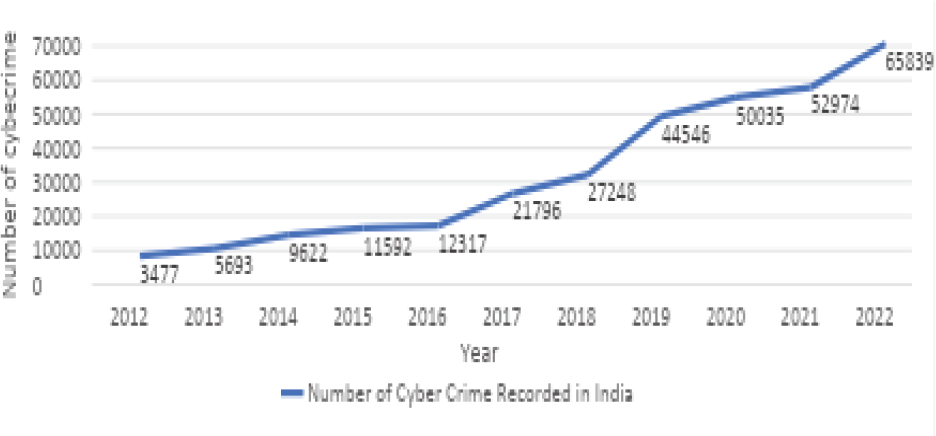
Figure 1.
Cybercrime complaints reported in India during 2012 and 2022 [2]
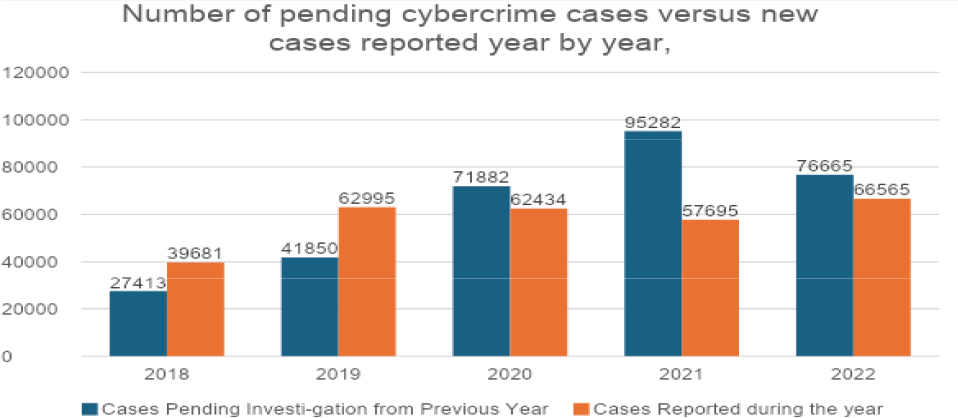
Figure 2.
Cybercrime complaints reported and pending during the years 2018-2022 [2]
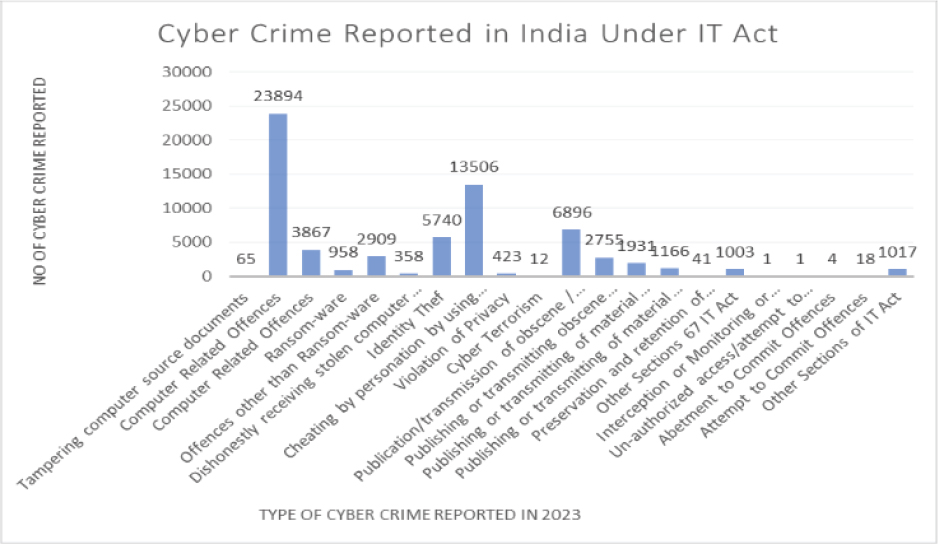
Figure 3.
Types of cybercrime registered during the year 2023 under the Indian IT Act [12]
Table 1.
Comparison of existing algorithms
| Author(s) | Dataset Used | Algorithm | Efficiency | IT / IPC Detected |
|---|---|---|---|---|
| Alami & Elbeqqali (2015) [19] | Microblog data | Text mining + SVM | Not detailed | No |
| Mbaziira & Jones (2016) [20] | Deceptive cybercrime text | Linguistics + ML | Medium | No |
| Kumari etal. (2018) [21] | Labeled text samples | NLTK, Scikit-learn | Moderate | No |
| Andleeb etal. (2019) [22] | MySpace bullying texts | Text mining + ML | Not detailed | No |
| Ch etal. (2020) [23] | State-wise crime stats | SVM, Decision Tree | Good | No |
| K. veena et al. (2022) [24] | Cybercrime reports | SVM | High | Potential |
| Pandey etal. (2022) [25] | Custom labeled reports | Ensemble (RF, NB, etc.) | High (noted) | No |
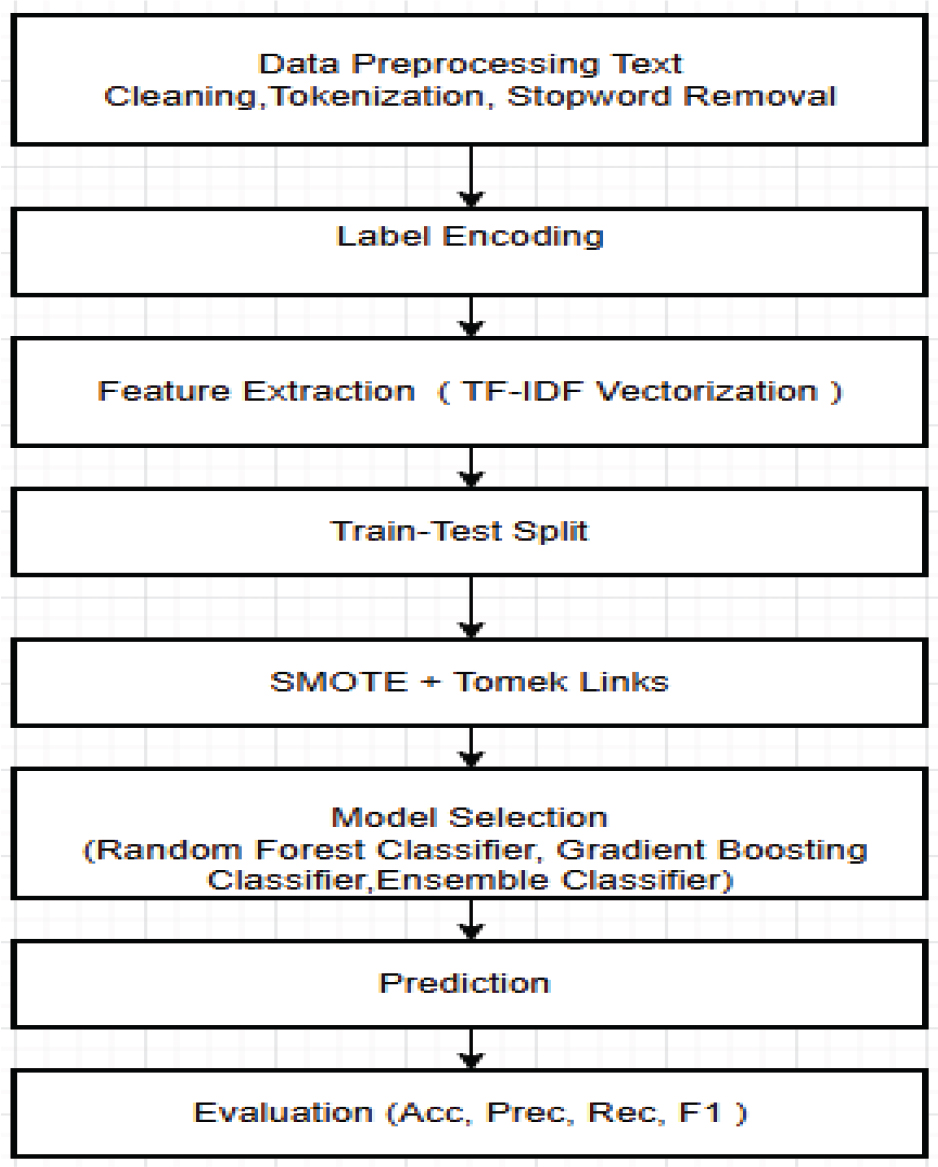
Figure 4.
Proposed methodology
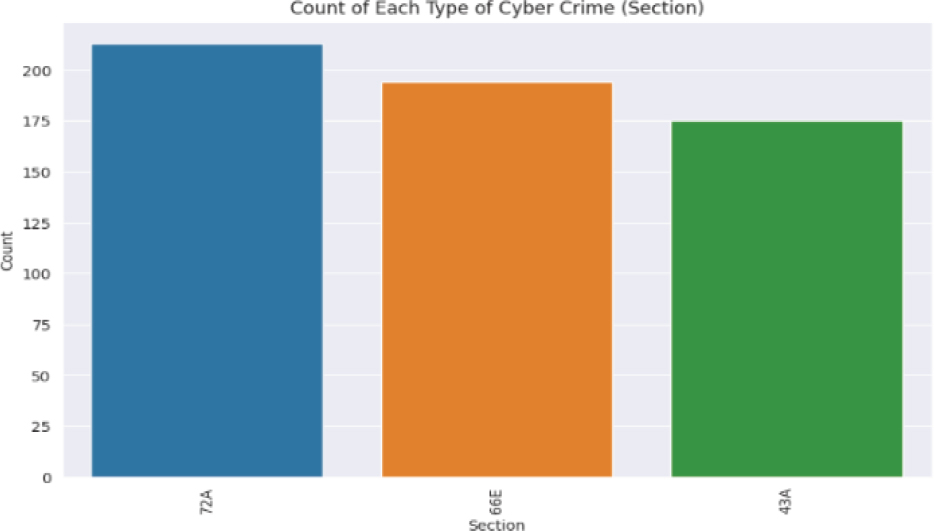
Figure 5.
Distribution of dataset
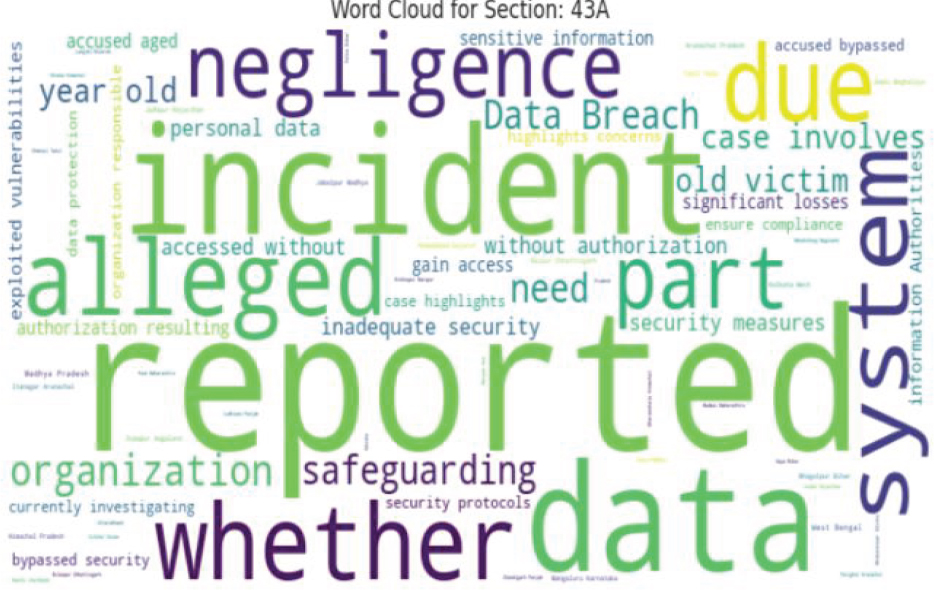
Figure 6.
Word cloud for Section 43A
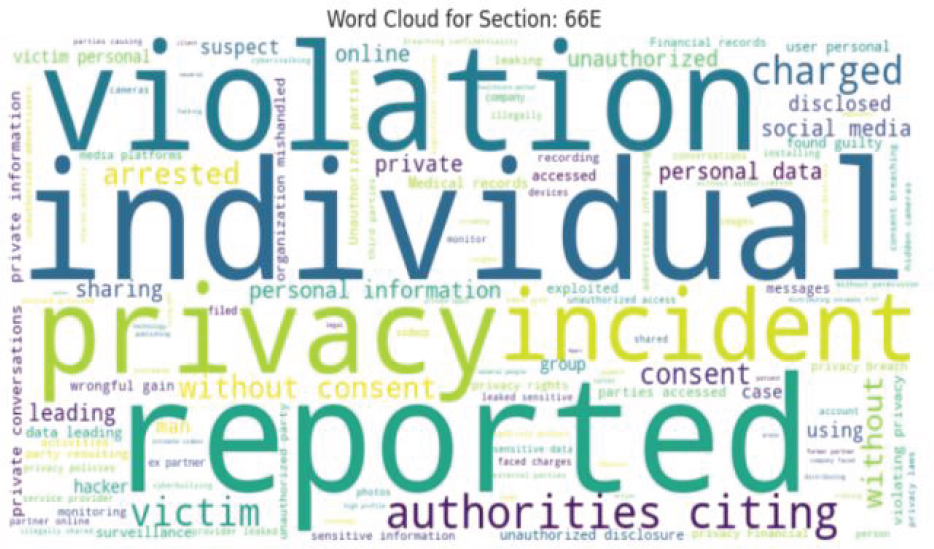
Figure 7.
Word cloud for Section 66E
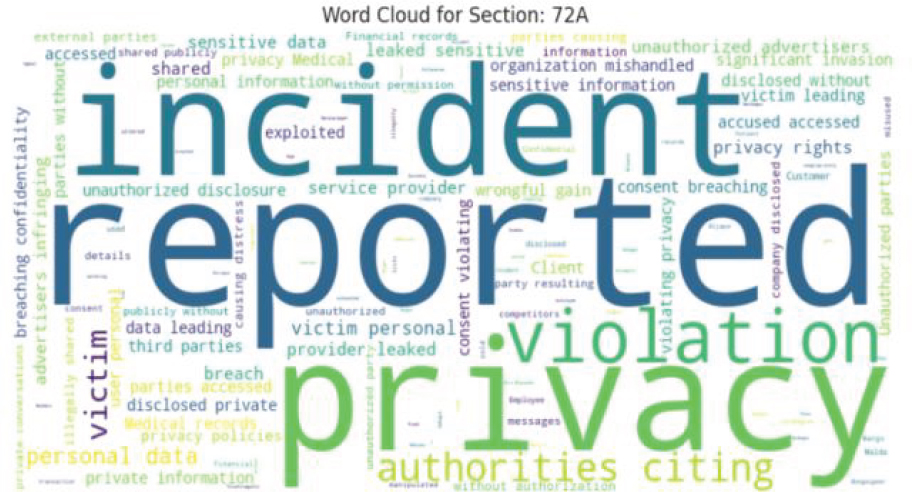
Figure 8.
Word cloud for Section 72A
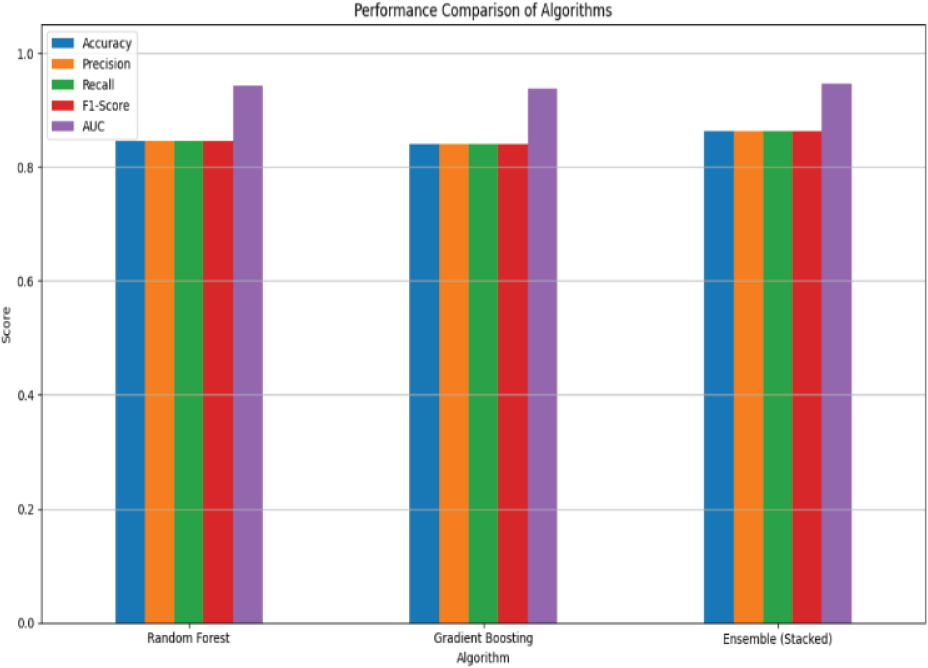
Figure 9.
Performance analysis for different models