
Have a personal or library account? Click to login
Structured flexibility: six case studies of how children with diagnosed autism develop independency in daily living activities Cover

Structured flexibility: six case studies of how children with diagnosed autism develop independency in daily living activities

Open Access
|Oct 2009

Figures & Tables

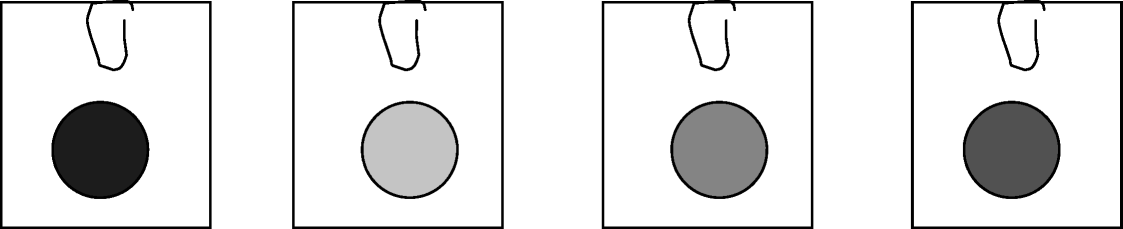
Figure 1. 

Geometrical shape, triangle, without edges.

Table 1. Participants and learning objects in the six case studies.
NameBiological ageFunctional ageSexVerbal/ Non verbalDiagnosisLearning objectCharles71,5–4MVAutism, Developmental disorderDiscern food at the table in a meal situationLiza104FVAutism, Developmental disorderUnderstand the use of a scheduleMax111,5MNVAutism, Developmental disorderDiscern the difference between my food and othersJessica123FNVAutism, Developmental disorderShoppingMary1313FVHigh functioning austism, EpilepsyTaking care of yourself when reaching pubertyPaul1515MVAsperger's syndromePhysical movements
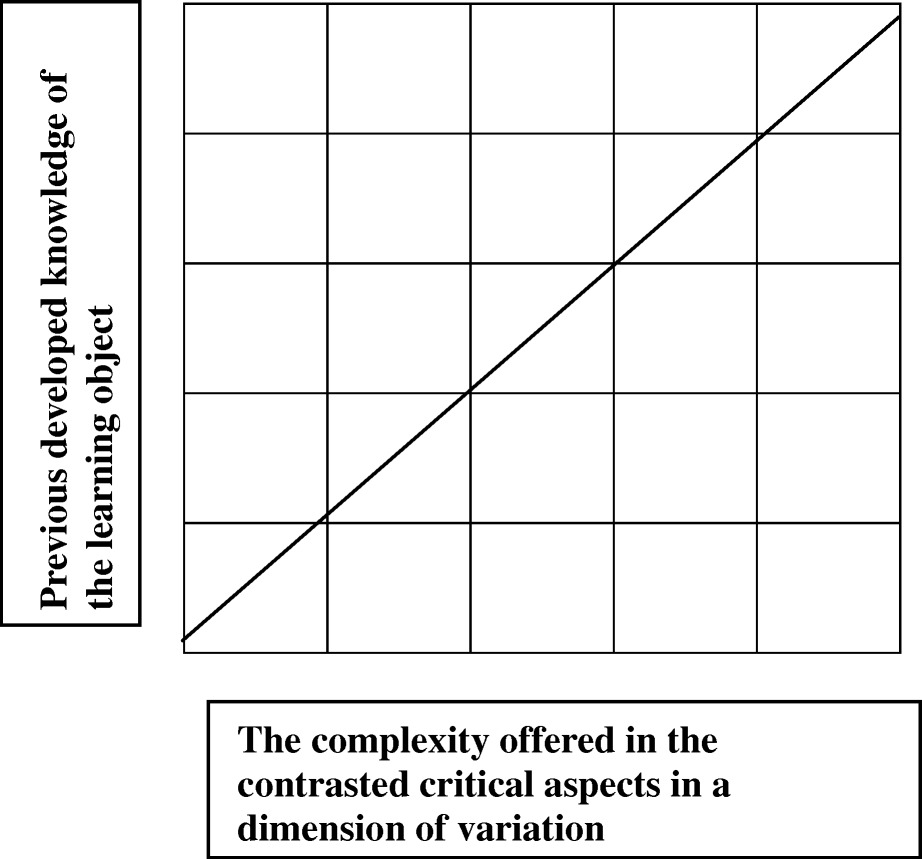
Figure 2. 

The learning diagonal. The relationship between the learner's ability to learn by discerning the critical aspects offered in the learning situation in relation to their previous knowledge.

Table 2. The relation between varied and constant aspects in a dimension of variation.
Case study 1: CharlesVaried aspectsConstant aspectsSituation 1Representation of food. Deep dishes containing food. People at the table. Verbally unfocused discussion between different people.Adult help from people sitting next to him. The quantity of food he got on his plate, served by the adult.Situation 2Representation of food. People at the table. Verbally unfocused discussion between different people.Deep transparent dishes containing food.Situation 3Representation of food shown by pictures. Quantity of food he could take from the dishes.Adult sitting with him at the table. Pictures of food as a reminder of what to ask for. Verbally focused discussion between him and one person.Situation 4Representation of food shown by pictures. Quantity of food he could take from the dishes. People at the table. Verbally unfocused discussion between different people.Pictures of food as a reminder of what to ask for.
Figure 3. 

Schedule board.

Table 3. The relation between varied and constant aspects in a dimension of variation.

Case study 2: LizaVaried aspectsConstant aspectsSituation 1Content of work material in the boxes on the shelf.Order of how to read the schedule: left–right. Order of symbol cards on the schedule. Order of boxes with work material on the shelf. Order of how to pick the boxes on the shelf: left–right.Situation 2Content of work material in the boxes on the shelf.Order of boxes with work material on the shelf. Order of how to pick the boxes on the shelf: left–right.Situation 3Content of work material in the boxes on the shelf. Order of symbol cards on the schedule. Order of boxes with work material on the shelf.Order of how to read the schedule; left–right. Order of how to pick the boxes on the shelf guided by the colours of the symbol cards.

Table 4. The relation between varied and constant aspects in a dimension of variation.

Case study 3: MaxVaried aspectsConstant aspectsSituation 1All activities on the schedule.Food on a food trolley from the kitchen. Food served at the lunch table.Situation 2Food in different situations. Food shared by many people. Activities after the meal sign in the schedule.Meal activity first on the schedule. Only eat food on his own plate.Situation 3Representation of food in reality and on television. Food in different situations. Food shared by many people. Activities after the meal sign in the schedule.Meal activity first on the schedule. Always put food from the dishes on his own plate without eating. Only eat food on his own plate. Food in cooking situations, no eating allowed.

Table 5. The relation between varied and constant aspects in a dimension of variation.

Case study 4: JessicaVaried aspectsConstant aspectsSituation 1Queue to pay. Put items on conveyer belt.Item. Shop. Help by teaching assistants.Situation 2Items. The order of items to buy shown in the portable schedule.Shop. Portable schedule. Move forward in the queue as the person in front moves. Put items on conveyer belt after next customer stick.Situation 3Items. The order of items to buy shown in the portable schedule.Shop. Portable schedule. Move forward in the queue as the person in front moves. Put items on conveyer belt when it is empty.Planned situation 4Shop.Items. Portable schedule. Move forward in the queue as the person in front moves. Put items on conveyer belt when it is empty.Planned situation 5Shop. Items. The order of items to buy shown in the portable schedule.Portable schedule. Move forward in the queue as the person in front moves. Put items on conveyer belt when it is empty.

Table 6. The relation between varied and constant aspects in a dimension of variation.

Case study 5: MaryVaried aspectsConstant aspectsSituation 1 Learning object ARepresentation of blood in the circulatory system. Different kinds of injuries causing bleeding.Situation 2 Learning object ARepresentation of blood (in the circulatory system and in the menstruation cycle). Weeks with and weeks without menstruation.Women have both systems because they can be pregnant. Men, children and older women do not have a menstruation cycle.Situation 3 Learning object BToilets for women to use to take care of their intimate hygiene.How sanitary towels are disposed of in a toilet with special waste boxes.Situation 4 Learning object BMixed toilets to use to take care of intimate hygiene.How sanitary towels are disposed of in a toilet without special waste boxes.

Table 7. The relation between varied and constant aspects in a dimension of variation.

Case study 6: PaulVaried aspectsConstant aspectsSituation 1Physical activities in different places.The physical activities performed.Situation 2Different physical activities.Each activity connected to a place where it is allowed.Situation 3Boys in different ages and their physical activities.The physical activity.
Language: English
Page range: 175 - 193
Submitted on: May 15, 2007
Published on: Oct 3, 2009
In partnership with: Paradigm Publishing Services

© 2009 Mona E. Holmqvist, published by Stockholm University Press
This work is licensed under the Creative Commons Attribution 4.0 License.