Have a personal or library account? Click to login
Video Observations of Dyadic Interaction: Behaviour style of Presymbolic Children Cover

Video Observations of Dyadic Interaction: Behaviour style of Presymbolic Children

By:   
Open Access
|May 2008

Figures & Tables

Table 1.

 Participants’ behaviour style profiles according to CRIB (Carolina Record of Individual Behaviour).

Child1234567Activity8734672Reactivity6538162Goal direct.3634531Frustration947157Attention span4754573Receptivity5645574Tonus668569
Table 2.

 Wish for change from the CCI questionnaire, focusing on the child's contribution to the interaction. The number of plusses and minuses show how great a degree of change is wanted.
Child1234567Initiate interaction+ +−+++ +End interaction− − − −++− −+ ++ ++ +Respond com.+++++Understand com.+++++ ++ + +Direct attention−++ + + ++ + ++ + + ++ + + +Decide subject− −− −+ + ++ + ++ +Decide time− −− −− −++ ++Time to handle obj.−++ + +
Table 3.

 Wish for change from the CCI questionnaire, focusing on the caregiver contribution to the interaction. The number of plusses and minuses show how great a degree of change is wanted.

Caregiver1234567Respond com.− −++Same expressions−++ +Understand com.+ +++ ++ ++ + +++Show interest−++ + + +Direct attention+++++ +Keep concentration+++ +++ ++ +Use app. objects+ ++ + + ++ + + + +Know situation++ +++Pace adjustment++ +
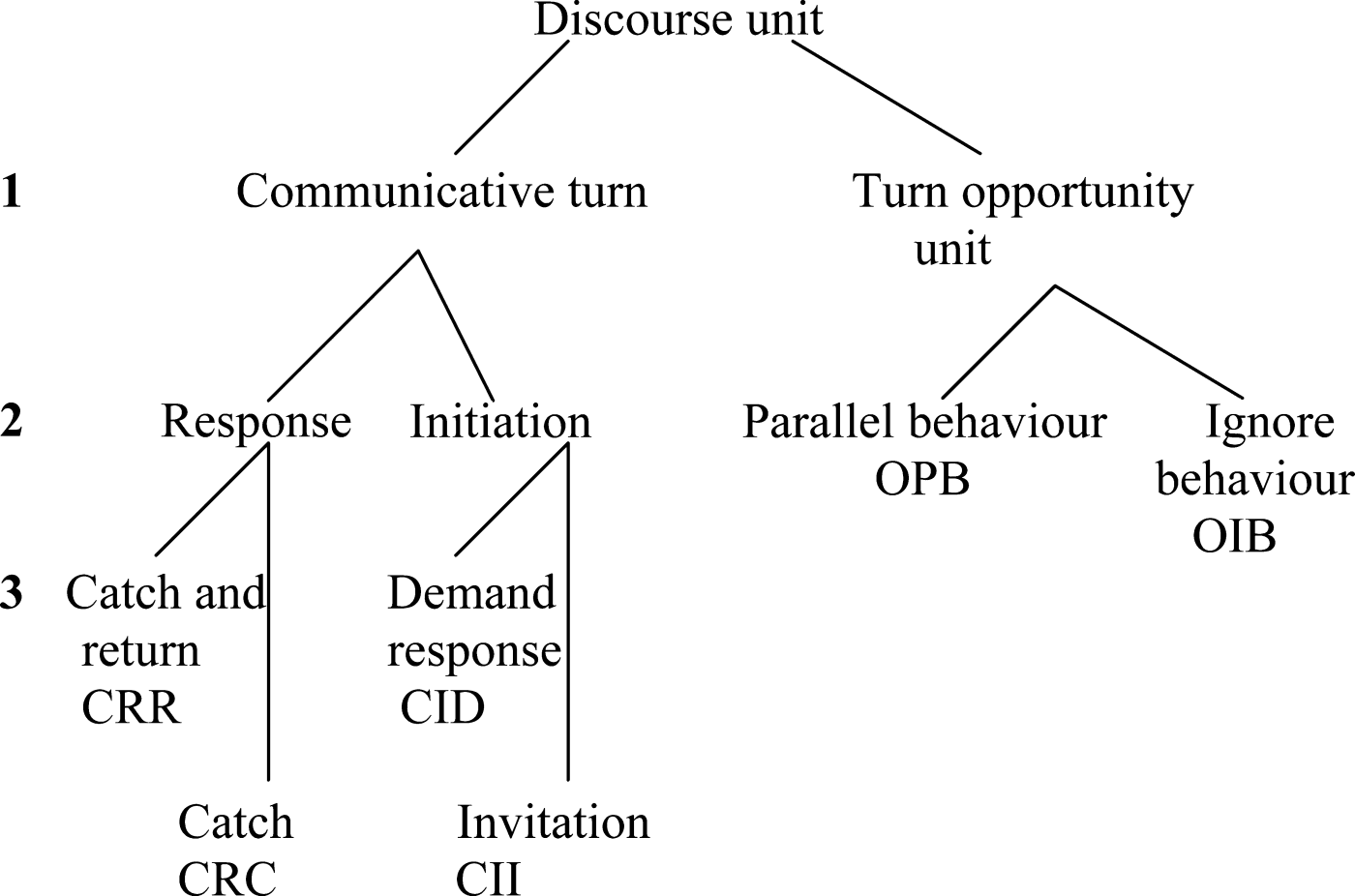
Figure 1. 

Model for the analysis of the interaction. CII: communicative turn, initiation, invitation. CID: communicative turn, initiation, demand response. CRR: communicative turn, response, catch and return. CRC: communicative turn, response, catch. OPB: turn opportunity unit, parallel behaviour. OIB: turn opportunity unit, ignore behaviour, ACC: accord.

Table 4.

 Coding of the turn-taking.

Strong turn-taking Catch and return (CRR)Contains three or more components i.e. look, vocalization, smile and/or a strong vocalization and/or a directed look. Demand a response (CID)Length > 2 secondsWeak turn-taking Catch (CRC)Contains less than three components and/or weak vocalizations. Invitation (CII)Length < 2 seconds
Table 5.

 The children's and the caregivers’ turn-taking in a typical interaction. The numbers represent the frequencies with which the child and the caregiver exhibit each type of turn-taking (child/caregiver).

Dyad1234567Length of interaction (min)2.301.552.471.12.522.191.31CII4/111/162/277/915/183/41/9CID2/02/40/30/00/43/41/6CRC22/1915/1521/206/622/226/711/8CRR0/03/11/20/40/23/16/6OPB6/77/522/25/218/134/67/4OIB1/10/06/010/15/02/14/0Pause22%2%0%16%0%0%0%ACC21%29%25%0%17%45%2%CII: communicative turn, initiation, invitation. CID: communicative turn, initiation, demand response. CRR: communicative turn, response, catch and return. CRC: communicative turn, response, catch. OPB: turn opportunity unit, parallel behaviour. OIB: turn opportunity unit, ignore behaviour, ACC: accord.
Table 6.

 Compilation of the children's interactions according to the CRIB and CCI instruments and analyses of the turn-takings in the sequences of typical interactions.

DyadCRIBCCI (child)CCI (caregiver)Turn-taking (child/caregiver)1Activity: 8 Reactivity: 6 Frustration: 9 Goal dir.= 3 Attention: 4Init inter: + + End inter: − − − − Dec. subj: − − Dec. time: − −Und com= + +CII: 4/11 CRC: 22/19 Pause: 22% Acc: 21%2Activity: 7 Reactivity: 5 Frustration: 4 Goal dir.: 6 Attention: 7Dec. subj: − − Dec. time: − −Resp com: − −CII: 1/16 CRC =15/15 OPB: 7/5 Pause: 2% ACC: 29%3Activity: 3 Reactivity: 3 Frustration: 7 Goal dir.: 3 Attention: 5Und com: + +CII: 2/27 CRC =21/20 OPB: 22/2 Pause: 0% ACC: 25%4Activity: 4 Reactivity: 8 Frustration: 1 Goal dir.: 4 Attention: 4End inter: − − Dir. att: + + + + Dec. time: − −Und com: + + Keep con: + + Use act. obj: + + Know sit: + +OPB: 5/2 OIB: 10/1 Pause: 16% ACC: 0%5Activity: 6 Reactivity: 1 Frustration: 5 Goal dir.: 5 Attention: 5End inter: + + Dir. att: + + + Dec. subj: + + +Same ex: + + Und com: + + + Use act. obj: + + + +CII: 15/18 OPB: 18/13 OIB: 5/0 Pause: 0% ACC: 17%6Activity: 7 Reactivity: 6 Frustration: 7 Goal dir.: 3 Attention: 7End inter: + + Und com: + + Dir. att: + + + + Dec. subj: + + + Dec. time: + + Tim to m.: + + +Show inte: + + + + Keep con: + + Use act. obj: + + + + +OPB: 4/6 OIB: 2/1 Pause: 0% ACC: 45%7Activity: 2 Reactivity: 2 Goal dir.= 1 Attention: 3Init inter: + + End inter: + + Und com: + + + Dir. att: + + + + Dec. subj: + +Dir. att: + + Keep con: + +CII: 1/9 CID: 1/6 OPB: 7/4 OIB: 4/0 Pause: 0% ACC: 2%CRIB (Carolina Record of Individual Behaviour): specific hypo- or hyper-loaded measures of the children's behaviour styles.CCI (Child and Caregiver Interaction) (child): the caregivers’ wishes for where they wanted the children to make extensive changes in interaction (more than one plus or one minus).CCI (Child and Caregiver Interaction) (caregiver): the caregivers’ wishes for where they wanted themselves to make extensive changes in interaction (more than one plus or one minus).Turn-taking: the dominating features of each dyad from analysis of a typical interaction in Table 5.
Language: English
Page range: 104 - 124
Published on: May 2, 2008
In partnership with: Paradigm Publishing Services

© 2008 Jenny Wilder, published by Stockholm University Press
This work is licensed under the Creative Commons Attribution 4.0 License.