
Introduction
Traditionally, mentoring has taken place in face-to-face settings and is often defined as a long-term and relationship-based process between one mentor and a few mentees (Olivier & Trivedi, 2021). At the Open University this is not possible, and our study is based on a programme of online delivery at scale, with a ratio of one or a few mentors to many distance learners.
Background and context
Peer mentoring, or peer-assisted learning, is known to be beneficial to mentees in face-to-face higher education settings; there is, however, less clarity with regard to its benefits in the fully online context. A systematic review (Tibingana-Ahimbisibwe et al., 2022) found only a suggestion that online peer mentoring benefited mentees due to the differing designs of online study programmes, mentoring schemes and evaluation methods; this review was based on only four studies that met its inclusion criteria (out of >2000 from the initial search). However, studies falling outside the inclusion criteria, but that are still related to online peer mentoring (Al-Thani et al., 2023; Gamage et al., 2021), provide a general consensus that peer mentoring benefits online distance learners in many ways. This is further supported by a significant (p = 0.01), but relatively small positive correlation (r = 0.276) between learner satisfaction and learner-learner interactions in distance learning and the need for social interaction in online course design (Lysitsa & Mavroeidis, 2024; Lyyra et al., 2024). Hybrid (a mix of face-to-face and online) mentoring schemes have also been trialled, as have programmes transferred from face-to-face to online, but often where the mentors had little or no prior experience of online delivery or learning (Garcia-Melgar & Meyers, 2020). In general terms, the benefit of online peer mentors can be theorised as an intervention that decreases the transactional distance for distance learning students and thereby contributes to their success (Kassandrinou et al., 2014).
For deeper coverage of mentoring see Mullen and Klimaitis (2021) as the intention here is not to produce a review paper on the topic. Rather, the aim of the current study is to fill a gap in the literature by examining the benefits and challenges to student peer mentors, (as experienced distance learners themselves) when acting as student buddies in asynchronous online forums in a virtual learning environment (VLE) over a period of 9–12 months.
There is much less literature on the perspectives of the peer mentors themselves compared to those of mentees, though they have been more extensively studied in face-to-face and blended contexts. In a cross-institutional study, Marshall et al. (2021) noted that undergraduate mentors at two universities recorded benefits in knowledge, self-awareness and career development. This is supported by Carvalho and Santos (2022), who showed that peer mentoring developed mentors’ collaborative and metacognitive skills in an online constructivist learning environment. An important caveat is that these studies focus on learners in schools or of traditional university age (i.e., late teenage years to early 20s), and the findings may not relate directly to online distance learners who are often older than the groups studied. Further, peer mentors who are experienced in working exclusively online are less likely to encounter the technical barriers reported in mentoring schemes that move from face-to-face to blended or online contexts (Garcia-Melgar & Meyers, 2020). Many studies highlight the acquisition of employability skills (e.g., Dawson et al., 2014), and there is encouraging evidence of the potential to raise the career aspirations of minoritised groups, such as Black women in Science, Technology, Engineering and Maths (STEM) (Rockinson-Szapkiw & Wendt, 2020).
The literature evidences challenges facing peer mentors that include becoming familiar with a mentor’s role and relating to/encouraging engagement with mentees (Marshall et al., 2021). Honeychurch et al. (2017) noted the complex nature of encouraging active engagement from learners who usually read forums passively without posting. Further challenges for peer mentors working online include setting mentee expectations, online communication, and the need for training and support (Pollard & Kumar, 2021). Many challenges appear to cross disciplines, academic levels, faculties and affect all types of online peer mentoring, whether one-to-one or one-to-many. However, these challenges can be largely overcome by using strategies to manage expectations and through the provision of mentor training. From the available literature it is thus likely that the challenges for online mentors are more programme-specific than the benefits, as perceived by mentors. Additionally, the style of mentoring itself may influence how a mentor perceives the balance of benefits and challenges in their role. Leidenfrost et al. (2011) identified three distinct peer mentoring styles: motivating; informative; and negative or minimalist, the latter of which could create a more negative mindset for a mentor. Communication style may also be important here in terms of how it affects engagement with mentees, as evidenced by Culpeper and Kan (2020). These challenges are essential considerations in the design, operation and evaluation of any mentoring programme, as mentors who perceive more benefits than challenges are more likely to continue in the role.
Online peer mentoring at the Open University, UK
The present study concerns a large online peer-mentoring programme, “The Student Buddies”, in Earth and Environmental Sciences at the Open University, UK. It operates on a modular basis whereby a few student volunteers who have passed their module are recruited to return the following presentation to support the new cohort of students, online, via an asynchronous forum. The average ratio on paper of mentor to mentees is 1:164 though this does vary by module and stage of study (Table 1). In reality, all the students on a module at a given point in time have access to one or two mentors who will be covering the forum at that time. Student volunteers contribute their time as available and are not all available at the same time. Not all students on a module will access the forums or engage with the student buddies.
Table 1
Summary of the mentors, modules and registered students in the “Student Buddies Programme” for the academic year 2023–24.
| NUMBER OF PEER MENTORS | NUMBER OF REGISTERED STUDENTS (MENTEES) | |
|---|---|---|
| Year 1 (1 module; 60 credits) | 6 | 1472 |
| Year 2 (2 modules; 60 credits each) | 7 | 1026 |
| Year 3 (2 modules; one of 60 credits, one of 30 credits) | 6 | 871 |
| Year 3 (capstone project module; 30 credits) | 8 | 1068 |
| Total | 27 | 4437 |
The “Student Buddies” online peer-mentoring programme started with a year-2 pilot, 60-credit module in 2017 and has now expanded throughout the curriculum (Table 1). The programme is voluntary, and student mentors receive no payment.
The programme is designed to be generically applicable as its focus is on non-academic student support and is run entirely online via asynchronous forums on the VLE (Moodle). The nature of the programme and the flexibility of the non-academic support facilitates mentors moving between cognate modules; it also renders the model transferable to unrelated modules outside the faculty. The programme in its present form has successfully been introduced in other Schools of the University’s STEM Faculty and has also been adopted in two further faculties.
As volunteers are recruited from the most recent cohort of students that have passed the module, this means mentors are only 1–2 modules ahead of their mentees, so are often mentoring students at a similar stage in their degree. Some mentors (on the capstone project module) are returning graduates. Diversity and inclusion is embedded in the recruitment process and is a strength of the programme. In particular, students with a range of pass grades are welcomed, as are students with varied backgrounds and characteristics (e.g., age, gender identity, neurodiversity, declared disability, and varying personal commitments, such as being a carer).
Students who are selected as peer mentors are provided with synchronous online training; resources (a handbook, template forum posts, and IT guidance); and an Associate Lecturer to support their team. The mentoring forum is kept as a student space (with Associate Lecturer support) and advertised to all students studying the module. The programme aligns with the recommendations for effective e-mentoring programmes established by Tinoco-Giraldo et al. (2020), including: good programme management structure; initial mentor training; ongoing mentor support; and periodic reviews to ensure quality is maintained and improved. It has been established that the programme benefits mentees and mentors, and is sustainable to operate in terms of recruitment and costs (Robson & Hutton, 2023; Hutton & Robson, 2019).
Aims and Objectives
This study builds on our earlier publication by discussing and evaluating the benefits for online peer mentors in greater detail (Robson & Hutton, 2023), and how this contributes to the sustainability of the scheme. The specific research questions we set out to address are:
What are the benefits and challenges of being a mentor?
How does mentoring contribute to mentors’ employability skills?
How does the mentoring experience support the sustainability of the programme?
Methods
The study used a mixed methods approach based on qualitative and quantitative data from questionnaires enriched by qualitative data from two online focus groups. The change in mentors’ perspectives was captured by completing a questionnaire before starting and then another after completing mentoring; the subsequent focus groups enabled deeper exploration of themes identified in the questionnaires. This mixed methods approach provided a robust, detailed investigation of the research questions (Creswell & Creswell, 2018).
Following the University’s approval processes for student research projects, participating mentors were recruited after giving their explicit, informed consent. Participants completed either one or two anonymous questionnaires, the findings of which were enriched and triangulated through two identical focus groups.
Data collection
Online questionnaires [JISC Online Surveys version 2 (no longer available), www.onlinesurveys.ac.uk] gathered information from participants prior to them mentoring for the first time (Questionnaire 1), and post completion of their first year (Questionnaire 2), to capture changes in mentors’ perceptions and expectations.
Questionnaire 1 was sent to 44 new volunteers on modules starting between October 2019 and February 2021, which incorporated the buddying experience before, during and after the Covid-19 pandemic. Mentors were asked about:
how long they had been studying before volunteering as a mentor;
what they expected the average weekly time commitment to be;
their motivations for volunteering;
which skills and attributes they thought would be useful (choosing from the list in Table 2, with the option to add further comments);
their concerns and thoughts prior to starting; and
evaluative comments on their induction and training.
Table 2
List of skills and attributes used in questionnaires 1 and 2.
| Previous knowledge of the module |
| ICT skills |
| Time management skills |
| Previous peer-mentoring skills |
| Experience of Open University forums |
| Social media skills (e.g., Facebook moderator, Twitter user |
| Interpersonal skills |
| Ability to help people |
Questionnaire 2 was sent to 46 mentors from the same modules as Questionnaire 1, after the mentoring period was completed, asking about:
if the average weekly time commitment was as they expected, and what this was;
if they would volunteer again, and why;
how well their mentor team worked and communicated;
challenges associated with mentoring;
skills and attributes that had been useful for mentoring (Table 2, with option to add more),
skills and attributes that had developed through mentoring (choosing from: communication; interpersonal; employability; teamwork; study skills; IT skills; with the option to add more); and
strengths of, and improvements for the programme.
Questionnaire responses were used to derive four open questions for two, 1-hour focus groups (FGs) attended by 4 and 2 student mentors respectively. Each FG was held online using Microsoft Teams [Microsoft Corporation, www.microsoft.com/en-gb/microsoft-teams/group-chat-software] in July, 2022. Mentors were asked:
What advice would you give to someone contemplating buddying for the first time?
How did the practical aspects of buddying work for you?
For you personally, what was the main reward and main challenge from the buddying experience?
Thinking about when you studied the module(s) that you were a buddy on, which parts of your study experience influenced your decision to volunteer?
Data analysis
Open questions facilitated more in-depth exploration of the research questions and as for the questionnaires, FG responses were analysed anonymously from transcripts by inductive thematic analysis using NVivo [Lumivero, https://lumivero.com/products/nvivo/]. Both authors carried out the thematic analysis separately and then compared results in order to discuss and agree the themes. Closed questions from the questionnaires were analysed quantitatively using graphical techniques.
Results
As all the research instruments (questionnaires and FGs) contributed answers to all the research questions, the results are considered here in chronological order by research instrument to chart the emergence of findings through the investigation. A synthesis of the findings in response to each research question then follows in the Discussion section.
Questionnaire 1 – perceptions before mentoring
Thirty-five responses (79%) were received and 94.3% of respondents had >2 years of university study prior to volunteering. Most students (62.9%) had 2–4 hours available per week for mentoring. The most important self-selected personal attributes for mentoring were knowledge of the module, ability to help others, and interpersonal skills (Figure 1).
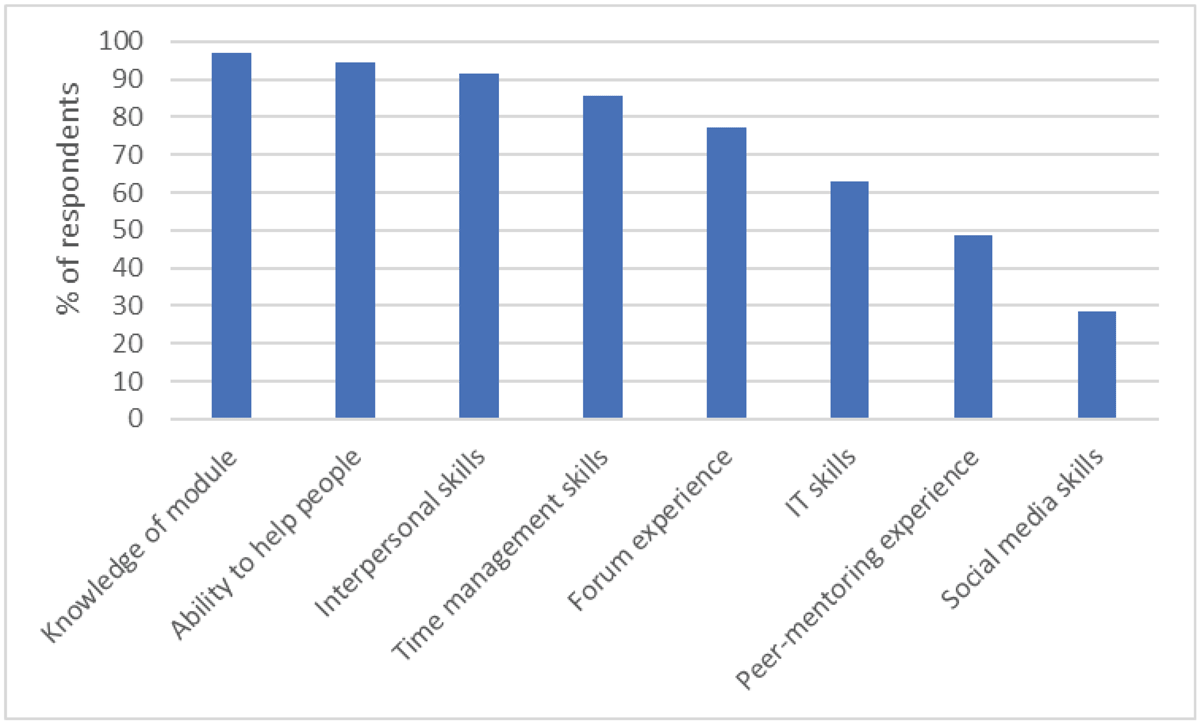
Figure 1
Number of respondents (%) agreeing to importance of personal attributes for buddying.
When students were asked about further attributes (not included in Table 2), specific interpersonal skills, such as patience, positivity, teamwork, friendliness and tact were mentioned. The importance of any relevant prior experience (e.g., in education and training) was also identified, along with the need for reliable engagement with the forum, team members and effective time management.
91.4% of the respondents found that the resources and training provided were helpful, and 94.3% engaged with pre-start online training.
Results from three open questions about motivation, concerns and thoughts before starting were analysed by thematic analysis (Table 3).
Table 3
Most common themes from free text questions in Questionnaire 1.
| QUESTION | THEMES |
|---|---|
| Motivations for volunteering | 1. Provide help 2. Extend personal development 3. Flexibility in timing of carrying out role |
| Concerns before starting | 1. No concerns 2. Ability to help others effectively 3. Time commitment |
| Thoughts about starting | 1. Eager and excited 2. Confident 3. Feel supported 4. Nervous and apprehensive |
Questionnaire 2 – perceptions after mentoring
Twenty-two responses were received (47%); 86.4% of respondents had remained active for the duration of the module and 77.3% would consider volunteering again. Most respondents (81.8%) found the time commitment to be the same or less than what they had expected, at about 1–2 hours per week. 63.6% of students did not find the role impacted negatively on their current studies, while a further 22.7% were not studying at the time of volunteering.
Respondents repeated their skills selection as in Questionnaire 1 (Figure 2) and identified skills they felt they had developed while mentoring (Figure 3).
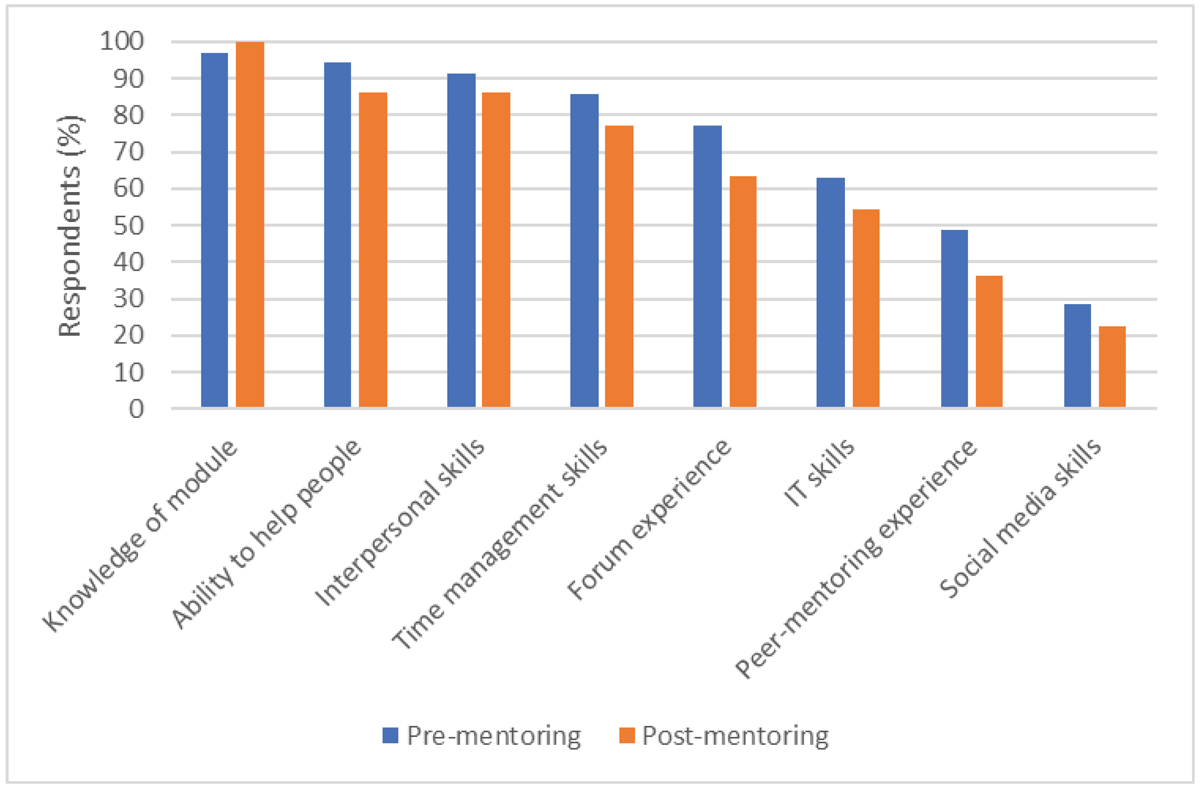
Figure 2
Comparison of personal attributes’ importance pre- (Questionnaire 1, repeated from Figure 1) and post-mentoring (Questionnaire 2) experience.
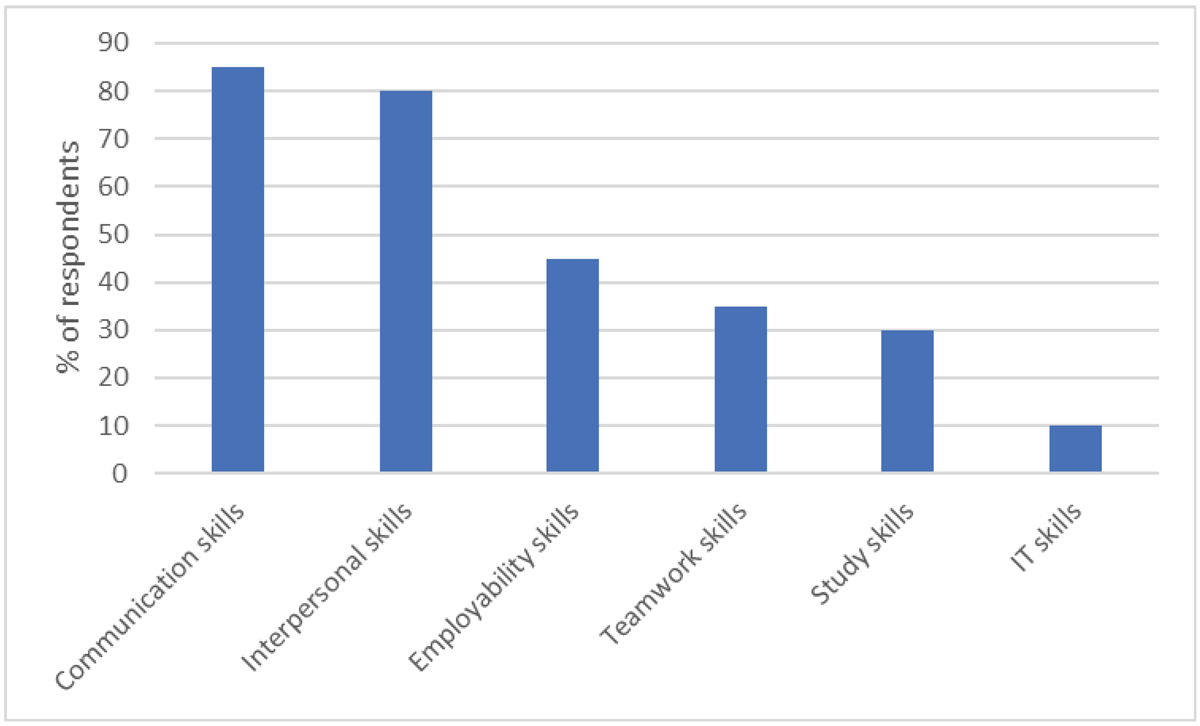
Figure 3
Skills identified as having developed during mentoring.
Knowledge of the module they were working on was the only attribute that students said was more important than they initially thought, while prior experience in forums and peer-mentoring were much less important than they originally believed (Figure 2). Whereas prior to mentoring an “ability to help people” was perceived as more important than interpersonal skills, post mentoring these attributes were recognised as being equally important (Figures 1 and 2). The most important skills to have improved were communication and interpersonal skills, with communication as the most important skill of all.
90.9% of respondents felt that their team worked satisfactorily or better, and 72.7% felt part of that team. The majority (81.8%) reported that communicating with fellow mentors, mostly via their own forum (88.9%), was important. Thematic analysis of open text questions revealed minor problems with team function, including one buddy dominating the forums and some evidence of poor communication. However, a much greater number of positive themes emerged, the most common of which were effective teamwork, and a sense of inclusion during a respectful, supportive experience.
Open questions that invited identification of challenges and improvements elicited few responses. The main challenges were infrequent communication between mentors, personal time management, and students’ expectations of what the mentoring role was. Suggested improvements were more frequent communication within the mentor team, and to provide opportunities for informal discussion between mentors across different modules.
Asked to identify the best thing about mentoring, a variety of responses were forthcoming, but the dominant theme was helping others. Feeling part of a team, giving back, being thanked, general satisfaction, and sharing knowledge and experience were also mentioned.
Focus Groups
The dominant themes, mapped against each focus group question, are presented in Figure 4.
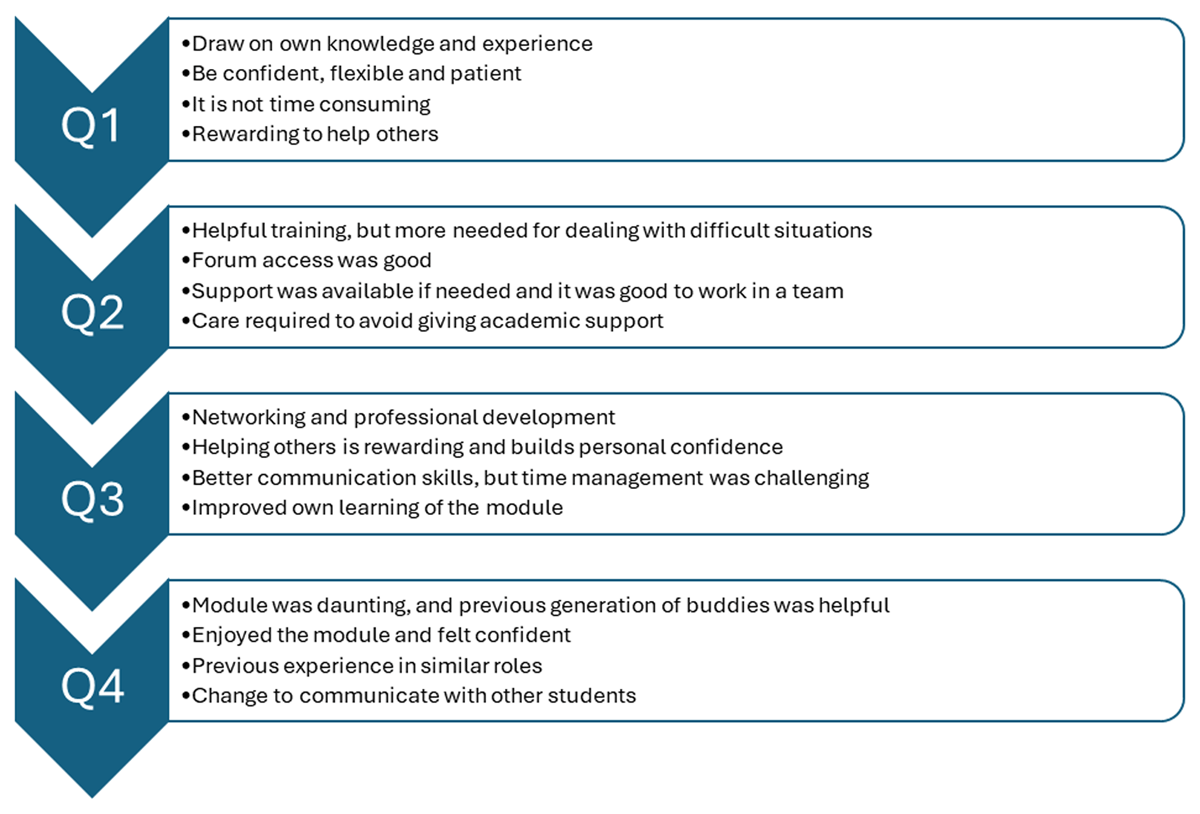
Figure 4
Main themes from Focus Groups.
Discussion
The results are discussed systematically by research question; the study’s limitations and the future direction of the mentoring programme are then considered.
Research Question 1: What are the benefits and challenges of being a mentor?
There is consistency across the research instruments in the perceived benefits for mentors, which include affective attributes such as satisfaction from helping others and “giving back”, as well as the development of transferable skills, particularly communication and interpersonal skills (see Figure 3). It is also noteworthy that some mentors reported gaining in confidence, both personally and in the subject matter of the module on which they were a student buddy (see Figure 4). The perceived benefits to mentors align with others’ findings (including, but not limited to Marshall et al., 2021) and provide corroborating evidence that peer mentoring online can be valuable for both mentors and mentees.
The results from both the student questionnaires and focus groups suggest that for the majority of peer mentors, there were few, if any challenges to carrying out their role in this particular scheme. The scheme aligns with recommendations for good practice and includes training and induction (Pollard & Kumar, 2021); respondents valued this, and it is known to help overcome some challenges, such as learning the mentor role (Marshall et al., 2021). Further, though difficult to quantify, initial induction and training also provide an opportunity for mentors to meet online with each other and their supporting Associate Lecturer, which is likely to explain the strong themes of “no concerns” and eagerness/anticipation that emerged before starting for the first time (see Table 3). New buddies also start work during the preparation period before a module begins: this gentler introduction due to fewer student postings may help mentors to acclimatise. Therefore, the timing of when mentors start could be an important factor in their experience that was not explicitly explored in this study. A very small number of difficulties around effective communication, time management and the balance of power in the mentoring team (due to one dominant buddy) emerged; though these were exceptions, they suggest minor improvements could be made to the training and support system for mentees.
Research Question 2: How does mentoring contribute to mentors’ employability skills?
Figure 3 shows that respondents indicated the most important skills they perceived to have improved were communication and interpersonal skills (at least 80% of respondents), with employability skills scoring much lower (45% of respondents) and ranking in third place. However, a focus group theme for the benefits of mentoring was “professional development and networking” (Figure 4), indicating that some participants recognised potential advantages for their employability. Communication, interpersonal skills (and teamworking) are all sound employability skills (Skoyles et al., 2019), though many respondents perceived them separately in this study. Our data suggest that mentors value the benefits to their skills development and recognise these to a certain degree. However, they do not consistently recognise what employability skills may be. The disconnect between students’ perceptions and development of employability skills is acknowledged in the literature as a pedagogical challenge and is not likely to be linked specifically to this study or peer mentoring scheme (Succi & Canovi, 2020).
Research Question 3: How does the mentoring experience support the sustainability of the programme?
The peer mentoring scheme is sustainable, being now in its 8th year with student mentors repeatedly volunteering, and the data from this study provide some insight into this. Contributing factors are likely to include mentors identifying the same pattern and order of beneficial attributes both before and after their mentoring experience: their expectations were not far from the reality of their experience (Figure 2), and, as discussed earlier, they perceive an overall benefit from participating. Further, the peer mentoring programme is designed to be motivating and informative in style (Leidenfrost et al., 2011), and the positivity in the questionnaire and focus group data suggests this contributes to high mentor retention rates, thereby contributing to the scheme’s success and longevity.
Neither IT skills nor time management have been barriers to participation in the scheme in its current form. The buddy role can be carried out via most smart mobile devices (working on a forum) and this improves accessibility for mentors affected by digital poverty. Furthermore, recruiting volunteers from those who have already studied and passed the module satisfies the pre-requisite attribute of “knowledge of the module” which almost all respondents identified as important (Figure 2). The small proportion of mentors who do not remain active for the duration of a module usually withdraw for personal reasons not linked to difficulties with the programme.
Pedagogical implications and technological integration
The peer mentoring programme investigated here is an example of a Community of Practice (CoP) (see Wenger, 2010; Holland, 2018) in which learning occurs in the context of the mentors’ lived experiences. While the aim of the mentoring was to provide non-academic support, build community and raise students’ confidence, the dialogue between the mentors and mentees, and the mentors’ perceptions of their knowledge being more important than they first thought highlight the constructivist nature of the programme. Several student mentors reported that their own learning of the module had deepened through their mentoring as they revisited content for themselves. Mentors were advised during training to take a reactive approach on the forum to the queries of the current student cohort, with proactive messaging being restricted to times before assignments or return after holidays, as the mentors are not academic teachers. Given that the mentors recognised communication skills as not only being very important but also one of the most improved during mentoring, there is a suggestion that the mentoring process has an element of action research within it for the mentors, especially when they carry on for a second year. While beyond the scope of this study, it would be interesting to investigate the types of communication styles used by different mentors, and if/how these changed over time, as research suggests this is important and can influence the outcomes for both mentors and mentees (Culpepper & Kan, 2020).
As technology develops with new tools and greater digital skills among students, the possibilities for delivery of online peer-mentoring increase all the time. This may include the use of video, the potential for synchronous mentoring sessions, and the availability of mentoring 24/7 across different time zones, all of which may enable reaching many more mentees than conventional face-to-face or hybrid programmes. However, for mentors it is crucial that they are trained and have experience of working with whatever technologies are used before mentoring begins to realise effective, meaningful dialogue with mentees.
Limitations
In general terms, the relatively small sample of mentors participating in this evaluation, and the potential impact of this on our conclusions, should be acknowledged. However, the use of a robust mixed methods approach in the research design (Creswell & Creswell, 2018), which triangulated concordant evidence from both questionnaires and focus groups, adds credence to our findings. Not foregoing that the mentoring programme is institution-specific, the study’s results are also validated by their agreement with the existing literature. Finally, our data were collected over several iterations of the peer mentoring scheme (from multiple modules over several years), which is helpful in providing a more representative, longer-term data set for this evaluation.
The lack of challenges to mentoring, or recommendations for improvements to the programme, could reflect a lack of confidence on the part of mentors to raise such things, or they could be a limitation of the study (e.g., the small sample or question format). Anonymous questionnaires were used to encourage authentic, open engagement. However, this also imposed a further limitation: by assuring anonymity, respondents who answered both questionnaires 1 and 2 could not be matched to see how each individual’s perceptions changed from before to after mentoring. Our questionnaire analyses are based on aggregated pre- and post-buddying responses. A more sophisticated design, such as that of Calatrava et al. (2022) could have overcome this but was beyond the resources available.
There is uncertainty over students’ understanding of employability skills, and the extent of their awareness that peer mentoring can benefit their employability. Further work is needed to determine the source of this disconnect; while it is widely acknowledged in the literature (Succi & Canovi, 2020), it may be an artefact of our methodology, such as a flaw in the way in which questions were constructed. Finally, the study is based on students’ perceptions of their skills development. Our research methods are appropriate, as the purpose of this study was to ascertain the mentors’ perspectives, but it is important to note that our conclusions are based on subjective measurements, and not on quantitative metrics of skills demonstrated by mentors.
Future development of the scheme
Student mentors have increased responsibility as they now have to moderate their forums (albeit with support from an Associate Lecturer). This was not seen as a barrier, but there is a need for additional pre-service training to help mentors deal with difficult situations that do occur, e.g., students breaking module assessment rules or posting inappropriate content that breaches expected conduct. Analysing mentor communication styles through keyword analysis is an area for further investigation to optimise mentor communication skills and to increase interactivity with mentees. It is important to better educate the mentors with regard to the value of their role in developing their own, recognisable employability skills. For the sustainability of the student buddies programme generally we must improve the advertising to the student cohort in agreement with the work of Kang et al. (2012) who recognised that any online peer-mentoring programme must be easy to find, join, share and use.
Before the scheme reached its present size, an attempt to establish a mentoring community of practice for mentors across a range of modules via access to a School/Faculty wide additional asynchronous forum failed with too few student mentor contributions to generate discussion. This suggested that there needs to be a critical mass in terms of potential participants for this to be effective. However, with the present increased number of mentors per year, and with adoption of the programme in other schools and faculties, it has now grown sufficiently to again trial building a diverse mentoring community to facilitate the exchange of experience and views between cognate modules, and perhaps more widely across the Faculty and University. Developing the programme by expanding mentor training and support through broader forums and workshops (Holland, 2018) would consolidate the learning for mentors and build on the CoP.
Conclusions
Despite the lack of suggestions for improvements from the student mentors, it is unlikely that the programme is flawless though the mentors do feel that the training and support are helpful. The majority of mentors perceive that there are several benefits and few challenges, and their expectations before starting are similar to their actual mentoring experience. While the benefits are similar to those reported for mentors in face to face and hybrid programmes, one of the biggest differences is that Open University mentors are not challenged by the online environment and asynchronous mode of support delivery via forums. The main reason for this is likely to reflect their own lived experience of the technology and the environment as distance learners themselves. We conclude that these factors contribute to the sustainability of the programme. The principal future improvement for the scheme needs to be helping students to recognise their employability skills development and the added value this brings.
Competing Interests
The authors have no competing interests to declare.