
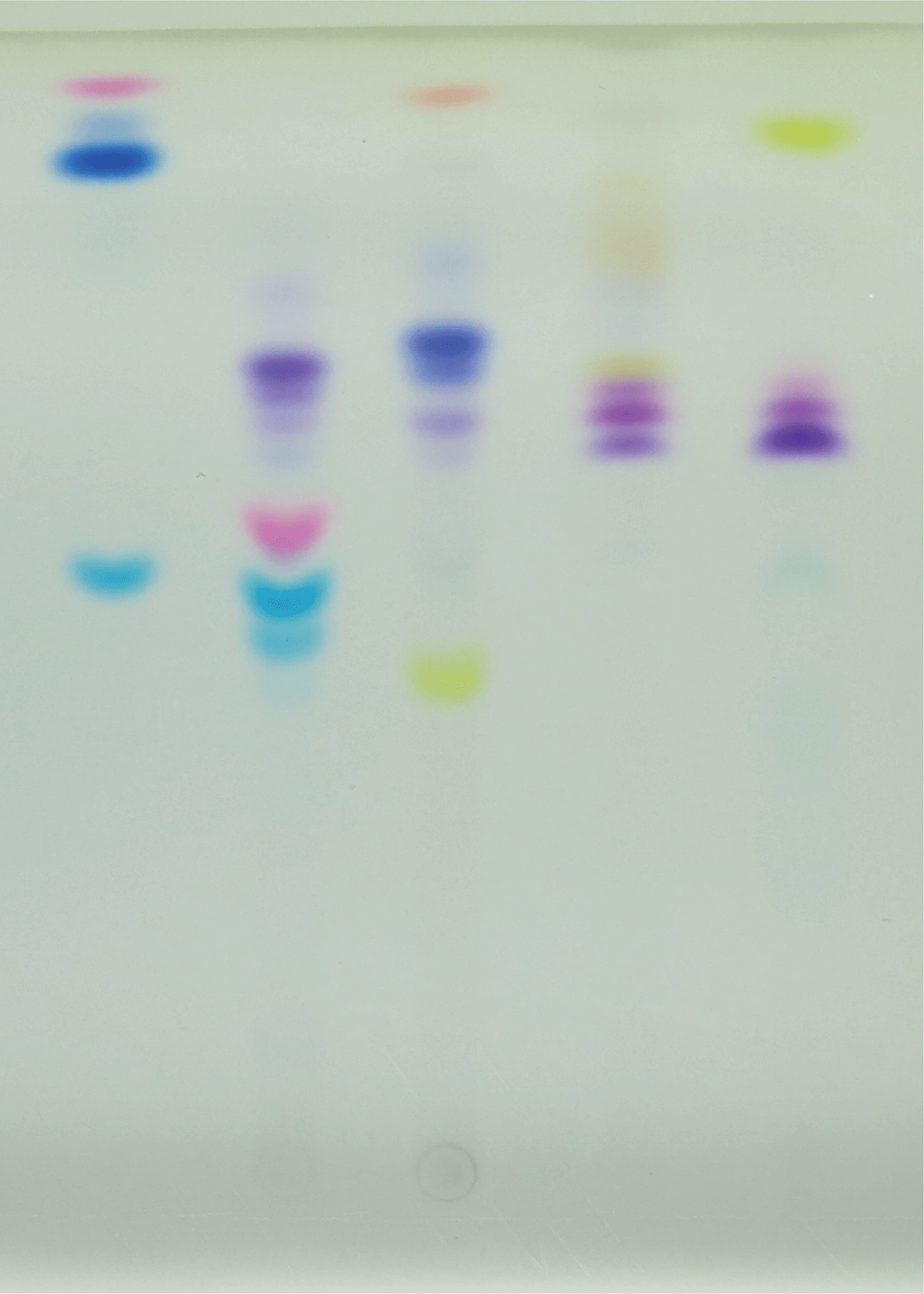
Figure 1
The thin-layer chromatogram obtained for Inks A through E (left to right) using Solvent I as the developing solvent (photographed under daylight).
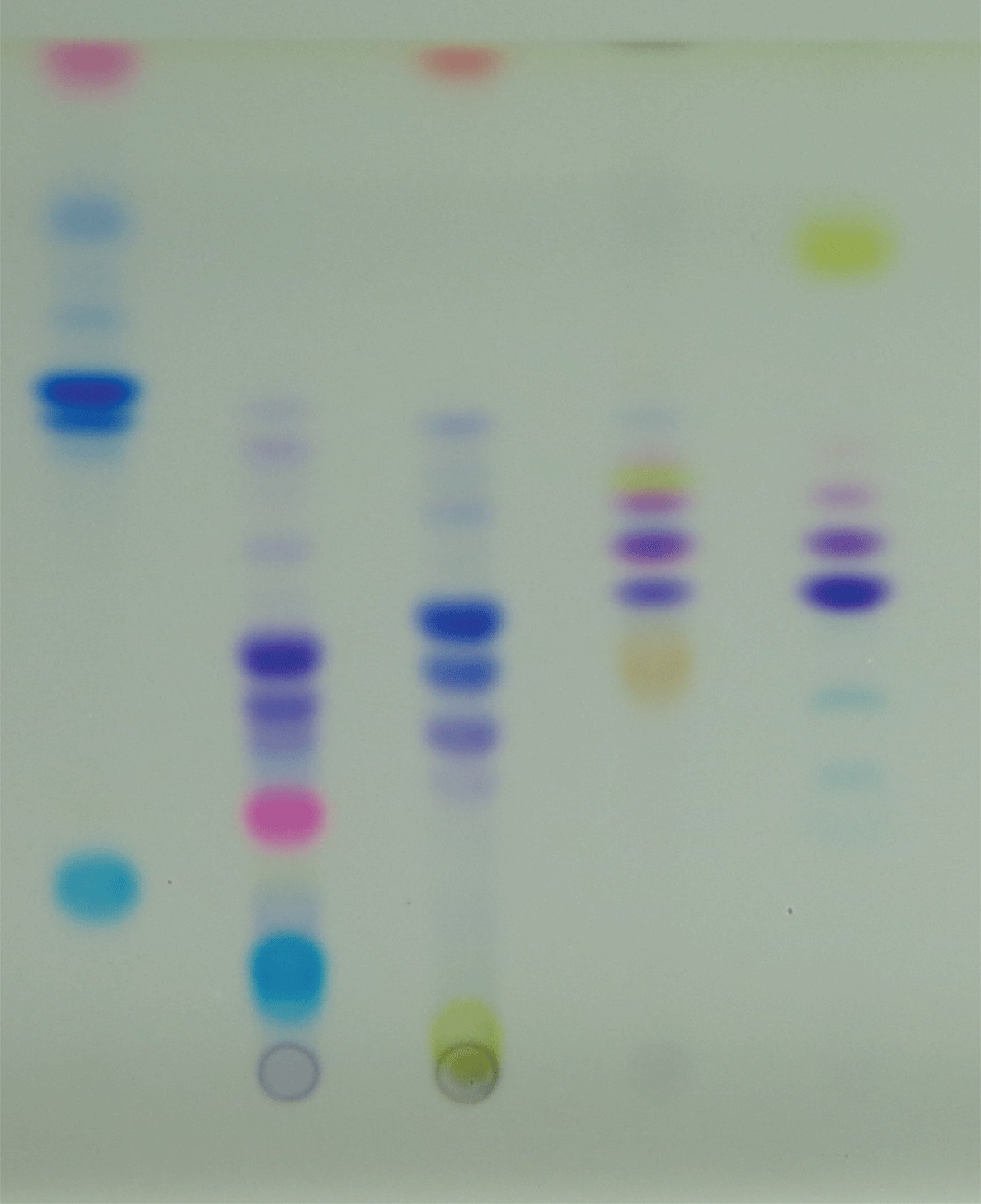
Figure 2
The thin-layer chromatogram obtained for Inks A through E (left to right) using Solvent II as the developing solvent (photographed under daylight).
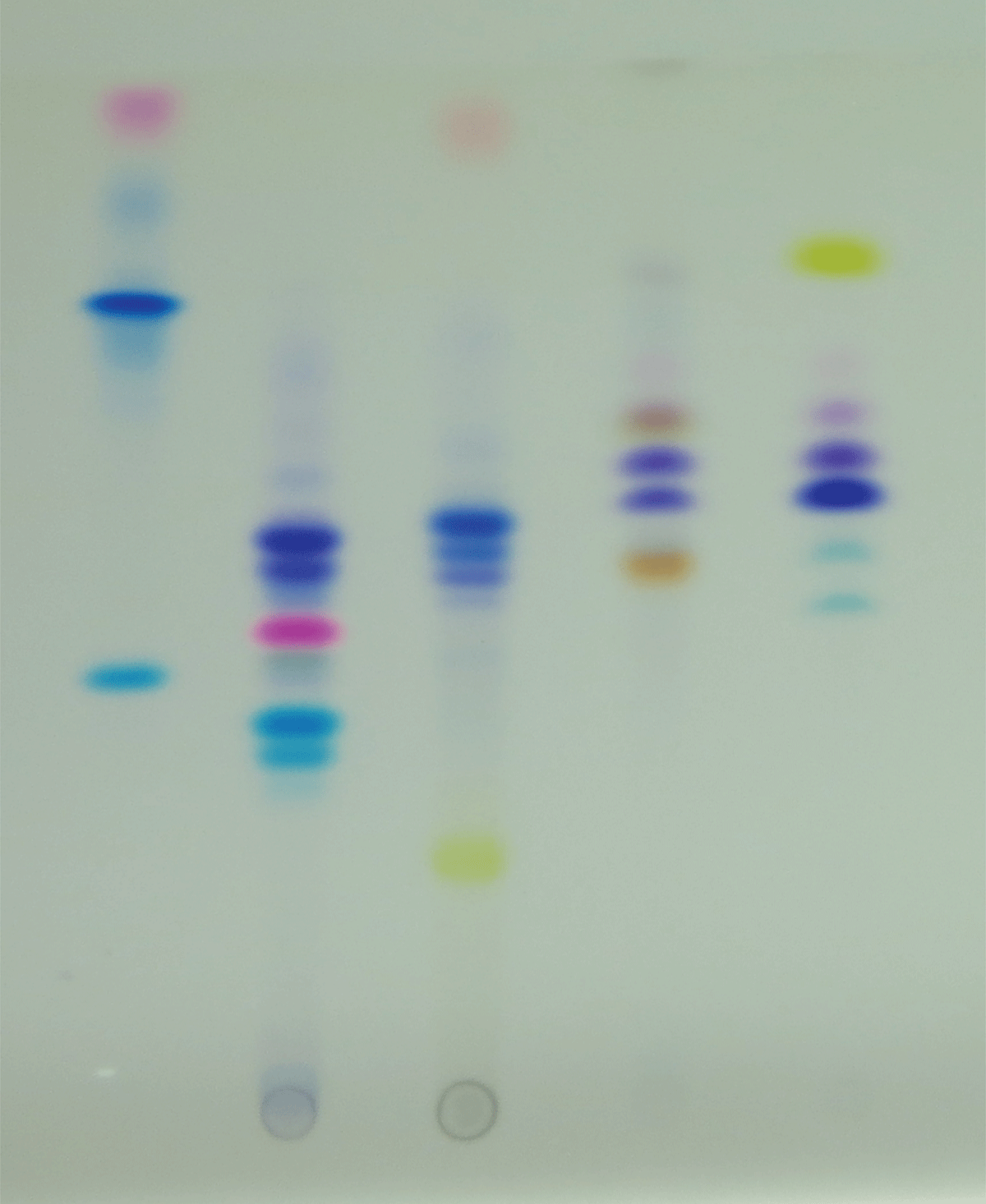
Figure 3
The thin-layer chromatogram obtained for Inks A through E (left to right) using Solvent III as the developing solvent (photographed under daylight).
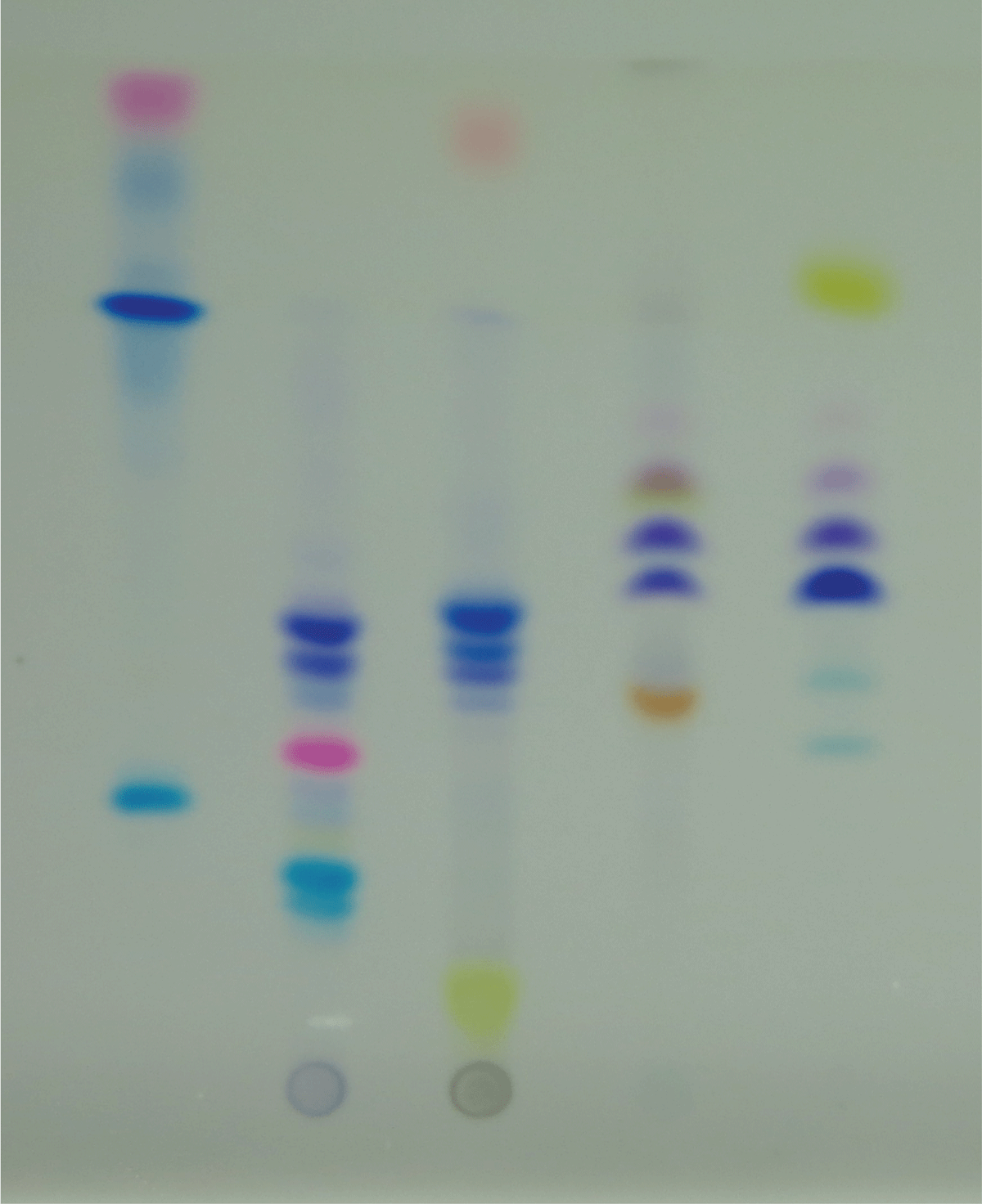
Figure 4
The thin-layer chromatogram obtained for Inks A through E (left to right) using Solvent IV as the developing solvent (photographed under daylight).
Table 1
The results of the TLC separation of the dye components of the five inks, designated as Inks A through E, using four developing solvents, designated as Solvents I through IV.
| Ink | Number of separated dye components | |||
|---|---|---|---|---|
| Solvent I | Solvent II | Solvent III | Solvent IV | |
| A | 4 | 6 | 4 | 4 |
| B | 8 | 12 | 11 | 10 |
| C | 9 | 10 | 10 | 9 |
| D | 7 | 9 | 8 | 9 |
| E | 6 | 7 | 7 | 7 |
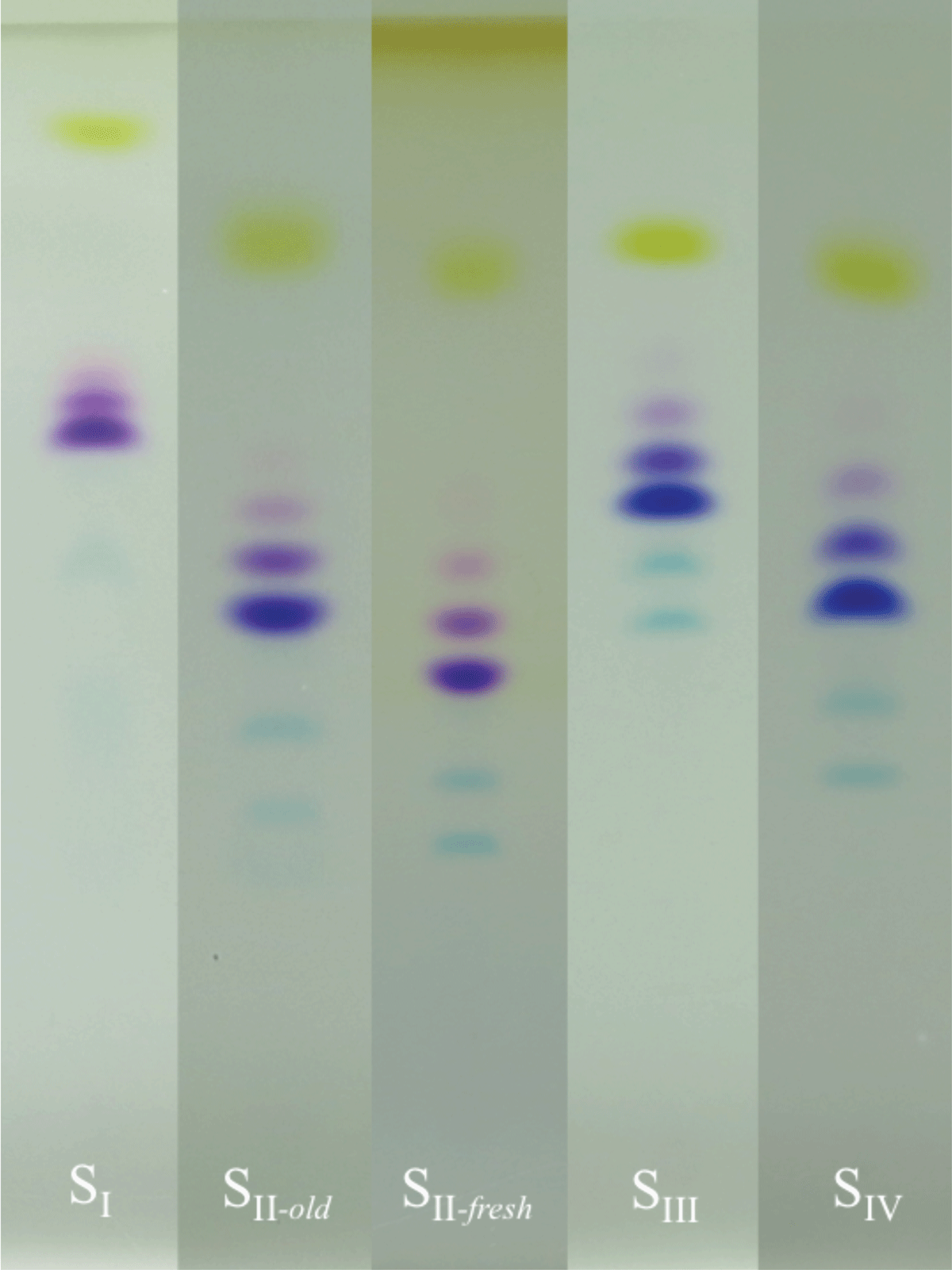
Figure 5
Five thin-layer chromatograms obtained for Ink E using the following developing solvents (photographed under daylight):
SI – Solvent I (prepared about 1 hour prior to the TLC analysis)
SII-old – Solvent II (prepared 32 days prior to the day of the TLC analysis)
SII-fresh – Solvent II (prepared about 1 hour prior to the TLC analysis)
SIII– Solvent III (prepared about 1 hour prior to the TLC analysis)
SIV – Solvent IV (prepared about 1 hour prior to the TLC analysis)