
Introduction
In current forensic signature examination, there is always a suspicion that the questioned signature, despite seeming to be legitimate, could also be a very good forgery.1
One method popular with forgers includes tracing a previously outlined signature. Experiments in our laboratory have shown that it is possible to distinguish a tracing guideline from similar outlines created by the inclination of the writing instrument on a soft writing substrate such as paper.
One of the methods used by forgers when constructing a forged signature is the creation of an indented outline of the signature and then filling it with ink in order to design a signature that at least with regard to its shape is similar to the genuine. In this effort, the forger creates the outline of the signature by tracing so that the signature is indented below onto a piece of paper, which he will later use to draft the forged document (e.g. a fake receipt). Then the forger very carefully fills with ink this signature outline so the constructed signature can appear as genuine.
During the microscopic examination of such a case, the forensic document examiner (FDE) must take care to discover any areas where the inked line is clearly separated from the indented outline previously created by the forger. These indented lines used as “guidelines” for tracings are thoroughly mentioned in literature [1] describing a safe and properly documented method.
However, what happens in cases where a similar outline is observed, which has not originated from a malicious (without ink) tracing, but instead is the result of holding the pen at a very acute angle (inclination between the writing instrument and the surface) (Figures 1, 2, 3, 4) while writing on a soft writing substrate?
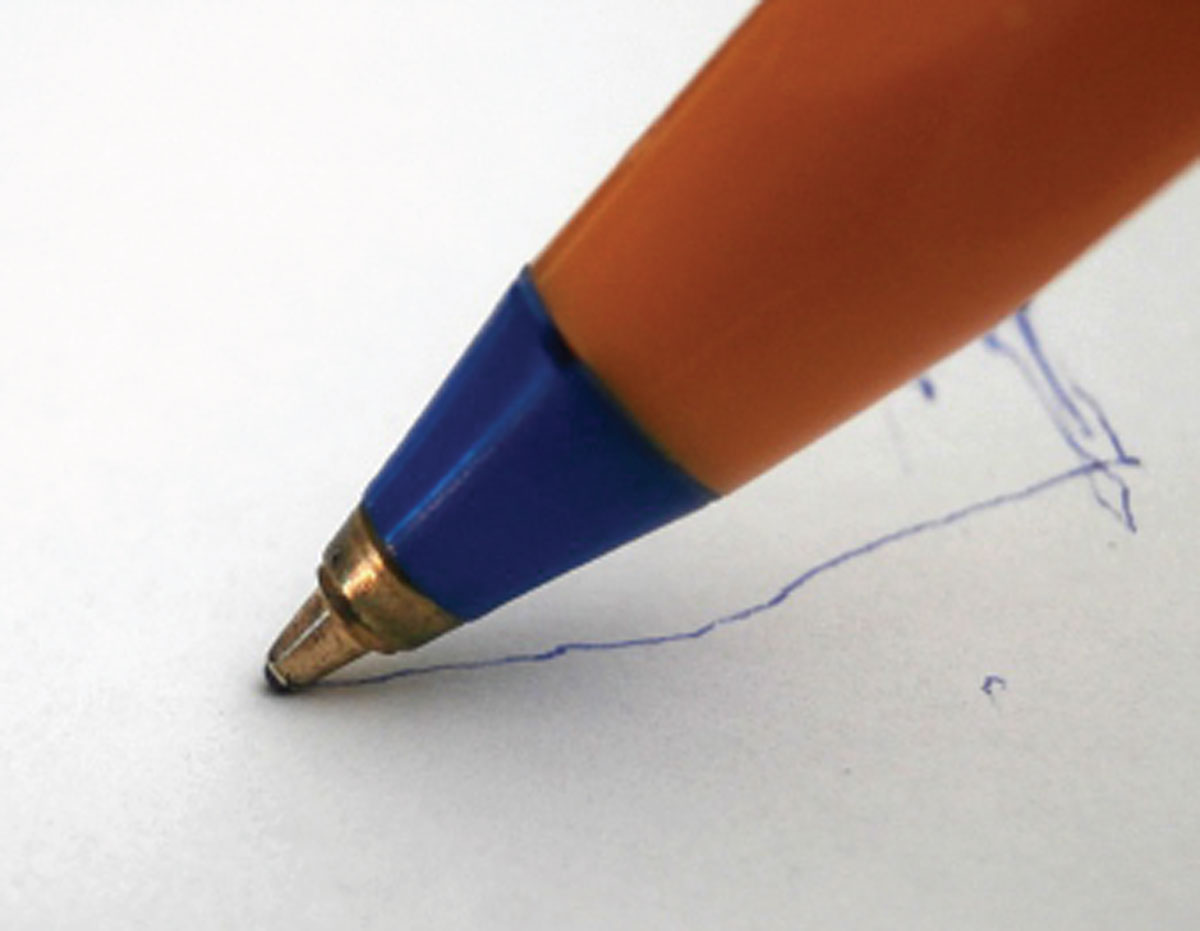
Figure 1
Ball point pen on paper with acute inclination.
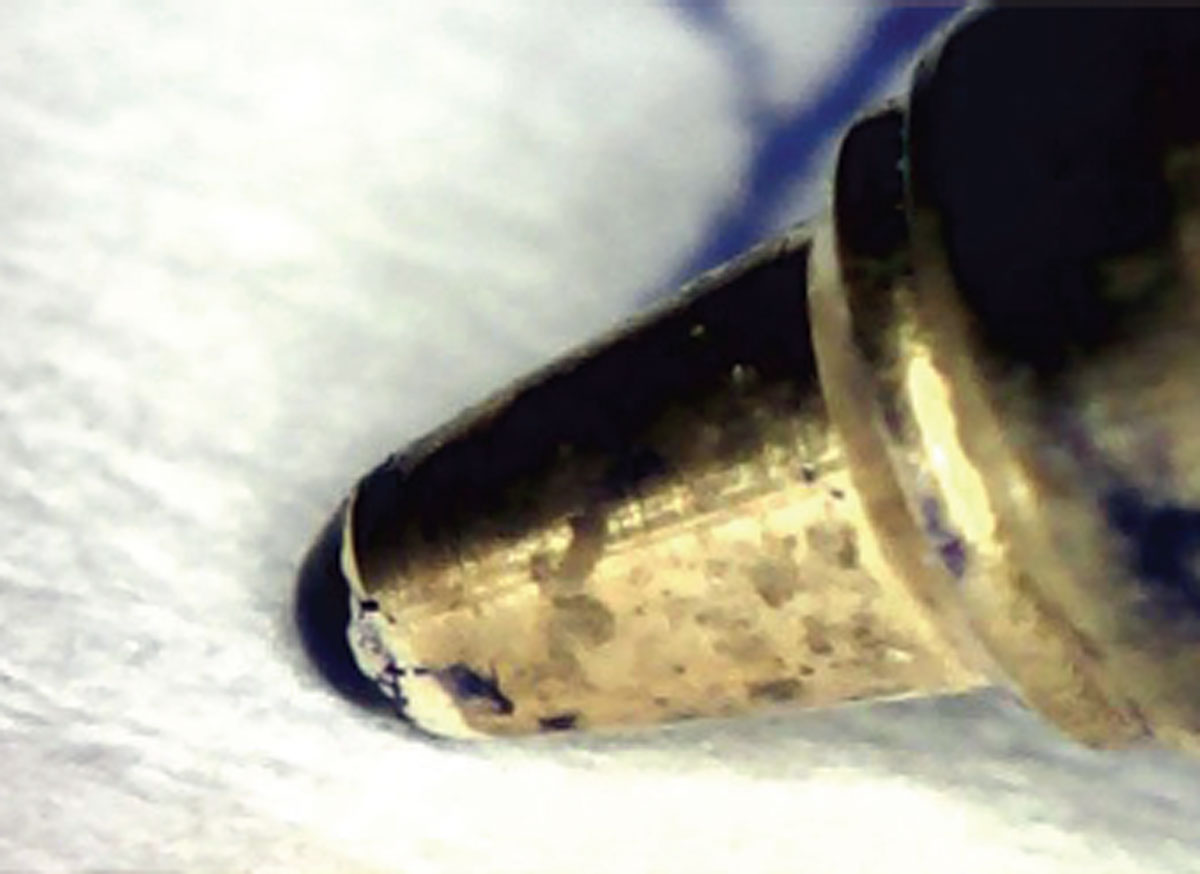
Figure 2
Micro-photograph of the same ball point pen.
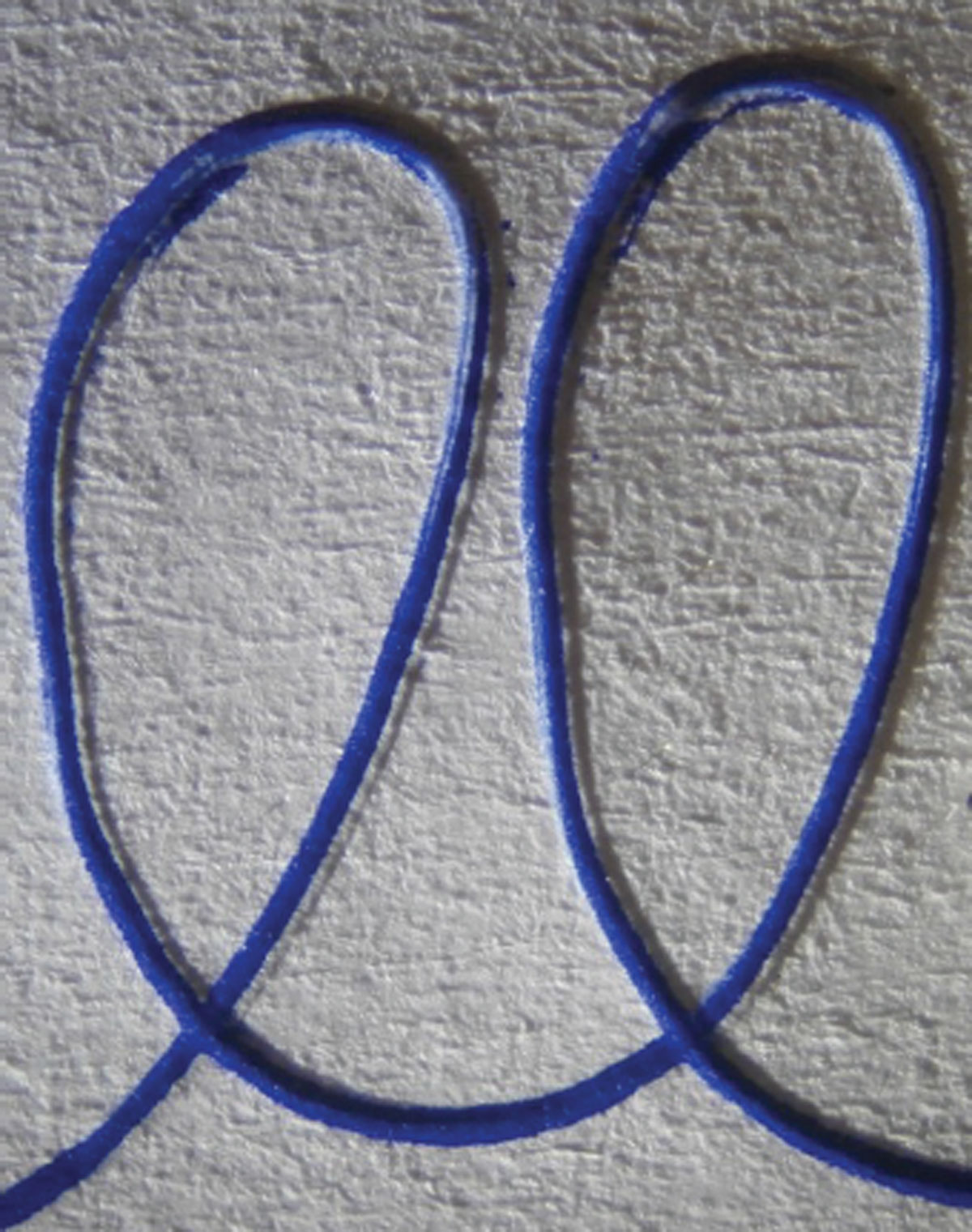
Figure 3
Microscopic examination of the writing line with inclination (10X).
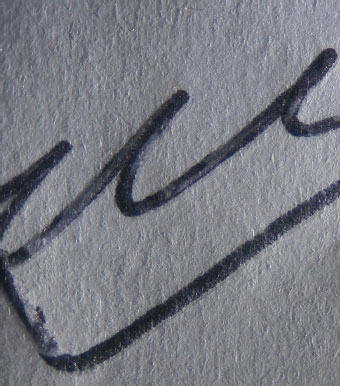
Figure 4
Microscopic examination of the inclination outline parallel to the inked line (black ball point pen).
Methods and Materials
Following an actual case, the author experimented by creating “forged” traced signatures, using the above indented line method. For comparison, experimental signatures were naturally executed with acute inclination using a ball point pen (Bic fine) on normal writing paper, A4 white paper (80gsm), placed on a soft writing substrate. By writing under intense inclination on a soft substrate, an indented impression was often created parallel to the inked line, as a “sister line”; this “sister line” has also been referred to in the literature [2].
Both sets of experimental signatures were examined under magnification and with side lighting. Line quality, classic indications of forgery, and the relationship of the inked line to the indented line were observed to determine which characteristics were indicative of a traced forgery and which of a signature naturally executed with acute inclination.
Results /Discussion
To confirm the forgery some writing features are observed, such as:
low line quality
low writing speed
lack of rhythm
hesitation by uncertain movement
patching and retouching
lack of natural shading
heavy stroke and lack of pen pressure variation
The absence of such features, in combination with the observation that the indented line is always at a fixed (parallel) distance from the inked line, indicates that this is due to the inclination of the writing instrument and does not confirm a tracing.
This acute inclination trace, caused by the housing of the ball of the ball point pen, moves along the inked trace and its distance is always within a small range (±0.2-0.3mm), approximately equal to the distance between the centre of the ball and the edge of the housing (Figure 5).
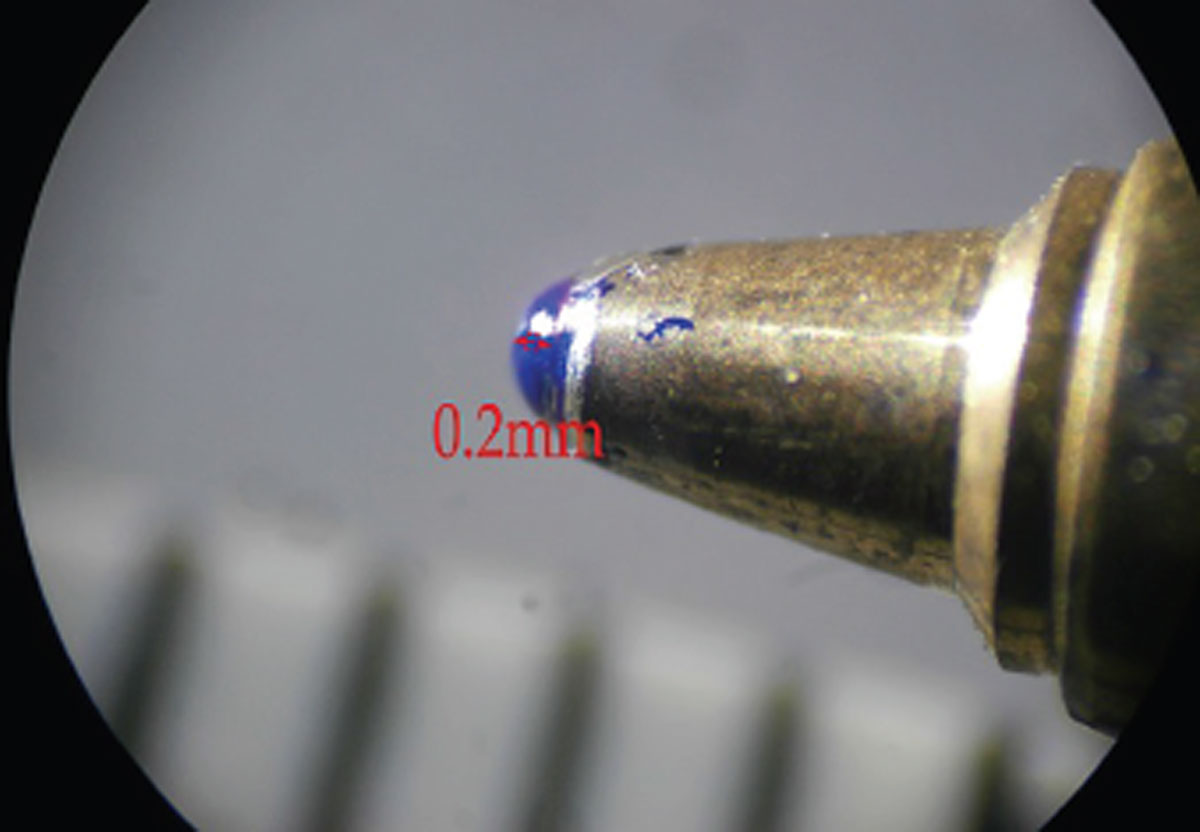
Figure 5
Distance of the ball of ball point pen from edge of the housing.
The softness of the writing substrate considerably affects the condition of the outline when writing under acute inclination, since the softer the writing surface the more the edge of the writing instrument penetrates paper. Thus the inked part of the writing instrument and the housing of the ball create double, parallel and uniform traces, the quality, shape and dimensions of which may differ (Figure 6).
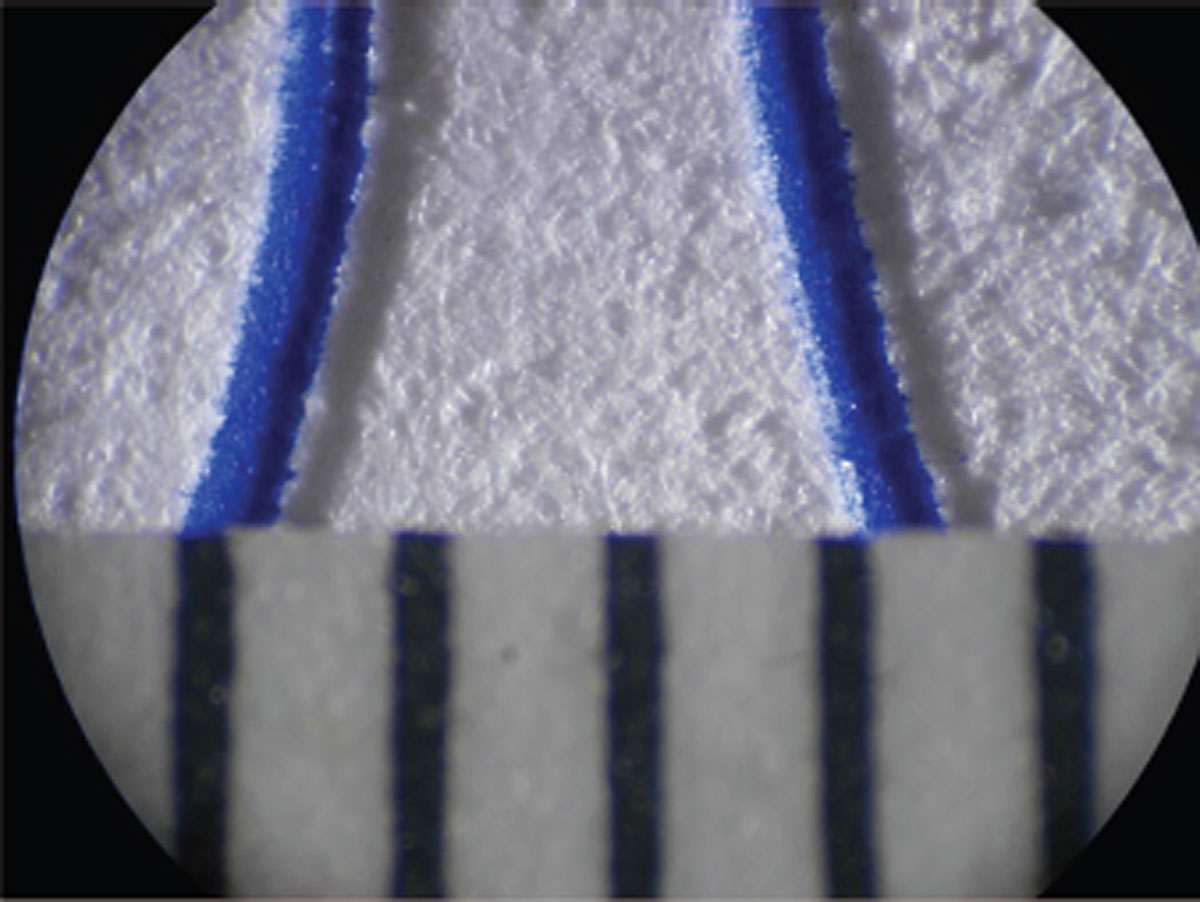
Figure 6
Microscopic examination of the outline, coming from the acute inclination on soft substrate.
Indented lines used as “guidelines” for forgeries are clearly different from indentations caused by the pen when held at a very acute angle. The “guidelines” do not maintain a parallel and uniform (or constant) distance trace from the inked trace sometimes they even are relatively far away from this trace and usually are accompanied by other indications of forgery (Figures 7 and 8).
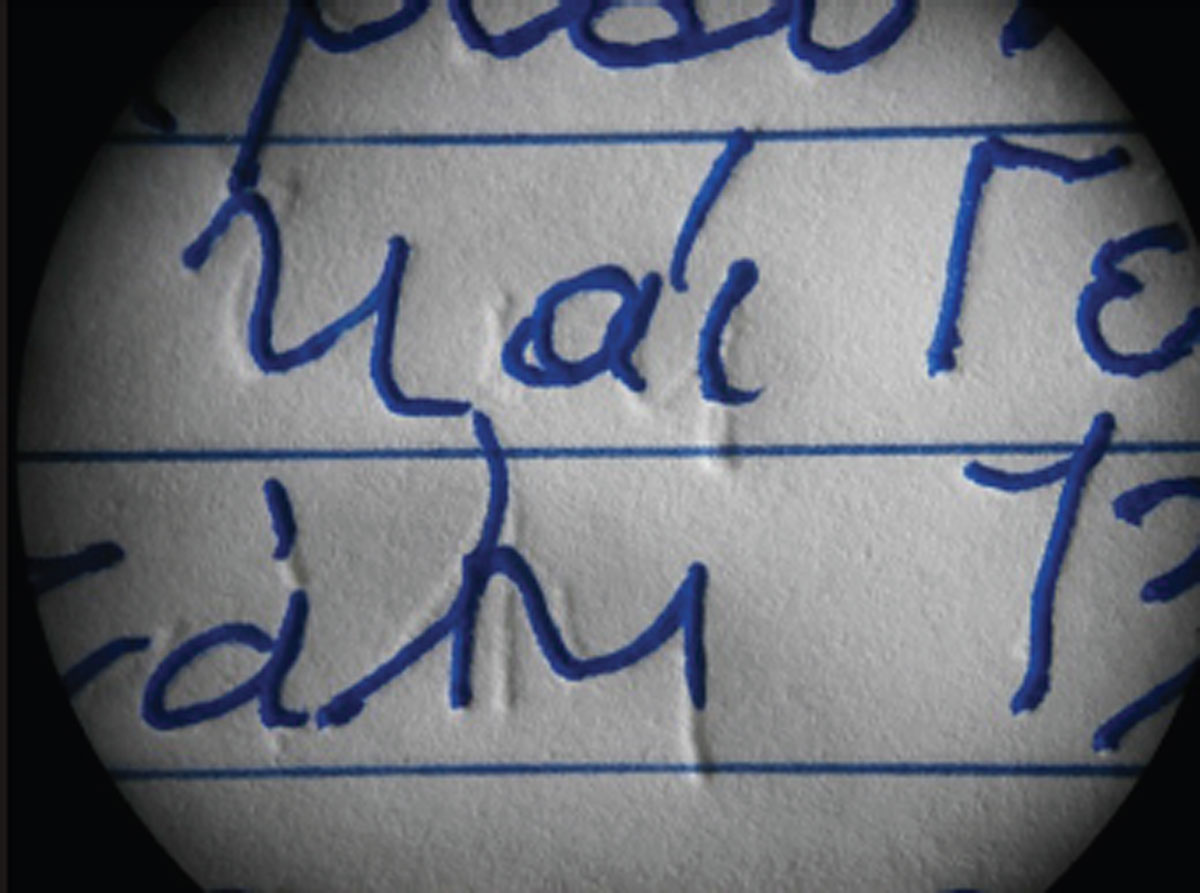
Figure 7
Tracing drawn outlines away from the inked line.
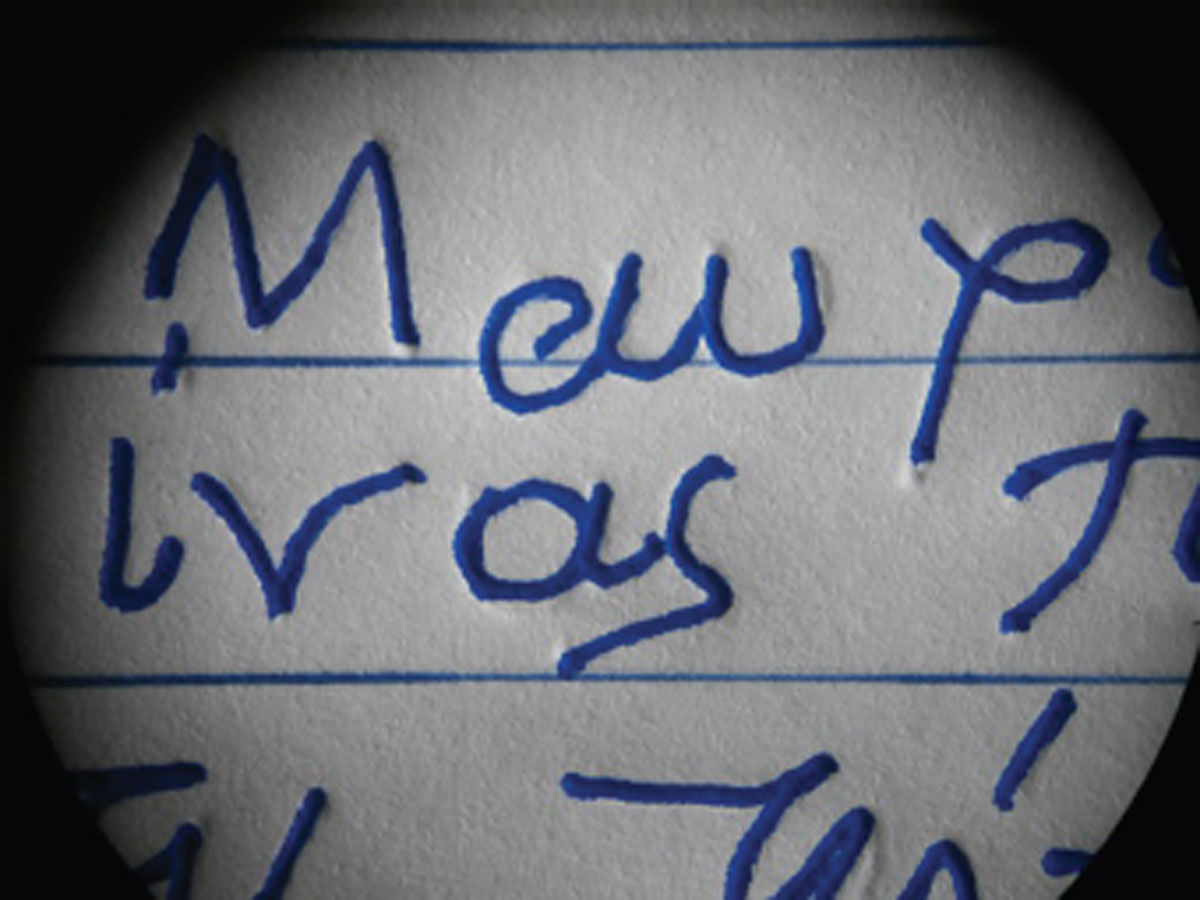
Figure 8
Tracing drawn outlines not parallel with the inked line.
In view of the above verification, any uninked indentations must be carefully examined, in combination with other writing features observed, before the FDE can conclude whether or not the specific indentations are a residual outline of forgery or have been caused by intense inclination of the writing instrument combined with a relatively soft writing substrate.
Some limitations were present with these tests as they were done with a limited number of pens and variety of papers on two kinds of desk pads, from leather and leatherette, which are common desk accessories. Further experimental evaluation with various types of writing instruments combined with different writing surfaces will provide verification of what traces are left under different conditions.
Notes
Acknowledgement
The Author acknowledges Mr. Wil Fagel for his helpful remarks and advice (Private FDE, Amsterdam, The Netherlands) and Mrs. Georgia Dutsu (Private FDE, Thessaloniki, Greece) for her review.