
Introduction
The first American patent for a paper shredder idea was submitted by Abbot A. Low in 1908 for his “Waste Paper Receptacle.” It was never manufactured [1]. Low was second only to Thomas Edison in the number of patents submitted by a single individual.
The first mechanical paper shredder was created by German Adolf Ehinger in 1935. As an anti-Nazi, Ehinger was confronted by German authorities when they found subversive literature in his trash. Inspired by the hand-cranked pasta machine (Figure 1), Ehinger’s paper shredder was manually operated. He later added an electric motor. He started his company, EBA Maschinenfabrik, and introduced the cross-cut paper shredder in 1959 [2].
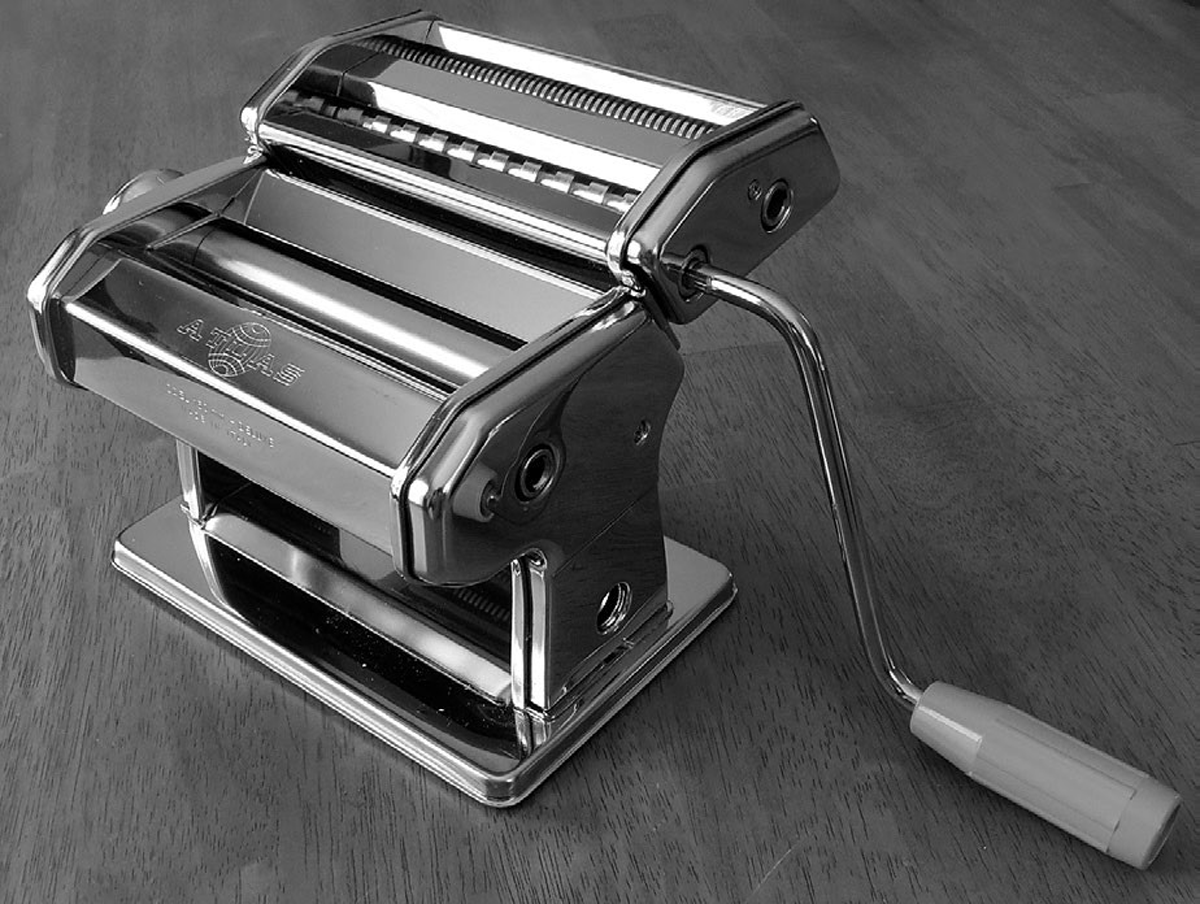
Figure 1
Hand-operated pasta making machine.
Paper shredders were used extensively by various governments during the cold war. In 1979, the American embassy in Iran was overrun by Iranian terrorists and all the shredded documents were seized. The Iranians enlisted Persian rug weavers to reconstruct the shredded documents and later published the reconstructed documents to the world. Subsequently, cross-cut shredders became very popular among US government agencies.
Paper shredding gained notoriety again in 1987 when Oliver North testified before the Congress about the Iran-Contra affair. North admitted that he and his secretary shredded numerous documents. Incidentally, North used a Schleicher Intimus 007 S cross-cut shredder, possibly influencing that company’s sales increase by about 20 % in 1987 [3].
The US Federal Trade Commission (FTC) estimates that millions of identity theft cases occur every year and recommends that individuals shred important and identifying documents before disposal [4]. Paper shredders have now become a common household appliance.
Types of Shredders
The diversity of shredder models on the market is extensive. They range from small, inexpensive household units, to heavier-duty office machines, to massive commercial units on trucks capable of shredding millions of documents an hour. Various manufacturers refer to the various types and grades of shredders by different names. The three most common shredder grades encountered in the forensic document examination arena are listed below.
Strip-cut shredders use rotating blades to cut documents into narrow strips of paper. These strips are as long as the paper being shredded and generally range from 1/16 inch to 1/8 inch in width (other sizes are possible) (Figure 2).
Cross-cut shredders use contra-rotating blades to cut documents into small pieces, generally smaller than one inch long and 1/8 inch wide. Also called a confetti shredder (Figure 3).
Micro-cut or High-security shredders reduce documents to tiny particles and dust, making manual reconstruction virtually impossible (Figure 4).
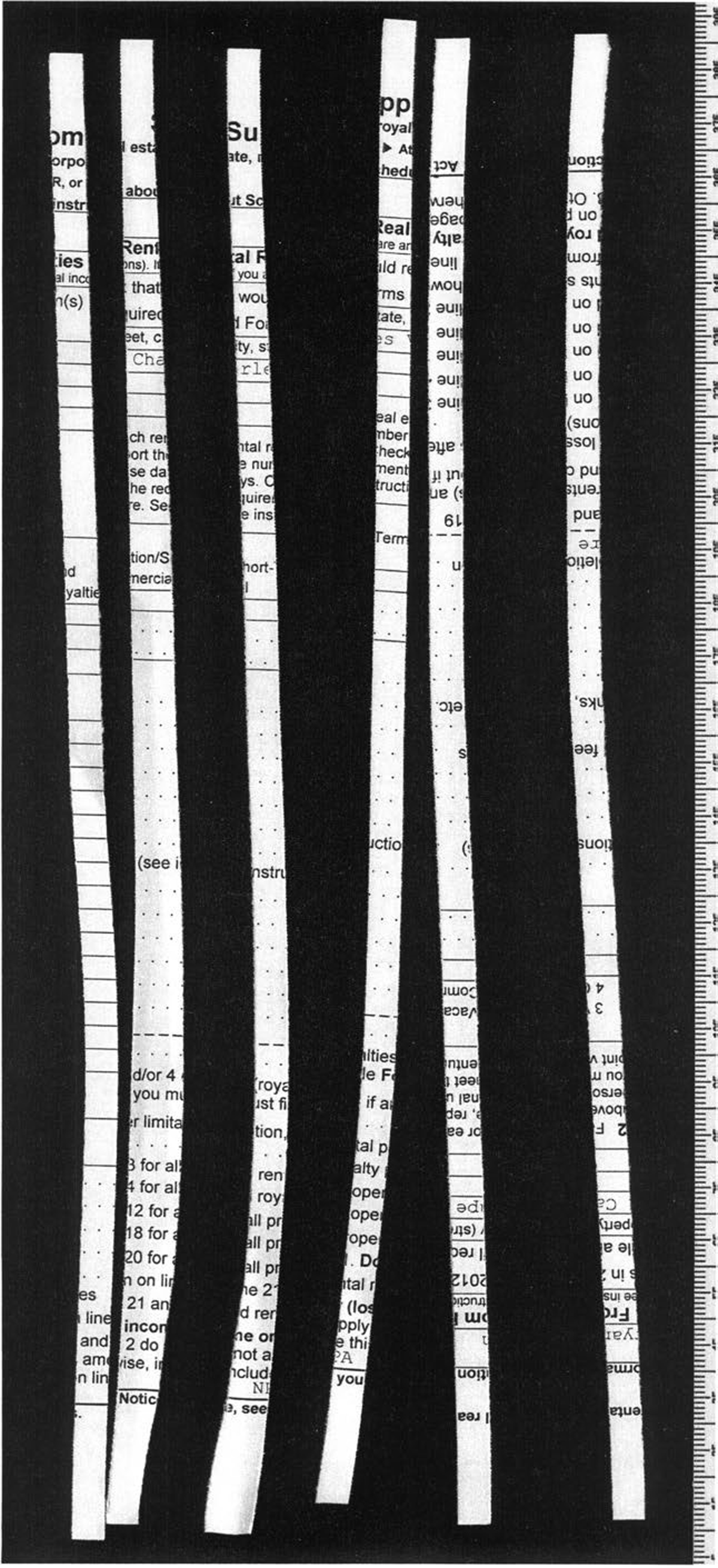
Figure 2
Strip-cut shredding.
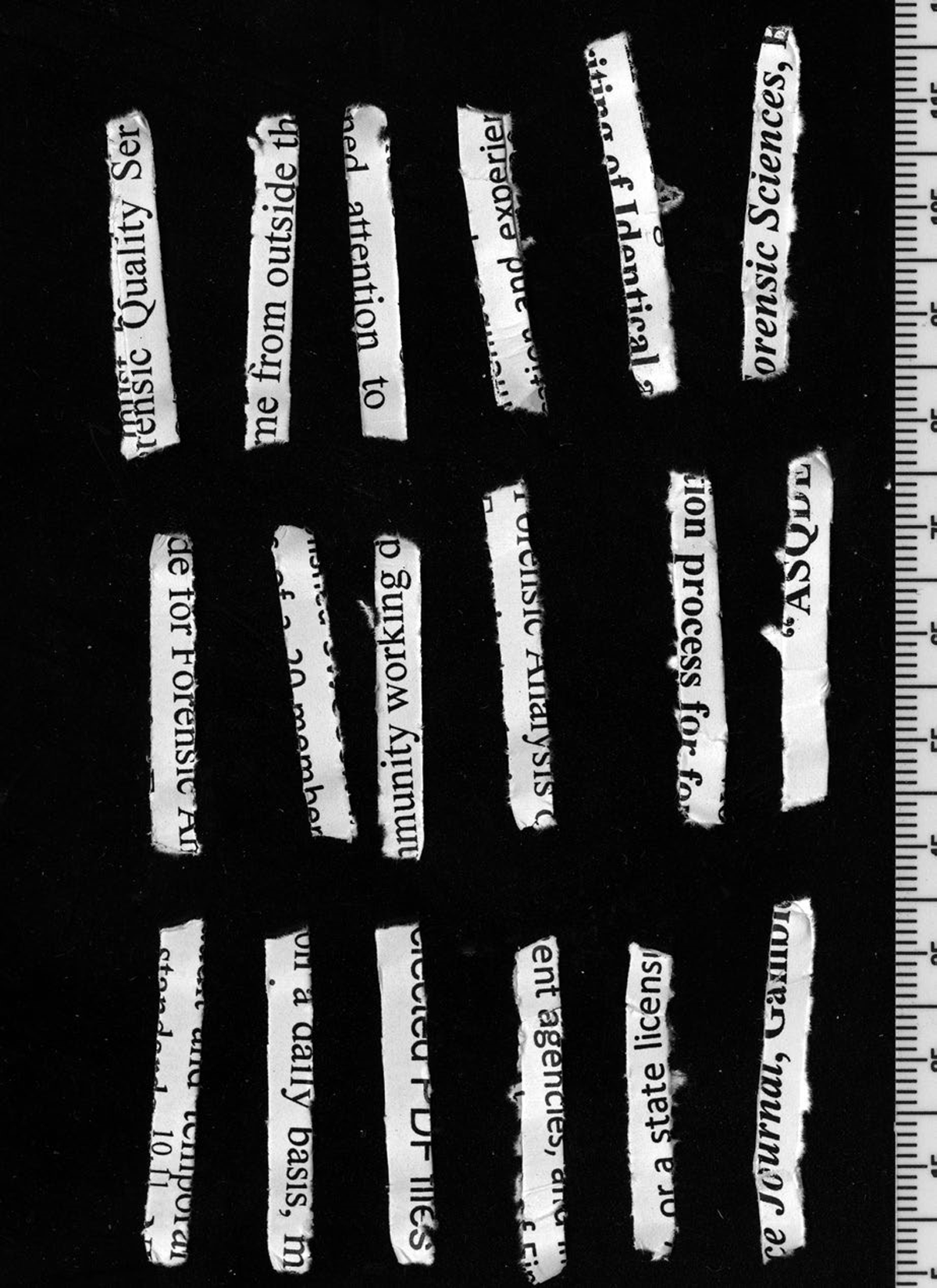
Figure 3
Cross-cut shredding.
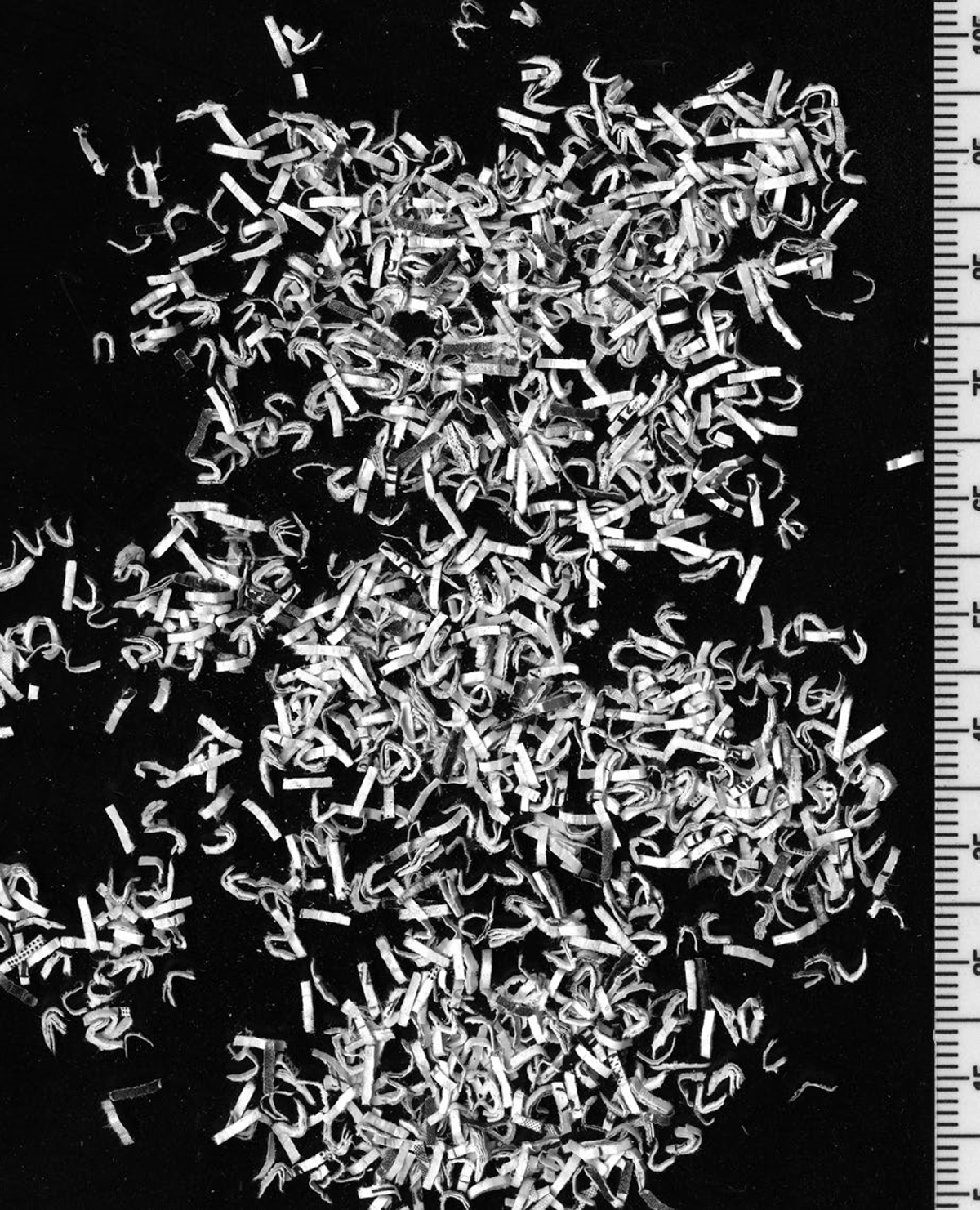
Figure 4
Micro-cut shredding.
Methods and Materials
Research of papers on this topic identified works by Schuetzner & Comella [5], Vail [6], Brassil [7] and Olson [8]. Brassil [7] addressed the identification of a particular shredding machine based on blade defects. Vail [6] and Olson [8] dealt with the procedure of document reconstruction. Their techniques of employing glue, glass or acetate sheets, pins, and cellophane tape to manually reconstruct shredded documents are sound. Another method is discussed here.
Experimentation over several years at the Army laboratory has produced a useful protocol to deal with these cases. Recommended equipment includes:
Foam board (various sizes)
Low-tack/high-tack, double-sided adhesive sheeting (3M 9415PC) (Figure 5)
Scalpels
Tweezers
ESDA adhesive lifters (or other transparent adhesive film at least 11”x17”)
Large sheets of transparent polymer film
Ultraviolet (UV) light source
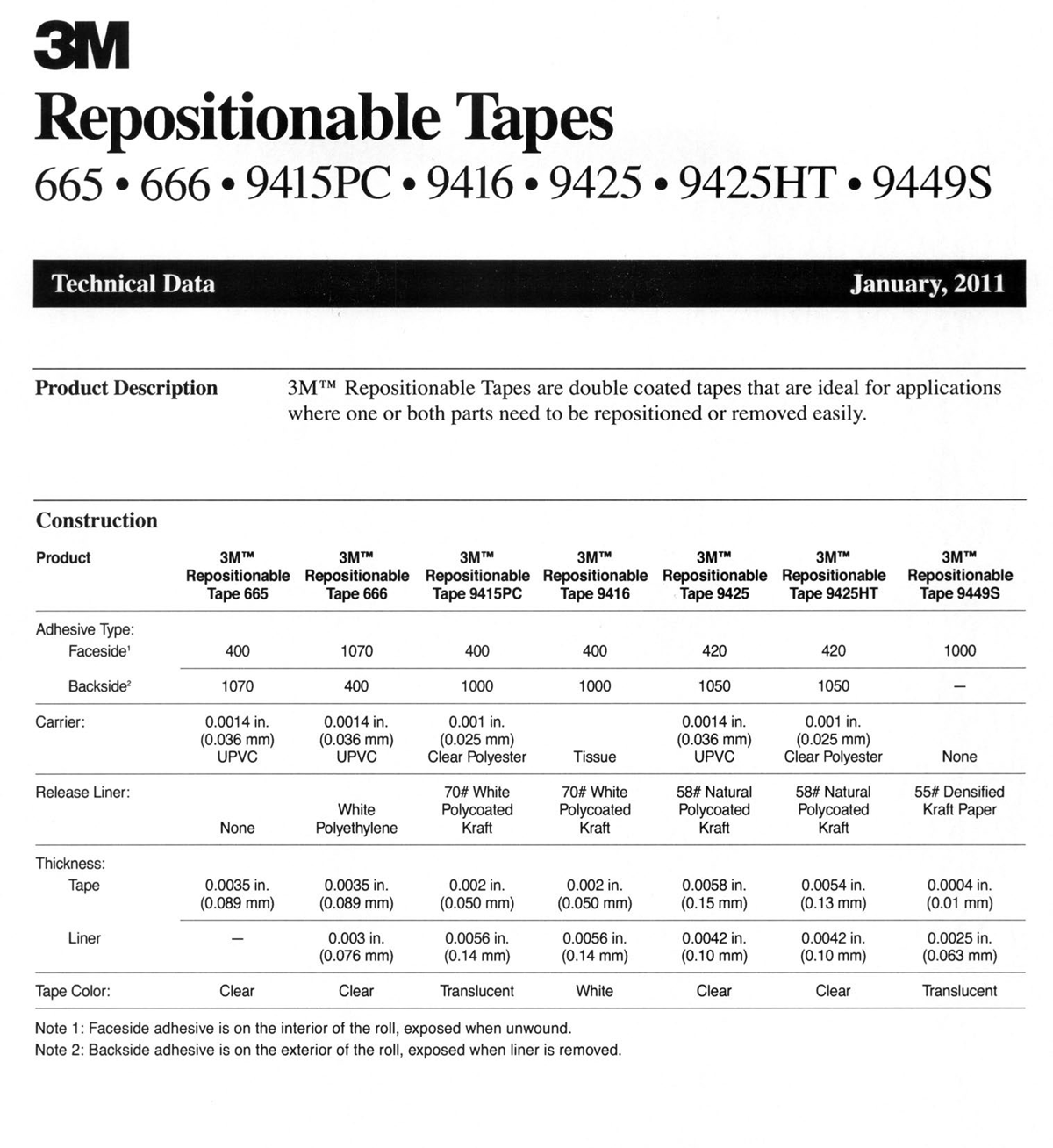
Figure 5
3M data sheet.
Investigators collecting and handling shredded documents should be advised to immobilize (prevent shifting) the shredded material as much as possible. This is to keep the multiple shredded pieces of each document close together. Keeping parts of the same documents closer together makes reconstruction much easier. All handling of the shredded material should minimize disturbance of the shredded material layers.
In preparation for reconstruction, affix pieces of the low-tack/high-tack, double-sided adhesive sheets to pieces of foam board, with the high-tack side down and the low-tack side facing up (Figure 6). Several boards should be prepared and placed in a large open area for the duration of the reconstruction effort. The low-tack/high-tack, doublesided adhesive sheeting can be ordered in rolls at varied widths and is an ideal adhesive to stabilize shreds during reassembly.
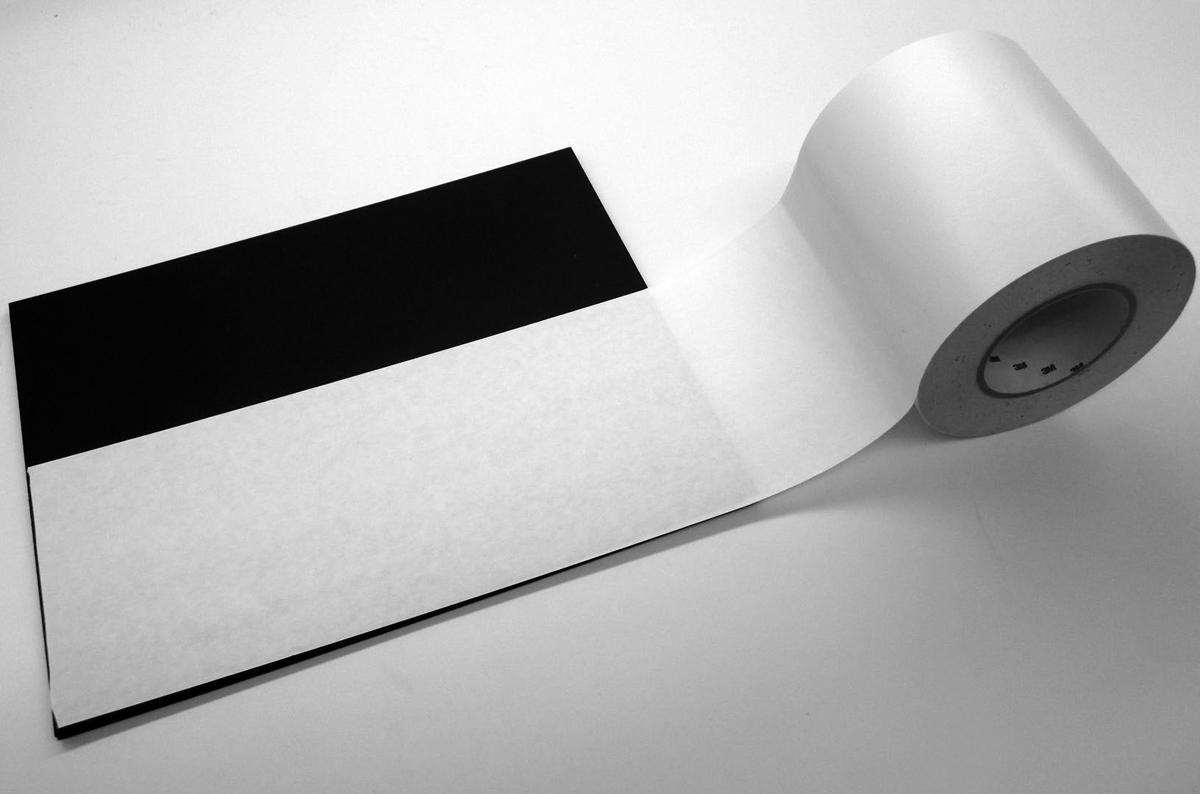
Figure 6
Applying 3M low-tack/high-tack tape to form board.
Preliminary examination of the shredded material should involve an attempt to sort the paper into like groups. Distinguishable features for consideration during sorting include [5]:
Paper color
Size
Texture
Paper with printed lines
Images (pictures, frames, etc.)
Strips having entries on one or both sides
Handwriting
Fonts
Other common non-document trash materials should be extracted for return to the submitter as appropriate. Initial coordination with submitters should also determine if all the shredded material needs to be reconstructed. If only certain documents are needed, the submitter should provide samples of the target documents for reference during the reconstruction process.
Shredded pieces are manually positioned on the low-tack adhesive surfaces on the foam board (Figure 7). The low-tack adhesive permits the pieces to be moved as needed, with little or no damage. As the shredded pieces are laid out flat on the foam board, associations begin for document reassembly (Figure 8). As more documents are reassembled, more foam board will generally be needed.
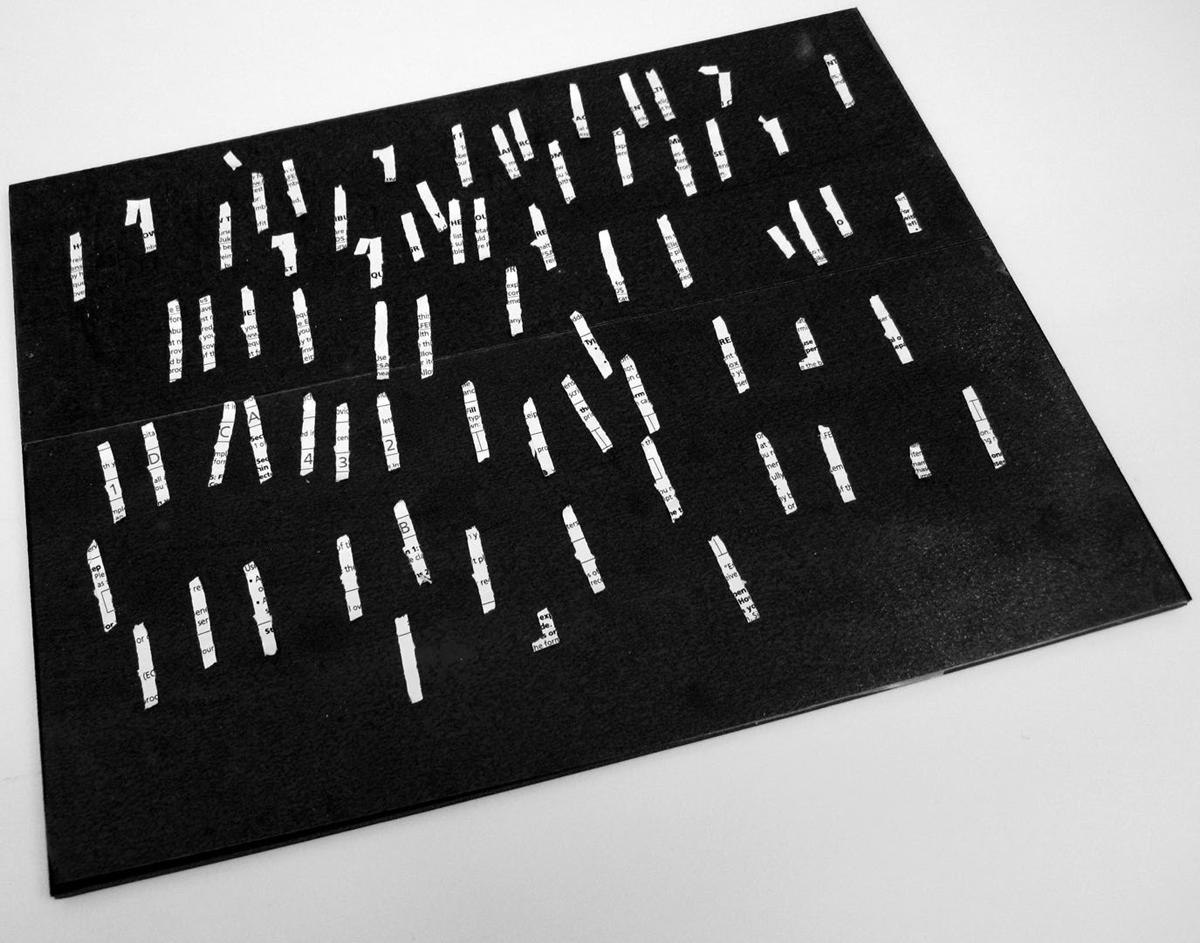
Figure 7
Cross-cut shreds applied to the low-tack/high-tack tape.
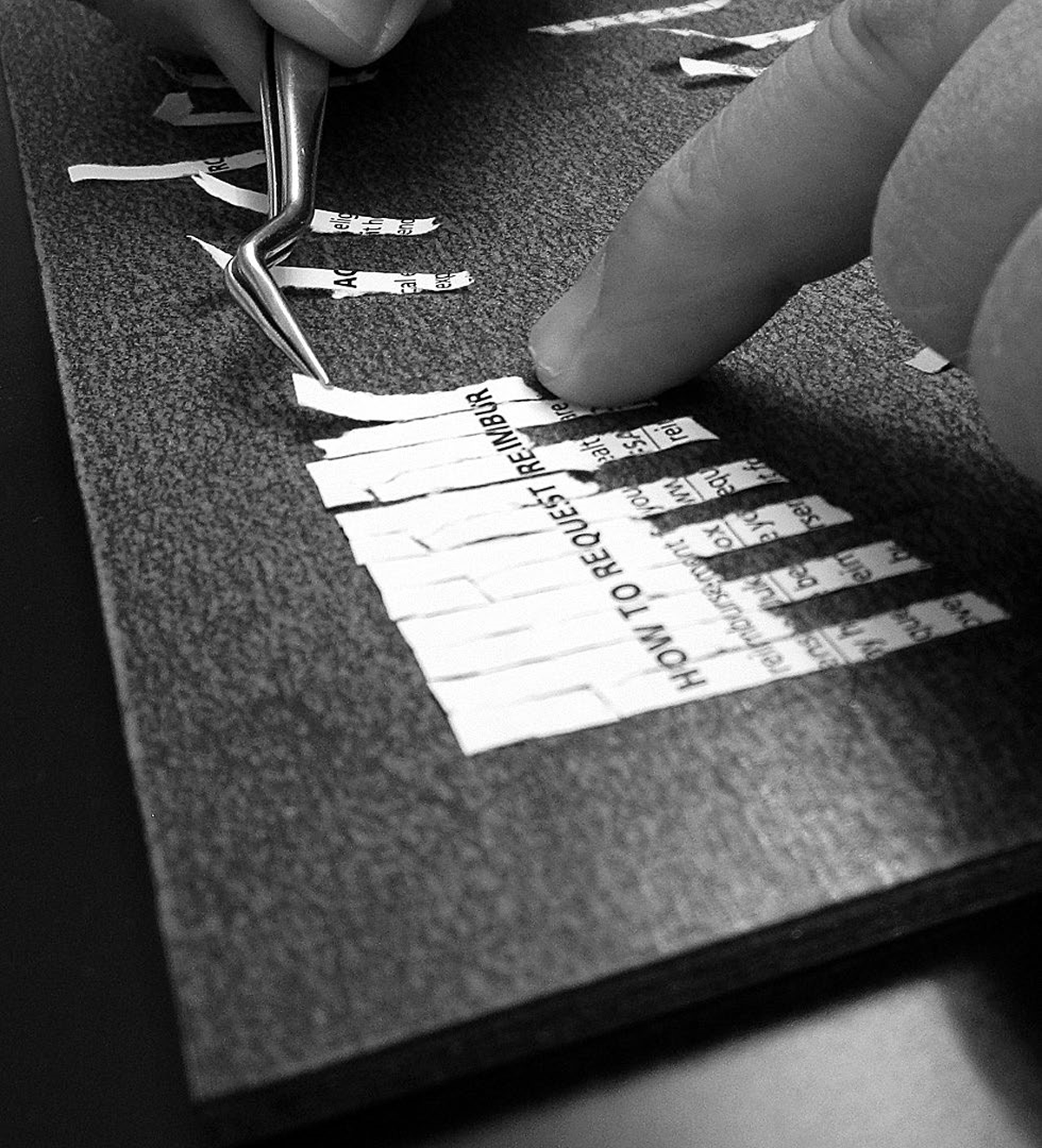
Figure 8
Shred assembly.
UV light can help distinguish different papers that otherwise look the same with the naked eye. A portable UV source works best, since the foam board is too large for most table top UV instruments.
Cases involving several copies of similar documents are more difficult. When there are only slight differences in the shredded pieces of similar documents, constant reassessment and reassembly may be needed. A scalpel and/or tweezers can assist in the repeated placing, removal and reaffixing of the shredded papers.
Shredder “jams” are common and can produce mangled, irregular shapes (Figure 9). The angle at which paper is placed into a shredder, and the condition of the paper prior to shredding, can both produce irregular shredded pieces.
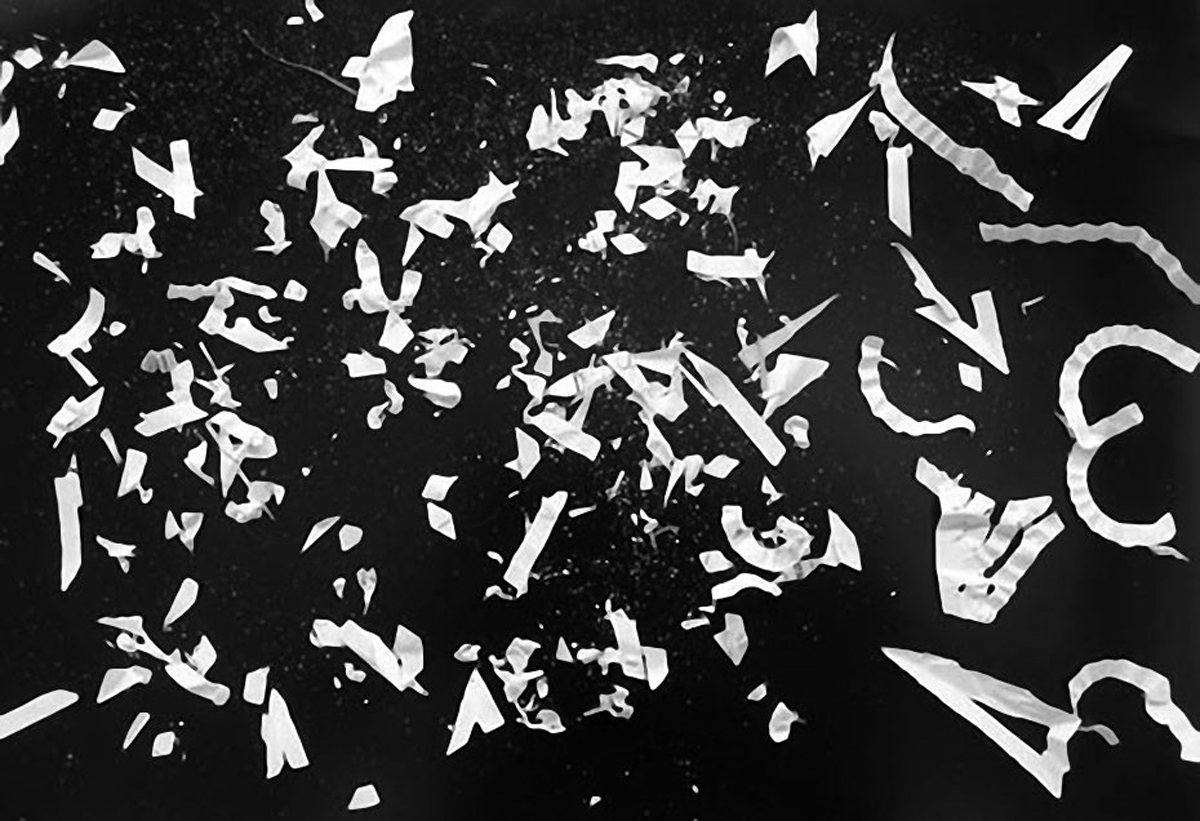
Figure 9
Debris caused from a defective strip shredder.
The reconstruction of irregular shredded pieces can be much more difficult than straight strips. Cross-cut shredded documents also create a great challenge. Care must be given to not disregard those very small pieces of paper debris on the bottom of evidence containers. The last piece of a document is sometimes hidden in these remains.
When reconstruction of a document is completed (which can involve only partial reconstruction), the pieces for each document can be transferred from the foam board onto a sheet of transparent film that has been covered with the low-tack/high-tack, double-sided adhesive sheets in a fashion similar to the foam board. After transferring the shredded pieces to the adhesive surface of the transparent film, cover the face of each reconstructed document with a piece of ESDA adhesive film. Both sides of the document are then visible. Variations of this procedure may be used as appropriate. Cutting foam board pieces apart that hold respective reconstructed documents can eliminate the step involving transferring reconstructed documents to transparent sheets when access to the back of reconstructed documents is not required. Not sealing the reconstructed documents in ESDA adhesive film may be appropriate as the lamination process can be permanent.
Conclusion
Some Federal agencies have automated systems that reconstruct shredded documents. All shredded material is scanned and a computer assists putting the puzzle together. Not everyone has access to this technology, however, and will have to do it the old-fashioned, manual way. Though shredded document reconstruction is a tedious job, the equipment and systematic approach detailed here can make the job easier.
Notes
[1] Paper was originally prepared for presentation at the Annual Meeting of the Southeastern Association of Forensic Document Examiners (SAFDE), Peachtree City, GA, 17 April 2008. The information was brought up to date, although the procedure is virtually the same.