
Introduction
The Energy Efficiency Directive (EED) recast has recently been transposed into national legislation by 18 Member States (MS) of the European Union (EU) (ManagEnergy, 2025). However, the actual implementation of Energy Efficiency (EE) across major sectors is reportedly lagging, with targets far below the set goals. For instance, in the building sector, the annual rate of deep renovations remains at just 0.1% (European Commission, 2020). The European Commission’s (EC) 2024 “Impact Assessment Report”, which explores different greenhouse gas emissions (GHG) reduction pathways, discusses representative scenarios in which final energy consumption for heating in buildings is projected to decrease by one-third in 2030, and by 51% in 2050 (European Commission, 2024). The current and projected rates indicate slow renovation progress, failing to meet the Renovation Wave target of reducing GHG from buildings by 60% by 2030, relative to 2015 levels (ECNO, 2024).
Considering the EU’s long-term planning delays towards carbon neutrality, the EC underscores the need to boost capacity-building to support policy development and the incorporation of the EE1st principle and its multiple impacts (MI) (Europa.eu, 2024). Capacity-building to develop expertise in the management and implementation of EE requires a comprehensive approach. This is essential for fostering a sustainable society and promoting social change (Virtic & Kovacic-Lukman, 2018; Jennings, 2009). A deep understanding of EE MI is crucial for achieving energy savings goals (Pantovic & Petrovic-Becirovic, 2016). Simultaneously, fostering epistemic policy-learning among authorities and market actors is a key pathway for mobilising financing and investment planning for EE initiatives (von Malmborg, 2024).
This paper discusses how capacity-building activities that aim to enhance understanding and measurement of EE MI can enable alignment with national, regional, and local planning visions, while identifying and addressing barriers in policy-making. The paper is structured as follows: First, an overview of existing EU capacity-building initiatives is provided, where identified gaps are highlighted. Next, a conceptual framework on capacity-building is introduced, framing it as the vehicle for discourse among the planning milieus. The results presented are derived from qualitative data collected during training sessions on the use of an MI assessment tool and focus on the planning goals and barriers reported by participants from different MSs. These are followed by a discussion on how capacity-building bridges EE-planning gaps nationally and cross-nationally, including reflections on its incremental role within planning systems. The findings inform a series of recommendations on the future of capacity-building towards EE in the EU, underlining the need for greater systematisation, institutionalisation, continuity, contextualisation, and silo-breaking.
Capacity-building initiatives for EE planning across the EU
Several EU initiatives have promoted capacity-building activities of the EED transposition. The Concerted Action (CA EED, 2022) fosters capacity-building for EU stakeholders engaged in energy planning through thematic workshops, peer-learning events, and webinars. It focuses on EE obligations, metering, monitoring, and sharing best practices among national experts. The European Commission’s Joint Research Centre (JRC) designed the initiative “Work with Evidence” to improve policymakers’ competence in evidence-informed policymaking (European Commission, 2025). Capacity-building on financing and cost-efficiency is promoted through the European Energy Efficiency Financing Coalition (DG ENER, 2026), which targets and bridges financial institutions and companies to enable EE investments.
ManagEnergy Masterclass (2026) focuses on sustainable energy investments, project scaling, and advancing energy communities through energy management seminars. EU-Peers (2026) builds a Community of Practice across nine priority EU MSs, promoting integrated home renovation services and One-Stop Shops (OSS) to speed EE integration in building renovation.
EUKI Academy (2026) builds capacity for public authorities, energy agencies, and NGOs across EU MSs, supporting climate action plans, energy and climate roadmaps, and renovation strategies within EE frameworks. The European City Facility (EUCF, 2026) helps local public bodies develop investment concepts, implement EE measures and climate plans, access funding, and receive technical support. EU vocational training initiatives for EE and RES expertise in the workforce have also been launched (COVE (2026), BUILD UP (2026a)) to boost EE integration at the implementation stage.
Capacity-building for planners is promoted through EU-funded projects. SPARKLE (2026) offers in-person sessions for EU stakeholders, focusing on fossil-free districts, community energy, sustainable food systems, and resource-efficient economies, while mentoring for the preparation of Sustainable Energy and Climate Action Plans (SECAPs). In Austria, IncorporatEE (SanierungsPLUS, 2026) supports municipal staff and planners with training on energy performance quality assurance in renovations.
The BUSHROSS project (Sofia Energy Centre, 2025) supports Bulgarian authorities and energy agencies in establishing OSS for residential energy refurbishment. LIFE PLAN4COLD (2026) helps Croatia, Greece, and Portugal design and implement Sustainable Heating and Cooling Plans through targeted training. IN-PLAN (FEDARENE, 2026) advances EE planning via train-the-trainer approaches. Enefirst+ (IEECP, 2026) delivers training in Croatia, Poland, and Greece for EE integration in SECAPs, cost-benefit analysis (CBA), and investment strategies.
Easy Energy (Interreg Baltic Sea Region, 2025) helps Polish municipalities and businesses cut energy use in existing buildings and trains practitioners in low-cost EE-oriented solutions. In Spain, LOGREENER (Nicolau, 2025) promotes cross-sectoral EE planning for local strategies, including SME-focused training.
Despite the plethora of EU capacity-building initiatives for energy planners, several challenges persist. Programs are often disrupted, ending once funding or the initiative concludes. Pre-designed training formats may not adapt to national planners’ needs or planning gaps. Top-down structures may also lack iteration and feedback, limit adaptation and contributing to fragmented skills and competencies.
While understanding MI requires cross-sectoral approaches, many programs are siloed and often unknown to local governments (Salvia et al., 2021). Professional EE capacity-building lacks uniformity, while utilisation is limited, with specialised curricula reaching only certain sector actors (Alhamami et al., 2020). Consequently, planning obstacles persist, including a dearth of data, skills, and effective administration (Herrando et al., 2022).
Considering the detected gaps in the established EU-initiated capacity-building activities on EE and MI, we formulate the following research question: In what ways can capacity-building initiatives aimed at capturing and quantifying the MI of EE contribute to bridging EE planning gaps across the EU? This study examines how capacity-building activities can support EU planners in integrating EE and its MI into policy and investment planning, thereby helping to overcome persistent planning barriers. To achieve responding to the research question, two preliminary questions were formulated: i) What are the EE planning goals of EU countries?, and ii) What are the EE planning barriers of EU countries? The responses to these initial questions lay the groundwork for understanding the context, goals, barriers, and needs of EU planners, which, in practice, capacity-building activities should address. The analysis draws on insights generated through training activities organised within the SEED MICAT project (2023) on the use of the Multiple Impacts Assessment Tool (MICATool).
The SEED MICAT Project and the MICATool
The EU-funded SEED MICAT (2023) project supports stakeholders engaged with policymaking in integrating the MI of EE into investment and policy assessments, advancing the EE1st principle in energy planning. Its core tool, the MICATool, enables policy scenarios comparisons, analysis of EE measures energy savings, quantification and monetisation of MI across planning sectors, and comprehensive CBAs.
The tool’s use requires users to first input their estimates on energy savings expected from measures (Figure 1), serving as the basis for assessing the social, environmental, and economic impacts across sectors, including industry, residential, transportation, and agriculture (Figure 2). In parallel, the tool’s connection to readily available datasets on EU policy measures and energy savings enables assessments to be complemented and validated using online databases, such as ODYSSEE-MURE (ODYSSEE, 2026).
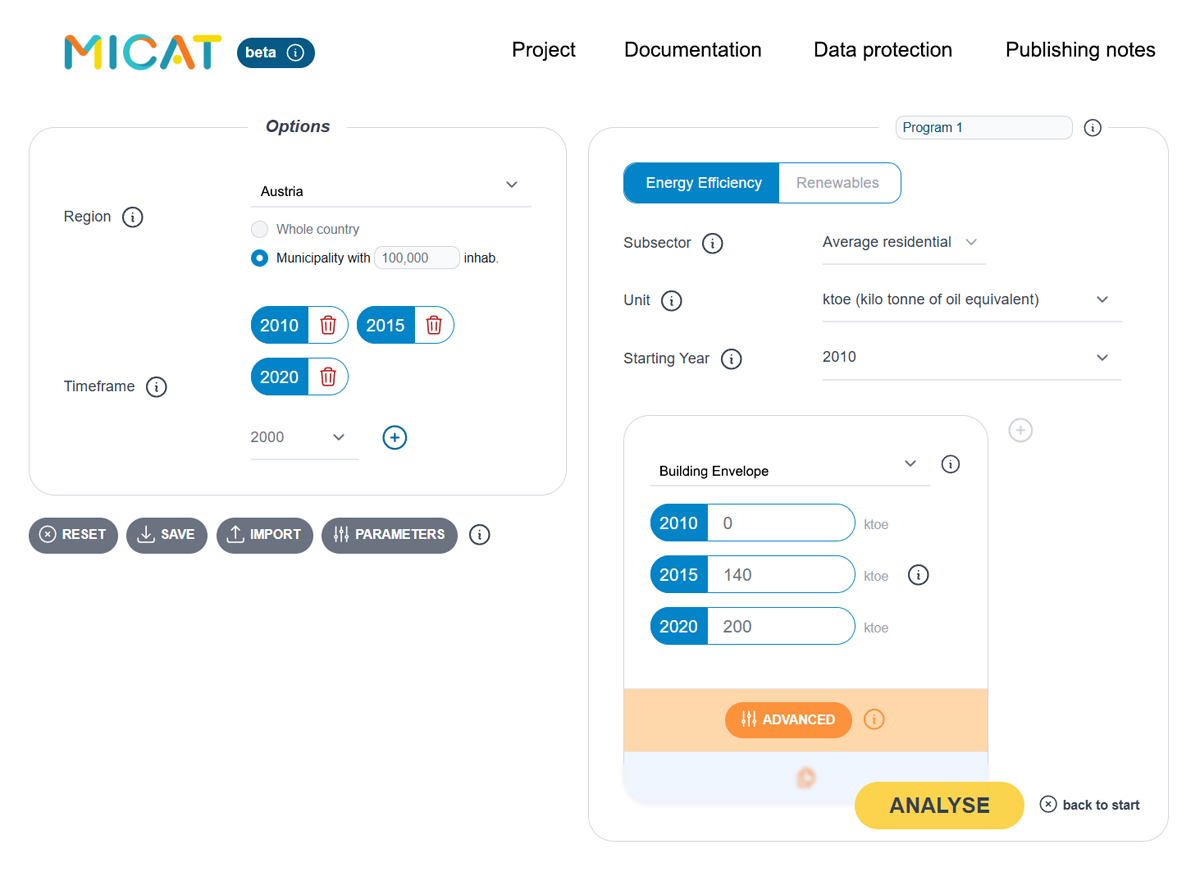
Figure 1
The “input page” of the MICATool: The user can enter data on energy savings to assess the MI of selected EE measures. (Edited by the authors).
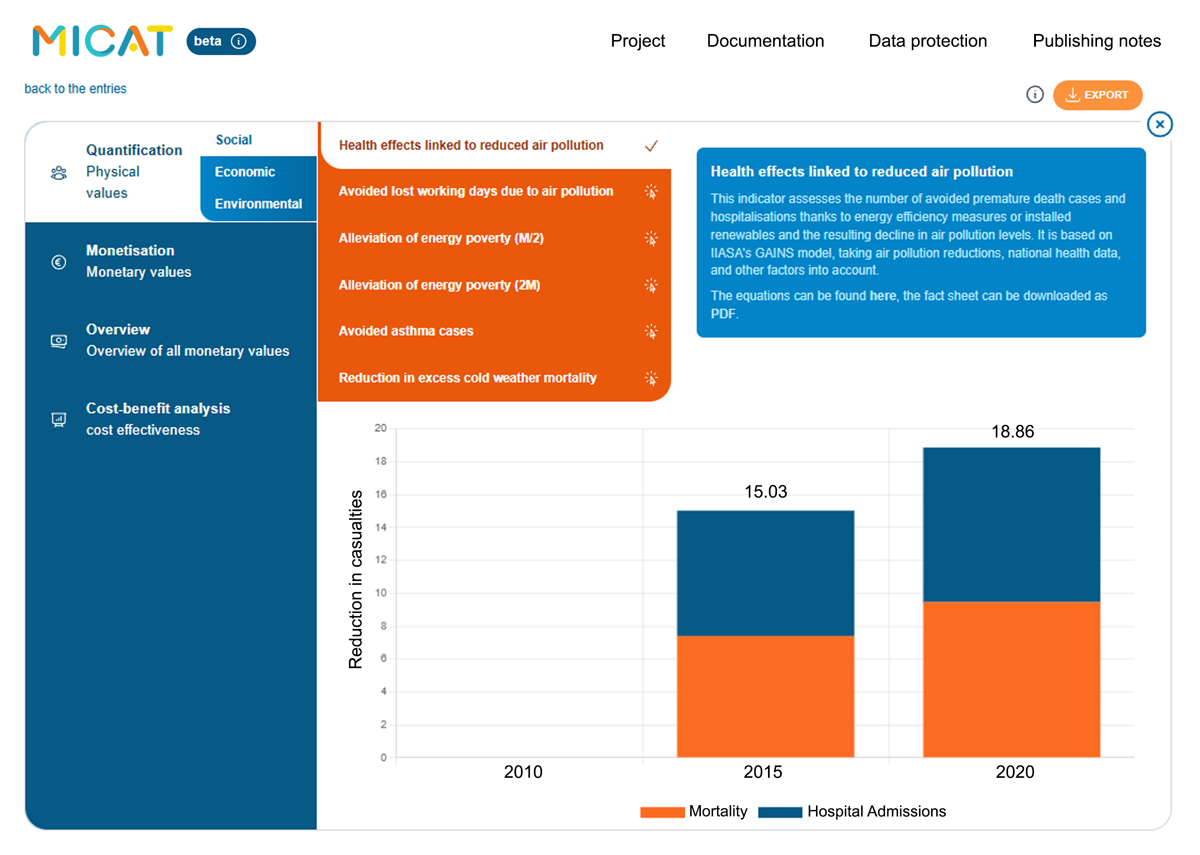
Figure 2
The “results page” of the MICATool: The quantification, monetisation and CBA of MI delivered for the various indicators are accompanied by graphs. (Edited by the authors).
Methodology
Conceptual framework
To establish the methodological approach for assessing the value and relevance of capacity-building in EE planning, we conceptualise the planning practice as a system of activities. Accordingly, we draw on the Driving Force–State–Response (DSR) framework for sustainable planning, developed by the United Nations Commission on Sustainable Development (UNCSD). This framework provides a consistent set of indicators for assessing progress toward a sustainable energy future (Meyar-Naimi & Vaez-Zadeh, 2012).
The DSR framework, employed initially in the domains of agriculture (Parris, 1996) and land use management (Yu et al., 2003), entails three tenets: the “Driving Force”, referring to human activities affecting the sustainability of a system; the “State” describing the planning system’s conditions (e.g., economy, natural resources); and the “Responses”, encompassing policy actions, and behavioral reactions. As Meyar-Naimi & Vaez-Zadeh (2012) argue, the DSR framework was further reinforced through the development of a set of Indicators for Sustainable Energy Development (ISED), by the International Atomic Energy Agency (IAEA, 2005) (Figure 3). These indicators – spanning social, economic, and environmental dimensions – provide a holistic framework for sustainable development, by capturing the multiple domains affected by planning activities.
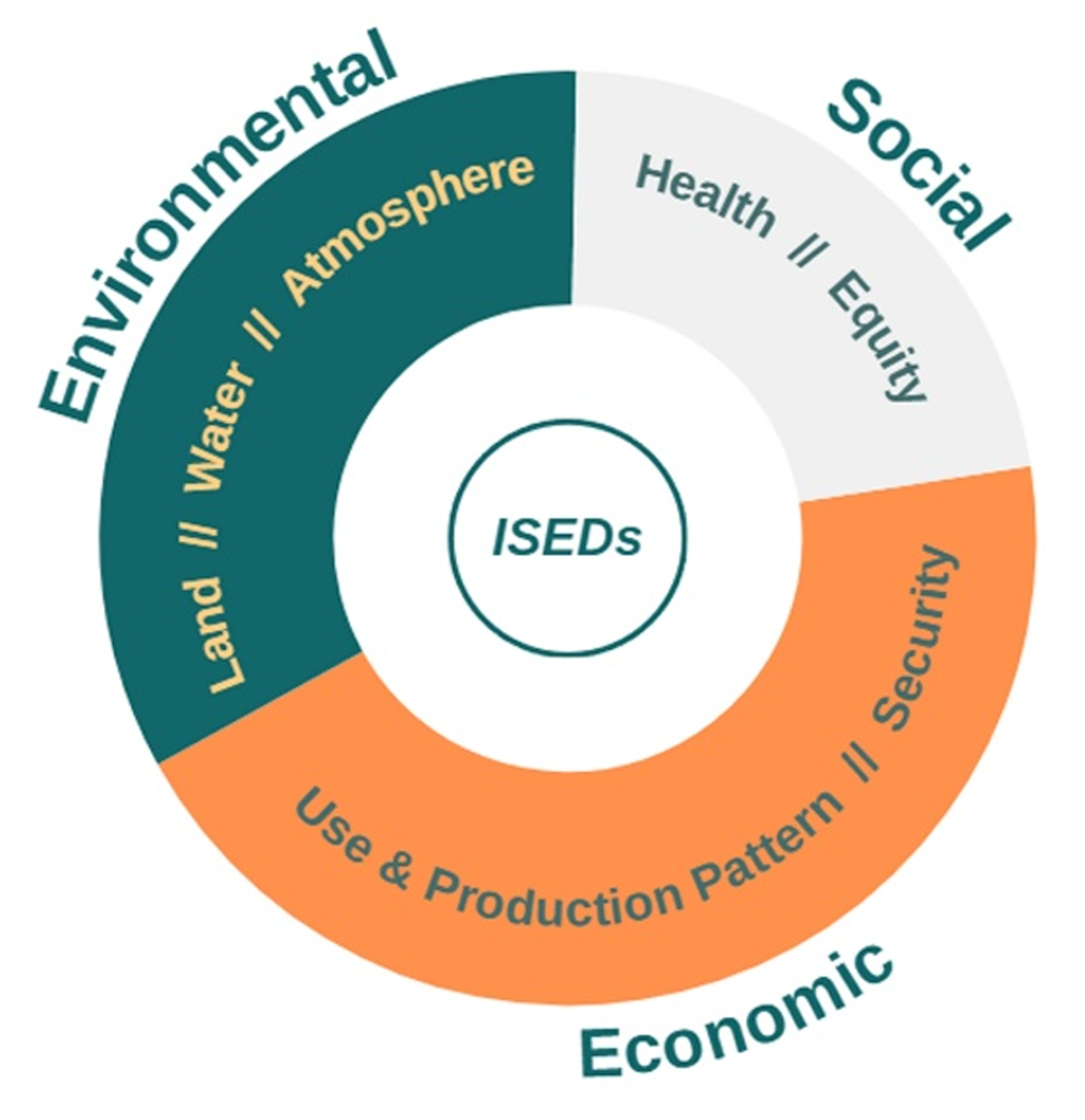
Figure 3
Indicators for Sustainable Energy Development (ISED) by IAEA – modified from (Meyar-Naimi & Vaez-Zadeh, 2012).
The DSR framework, combined with the ISED indicators, allows us to comprehensively “map” contextual status-quo or “State” across the economic, environmental, and social domains, the “Driving Forces”, or the urgencies and factors that drive environmental and socio-economic conditions changes, and the “Responses”, or the actions and reactions by stakeholders engaged in planning, including civil society.
Within the sustainable planning circuit illustrated by the DSR framework, capacity-building activities can be positioned as an incremental and integrative element (Figure 4) acting as a vehicle for detecting planning gaps and enabling informed planning practices through targeted knowledge dissemination. Capacity-building is defined as the means of delivering deep learning to planners, enabling the development of skills and expertise within multilevel systems (Domorenok & Prontera, 2021), and boosting knowledge infrastructure towards solutions’ leadership, ownership (Cannone et al., 2023), and legitimacy (Edmunds et al., 2018).
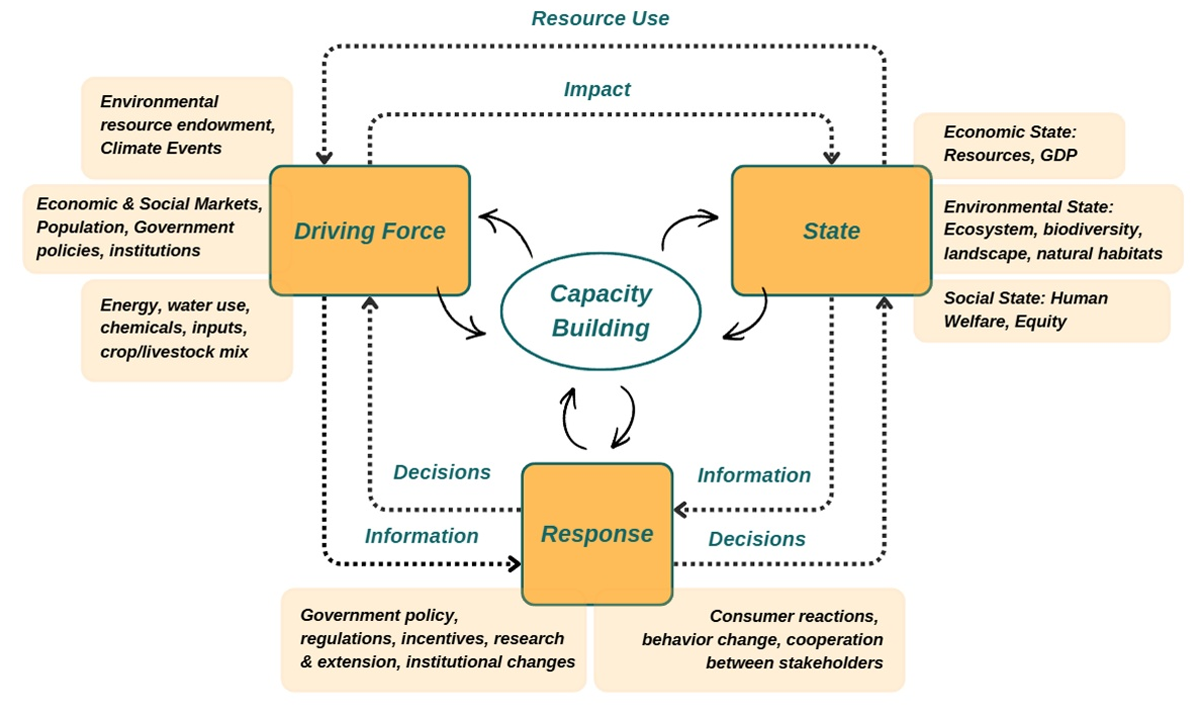
Figure 4
The DSR framework, modified from Meyar-Naimi & Vaez-Zadeh (2012), IAEA (2004), and OECD (Parris, 1996). The “Capacity-Building” element is introduced as an incremental link within the planning system.
Following this framework, the SEED MICAT capacity-building activities act as a deliberate response mechanism within the planning system. Within the project, a comprehensive strategy was employed, delivering capacity-building activities for national stakeholders engaged in energy planning across the EU. These activities aimed to disseminate information about the MICATool through workshops, events, and dedicated training sessions. At the same time, they allowed participants to reflect on the needs, barriers, status quo, means, and goals (or “State”, “Driving Forces”, and “Responses”) within their energy planning systems.
Data collection
Data collection was performed through audio recordings and systematic minute-taking during dedicated training sessions involving organisation representatives from 7 MSs. Following the training completion, an online survey was distributed via email to gather further reflections on the MI tool applicability (Appendix A). Both the training’s Q&A session and the survey followed the same set of questions, enabling a homogeneous – primarily qualitative – material collection, including participant quotes and testimonies (Appendix A.). Therefore, the unit of analysis in this qualitative study is “chunks” of text, derived from minute reports, surveys, and recordings. The agenda of the dedicated training sessions delivered is presented in Table 1.
Table 1
Agenda of the MICATool training session.
| MICATOOL TRAINING AGENDA | |
|---|---|
| Introduction |
|
| MICATool presentation |
|
| Discussion and Q&A session |
|
| Conclusion |
|
Data analysis methodology
From November 2023 until February 2026, over 250 stakeholders were introduced to the MICATool, via targeted workshops, events, and trainings. In this study, we present the analysis of qualitative inputs collected during dedicated trainings with 21 stakeholders (Table 2), representing 11 different organisations from 7 EU countries, delivered between July 2025 and February 2026.
Table 2
Participants in trainings on the MICATool use, delivered within the SEED MICAT project frameworks.
| LIST OF PARTICIPANTS IN TRAININGS ON THE MICATOOL USE | |||
|---|---|---|---|
| Number of organisations represented by the participants | 11 | Number of trainings | 7 |
| Total number of participants | 21 | Number of countries | 7 |
| Absolute number of participants and organisations per country | Austria (AU): 4 | National Energy Agency | |
| Bulgaria (BG): 2 | Research institutes (2) | ||
| Spain (ES): 3 | Regional Energy Agency | ||
| Greece (GR): 5 | National Energy Agency, Ministry of the Environment and Energy | ||
| Croatia (HR): 5 | Regional energy agencies (2), Research institute | ||
| Poland (PL): 1 | Research Foundation | ||
| Portugal (PT): 1 | Regional Energy Agency | ||
Participants represented National and Regional Energy Agencies, Ministries, Research Institutes, and Foundations. The organisations were invited directly, to secure their participation in the sessions. Key selection criteria included versatile activities across domains and geographies, policy-making impact at various governance levels, and EU-funded project experience.
The material collected during the trainings was analysed following a three-step procedure (Figure 5). First, a thematic clustering was developed for “Planning Goals” related to EE, based on recurring themes identified across the participants. These common themes were defined through iterative comparison of the reported planning goals. Then, a thematic clustering of the “Planning Barriers” captured recurring constraints identified by stakeholders.
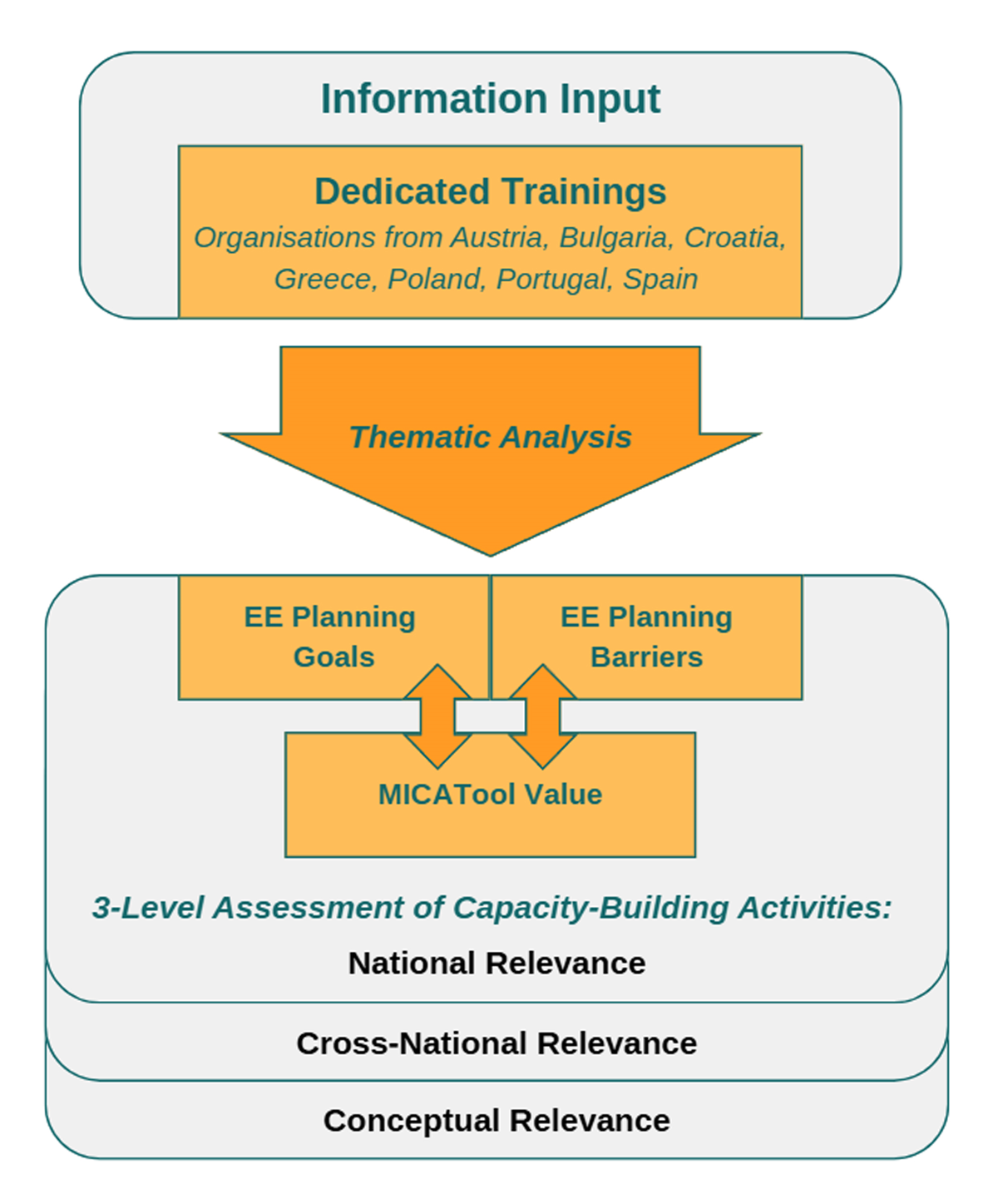
Figure 5
Methodology visualisation – illustrated by the authors.
With this three-step analysis, the research team aspired to undertake an interpretative assessment and discussion of the EE planning goals and barriers, to consider the added value of the trainings within the national and cross-national regulatory and policy contexts, and to examine their role within the planning systems under study.
Results
Content analysis
Tables 3 and 4 present the thematic analysis results of the qualitative material collected during the training sessions, and the follow-up survey. As mentioned, the results are structured under the main themes of EE Planning Goals (PG) and Planning Barriers (PB). For each PG and PB, we indicate the country to which the detected goal or barrier is relevant, and present the corresponding quote or testimony captured during the sessions or in the survey.
Table 3
PGs detected during the Training sessions on the MICATool use.
| PG# | PG TITLE | COUNTRY | PARTICIPANTS’ QUOTES ON THE MICATOOL USE: |
|---|---|---|---|
| PG1 | Public/Private investments on EE & Fiscal Incentives | BG, PL, PT | “The tool can support an evaluation of EE national funding schemes” (PL – Survey response quote) |
| “The MICATool can help us with incentives and subsidies design, related to property taxing” (PT – Training Q&A session) | |||
| “[…] the tool can support us in our work with the Ministry on comparing policies towards public sector uptake of EE measures” (BG – Training Q&A session) | |||
| PG2 | Labor, Employment & Business-oriented measures | AU | “The MICATool can support assessing measures on […] business measures within the UFI frameworks (Domestic Environmental Funding Program)” (AU – Training Q&A session) |
| PG3 | Building sector measures & EP | AU, BG, ES, GR, HR, PL, PT | “The tool can support us in household and building envelope schemes” (AU – Training Q&A Session) |
| “There is interest in using the tool for heating-related measures in the residential sector” (PL – Training Q&A session) | |||
| “(The tool can support in) assessment of a program for EE renovation of the building stock” (BG – Survey response quote) | |||
| “The improvements of the National Building Renovation program can be achieved via the MICATool” (HR – Training Q&A session) | |||
| “In the Asturias region, we could envisage using the tool for the review of the regional energy strategy, and for targeted improvements within our current lines of action, such as enhancing EE and tackling EP” (ES – Survey response quote) | |||
| “[…] the EP alleviation is a major goal for Portugal; having a quantitative part on justifying measures is very important” (PT – Training Q&A session) | |||
| “As we are working on energy poor households, […] it would be interesting to further explore via this tool social housing rental rates, or market rental rates” (BG – Training Q&A session) | |||
| PG4 | Energy system transitions & Renewables | AU, GR, PT | “The MICATool can support assessing measures on industry […] within the UFI frameworks (Domestic Environmental Funding Program)” (AU – Training Q&A session) |
| “We are already using the tool for strategies on heating and cooling.” (GR – Survey response quote) | |||
| “[…] the tool can support assessments for public local funds for the installation of photovoltaic (PV) panels” (PT – Training Q&A session) | |||
| PG5 | Transportation (Fuel Switch & Modal Shift) | BG, ES | “The tool could be highly valuable for evaluating future measures, (e.g., the promotion of electric mobility), by assessing not only energy savings but also the wider economic and social impacts.” (ES – Survey response quote) |
Table 4
PBs detected during Training sessions on the MICATool.
| PB# | PB TITLE | COUNTRY | PARTICIPANTS’ QUOTES ON THE MICATOOL USE: |
|---|---|---|---|
| PB1 | Data Availability & Data Security | AU, BG, ES, GR, HR, PL, PT | “Outdated datasets on EP in Poland might lead to miscalculations; thus, the MICATool is seen as valuable to be used mostly on the national level – and not on regional/local assessments” (PL – Training Q&A session) |
| “(The tool) can also verify some data estimations present in the public debate, i.e., regarding the annual number of deaths because of the air pollution” (PL – Survey response quote) | |||
| “[…] barriers are focused on the importance of data recovery and the implementation of mechanisms to recover real and effective information. Currently, this is a challenge for regional administration.” (ES – Survey response quote) | |||
| “The historical and projection data pre-existing in the tool (e.g., national energy mix, prices, GDP, etc.) need to be updated annually so that the tool results are accurate.” (BG – Survey response quote) | |||
| “The unavailability of adequate data for the industry sector might render the initial energy savings assessment challenging” (AU – Training Q&A session) | |||
| “The CBA hasn’t been implemented enough; this approach can improve the documentation of future policies” (HR – Training Q&A session) | |||
| PB2 | Indicators interpretation misalignment & Inefficient indicators | BG, PL, PT | “In terms of EP, the tool uses SILC indicator; we use LIHC more often” (PL – Survey response quote) |
| “Certain complex indicators need to be further explained (to the user)” (PT – Survey response quote) | |||
| PB3 | Lack of available contextualised methodologies & specialised expertise | BG, HR | “There is no alternative tool currently available used on a national level in these policy areas; thus, the training on the MICAT tool is of high value” (BG – Training Q&A session) |
| “The language barrier is an issue for use of the tool by local authorities; low knowledge of English” (BG – Training Q&A session) | |||
| “Organisational and data-management and assessment skills can create a barrier that goes beyond the tool” (HR – Training Q&A session) | |||
| “(A barrier to the MICATool’s use) is people’s per se willingness to learn something new” (HR – Survey response quote) | |||
| PB4 | Communication and Knowledge Transfer | AU, BG, ES, HR, PL, PT | “The quantification capabilities of the tool on energy sector aspects are very useful for capturing and communicating results with authorities” (ES & AU – Training Q&A session) |
| “The tool shows that silo-breaking between expertise, both at the preparatory and the output stage can support and further benefit holistic, documented policy-making” (HR – Training Q&A session) | |||
| “The results by the MICAT tool can be used for public debates and support decision making for authorities” (PL – Training Q&A session) | |||
| “[…] extremely useful for researchers and agencies in backing up and justifying the beneficial impacts of certain measures, and therefore to inform politicians and decision-makers.” (PT – Training Q&A session) |
PGs towards EE
Participants highlighted 5 thematic domains related to national PGs for developing EE-oriented measures (Table 3). These referred to “Public/Private investments on EE & Fiscal Incentives” (PG1), “Labour, Employment & Business-oriented measures” (PG2), “Building sector measures & Energy Poverty (EP)” (PG3), “Energy system transitions & Renewables” (PG4), and “Transportation (Fuel Switch & Modal shift)” (PG5).
PBs towards EE
The analysis revealed a series of common barriers shared by the stakeholders across countries, corresponding to persistent challenges in EE planning and constraining the effective use of the MI assessment tool. Table 4 presents these barriers, categorised in 4 distinct groups. These refer to “Data Availability & Data Security” (PB1), “Indicators interpretation misalignment & Inefficient indicators” (PB2), “Lack of available contextualised methodologies & Specialised expertise” (PB3), and “Communication and Knowledge Transfer” (PB4).
Discussion
Following the data analysis, the findings are discussed at three levels. Initially, we discuss how the MICATool training can support achieving the expressed PGs, in alignment with national planning contexts, and overcoming persistent PBs that hinder their accomplishment. Next, we reflect on the value and relevance of the conducted trainings at a cross-national level, discussing common goals, gaps in understanding and capturing MI, and the successful integration of MI into EE planning. Lastly, we analyse the conceptual dimensions of the conducted capacity-building activities, and their incremental contribution to planning systems toward effective EE planning. In this way, we aim at responding to the research question – “In what ways can capacity-building initiatives aimed at capturing and quantifying the MI of EE contribute to bridging EE planning gaps across the EU?” – in an intersectional, cross-national, and conceptual manner.
The capacity-building activities’ value and relevance at the national level
Based on the tripartite discussion approach, we first consider how capacity-building on the MICATool supports planners in aligning with national planning trajectories, while understanding the gaps and barriers that prevent them from effectively incorporating them in EE-oriented planning.
Austria
In Austria, the NECP (2024) and the Federal Energy Efficiency Act (EnEfG, 2024), steer the 2030 and 2040 climate goals. “Building sector measures & EP (PG3) are advanced under the Sanierungsoffensive (2026), covering thermal renovations, EP support, and climate standards. “Energy system transitions & Renewables” (PG4) are promoted by the Energy Expansion Acceleration Act (Klimadashboard, 2025a) and the Renewable Heating Law (Kellermann, 2024), thereby supporting OSS and infrastructure shifts across governance levels. Industrial transitions fall under the Electricity Industry and Organisation Act (Klimadashboard, 2025b), while labour and employment measures (PG2) are primarily addressed by the Active Customer program (Wallner, 2025), fostering participation of energy communities, households, and SMEs in energy trading.
Austrian participants stressed that a comprehensive tool with strong quantification, monetisation, and CBA capabilities would improve measure comparison (e.g., environmental funding schemes), highlighting MICATool’s value in planning building envelope upgrades, heating transitions, and industrial projects. The tool’s visualisation was also seen as essential for overcoming communication barriers (PB4) with national authorities.
However, outdated data (PB1) for sectors like industry reduces the tool’s effectiveness, limiting assessments to rough estimates based on datasets such as ODYSSEE MURE. This gap constrains Austrian stakeholders’ preliminary calculations and accurate results, underscoring the need for cross-sectoral and MS collaboration for monitoring and data collection.
Bulgaria
The NECP (NECP, 2024) sets the trajectories for EE-oriented planning in Bulgaria. The “Public/Private investments on EE & Fiscal Incentives” (PG1) is encompassed in the National Recovery and Resilience Plan (RRP, 2025), which focuses on EU funds streamlining towards achieving building renovation and energy storage projects, while the National Decarbonisation Fund (NDF) (European Commission, 2023) aims to support sustainable market models on EE investments. Regarding PG1, the participants accentuated the tool’s value in supporting the Ministries with policy comparisons.
The National Building Renovation Plan (NBRP, 2026) and NDF prioritise “Building sector measures & EP” (PG3), fully covering approved residential renovation costs. The NBRP also addresses “Transportation (Fuel Switch & Modal shift)” (PG5), supporting EV adoption, charging infrastructure, and public transport modernisation. Participants highlighted the tool’s support in assessing both building stock measures and transport-related modal shifts, including transport poverty aspects.
Simultaneously, they emphasised the value of integrating EP indicators into the tool, noting a lack of comparable national or regional methodologies. Even when tools are made available through training, language barriers persist, as most are in English. Thus, participants identified unavailable contextualised methodologies (PB3) and ineffective knowledge transfer (PB4) as obstacles. Outdated datasets (PB1) on prices and GDP, and the need for context-sensitive indicators (PB2) and calculation parameters, were also stressed for future tool improvements. Better cross-sectoral coordination for data updates, improved communication for knowledge transfer and EE MI alignment, and contextual sensitivity, were mentioned as key enablers.
Croatia
The Croatian participants highlighted “Building sector measures & EP (PG3) among their major planning priorities, as new national acts were introduced in late 2025, focusing on zero-emission buildings, with programmes such as the Building Act (Hrvatski sabor, 2026), and the Act on Energy Efficiency in Building constructions (Hrvatski sabor, 2024). In Croatia, EP is further addressed via the Social Climate Fund national plan (2026), while the National Housing Policy Plan (Bačić, B., 2024) aims to allocate €400M to energy-efficient renovations.
Participants highlighted the tool’s value in enhancing the NBPR (2026) and supporting quantitatively grounded national policymaking, yet noted persistent barriers in data relevance and documentation practices (PB1) that constrain independent CBA application without comprehensive tools. The tool’s preparatory input requirements (e.g., energy savings estimates) underscore the need for cross-sectoral collaboration, improved policy documentation across governance levels, and strengthened skills development.
Greece
In Greece, the EE incorporation in the “Building sector measures & EP” (PG3) domain will be intensified with the expected EPBD transposition by May 2026 (BUILD UP, 2026b). The government has advanced energy-label upgrades through dedicated schemes (e.g., Ministry of Environment and Energy, 2025), while subsidy measures to phase out fossil boilers have been introduced. Also, EP is expected to be addressed via the Energy Poverty Alleviation Plan with measures included in the Social Climate Fund (SCF, 2026), given the country’s high EP rates (Angeletopoulou et al., 2025). Meanwhile, planning for “Energy system transitions & Renewables” (PG4), with lignite phase-out at the core of the national plans, has been guided by the Greek NECP (2024), while the ministry has pushed for intensification of RES production (MFA, 2026).
During the training, some participants working under these trajectories highlighted their familiarity with the tool, citing their external affiliation with SEED MICAT’s sister project (IEECP, 2026). They also mentioned that they have already practically employed the MICATool to assess heating and cooling measures to combat EP. These testimonies further underline the value of communication among EU-funded project partners for knowledge exchange and the practical training of practitioners in MIs assessments in real-world scenarios.
Spain
In Spain, the NECP (2024) comprises the core framework promoting cross-sectoral EE measures, with the incorporated Long-Term Renovation Strategy (ERESEE, 2020) aiming to accelerate planning for “Building sector measures & EP” (PG3). “Transportation (Fuel Switch & Modal shift)” (PG5) is guided by the Sustainable Mobility Law (Movilidad Sostenible, 2025), which promotes EV uptake and higher taxes on diesel. Within this context, the engaged regional energy agency stakeholders highlighted the tool’s value for assessing measures in the Asturian region, particularly in supporting electric mobility by evaluating energy savings and broader economic and social impacts.
Despite the tool’s ability to generate results from online datasets, Spanish participants reported ongoing data unavailability (PB1), which hinders preliminary energy-savings estimates and limits reliable MI studies regionally. However, they emphasised the tool’s effective, communicable quantification, monetisation, and CBA visuals, highlighting the importance of facilitating knowledge and results exchange (PB4) across sectors.
Portugal
The Portuguese NECP (2024) promotes EE across sectors, with the national RRP (2025) funding “Public and Private investments on EE measures” (PG1) and “Building sector measures & EP” (PG3) through programmes like PAE+S (Fundo Ambiental, 2023). Stakeholders emphasised the tool’s value in comparing measures, designing targeted subsidies, and supporting EP studies. For “Energy system transitions & Renewables” (PG4), the tool aids in assessing PV installation schemes via its RES measures feature.
The MICATool’s quantification and monetisation capabilities were discussed as a major benefit for backing-up and justifying the beneficial impacts of EE measures (PB4). However, the outdated data incorporated in the readily available ODYSSEE-MURE datasets was flagged as an issue in delivering accurate results (PB1). Participants considered that additional training on localised scenarios and indicators (PB3) would be required before experts could confidently use the tool in their daily practice.
Poland
In Poland, EE is framed by the NECP (2024) and the Energy Policy of Poland (EPP2040, 2026), while the National RRP (2025) has supported “Public/Private investments on EE” (PG1) and the design of tax-relief schemes. The training participant underlined the MICATool’s value for designing funding schemes under these policy frameworks, while justifying needs and data gaps (PB1, PB4) prevalent in public debates regarding impacts such as air pollution.
Regarding the “Building sector measures & EP” (PG3), promoted by the upcoming National Building Renovation Plan (NBPR, 2026), the Thermo-modernisation and Renovation Fund, and the Clean Air Program (Bankert and Gokarakonda, 2024), the participant discussed that the MICATool can support in backing up the EE measures design for the building stock. However, when it comes to EP, the tool’s use of specific indicators (i.e., M/2, 2M) does not align with Polish standards and employed approaches (PB2). Thus, the need for greater contextualisation became apparent, despite the tool’s flexibility and its incorporation of a wide range of indicators.
The capacity-building activities’ value and cross-national relevance
The MICATool trainings address the needs for expertise and knowledge development across a range of common themes in the EU. Organisational representatives highlighted the tool’s value in supporting funding schemes evaluation and subsidy schemes design (PG1; PL, PT), under the NECP frameworks, owing to its monetised output. These outputs can further support EE-oriented investment decisions and business model assessments (PG2). The tool’s assessment and quantification capabilities were also considered particularly relevant for the domains of buildings and EP, especially in relation to household energy-upgrade schemes (PG3; AU, PL) and national plan improvements (PG3; HR, ES). Similarly, participants highlighted its applicability in supporting energy system transitions in industry (PG4; AU) and renewable energy (PG4; PT), as well as in enabling modal shifts (PG5; BG, ES).
Despite the tool’s recognised potential, persistent planning barriers were identified across the countries. The recurrent issue of data (un)availability (PB1) points to systemic issues in data collection and continuous monitoring across domains and sectors, highlighting the need for cross-level collaboration and silo-breaking to enable effective cross-sectoral data integration. Issues related to “Indicators interpretation misalignment & Inefficient indicators” (PB2) reflect difficulties in adapting assessment frameworks to local planning levels, particularly in sectors closely tied to local specificities (e.g., EP). The lack of targeted expertise (PB3) in assessing energy savings – an essential input for the tool – further underscores the fragmented skills across sectors and governance levels. Finally, although participants acknowledged the strong value of the tools’ visualisation capabilities in supporting public debates, communication-related challenges (PB4) persist.
Capacity-building as a vehicle towards EE within the planning system
The facilitated discussions, hands-on experimentation with the tool during the training sessions, and the completion of the follow-up survey enabled a dialectical feedback process that supported bidirectional knowledge exchange between the trainers and the organisational representatives. In practice, the capacity-building activities operated in two complementary ways: on the one hand, they served to deliver knowledge on the quantification and monetisation of EE MI. On the other hand, they provided a structured setting for participants to reflect on and report the different parameters that affect EE-oriented planning across the different stages and domains of their planning system – namely “Driving force”, “Response”, and “State”.
Participants, for instance, identified key “driving forces”, understood as underlying urgencies and needs that motivate action, such as addressing EP, improving housing conditions, and enabling viable business models. They also reflected on the decisions and plans they aim to implement based on these drivers across sectors, including industrial energy transitions, EE-oriented investment incentives, building renovations, and modal shifts. In this sense, the thematic PGs can be interpreted as “responses” within each planning system, which the tool and associated learning processes are intended to support. Finally, a series of recurring issues, clustered as PBs, relates closely to the challenges in quantification and monetisation of EE MI across countries. These include data availability, methodological misalignments, and communication barriers, all of which reflect the current “state” of participants’ planning contexts.
Overall, the study showcased that capacity-building in understanding and capturing EE MI can be conceptualised as an incremental and multifaceted component of planning systems. It not only facilitates skills development and knowledge exchange but also enables holistic, multi-level situational analyses, thereby helping bridge gaps in EE-oriented planning.
Limitations
This study is subject to several limitations. The qualitative design and relatively small participant pool limit generalisability, while testimonies may be subject to misinterpretation, as potential biases among organisational representatives are hard to trace. Additionally, the interpretation of qualitative data is inherently influenced by researchers’ perspectives, which may introduce interpretive bias despite efforts to ensure analytical rigour. The Q&A session following the training may not capture all perspectives, and analytical depth is limited by the few testimonies per country. Findings are exploratory, offering early insights into capacity-building for integrating EE impacts in planning practices.
The study’s results also highlight the constraints in the tool’s ability to fully address planners’ needs and overcome barriers. For example, outdated data in certain sectors, as well as difficulties accessing regional-level information, limit the widespread use of the MICATool. Language barriers and variation in methodological approaches across planning contexts further limit the tool’s effectiveness.
Conclusions
This paper examined how capacity-building initiatives can support knowledge development to facilitate the MI of EE into planning practice across the EU. The exploratory analysis of the MICATool trainings showed that, while the tool supports quantified, communicable, and more justified assessments of EE MI in alignment with national and cross-national planning trajectories, its effective uptake in planning practice remains constrained by data unavailability, contextual adaptation needs, fragmented expertise, and cross-sectoral communication gaps, within countries, and across the EU. The study further highlighted that capacity-building within planning systems acts not only as a means of distributing knowledge about the EE benefits; rather, these activities can be interpreted as a major component of a planning circuit, bridging planning gaps by guiding planners to identify their position, priorities, actions, and implementation steps.
Based on the study’s findings, the following recommendations outline directions for strengthening capacity-building to support knowledge and integration of the MI of EE into planning practice across the EU.
First, we suggest that achieving the sought-after transition and adaptation of planners’ practice requires that capacity-building activities must be tailored to the specific needs of trainees to fill gaps in EE planning and boost its implementation across the EU. Second, efforts should be made to move beyond fragmentation and siloed training activities by promoting more systematised capacity-building beyond borders and expertise. Lastly, greater institutional support for training and capacity-building is recommended to ensure the continuous availability of capacity-building activities for planners across the EU. This would require establishing an overarching framework to deliver state-of-the-art knowledge to planners at all planning levels across the EU. Effectively understanding and capturing MI requires overcoming communication barriers, applying context-sensitive approaches, and bridging sectors and national perspectives to enable meaningful planning transitions and supporting holistic solutions.
In conclusion, capacity-building institutionalisation might imply top-down approaches, leading to the replication of inflexible educational systems. Capacity-building initiatives should, thus, consider engaging actors beyond the traditional planning milieu, including civil society and other relevant stakeholders, to foster dialogue, knowledge exchange, and more holistic approaches to EE-oriented planning. In that direction, future capacity-building forums should enable adaptability and restructuring of trainings across different planning levels using co-design approaches involving actors from multiple sectors to support the development of curricula that deliver knowledge in line with contextual needs and planners’ expertise.
Additional File
The additional file for this article can be found as follows:
Modus vocationis: Capacity-building for assessing the multiple impacts of energy efficiency in energy planning practices – Poster Presentation
This poster was presented at the ECEEE Summer Study 2026. It showcases the key elements of the paper, including the main Research Question, the Methodology and Conceptual framework employed for the study, and the Results following the analysis of the collected data. It also presents in a condensed manner the take-away points of the paper’s Discussion section, as well as the main Recommendations suggested by the authors. Finally, the poster provides additional information regarding the EU-funded project SEED MICAT and the MICATool, which is central to the study. URI: https://eceeeproceedings.org/articles/15/files/6a59fc2defe9a.pdf
Appendices
Appendix A
Supplementary data on the survey questionnaire:
https://osf.io/64uxv/overview?view_only=8ce8133eafee4a17ba7896adb465e209
Supplementary data on the participants’ input:
https://osf.io/ahqne/overview?view_only=699f6d77b7c543ec84a8c786eb91990c
Acknowledgements
The study presented in this paper was conducted under the SEED MICAT project frameworks (ID 101120599). The authors alone are responsible for the paper’s views, which do not necessarily reflect those of the EC. We thank the project partners for supporting data collection and all training participants for sharing their insights and experiences.
Data Accessibility Statement
The authors confirm that the data supporting the paper’s findings are available within the article and its supplementary material.
Author Contributions
Konstantina Karalaiou initiated the article, performed the data collection, analysed the data, and drafted the manuscript. Konstantina Karalaiou, Sofia-Natalia Boemi, Nives Della Valle, Jean-Sébastien Broc contributed to the study’s conceptual framing. Sofia-Natalia Boemi and Nives Della Valle supported the drafting efforts. Marco Peretto supported the trainings delivery and data collection. All authors have read and agreed to the published version of the manuscript.
eceee paper ID
4-078-26