
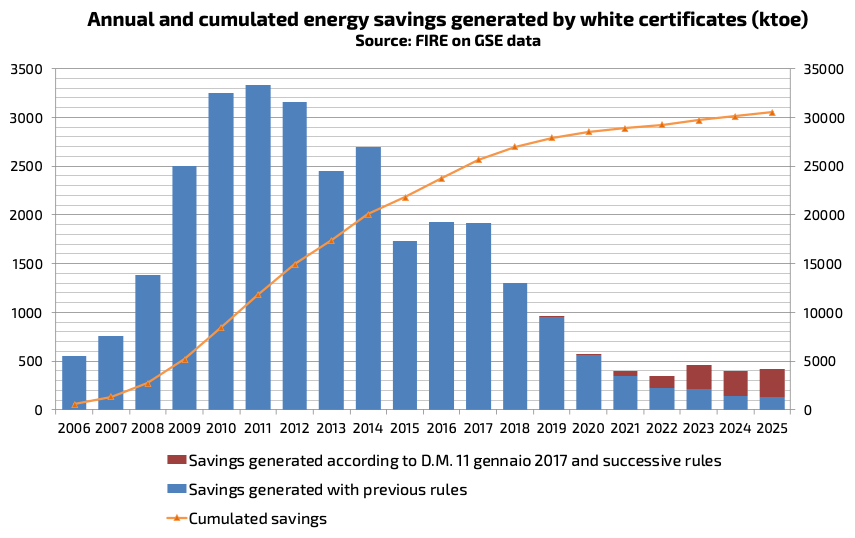
Figure 1
Annual and cumulated savings generated by white certificates in Italy since the launch of the scheme.
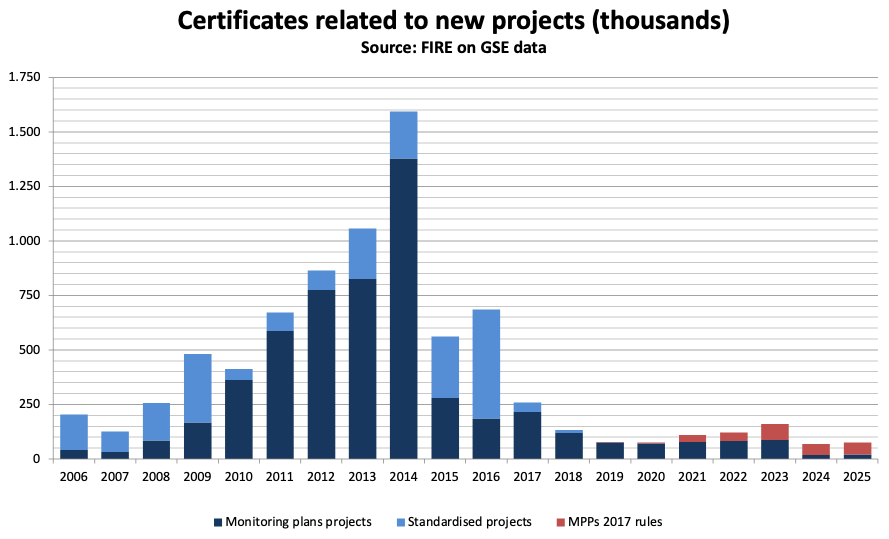
Figure 2
Certificates related to new projects for each year.
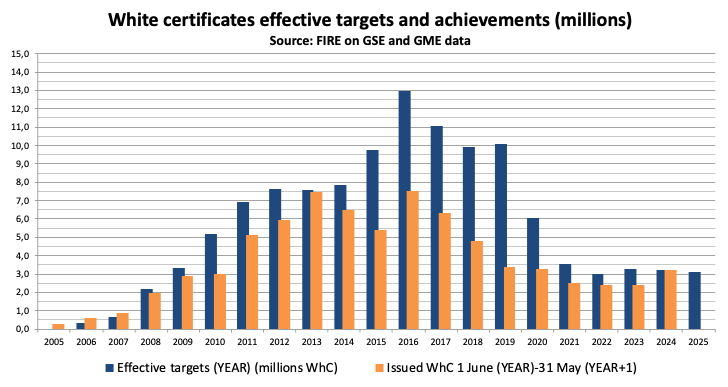
Figure 3
Effective targets (60% annual target plus residual targets) and issued certificates.
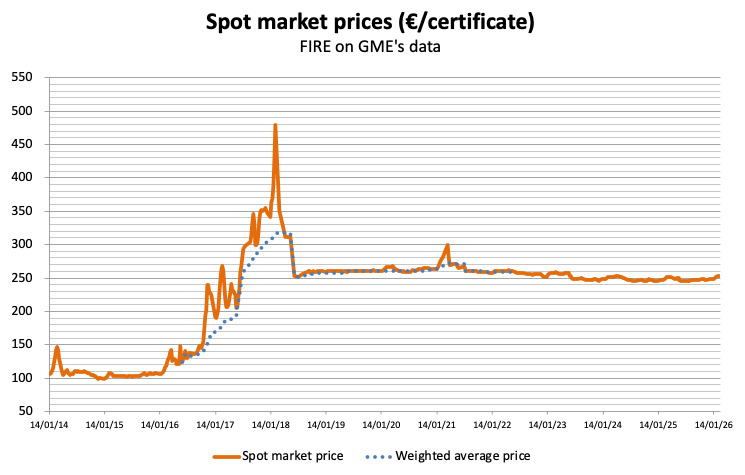
Figure 4
WhC spot market price (January 2014–February 2026).
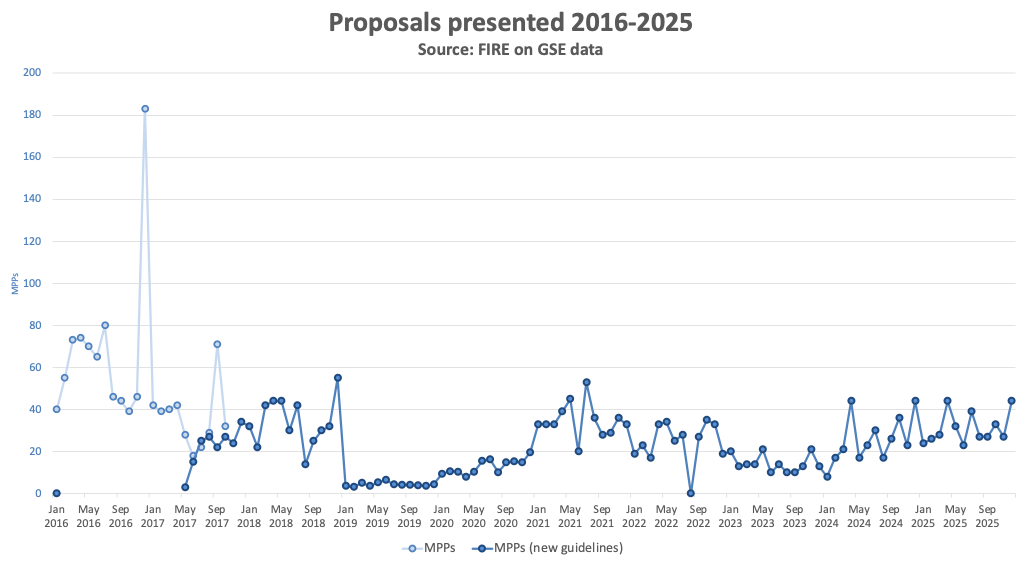
Figure 5
Monitoring plan applications 2016–2025 under old (2012) and new (2017) guidelines.
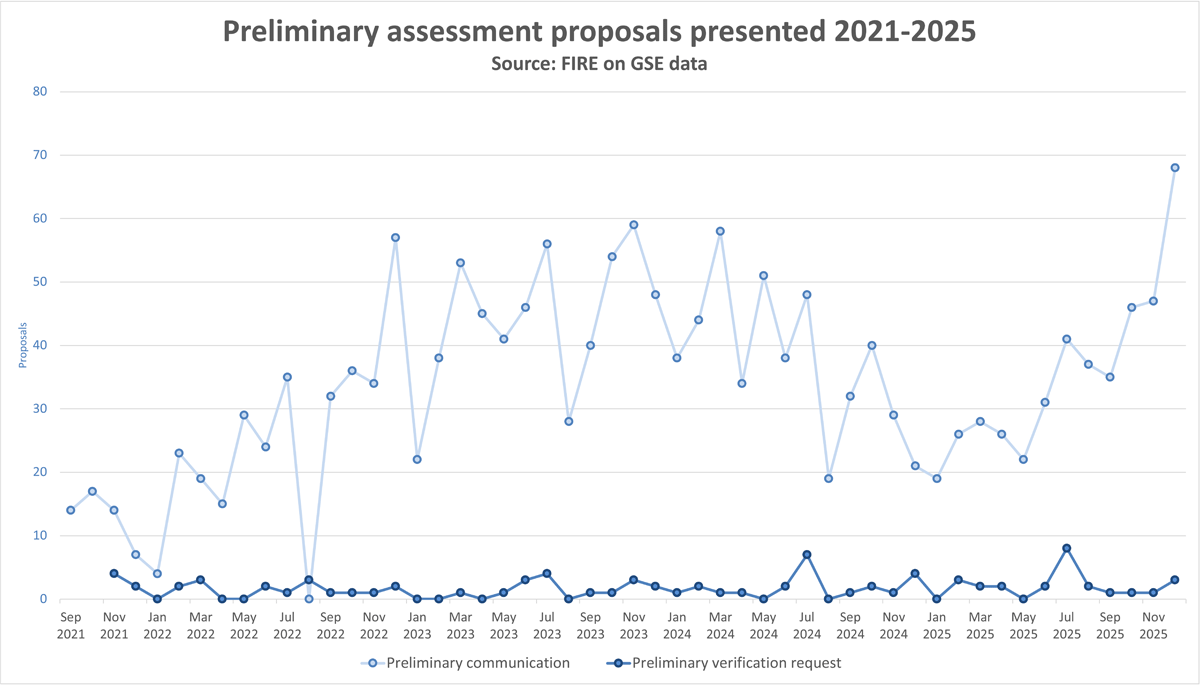
Figure 6
Preliminary assessment proposals presented 2021–2025.
Table 1
Main news introduced by 2025 rules’ update.
| TARGETS | MAIN CHANGES INTRODUCED IN 2025 |
|---|---|
| Proponents | The possibility to present proposals referring to projects implemented among different end-users has been reintroduced, but only for interventions of the same typology and with a maximum threshold for savings of 50 toe. It is possible to present a proposal in the form of temporary association or grouping of companies or entities. |
| M&V | For single intervention with savings below 250 toe/year it is possible to get a constant number of certificates—equal to the average of savings measured over the first three years—starting from the 4th year, without the need to communicate the measurements. Baseline measurement can start after the start-up project date, provided the operative variables that affect energy consumption remain unaltered. The baseline for substitutions (i.e. an energy efficiency solution or process that replaces an existing one, even if of different type, like a heat pump substituting a boiler) can alternatively be defined based on the lower value between the market reference baseline and the consumption calculated based on technical documentation. |
| Timelines | Various flexibility options have been introduced for delays (e.g. project start-up, ex-post consumption measurement, application to request white certificates, etc.), usually in exchange with a reduction in the number of certificates issued. |
| Eligible projects | New options, for example for electrification actions—including the contribution from coupled electricity RES—and for savings associated with the use of new materials. The lifetime for substitutions is now equal to the one for new installations. |
| Financial flexibility | Virtual certificates maximum quantities will decrease from 60% in 2025 to 20% in 2030. The possibility to obtain more certificates in the first half of the project lifetime, reducing proportionally the quantity for the second half, has been extended to all type of projects. |