
Introduction and Context
The impetus for this project came from a UK Government funded project, “Clean Heat Streets” which used a “place-based approach” to facilitate a dense installation of heat pumps into a particular neighbourhood of Oxford City known as Rose Hill. Rose Hill has a mix of better off owner-occupied housing and a large area of social housing which is primarily occupied by households on low incomes. There is a great deal of ethnic diversity in the area with approx. 35% of people in the area born outside of the UK (OCSI, 2021). However, the majority of households in social and privately rented housing are of white working-class origins with some living in the area for 2 or 3 generations. The general socio-cultural and economic context for the project was a “cost of living crisis”, where much increased energy bills as a result of Russia’s invasion of Ukraine were still endemic and where a national culture war around the implementation of “Net Zero” policies was fuelled by very vocal local opposition to Council attempts to introduce “Low Traffic Neighbourhoods”.
Despite great efforts to work hyperlocally, to engage with low income areas and to co-design the project such that the heat pump offer was as inclusive and as accessible as possible, at the end of the project period, 85% of project activity remained in the better off areas (see Figure 1): the low income groups and ethnic minorities living in Rose Hill had not, by and large, taken the offer despite the technology having a strong value proposition for these groups with low or no cost installations (for those living in social housing), the potential for lower bills if installed in conjunction with a Time of Use tariff and the prospect of a much improved standard of heating service which would tackle many of the issues associated with living in an underheated home: damp and mould, condensation and cold spots.
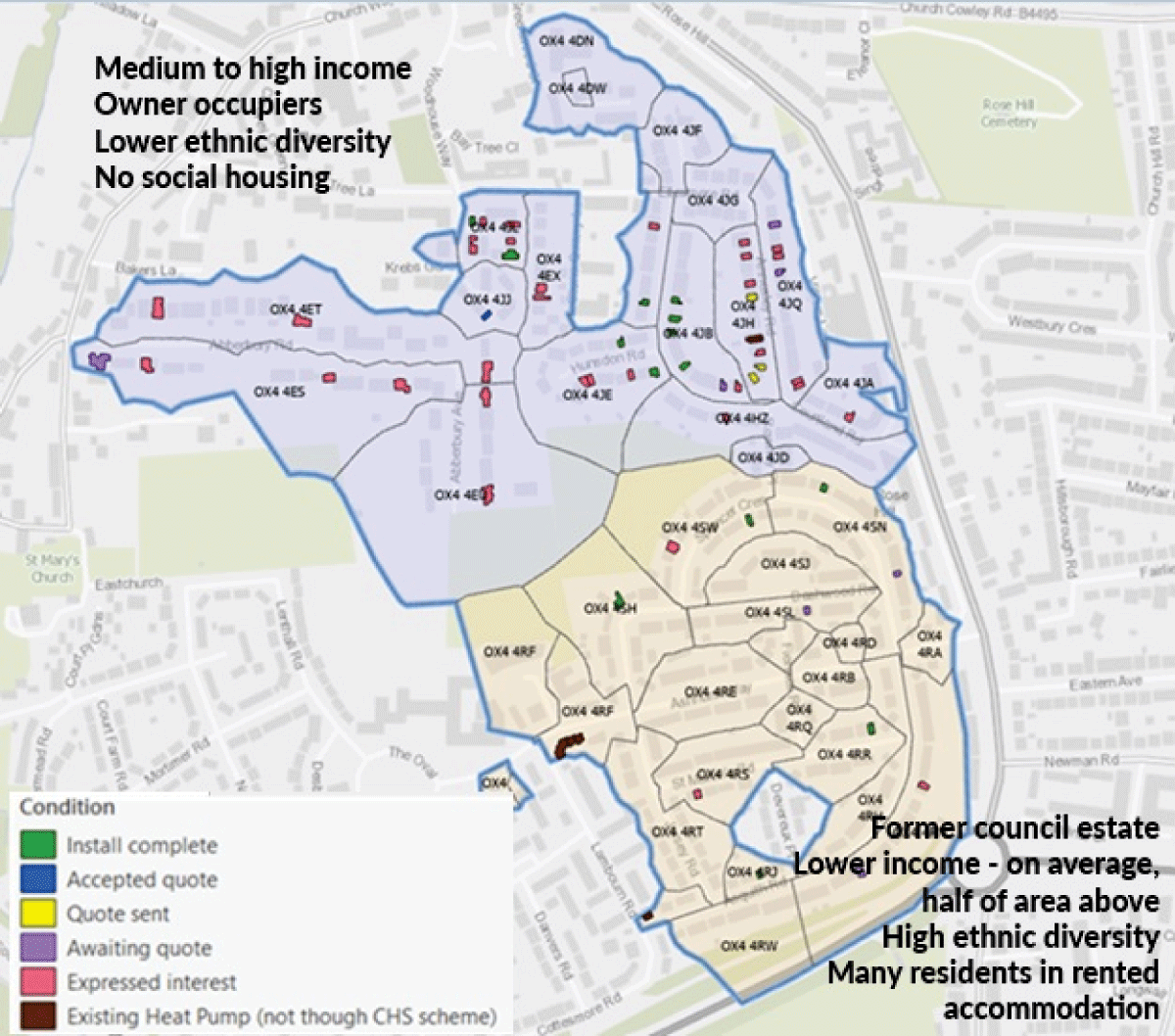
Figure 1
At the end of the Clean Heat Streets project there was a clear difference in the distribution of project activity between demographically and socio-economically distinct parts of the neighbourhood.
This outcome was not related to technical unsuitability. Rather, a mix of financial, social and cultural factors played a part. These included misinformation on the benefits of heat pumps, socio-psychological factors such as risk aversion and the lack of sufficient cognitive bandwidth for longer term thinking encountered when living on a low income. In our project we also found a variety of cultural factors. Some of these were obvious, such as language barriers preventing meaningful communication on the doorstep. Others were less obvious and related to cultural practices such as cooking practices and social connectedness of the various groups in the community. We note that other studies have likewise found a range of non-financial and non-technical factors influencing adoption of heat pumps (Jager et al, 2025; Rao et al, 2025). Evaluation of these various factors suggested a need for radical new approaches to engagement if the offer of transformative low carbon technologies was to become salient to “hard to reach” and underserved groups. Further, it was recognised that engagement with the project would be boosted if it was pleasurable, even inspiring and that we should be presenting narratives rather than information or data, thereby reducing cultural and literacy/numeracy barriers. Infusing the project offer with insights from the arts was suggested as a promising way forward: a community theatre model, with its long history of engaging and empowering marginalised groups with social issues, seemed particularly appropriate.
Approach and Evaluation
Partnered with an arts organisation, “ClimArts”, the Clean Heat Streets project lead at Oxford University successfully sought funding to develop a “test piece” of community theatre with the expectation that a full-length piece would subsequently be funded and toured through underserved Oxfordshire communities. This paper summarises the conception, development, performance and legacy of the test piece, titled, “The Picnic at Rose Hill”.
The research question at the heart of this evaluation was qualitative and quite modest: “What is the potential for community theatre to drive engagement with Net Zero issues?”. Wider research questions that stem from this, including community theatre’s capacity to stimulate behaviour change, or increased participation in community energy schemes, were not in scope.
As well as contributing to the development of the piece, the author took a role in the play – as the grumpy, sceptical father of the family at the centre of the story. In the spirit of participant observation, this enabled much richer insights to be gathered but there is always the risk that bias was facilitated as the author naturally wanted the play to be as successful as possible.
As part of the development of the piece, 3 interviews with community members were conducted by ClimArts. Also, a 2 hour workshop with a further 6 members of the community was conducted by the scriptwriter and director. The author was present at all interviews and the workshop. Both the workshop, all interviews, rehearsals and the final performance were either photographed or video recorded. Interview transcripts and the workshop report were also analysed as part of the evaluation.
The performance was organised to coincide with a pre-existing community apple harvesting event. This is notable because the audience had not voluntarily assembled to attend the play. Therefore, it is likely that the play exposed the audience to ideas that they had not anticipated.
After the performance, 13 audience members, chosen at random, were interviewed. Each interviewee was asked 6 questions related to adoption of Net Zero and low carbon behaviours: Do you think low carbon living is for everybody? Were there any issues and opportunities for low carbon living not covered by the piece? What do you think you or your community could do more of to live in a greener way? How could the council or government help the community live in a greener way? The interviews lasted around 15 minutes, were video recorded, transcribed and then thematically analysed by the author using NVivo software.
The scriptwriter and director of the play, an experienced theatre practitioner, was also formally interviewed for this paper. Her responses were transcribed, analysed and any pertinent views or opinions are used throughout this evaluation.
Ethical procedures to secure written and verbal consent for use of workshop and interview data, photographs, and video recordings were followed at all stages. As an evaluation, the work reported here did not require university ethics approval.
Theatrical Potential of Energy and Low Carbon Transition
The real “theatre” of low carbon transition is found amongst ordinary people trying to sustain meaningful and satisfying lives in the face of endless demands on their time, attention, energies and incomes. When invitations to change behaviour or consumption choices are made or when new technologies are offered, households navigating this complex socio-technical and cultural space may find that existing practices and hierarchies become exposed, the mundane routines of daily life may be disrupted or contested, household and lifestyle dynamics are foregrounded and new possibilities for how to live and relate are glimpsed. The micro-dramas of households in transition also extend beyond daily life and touch wider issues of climate and energy justice, cultural and racial tensions, governance and power structures, questions of fairness, responsibility, resilience, citizenship and wellbeing. Thus, energy transition and climate action at the household and community level overflow with dramatic and narrative opportunity.
The Theory of Community Theatre
Participatory arts including community theatre are increasingly recognised as potentially effective tools for public engagement and community empowerment around climate and energy issues. For example, the IPCC Sixth Assessment Report (AR6) states:
Participatory approaches that involve arts, storytelling, and cultural practices can help communities engage with climate change, improve understanding of risks, and support collective responses by connecting scientific knowledge with lived experience (IPCC, 2022)
But what is community theatre and how is it different to conventional theatre? As with most activity in the just transition space, the heart of the difference is in the principle of co-design: community theatre is created with communities rather than for them. As such, all stages of the production process and the performance itself involve local people and non-professional performers and technicians. The script will also be co-created and will typically dramatize social, political or environmental issues that reflect the lives of the co-creators. This means that the engagement power of community theatre derives from the process of production – the rehearsals, the exploratory workshops, the co-creation of the script, the development of skills in the various supporting roles in production (props, publicity etc) as well as the performance itself. It is the process of producing the final performance where participants can really examine and engage with the social issue in question.
Community theatre and energy justice
Community theatre has emerged as a particularly powerful medium for exploring social issues and is recognised for its ability to reach out to marginalised and hard to reach groups whose voices often go unheard in deliberations about infrastructure and distribution of resources. Community theatre intersects with the three dimensions of energy justice (Jenkins et al, 2016) as follows:
Distributional Justice. Community theatre can capture lived experience of unfair or inequitable distribution of benefits and costs of incumbent and proposed energy systems thereby raising wider issues of who gets access to affordable and reliable energy services. Through the process of production and experiencing the final performance, communities are able to collectively examine lived experiences of inequality, articulate alternative futures, and challenge dominant political narratives.
Procedural Justice. Concerns fair and inclusive decision-making processes in energy policy and projects – communities should have a voice in energy decisions that affect them. In this respect, one of the most widely studied approaches to engaging marginalised communities is Forum Theatre, part of the broader methodology known as Theatre of the Oppressed, developed by Augusto Boal (Boal, 1979). In this influential framing, art, theatre and storytelling offer a route to dialogue with marginalised groups who may not have the skills, confidence or language to express themselves persuasively in conventional processes of consultation and decision making (Miramonti et al, 2025). In this way, community theatre can boost “carbon capability” i.e. the ability of a household to engage with governance and decision making relating to climate action (Hampton and Whitmarsh, 2024).
Recognition Justice. Through providing an accessible means for marginalised groups to have their voices and concerns heard, community theatre is well suited to acknowledging and respecting the needs and priorities of different social groups in a community and in developing and valuing the skills and capacities they bring to the process of production.
A number of further characteristics of community theatre making it particularly suited to engagement and co-design activity in just energy transition projects are described below.
Community theatre as a means of building social capital
Participation in cultural activity such as community theatre strengthens the social fabric of a community via building various forms of “social capital”. This creates a socio-technical space in which:
Information, innovative practices and new technologies are transmitted more quickly and more deeply through communities. Information is also more likely to be replicated and acted upon when transmitted through trusted social relationships. McMichael and Shipworth (2013) found that seeking information amongst trusted personal contacts in a social network increased the likelihood of adoption of energy efficiency innovations by up to four times.
Collective action, such as peer to peer trading of electricity, collective buying of retrofit technologies and aggregate flexing of energy demand to provide local network services is enabled and encouraged when communities have denser networks of trusted social relationships supported by social media platforms.
Skills and resources both within the community and outside of it become more accessible. The more resources can be accessed, shared and distributed the more actions are enabled.
One widely cited typology groups social capital into 3 different types: “bonding”, “bridging” and “linking” (Woolcock, 1998). A fourth type is identified by the author: shareable resources embedded in the community. Community theatre can increase each of these types of social capital:
‘Bonding’ social capital refers to the social relationships between households in a place - the ‘social glue’ in a community. Bonding social capital gives a community a strong sense of identity and belonging. By bringing together disparate households from different parts of the community in a common endeavour, community theatre creates more trusted social relationships and therefore more bonding social capital. The community coming together as an audience also increases social interaction and a stronger connection to place.
‘Bridging’ social capital refers to the ability of different social groups and “middle actors” to get along and to share information and skills (Holman and Rydin, 2012). Groups could include the local football club, the local church or faith group, parents in the year group of the local school, local businesses and trades. Studies show the importance of these middle actors in mediating influence of energy policies on household behaviours (Parag and Janda, 2014). Community theatre production offers an opportunity to bring together these middle actors – for example local electricians could offer technical skills for sound and lighting, the local youth club could provide keen teenage actors and technicians.
‘Linking’ social capital refers to the presence in the community of skilled and confident local groups and individuals able to reach out to external sources of resources, funding and expertise with an invitation to, “Come into our community and help us.” Numerous studies of success factors in community energy schemes show the importance of linking social capital (e.g. JRF, 2014). Community theatre creates a pathway to invite in external sources of knowledge, skills and resources at both the process stages where participatory knowledge is being generated and at the performance stage where local practitioners and gatekeepers to community development resources such as local authorities are invited to witness the performance and then become available for follow up questions and information exchange.
‘Shareable resources’ social capital refers to the skills, materials and resources which can be shared amongst households and groups in the community. This includes intangibles like knowledge of low-carbon technologies and practices such as how to draught-proof a door, or financial or project management skills such as how to manage meetings and reach consensus. Tangible resources are the materials or assets that can be shared: e.g. meeting space, tools, building materials etc. Community theatre can develop both soft and hard. For example, theatre requires set building, sound technicians, lighting technicians – an introduction to these skills as part of a community theatre production can lead to acquiring the carpentry and electrical installation skills needed for retrofit. Theatre also requires creative, managerial, cognitive and “people” skills for example in crafting truthful and powerful stories, in publicity, and in working with teams.
Theatre as participatory knowledge production
Community theatre can bring together the disparate groups in a community including the marginalised groups with lived experience of the social issue in question. This inevitably builds empathy and shared knowledge. To catalyse action, it is not enough to simply understand a social issue: one must also affectively engage with it (Burke et al, 2018). Knowledge production can be boosted by bringing in “expert” witnesses who can add depth and nuance. As such, the community theatre process excels at creating the space where information can be exchanged between different community members to co-produce knowledge through storytelling and performance about social inequality, energy transition, climate justice or any other topic. It is also a proven vehicle for effective science communication and thereby has a role in countering misinformation that can hamper climate action and energy transition projects in particular places (Murray et al, 2026).
Making invisible infrastructure visible
Community theatre can expose structural conditions of existence in a place that shape everyday life: housing standards, traffic movements, social capital and social structure. The process of revealing invisible infrastructure comes through workshops, interviews and impromptu conversations. Gaining this deeper knowledge of how a place functions is an important stage in a place-based approach to energy transition.
Collective imagination of alternative futures
The concept of collective imagination is particularly significant in relation to climate change and energy transitions which require not only mass adoption of low carbon technologies but also new ways of imagining low carbon lifestyles that resonate with the primary components of human welfare and happiness: secure, protective, affordably serviced homes, social respect, bodily health. Community theatre offers a space where communities can explore alternative futures that prioritise sustainability, equity, and collective wellbeing. For example, performances may depict scenarios involving renewable energy cooperatives, community-owned infrastructure, or more equitable housing systems. Such narratives can challenge the perception that existing economic structures are inevitable, encouraging audiences to consider different possibilities for organising energy systems and social resources.
Limitations of community theatre
There are limitations of the community theatre model. Firstly, many potential participants feel that theatre is not for them – both as an audience member, performer or technician. This can make recruitment to theatre projects very difficult, particularly for households who have low confidence and may feel that theatre can only be enjoyed by people with certain kinds of cultural capital. There may also be cultural barriers to participation. For example, practising Muslims and Christians may only feel able to participate if the play sticks to certain themes. Involvement with a production is also a very significant commitment of time. Many households at certain life stages, perhaps with young children, may be unable to participate for this reason. Vulnerable people who struggle to travel even short distances may be unwilling or unable to join rehearsals etc. Given that it is precisely these groups that are the target for a community theatre production, specific arrangements need to be made to allow participation and inclusivity.
The Picnic at Rose Hill
Having considered some of the ways that community theatre can have a role in catalysing just energy transition we now consider if this was borne out in practice in the production and performance of our play, “The Picnic at Rose Hill”. Our objectives were threefold:
To co-create a work of community theatre, dramatising an ethnically and socio-economically diverse community’s transition to low-carbon living.
To explore how co-produced art, and the community theatre model in particular, can be used as an engagement tool to connect hard to reach groups with the social issues associated with fair transition to Net Zero.
To directly inform ongoing research at Oxford University’s, Environmental Change Institute on just place-based approaches to decarbonisation and energy transition and, in particular, to explore how hard-to-reach households can be informed, inspired and empowered via innovative engagement techniques.
Using workshops and interviews with local people we determined that the play should explore multiple aspects of low carbon living: better use of green space, increasing recycling rates and installation of low carbon technologies including heat pumps. We intended that the audience’s awareness of these practices increased, that adoption and use became normalised, that misinformation was countered and that the audience went away entertained and inspired with the thought that they could change their community and take action, even if only in a small way.
Planning
To establish terms of reference and a steering group for the project we held a series of meetings with stakeholders in the Clean Heat Streets project and the local community. We also contracted an Oxford based community theatre practitioner to write a script, direct and produce the play and an Oxford based “dramaturg” to work with the scriptwriter and to develop plans for a full touring production of the piece.
Both scriptwriter and producer had lived and worked in Oxford for many years and had friends and contacts in Rose Hill and the surrounding area. This local knowledge proved to be absolutely critical to the success of the piece. Without this our theatre professionals would have struggled to develop a script that reflected local issues, language, humour and hopes and our target audience would not have been able to see themselves on the stage. Consequently, emotional engagement with the social issues being explored would have been much diminished.
Research
Next, we conducted three interviews with local people to generate initial ideas for the play. These included an interview with representatives from a local family of Pakistani heritage who were practising Moslems which was extremely helpful in understanding perceptions of low carbon living from this social group. For example, environmental pollution and excessive consumption are strongly condemned in Islamic ethical frameworks. Ideas from the interviews were explored in further detail in a workshop with local people (see Figure 2) which further aimed to build trust, create a safe space to have open discussions on low carbon living and to hear community voices on wider priorities and motivations.
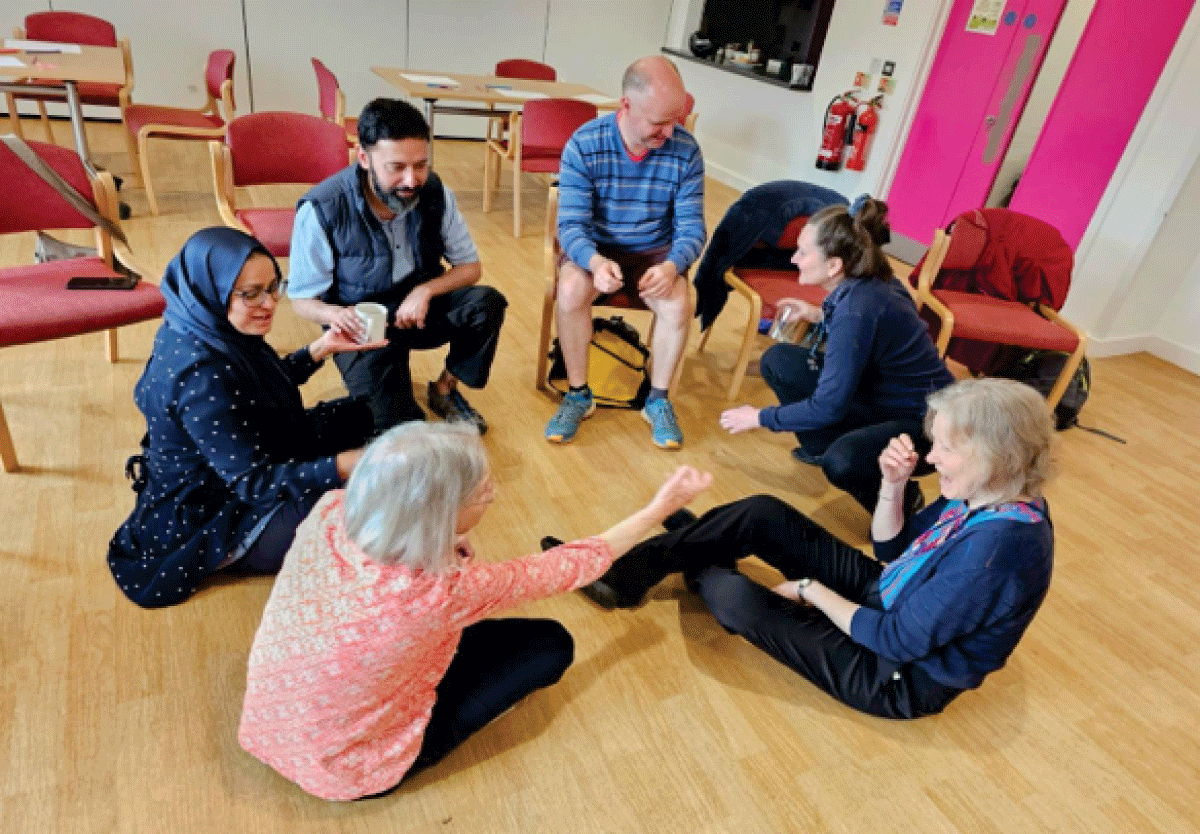
Figure 2
Workshop with local residents.
Scriptwriting
In the next phase, workshop and interview results were discussed by the steering group and then used to inform the first draft of the script written by our professional theatre practitioner. The resulting draft was for a play of about 15 minutes duration, set in an alternative reality where everyday life, including participating in a community picnic, is policed by zealous officials from the local authority who are charged with enforcing low carbon behaviours. The script went through two rounds of comment and amendment before the final draft was produced.
Casting and rehearsals
Casting proved extremely difficult. Despite our close connection with the local low carbon living group, the request to local people with no acting experience to come forward must have seemed extremely daunting. We amplified our efforts by reaching out to local youth clubs, local theatre groups, community groups, friends and family. We originally envisaged recruiting the entire cast of 6 people from the local community, but it quickly became apparent that this would be too difficult in the time available. Consequently, the decision was taken to recruit 2 local professional actors for the key roles of the rubbish collecting superhero and the zealous council official. In the event, the two professional actors hugely improved the whole production, lifting everyone’s performance and bringing a confidence that what we were producing was high quality. We conducted three 2 hour rehearsals with the whole cast prior to the actual performance. This was just enough.
Performance
Highly fortuitously, we were able to piggyback our performance onto a pre-existing community event: the annual community orchard apple picking day which involved an actual community picnic! See Figure 3 this guaranteed an audience of around 60 people including children and created the impression that our theatrical picnic was in some way integrated with the actual picnic. This demonstrates the importance of the whole production process becoming interwoven with the social life of the host community. As well as local residents, we also invited representatives from the local authority, local councillors, local school and youth club and university staff.
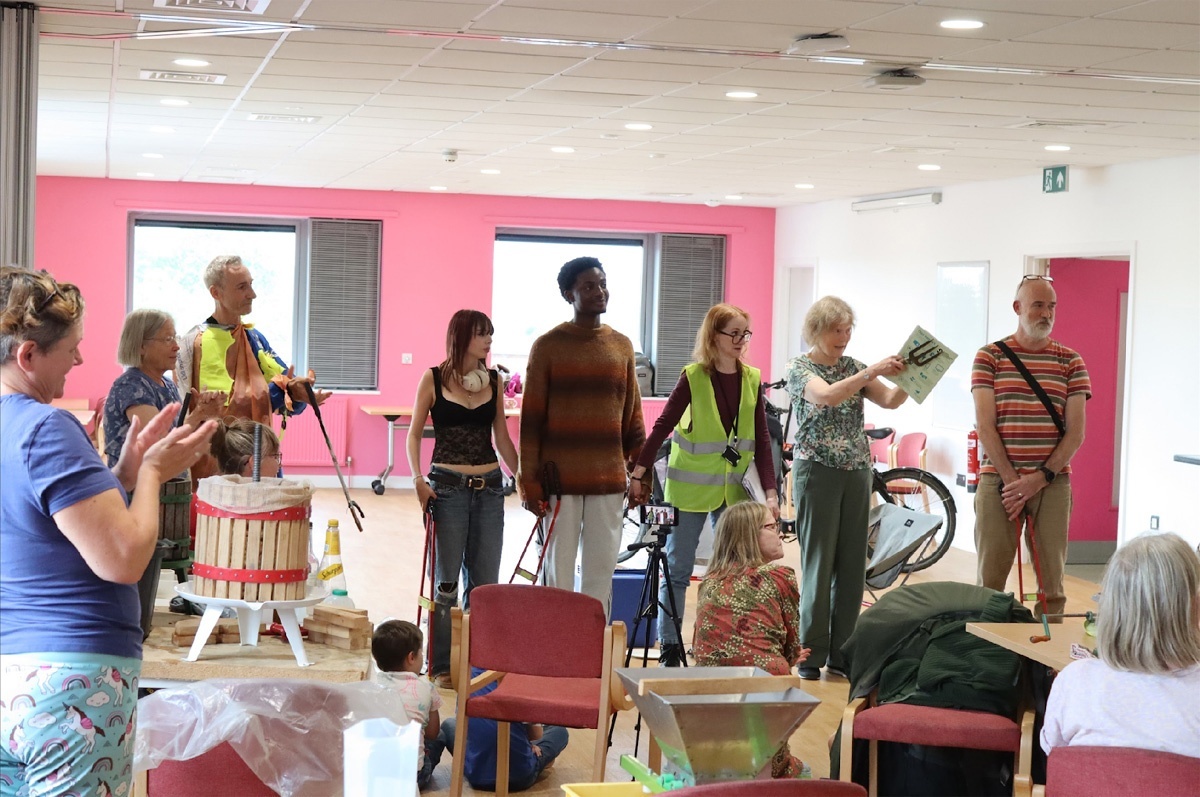
Figure 3
We performed to an audience of around 60 people at the Rose Hill Community Centre on the 20 September 2025.
Evaluation and legacy
Our process also included resource for formal evaluation of the whole experience including analysis of audience feedback, report writing and the creation of a production plan for a follow up full production of the piece which would tour underserved communities in Oxfordshire.
The Script
The core idea for the script originated from a workshop participant who described a “moment of transformation” where sharing food at a community picnic broke down barriers and brought the community together. This became the context for a light-hearted presentation of a low-carbon living scenario for Rose Hill. A dad, mother, a teenage sister and brother, a “super rubbish collector” and a local government official humorously interact about facts, perceptions, rules and possibilities in an alternate reality where the local authority has become tyrannical about enforcing low carbon lifestyles. This humorous aspect not only brings in a wider audience, it has also been found to be an effective means of engagement with climate change issues (Burke et al, 2018). As the official says:
Welcome to the Rose Hill Low Carbon Picnic. I will be checking picnic items and I’ve got penalty notices to hand out to anyone not complying. Rose Hill is officially a low carbon area, and this is a low carbon picnic. Are you compliant?
A synopsis follows which shows how the play follows classic principles of drama: identifying a problematic situation, bringing arguments exploring different solutions to resolving the problem leading to a climactic moment of heightened tension and breakthrough and finally a closing scene of resolution and conclusion.
The opening and conflict
The play is set during a sunny community picnic in Rose Hill. The scene is introduced by the officious Council official, who wears a high-vis vest and carries a clipboard, attempting to enforce strict low carbon compliance and conduct a mandatory survey. The official welcomes attendees to the “low carbon picnic” and uses penalty notices and time pressure to urge quick compliance. The main dramatic tension is introduced through the Family (Mum, Dad, Daughter, and Son), who arrive, hauling a heavy cooler and complaining that they couldn’t drive to the picnic area, immediately highlighting some of the perceived challenges in low carbon living. While the family is committed to low carbon ideals with Mum meticulously organising recycling and Dad having installed a heat pump, they struggle with practicalities, such as Dad purchasing unhealthy crisps in packets that are non-recyclable and bemoaning the extreme prices of the organic foods that make up their picnic.
Thematic debate
The family dynamic allows for a discussion of differing approaches to climate issues: the Daughter (a teenager) uses a scientific brain and deals in facts, while the Son (a wannabe social media influencer) focuses on content, filming and voices some of cultural meanings of low carbon living (as seen from a teenagers’ perspective). The Official attempts to proceed with the survey, focusing first on the family’s heat pump installation. The Official is visibly anxious about targets, noting they have allotted “3 minutes 45 seconds per survey”. The Official’s rigid, rule-based approach is challenged by the Son, who questions compliance and the affordability of low carbon living.
The climax and transformation
The scene is disrupted by the entrance of the (Super) Rubbish Collector, a charismatic, rhyming “Compost Crusader” and “Litter Picking Bard” who rides a bicycle and champions freedom and rebellion over the “clipboard” (Figure 4). In a playful act, the Rubbish Collector accidentally hooks the Official’s clipboard with a litter picker, scattering all the vital survey papers. The loss of the forms causes the Official to have a public emotional breakdown, admitting defeat: “I followed the system. I stuck to the plan. But it’s never enough” (Figure 5). In a pivotal moment, the Rubbish Collector and the Family immediately help gather the scattered papers. The Daughter observes, “Community isn’t a spreadsheet-it’s a system of support”.
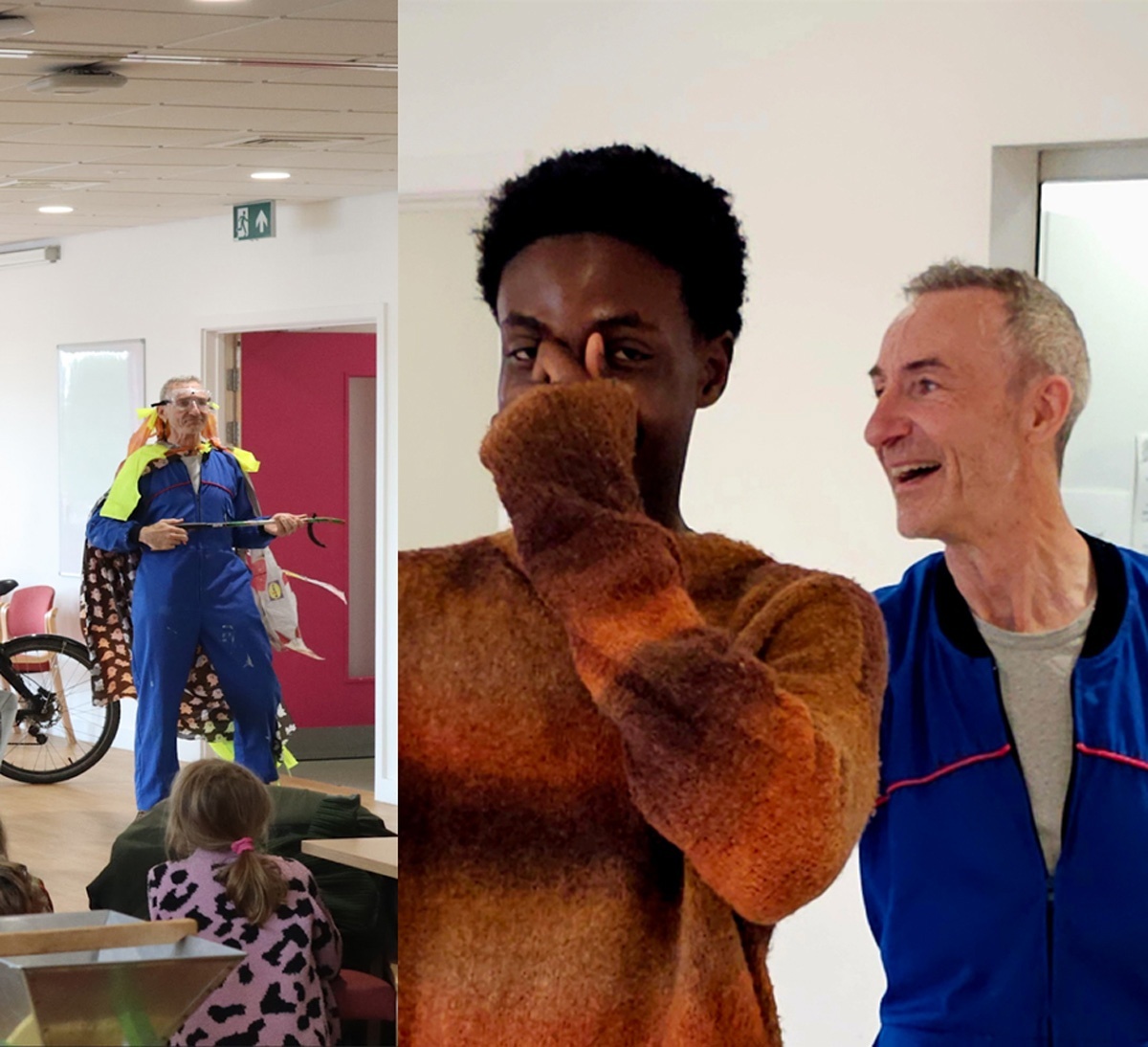
Figure 4
The son doesn’t quite know what to make of the rubbish collecting superhero.
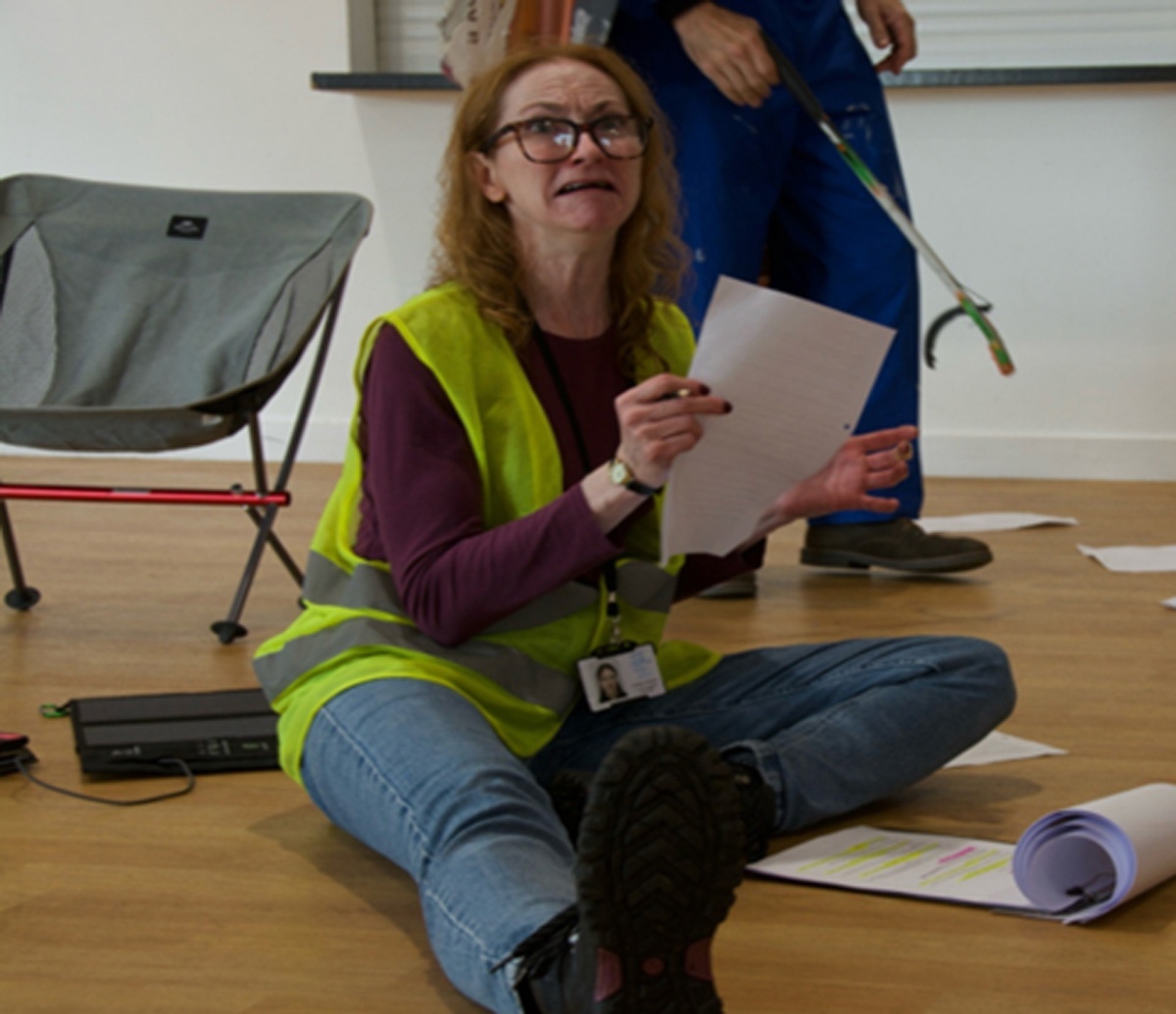
Figure 5
The official who tries to decarbonise communities using rules and regulations loses her forms – much to her distress.
Resolution and conclusion
The Official gains a realisation that low carbon action requires collecting “stories” alongside “data,” acknowledging the necessity of both “the rules and the rhymes”. The Official and the Rubbish Collector form an alliance to promote action that combines “heart, hope, humour, humanity”. The play concludes with the characters offering concrete, small, and joyful low-carbon suggestions, reinforcing the collective message that the earth does not require perfection, “just your participation”. The piece ends on a positive and connective note, promoting a low-carbon life that includes everyone (Figure 6).
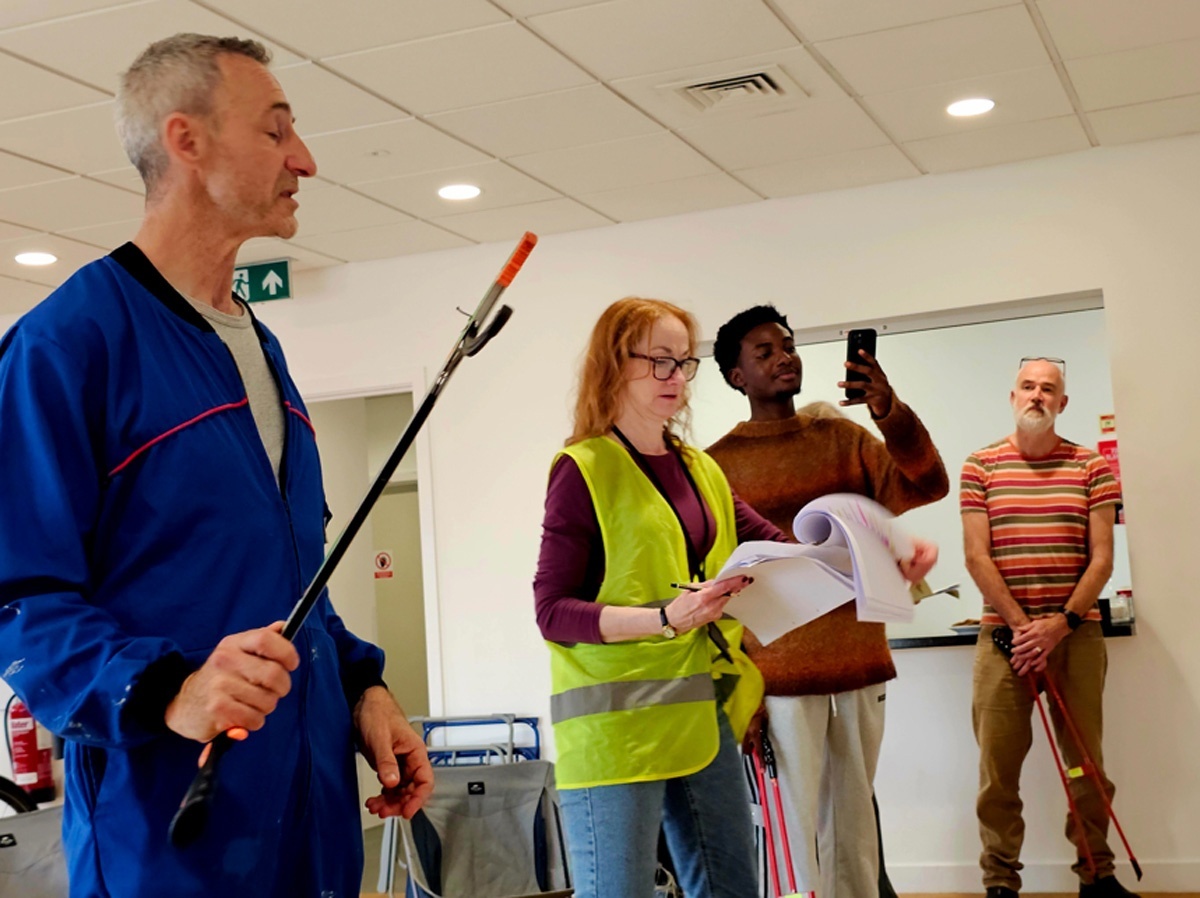
Figure 6
An alliance, of sorts, is created between the big hearted but rule adverse superhero and the officious but ultimately well-intentioned low carbon council official: successful transition needs rules and regulations AND the wholehearted support of the community.
Discussion
After consent had been secured, members of the audience chosen at random were asked some scripted questions about their experience. Responses are summarised below with some further general observations on the role of community theatre in place based approaches to energy transition.
Enjoyment, empathy and emotional engagement
There were many aspects of the play that people enjoyed. In particular, we heard that the sudden arrival of a superhero character was not expected and this both lifted the dramatic energy of the piece and added to the humour that was already building. Others mentioned the humorous and relatable family dynamics with good clear characters and that it “didn’t try to floss over the issues”. But rather, “it just took an ordinary family, and it showed that the challenges of trying to live a low carbon lifestyle”. This demonstrates how community theatre is inherently accessible and relatable. When the audience see themselves and their own challenges presented on stage, empathy and emotional engagement with the topic is created which greatly increases the engagement power of the medium (Lorenzoni et al, 2007). We can conclude that the play was effective in creating an opportunity for social capital to be increased and in presenting norms and challenges for ordinary people in adopting low carbon behaviours.
Individual versus system change
We heard some concerns that the play could have given the impression that individual action was sufficient to deliver effective community responses to climate change whereas in reality there has to be systemic change – both so that individual action is enabled and so that fundamental transformations to infrastructure, regulation and policy can be actioned:
Personally, I find it difficult to make the distinction between individual action and just systemic action because these problems are quite systemic. You need big actors, governments, corporations doing a lot more and sometimes you are in a situation where you problematise at an individual level when in fact the problem is with the systems. That doesn’t mean individuals can’t do more and they have to
Respondents further emphasised that it was up to the voting public to elect governments that took climate change mitigation seriously and that government officials should be reminded of their duties and obligations in this respect.
In this way the play was successful in communicating that system change will not occur unless people both take action in their own lives and that they use their voice and their vote to drive political change – the zealous low carbon council official with her rules and regulations needs to work with the emotional heart of the households making up the community as embodied by the rubbish collecting superhero with his rhymes and narratives.
Self-efficacy and carbon literacy
All audience respondents felt that everyone could do something to reduce their environmental impact, “I think everyone can practise low carbon living”. But, we heard a number of qualifications to this general position. For example, it was recognised that often people “don’t really know” what “lower carbon living” means and what practical actions could be taken. In this respect, the play was thought to be effective in raising awareness but had less to say about appropriate responses to take into daily life or in getting involved in local governance or decision-making. This carbon and energy “knowhow” constitutes self-efficacy which is thought to be a critical antecedent of behavioural intention in the Theory of Planned behaviour (Bostrom et al, 2019). For this reason, we intend that in future productions there will be opportunities to interact with low carbon and retrofit practitioners, local politicians and representatives from local government.
Should we all try to “do our bit”? – equity issues exposed by the play
A number of respondents picked up the equity issues exposed by the play voicing that everyone can and should do something but that some groups are more able to do some things than others. A further insight was that we shouldn’t be expecting or even aiming for perfection. It’s enough that people do something, anything, so that they feel they are part of the solution and have a part to play:
I think the message from the play was clear: everyone has a part to play and, you know, we’re not aiming for perfection. We’re each doing our bit and that and that was what I thought the play did really well was to say we can each do our bit and it was really effective in getting that message across.
In this viewing, even those who are living on low incomes, should take some responsibility for whatever changes they can make in their own lives to minimise environmental impacts. This idea needs careful handling though: creating a feeling of compulsion to take measures to reduce energy consumption in socio-economic groups that already consume relatively little could result in either: a) a sense of shame if savings are not achieved or, b) a sense that that this is an unfair request – those high consuming families that cause the environmental problems should reduce their consumption first, c) any consumption reductions that are achieved could impact minimum levels of energy services thereby creating potential detriment to welfare.
Social norms
The Theory of Planned Behaviour suggests that intention to take action is influenced by attitudes, self-efficacy and the perception of a social norm for the behaviour (Gadenne et al, 2011). In dramatising a “typical” Rose Hill family’s struggles on the low carbon journey, a social norm for low carbon living is presented and explored – both during the performance and, subsequently, when the audience thinks about what they have witnessed. But it is not clear if a theatrical norm for low carbon living as presented in our play becomes transposed in people’s minds to the real world of friends and neighbours in the Rose Hill community. The extent to which fictional or theatrical norms become integrated into the actual personal psychology of the audience would be worth investigating further.
Social capital
The play created a social space in which increases in “bonding”, bridging and “linking” social capital were likely to increase. The audience included lots of local families with young children, the local constituency Member of Parliament (MP), local ward councillors, the vicar from the local church, a number of people from the local low carbon living group and various representatives from similar groups from across southern Oxford. There is no doubt that new conversations were had and new relationships were forged amongst audience members, building trust and social capital. As our scriptwriter stated:
I think when groups of people get together who wouldn’t normally get together and collaborate with a common cause and spend time doing that and getting to know each other, then they are building up trust…a very important part of all of this is trust. All of these things are very important life skills, but they’re really, really important to progressive change as well.
Engaging “hard to reach” groups
The project aimed to connect with “hard to reach” groups: local residents drawn from Rose Hill’s many ethnic minorities, young adults, vulnerable householders and people on very low incomes. We can report only partial success in this respect: most of the audience for the final performance could loosely be described as white middle class families with younger children. However, in the process of producing the piece, we had representation from the Pakistani community, two of the actors were teenagers, one with black British ethnicity, the “Syrian Sisters” provided food for the performance, and connections were made with the youth group and local school. One learning is that when making the offer of community theatre it is critical to emphasise that acting and final performance is only one part of it. In the process of producing the piece there are multiple other roles which may be more accessible and attractive for marginalised groups: attending workshops and interviews to work up the script; working on the script itself; technical support – stage hands etc; other various administrative roles including publicity etc. Marginalised and hard to reach groups may also struggle to participate for a variety of practical reasons: travel costs; timings of rehearsals not being convenient for work or school drop offs/pickups etc; need to eat at certain time. These small but significant barriers can be systematically addressed.
Culture wars
One audience member mentioned that although everyone “can do something” some people “seem to be ideologically opposed to it”. This is a reminder that low carbon living is, for many people, politically charged. Any subsequent work to develop the community theatre model needs to have the political context constantly in mind. If the objective is to engage with not-the-usual suspects, then the political and ideological framing must not alienate particular social groups – particularly those groups that reject Net Zero objectives for political or social reasons. The production must genuinely create a space where all voices are heard and fairly represented.
Coverage of controversial topics
Most respondents felt that the play had been balanced and covered all the main issues of concern in the Rose Hill community. This was gratifying to hear and is a reflection of the considerable time invested in the learning phase of the project where conversations with local people were conducted. The one topic mentioned as “left out” was “low traffic neighbourhoods”. This was described as “probably sensible” given how controversial this issue is in Oxford. However, future productions should not avoid dramatization of a social issue simply because it is controversial. The purpose of the community theatre is to create a safe space where controversial issues can be discussed. Furthermore, a follow up production should not be afraid to explore some of the real conflict, disruption and difficulty that communities will encounter on the journey to low carbon living. For example, there are real dangers that vulnerable householders who may be unskilled in operating a heat pump in conjunction with a Time of Use tariff could dramatically increase their electricity bill and precipitate indebtedness and associated detriment. A production needs to handle these topics responsibly, pointing out downsides, dangers and disbenefits as well as the benefits.
The importance of quality
One minor criticism was that the performance was a little under rehearsed. However, it was acknowledged that this was to be expected in a piece of theatre with non-professionals involved. However, we are strongly of the view that community theatre should aim for the highest production standards possible within time and budget. A high quality production is both more entertaining and more effective in achieving its wider objectives: countering misinformation, attracting participants, raising awareness and imparting life skills.
Learnings to take into the next phase
We propose to take a number of key learnings into the next phase:
Issues will be explored in greater depth, with more light and shade and with moments of real conflict and drama. Mitigation of climate change, the cost-of-living crisis and social justice are intertwined and are among the most serious issues of our times. The tone of a full production should acknowledge this.
A core script should be developed with a core group of professional actors. But this script is to be continuously adapted to reflect hyperlocal issues in each host community.
After performance, a discussion with the audience about the issues just witnessed will be facilitated.
Local “low carbon” practitioners will be on hand, such as the Local Authority energy advice team, to give concrete guidance and answer specific questions about transition to lower carbon and more resilient living.
Conclusion
This paper reports an initial evaluation of a small “test piece” of community theatre – our conclusions should be judged accordingly. Nonetheless, supported by the theory of community theatre and the positive responses of all those involved, whether as scriptwriters, performers or audience members, we feel that the “Picnic at Rose Hill” has demonstrated the potential for community theatre to powerfully engage communities with social and environmental issues. Also, that, if properly funded, carefully developed and implemented, hyperlocal community theatre could play a powerful role in countering misinformation, inspiring grass roots action, strengthening social capital and building confidence and local skills. It could thereby serve a supportive role in transition to lower carbon living as part of a place based approach and, in particular, offer a route to engaging social and cultural groups who do not normally participate in conversations about Net Zero. To fully demonstrate the value and impacts of the approach we propose that there should be formal social science evaluation of any follow up production. This should include qualitative and quantitative metrics to understand behavioural and attitudinal change, skills transfer, social capital development and specific material outcomes including increases in adoption of retrofit measures and adoption of low carbon practices.
Additional File
The additional file for this article can be found as follows:
The theatre of net zero:
Exploring the power of community theatre as a radical engagement tool in place-based approaches to just energy transition. DOI: https://doi.org/10.66506/essp.1-261-26.s1
Acknowledgements
This project would not have been possible without the funding of the Oxford Is Community Programme. Eleanor Watts at the Rose Hill and Iffley Low Carbon group came up with the core “picnic” idea for the play and was key to providing a bridge into the Rose Hill Community. Rowan Padmore, the scriptwriter and director, crafted a funny, informative and inspiring experience enjoyed by more than 60 members of the Rose Hill community.
Data Accessibility Statement
Qualitative data including workshop reports, video recordings, interview recordings and transcripts may be made available to research organisations on request where appropriate.
eceee paper ID
1-261-26