
Table 1
Summary of themes relating to energy activities relevant to energy equity, divided between the public and academic expert subsamples. A tick indicates that interviewees in this subsample mentioned an activity that was coded into this theme.
| THEME MENTIONED BY SUBSAMPLE GROUP | ||
|---|---|---|
| PUBLIC SUBSAMPLE | ACADEMIC EXPERT SUBSAMPLE | |
| Energy activities relevant to energy equity | ||
| Household energy demand | ✓ | ✓ |
| Energy generation and supply | ✓ | ✓ |
| Transport and mobility | ✓ | ✓ |
| Energy infrastructure and materials | ✓ | |
| Community engagement | ✓ | |
| Energy jobs | ✓ | |
Table 2
Summary of themes relating to differences in the focus of the terms ‘energy equity’ and ‘energy justice’. A tick indicates that interviewees in this subsample mentioned an activity that was coded into this theme.
| THEME MENTIONED BY SUBSAMPLE GROUP | ||
|---|---|---|
| PUBLIC SUBSAMPLE | ACADEMIC EXPERT SUBSAMPLE | |
| Differences in focus between energy equity and energy justice | ||
| Process vs outcome | ✓ | |
| Catering to individual vs collective needs | ✓ | ✓ |
| Abstract vs specific | ✓ | ✓ |
| Systemic vs isolated | ✓ | |
| Public and political acceptability | ✓ | ✓ |
| Measurability | ✓ | |
| Inclusion of public participation | ✓ | |
| Conceptual validity | ✓ | |
Table 3
Summary of themes relating to impacts of energy equity mentions by the public and academic expert subsamples, divided between direct and indirect, longer-term impacts. A tick indicates that interviewees in this subsample mentioned an impact that was coded into this theme.
| THEME MENTIONED BY SUBSAMPLE GROUP | ||
|---|---|---|
| PUBLIC SUBSAMPLE | ACADEMIC EXPERT SUBSAMPLE | |
| Direct impacts of energy equity | ||
| Financial impacts | ✓ | ✓ |
| Energy access | ✓ | ✓ |
| Energy supply | ✓ | ✓ |
| Transport and mobility | ✓ | ✓ |
| Energy infrastructure and materials | ✓ | ✓ |
| Energy demand | ✓ | |
| Indirect, longer-term impacts of energy equity | ||
| Wider economic impacts | ✓ | ✓ |
| Environmental | ✓ | ✓ |
| Educational | ✓ | ✓ |
| Health | ✓ | ✓ |
| Geopolitical | ✓ | |
| Unintended impacts | ✓ | |
| Political | ✓ | |
Table 4
Summary of themes relating factors creating and/or entrenching energy inequities, divided between the public and academic expert subsamples. A tick indicates that interviewees in this subsample mentioned a factor that was coded into this theme.
| THEME MENTIONED BY SUBSAMPLE GROUP | ||
|---|---|---|
| PUBLIC SUBSAMPLE | ACADEMIC EXPERT SUBSAMPLE | |
| Factors creating and/or entrenching energy inequities | ||
| Financial factors | ✓ | ✓ |
| Infrastructural factors | ✓ | ✓ |
| Spatial and geographical factors | ✓ | ✓ |
| Informational factors | ✓ | ✓ |
| Social and individual-level factors | ✓ | ✓ |
| Political priorities | ✓ | ✓ |
| Access to energy services | ✓ | |
| Poor maintenance | ✓ | |
| Reliability | ✓ | |
| Skills gaps | ✓ | |
| Energy system itself | ✓ | |
Table 5
Summary of themes relating to energy equity measurements and metrics, split into direct and indirect energy equity measurements. A tick indicates that interviewees in this subsample mentioned a measurement, metric or indicator that was coded into this theme.
| THEME MENTIONED BY SUBSAMPLE GROUP | ||
|---|---|---|
| PUBLIC SUBSAMPLE | ACADEMIC EXPERT SUBSAMPLE | |
| Direct energy equity measurements | ||
| Cost metrics | ✓ | ✓ |
| Access metrics | ✓ | ✓ |
| Demand metrics | ✓ | ✓ |
| Energy infrastructure metrics | ✓ | ✓ |
| Energy supply metrics | ✓ | ✓ |
| Indirect energy equity measurements | ||
| Wider economic metrics | ✓ | ✓ |
| Environmental metrics | ✓ | ✓ |
| Social metrics | ✓ | ✓ |
| Health metrics | ✓ | ✓ |
| Waste metrics | ✓ | |
| Intervention metrics | ✓ | |
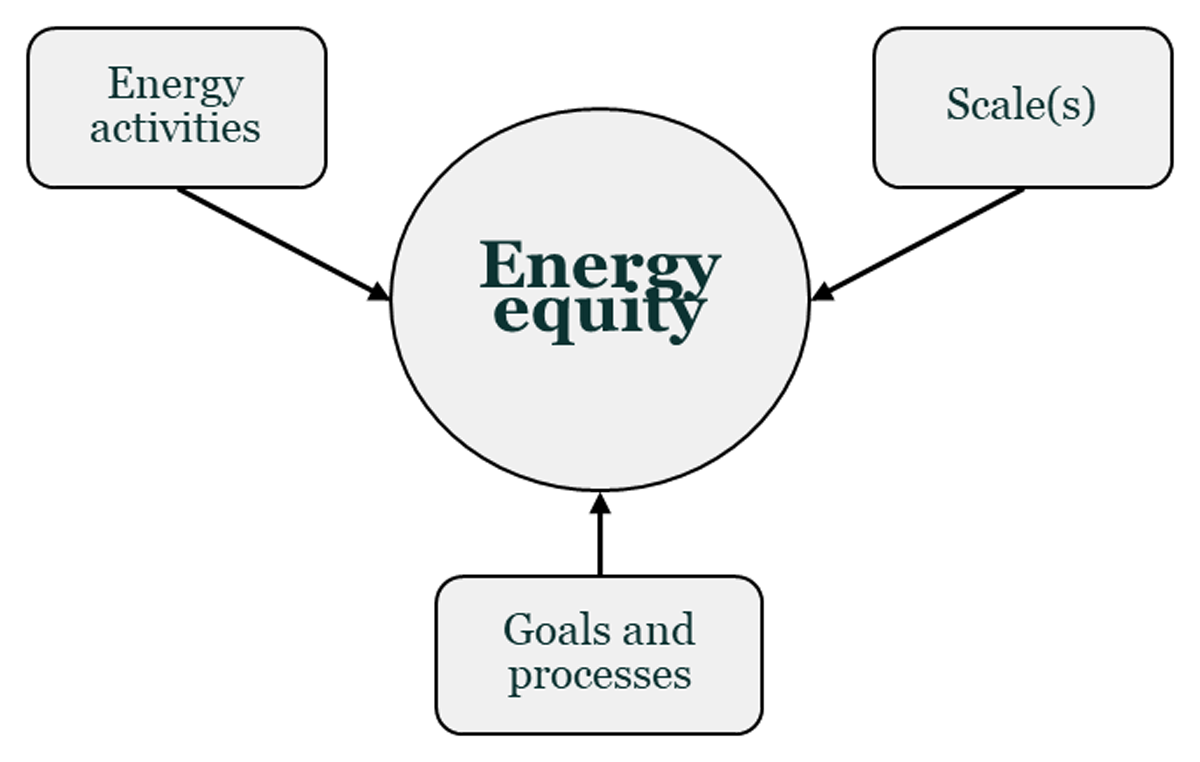
Figure 1
Preliminary visualisation of energy equity, determined by the types of energy activities included; the temporal, spatial, societal and political scales; and the approach grounded in goals and processes aimed at ensuring equitable distribution of energy services tailored to individual needs, delivered with fairness and respect and cognisant of public voice and lived experience.
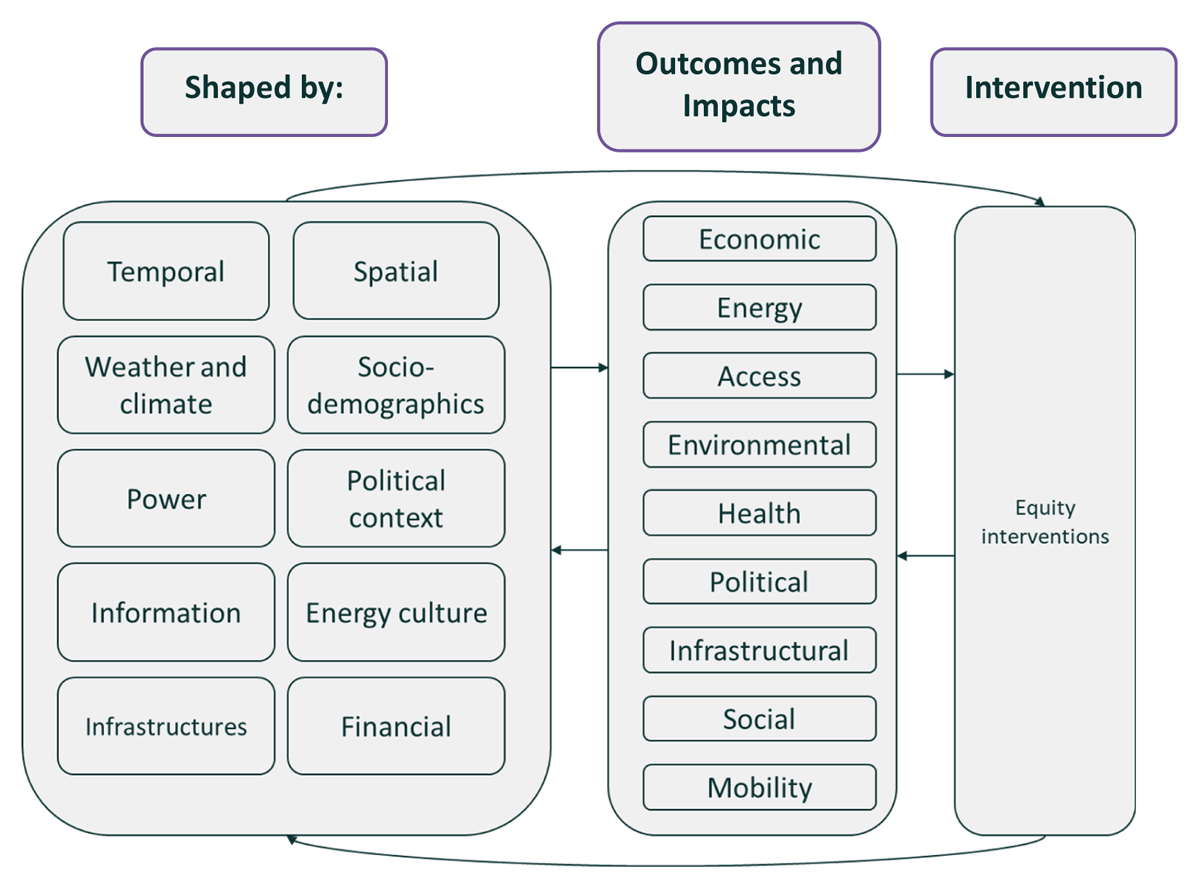
Figure 2
Preliminary shaping determinants, outcomes and impacts, and interventions of energy equity showing a non-exhaustive list of variables as determined by participants in this study. The structural and social determinants interact with outcomes and impacts, as well as interventions, and reproduce with one another.