
Introduction
Sepsis is a life-threatening condition characterized by infection-induced immune dysregulation, resulting in acute organ dysfunction and high mortality among critically ill patients worldwide [1,2]. The timely initiation of appropriate antimicrobial therapy is a cornerstone of international sepsis management and is consistently associated with improved survival and clinical outcomes [3,4]. However, effective antimicrobial management also requires careful determination of the optimal timing for antibiotic de-escalation or discontinuation to minimize antimicrobial resistance, drug-related adverse events, secondary infections, and avoidable healthcare costs [5,6,7,8]. In this context, relying solely on clinical improvement and nonspecific inflammatory markers may delay antibiotic discontinuation, especially in critically ill patients with ongoing organ dysfunction. Therefore, adjunctive tools indicating resolution of infection may assist clinicians in making individualized decisions regarding the duration of antibiotic therapy.
Several biomarkers have been described for assessing infection severity and guiding antibiotic de-escalation strategies, with leukocyte count and C-reactive protein (CRP) being the most commonly used in clinical practice [9]. However, these markers may lack sufficient specificity in critically ill patients because they can be influenced by trauma, surgery, systemic inflammation, and noninfectious organ dysfunction. Among recent available biomarkers, procalcitonin, a calcitonin-related gene product expressed by human epithelial cells in response to bacterial infections, has gained more attention as a biomarker with superior specificity and sensitivity compared with CRP for monitoring the course of severe bacterial infections [10,11,12,13]. In February 2017, the US Food and Drug Administration approved procalcitonin as a blood biomarker to support guidance of antibiotic therapy in patients with sepsis. Current sepsis guidance suggests that procalcitonin may be considered as an adjunct to support antibiotic discontinuation decisions in selected critically ill patients, while emphasizing that its use should complement rather than replace clinical judgment [14]. Although most randomized trials of procalcitonin-guided strategies were designed to evaluate reductions in antibiotic exposure, emerging evidence suggests that these interventions may also influence mortality outcomes in critically ill populations. In this regard, a large, randomized trial conducted in the Netherlands reported a reduction in mortality associated with PCT-guided antibiotic therapy [5], whereas the recent ADAPT-Sepsis trial demonstrated a non-significant difference in all-cause mortality at the last time point compared with standard care [15]. Given the conflicting results and a lack of robust evidence regarding the consistency of potential benefits across different mortality time points, sepsis severity strata. Therefore, a comprehensive meta-analysis of RCTs is warranted to clarify the efficacy and safety of PCT-guided antibiotic therapy compared with standard care in adult patients with sepsis or septic shock and to inform evidence-based clinical practice recommendations.
Methods
Protocol Registration and Reporting Standards
This systematic review and meta-analysis protocol was developed in accordance with the Preferred Reporting Items for Systematic Reviews and Meta-Analyses (PRISMA) [16] and follows the methodological guidance outlined in the Cochrane Handbook for Systematic Reviews of Interventions [17]. The protocol was registered in PROSPERO under registration number (CRD420261410435).
Information Sources and Search Strategy
A comprehensive and systematic literature search was conducted in MEDLINE (via PubMed), Scopus, the Cochrane Central Register of Controlled Trials (CENTRAL), and Web of Science (WoS) from database inception to January 2026, to identify RCTs evaluating PCT-guided antibiotic therapy compared with standard care or usual care in critically ill patients admitted to the intensive care unit (ICU) with sepsis, septic shock, or suspected bacterial infection. A highly sensitive search strategy was developed using Boolean operators and a combination of MeSH terms and free-text keywords, including: “procalcitonin,” “PCT-guided therapy,” “antibiotic discontinuation,” “standard care,” “sepsis,” “septic shock,” “bacterial infection,” and “intensive care unit”. No restrictions were applied regarding language, publication status, or publication date. A detailed search strategy for each database, including all search terms, Boolean operators, and filters, is provided in the Supplementary Table 1. To ensure comprehensive coverage, forward and backward citation tracking was performed by manually screening the reference lists of included studies and relevant systematic reviews, as well as identifying newer studies citing the included articles using Google Scholar. In addition, ClinicalTrials.gov and the WHO International Clinical Trials Registry Platform (ICTRP) were searched to identify ongoing or unpublished trials.
Study Selection
All retrieved records were initially imported into EndNote reference management software for duplicate removal. The deduplicated records were subsequently uploaded to the Rayyan web-based screening tool for further evaluation [18]. Study selection was conducted in two sequential stages. First, titles and abstracts were independently screened by two reviewers to assess eligibility according to the predefined inclusion and exclusion criteria. Second, the full texts of potentially eligible studies were retrieved and independently assessed for final inclusion. Any discrepancies between reviewers at either stage were resolved through discussion, and when consensus could not be reached, a third reviewer was consulted.
Eligibility Criteria and Outcomes
We included randomized controlled trials (RCTs) enrolling adult ICU patients with suspected or confirmed bacterial infection, including suspected sepsis, sepsis, severe sepsis, or septic shock, regardless of infection source, as defined by the original trial investigators using SIRS-based criteria, Sepsis-2, Sepsis-3, or trial-specific definitions of suspected infection. Eligible interventions included PCT-guided antibiotic strategies in which initiation, continuation, escalation, de-escalation, or discontinuation of systemic antibiotic therapy was guided by serial procalcitonin measurements according to a predefined algorithm or protocol. Comparator groups consisted of standard care, usual care, or guideline-based antibiotic management relying on clinical judgment without reference to procalcitonin values. Only RCTs conducted in ICU settings were included, with no restrictions on language or publication date. Studies were excluded if they involved pediatric populations, were conducted exclusively outside the ICU, evaluated biomarkers other than procalcitonin without a PCT-guided algorithm, used non-randomized designs, or focused on infections requiring predefined prolonged antibiotic therapy where biomarker-guided discontinuation was not clinically appropriate. Eligible studies were required to report at least one prespecified outcome of interest. The primary clinical outcome was all-cause mortality at the longest available follow-up, whereas the key antimicrobial stewardship outcome was duration of antibiotic therapy. The secondary outcomes included length of ICU stay or hospital stay, infection relapse or recurrence, new infection or superinfection, antibiotic-free days, and clinical cure.
Data Extraction
Data extraction was performed using a predefined, structured data extraction sheet developed in Microsoft Excel. The extraction sheet captured key information across three main domains: study summary characteristics, baseline patient characteristics, and outcome data (including all prespecified primary and secondary outcomes). Data were extracted independently by two reviewers. Any discrepancies identified during the extraction process were resolved through discussion and consensus, and when agreement could not be achieved, a third reviewer was consulted.
Risk of Bias Assessment
The risk of bias of included RCTs was independently assessed by two reviewers using the Cochrane Risk of Bias 2 (RoB 2) tool [19], which evaluates bias arising from the randomization process, deviations from intended interventions, missing outcome data, measurement of outcomes, and selection of the reported results. Each study was judged as having low risk of bias, some concerns, or high risk of bias according to the RoB 2 algorithm. Any disagreements between reviewers were resolved through discussion and consensus.
Data synthesis and statistical analysis
All statistical analyses were performed using Stata/SE version 19.5 (StataCorp, College Station, TX). Data from all eligible trials were analyzed strictly according to the intention-to-treat (ITT) principle, whereby participants were retained in their originally randomized groups regardless of treatment adherence, crossover, or protocol deviations. For dichotomous outcomes, treatment effects were pooled as risk ratios (RRs) with corresponding 95% confidence intervals (CIs). For continuous outcomes, effects were summarized as mean differences (MDs) with 95% CIs. When continuous data were reported as medians with interquartile ranges or ranges, these were converted to means and standard deviations using established statistical methods before pooling. Study-specific effect sizes were pooled using a random-effects DerSimonian–Laird model, accounting for anticipated clinical and methodological heterogeneity across studies. Statistical heterogeneity was assessed using Cochran's Q test, the I2 statistic, and between-study variance (τ2), with I2 values of approximately 25%, 50%, and 75% interpreted as indicating low, moderate, and substantial heterogeneity, respectively. Additional graphical and exploratory analyses were performed to assess consistency and potential biases. L'Abbé plots were generated to visualize the risk–benefit ratio for each included study, while Galbraith plots were used to identify potential outliers and sources of heterogeneity. Funnel plots were constructed to visually assess small-study effects and publication bias when a sufficient number of studies were available. To assess the robustness of the accumulated evidence and to minimize the risk of random errors arising from repeated significance testing, Trial Sequential Analysis (TSA) [20,21,22] was applied to both dichotomous and continuous outcomes. For dichotomous outcomes, we prespecified a two-sided α of 0.05, β of 0.20 (80% power), and an anticipated relative risk reduction of 10%, with the control event rate estimated from the pooled control groups across included trials. For continuous outcomes, the required information size was calculated using the observed variance, a prespecified clinically meaningful mean difference, and adjustment for between-study heterogeneity based on the random-effects model variance. In both analyses, O'Brien–Fleming α- and β-spending boundaries were applied. The evidence was considered conclusive if the cumulative Z-curve crossed the conventional significance boundary and the trial sequential monitoring boundary, or if the required information size was reached; otherwise, the evidence was considered inconclusive, indicating that further studies may be necessary.
The Grading of Recommendations Assessment, Development, and Evaluation (GRADE) [23] framework was used to assess the certainty of the evidence and the strength of recommendations. Certainty of evidence was classified as high, moderate, low, or very low. High certainty indicates strong confidence that the estimated effect is close to the true effect, whereas moderate certainty suggests that further research may affect the estimate. Low certainty implies that additional studies are likely to substantially influence the effect estimate, and very low certainty reflects considerable uncertainty, with the true effect potentially differing markedly from the estimated effect. The GRADE approach provides a transparent and systematic method for translating evidence into clinical recommendations.
Prespecified subgroup analyses were conducted for mortality according to follow-up time points (ICU, in-hospital, 28-day, 60-day, and 90-day mortality), and for both all-cause mortality and duration of antibiotic therapy according to baseline illness severity stratified by SOFA score categories (0–6, 7–9, and ≥10).
Results
Literature Search
The literature search identified a total of 6,730 records from electronic databases. After removal of 687 duplicate records, 6,043 records remained for title and abstract screening, of which 5,950 were excluded as clearly irrelevant. Consequently, 93 full-text articles were retrieved and assessed in detail for eligibility. Following full-text review, 16 RCTs met the eligibility criteria and were included in both the systematic review and meta-analysis [1,5,15,24,25,26,27,28,29,30,31,32,33,34,35,36]. The study selection process is illustrated in the PRISMA flow diagram (Figure 1).
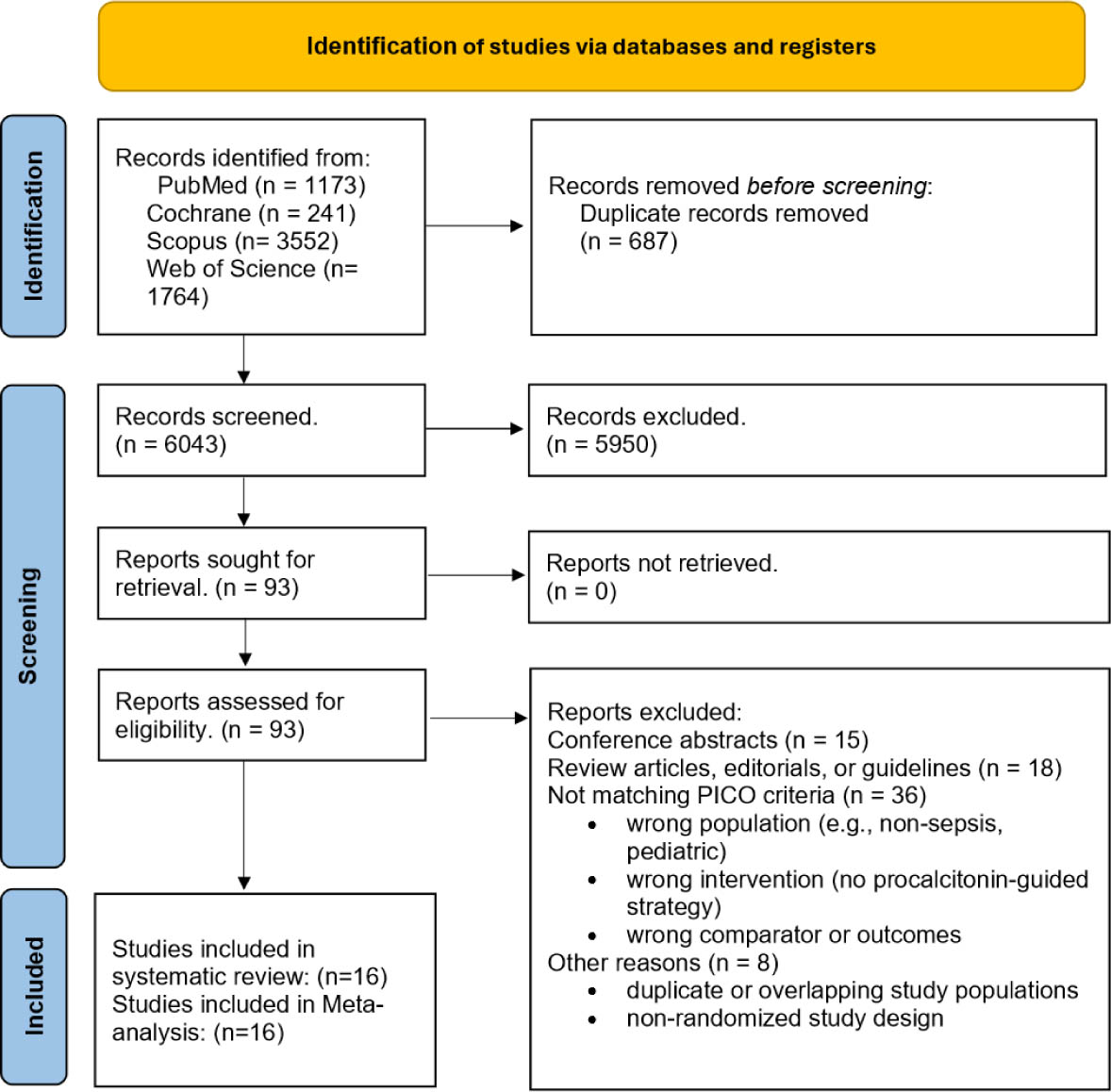
Fig. 1.
PRISMA flow diagram
Characteristics of the included studies and risk of bias assessment
Sixteen RCTs enrolling 7,966 patients were included, of whom 3,985 were allocated to a PCT-guided antibiotic strategy and 3,981 to standard care. Across trials, baseline demographic characteristics were comparable between groups. The overall weighted mean age of enrolled patients was 63.5 years, and 4,747 patients (59.6%) were male. Follow-up duration ranged from 28 to 365 days, with a median follow-up of 60 days and a mean follow-up of 93.4 days. A detailed summary of study characteristics and baseline demographics is presented in Table 1. Risk of bias assessment using the Cochrane RoB-2 tool demonstrated that the majority of included randomized trials were judged to be at low overall risk of bias or to raise some concerns. In contrast, Hochreiter et al. (2009) [28] was assessed as being at high risk of bias, primarily due to insufficient reporting of the randomization process and lack of adequate allocation concealment (Figure 2).
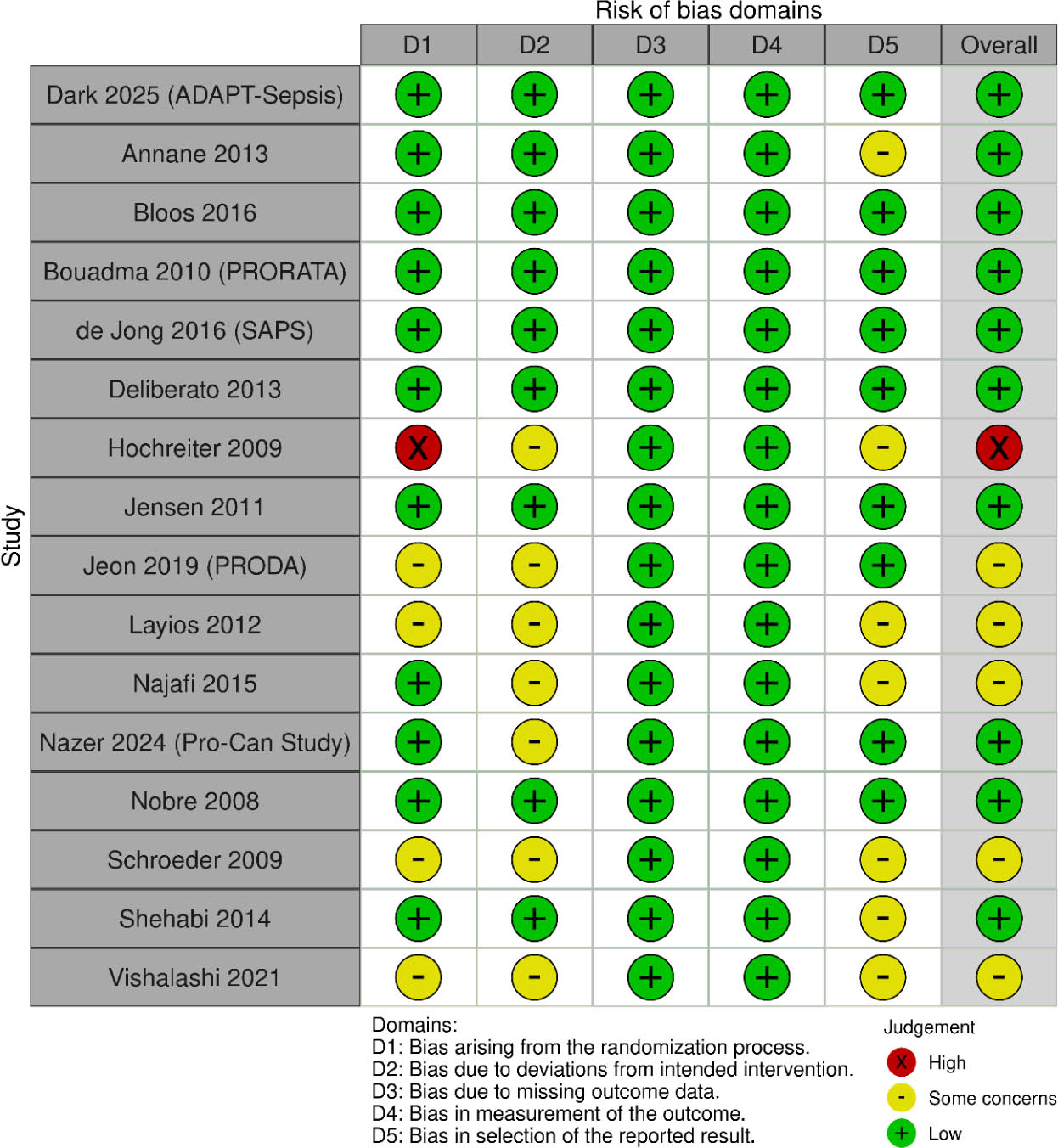
Fig. 2.
Risk of bias assessment (ROB-2) for the included studies.
Table 1:
Baseline characteristics of patients included in this review.
| Study ID | Study design | Setting, type of trial | Country | Time frame | Follow-up (days) | Total | Sample size in ITT analysis PCT-guided | Control | Clinical diagnosis | Definition of sepsis | Type of procalcitonin algorithm and procalcitonin cutoffs used | Primary outcomes |
|---|---|---|---|---|---|---|---|---|---|---|---|---|
| Dark 2025 (ADAPT-Sepsis) | Multicenter, intervention-concealed RCT | 41 UK 41 UK National Health Service ICUs | UK | January 1, 2018, to June 5, 2024 | 90-days | 1836 | 918 | 918 | Suspected sepsis with acute organ dysfunction | Sepsis-3 (SOFA score) | Strong stop: PCT <0.25 μg/L; Supports stop: PCT drop >80% and <0.50 μg/L; Usual care otherwise | Total antibiotic duration (28d); 28-day all-cause mortality |
| Annane 2013 | Multicenter, randomized, single-blind trial | 8 ICUs in France | France | Dec 2006 to Dec 2009 | Until hospital discharge or up to 30 days | 62 | 31 | 31 | Severe sepsis/septic shock | Severe sepsis phenotype, negative cultures, no overt infection | Algorithm at 6h, day 3, day 5: <0.25 μg/L (stop), 0.25–<0.5 (discourage), 0.5–<5 (recommend), ≥5 (strongly recommend) | Proportion on antibiotics at day 5 |
| Bloos 2016 | Multicenter, randomized, 2×2 factorial trial | 33 ICUs in Germany | Germany | November 6, 2009, to March 8, 2013 | 90 days | 1089 | 552 | 537 | Severe sepsis or septic shock | Severe sepsis/septic shock (SIRS + organ dysfunction) | PCT measured on days 0,1,4,7,10,14; Stop if PCT ≤1 ng/mL or drop ≥50% from previous | 28-day all-cause mortality |
| Bouadma 2010 (PRORATA) | Multicenter, prospective, parallel-group, open-label RCT | 8 ICUs (medical/surgical), multicentre RCT | France | June 2007 to May 2008 | 60 days | 630 | 311 | 319 | Suspected bacterial infection in the ICU | Septic shock is defined per ACCP/SCCM criteria | Start: PCT <0.25→strongly discourage; >1→strongly encourage. Stop: PCT <80% of peak or <0.5 μg/L → encourage stop. | Mortality at 28 & 60 days (non-inferiority); days without antibiotics by day 28 (superiority) |
| de Jong 2016 (SAPS) | Multicenter, randomized, open-label intervention trial | 15 ICUs (Netherlands), pragmatic RCT | Netherlands | Sept 18, 2009, to July 1, 2013 | 365 days | 1575 | 776 | 799 | Assumed or proven infection (sepsis, severe sepsis, or septic shock) in the ICU | Sepsis/severe sepsis/septic shock (2001 SCCM/ESICM criteria) | Stop if PCT ↓ ≥80% from peak or ≤0.5 μg/L. Non-binding advice. | Daily defined doses & duration of antibiotic treatment |
| Deliberato 2013 | Single-centre, prospective, open-label RCT | 1 ICU (Brazil) | Brazil | March 2008 to February 2010 | Hospital discharge | 81 | 42 | 39 | Critically ill patients admitted with suspected sepsis, severe sepsis, or septic shock | Sepsis/Severe sepsis/Septic shock (ACCP/SCCM) | Stop if PCT ↓ >90% from peak or <0.5 ng/mL. | Duration of antibiotic therapy |
| Hochreiter 2009 | Randomized prospective controlled trial | Surgical ICU, single center | Germany | January 2006 to March 2007 | Until discharge | 110 | 57 | 53 | Suspected or confirmed bacterial infection + ≥2 SIRS criteria | ACCP/SCCM sepsis definition | Stop if clinical improvement + PCT <1 ng/mL or PCT >1 ng/mL but dropped to 25–35% of initial value over 3 days | Duration of antibiotic therapy |
| Jensen 2011 | Randomized controlled open-label trial | 9 | Denmark | September 1, 2006, to February 6, 2009 | 60 days | 1,200 | 604 | 596 | Suspected infection in ICU patients | ACCP/SCCM criteria (sepsis, severe sepsis, septic shock) | Alert PCT: ≥1.0 ng/mL and not decreasing ≥10% from previous day → escalate antibiotics + intensify diagnostics | 28-day all-cause mortality |
| Jeon 2019 (PRODA) | Multi-center randomized controlled trial | 4 medical ICUs, single-blinded | Korea | July 2014 through June 2015 | 28 days | 62 | 30 | 32 | Suspected severe sepsis or septic shock, within 24h of ICU admission | Surviving Sepsis Campaign definitions | Stop if PCT decreased by ≥80% from peak or ≤0.5 μg/L; measured every other day | Duration of antibiotic therapy |
| Layios 2012 | Randomized controlled trial (RCT) | Five ICUs from a tertiary teaching hospital | Belgium | April 2008 to December 2008 | ICU stay | 509 | 258 | 251 | Suspected infection (Sepsis, severe sepsis, or septic shock) in ICU patients | American College of Chest Physicians / Society of Critical Care Medicine (ACCP/SCCM) Consensus Conference definitions | Initiation guidance: PCT <0.25 μg/L discouraged; >1 μg/L recommended | Antibiotic consumption (treatment days, DDD/100 ICU days) |
| Najafi 2015 | Randomized controlled trial (RCT) | ICU, single-center, single-blind | Iran | December 2012 to December 2013 | Hospital stay | 60 | 30 | 30 | SIRS in ICU patients | SIRS criteria (≥2 SIRS criteria) | Initiation guidance: PCT <0.5 ng/mL → discourage; 0.5–2 ng/mL → monitor; >2 ng/mL → treat | Antibiotic use (total exposure days) |
| Nazer 2024 (Pro-Can Study) | Randomized, controlled, single-blinded trial | Comprehensive Cancer Hospital ICU, Jordan | Jordan | June 2019 to September 2023 | Up to 28 days | 156 | 78 | 78 | Critically ill cancer patients with Sepsis | SEPSIS-3 criteria | Algorithm with thresholds: <0.1 ng/mL (stop if low infection likelihood), 0.1–0.25 ng/mL (reassess), ≥0.5 ng/mL (continue until <0.1 ng/mL or >90% drop) | Time to antibiotic cessation |
| Nobre 2008 | Randomized, controlled, open trial | University hospital ICU, Switzerland | Switzerland | February 2006 to April 2007 | 28 days | 79 | 39 | 40 | Severe sepsis or septic shock | ACCP/SCCM criteria | Stop if PCT ↓ ≥90% from peak or <0.25 μg/L (if baseline ≥1 μg/L, assess at D5; if <1 μg/L, assess at D3, stop if <0.1 μg/L) | Duration of antibiotic therapy for the first infection episode |
| Schroeder 2009 | Prospective randomized controlled trial (RCT) | Surgical ICU, single-center | Germany | October 2006 and April 2007 | Hospital stay | 27 | 14 | 13 | Severe sepsis after abdominal surgery | ACCP/SCCM 1992 criteria | Discontinue if PCT <1 ng/ml or decreased to <35% of the initial within 3 days | Duration of antibiotic treatment |
| Shehabi 2014 | Prospective RCT, single-blind, multicenter | Mixed ICUs (11 centers) | Australia | March 2011 and December 2012 | 90 days | 400 | 200 | 200 | Undifferentiated infection/suspected sepsis | Sepsis-2 (2001 criteria) | Stop if PCT <0.1 ng/ml, or 0.1–0.25 ng/ml if infection unlikely, or >90% drop from baseline | Antibiotic treatment days at day 28 |
| Vishalashi 2021 | Prospective RCT, non-blinded, single-center | Mixed adult ICU | India | September 2018 to February 2020 | ICU stay, 28-day readmission | 90 | 45 | 45 | Sepsis/septic shock | Sepsis-3 criteria | Stop if PCT <0.1 ng/ml or >80% decline from baseline | Duration of antibiotic therapy (days) |
Primary Effectiveness – All-cause death
The primary efficacy endpoint of all-cause mortality was evaluated across sixteen RCTs that enrolled 7966 patients, of whom 3,985 were allocated to a PCT-guided strategy and 3,981 to standard care. The pooled effect estimate using a random-effects DerSimonian–Laird model demonstrated no statistically significant difference in all-cause mortality between groups (RR = 0.99, 95% CI 0.92 to 1.06, p = 0.72). Between-study heterogeneity was negligible, with no evidence of statistical inconsistency (τ2 = 0.00; I2 = 0.0%; Cochran's Q(15) = 7.40, p = 0.95) (Figure 3). Leave-one-out sensitivity analyses confirmed the robustness of the pooled estimate, with sequential omission of individual trials having no impact on the direction, magnitude, or statistical significance of the overall effect (Supplementary Figure 1). Additionally, subgroup analyses stratified by baseline SOFA score demonstrated no statistically significant differences in all-cause mortality across severity strata, including patients with SOFA scores 0–6 (RR = 0.90, 95% CI 0.79 to 1.03; p = 0.11), SOFA scores 7–9 (RR = 1.06, 95% CI 0.93 to 1.22; p = 0.36), and SOFA ≥10 (RR = 0.97, 95% CI 0.83 to 1.14; p = 0.74). The test for subgroup differences was not statistically significant (Qb(2) = 3.07; p = 0.22), indicating no evidence of effect modification by baseline SOFA score (Supplementary Figure 2). Subgroup analyses according to mortality time-point demonstrated consistent, non-significant effects across all predefined categories, including ICU mortality (RR = 1.08, 95% CI 0.83 to 1.41; p = 0.56), in-hospital mortality (RR = 1.07, 95% CI 0.81 to 1.41; p = 0.63), 28-day mortality (RR = 0.95, 95% CI 0.87 to 1.04; p = 0.31), 60-day mortality (RR = 1.05, 95% CI 0.92 to 1.20; p = 0.49), and 90-day mortality (RR = 1.00, 95% CI 0.89 to 1.13; p = 0.96). There was no evidence of subgroup heterogeneity (Qb(4) = 2.07; p = 0.72) (Supplementary Figure 3). Moreover, TSA demonstrated that the cumulative Z-curve did not cross monitoring boundaries for benefit or harm and remained within the futility region. Despite an accrued sample size close to the RIS, the evidence remains insufficient to draw firm conclusions regarding a small-to-moderate mortality effect (Figure 4). The L'Abbé plot demonstrated that study estimates clustered around the line of no effect, indicating comparable event risks between the PCT-guided and control groups across included trials (Supplementary Figure 4). Visual inspection of the funnel plot showed no major asymmetry, with studies distributed reasonably around the pooled effect estimate, suggesting no strong evidence of publication bias (Supplementary Figure 5).
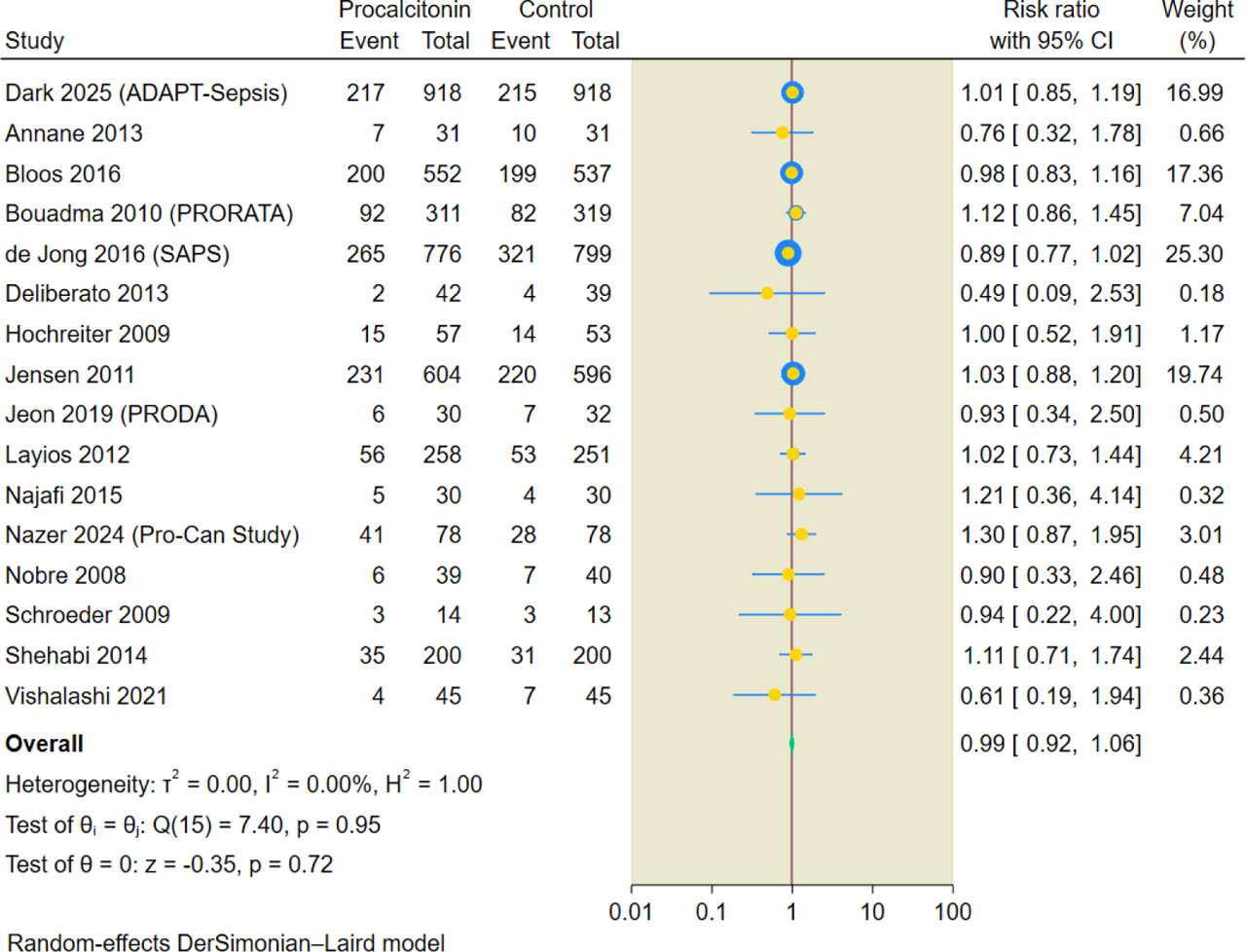
Fig. 3.
Forest plot of all-cause mortality
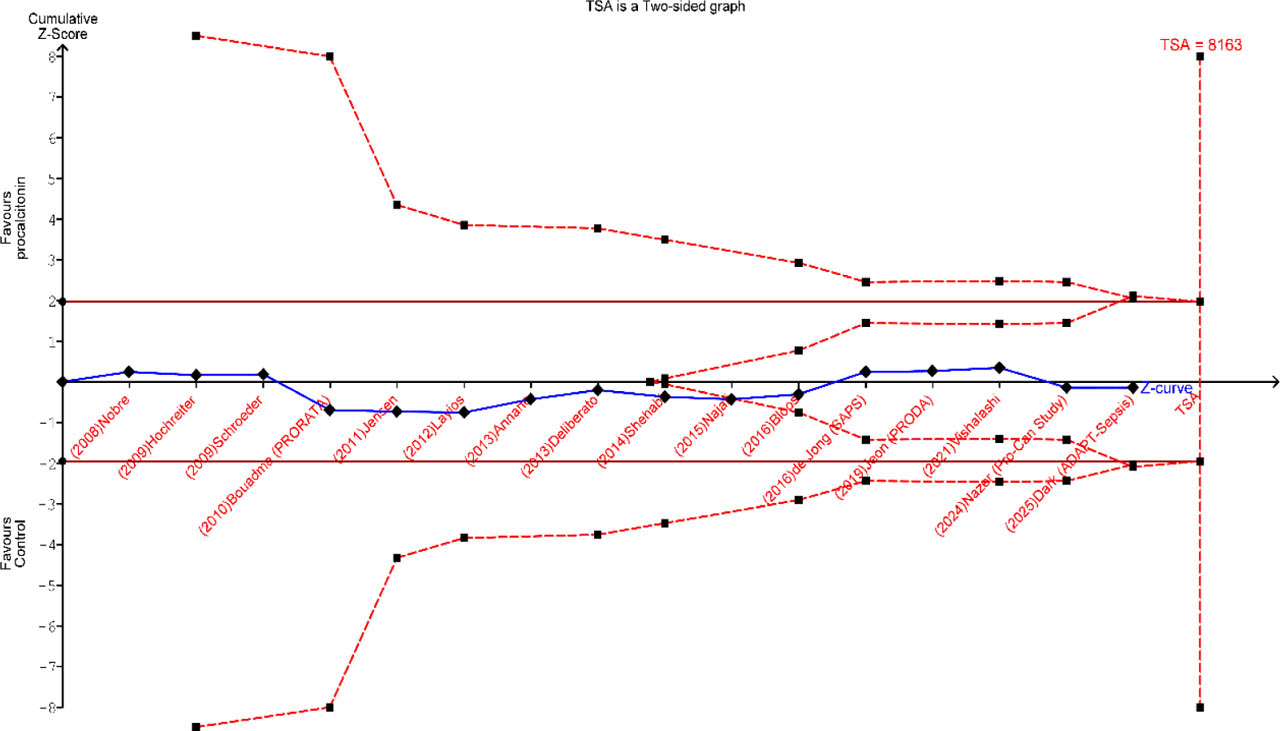
Fig. 4.
Trial sequential analysis of all-cause mortality
Meta-regression analyses showed no significant association between the treatment effect on all-cause mortality and any of the evaluated covariates, including age, sex distribution, and baseline illness severity (SOFA score and APACHE II score). Similarly, no significant effect modification was observed according to the presumed site of infection, including respiratory tract, intra-abdominal, urinary tract, skin and soft tissue, and catheter-related infections. Overall, these findings suggest that the effect of PCT-guided therapy on all-cause mortality was consistent across the examined study-level characteristics (Supplementary Table 2).
Primary Effectiveness – Duration of Antibiotic Therapy
The effectiveness outcome of duration of antibiotic therapy was evaluated across fourteen RCTs reporting antibiotic exposure in patients managed with a PCT–guided strategy compared with standard care. Using a random-effects DerSimonian–Laird model, PCT-guided therapy was associated with a statistically significant reduction in antibiotic duration (MD = −1.51 days, 95% CI −2.24 to −0.78; p < 0.0001). Substantial between-study heterogeneity was observed (τ2 = 1.39; I2 = 87.6%; Cochran's Q(13) = 104.72, p < 0.001) (Figure 5). Leave-one-out sensitivity analyses confirmed the robustness of the pooled estimate, with sequential omission of individual trials having no material impact on the direction or statistical significance of the overall effect (Supplementary Figure 6). Furthermore, subgroup analyses stratified by baseline SOFA score demonstrated a significant reduction in antibiotic duration among patients with lower to intermediate disease severity, including those with SOFA scores 0–6 (MD = −2.51 days, 95% CI −3.76 to −1.26; p < 0.0001) and SOFA scores 7–9 (MD = −1.64 days, 95% CI −2.51 to −0.76; p < 0.0001). In contrast, no statistically significant reduction was observed among patients with SOFA ≥10 (MD = −0.44 days, 95% CI −1.50 to 0.62; p = 0.42). The test for subgroup differences was statistically significant (Qb(2) = 6.43; p = 0.04) (Supplementary Figure 7). By TSA, the cumulative Z-curve crossed both the conventional boundary for statistical significance and the trial sequential monitoring boundary for benefit, supporting a statistically reliable reduction in antibiotic duration with PCT-guided therapy. The accrued sample size approached the RIS, indicating that the available evidence is sufficient and conclusive to support this finding (Figure 6). Heterogeneity was further explored using the Galbraith plot, which identified two studies lying outside the 95% confidence limits of the regression line, indicating that these trials contributed to between-study heterogeneity (Supplementary Figure 8). Potential publication bias was assessed using a funnel plot, which demonstrated marked asymmetry, with three studies imputed by the trim-and-fill method to restore symmetry (Supplementary Figure 9A-B). The adjusted analysis did not materially alter the overall effect estimate, suggesting that the observed asymmetry may be attributable to limited available literature and underlying clinical heterogeneity rather than true publication bias.
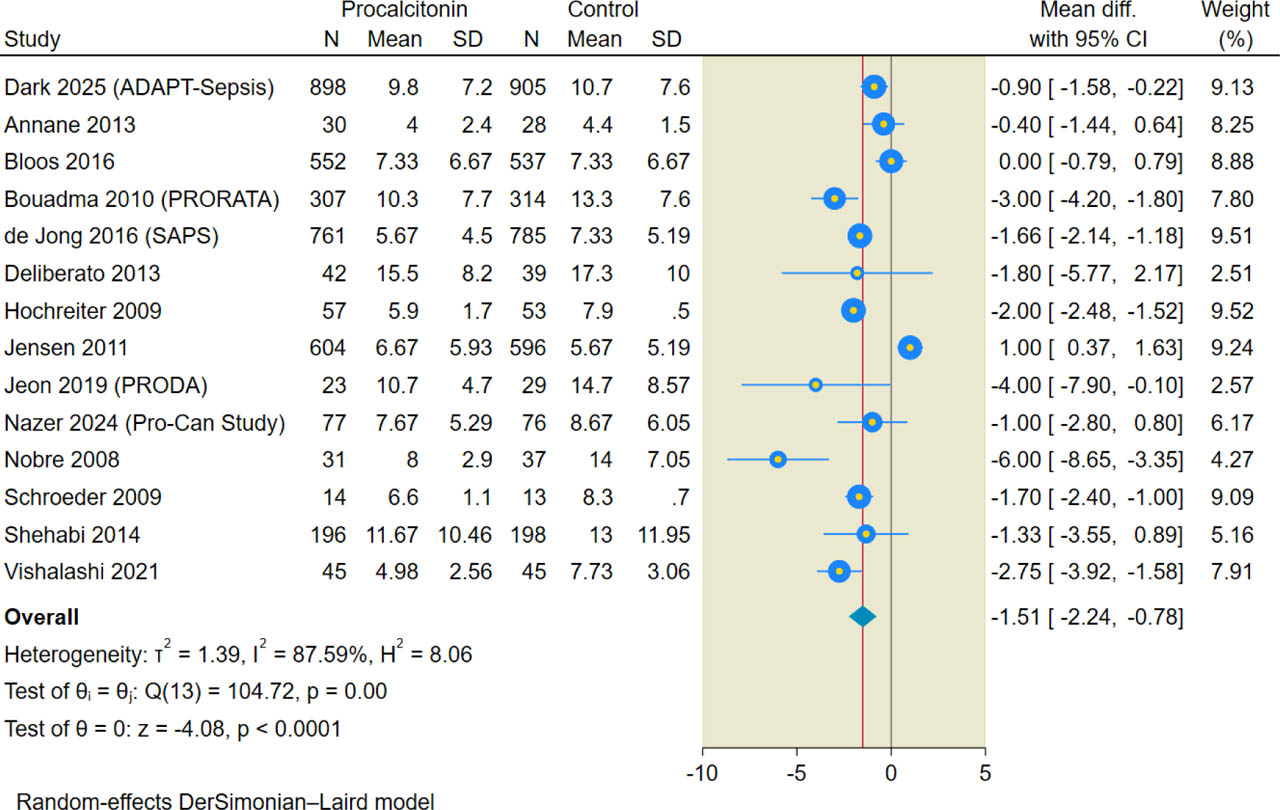
Fig. 5.
Forest plot of duration of antibiotic therapy
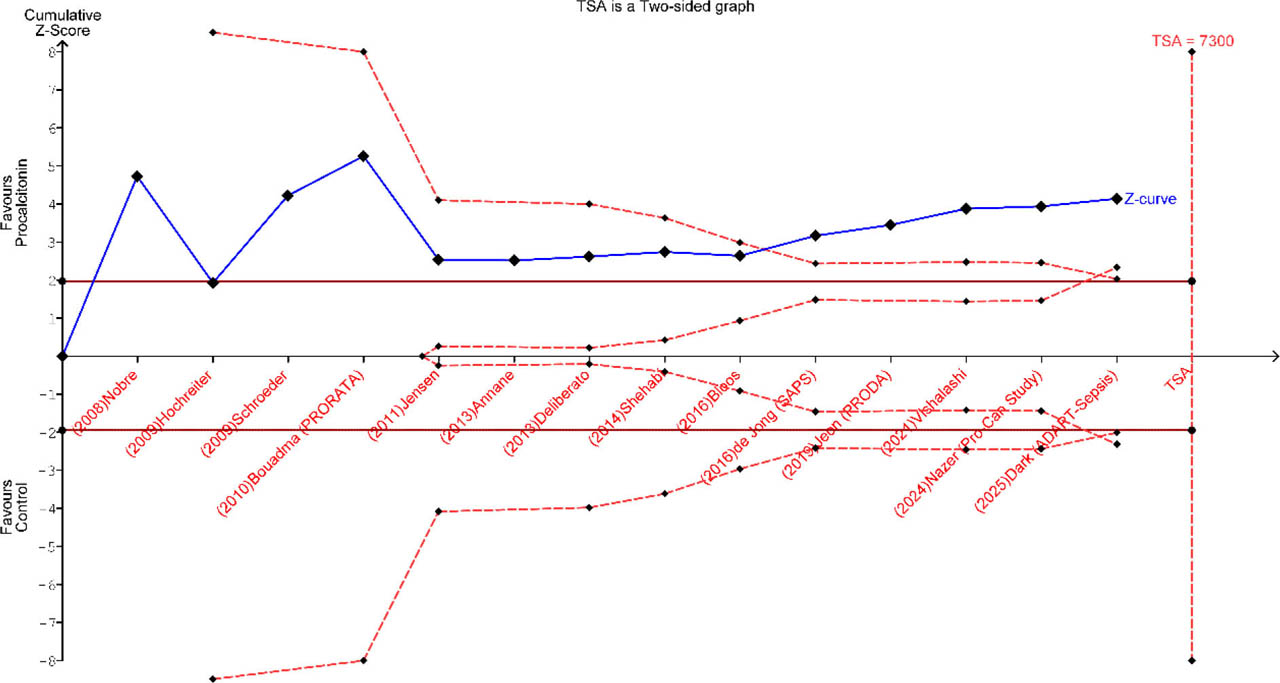
Fig. 6.
Trial sequential analysis of duration of antibiotic therapy
Meta-regression analyses identified several study-level covariates associated with the effect on the duration of antibiotic therapy. Sex distribution (female proportion) and baseline illness severity, as measured by the SOFA score, were significant moderators of the treatment effect, indicating that studies with a higher proportion of female patients and greater illness severity tended to report longer durations of antibiotic therapy. In contrast, age, male sex distribution, and APACHE II score were not significantly associated with the treatment effect. Likewise, no significant effect modification was observed according to the presumed site of infection, including respiratory tract, intra-abdominal, urinary tract, skin and soft tissue, and catheter-related infections (Supplementary Table 3).
Secondary Clinical Outcomes
Using a random-effects DerSimonian–Laird model, pooled analyses demonstrated no statistically significant differences between PCT-guided strategies and standard care across secondary clinical and safety outcomes. Specifically, PCT-guided therapy was associated with a non-significant trend toward higher infection relapse (RR = 1.35, 95% CI 0.98 to 1.85; p = 0.06), with negligible between-study heterogeneity (I2 = 0.0%; τ2 = 0.00; p = 0.70) (Supplementary Figure 10). Similarly, no difference was observed in the occurrence of new infection or superinfection (RR = 1.00, 95% CI 0.82 to 1.22; p = 0.98), with moderate heterogeneity noted across studies (I2 = 33.2%; τ2 = 0.01; p = 0.20) (Supplementary Figure 11). In addition, clinical cure rates were comparable between groups (RR = 1.02, 95% CI 0.81 to 1.28; p = 0.90), with no evidence of heterogeneity (I2 = 0.0%; τ2 = 0.00; p = 0.51) (Supplementary Figure 12).
Secondary Efficacy Outcomes
Antimicrobial-free days were reported across seven trials involving 1954 patients receiving a PCT-guided strategy and 1975 patients receiving standard care. The pooled estimate based on the random-effects DerSimonian–Laird method demonstrated that PCT-guided therapy was associated with a significant increase in antimicrobial-free days compared with standard care (MD = 1.19 days, 95% CI 0.40 to 1.98; p < 0.0001), although substantial heterogeneity was observed across studies (I2 = 69.2%) (Supplementary Figure 13). In contrast, no statistically significant differences were observed in length of hospital stay (MD = −0.41 days, 95% CI −2.15 to 1.33; p = 0.64; I2 = 65.0%) or length of ICU stay (MD = −0.25 days, 95% CI −0.97 to 0.48; p = 0.51; I2 = 72.6%) (Supplementary Figure 14). The GRADE assessment (Supplementary Table 4) indicated high-certainty evidence for all-cause mortality and new infection or superinfection; moderate-certainty evidence for duration of antibiotic therapy, infection relapse, clinical cure, and antimicrobial-free days; and low-certainty evidence for hospital or ICU length of stay.
Discussion
In this systematic review and meta-analysis of RCTs conducted in critically ill adult patients admitted to the ICU, we comprehensively evaluated the effectiveness and safety of PCT-guided antibiotic strategies compared with standard care. Overall, PCT-guided therapy was not associated with a statistically significant reduction in all-cause mortality at any evaluated follow-up time point. However, PCT-guided strategies were associated with a shorter duration of antibiotic therapy and more antibiotic-free days, without clear evidence of increased infection relapse, superinfection, or reduced clinical cure rates. These findings support the interpretation that PCT-guided therapy functions primarily as an antimicrobial stewardship intervention rather than a survival-improving treatment.
Our analysis demonstrated no significant difference in all-cause mortality between PCT-guided therapy and standard care, despite the biological rationale supporting PCT as a marker of bacterial infection severity and resolution. This finding was consistent across all predefined mortality time points, including ICU, in-hospital, 28-day, 60-day, and 90-day mortality, and across illness severity strata defined by SOFA score. The absence of heterogeneity in these analyses strengthens the robustness of this conclusion. According to GRADE assessment, this high-certainty evidence increases confidence that PCT-guided therapy does not influence survival in critically ill patients. Mortality in critically ill patients with sepsis or suspected infection is multifactorial and influenced by host factors, comorbidities, severity of organ dysfunction, adequacy of initial resuscitation, timeliness of source control, and overall quality of supportive care, rather than antibiotic duration alone [1,37]. PCT-guided strategies inform decisions regarding antibiotic discontinuation rather than early initiation of empirical therapy, which are more likely to influence survival in septic patients. These conclusions are further strengthened by TSA, which demonstrated that the cumulative evidence did not cross boundaries for benefit or harm and entered the futility region, suggesting that further trials are unlikely to reveal a clinically meaningful mortality effect of PCT-guided therapy in the ICU population. Notably, these findings are strongly reinforced by the recently published ADAPT-Sepsis, which includes the largest ICU-specific biomarker-guided antibiotic trial to date. ADAPT-Sepsis demonstrated that daily PCT-guided antibiotic discontinuation was noninferior to standard care for both 28-day and 90-day all-cause mortality, despite enrolling a population with substantial illness severity. The convergence of results between ADAPT-Sepsis and the present meta-analysis provides compelling contemporary evidence that PCT-guided strategies do not confer a survival advantage in critically ill patients [15].
In contrast to mortality outcomes, PCT-guided therapy was associated with a significant reduction in the duration of antibiotic therapy, with a mean decrease of approximately 1.5 days compared with standard care [1]. The TSA also confirmed this finding by statistically supporting a sufficient accumulation of information. Although substantial heterogeneity was observed, sensitivity analyses demonstrated that the magnitude of effect was robust to the exclusion of individual studies. From a clinical perspective, modest reductions in antibiotic duration may translate into substantial benefits at both patient and system levels, including reduced risk of antibiotic-associated adverse events, decreased selective pressure for antimicrobial resistance, and lower healthcare costs [38]. These benefits are particularly relevant in ICU settings, where the use of broad-spectrum antibiotics is common, and antimicrobial resistance poses a growing threat. These benefits are particularly relevant in ICU settings, where the use of broad-spectrum antibiotics is common, and antimicrobial resistance poses a growing threat. The stewardship benefit observed in this meta-analysis is further substantiated by ADAPT-Sepsis, which reported a statistically significant reduction in total antibiotic duration of nearly one day in the PCT-guided group compared with standard care [15]. Subgroup analyses revealed that the reduction in antibiotic duration was observed among patients with low to intermediate illness severity (SOFA scores 0–6 and 7–9), whereas no significant reduction was observed in patients with SOFA scores ≥10. This finding suggests that PCT-guided strategies may be less effective in patients with severe organ dysfunction, in whom persistent inflammation, secondary infections, or clinician concern regarding clinical instability may override biomarker-based recommendations.
In this analysis, PCT-guided therapy was noninferior to the standard of care for new infections, superinfections, or failure to achieve clinical cure. Although a non-significant trend toward higher infection relapse was observed, the absolute risk difference was small, heterogeneity was negligible, and confidence intervals included unity, suggesting that this finding should be interpreted cautiously. Furthermore, PCT-guided therapy was associated with a significant increase in antibiotic-free days, reinforcing its role in reducing unnecessary antimicrobial exposure without compromising patient safety. No significant differences were observed in ICU or hospital length of stay, indicating that reduced antibiotic use did not adversely affect short-term clinical recovery or resource utilization.
Substantial heterogeneity was observed for antibiotic duration and some secondary outcomes. This variability likely reflects differences in PCT algorithms, cutoff thresholds, frequency of measurement, adherence to protocols, baseline illness severity, and local antimicrobial practices across trials. Galbraith plot analysis identified a small number of outlying studies that contributed disproportionately to heterogeneity; however, excluding these studies did not materially alter the pooled estimates. Potential publication bias was suggested by funnel plot asymmetry for antibiotic duration; however, trim-and-fill analysis did not change the overall effect size. This asymmetry may reflect clinical heterogeneity or selective reporting of stewardship-related outcomes rather than true publication bias.
The findings of the present meta-analysis are broadly consistent with the existing body of evidence evaluating PCT-guided antibiotic strategies in critically ill patients. Several large RCTs conducted in ICU populations have consistently demonstrated that PCT-guided algorithms reduce antibiotic exposure without a corresponding increase in mortality. Notably, the PRORATA trial, which enrolled ICU patients with suspected bacterial infections, showed a significant reduction in antibiotic duration in the PCT-guided group, while mortality at 28 and 60 days remained comparable to standard care [26]. Similarly, the SAPS trial, one of the largest ICU-based RCTs to date, confirmed that PCT-guided antibiotic discontinuation safely reduced antibiotic use without increasing 28-day or 1-year mortality, despite enrolling a population with substantial illness severity [5]. These findings have been corroborated by multiple meta-analyses. Earlier pooled analyses, including those by Schuetz et al. and Papp et al., reported significant reductions in antibiotic duration and exposure among critically ill patients managed with PCT guidance, with no adverse impact on survival [39,40]. However, many of these analyses combined heterogeneous patient populations, including non-ICU settings, or incorporated non-randomized studies, limiting the strength of causal inference. In contrast, our analysis exclusively included RCTs conducted in ICU settings, thereby minimizing clinical and methodological heterogeneity related to care environments. The inclusion of ADAPT-Sepsis substantially strengthens the evidence base by providing high-certainty RCT data that align closely with our pooled estimates and reinforces the interpretation of PCT guidance as a stewardship rather than a disease-modifying intervention [15].
More recent meta-analyses have suggested a potential mortality benefit of PCT-guided therapy in critically ill patients; however, these findings remain inconsistent and controversial [41,42,43]. Differences in included study designs, outcome definitions, and follow-up durations likely contribute to these discrepancies. Our subgroup analyses further refine the interpretation of prior evidence by demonstrating that reductions in antibiotic duration are primarily driven by patients with low to intermediate illness severity, as defined by baseline SOFA scores. This observation aligns with post hoc analyses of major RCTs, which have suggested that clinicians are more willing to adhere to PCT-guided discontinuation algorithms in clinically stable patients [44]. Such behavior may partially explain why antibiotic duration was not significantly reduced among patients with SOFA scores ≥10 in our analysis and underscores the importance of clinical context when applying biomarker-guided strategies. These findings reinforce that PCT-guided antibiotic therapy is best viewed as a stewardship intervention rather than a disease-modifying treatment [45].
Clinical implications
Taken together, these findings support the use of PCT-guided antibiotic strategies as a safe, evidence-based antimicrobial stewardship intervention in critically ill patients, particularly among those with low to moderate illness severity. In this population, PCT guidance facilitates earlier discontinuation of antibiotics without compromising clinical outcomes, thereby reducing unnecessary antimicrobial exposure and its associated risks. However, the absence of a mortality benefit indicates that PCT-guided therapy should not be expected to improve survival in the ICU setting, where outcomes are predominantly driven by disease severity, organ dysfunction, source control, and overall quality of supportive care. The GRADE evidence profile supports strong confidence in this recommendation for stewardship purposes, while discouraging expectations of survival benefit. Importantly, PCT should not be applied as a standalone decision-making tool or used to override sound clinical judgment, especially in patients with severe organ failure, persistent hemodynamic instability, or unresolved infectious sources [46]. Rather, the greatest clinical value of PCT appears to lie in its integration into structured antimicrobial stewardship protocols, where biomarker trends are interpreted in line with clinical trajectory, microbiological data, and complementary inflammatory markers, enabling individualized and context-sensitive antibiotic management [47].
Strengths and limitations
This systematic review and meta-analysis have several important strengths. First, the analysis was restricted exclusively to RCTs conducted in adult ICU populations, thereby minimizing confounding related to study design and care setting and strengthening causal inference. Second, the large, pooled sample size and inclusion of nearly 8,000 critically ill patients provide substantial statistical power to detect clinically meaningful effects, particularly for stewardship-related outcomes. Third, all analyses were performed according to the intention-to-treat principle and adhered to rigorous methodological standards. Fourth, the application of TSA represents a major methodological strength, as it allowed evaluation of the conclusiveness of the evidence and mitigation of risks associated with random error and repetitive significance testing. Finally, prespecified subgroup analyses based on illness severity and mortality time points enhance the clinical interpretability of the findings and provide nuanced insights into patient populations most likely to benefit from PCT-guided strategies.
Several limitations merit consideration. Despite the exclusive inclusion of RCTs, substantial clinical heterogeneity was observed for certain outcomes, particularly duration of antibiotic therapy and length of stay. This heterogeneity likely reflects variability in PCT algorithms, cutoff thresholds, frequency of biomarker measurement, adherence to protocol recommendations, baseline illness severity, and institutional antimicrobial stewardship practices across studies. Second, although funnel plot asymmetry was observed for antibiotic duration, adjusted analyses using trim-and-fill methods did not materially alter the pooled effect estimates, suggesting that the observed asymmetry may be attributable to limited study numbers or underlying clinical heterogeneity rather than true publication bias. Nevertheless, the possibility of small study effects cannot be fully excluded. Third, the absence of individual patient-level data precluded more granular exploration of effect modification by factors such as infection source, pathogen type, appropriateness of initial empirical therapy, or dynamic changes in organ dysfunction. Fourth, clinician adherence to PCT-guided algorithms varied across trials and was incompletely reported, potentially attenuating the observed effects and limiting generalizability to real-world settings. Finally, while TSA strengthened inference regarding mortality and antibiotic duration, it does not eliminate uncertainty related to long-term outcomes or rare adverse events, which remain insufficiently reported in the existing literature.
Future research
Future studies should focus on individual patient data meta-analyses to better identify subgroups most likely to benefit from PCT-guided strategies, standardization of PCT thresholds and protocols, and evaluation of combined biomarker approaches. Trials targeting specific ICU populations, such as immunocompromised patients or those with septic shock, may further refine the role of PCT-guided antibiotic management.
Conclusion
Overall, PCT-guided therapy was not associated with a statistically significant reduction in all-cause mortality at any evaluated follow-up time point, indicating no survival benefit in the available randomized evidence. However, PCT-guided strategies were associated with a shorter duration of antibiotic therapy and more antibiotic-free days, without clear evidence of increased infection relapse, superinfection, or reduced clinical cure rates. These findings support the interpretation that PCT-guided therapy functions primarily as an antimicrobial stewardship intervention rather than a survival-improving treatment.
Acknowledgments
The authors declare that this research received no specific grant from any funding agency in the public, commercial, or not-for-profit sectors.
Notes
[2] Contributed by Authors' contribution
EAA (Conceptualization, Methodology, Project administration, Writing – original draft)
AAA; ARA (Data curation, Investigation, Writing – review & editing)
LAA (Formal Analysis, Validation, Writing – review & editing)
MABA (Data curation, Investigation, Resources, Writing – original draft)
AFA; AA (Investigation, Data curation, Validation, Resources, Writing – review & editing)
YA; RA (Data curation, Visualization, Writing – review & editing)
RAA; RHA (Conceptualization, Investigation, Writing – review & editing)
MAA (Conceptualization, Investigation, Writing – review & editing)
AMM; SMA (Data curation, Investigation, Resources, Writing – review & editing)
HAA (Supervision, Formal Analysis, Methodology, Writing – review & editing)