
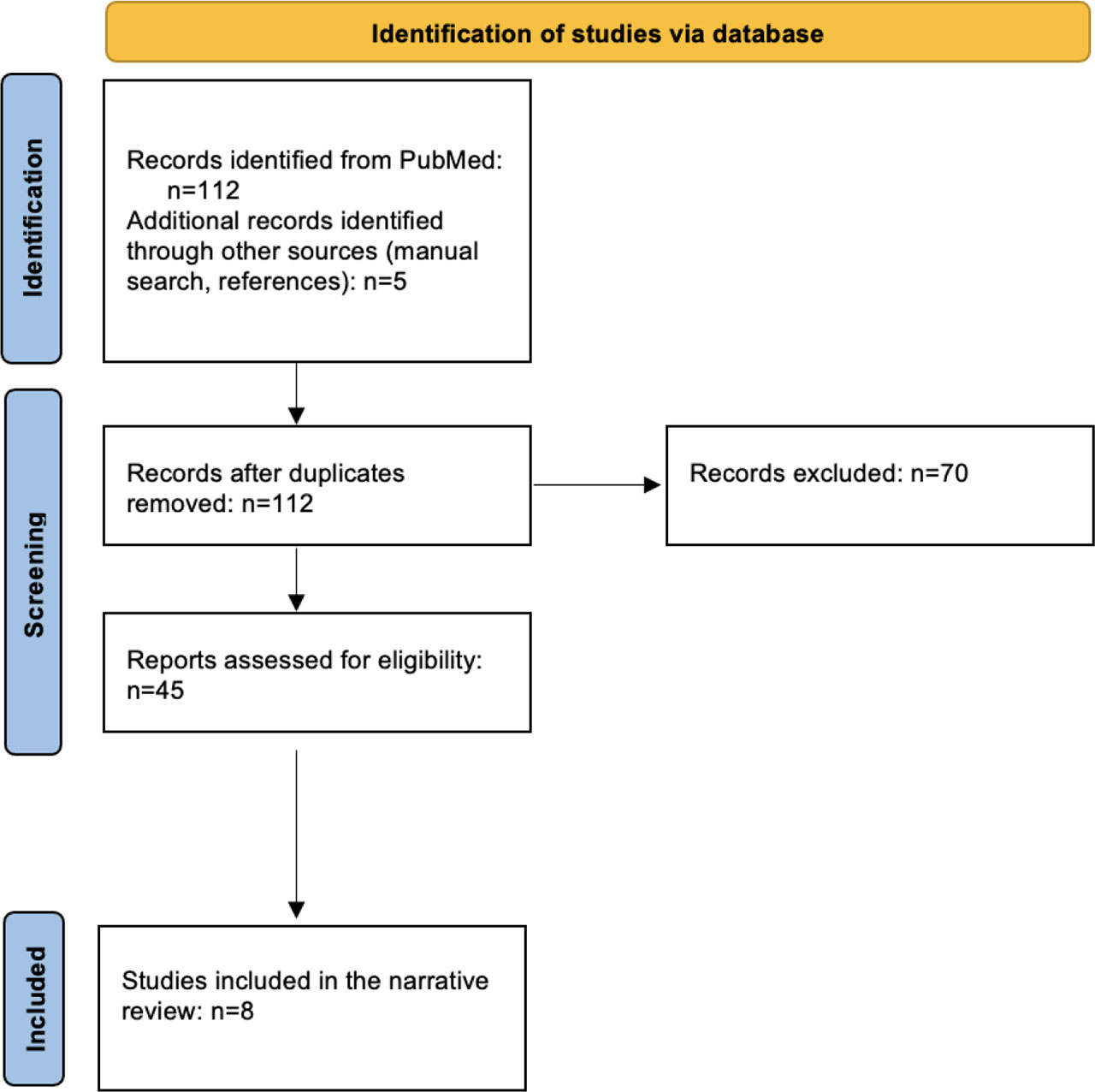
Fig. 1.
Study flow chart
Table 1.
Study’s description, participants, and characteristics of the interventions
| Author (Year) | Country | Design | Sample Size | Intervention | Duration | Description |
|---|---|---|---|---|---|---|
| Tanoubi et al. (2020) | Canada | short report | 10 cohorts of residents (24 residents in each cohort) | High-fidelity simulation | 10 years | 3 simulation scenarios involving circumstances with different ethical issues (instruction in critical incident disclosure, communication regarding patient awareness under general anesthesia, and physicians’ perspectives on overriding do-not-resuscitate orders in the context of iatrogenic cardiac arrest) |
| Ghoneim et al (2018) | USA | interventional study | 15 participants (NICU trainees) | A simulation-based training intervention focusing on the SPIKES protocol for breaking bad news | 1 year | Participant delivery of bad news to a standardized parent (actor in the role of a parent). |
| Colman et al (2019) | USA | mixed methodological observation cohort study | 165 participants (nurses, critical care fellow, respiratory therapist) | Implementation of team training through simulation | 21-month period | The simulation program comprised 30 mandatory workshops, each lasting 3 hours and featuring three scenarios based on real-life ICU cases, using mannequin settings, trained embedded participants, and facilitator prompts. After the simulations, there was an improvement in communication, teamwork, and role appointment. |
| Figueroa et al (2012) | USA | interventional study | 37 participants | The course included: didactics and high-fidelity simulation-based training | 3 months | The implementation of Team STEPPS protocol and its incorporation into both, the course content and simulation scenarios, resulted in improved communication within the multidisciplinary PICU team. |
| Downar et al (2012) | Canada | interventional study | 51 trainees | This communication workshop incorporated a short didactic session and four simulated family meetings, using trained professionals as standardized family members. | 5 years | Findings of the workshop included ethical and legal knowledge and communication comfort (before and after the workshop), as well as communication skills. Participation in the practical course significantly enhanced ethical and legal knowledge and improved communication comfort among the critical care trainees. |
| Arnold et al (2015) | USA | interventional study | 38 Pulmonary and critical care fellows | The intervention was a 3-day communication skills workshop incorporating short didactic sessions, faculty skill demonstrations, and practice with simulated families. | 2 years | Training focused on three core domains: delivering bad news, achieving consensus on therapeutic goals, and discussing limitations of life-sustaining treatments. Participant self-assessments of competence in 11 key communication points were collected before and after the workshop using a 5-point Likert scale. |
| Hope et al (2015) | USA | interventional study | 31 critical care fellows | A didactic curriculum containing lectures and case discussions on end-of-life care, communication, palliative care, and bioethics was created, supplemented by two simulated family meetings | 3 years | Residents participated in 101 family meeting simulation. After following a month-long curriculum, more than 90% of trainees declared increased comfort – either ‘slightly’ or ‘much’ more comfortable – with debates regarding the relinquishment of life-sustaining treatment. |
| Sung et al (2025) | Taiwan | Prospective interventional study | 237 participants, including medical trainees, nurses, respiratory therapists, and administrative staff. | The intervention incorporated two high-fidelity scenarios simulating real emergencies. | 5 years | The group performing was evaluated using the Team Emergency Assessment Measure (TEAM). Methodical questionnaires granted qualitative feedback that was analysed thematically. Involvement in the program allowed an improved communication, teamwork and collaborative skills between healthcare professionals working in vulnerable environments. |