
Table 1
Applying TPB to Coaches at Baseline
| Attitudes The ASC manager did not fully value assessment. Four of five coaches questioned its purpose and place in the ASC. Three of five coaches reported assessment belonged in the classroom. | ||
| Norms Because the ASC was relatively siloed from academic affairs, the coaches mainly had each other for norm comparison. As such, the norm was to not complete rubrics. Further, four of five coaches viewed themselves more as service providers than educators. | Intention Four of five coaches were not intending to assess student learning. | Behavior No coaches were assessing student learning. |
| PBC Four out five coaches felt they were unable to complete the rubrics. |
Table 2
Applying TPB to Coaches in the First Loop
| Attitudes Four of five coaches viewed assessment negatively. They felt it did not fit in the ASC and would be extra work. | ||
| Norms Because the ASC was somewhat siloed from academic affairs, the coaches mainly had each other for norm comparison. As such, the norm was to not complete rubrics. Further, they viewed themselves more as service providers than educators. | Intention Four of five coaches were not intending to assess student learning, but all five coaches agreed to implement a student self-rated measure. | Behavior Five coaches were attempting to measure student learning on the 3-point scale of student-rated confidence to perform a skill. |
| PBC Four of five coaches cited many reasons why they could and should not complete assessments. |
Table 3
Applying TPB to Coaches in the Second Loop
| Attitudes Four of five coaches continued to push back about assessing student learning, as they fundamentally did not see this as part of their role. | ||
| Norms The team met to discuss the assessment findings, or lack thereof, so it was not clear to the coaches who was or was not completing the rubrics. | Intention Two coaches intended to use the ILO rubrics. | Behavior For written communication, of 387 possible pre/post assessments, 156 were filled out by students and 202 by coaches. For quantitative reasoning, of 143 possible pre/post assessments, 44 were filled out by students and 21 by coaches. |
| PBC Although trainings had been held, three coaches still seemed unsure of how to apply the assessment rubrics. |
Table 4
Applying TPB to Coaches in the Third Loop
| Attitudes Four of five coaches continued to show reluctance about assessing student learning, as they did not see this as part of their role. | ||
| Norms Four of five coaches appeared to believe assessment was not required and that others were not completing them. | Intention Three coaches claimed to be intending to use the ILO rubrics. Two coaches said they would attempt to remember to use the rubrics. | Behavior For written communication, of 557 possible pre/post assessments, 472 were completed by students and 400 by coaches, with 329 having both pre/post assessments. For quantitative reasoning, of 226 possible pre/post matched assessments, 144 were completed by students and 53 by coaches, with 39 having both pre/post matched assessments. |
| PBC Four of five coaches had been trained on how to use the rubrics but lacked knowledge on why it was important to use the rubrics. |
Table 5
Applying TPB to Coaches in the Fourth Loop
| Attitudes Six of seven coaches appeared to have favorable attitudes toward assessment. | ||
| Norms Six of seven coaches appeared to believe that completing assessment rubrics was important and that they would be evaluated monthly through QA protocol on their ability to meet these expectations. | Intention All seven coaches claimed to be intending to use the ILO rubrics. | Behavior For written communication, of 423 possible pre/post assessments, 347 were completed by students and 423 coaches, with 347 having both pre/post matched assessments. For quantitative reasoning, of 216 possible pre/post assessments, 200 were completed by students and 196 by coaches, with 182 having both pre/post matched assessments. |
| PBC All seven coaches had been trained, and six of them appeared confident in their ability to meet or even exceed expectations of completing the assessments. |
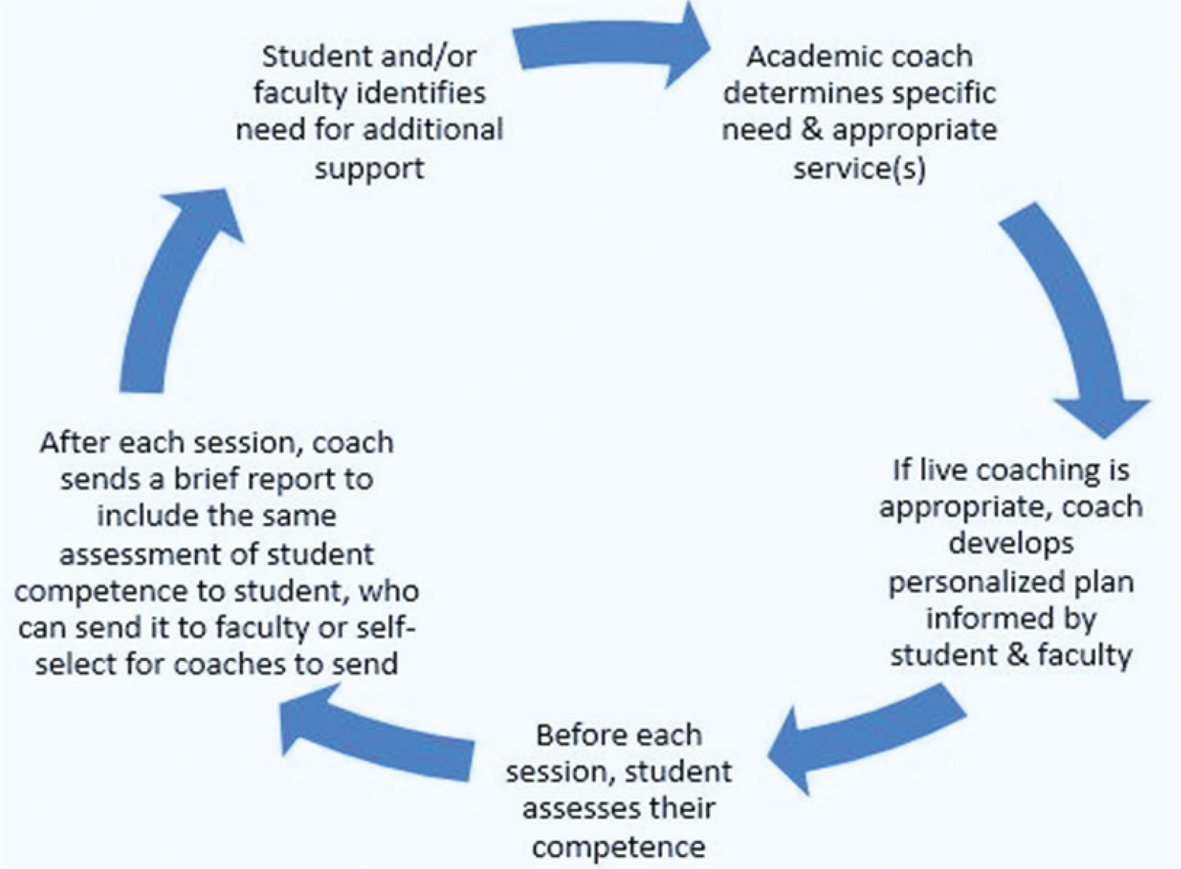
Figure 1
New collaborative coaching cycle informed by ASC co-curricular learning assessment loops.