
1. About
The International Association for Hydrogen Safety (HySafe) is a not-for-profit association, headquartered in Belgium. HySafe facilitates the international coordination, development and dissemination of hydrogen safety knowledge by being the focal point for hydrogen safety research, education and training.
HySafe conducts the following activities in the field of hydrogen safety:
Promote cost-effective, coordinated basic and applied research in the field of hydrogen safety.
Create and maintain a forum for communication between stakeholders.
Facilitate the coordination, maintenance and future development of innovative infrastructure for hydrogen safety research.
Transfer knowledge from research to education and training, by providing integrated resources for the training and education of engineers, scientists and other stakeholders.
Effectively disseminate knowledge via communication/information platforms to all stakeholders, thus contributing to public acceptance of a hydrogen economy.
Provide support internationally and to governments, industry, non-government organisations, codes and standards developers and the like, in the field of hydrogen safety.
The Research Priorities Workshop (RPW) is held biennially on alternative years to the International Conference on Hydrogen Safety (ICHS), enabling discussion in learnings and advancements made in hydrogen safety topics, while addressing gaps in knowledge required to support the safe, efficient and sustainable development and adoption of hydrogen as an energy carrier across the global economy.
The 2024 RPW was held on 23–24 September 2024, in advance of the IEA TCP Hydrogen Safety Task 43 meeting at the Cummins Inc Shoreview Offices in Minneapolis, MN, United States.
HySafe also coordinates the ICHS on a biennial basis, held in different regions of the world where there is interest in developing a safe and sustainable hydrogen economy. In conjunction with the Korean Government, ICHS2025 will be held in Seoul 23–25 September 2025.
2. Executive Summary
The RPW brought together experts from academia, industry, and government to identify and prioritise future research directions with regard to hydrogen safety. Over two days, participants engaged in presentations and discussions covering key areas such as production, transportation and storage, ignition phenomena, cryogenic hydrogen, risk assessment methodologies and others. A critical component of the workshop was the prioritisation exercise, during which attendees voted on the most urgent and impactful areas for future research. This document summarises the workshop’s activities, including the prioritisation results, which will serve as input to guide global hydrogen safety research efforts.
The combined rankings from industry and non-industry stakeholders (see Figure 1) highlighted Quantitative Risk Assessment (QRA) and Reliability Data as the top priority, followed closely by Mitigation, Sensors, and Hazard Prevention, and Phenomena Understanding and Modelling. Regulations Codes and Standards followed immediately with a particularly high ranking from the industry representatives. These priorities reflect a strong collective focus on those topics to ensure hydrogen’s safe and scalable adoption.
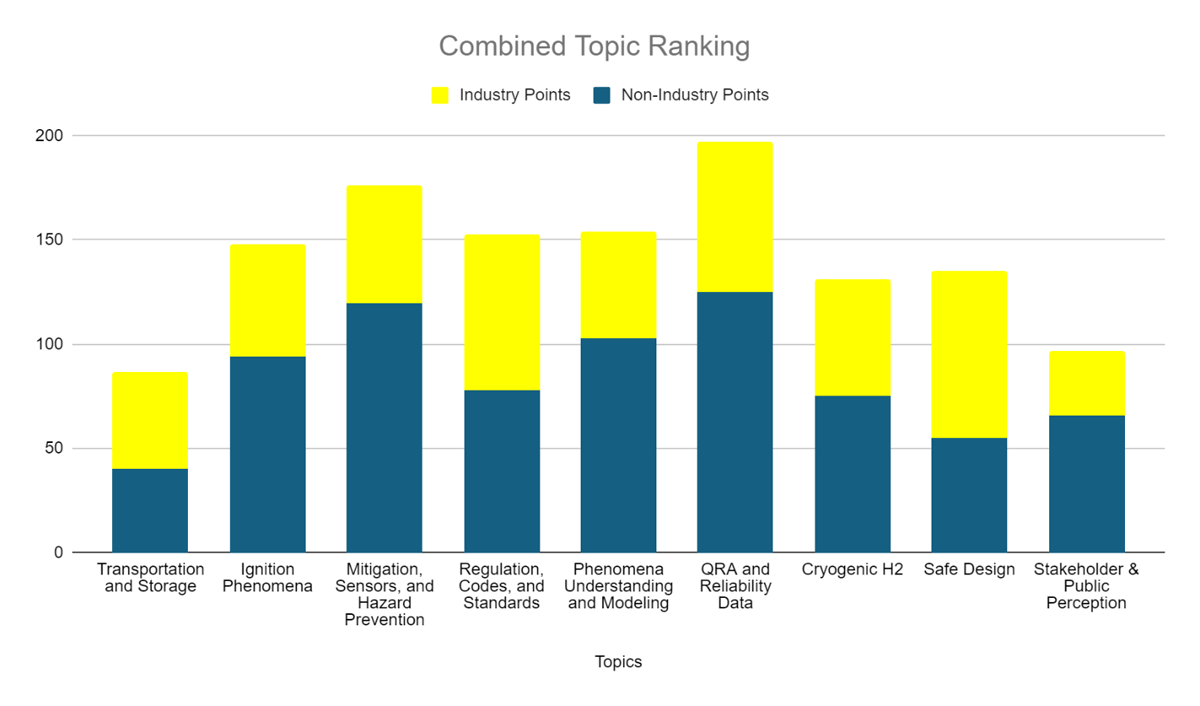
Figure 1
Combined Topic Ranking.
The insights and recommendations gathered during the RPW are important for shaping the strategic research priorities necessary to support the safe commercialisation of hydrogen technologies.
3. Organisations Represented
The Research Priorities Workshop presentations and discussions were represented by the following organisations:
| Air Liquide | Karlsruhe Institute of Technology |
| Air Products | Kawasaki Heavy Industries |
| Ballard Power Systems Europe | Korea Gas Safety |
| Bureau Veritas | Norwegian University of Science and Technology (NTNU) |
| Canadian Nuclear Laboratory | Shell |
| Compressed Gas Association (US) | Surrey University |
| Cummins Inc | Technical University of Denmark (DTU) |
| Danish Gas Technology Centre | Thorton Tomasetti |
| Engie | US Department of Energy |
| European Industrial Gases Association | UK Health and Safety Executive |
| Forschungszentrum Jülich | University of Bergen |
| French National Centre for Scientific Research (CNRS) | University of Maryland |
| French National Institute for Industrial Environment and Risks (INERIS) | University of Stavanger |
| German Aerospace Center (DLR) | US National Renewable Energy Laboratory (NREL) |
| German Federal Institute for Materials Research and Testing (BAM) | US Sandia National Laboratories |
| Global Decarbonisation Advisory | World Steel Association |
| Helixos | Yokohama National University |
| Hydrogen Council | Zero Carbon Energy Solutions |
4. Research Priority Topics
During the RPW, research priority topics were identified, each representing a key area critical to advancing hydrogen safety. These topics reflect the current challenges and opportunities in hydrogen safety as seen by a broad range of stakeholders. The prioritisation of these research areas, and the subtopics within these areas, highlight the hydrogen industry’s collective efforts to address both the technical and regulatory needs of the growing hydrogen industry on one side and the current level of understanding on the other. Each topic outlined below plays a crucial role in overcoming barriers to hydrogen adoption.
4.1. Transportation and storage
Transportation and storage of hydrogen at industrial scales is critical to ensuring a reliable supply chain while minimising safety risks. This topic covers the safety concerns associated with moving hydrogen through pipelines, storing it in large-scale tanks, and ensuring the stability of hydrogen systems. Key subtopics include:
Pipeline transportation: Safety considerations for transporting hydrogen through long-distance pipeline systems.
Cavitation in liquid hydrogen (LH2) tanks: Examining the occurrence of cavitation in liquid hydrogen tanks and its impact on storage safety.
Substitutes for LH2: Research on possible substitutes for liquid hydrogen to better understand the consequences of loss of containment.
Industrial scale storage: Storing hydrogen at industrial scales.
LH2 pipe hazard classification: Establishing hazard classifications for pipe connections to mitigate risks in liquid hydrogen handling.
4.2. Ignition phenomena
Ignition phenomena encompass the mechanisms that lead to hydrogen ignition, both spontaneous and delayed under different scenarios, making this a foundational topic for hydrogen safety research. Understanding these mechanisms helps predict and control unintended ignition events. Key subtopics include:
Ignition probabilities: Investigating the likelihood of hydrogen ignition under varying conditions.
Immediate/delayed ignition: Differentiating between immediate and delayed ignition risks.
Spontaneous ignition: Factors contributing to the spontaneous ignition of hydrogen (‘spontaneous’ here implies ‘with unknown mechanism’).
Cryogenic ignition: Understanding the unique conditions under which cryogenic hydrogen may ignite and combust.
Ignition mechanisms: A deeper exploration into different pathways that can lead to hydrogen ignition.
4.3. Mitigation, sensors, and hazard prevention
Mitigation strategies, hazard prevention, and the role of sensors are vital to managing risks associated with hydrogen use. This category explores how to mitigate the severity of hydrogen incidents, monitor environments for hazards, and prevent safety issues through design and sensor deployment. Key subtopics include:
Severity criteria for hazards: Establishing criteria for predicting and mitigating Deflagration to Detonation Transitions (DDT).
Ventilation design: Designing forced ventilation systems to mitigate hydrogen build-up in enclosed areas.
Mitigation measures: Measures to reduce the impact of potential hydrogen releases.
In-line monitoring: Development of real-time, in-line systems for continuous monitoring of hydrogen levels.
Ammonia mitigation: Specific mitigation approaches for ammonia-hydrogen mixtures.
Hazard area classification: Defining safety zones in facilities handling hydrogen to minimise risks.
Leak detection and surveillance: Advances in detection technologies and protective measures for hydrogen leaks.
4.4. Regulation, codes and standards
A robust framework of regulations, codes, and standards is essential for ensuring the safe and widespread adoption of hydrogen technologies. This topic addresses existing standards, new regulatory requirements, and the expansion of standards to novel uses of hydrogen. Key subtopics include:
Best practices: Compiling best practices from existing company rules, national regulations, and international standards.
New industry standards: Addressing the need for standards to support hydrogen adoption in new sectors such as heavy industry.
QRA in standards: Advocating for the integration of QRA methodologies into regulatory standards.
LH2 standards: Specific standards for the handling, storage, and transport of liquid hydrogen.
Aerospace standards: Addressing safety standards and best practices for hydrogen utilisation in the aerospace industry.
4.5. Phenomena understanding and modelling
Understanding and accurately modelling hydrogen behaviour under different physical conditions is essential for advancing safety research. This category explores complex phenomena, including detonation, impinging jets, and cloud explosions. Key subtopics include:
DDT sensitivity: Studying how small changes in conditions can affect the transition from deflagration to detonation.
Chemical inhibition: Research on chemical additives that could prevent or inhibit hydrogen-air combustion.
Hybrid mixtures: Examining hydrogen mixtures with other gases to understand their effects on safety.
Gas explosion modelling: Enhancing existing engineering models to improve predictions for gas explosions.
Critical thermodynamics: Investigating hydrogen’s thermodynamic properties near critical state.
Vapour cloud explosion: Understanding the potential for vapour cloud explosions in different release scenarios.
Impinging jets: Examining the behaviour of hydrogen jets impinging on surfaces and the associated hazards.
Benchmark studies: Conducting benchmark studies to evaluate the accuracy of hydrogen safety models.
H2 derivatives: Exploring the behaviour of hydrogen derivatives and their implications for safety.
Jet explosions: Modelling and analysis of jet explosions involving gaseous hydrogen.
4.6. QRA and reliability data
QRA and the collection of reliability data are fundamental for evaluating hydrogen risks and informing safe system designs. This topic focuses on methods for improving risk models and ensuring system reliability. Key subtopics include:
Uncertainty in risk models: Addressing uncertainties within QRA models to improve reliability.
Indoor hydrogen QRA: Assessing risks associated with using hydrogen indoors, including ventilation and control measures.
Reduced order models: Developing simplified models that can quickly run safety simulations.
Failure rate collection: Collecting data on component failure rates to support reliability assessments.
Electrolyser risk analysis: Evaluating risks associated with large-scale hydrogen production using electrolysers.
Electrolyser reliability: Improving the reliability of electrolyser components for safe hydrogen production.
Integrity monitoring: Technologies and methods for monitoring the integrity of hydrogen systems.
Nuclear coupled H2 production: Conducting QRAs for hydrogen production systems coupled with nuclear reactors.
System design: Ensuring that all components in a hydrogen system meet safety and reliability requirements.
Reliability database: Establishing a comprehensive database of reliability data to support safety assessments.
Test labs: The role of testing labs in validating the reliability of hydrogen components.
Risk model development: Developing and applying risk models for innovative hydrogen applications.
4.7. Cryogenic hydrogen
Cryogenic hydrogen, comprising LH2 and supercritical hydrogen below 120 K, involves unique risks due to its ultra-low temperatures, requiring specific safety protocols and design considerations. This topic explores the properties, behaviours, and safety measures required for cryogenic hydrogen. Key subtopics include:
LH2 modelling tools: Development of tools to model the behaviour and safety aspects of liquid hydrogen.
Flame acceleration at cryogenic temperatures: Examining flame behaviour and detonation risks specific to cryogenic hydrogen.
Sensor placement: Optimising sensor placement for early detection of leaks or incidents involving cryogenic hydrogen.
Ventilation strategies: Designing effective ventilation systems to handle cryogenic hydrogen releases.
LH2 releases: Analysis of potential hazards associated with liquid hydrogen releases.
LH2 concentration: Understanding and mitigating risks associated with the build-up of hydrogen concentration in confined spaces.
Impinging jet flames: Studying the behaviour and hazards of cryogenic hydrogen jet flames.
Cryogenic H2 safety: Comprehensive safety measures required for handling and storing cryogenic hydrogen.
Cryogenic H2 behaviours: Understanding specific properties and behaviours of hydrogen at cryogenic temperatures.
BLEVE risk: Studying the potential for Boiling Liquid Expanding Vapour Explosions (BLEVE) involving liquid hydrogen tanks.
4.8. Safe design
The safe design of hydrogen systems is a proactive approach to preventing incidents by eliminating hazards at the design stage. This topic focuses on design methodologies that reduce risks inherently. Key subtopics include:
Material assessment: Developing straightforward approaches to assess material compatibility with hydrogen.
Non-metallic vessels: Ensuring the safety of non-metallic vessels used for hydrogen storage.
Structural design: Designing structures to handle hydrogen safely, accounting for molecular properties.
Inherently safe design: Identifying design choices that inherently minimise risks in hydrogen systems.
Na-Tech: Addressing natural and technological (Na-Tech) hazards in hydrogen infrastructure.
Laboratory safety: Best practices for laboratory environments where hydrogen research is conducted.
Vent design: Designing venting systems to control hydrogen release and limit hazardous ground effects.
4.9. Stakeholder and public perception
Effective stakeholder and public engagement are crucial for the adoption of hydrogen technologies, as public perception can significantly impact their deployment. This topic examines strategies for educating and involving stakeholders. Key subtopics include:
Education on H2 safety: Initiatives aimed at educating stakeholders and the general public on hydrogen safety measures.
Public perception of H2: Understanding how the public perceives hydrogen and addressing misconceptions.
Risk awareness, perception, and preferences for stakeholders: Investigating stakeholder awareness of hydrogen risks and their preferences regarding safety measures.
Public perception of H2 safety: Assessing public attitudes towards the safety of hydrogen technologies and addressing concerns.
Communication strategies: Developing effective communication strategies to improve stakeholder engagement and public understanding of hydrogen safety.
5. Ranking Outcomes
The ranking exercise involved two levels of analysis: the ranking of subtopics within each research priority topic and the ranking of the broader research topics themselves. During the workshop, attendees voted on the subtopics within each category to identify specific critical areas that require focused attention and then voted on the broader topics to determine overall research priorities for future hydrogen safety initiatives.
The ranking outcomes are presented in three perspectives: a combined view, capturing the consensus of all participants, and separate industry and non-industry views to provide a holistic perspective on where each stakeholder group places emphasis.
This comprehensive ranking approach helps shaping the direction of future hydrogen safety research, aligning industry and regulatory efforts to facilitate the safe, scalable expansion of hydrogen technologies.
5.1. Transportation and storage
5.1.1. Combined view
In the transportation and storage category, industrial scale storage emerged as the top priority, with broad agreement across both industry and non-industry participants (see Table 1 and Figure 2). There was a strong emphasis on advancing safe and efficient storage capabilities to support the growing adoption of hydrogen, particularly in large-scale industrial applications. Additionally, pipeline transportation was ranked highly, reflecting a consensus on the need for reliable infrastructure to transport hydrogen across long distances, which is fundamental to the expansion of the hydrogen industry. Hazard classification for liquid hydrogen pipe connections also garnered significant attention, highlighting the shared need for clear safety guidelines to manage risks effectively.
Table 1
Combined Transportation and Storage Ranking.
| SUBTOPICS | VOTES |
|---|---|
| Pipeline Transportation | 24 |
| Cavitation in LH2 Tanks | 11 |
| Substitutes for LH2 | 10 |
| Industrial Scale Storage | 31 |
| LH2 Pipe Hazard Classification | 21 |
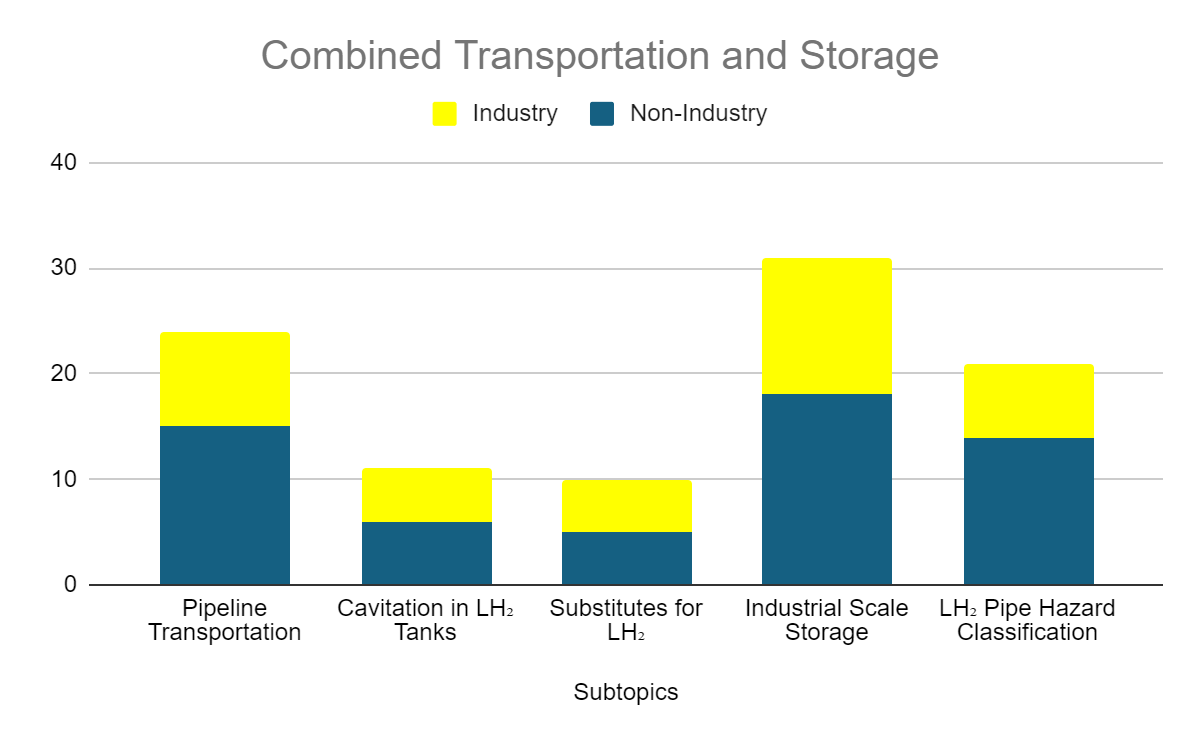
Figure 2
Combined Transportation and Storage Ranking.
5.1.2. Non-industry view
For non-industry participants, industrial scale storage was identified as the top priority, highlighting the importance of safe, large-scale hydrogen storage solutions to meet growing hydrogen demand (see Figure 3). There was also significant interest in pipeline transportation, which was seen as critical for ensuring the safe and efficient distribution of hydrogen. Hazard classification for LH2 pipe connections was another important focus, emphasising the need for clearly defined protocols to enhance safety measures and ensure regulatory compliance.
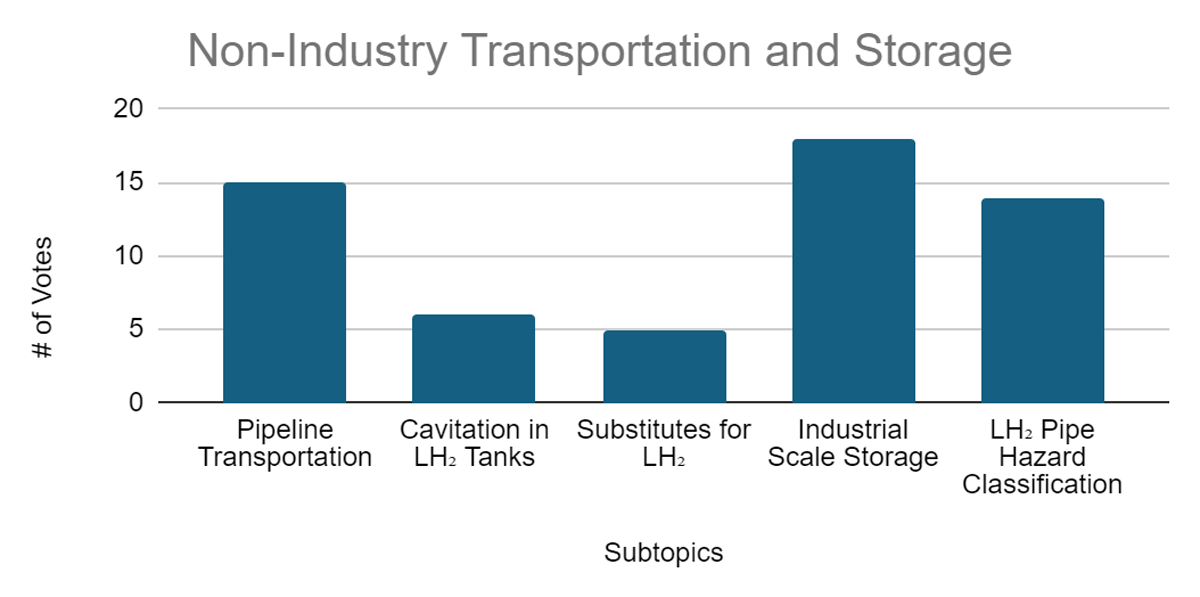
Figure 3
Non-Industry Transportation and Storage Ranking.
5.1.3. Industry view
Industry participants also ranked industrial scale storage as their top priority, highlighting the need for robust infrastructure to support growing hydrogen adoption (see Figure 4). In addition to storage, pipeline transportation was a key focus, reflecting the importance of establishing secure hydrogen transport infrastructure. Hazard classification for LH2 pipe connections was seen as vital, underscoring the industry’s focus on clear risk management protocols to enhance operational safety and comply with regulations.
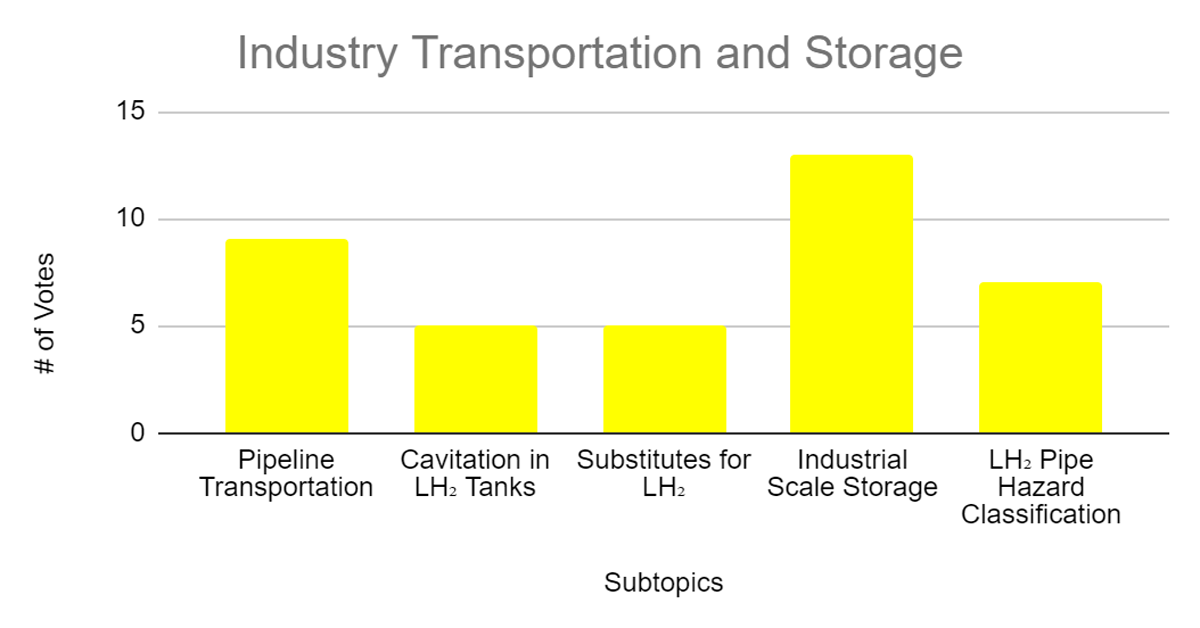
Figure 4
Industry Transportation and Storage Ranking.
5.2. Ignition phenomena
5.2.1. Combined view
In the ignition phenomena category, understanding ignition probabilities was identified as the top priority across both industry and non-industry participants (see Table 2 and Figure 5). This reflects a shared recognition of the importance of assessing the likelihood of hydrogen ignition under various conditions to guide effective risk mitigation strategies. Immediate and delayed ignition was also prioritised, emphasising the need to distinguish between these scenarios to develop tailored preventive measures. Additionally, cryogenic ignition and ignition mechanisms received considerable attention, underscoring the need to investigate the unique ignition characteristics of cryogenic hydrogen and the pathways that lead to ignition.
Table 2
Combined Ignition Phenomena Ranking.
| SUBTOPIC | VOTES |
|---|---|
| Ignition Probabilities | 24 |
| Immediate/Delayed Ignition | 23 |
| Spontaneous Ignition | 10 |
| Cryogenic Ignition | 22 |
| Ignition Mechanisms | 22 |
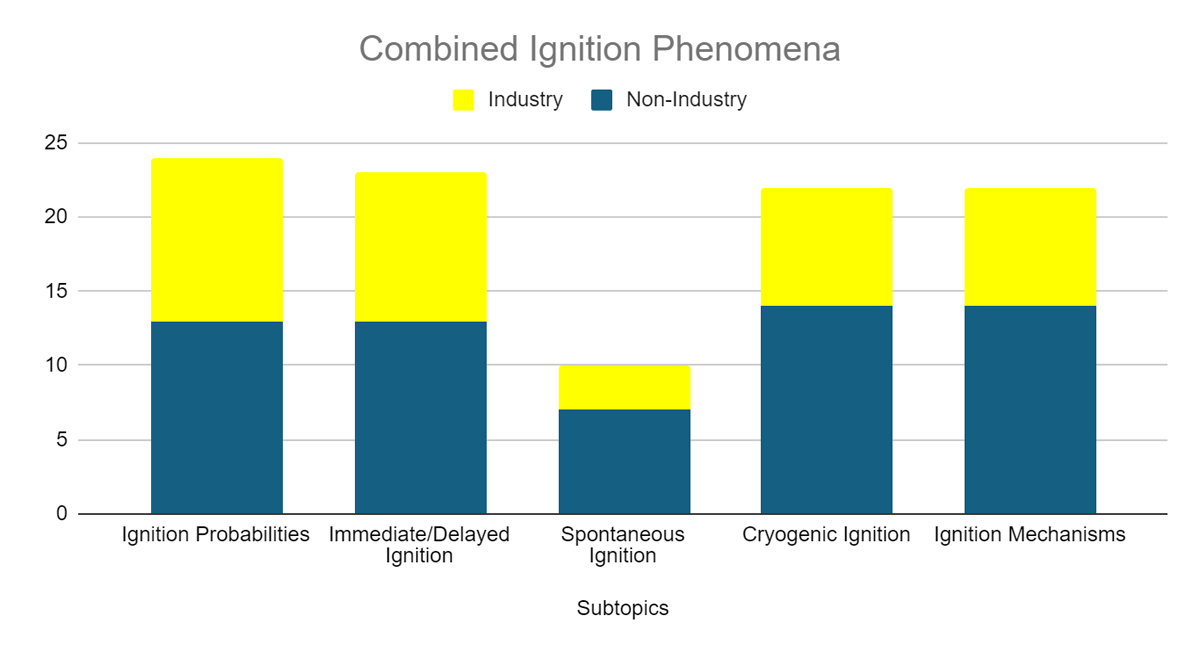
Figure 5
Combined Ignition Phenomena Ranking.
5.2.2. Non-industry view
For non-industry participants, cryogenic ignition was ranked as the top priority, highlighting the need to address the specific risks associated with cryogenic hydrogen (see Figure 6). There was also a focus on ignition mechanisms, with participants emphasising the importance of understanding the various pathways that lead to hydrogen ignition. Ignition probabilities and immediate/delayed ignition were also highly prioritised, reflecting the necessity of accurately assessing and managing hydrogen ignition risks.
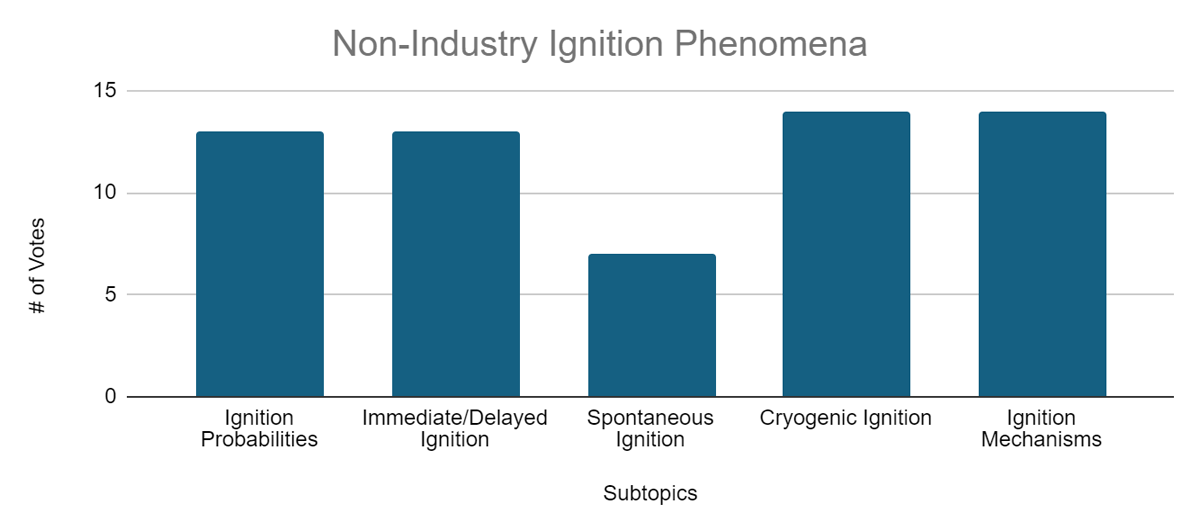
Figure 6
Non-Industry Ignition Phenomena Ranking.
5.2.3. Industry view
Industry participants placed the highest emphasis on understanding ignition probabilities, recognising the need for reliable assessments to mitigate risks during hydrogen handling (see Figure 7). Immediate and delayed ignition was also a significant focus, as it is crucial to understand the different scenarios that could lead to ignition. Cryogenic ignition and ignition mechanisms were also highlighted, pointing to the industry’s interest in understanding both the specific risks of cryogenic hydrogen and the broader mechanisms of ignition.
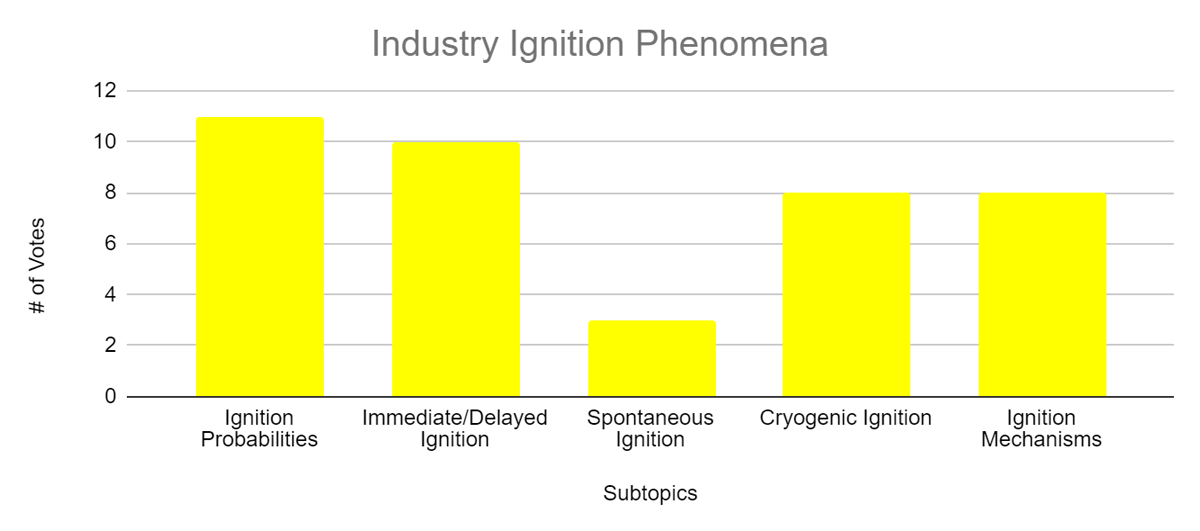
Figure 7
Industry Ignition Phenomena Ranking.
5.3. Mitigation, sensors, and hazard prevention
5.3.1. Combined view
The combined results for the mitigation, sensors, and hazard prevention category revealed that leak detection and surveillance was the highest priority (see Table 3 and Figure 8). Both industry and non-industry participants highlighted the need for early detection systems as a fundamental aspect of maintaining operational safety and preventing hydrogen-related incidents. Hazard area classification also emerged as a key priority, indicating the shared need for well-defined safety zones within hydrogen facilities. Other areas of focus included severity criteria for hazards, ventilation design, and in-line monitoring – reflecting the importance of comprehensive mitigation strategies and effective ventilation to avoid hydrogen accumulation, and real-time monitoring systems to quickly identify risks.
Table 3
Combined Mitigation, Sensors, and Hazard Prevention Ranking.
| SUBTOPIC | VOTES |
|---|---|
| Severity Criteria for Hazards | 13 |
| Ventilation Design | 13 |
| Mitigation Measures | 11 |
| In-Line Monitoring | 12 |
| Ammonia Mitigation | 6 |
| Hazard Area Classification | 15 |
| Leak Detection and Surveillance | 31 |
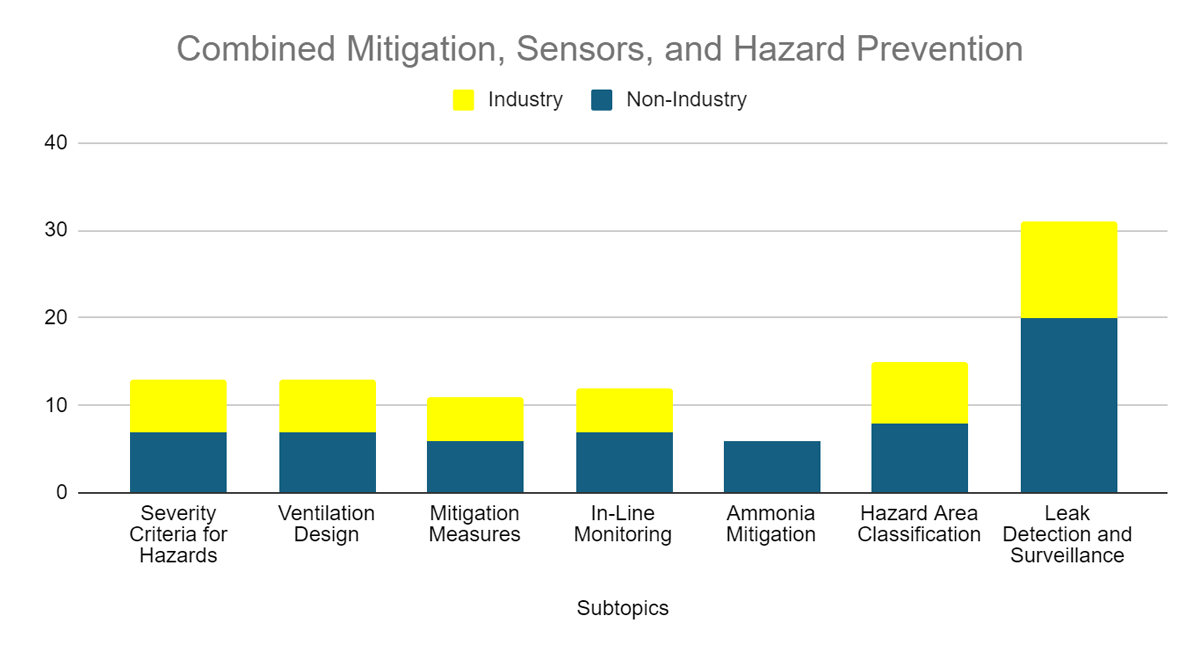
Figure 8
Combined Mitigation, Sensors, and Hazard Prevention Ranking.
5.3.2. Non-industry view
For non-industry participants, leak detection and surveillance emerged as the highest priority, pointing to the necessity of advanced sensing technologies to bolster hydrogen safety (see Figure 9). There was also considerable focus on hazard area classification, emphasising the need for clearly defined hazard zones to ensure regulatory compliance and effective risk management.
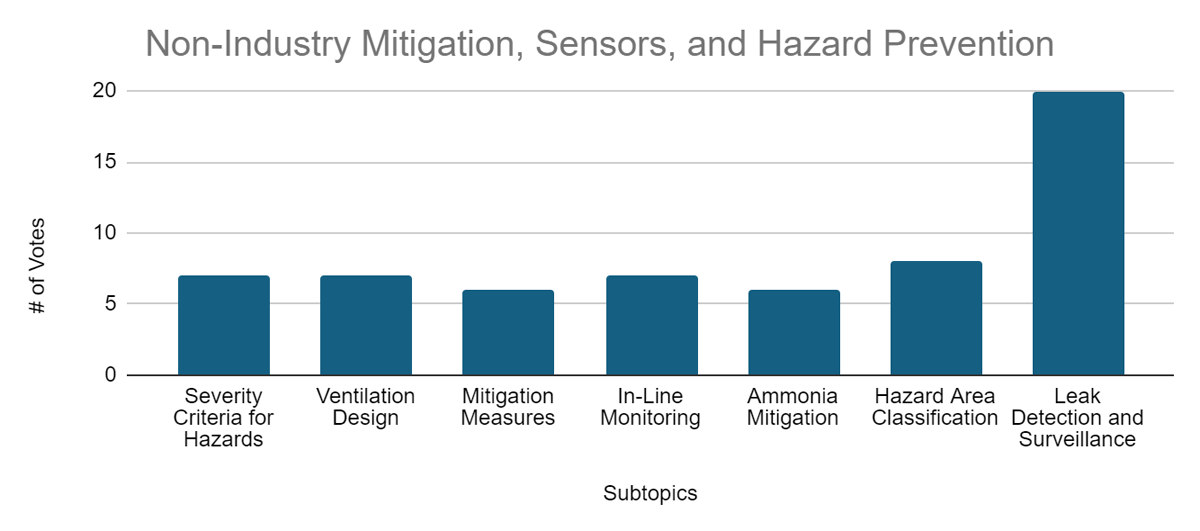
Figure 9
Non-Industry Mitigation, Sensors, and Hazard Prevention Ranking.
5.3.3. Industry view
Industry participants similarly prioritised leak detection and surveillance, emphasising the need for monitoring technologies to address safety concerns promptly (see Figure 10). Hazard area classification was also a critical focus, reflecting the industry’s commitment to ensuring safety compliance through well-defined protocols. Additionally, severity criteria for hazards and the design of effective ventilation systems were recognised as important measures for mitigating the risks associated with hydrogen technologies.
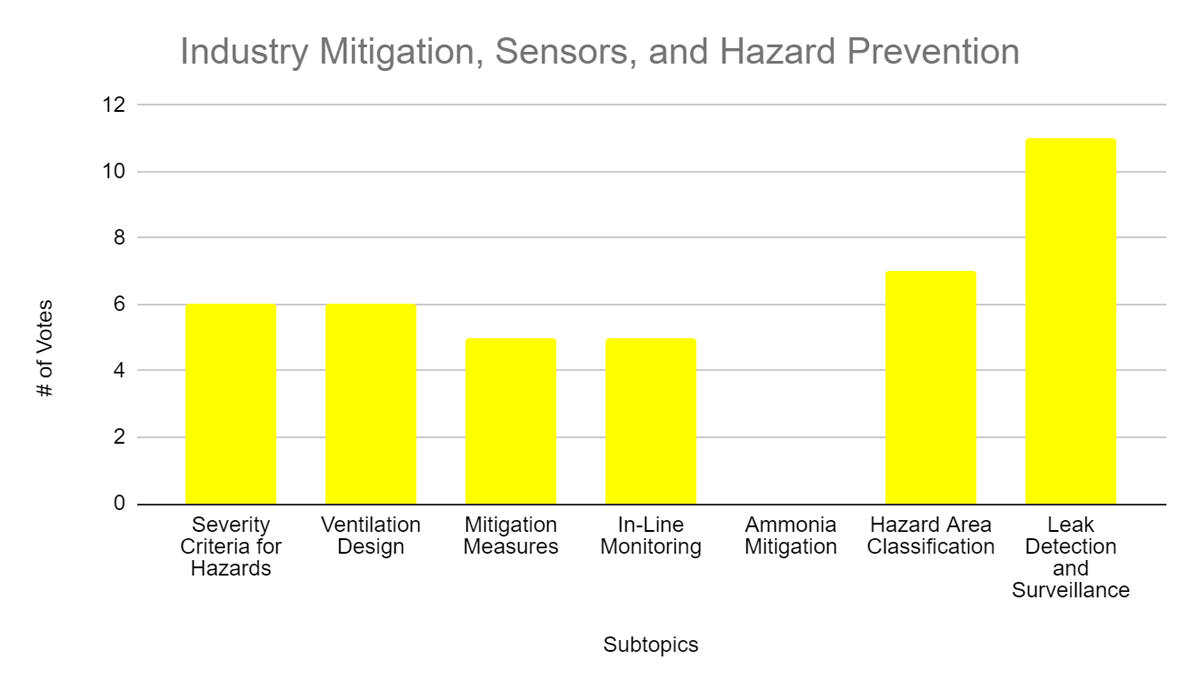
Figure 10
Industry Mitigation, Sensors, and Hazard Prevention Ranking.
5.4. Regulations, codes, and standards
5.4.1. Combined view
In the regulations, codes, and standards category, standards for LH2 were identified as the top priority by both industry and non-industry participants (see Table 4 and Figure 11). This highlights the need for comprehensive standards to ensure safe handling, storage, and scale-up of LH2 use. Best practices and the integration of QRA into existing standards were also prioritised, underscoring the importance of using data-driven approaches to enhance safety and regulatory frameworks. Additionally, the development of new industry standards for emerging hydrogen applications was recognised as crucial to support the evolving use cases of hydrogen across various sectors.
Table 4
Combined Regulations, Codes, and Standards Ranking.
| SUBTOPIC | VOTES |
|---|---|
| Best Practices | 23 |
| New Industry Standards | 20 |
| QRA in Standards | 21 |
| LH2 Standards | 27 |
| Aerospace Standards | 10 |
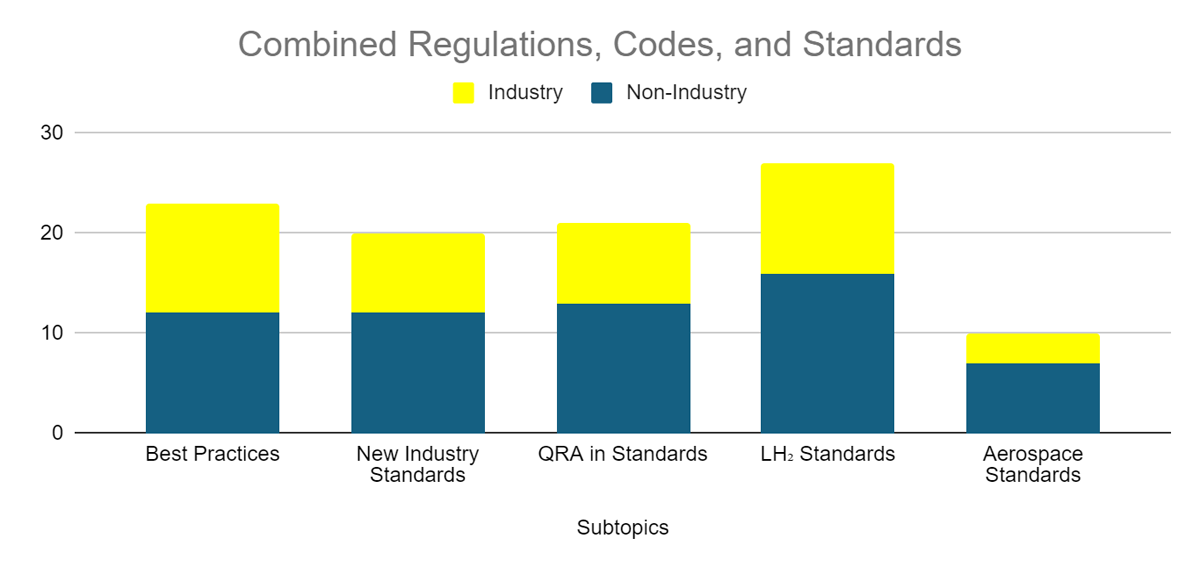
Figure 11
Combined Regulations, Codes, and Standards Ranking.
5.4.2. Non-Industry View
Non-industry participants emphasised standards for LH2 as their highest priority, reflecting a focus on ensuring the safety and reliability of liquid hydrogen handling and a corresponding gap of knowledge (see Figure 12). There was also considerable interest in integrating QRA methodologies into existing standards, recognising the role of data in shaping effective safety measures. Best practices and the creation of new industry standards were also seen as vital for facilitating safe hydrogen adoption.
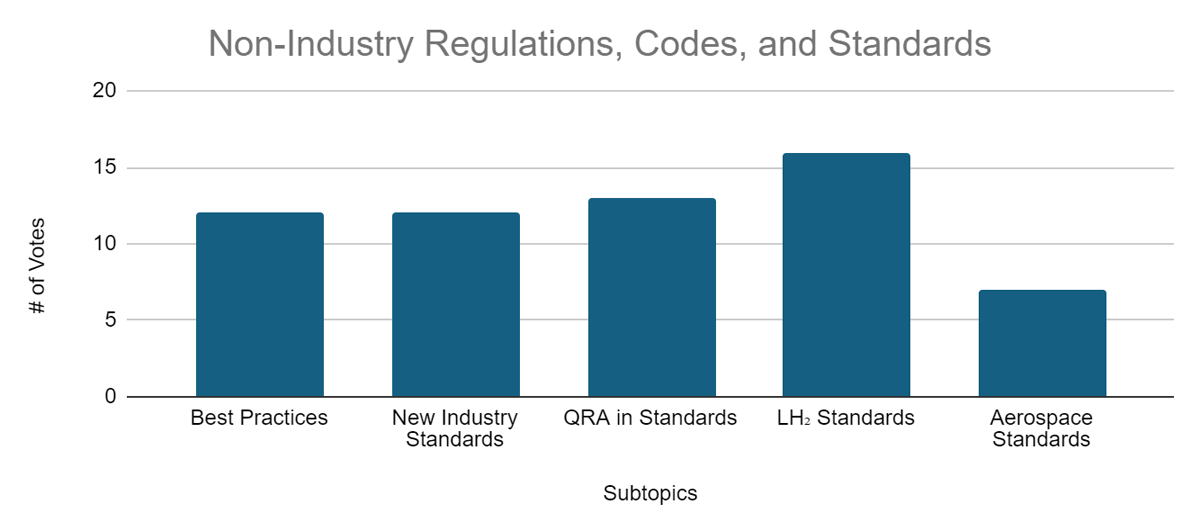
Figure 12
Non-Industry Regulations, Codes, and Standards Ranking.
5.4.3. Industry view
Industry participants similarly placed significant importance on standards for LH2 (see Figure 13). Best practices were also highlighted as key areas of focus. Additionally, the development of new standards for hydrogen’s novel applications and QRA in standards was prioritised, reflecting the industry’s proactive approach to adapting safety regulations to accommodate emerging technologies.
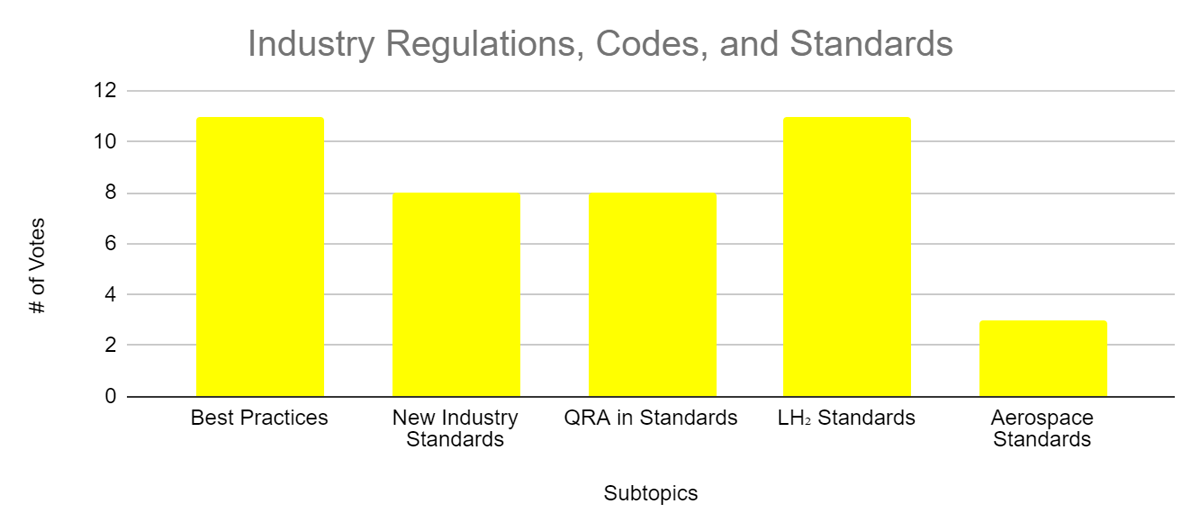
Figure 13
Industry Regulations, Codes, and Standards Ranking.
5.5. Phenomena understanding and modelling
5.5.1. Combined view
In the phenomena understanding and modelling category, gas explosion modelling emerged as the top priority for both industry and non-industry participants (see Table 5 and Figure 14). This reflects the collective recognition of the importance of improving predictive capabilities for hydrogen gas explosions, which is essential for designing safer systems. There was also considerable emphasis on vapour cloud explosions, highlighting the need to understand and mitigate the risks associated with hydrogen vapour clouds. Hybrid mixtures and impinging jets were additional areas of interest, reflecting a shared focus on advancing modelling techniques for complex hydrogen scenarios.
Table 5
Combined Phenomena Understanding and Modelling Ranking.
| SUBTOPIC | VOTES |
|---|---|
| DDT Sensitivity | 9 |
| Chemical Inhibition | 5 |
| Hybrid Mixtures | 10 |
| Gas Explosion Modelling | 21 |
| Critical Thermodynamics | 4 |
| Vapour Cloud Explosion | 16 |
| Impinging Jets | 12 |
| Benchmark Studies | 10 |
| H2 Derivatives | 5 |
| Jet Explosions | 11 |
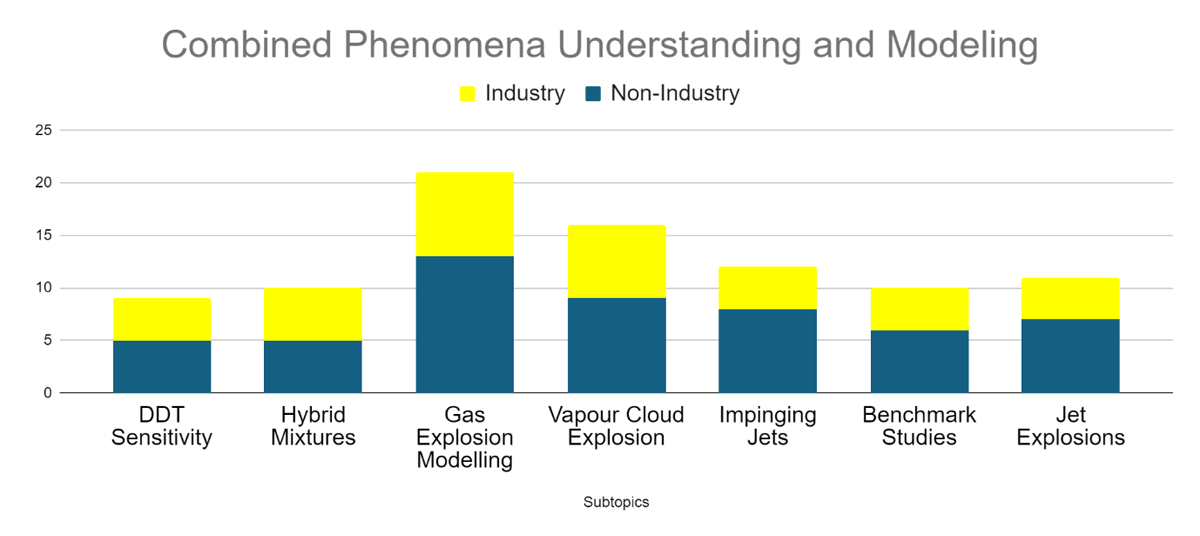
Figure 14
Combined Phenomena Understanding and Modelling Ranking. Please note that Chemical Inhibition, Critical Thermodynamics, and H2 Derivatives have been hidden from the figure.
5.5.2. Non-industry view
Non-industry participants placed gas explosion modelling as the top priority, demonstrating a strong focus on accurate engineering models to predict and mitigate explosion risks (see Figure 15). Vapour cloud explosion was another closely related significant concern, reflecting the necessity of understanding hydrogen behaviour in different scenarios to improve safety. The need for modelling hybrid mixtures and impinging jets was also noted, indicating a comprehensive approach to capturing various hydrogen behaviours in risk assessment models.
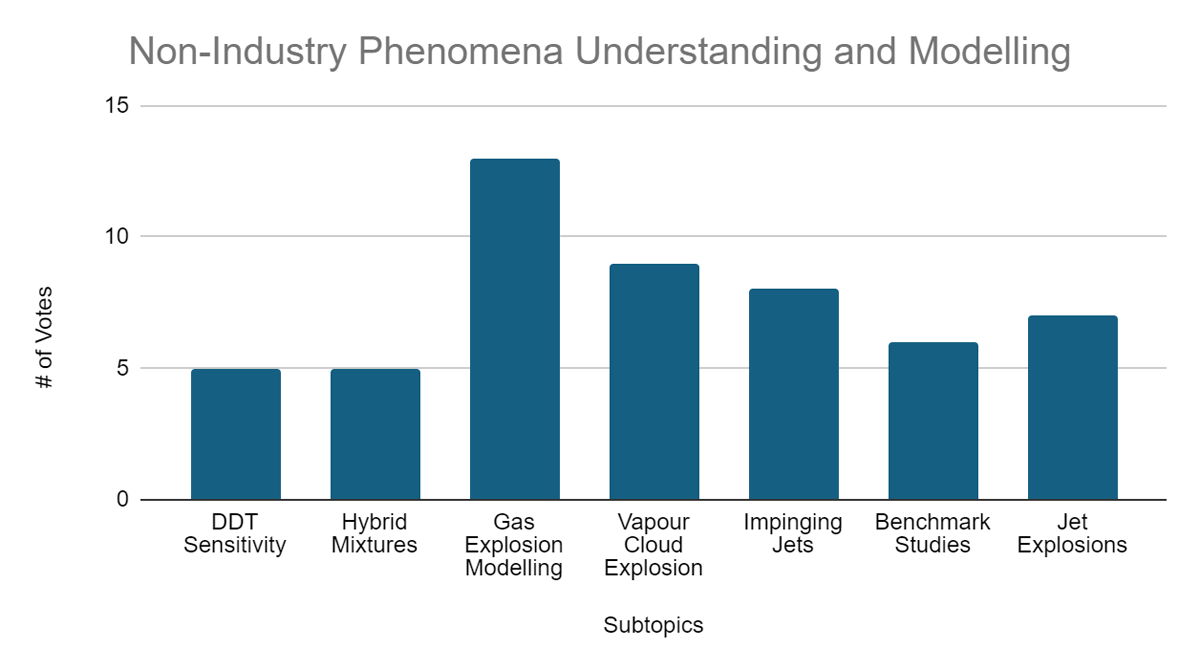
Figure 15
Non-Industry Phenomena Understanding and Modelling Ranking. Please note that Chemical Inhibition, Critical Thermodynamics, and H2 Derivatives have been hidden from the figure.
5.5.3. Industry View
Industry participants also ranked gas explosion modelling as the highest priority, highlighting the critical role of predictive capabilities in informing safe system design (see Figure 16). Vapour cloud explosions and hybrid mixtures received significant attention, reflecting the need for precise modelling to understand and manage risks. The industry also showed interest in impinging jets, emphasising the importance of advanced modelling tools for assessing risks in hydrogen applications under diverse conditions.
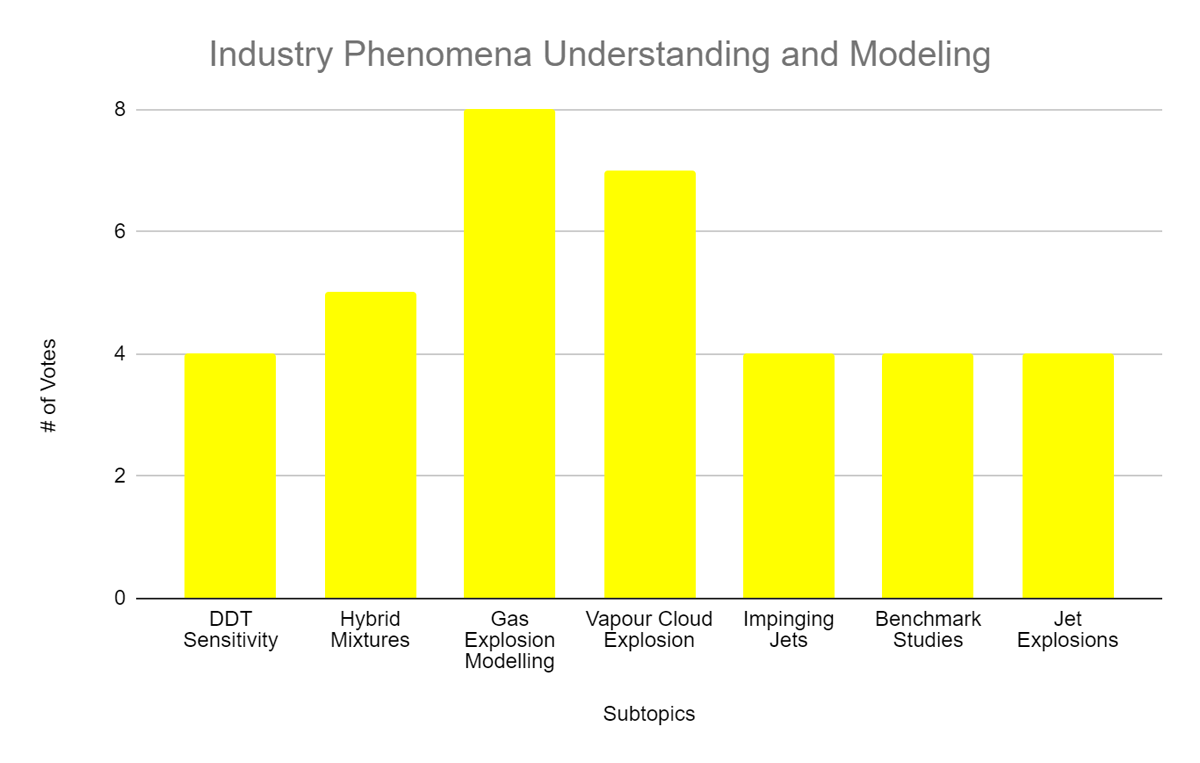
Figure 16
Industry Phenomena Understanding and Modelling Ranking. Please note that Chemical Inhibition, Critical Thermodynamics, and H2 Derivatives have been hidden from the figure.
5.6. QRA and reliability data
5.6.1. Combined view
In the QRA and Reliability Data category, system design emerged as the top priority, reflecting the shared importance placed on developing inherently reliable hydrogen systems capable of mitigating risks (see Table 6 and Figure 17). Both industry and non-industry participants highlighted the significance of failure rate data collection as crucial for enhancing risk assessments and ensuring the dependability of hydrogen components. Additionally, the creation of a reliability database and emphasis on electrolyser risk analysis demonstrated a commitment to data-driven approaches that support safe and effective hydrogen deployment.
Table 6
Combined QRA and Reliability Data Ranking.
| SUBTOPIC | VOTES |
|---|---|
| Uncertainty in Risk Models | 14 |
| Indoor Hydrogen QRA | 6 |
| Reduced Order Models | 3 |
| Failure Rate Data | 20 |
| Electrolyser Risk Analysis | 12 |
| Component Reliability | 3 |
| Integrity Monitoring | 4 |
| Nuclear Coupled Hydrogen | 3 |
| System Design | 13 |
| Reliability Database | 14 |
| Testing Labs | 1 |
| Risk Model Development | 8 |
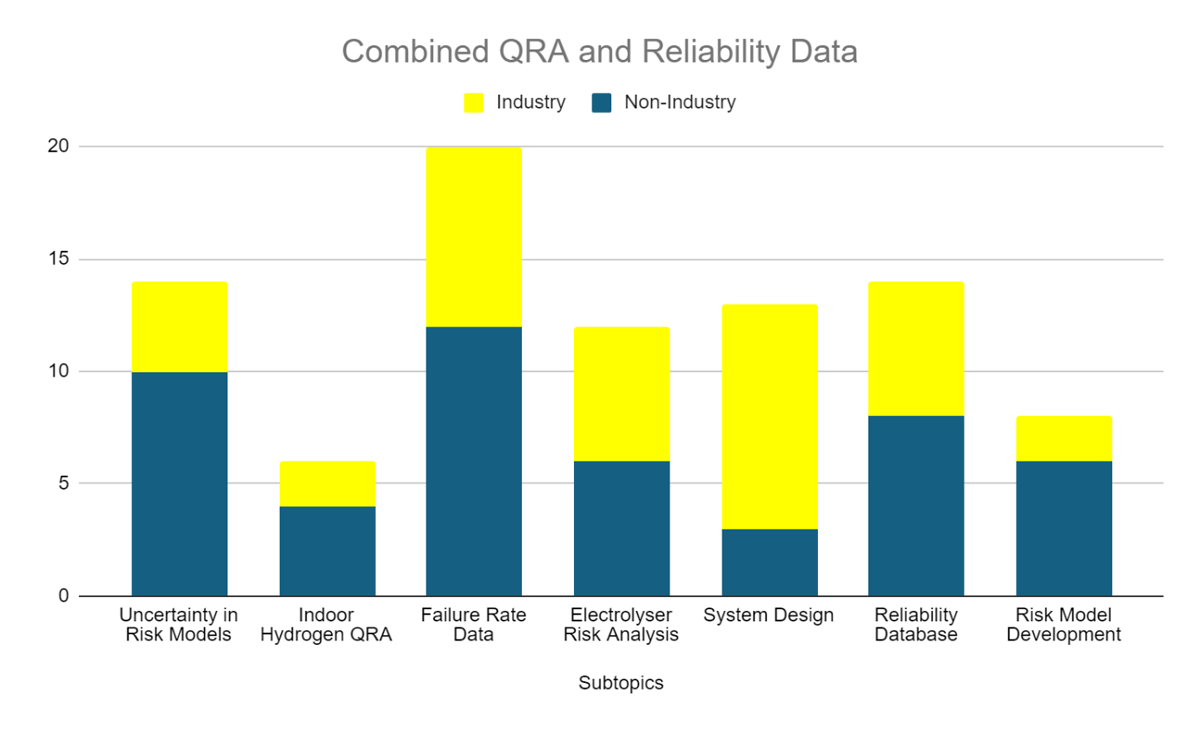
Figure 17
Combined QRA and Reliability Data Ranking. Please note that Reduced Order Models, Component Reliability, Integrity Monitoring, Nuclear Coupled Hydrogen, and Testing Labs, have been hidden from the figure.
5.6.2. Non-industry view
Non-industry participants prioritised failure rate data and corresponding databases, as well as uncertainties in risk models as the highest focusses, highlighting the need for reliable data to inform safety analyses and risk assessments (see Figure 18).
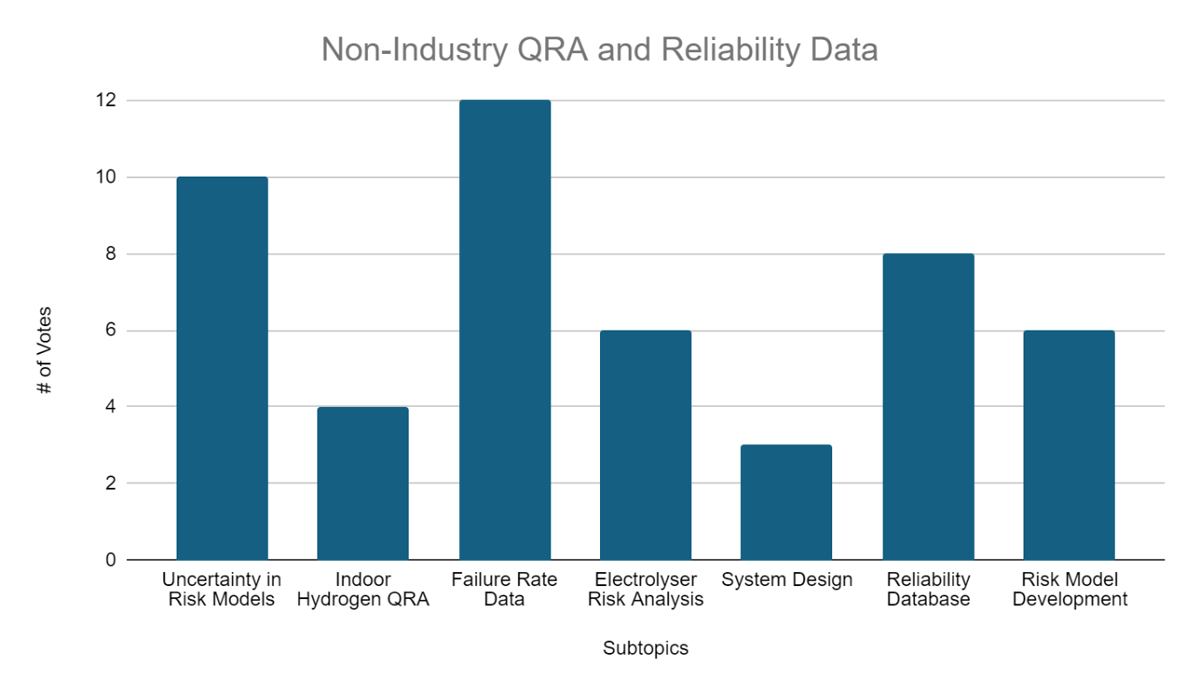
Figure 18
Non-Industry QRA and Reliability Data Ranking. Please note that Reduced Order Models, Component Reliability, Integrity Monitoring, Nuclear Coupled Hydrogen, and Testing Labs, have been hidden from the figure.
5.6.3. Industry view
For industry participants, system design was the top priority, highlighting the emphasis on developing robust and inherently safe hydrogen systems (see Figure 19). Failure rate data collection was also a critical area of focus, supporting informed decision-making in system safety. Additionally, industry participants stressed the importance of a comprehensive reliability database and electrolyser risk analysis, reflecting their commitment to enhancing system reliability through structured data and analysis.
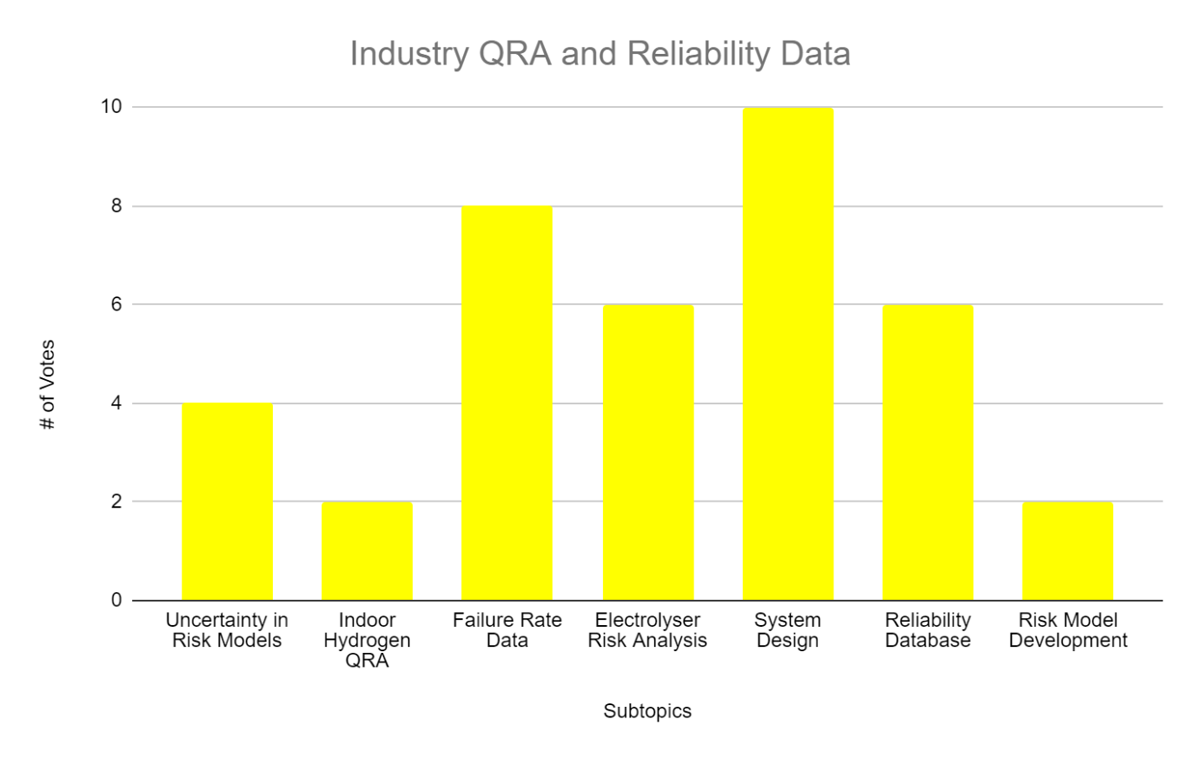
Figure 19
Industry QRA and Reliability Data Ranking. Please note that Reduced Order Models, Component Reliability, Integrity Monitoring, Nuclear Coupled Hydrogen, and Testing Labs, have been hidden from the figure.
5.7. Cryogenic hydrogen
5.7.1. Combined view
In the cryogenic hydrogen category, the risk of BLEVE was identified as the top priority by both industry and non-industry participants (see Table 7 and Figure 20). Addressing this risk is crucial for ensuring the safe handling and storage of cryogenic hydrogen in large-scale applications. There was also a significant focus on developing modelling tools for liquid hydrogen (LH2), which are essential for accurately predicting hydrogen behaviour under cryogenic conditions. Additionally, understanding potential LH2 release scenarios was highlighted as a key area to mitigate associated hazards and improve safety.
Table 7
Combined Cryogenic Hydrogen Ranking.
| SUBTOPIC | VOTES |
|---|---|
| LH2 Modelling Tools | 21 |
| Flame Acceleration in LH2 | 5 |
| Sensor Placement | 11 |
| Ventilation Strategies | 7 |
| LH2 Releases | 15 |
| LH2 Concentration | 6 |
| Impinging Jet Flames | 2 |
| Cryogenic LH2 Safety | 7 |
| Cryogenic H2 Behaviours | 6 |
| BLEVE Risk | 18 |
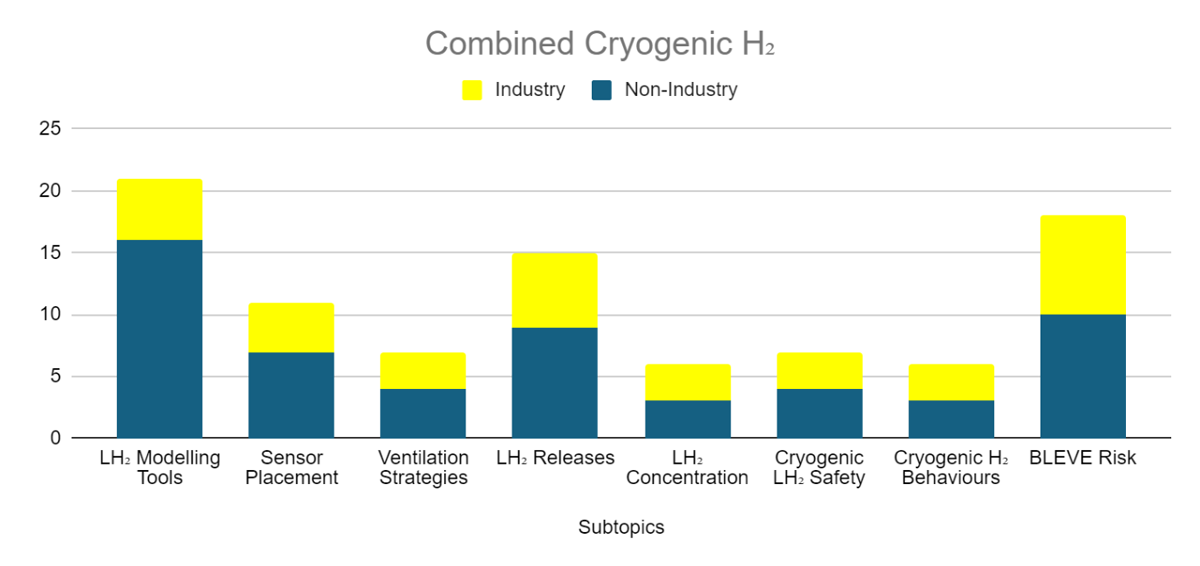
Figure 20
Combined Cryogenic Hydrogen Ranking. Please note that Flame Acceleration in LH2 and Impinging Jet Flames have been hidden from the figure.
5.7.2. Non-industry view
Non-industry participants prioritised LH2 modelling tools, highlighting the importance of predictive capabilities to understand cryogenic hydrogen behaviour comprehensively (see Figure 21). BLEVE risk and LH2 releases were also key concerns, reflecting the need to address these risks and ensure effective mitigation measures are in place for cryogenic hydrogen.
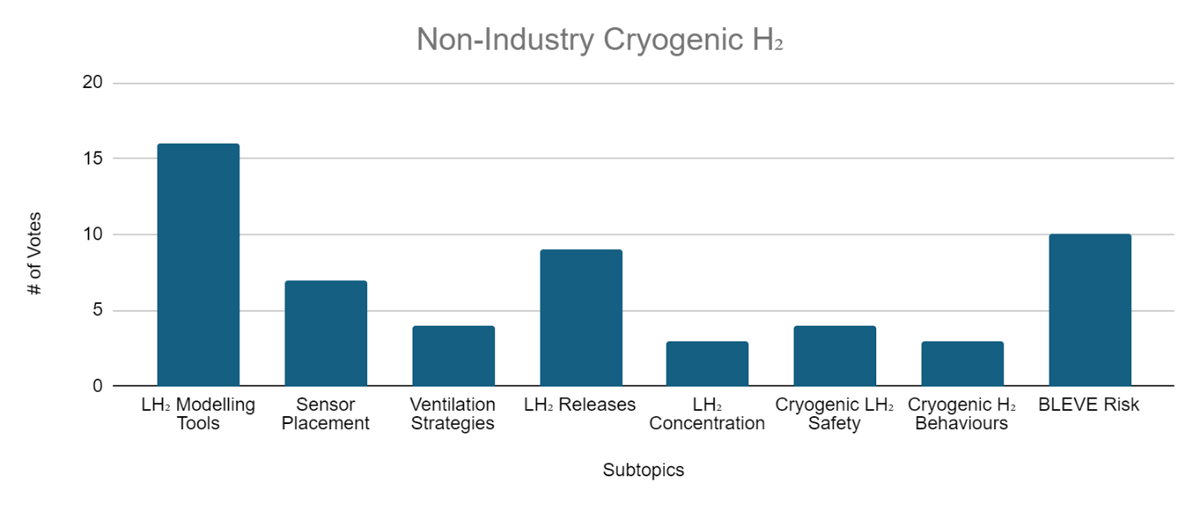
Figure 21
Non-Industry Cryogenic Hydrogen Ranking. Please note that Flame Acceleration in LH2 and Impinging Jet Flames have been hidden from the graph.
5.7.3. Industry view
Industry participants ranked BLEVE risk as the highest priority, underscoring the focus on addressing major hazards associated with cryogenic hydrogen storage and use (see Figure 22). LH2 modelling tools and potential release scenarios were also prioritised, reflecting the industry’s commitment to predictive modelling and risk management as integral parts of safe cryogenic hydrogen operations.
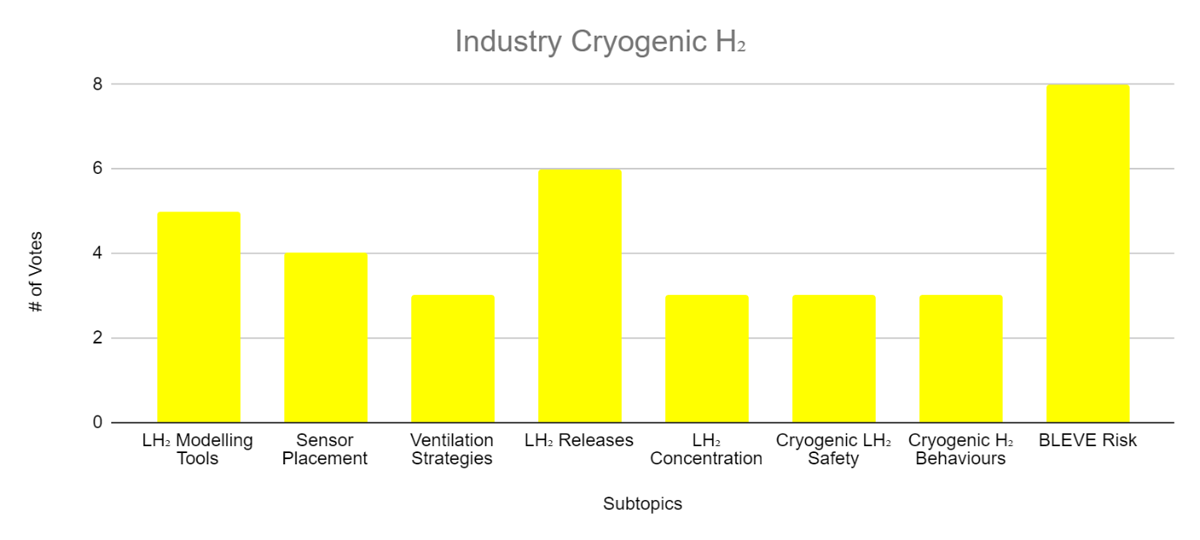
Figure 22
Industry Cryogenic Hydrogen Ranking. Please note that Flame Acceleration in LH2 and Impinging Jet Flames have been hidden from the figure.
5.8. Safe design
5.8.1. Combined view
In the safe design category, inherently safer design and vent design emerged as the top priorities for both industry and non-industry participants (see Table 8 and Figure 23). This reflects a shared emphasis on integrating safety at the earliest stages of hydrogen system design to proactively minimise risks. Material assessment also received considerable attention, highlighting the importance of selecting materials that can withstand hydrogen’s unique properties.
Table 8
Combined Safe Design Ranking.
| SUBTOPIC | VOTES |
|---|---|
| Material Assessment | 19 |
| Non-Metallic Vessels | 12 |
| Structural Design | 5 |
| Inherently Safe Design | 26 |
| Na-Tech | 1 |
| Laboratory Safety | 6 |
| Vent Design | 22 |
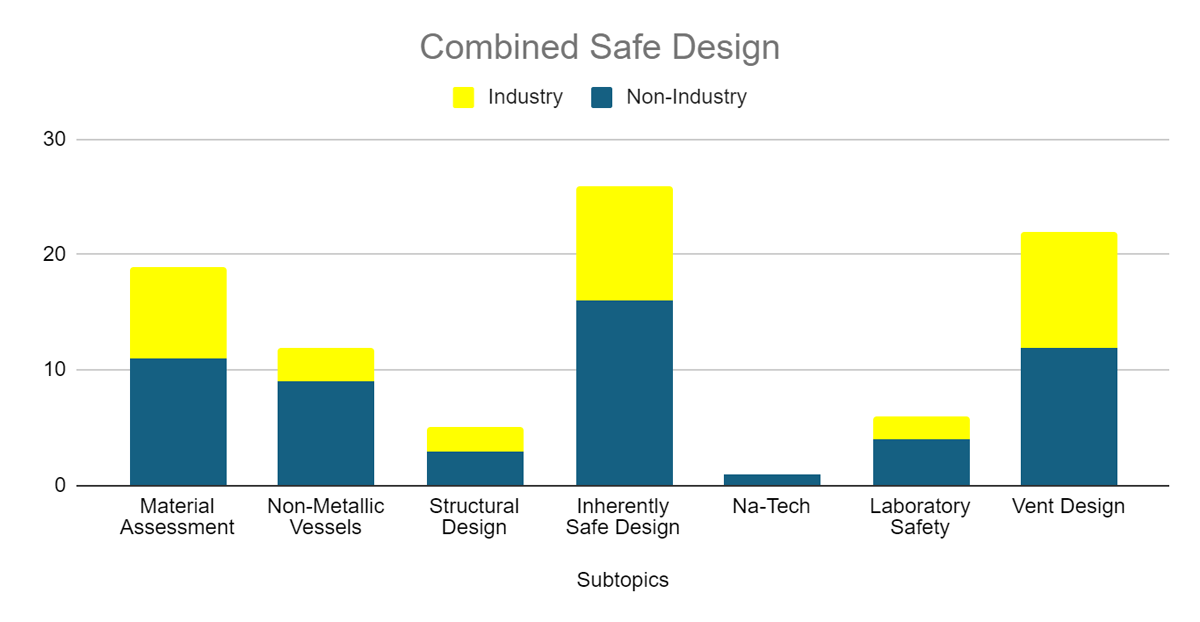
Figure 23
Combined Safe Design Ranking.
5.8.2. Non-Industry View
Non-industry participants prioritised inherently safer design, emphasising the need to embed safety considerations throughout the design process (see Figure 24). Vent design was also highlighted as critical for managing hydrogen releases and mitigating risks effectively. Material assessment was considered important to ensure that the materials used in hydrogen systems are appropriate for maintaining safety and durability.
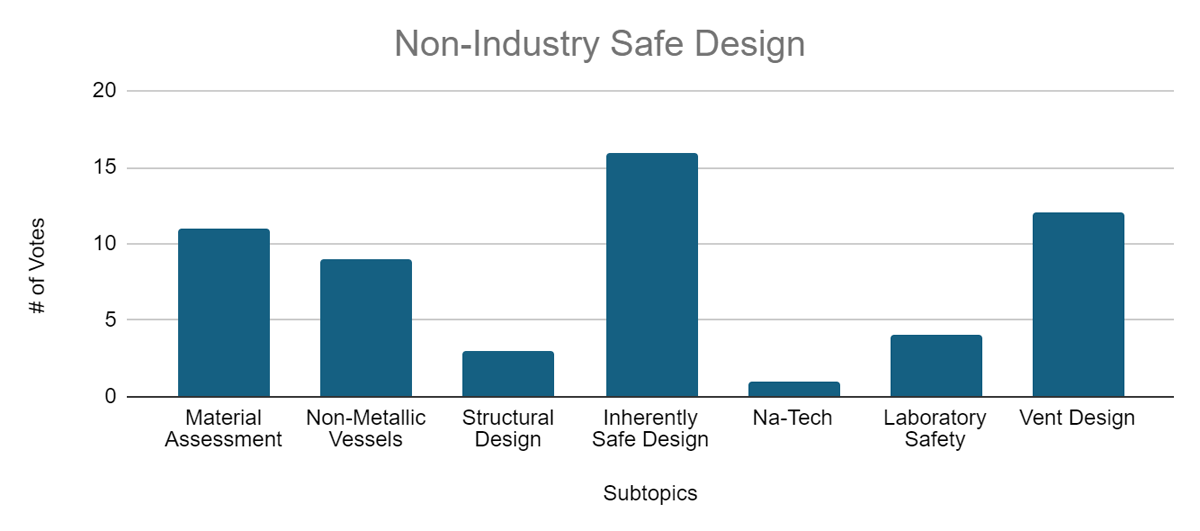
Figure 24
Non-Industry Safe Design Ranking.
5.8.3. Industry view
Industry participants similarly placed significant emphasis on inherently safer design, vent design and Material Assessment (see Figure 25).
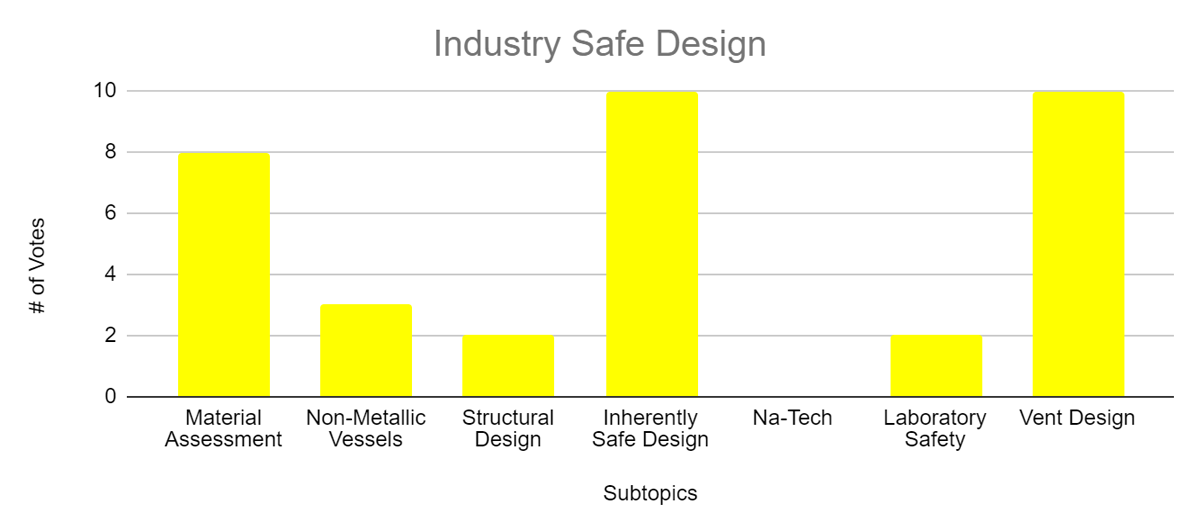
Figure 25
Industry Safe Design Ranking.
5.9. Stakeholder and public perception
5.9.1. Combined view
In the stakeholder and public perception category, education on hydrogen safety emerged as the top priority, indicating a shared understanding of the importance of disseminating knowledge to support the adoption of hydrogen technologies (see Table 9 and Figure 26). Both industry and non-industry participants recognised that enhancing risk awareness is crucial to support the industry. Additional emphasis was placed on public perception of hydrogen safety and communication strategies to effectively engage with stakeholders and the broader public.
Table 9
Combined Stakeholder and Public Perception Ranking.
| SUBTOPIC | VOTES |
|---|---|
| Education on H2 Safety | 28 |
| Public Perception of H2 | 13 |
| Risk Awareness, Perception, and Preferences for Stakeholders | 21 |
| Public Perception of H2 Safety | 19 |
| Communication Strategies | 19 |
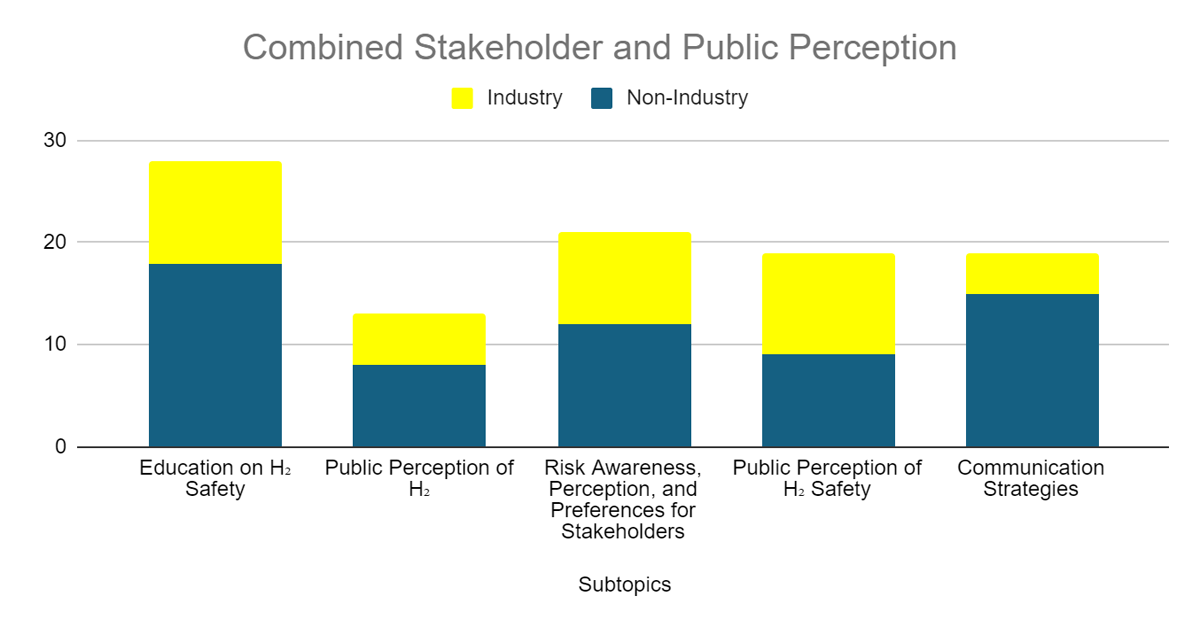
Figure 26
Combined Stakeholder and Public Perception Ranking.
5.9.2. Non-industry view
Non-industry participants prioritised education on hydrogen safety, highlighting the importance of ensuring that both stakeholders and the general public have a solid understanding of hydrogen technologies and their associated risks (see Figure 27). There was also considerable emphasis on effective communication strategies to improve public perception and foster confidence in hydrogen applications.
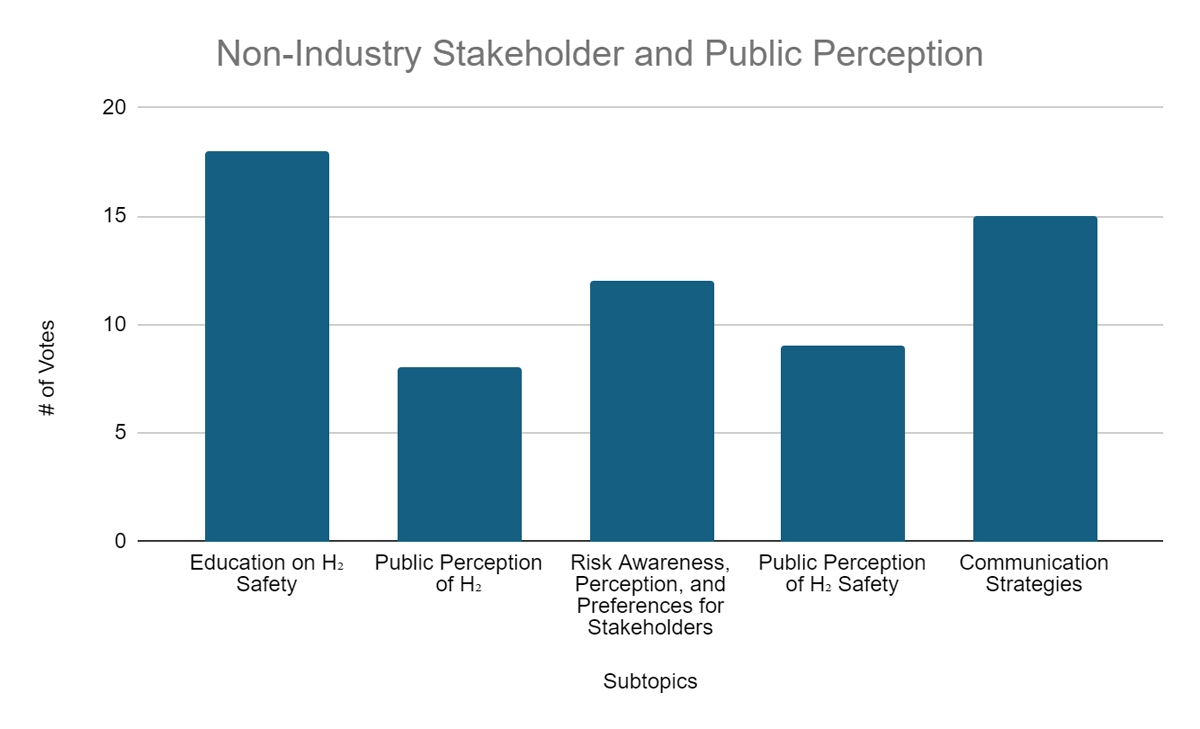
Figure 27
Non-Industry Stakeholder and Public Perception Ranking.
5.9.3. Industry view
Industry participants also prioritised education on hydrogen safety, reflecting the importance of equipping stakeholders with the necessary knowledge to support hydrogen adoption (see Figure 28). Public perception and risk awareness were key areas of focus, demonstrating the need for open and transparent communication to foster stakeholder trust and improve public acceptance of hydrogen technologies.
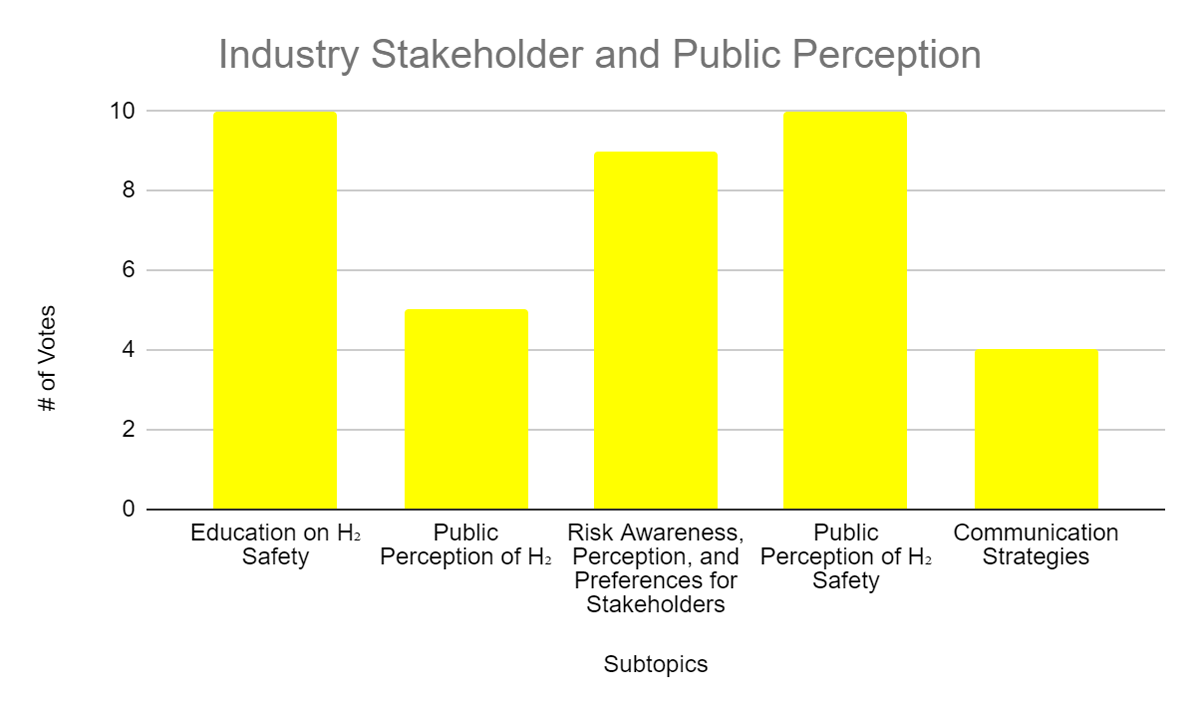
Figure 28
Industry Stakeholder and Public Perception Ranking.
5.10. Topic ranking outcomes
In addition to ranking the subtopics within each category, participants were asked to prioritise the broader research topics to determine key focus areas for future hydrogen safety research. The combined rankings were derived using a reverse scoring system, with higher points assigned to higher-ranked priorities. The results provide a comprehensive overview of the most critical research directions, reflecting insights from industry and non-industry participants.
5.10.1. Combined view
The combined analysis of the research topics highlights the areas that both industry and non-industry stakeholders consider most pressing for advancing hydrogen safety. QRA and Reliability Data emerged as the highest priority, reflecting a strong collective emphasis on understanding and managing risks through robust reliability data and quantitative risk assessments (see Table 10 and Figure 29). This result emphasises the foundational role of risk analysis in ensuring the safe and reliable deployment of hydrogen technologies.
Table 10
Combined Topic Ranking.
| TOPIC | POINTS |
|---|---|
| Transportation and Storage | 87 |
| Ignition Phenomena | 148 |
| Mitigation, Sensors, and Hazard Prevention | 176 |
| Regulation, Codes, and Standards | 153 |
| Phenomena Understanding and Modelling | 154 |
| QRA and Reliability Data | 197 |
| Cryogenic H2 | 131 |
| Safe Design | 135 |
| Stakeholder and Public Perception | 97 |
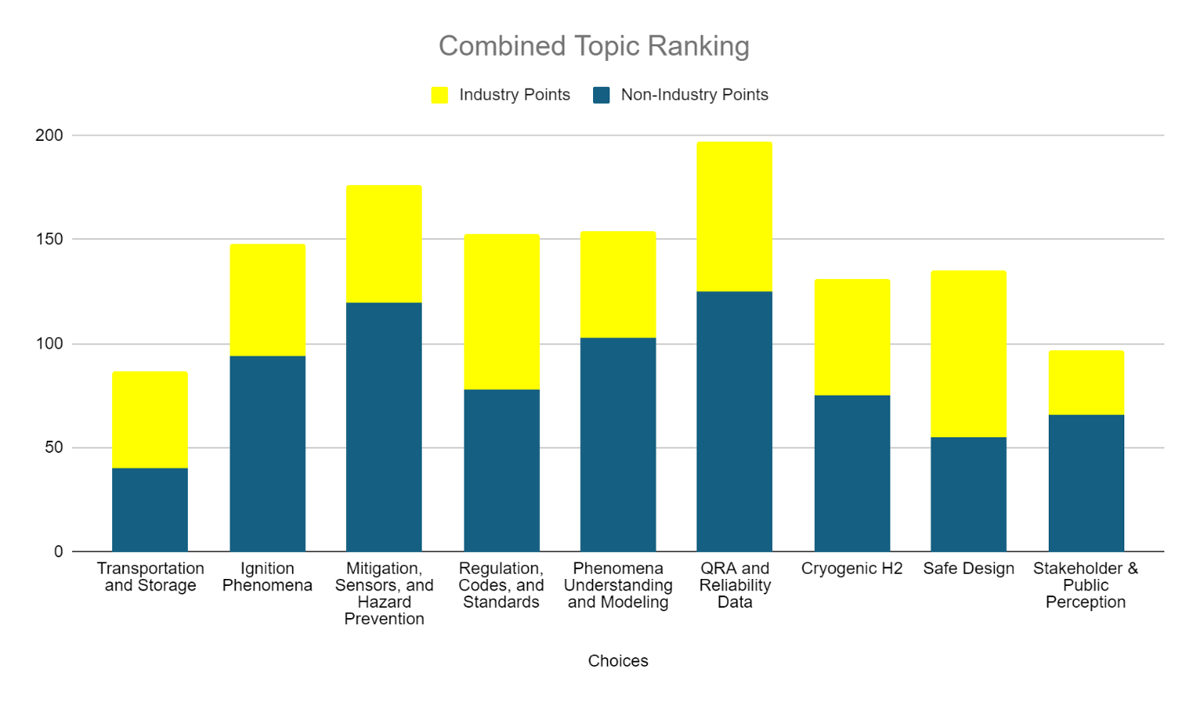
Figure 29
Combined Topic Ranking.
Mitigation, Sensors, and Hazard Prevention was ranked second, indicating the necessity of developing and implementing effective safety measures, such as leak detection, hazard prevention, and advanced monitoring. This demonstrates the importance of ensuring safety measures are in place to prevent incidents in hydrogen systems.
Phenomena Understanding and Modelling, which ranked third, points to the importance of improving the associated knowledge base and deriving reliable predictive models for hydrogen behaviour under different conditions.
Regulations, Codes, and Standards and Ignition Phenomena were also highlighted as important areas, reflecting the shared need for establishing consistent safety standards and gaining a better understanding of ignition risks associated with hydrogen.
These priorities highlight the importance of creating a regulatory framework and technical understanding that can support the growing hydrogen industry.
5.10.2. Non-industry view
For non-industry participants, QRA and Reliability Data emerged as the top priority, reflecting a significant emphasis on robust risk assessment and system reliability (see Table 11 and Figure 30). This aligns with the non-industry perspective that prioritises a comprehensive understanding of potential hazards and ensuring safe hydrogen deployment through quantitative methodologies.
Table 11
Non-Industry Topic Ranking.
| TOPIC | POINTS |
|---|---|
| Transportation and Storage | 40 |
| Ignition Phenomena | 94 |
| Mitigation, Sensors, and Hazard Prevention | 120 |
| Regulation, Codes, and Standards | 78 |
| Phenomena Understanding and Modelling | 103 |
| QRA and Reliability Data | 125 |
| Cryogenic H2 | 75 |
| Safe Design | 55 |
| Stakeholder and Public Perception | 66 |
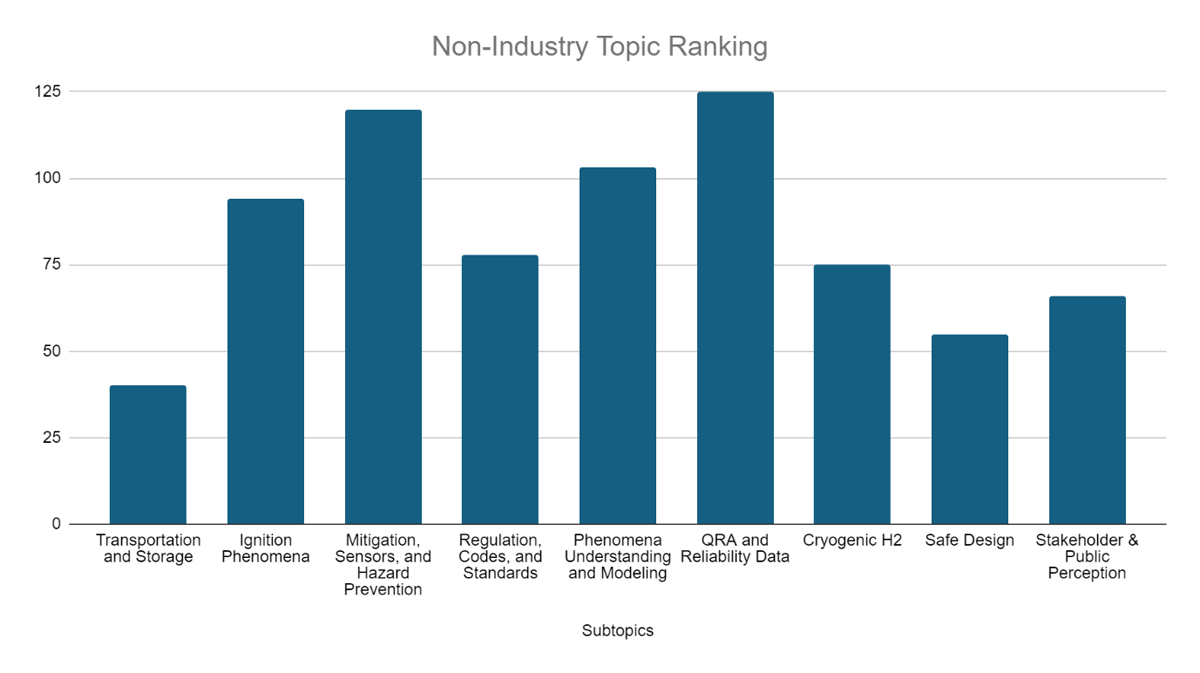
Figure 30
Non-Industry Topic Ranking.
Mitigation, Sensors, and Hazard Prevention follows as the second highest priority. This indicates the importance of proactive safety measures, such as advanced leak detection and hazard classification, to prevent incidents and ensure safe operations.
Phenomena Understanding and Modelling ranked third, highlighting the importance placed on advancing predictive models to better understand hydrogen behaviour under various conditions. Improved modelling is essential for designing safer hydrogen systems and mitigating risks in an efficient way.
Regulations, Codes, and Standards was also a significant focus for non-industry participants, ranking fourth. This emphasis demonstrates the importance of ensuring that regulatory measures are robust and aligned with best practices to maintain safety as hydrogen technologies develop.
The rankings of Ignition Phenomena, Cryogenic H2, Safe Design, Stakeholder and Public Perception, and Transportation and Storage illustrate a diversified view among non-industry stakeholders. Non-industry participants place particular importance on improving stakeholder and public perception, as well as addressing cryogenic hydrogen challenges.
5.10.3. Industry view
From the industry perspective, Safe Design emerged as the highest priority (see Table 12 and Figure 31). This suggests a clear focus within the industry on designing hydrogen systems that are inherently safer and capable of minimising risks from the outset. Developing safety at the core of system design is crucial for ensuring that hydrogen technologies are deployed and operated at lowest risk reasonably possible.
Table 12
Industry Topic Ranking.
| TOPIC | POINTS |
|---|---|
| Transportation and Storage | 47 |
| Ignition Phenomena | 54 |
| Mitigation, Sensors, and Hazard Prevention | 56 |
| Regulation, Codes, and Standards | 75 |
| Phenomena Understanding and Modelling | 51 |
| QRA and Reliability Data | 72 |
| Cryogenic H2 | 56 |
| Safe Design | 80 |
| Stakeholder and Public Perception | 31 |
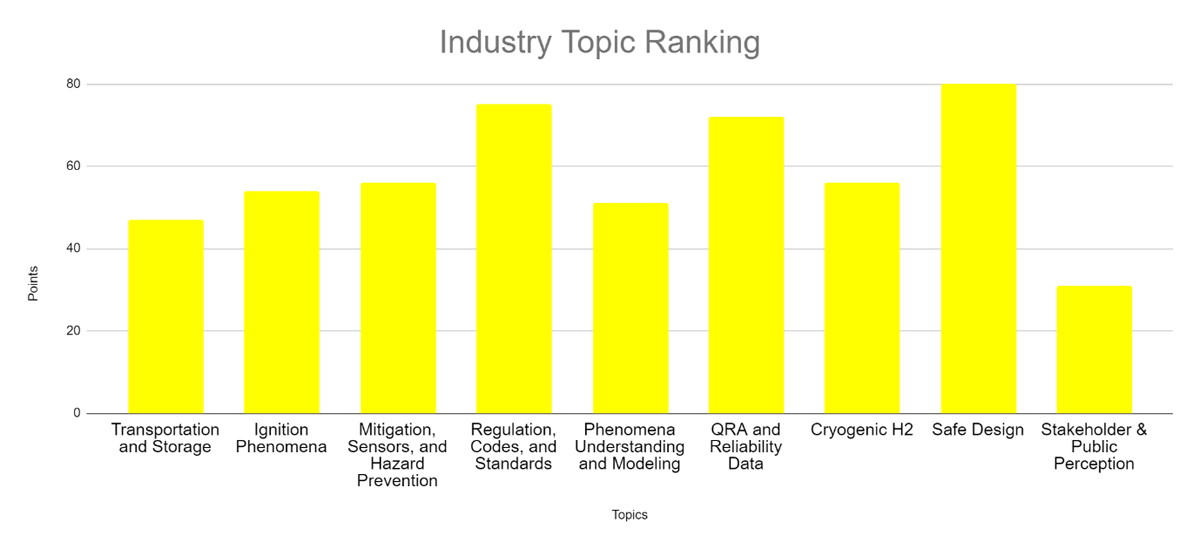
Figure 31
Industry Topic Ranking.
QRA and Reliability Data ranked second among industry participants, indicating the industry’s emphasis on rigorous risk assessment methodologies and reliability assurance. This aligns with the importance of providing a strong data foundation for decision-making and ensuring that components and systems operate safely and effectively.
Mitigation, Sensors, and Hazard Prevention followed as a key priority. The emphasis on mitigation measures and hazard prevention reflects the industry’s recognition of the need for effective safety technologies, such as advanced leak detection and real-time monitoring systems, to prevent incidents and ensure operational safety.
Phenomena Understanding and Modelling and Regulations, Codes, and Standards were also highlighted, indicating a need to further develop technical models that predict hydrogen behaviour and to ensure regulatory standards are robust and applicable to new hydrogen technologies. These priorities are necessary to support the safe upscaling across various industrial applications.
The ranking of Cryogenic H2, Stakeholder and Public Perception, Transportation and Storage, and Ignition Phenomena further illustrates the industry’s balanced focus on technical, regulatory, and public-facing aspects of hydrogen safety. While these topics received fewer points overall, they remain important components of a comprehensive approach to hydrogen safety.
6. Summary and Conclusion
The Research Priorities Workshop has provided valuable insights into the key areas of focus necessary for advancing hydrogen safety. By gathering input from both industry and non-industry stakeholders, a comprehensive understanding of the priorities in hydrogen research has emerged. These priorities form the foundation for future research and development efforts.
As for the previous workshops, the results of the voting described in detail above have been aggregated and arranged in a simplified matrix view applying an extended traffic light logic (see Figure 32). The rows of the matrix address each element of the hydrogen value chain from production to use (‘Application’), whereas the columns reflect phenomena and tools. The entries set in bold font were explicitly addressed in the workshop. References to the chapters above are provided, to justify the corresponding colour coding.
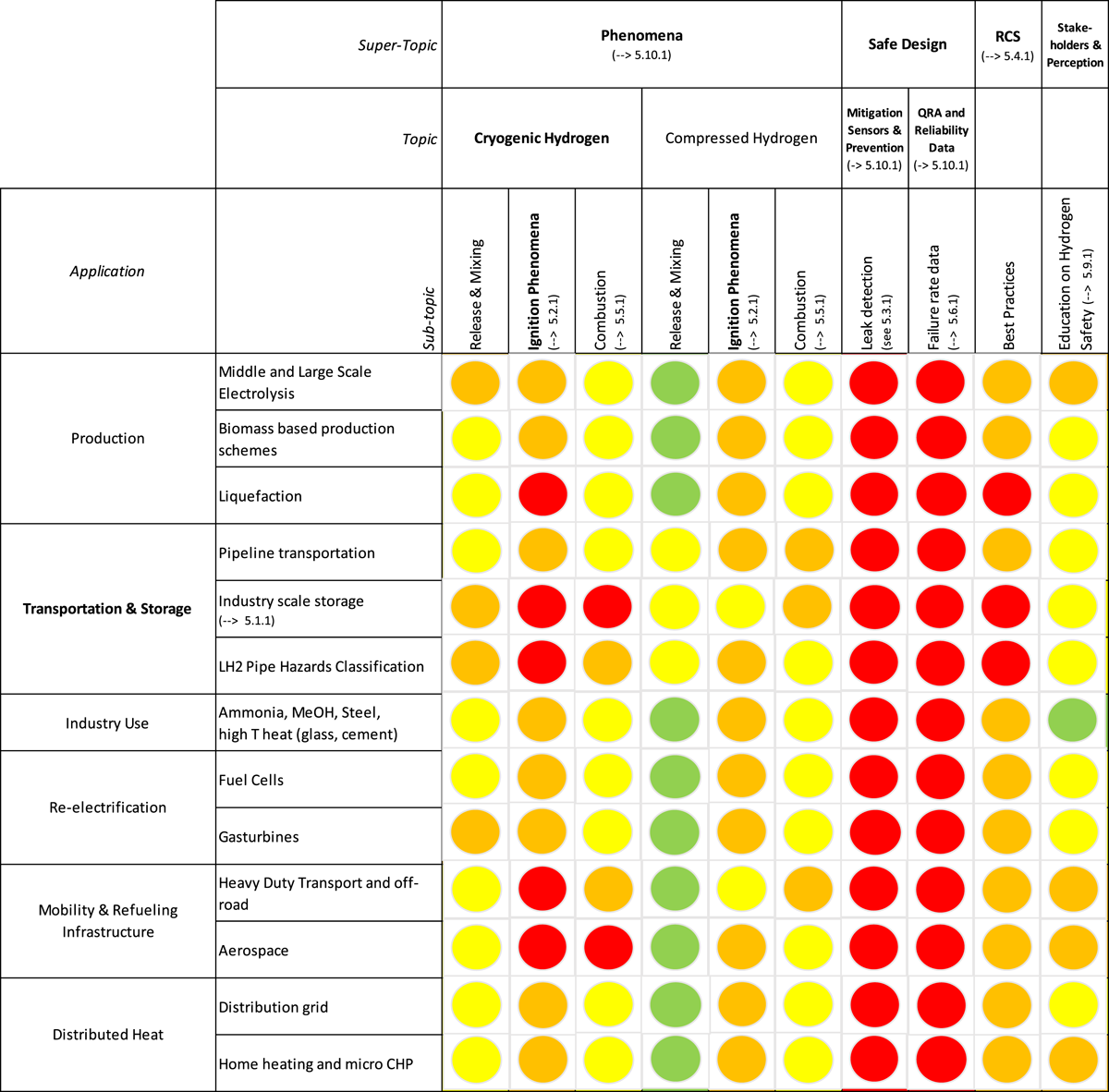
Figure 32
Priorities matrix with applications from production to usage in rows and phenomena and tools in different columns (highest priority in red, via orange and yellow to lowest in green).
The outcomes of this workshop highlight the importance of developing strong foundations of QRA and reliability data, implementing proactive safety, respectively mitigation measures, developing robust regulatory standards, and a developing deep understanding of hydrogen phenomena to ensure the safe and scalable deployment of hydrogen technologies. Addressing the challenges identified in this report will require continued collaboration among researchers, industry experts, and regulators to ensure that hydrogen can fulfil its role in the global energy transition safely and effectively.
This document aims to guide stakeholders in directing their research and development efforts towards the areas that are most critical for ensuring hydrogen safety. The collective prioritisation of these topics will help shape the future of hydrogen technologies, promoting a safe, resilient, and efficient hydrogen infrastructure capable of meeting the needs of a rapidly changing energy landscape.
7. Further Information
The abstracts of all presentations delivered at the Research Priorities Workshop are available on the HySafe website https://hysafe.info/activities/research-priorities-workshops/. These abstracts are categorised into non-industry and industry presentations, providing a comprehensive view of the diverse perspectives shared at the event. The full presentations are available to HySafe Members only.
If you are interested in gaining access to these resources and joining the HySafe community, please visit https://hysafe.info/about/membership/, or reach out to info@hysafe.info.
Acknowledgements
HySafe and in particular the organisers of the RPW 2024, represented by the chair of the Scientific Committee Jay Keller, thank all the participants for their contributions and active participation in the intense discussions and voting process.
HySafe cordially thanks Cummins Inc., represented by Karen Ramsey-Idem, for the generous hosting of the workshop and Elena Vyazmina for her organisational support.
Competing Interests
The authors have no competing interests to declare.