
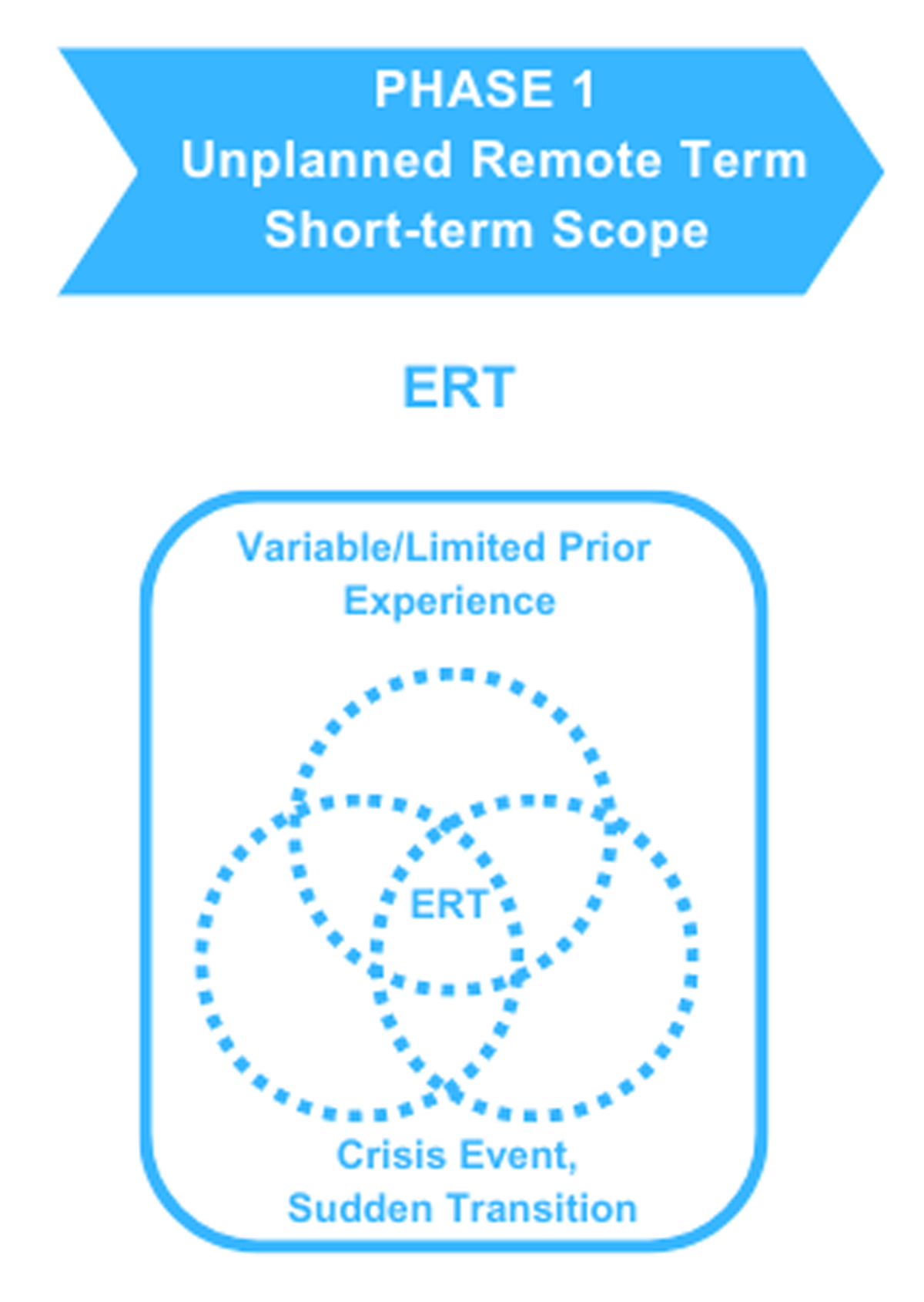
Figure 1
Phase 1: Emergency Remote Teaching (ERT).
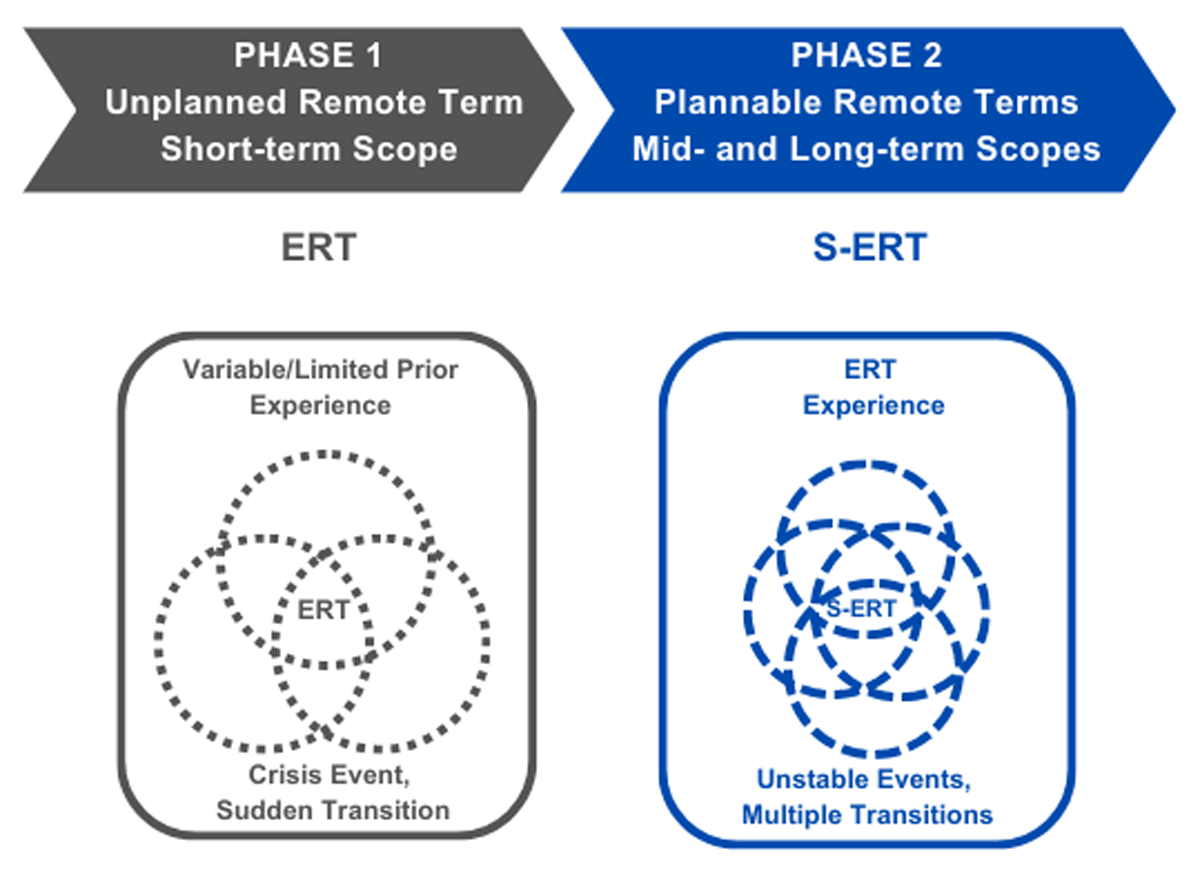
Figure 2
Phase 2: Sustained Emergency Remote Teaching (S-ERT).
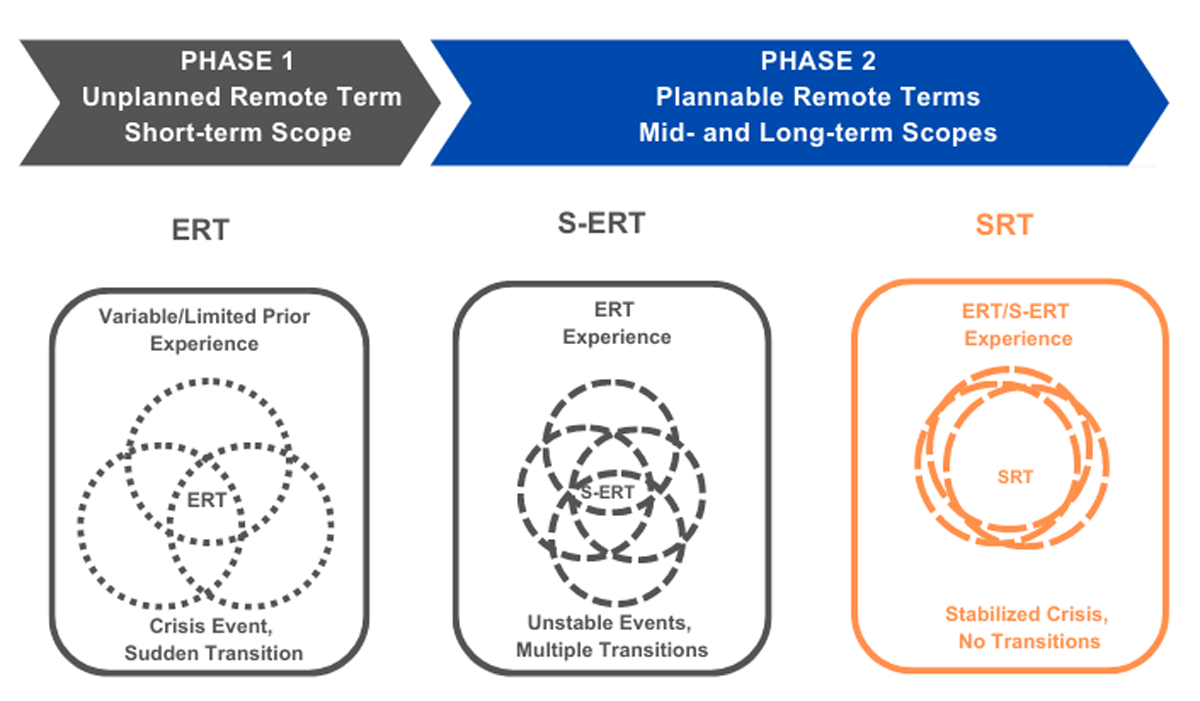
Figure 3
Phase 2: Sustained Remote Teaching (SRT).
Table 1
Pathway Manifestations and Characteristics.
| SCOPE | PATHWAYS | CHARACTERISTICS |
|---|---|---|
| Short term | ERT → Post RT | Unstable Unexpected, Minimal Planning, Major Transition |
| Mid term | ERT → S-ERT→ Post RT | Unstable Expected, Plannable, Multiple Transitions |
| Mid/Long term | ERT → SRT → Post RT | Stabilizing Expected, Plannable, No Secondary Transitions, Strategic, Quicker |
| Long term | ERT → S-ERT → SRT → Post RT | Stabilizing Expected, Plannable, Multiple Transitions, Slower |
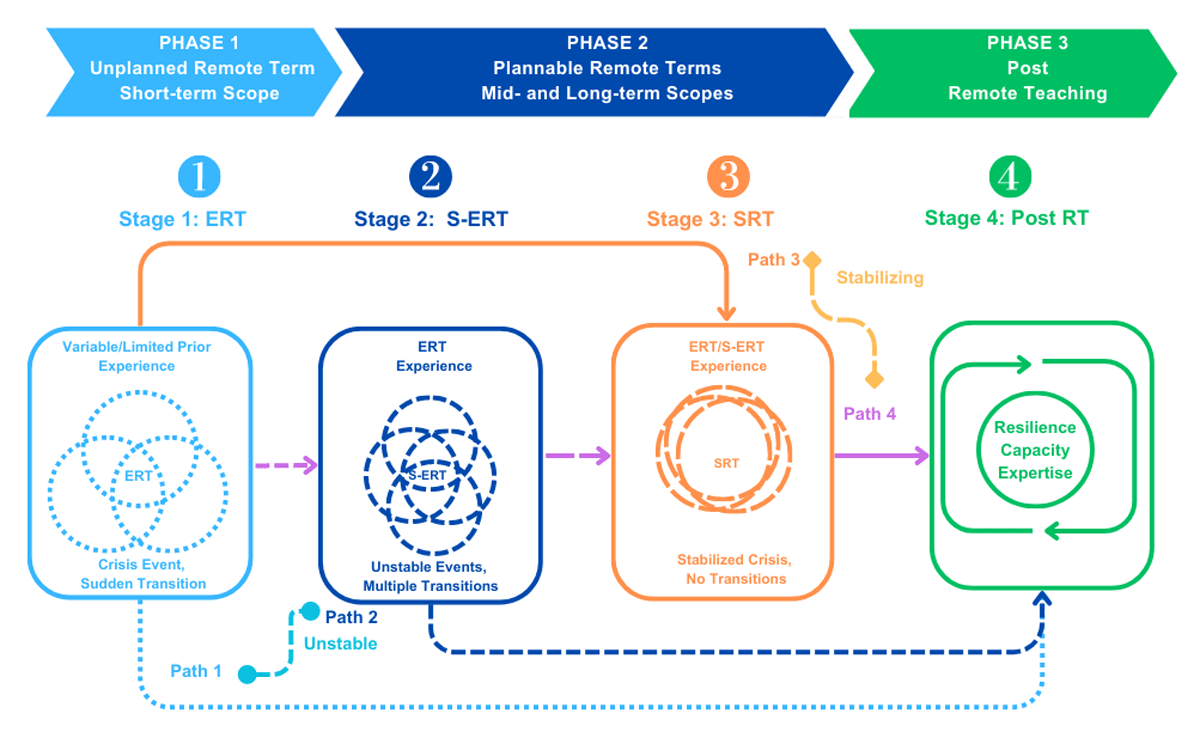
Figure 4
Staged Crisis-based Remote Education Model.
Table 2
Stages, Educator Roles, and Strategies for Crisis-based Remote Education.
| STAGE | EDUCATOR ROLES | GOALS AND STRATEGIES |
|---|---|---|
| ERT | FirstResponder | Transition assistance:
|
| S-ERT | Guidance Provider | Teaching improvement:
|
| SRT | Practice Stabilizer | Practice consistency:
|
| PostRT | Policy and Protocol Developer | Resilience and capacity building:
|