
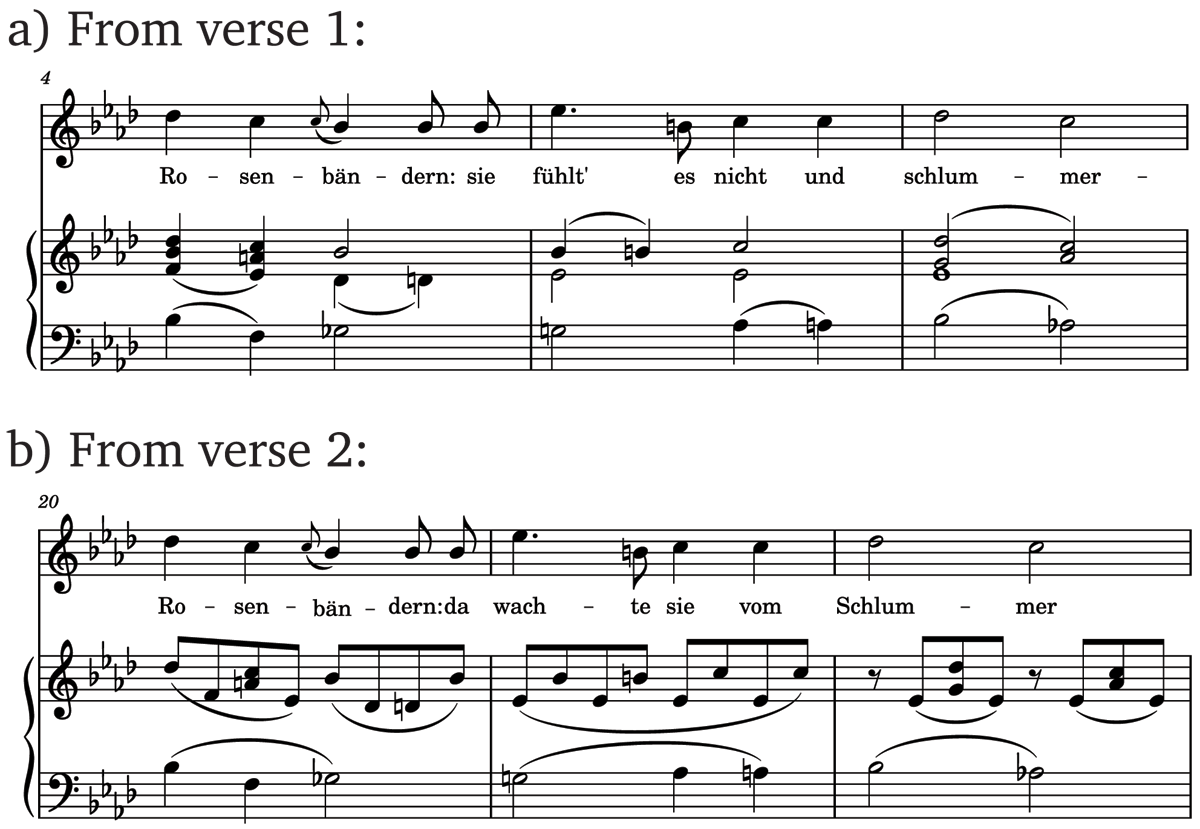
Figure 1
Two extracts from Franz Schubert’s Das Rosenband (D.280) with varied texture but arguably the same underlying harmony. In this example, the latter case can be encoded as an harmonic repeat of the former with m20-22 = m4-6, or as part of larger spans, e.g., m20-31 = m4-15.
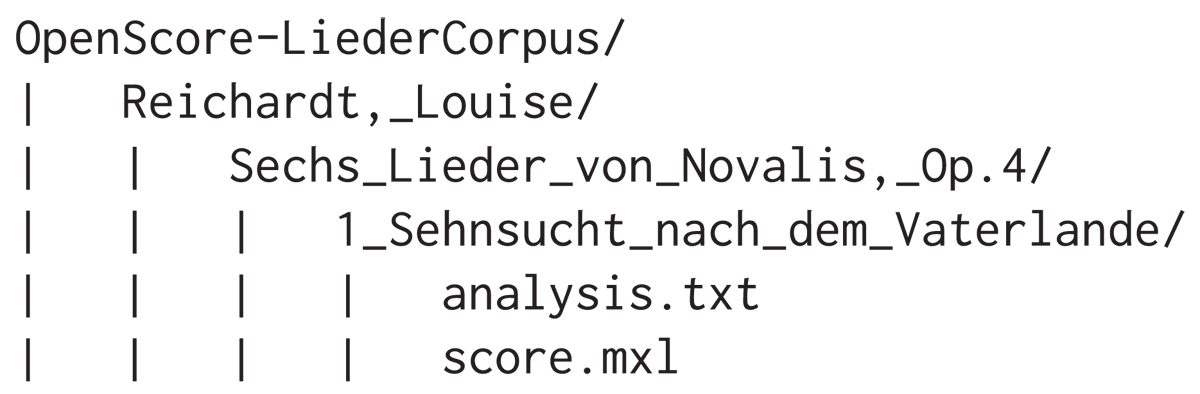
Figure 2
An example for part of WiR’s Corpus/ directory structure.
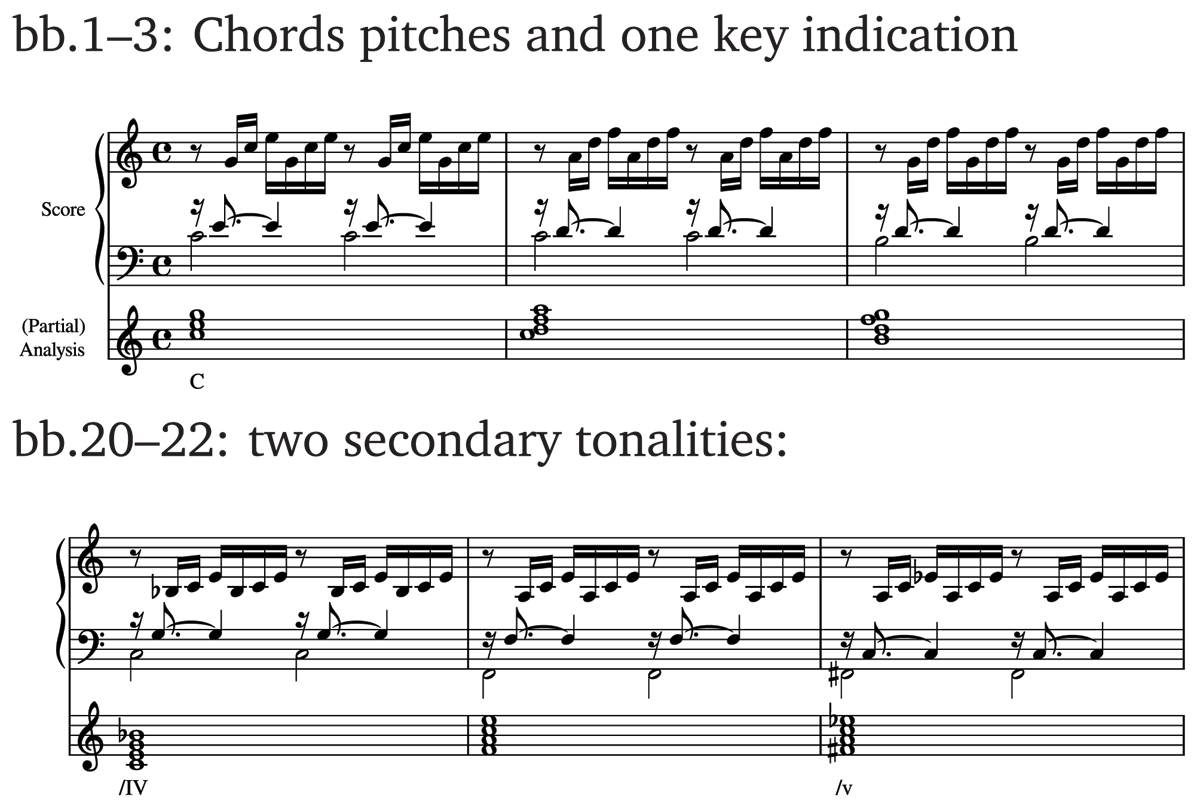
Figure 3
Extracts from the partial analysis test provided in the corpus. The two extracts show full pitch reductions but very little textual analysis. WiR fills in the blanks to complete the picture.
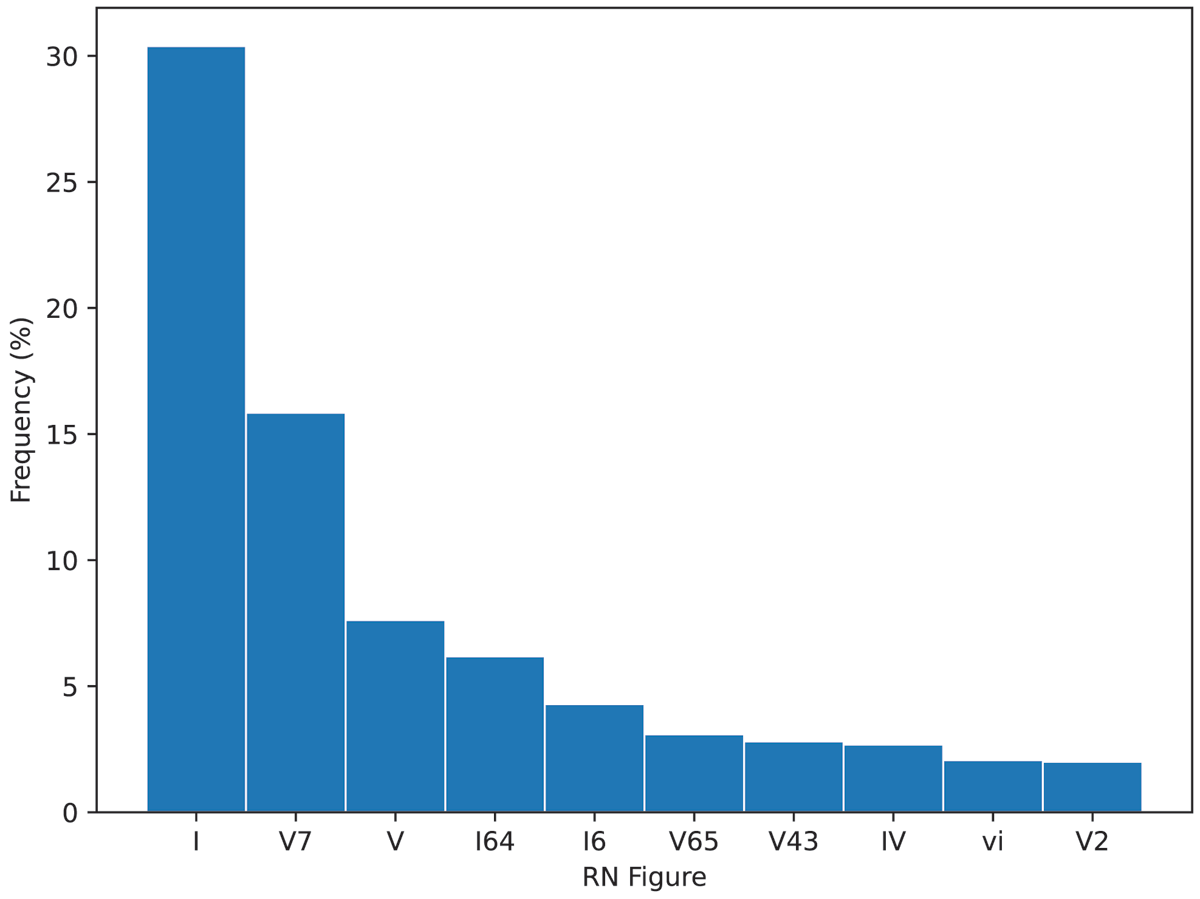
Figure 4
The 10 most common figures in major contexts of the lieder corpus, after simplification and ‘consolidation’ as discussed in the main text.
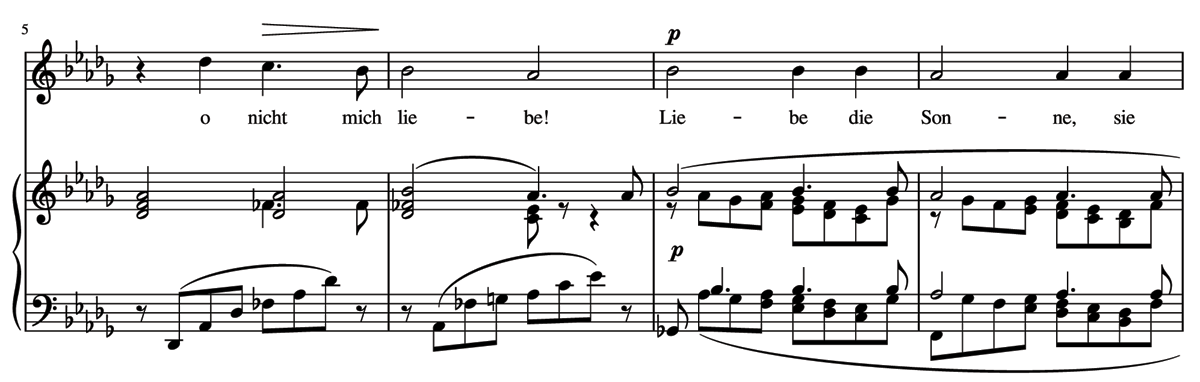
Figure 5
An extract from Clara Schumann’s setting of Rückert’s ‘Liebst du um Schönheit’, with V (A♭ major, second half of b.6) leading to IV (G♭ major, b.7) as an example of less-common figure-to-figure transition probability.
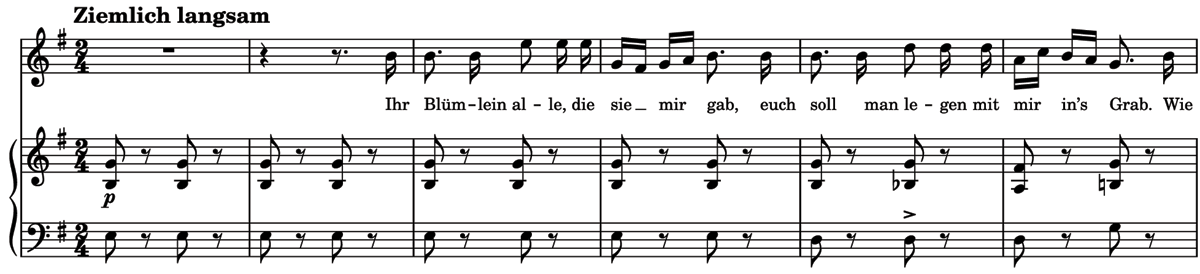
Figure 6
An extract from Franz Schubert’s ‘Trockne Blumen’ with initially static harmony.