
1. Introduction
Present research in Quaternary palaeontology, taphonomy and palaeoenvironments has examined various aspects of the mechanisms of vertebrate accumulation, using the exceptional preservation potential in caves as a vital source of data (e.g. Worthy & Holdaway 1994; Auler et al., 2006; Blain et al., 2009; Bountalis & Kuhn 2014; Maldonado et al., 2016; Price et al., 2019). However, a comprehensive assessment of the depositional histories of individual cave breccia deposits is generally lacking, particularly in Southeast Asia, although there are some notable exceptions (e.g. Bacon et al., 2004; Bacon et al., 2008; O’Connor et al., 2010).
Current research in Southeast Asia strongly emphasises breccia as valuable archives for fossil and geochronological data (e.g. Westaway et al., 2007, 2017; O’Connor et al., 2017). However, limitations associated with investigating breccia as a source of taphonomic information may have repercussions on our understanding of the temporal reconstruction of cave palaeoenvironments and regional chronostratigraphies (Louys et al., 2017). A more detailed understanding of taphonomic data has the potential to inform on the evolution of ecosystems through time, and to consider the emerging complexity of taphonomic modification, future research will benefit considerably from a detailed study of the geochronology of cave sites (Wei et al., 2005; Wang et al., 2007).
Caves host a variety of deposits, including breccia and conglomerates, speleothem and flowstones, tufas and calcretes, organics and anthropogenic deposits (Farrand, 2001; Fairchild and Baker, 2012). We focus on karst breccia as these deposits appear to contain the majority of cultural or faunal material in Southeast Asian cave sites, also often interbedded with flowstone. These materials are often the only surviving remnants in Southeast Asian cave sites, preserving evidence crucial to understanding the chronology of cave deposits and the taphonomy of incorporated fossil assemblages.
Here, we systematically analyse primary studies of breccia histories in Southeast Asia to better synthesize what is known about the depositional and preservational processes that alter cave deposits in tropical climates, challenges associated with identifying the taphonomic agents acting on cave palaeofaunal assemblages, and identify areas for further study. This review critically analyses the conventional methods used in the taphonomic interpretation of naturally accumulated fossil assemblages in Southeast Asian cave deposits. We assess case studies to determine the analytical methods used, highlight the findings, assess the common limitations, and assert how the application of new methods would improve these results. We highlight the potential of novel techniques for a holistic analysis of fossiliferous cave deposits, reconstructing the complex taphonomic history of fossil assemblages and the diagenesis of the sediments in which they are held. In particular, this paper aims to answer the following questions: (1) What taphonomic evidence has been extracted from cave breccia in Southeast Asia and what are the limitations of the methods used?; (2) What are the knowledge gaps in previous taphonomic studies of cave breccia in Southeast Asia and what approach should be used in future research?
Study Location
There has been an expansion in Late Pleistocene archaeological research in caves from tropical climates, particularly in the Southeast Asian region (e.g. Anderson, 1997; O’Connor & Veth, 2005; Aubert et al., 2017; Morley, 2017). However, this hardly approaches the amount of scientific endeavour seen in other parts of the world; particularly for questions regarding hominin occupation and dispersal (e.g. Brain, 1981; Emslie, 1988; Andrews & Cook, 1990; Herries et al., 2006a, b, 2009; Dirks et al., 2010, 2017; Blain et al., 2009; Adams, 2017; Steinthorsdottir & Håkansson, 2017; Schubert & Mead, 2019). Nevertheless, recent publications that have investigated the taphonomy of palaeontological assemblages in cave sites have increasingly focused on Southeast Asia.
The region of Southeast Asia in this review comprises the eleven countries that lie geographically south of China, east of the Indian subcontinent and north-west of Australia: Indonesia, Malaysia, Singapore, Philippines, Timor-Leste, Brunei, Cambodia, Laos, Myanmar (Burma), Thailand and Vietnam. The geographical distribution of the cave sites in Southeast Asia discussed is shown in Figure 1.
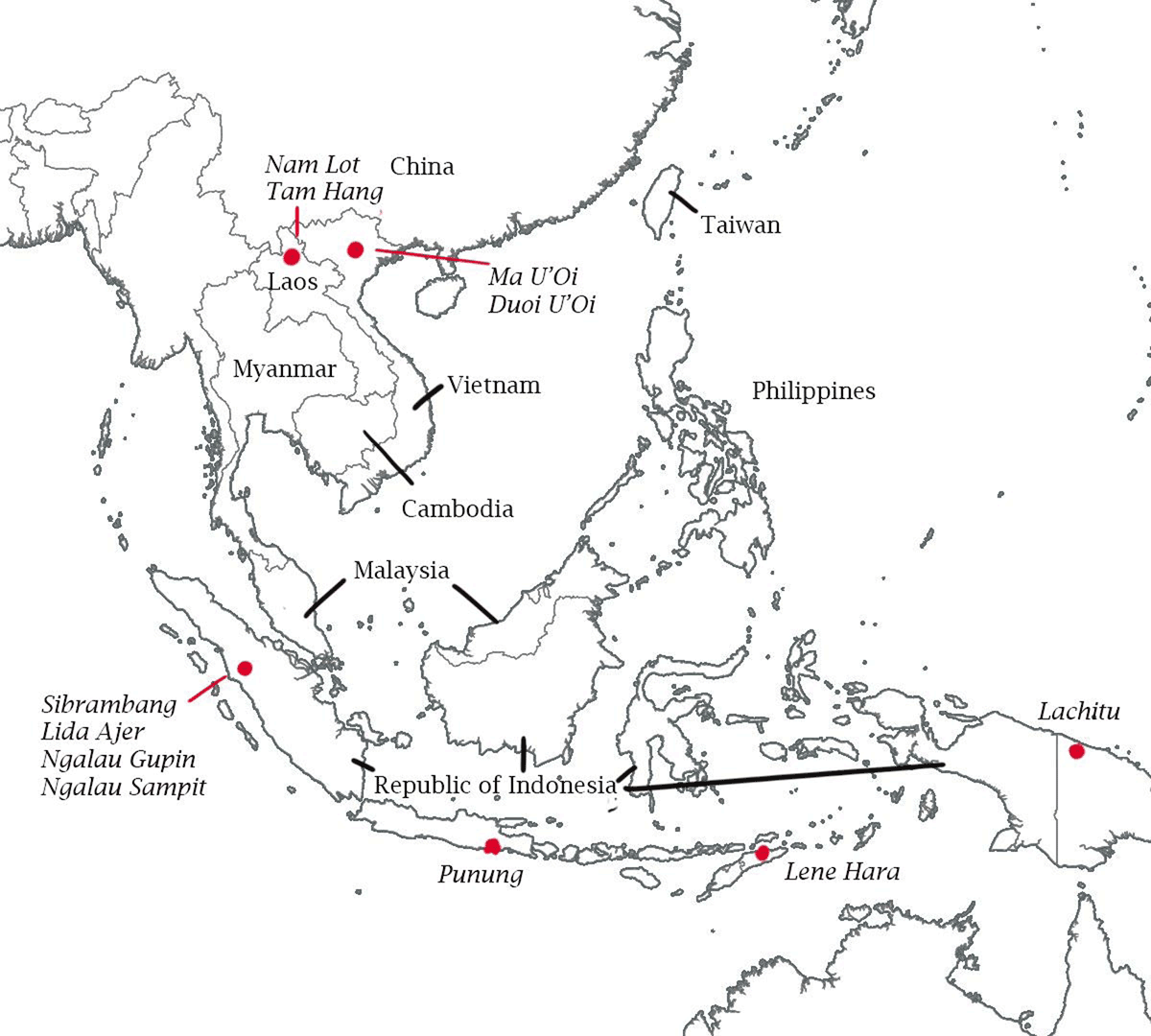
Figure 1
A map of Southeast Asia, highlighting the key cave localities in the research analysed in this review.
Geological Background
Limestone caves form when water percolates through soil using groundwater runoff (Palmer, 2007). Carbon dioxide in the atmosphere dissolves into these waters to form carbonic acid (H2CO3). Further carbon dioxide from the soil, which accumulates from root respiration and decay of organic matter, is added as the waters travel through the ground (Palmer, 1991). Carbonic acid solution then builds up in fissures, bedding planes, joints, and faults, which dissolves the calcium carbonate to create a limestone cave (Gillieson, 2009; Fairchild & Baker, 2012). This fluid circulation can assist in guiding the evolution of karstic caves.
Breccias are clastic sedimentary rocks that commonly occur in caves formed in limestone or dolomite. They are composed of angular fragments over two millimetres in diameter, bound together by mineral cement of lesser size (Woodcock & Mort, 2008). Breccia formation is common in limestone caves in Southeast Asia (Dominguez-Bella et al.,, 2012; O’Connor et al., 2017). Breccia are very dense, well-cemented deposits and so can survive the destructive processes of cave evolution, increasing the preservation potential of geological and faunal aggregates incorporated within. Karst breccia can provide a chronological framework of depositional history as the indurate deposits incorporate aggregates such as speleothem and mammalian teeth conventionally used for direct dating in isolation. We focus on karst breccia as these deposits are the primary source of data in Southeast Asian cave studies, due to being the most frequently encountered and often containing vertebrate assemblages (see supplementary information).
Humid climates increase water levels that allow for carbonate laden solutions to seep through fissures in cave walls and cement the breccia deposits (e.g., Mijares et al., 2010; Morley & Goldberg, 2017). These carbonates are often interbedded with evaporitic rocks such as anhydrite or gypsum (Klimchouk et al., 2000). Expansion and dissolution of carbonates or evaporitic rocks can cause brecciation of the minerals and adjacent rock (Klimchouk, 1996; Li & Zhou, 2015). The instability created by brecciation typically occurs when the cave is inactive. Subsequent karst collapse can lead to the formation of dissolution-collapse breccia composed of carbonate clasts (O’Connor et al., 2017; Shukla & Sharma, 2018).
The breccia deposits of Southeast Asia are often clay-rich infill with large angular limestone clasts (Figure 2). These breccia are thin remnants of much larger, older deposits removed from the cave networks, found cemented to the walls or accumulated on the floor. These relics are likely removed by solution, and mechanical erosion enhanced by significant humidity and increased precipitation levels (Andrews & Cook, 1985; Fernández-Jalvo et al., 2010; Morley & Goldberg, 2017). Allogenic sediment from eroded cave fill can be reactivated and pass through internal waterways. The resulting deposits can be heavily reworked from the original sediments laid down during diagenesis. Exhumation is one such mode of modification, in which filled and covered sediments are removed from a palaeokarst feature; it occurs due to the recommencement of speleogenetic processes after a dormant period (Osborne, 2000, 2003). Sediments can be heavily reworked multiple times by complex processes occurring in situ (Farrant & Smart, 2011). These processes can profoundly alter the type and completeness of incorporated fossils.
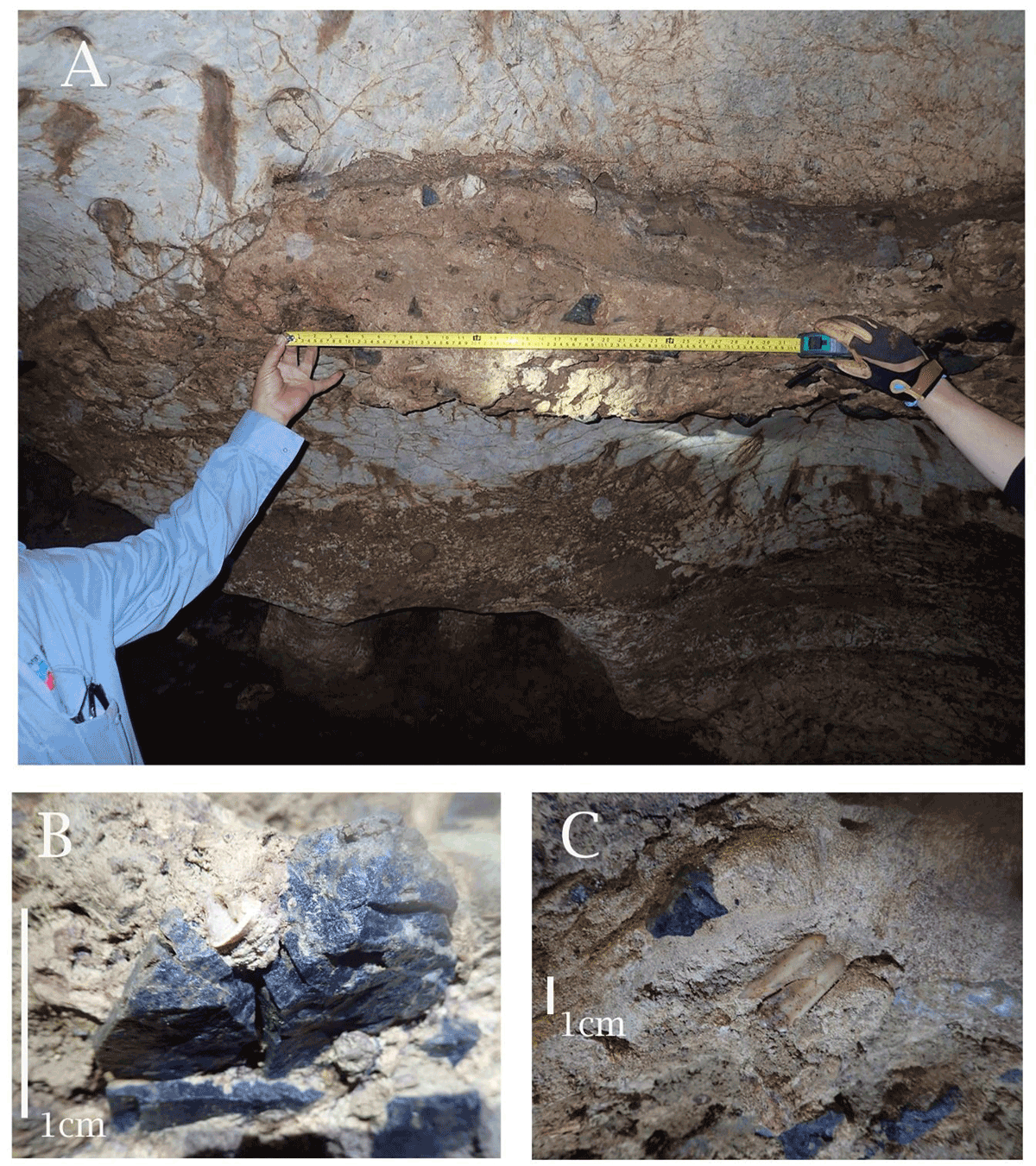
Figure 2
(A) Argillaceous chaotic breccia deposit cemented to the limestone cave wall of Lida Ajer; (B) Fractured angular clast protruding from the breccia cement; (C) Cervid tooth specimen incorporated into the breccia matrix.
2. Methodology
A systematic literature review was performed using a recently developed method that lies between a traditional narrative review and a detailed meta-analysis of relevant scientific research (Pickering & Byrne, 2014). A paper was considered a primary publication if the focus were to elucidate the formation history of breccia deposits in Southeast Asian caves and listed in Table 1. Included in our review is literature that investigates early hominin remains in Southeast Asian caves, as the presence of early hominin remains is often regarded as evidence of cave occupation, similarly to that of faunal remains, though evidence suggests that these remains could be allochthonous; ex-situ recycled deposits as part of larger faunal assemblages (e.g. Anderson, 1997; Barker et al., 2007; O’Connor et al., 2010). It is likely that taphonomic literature from Southeast Asia and regions of similar tropical climate has documented scientific knowledge in a language that is not native to any of the authors and thus has not been analysed by this review. This is a noted limitation to this review.
Table 1
A summary of the method evolution used in the taphonomic analyses of Southeast Asian cave sites. A full review is available in the supplementary information.
| Theme | Author/Year | Cave site name | Study Location | Methodologies |
|---|---|---|---|---|
| Breccia Depositional Components | Glover, 1979 | Ulu Leang I | Lealleang Valley Maros Sulawesi | Stratigraphic analysis Sediment analysis |
| Gilbertson et al., 2005 | Subis limestone Niah | Sarawak | Stratigraphic analysis Radiocarbon dating | |
| Duringer et al., 2012 | Nam Lot | Pà Hang Mountain Laos | 14C for recent deposits U/Th - detrital content pollution | |
| Tam Hang | Huà Pan province Laos | Cosmogenical burial - susceptible to reworking OSL | ||
| Duoi U’oi | 25 km from Hoà Binh city Man Duc Village Vietnam | Cosmogenical burial - susceptible to reworking OSL | ||
| Ma U’oi | Man Duc village Vietnam | Cosmogenical burial - susceptible to reworking OSL | ||
| O’Connor et al., 2017 | Lachitu | S2°38’0.20” E141°08’11.0” Oenake range Papau New Guinea | Carbon dating Bio/chronostratigraphic dating of cultural materials from archives | |
| Lena Hara | S08°24’51.9” E127°07’21.42” Papau New Guinea | Carbon dating Bio/chronostratigraphic dating of cultural materials from archives | ||
| Laili Cave | S08°54’48” E126°16’40.5” Timor-Leste | Carbon dating Bio/chronostratigraphic dating of cultural materials from archives’ into the methodology column for Laili Cave | ||
| Louys et al., 2017 | 32 sites Talaud | See Supplementary database | 14C dating Neutron tomographic imaging ESR dating OSL dating Micromorphology | |
| 4 sites Sangihe | 14C dating Neutron tomographic imaging ESR dating OSL dating Micromorphology | |||
| 19 sites Alor | 14C dating Neutron tomographic imaging ESR dating OSL dating Micromorphology | |||
| 19 sites Pantar | 14C dating Neutron tomographic imaging ESR dating OSL dating Micromorphology | |||
| 13 sites Timor Leste | 14C dating Neutron tomographic imaging ESR dating OSL dating Micromorphology | |||
| 25 sites Sumatra | 14C dating Neutron tomographic imaging ESR dating OSL dating Micromorphology | |||
| Celiberti et al., 2018 | Doi Pha Kan | Lampang Province N18°26.95’ E99°46.62’ Thailand | Techno-morphostudy | |
| Vertebrate & Cultural Assemblages | Long et al., 1996 | Lang Trang | Thanh Hoa Province Vietnam | Faunal Analysis |
| Tougard et al., 1998 | Thum wiman nakin | Kon San District Thailand | Taphonomic analysis Faunal analysis | |
| Esposito et al., 2002 | Snake cave | Kon San District Thailand | U-series dating | |
| Bacon et al., 2004 | Ma U’oi | Tan Lac Province N20°37’22” E105°16’40” Vietnam | U/Th dating | |
| Bacon et al., 2006 | Ma U’oi | Tan Lac Province N20°37’22” E105°16’40” Vietnam | U/Th dating | |
| O’Connor et al., 2005a | Pulau Kobroor Liang Nabulei Lisa | Aru Island | Radiocarbon dating Weighting cultural material Faunal analysis | |
| Ibrahim et al., 2013 | Batu caves | Malaysia 13 km north of Kuala Lumpur Batu cave Massif | Luminescence U/Th dating TIMS Gamma spec | |
| Filoux et al., 2015 | Tham Prakia Phet | Chaiyaphum Province Thailand | Faunal analysis | |
| Suraprasit et al., 2015 | Khok sung | Nakhon Ratchasima Province Thailand | Magnetostratigraphy Systematic Palaeontology | |
| Bacon et al., 2015 | Tam Hang | Huà Pan province Laos | Uranium series dating OSL | |
| Nam Lot | Pà Hang Mountain, Laos | Uranium series dating OSL | ||
| Duoi U’oi | 25 km from Hoà Binh city Man Duc Village Vietnam | Uranium series dating OSL | ||
| Punung Fauna | S08°80’30.3” E111°10’58.3” S08°70’33.2” E110°580’58.5” S08°070’33.5” E110°590’15.1” Java | Uranium series dating OSL | ||
| Simbrambang | Tapisello, west Sumatra | Uranium series dating OSL | ||
| Sutikna et al., 2016 | Liang Bua | East Nusa Tenggara Flores | ESR dating Thermoluminescence | |
| Westaway et al., 2017 | Lida Ajer | S00°19’11.8” E100°35’12.3” Sumatra | Luminescence U-series dating ESR dating | |
| Bacon et al., 2018a | Boh Dambang | N22°210’21.54” E106°260’6.12” Cambodia | SG-OSL U-series dating ESR dating | |
| Setiyabudi et al., 2018 | Seropan | Yogyakarta S08°00’55.5” E110°40’56.9” Indonesia | Systematic palaeontology | |
| Suraprasit et al., 2019 | Yai Ruak | Krabi Province N92°78’98” E47°50’10” Thailand | Radiometric dating Systematic Palaeontology | |
| Taphonomic Agents | Schwartz et al., 1994 | Tham Khuyen | Lhang Song Province Vietnam | Faunal analysis |
| Zeitoun et al., 2005 | Cave of the Monk | Chiang Dao Wildlife Reserve Thailand | Taphonomic analysis | |
| Bacon et al., 2008 | Doui U’oi | Tan Lac Province N20°37’12” E105°16’25” Thailand | Palynology | |
| Mijares et al., 2010 | Callao | Cagayan Valley, Northern | U-Series | |
| Luzon, Phillippines | U- concentration Laser ablation Faunal analysis CT scanning | |||
| Frère et al., 2018 | Doi Pha Kan Ban Tha Si | N18°26’55” E99°45’98” Lampang Province Thailand | Taphonomic analysis | |
| Laang Spean | Battam Bang N12°51’E102°55’ Cambodia | Taphonomic analysis | ||
| Post-depositional Complexities | O’Connor et al., 2005b | Sungai Dosi Liang Lemdubu | Aru Island | Radiocarbon dating Weighting & distribution of remains |
| O’Connor & Aplin, 2007 | Lena Hara Matja Kuru 2 Telupunu Jerimalai Uai bobo Bui Ceri Oato | Northeast coast of Timor-Leste Within Baucau Limestone formation | Radiocarbon dating | |
| Liang Lemdubu Nebulai Lisa | Aru Islands South of New Guinea at 7°S and 134°E | Radiocarbon dating | ||
| Westaway et al., 2007 | Punung Fauna | S08°080’30.3” E111°010’58.3” S08°070’33.2” E110°580’58.5” S08°070’33.5” E110°590’15.1” Java | OSL TIMS Thermoluminescence | |
| O’Connor et al., 2010 | Lene Hara | S08°24’51.9” E127°07’21.42” Timor-Leste | Thermoluminescence OSL | |
| Morley et al., 2017 | Liang Bua | Western Flores, Miocene limestone near Wae Racang | Radiocarbon dating Micromorphology | |
| Zeitoun et al., 2019 | Ban Fa Suai II | Ban Fa Suai Village Thailand | Faunal analysis ESR dating Palaeoecological analysis | |
| McAdams et al., 2020 | Con Moong | Cuc Phuong National Park Vietnam | Radiocarbon dating OSL dating Micromorphology |
3. Results
The method evolution of the literature we are analysing is summarised in Table 1 and fully described in the supplementary online database.
General site characteristics
The cave sites were all located in karstified limestone hills or karst towers at elevations from approximate sea-level to over one hundred metres above sea level (e.g. Long et al., 1996; O’Connor et al., 2010, 2017). The elevated karst systems of Island Southeast Asia were instigated as a secondary result of major tectonic activity during the Pliocene and Pleistocene that triggered an increased period of mountain building and elevated the continental Sundaland margin (Drawhorn, 1994; Hall, 2009). The deposit and preservation of the cave breccias or other fillings are directly linked to the combined effects of variations in tectonic uplift and sea level oscillations. Plio-Pleistocene sea-level changes during the region’s interglacial periods led to the repetitive inundation of the region’s continental shelves during interglacials (Hanebuth et al., 2011; De Bruyn et al., 2014). The elevations in the continental Sundaland margin occurred together with significant intensification in rainfall levels that modified the geochemistry of the geological setting and began the process of cave formation (Verstappen, 1997). Further north, the karst structures of Indochina were predominantly formed by mountain building incurred by non-rigid clockwise shifting past the stresses of the eastern syntaxis of northward-moving India during the Cenozoic (Huchon et al., 1994).
All excavated cave breccia contain comparable diverse vertebrate remains, dominated heavily by a suite of extant and extinct medium to large-bodied mammal teeth and bone fragments (e.g. Schwartz et al., 1994; Mijares et al., 2010; Duringer et al., 2012; Bacon et al., 2018a). The deposits are characterised by the abundance of teeth and a general absence of large or complete bones. It is also possible that fragmentation of bone in the collections are so intense that researchers invest little effort in preparing or identifying the remains, and so teeth dominate the ‘taxonomically informative’ aspect of the assemblages. This likely results in a bias in publication of dental remains in comparison to that of skeletal remains.
Species identified in Southeast Asian faunal assemblages include herbivorous, omnivorous, carnivorous, and durophagous (bone) feeders. The vertebrate remains and fossil-bearing sediments show a range in age from the early to late Quaternary (e.g. Esposito et al., 2002; Bacon et al., 2018b; Zeitoun et al., 2019). Taken together, most data suggest that mammal remains were initially deposited in the landscape surrounding the caves, then transported into the cave and lithified into consolidated breccia. The fauna inhabits both humid tropical rainforest environments like that of modern Southeast Asia as well as more open savannah environments (Louys and Roberts, 2020).
Geomorphological Processes
Glover (1979) considered the changing nature of archaeological research, shifting to the geomorphological aspects of caves, as there seemed to be recurring issues in forming chronological interpretations of sites. The deposits of greatest scientific interest were deemed to be “ancient intact deposits cemented to cave walls be calcareous groundwater” (Glover, 1979, p. 305). Glover (1979) recorded artefacts recovered from Ulu Leang I as blades, flakes, bones and shells but provided no detailed taxonomic or taphonomic analysis. Nevertheless, his research first highlighted the hidden complexity in post-depositional discontinuities during deposit formation. The rate of occurrence of these dislocations was noted to increase dramatically in tropical sites such as Southeast Asia. The author forewarned future researchers to ascertain that depositional sites are in-situ prior to analysis.
However, it was not until the early 2000s that a critical component of this issue, taking into account the fabric of the deposits, was considered. Burial context is a key factor in a taphonomic analysis and can be informed by fabric descriptions. However, in early studies breccia were simply noted as present, or the principal characteristics described only by general colouration, basic composition or broad type. In geological studies, the fabric of breccia has often been used as the diagnostic signature to determine breccia type. Defining breccia type can provide important information about the depositional conditions and history of the deposit. Thus, classifying a breccia can provide direct indications into the basic mechanisms and timescale of accumulation of incorporated vertebrate remains, and the interactions with the depositional environment. The classification of karst breccia is determined by conducting a fabric analysis based on their microscopic and macroscopic lithological character; the principal types of each breccia are described in Table 2.
Table 2
| Major Type | Sub-type | Lithology | Nature/Origin | SE Asian Example |
|---|---|---|---|---|
| Extra-formational breccia | Polymict | Matrix-supported fabric. Many variable gravel-sized clast origins derived outside the site of deposition | Breakdown of older rocks through erosion and deposition by fluid flow and sediment gravity flow | |
| Oligomict | Matrix-supported fabric. Few gravel-sized biogenics/clastics. Clasts with origins likely derived predominantly of contemporaneous limestone or dolomite | See above | Westaway et al., 2007 | |
| Monomict | Matrix-supported fabric. Gravel-sized biogenics/clastics. Clasts of a single rock type, likely a single contemporaneous rock unit | See above | Bacon et al., 2008 | |
| Intra-formational breccia | Mainly monomict | Gravel-sized biogenics/clastics derived from the site of deposition, clastics are typically micritic limestone in origin | Fragmentation of poorly consolidated contemporaneous beds, deposited by fluid or gravity flow | O’Connor et al., 2017 |
| Cataclastic breccia | Landslide/slump | Random biogenic/clastic supported fabric. Appear massive | Breakage due to tensile stresses of slumping | Louys et al., 2017 |
| Solution collapse breccia | Inversely graded fabric. Sharp, flat base. Commonly matrix supported. Insoluble clast fragments | Breakage due to collapse into void created by solution or similar processes |
Gilbertson et al., (2005) was the first to undertake the research suggested by Glover (1979), when he described, analysed, and interpret the geomorphology of Niah cave, Sarawak rather than focussing on dating the vertebrate remains. Comparisons between lithological properties, location, and observed lithostratigraphic positions of all the surviving exposures were made to determine the sedimentary and stratigraphic sequence of the site. Rather than taking on the previous approaches at this site (determining the initial biological, airfall, and human origins of much of the materials in the cave), the investigation focused on depositional and post-depositional sedimentary structures and diagenetic changes. Notably, there was a truly novel approach to document small-scale and microscale sedimentary and structural features to fully understand the depositional and deformational processes. Correlating the principal components of the sequence with those previously analysed revealed a more complex stratigraphy than had previously been described. Important geomorphological processes that formed the sequence were identified as mudflow, colluviation, and fluvial and shallow lake activity. Diagenetic alteration of guano and midden then further modified the in-situ cave sediment.
Speleogenesis is the process that determines the evolution of cave formation and development (Klimchouk et al., 2000; Palmer, 2002). It determines the plan geometry of a cave and directly affects cave entrance morphologies, associated fluvial systems, and the actions of biological accumulators (Andrews & Cook, 1990) that introduce and shape cave deposits and any incorporated fossil assemblages. Numerous factors affect speleogenesis, uniquely determining the evolution of each cave and the nature of the passages into which sediments and fossils accumulate. The energy of streamflow in invading waters determines the size and number of, the degree of dispersal and the configuration of the final assemblage (Voorhies, 1969).
Duringer et al. (2012) were the first to examine speleogenesis at a landscape level. They introduced the idea of comparing the dates of the breccia with the topographic level of alluvial plains to determine if cave formation is determined by water table changes. Their study suggested that the origin and preservation of the fossil bearing breccias are controlled at shorter time scales by the hydrology inside the karsts themselves. However, there is little evidence of direct geomorphological coupling between breccia formation and the broader landscape hydrology or major zones of sediment storage suggesting localized breccia forming processes. Duringer et al. (2012) highlighted that the fluctuating velocity of natural flowing waters regulates the grade of suspended load that is transported and deposited during cave development. When fossil elements are suspended in these natural flowing waters, the remains are similarly characterised by a systematic gradation in size and the taphonomic mode of occurrence, and transport histories can be evident in the sedimentological context of the host lithofacies (Behrensmeyer & Hill, 1988; Andrews & Cook, 1990; Aslan & Behrensmeyer, 1996).
Fluvial action has long been considered a possible primary taphonomic agent operating in the caves of Southeast Asia. Fluvial transport is particularly likely to act as a prominent taphonomic process in cave environments (Howard, 1964; Palmer, 1987, 2001, 2007; Klimchouk, 1996; Klimchouk et al., 2000). Voorhies (1969), Behrensmeyer & Ak (1975), Hanson (1980) and Koster (1987), focused on theoretical and practical reconstructions of fluvial taphonomic processes that can affect vertebrate remains. Bones are sorted as a function of size and density. The methodologies included in these studies are excellent sources of direct evidence as to the physical and hydraulic processes in complex fluvial environments in caves. Water is also the key agent for most of the major chemical processes that can instigate significant bone and tooth modification within the soil (Behrensmeyer & Ak, 1975; Hedges & Millard, 1995; Hedges, 2002; Turner-Walker, 2008).
The morphometrics and distribution of caves are a natural record of the setting in which the cave formation processes originated and the dynamics of cave development (e.g. Palmer, 2001; Gillieson, 2009; Boggus & Crawfis, 2009; Morley et al., 2017). Thus, a thorough analysis of solution cave characteristics can provide direct evidence of the natural controls of cave formation and origin. The origin and development of caves reflected the influence of speleogenesis as a taphonomic process in the long-term accumulation and deposition of cave deposits, some of which are fossiliferous.
The key characteristics of the breccia studied by Duringer et al. (2012) denoted a similarity in geological, biogeographical, and environmental settings of the deposits, while the complex interactions of hydrology, tectonics and climate determined the evolution of each individual cave. This evolution is highly variable, and so each cave is a unique dynamic system. O’Connor et al. (2017) demonstrated this concept in in Lachitu, Papau New Guinea and Lena Hara and Laili Cave, Timor Leste, where a significant lateral shift in facies composition over a few metres in the breccia deposits was recorded. Concentrations of fossils can vary considerably laterally or vertically in a single breccia (Westaway et al., 2007; Bacon et al., 2008, 2015; Duringer et al., 2012); though these interpretations of breccia are limited as the deposits were only viewed externally.
Acknowledging the apparent importance in the geomorphological aspects of cave studies in Southeast Asia as an increasing relevant theme in the literature, O’Connor et al. (2010) focused on the lithostratigraphy of the deposits. A depositional history of the breccia was formed suggesting multiple erosional and depositional episodes together with long-term shifts in sedimentary processes. Mylroie & Carew (1990) note that the process by which authigenic cave deposits are originally set down can be further altered by alluviation from freshwater discharge, known in cave environments as allogenic recharge. This can radically alter any interpretation of cave origin and the evolution of a cave system. Erosional processes not only form caves and shape overall morphology but are also the very factors that can infill and permanently destroy the cave (Palmer, 1991, 2001, 2002).
Breccia formation and removal have different causes and mapping of time discontinuities and lateral sequence gaps is informative about the occupation and geomorphic history of the sites. One of the most significant findings from the archaeological sites discussed by O’Connor et al. (2017) concerns sampling. Their results clearly demonstrate that cave deposits in humid tropical regions are stratigraphically complex, reflecting multiple erosional and depositional episodes together with long term shifts in sedimentary processes. This complexity means that a complete cultural and chronological sequence may not survive as a typical stratigraphic column in any single part of a site. While breccia has excellent potential to act as stores of chrono-stratigraphic data, complicated depositional histories are a significant issue in Southeast Asian cave studies.
Louys et al. (2017) focused on defining formation processes of vertebrate-bearing breccias, their taphonomic histories, and the criteria used to determine whether breccia represent syngenetic or multiple deposits in multiple caves across Asia. Their study also demonstrated that a single breccia can be formed through multiple cementation and dissolution events and yet show no significant lateral movement of fossils incorporated within. These data indicate that depositional histories for individual breccias are potentially highly complex and may result in significant time- or habitat-averaging of fossils. While direct dating may help resolve some of these complexities, Louys et al. (2017) highlighted that events extending beyond radiocarbon dating thresholds require a comprehensive multi-disciplinary approach to interpret complex breccia formation histories. Their research makes a novel attempt to form a critical understanding of vertebrate taphonomy by reconstructing the biogeographic context in which burial data are created. This was also the first study in the region to use neutron tomography to non-destructively analyse the spatial associations and variations of clasts and inclusions within a breccia deposit.
Detailed recording of spatial distribution data in breccia in relation to dating samples may improve the reconstruction of pre- and post-depositional actions in vertebrate-bearing deposits. High resolution dating and detailed interpretation of localised palaeoenvironmental information has recently been informed using photogrammetry and laser scan surveys (Bates et al., 2010; McFarlane et al., 2013; Oludare & Pradhan, 2016). This methodology can be applied to quickly record three-dimensional models of cave surfaces for realistic high-resolution visualisation and extraction of data at various scales (Lerma et al., 2010). The results of such research may aid in the documentation of the metrics of the cave, to monitor modifications and developments in cave deposition and morphology (Lerma et al., 2010), and hence inform on some elements of the formation history of the cave. Computed tomographic imaging provides the potential to reveal the depositional and three-dimensional relationships of internal breccia structures, correlating breccia formation history with that of the incorporated vertebrate remains.
The recording of spatial information using such methods is, however, limited by not accounting for variable taphonomic processes that alter the formation, preservation, and degradation of complex cave sites at the microscale. Such insights can provide further information on site formation processes. Morley et al. (2017) detailed the microscale component of a multidisciplinary program of research that is entirely focussed upon the geomorphological aspects of Liang Bua, Flores. A robust understanding of site formation, preservation and destruction was described. Death assemblages and their primary or secondary context can be further modified by numerous chemical, physical, and biological processes after decomposition has begun (Behrensmeyer & Hill, 1988; Lyman, 1994). In a novel approach for the region, micromorphological samples were used to study the chronologies and depositional histories of fossil-bearing sediments.
The geomorphic and archaeological context of Con Moong cave, Vietnam was also studied through geoarchaeological and geochronological analyses of excavated sediments by McAdams et al. (2020). Field descriptions combined with micromorphological analyses revealed major stratigraphic changes throughout the deposit. Sedimentological analyses were carried out on bulk samples to form numerical data related to texture, geochemistry, and mineralogy. The destructive effects of sediment transport, bioturbation and guano- driven diagenetic change were visible throughout the sequence. The loss of microstratigraphic relationships and sedimentary constituents means that the environmental histories of the sediments cannot be reconstructed solely from micromorphological analysis. Bulk sediment analysis combined with these sedimentological observations enabled the authors to extrapolate these data across the entire sequence. Radiocarbon, OSL and micro X-ray flourescence (pXRF) indicate that the sediment ages range from ~74 to ~19 ka. The authors reiterated strongly that the complexity of the processes that commonly affect caves in Southeast Asia ultimately require a diverse combination of a range of complementary macro- and microtechniques and approaches.
Insights from Direct Dating and Biochronology
The focus of Long et al. (1996) was on the faunal composition rather than the geomorphological aspects of several cave sites. The species of Lang Trang in Vietnam, Punung in Java and Lida Ajer in Sumatra were seen to be similar, particularly the distribution of species in Lang Trang and Lida Ajer. Not only was the species content similar but Long et al. (1996) suggested that their taphonomy was also comparable: there was significant evidence of rodent gnawing attributed to porcupines. In Southeast Asian cave deposits, porcupine accumulations are dominated by isolated mammal teeth (Lenoble et al., 2006; Bacon et al., 2008; Bacon et al., 2015; Zeitoun et al., 2019). Porcupine gnawing marks are evident on the enamel and root of isolated teeth and the periphery of long bones. It is very difficult to determine if a fossil assemblage is the result of a single accumulator or multiple agents, and the order in which these agents recycled the deposits (c.f. Behrensmeyer & Hill, 1988). Considerable opportunities surround definitively indicating the presence of a modifier or accumulator in cave environments, should future research focus their intentions upon explicating intense post-depositional fossil disintegration and complex depositional histories (Duringer et al., 2012). However, porcupines are the only definitively identified taphonomic agent acting upon the vertebrate remains in most cave deposits (e.g. De Vos, 1984; Bacon et al., 2006).
Tougard et al. (1998) recorded a huge variation in age in the extracted mammalian teeth of the Thum Wiman Nakin assemblage, spanning between 80 –350 000 years old based on biochronology. It was not considered whether the deposit represented a mix of older and younger fauna or just older fauna that had been eroded into a younger deposit. This is remains a common challenge associated with interpreting the palaeoenvironmental history of the vertebrate-bearing breccia in Southeast Asian caves.
Esposito et al. (2002) established a chronology of site deposition in Snake cave, Thailand, shifting methodology radically from that of Long et al. (1996) and Tougard et al. (1998) to focus on direct dating. The application of uranium series dating relies on dating individual inclusions within a deposit, including fossil teeth, or bracketing the age of a deposit through the dating of capping flowstones. This approach is, however, susceptible to time averaging processes. As detailed above, complex speleogenic events can rework cave deposits through one or multiple phases of dissolution and cementation. A complicated depositional history can lead to temporal mixing of incorporated fossils (O’Connor et al., 2010; Duringer et al., 2012; Louys et al., 2017). This can lead to inaccuracies in establishing the age of the deposits, as the fossils found within a single stratum may not be contemporaneous (e.g. Louys et al., 2017; O’Connor et al., 2017; Curnoe et al., 2019). The bracketed age derived from capping flowstones can constitute low resolution ages with large errors.
In part to address this, a multi-disciplinary approach was taken by Bacon et al. (2004, 2006) to determine the biostratigraphy of Ma U’Oi cave, Vietnam and determine biocorrelation with other cave sites in the region. A virtual stratigraphy was formed by directly correlating deposits of similar lithological character throughout the cave. A taxonomic analysis of the mammalian fauna and direct comparison with similar continental sites was used to bracket an age for the remains. In their 2006 study, U/Th dating of calcite and breccia provided a minimum age of late Pleistocene for the in-situ fauna. This age estimation fitted with the biochronological age suggested by earlier site comparisons. However, the initial apparent homogeneity of breccia was not demonstrated, and a finer scaled stratigraphy suggested a multi episodic breccia formation. Multiple dating techniques were also used by Ibrahim et al. (2013) to provide independent age estimates for deposits associated with a diverse faunal assemblage excavated from Batu caves, Malaysia. Luminescence dating was employed to provide a chronology for the breccia sediments and uranium-series dating of flowstones provided a minimum age for the deposition and cementation of the breccia.
The use of multiple dating methods continued to co-occur with efforts to refine biostratigraphic schemes in Southeast Asia into the 2010s. Re-investigations of faunal remains excavated from Tham Prakia Phet in Thailand were undertaken by Filoux et al. (2015) to complement the Pleistocene mammal biostratigraphic framework of the Indochinese sub-region. The mode of accumulation was difficult to establish due to destructive excavation and stratigraphic analysis, although gnawing evidence suggested partial accumulation by porcupine rodents. The new taxonomic data nevertheless revealed a considerably more diverse Pleistocene faunal assemblage than previously documented at this site. The authors indicated that some taxonomic attributions were tenuous due to the natural range in tooth size and concluded that more contextual evidence needed to reconstruct the biostratigraphy and environment of Pleistocene Southeast Asia.
Excavation of Khok Sung cave site, Thailand by Suraprasit et al. (2015) yielded many fossil vertebrate remains, of which the extensive diversity allows the authors to constrain the age of the fauna from the previous estimates between the Early Pleistocene and the Middle Pleistocene to a more definitive Middle Pleistocene age. The faunal comparisons with other Middle Pleistocene assemblages focused on a hyaenid skull and mandible characteristic of Southeast Asian Middle Pleistocene faunas. These new bio-chronological data were coupled with a magnetostratigraphic study of the lithological section, to reinforce the age determination within a multiproxy approach.
The vertebrate assemblages recovered in five mainland and insular karstic sites in Laos, Vietnam and Java were analysed by Bacon et al. (2015) to improve the potential for faunal interpretation by establishing solid chronologies. These mammalian faunas were well-known and had already been discussed in terms of composition, taphonomy, biochronology, evolution, and palaeoecology, but only two solid age estimates of two fauna had been determined. To ensure the accuracy of the new chronologies, independent age estimates were obtained by employing luminescence techniques applied to the sediments/breccias, OSL of quartz grains and U-series dating of flowstone. The previously estimated chronologies of Tam Hang and Nam Lot were replaced with direct chronological context. The mortality profiles of the remains were also analysed by Bacon et al. (2015) to emphasize the possible selectivity of large predators (carnivores and humans) on ungulate prey.
The multidisciplinary practice that has become standard in Southeast Asian cave studies is well demonstrated by Westaway et al. (2017). Luminescence and uranium-series techniques were applied to bone-bearing sediments and speleothems. Coupled uranium-series and ESR were applied to mammalian teeth. These methods were modelled under a Bayesian framework, and produced estimates of 73 and 63 ka for the age of the breccia. Similarly, to constrain deposition at Coc Muoi cave, Vietnam, Bacon et al. (2018b) undertook a multi-proxy dating approach to contextualise a dental health assessment of the fauna. OSL and post-infrared infrared-stimulated luminescence (pIR-IRSL) dating of the cave sediments and U-series dating of flowstones indicated a potential age range of 148–117 ka for the fauna (MIS 6–5).
Bacon et al., (2018a) also analysed sediments and fauna excavated from Boh Dambang, Cambodia using a standard multi-proxy integrated dating approach; unlike previous studies above, this allowed them to consider multiple phases of deposition within their site. Red thermoluminescence and OSL, ESR and U/Th dating methods were used, with the resulting age estimates suggesting two depositional phases: the younger ranging from 25 +/– 18 ka with sediment that was last exposed to sunlight between 8 and 7 ka, and an older deposit (~100 +/– 80 ka) that they suggested had eroded from the higher caves in the system and washed down an incorporated into the younger deposit. They also conducted a taphonomic analysis of the assemblage but focusing on isolated teeth to determine taxonomic diversity and abundance. Hyenas and porcupines were considered the main bone accumulators.
While the use of multiple direct dating techniques has increased the chronological resolution of the specific material dated, it has so far failed to provide sufficient clarity on the chronology of depositional events that may be present within breccia deposits. This lack of resolution has impacted efforts to refine or expand biochronological schemes based on Southeast Asian cave deposits. This was highlighted by Zeitoun et al. (2019) who studied the vertebrate remains from the site of Ban Fa Suai II using an atypical multidisciplinary approach to form a palaeoenvironmental reconstruction. The authors provided a systematic critique of the issues and assumptions that prevent a consistent regional bio-chronological framework being developed. The study reappraised numerous sites and taxa in the Southeast Asian regional complex associated with the Ailuropoda-Stegodon complex, identifying some key issues; namely, the “admixture of faunas.., the inadequacy between chronological data and faunal assemblages, the absence of taphonomic work, and the lack of record of remains” (Zeitoun et al., 2019, p 9). Partly because of the insights provided by dating difficulties and attempts to resolve biostratigraphic schemes, attention has shifted attention towards more detailed taphonomic studies in Southeast Asia.
Taphonomic Agents
The focus of Schwartz et al. (1994) marked the early focus on the taphonomic agents that alter and transport the cave vertebrate remains in Southeast Asia. Schwartz et al. (1994) undertook a taphonomic analysis of the vertebrate remains excavated from the breccia deposits of Tham Khuyen, Vietnam. Zeitoun et al. (2005) also focused almost solely on the taphonomic history of the mammalian fauna excavated from the Cave of the Monk, Thailand, reporting prolific gnawing of porcupines in several phases and intense weathering as the main taphonomic agents that had modified the assemblage. However, they considered their taphonomic approach as ‘modest’, and indeed, thorough taphonomic analyses of fossil deposits from cave sites in Southeast Asia remain rare.
Bacon et al. (2008) attempted a detailed analysis of a rich mammalian fauna excavated from Duoi U’oi cave, Vietnam to determine local taphonomy and palaeoenvironment. Their sedimentological analysis showed that the fossiliferous deposits represented several thousand years of accumulation. Due to the significant taphonomic modifications that the assemblage had undergone, namely porcupines and water action, led to the faunal material being far from complete.
A taxonomic and taphonomic analysis of vertebrate assemblages from three sites in Cambodia and Thailand by Frère et al. (2018) attempted to determine how taphonomy, preservation, or hunter-gatherer subsistence behaviours can influence the interpretations of archaeological bone quantification studies. Taphonomic biases were recorded at all three sites. The conventional quantification methods of MNI and NISP were used, as well as a less conventional bone weight (mass) quantification approach, that has previously been favoured in Europe. The quantity of meat from each species was correlated with the fragment count as an indicator of bone biomass. This data suggested the meat supply seemed to be specifically based on large grazers, providing potential insights into primary accumulating agents.
The main issue with taphonomic analyses of breccia deposits is the indurated nature of the breccias. The extraction of incorporated aggregates from breccia samples is particularly destructive (Dominguez-Bella et al., 2012). The properties that make excavation difficult are the very properties that resist forces eroding unconsolidated cave deposits, preventing the removal or destruction of incorporated fossils (Pickle, 1985; Smilg & Berger, 2015). The hardness and density of breccia creates resistance to the natural erosive forces produced when a large volume of low-velocity water is trapped within a considerable area of the cave cross-section (Pickle, 1985). Hydrodynamic processes often cause these erosive episodes (Bosch and White, 2004; Gillieson, 2009; Morley et al., 2017). Local features, of course, dictate this within each cave, such as the stability of adjacent cave walls and the mass transfer within the allogenic waters of the host limestone rock (O’Connor et al., 2017). Methods such as acid preparation and mechanical preparation require the disintegration of the breccia; this manual dissection of the breccia matrix disturbs the internal stratigraphical record of reformation and destruction that may be preserved at the macroscopic and microscopic levels.
4. Knowledge Gaps and Future Approaches
Even the most recent research suffers from the same problems seen throughout the literature: admixture of faunas, the disconnect between chronological data and faunal assemblages, the absence of taphonomic work, and the lack of record of the positions of the remains in the sediment. Many Southeast Asian caves are hypothesised to be composed of interconnected, active, non-active, and reactivated cavities that underwent multiple major depositional processes, thus the hypothesised agents acquired from direct analysis of aggregates may not provide complete evidence of primary processes due to significant overprinting and time-averaging. Within the last decade, a better understanding of sedimentary processes and stratigraphy in the caves, and the improvement of various dating methods have allowed researchers the opportunity to place the fossil-bearing breccias deposits in a more precise chronological frame. Even if the faunal assemblages from karst breccias may possibly represent a significant period of accumulation time, they remain the most frequently encountered, and therefore important, sources of archaeological and palaeontological data.
This review has demonstrated that the mechanisms of vertebrate-bearing breccia deposition in Southeast Asian caves is understudied. There is an urgent need for a multiscale and multidimensional contextual approach that cannot be fulfilled by traditional methods alone. In the field, in terms of dynamics, it is difficult to determine lithostratigraphy or mode of deposition if the deposits seem largely homogeneous, as in Lida Ajer, Sumatra (Westaway et al., 2017; Louys et al., 2017). Conventional methods can be valuable when applicable (e.g. McAdams et al., 2020) but can be particularly destructive to delicate structures and may destroy evidence in the surrounding matrix.
Most previous studies of complex depositional histories of individual deposits within Southeast Asia have been limited, hindering palaeoenvironmental analyses (Lenoble et al., 2006; Louys et al., 2017; Zeitoun et al., 2019). Research in recent years has acknowledged the importance of local taphonomic agents, requiring a more thorough examination of the formation, preservation, and degradation of complex cave sites. Multi-disciplinary analyses of vertebrate assemblages in cave environments has led to a greater focus on the chronology of site depositional phases, which has in turn spurred detailed taphonomic reconstructions. An integrated and multidisciplinary approach to analysing breccia deposits is essential for a holistic interpretation of fossiliferous cave deposits.
Future research should aim to establish an understanding of the fossil distributions through three-dimensional studies of the geometrical relationships of breccia, and the attendant vertebrate remains, combined with microstratigraphic analyses to elucidate the depositional and post-depositional histories of the Southeast Asian breccia records. Significant deterioration created by harsh conditions, such as humid tropical sites, promotes particularly severe post-depositional alterations of fossil assemblages. The complex diagnostic features of geomorphic processes and site formations in tropical climates, as opposed to the more typical signatures in colder climates, are still poorly understood and make the process of determining the taphonomy and palaeoenvironments complicated (Stephens et al., 2005; Gupta, 2011; Morley et al., 2017). For this reason, one method in isolation cannot reconstruct the environmental history of an archaeological or palaeontological site. As highlighted in our review, combining computed tomography and micromorphology might be one way to provide finer resolution than exists using traditional methodologies.
Computed tomography
A relatively new aspect of palaeontological and geoarchaeological studies involves non-destructive thermal neutron computed tomography (CT) scanning. These scans are a non-destructive digital imaging method that allows for quick three-dimensional reconstructions that have the potential to reveal complex internal structures at the macroscopic and microscopic levels. The exact location, orientation, and direction (imbrication) of clasts, including bones, in the deposit can be measured. These data can reveal various characteristics of a bone assemblage, such as overall composition, frequencies of elements and clasts (Schwarz et al., 2005), and size and alignment of coarse elements that can provide information about depositional environments. Tomographic techniques have been used in palaeontology since the 1980s but have become more widely used in modern research as the equipment is now more readily available, and the costs of analysis have been reduced (Sutton et al., 2014; Rahman & Smith, 2014). Imaging contrast of any sample is determined by the differences in the attenuation properties and detection techniques of each tomographic method; thus, the best applicable method is determined by the preservational and material properties of the object in question (Schwarz et al., 2005).
Computed tomographic imaging of vertebrate-bearing breccia deposits provides evidence of complex breccia formation at the macroscopic level that would otherwise have been destroyed. This method can reveal that seemingly homogeneous deposits retain significant geological, sedimentological, and fossil evidence that can inform the chronology of site formation. Previous use of tomographic analysis to determine the taphonomy of vertebrate-bearing deposits has been limited due to the technique’s youth and limited instrument availability, especially for investigations in which there is a complicated nature to the depositional environments. However, there are several recently published examples of palaeontological research using tomography techniques, with high-resolution scanning techniques informing on both the complex breccia formation histories and vertebrate remains at the macroscopic level (e.g., Bevitt (2016) and Louys et al. (2017)).
Louys et al. (2017) used the DINGO tomographic imaging station at the Australian Nuclear Science and Technology Organisation, in Sydney, Australia, to render two false-colour volume-rendered neutron computed tomography images of a single breccia subsample from Matja Kuru, Timor. These data revealed evidence of the overall composition and frequencies of certain aggregates that correlated to younger, unconsolidated deposits nearby. Reconstructed volume data could further provide preliminary evidence of the agents of concentration that have influenced the faunal assemblage. This isolated study of breccia formation processes through three-dimensional analyses of spatial associations or orientations of clasts and inclusions in a singular deposit does not, however, create a stronger chronological resolution of formation history. A more comprehensive tomographic study of multiple samples across individual cave sites, and across multiple cave sites, may offer a holistic analysis of complex depositional cave environments that have removed all other indication of the complex depositional history of the site.
Tomographic analysis is an excellent method with which to determine sediment distribution and interrelationships of clasts, but it is limited regarding observation of depositional and post-depositional alterations of cave deposits (Louys et al., 2017). Furthermore, such analyses are limited to macro-studies and may not relay crucial microstructural information.
Micromorphology
Micromorphology is a microtaphonomic approach that could be used to determine the alteration processes of fossils and sediments during burial or post-deposition. Micromorphology has previously been used for investigations in which there is a complicated nature to the depositional environments of the cave sites (Stephens et al., 2005; Karkanas & Goldberg, 2010; Estévez et al., 2014; Morley et al., 2017). There is significant potential for the use of micromorphology in palaeontological studies to elucidate taphonomy and palaeoenvironmental history in equivalent complex depositional environments.
The study of microstratigraphy (micromorphology) was a technique first used to study soils by Walter Kubiëna in the early 1930s (Kubiëna, 1938). Micromorphology documents formation processes on a microscopic level, detailing timing and modification of the accumulations (Stephens et al., 2005; Berna et al., 2012; Morley, 2017; Morley & Goldberg, 2017; Morley et al., 2017). Most importantly, sediment and inclusions are analysed while retaining their original associations. As such, Goldberg & Aldeias (2016) define the underlying strategy of micromorphology as using intact samples of cave sediment material to reveal internal geometry and microcontext of incorporated components. This methodology conserves the original integrity of excavated cave deposits, allowing depositional and post-depositional alterations to be observed, that can in turn reveal diagenetic episodes (Goldberg & Berna, 2010; Karkanas & Goldberg, 2010; Macphail & Goldberg, 2010; Morley et al., 2017). It is possible to directly observe sediment breakdown and specific stages of alteration through analysis of micromorphology in thin section samples (Stoops, 2003; Estevez et al., 2014; Morley et al., 2017; Stephens et al., 2017). The climatic and environmental conditions of a cave site reconstructed in this way can be related to different states of faunal preservation (Stephens et al., 2005; Karkanas & Goldberg, 2010).
Micromorphology has not been a popular technique due to the difficulties in interpreting and describing such detailed evidence (Goldberg & Aldeias, 2016). There has been, however, recent increases in the use of micromorphology in geoarchaeology and palaeoanthropology due to the advances from optical viewing through a petrographic microscope to more sophisticated methodologies such as Fourier Transform Infrared Spectroscopy (FTIR) and Scanning Electron Microscope (SEM) (e.g. Morley et al., 2017; McAdams et al., 2020). FTIR measures the absorption rates of a range of infrared radiation wavelengths travelling through organic and inorganic compounds to identify functional groups (Smith, 2011; Margaris, 2014; Berna, 2017). Scanning electron microscopy involves an electron microscope in which a concentrated beam of secondary electrons scans a sample, which can be used to determine surface structural or chemical compositions (Wang & Petrova, 2012).
The method is ‘microdestructive’ in that sample preparation requires only a tiny amount of sediment to perform the technique and is a quick process that allows for on-site sampling and analysis to provide real-time results and guide further fieldwork (Monnier, 2018). One recent example is the study by McAdams et al., (2020) described above. Micromorphological research revealed features indicative of site depositional history and human occupation in Con Moong Cave, Vietnam that was otherwise unobservable in the field. The in-situ sediments in the cave were homogeneous to the naked eye; however, photomicrographs revealed nodules, faunal voids, phosphatization, and combustion features.
After the initial burial of vertebrate remains, physico-chemical agents can significantly broaden the modifications of any biotic agents or transport mediums. Turner-Walker (2008) state that environments of continually flowing water amplifies dissolution processes in comparison to that of saturated soils. Diagenesis is considerably accelerated in the tropics by humid temperatures and high levels of precipitation (Andrews & Cook, 1985; Fernández-Jalvo et al., 2010; Morley & Goldberg, 2017). Most of Southeast Asia is within the commonly used humid tropical climate classification created by Köppen (1923). The high levels of precipitation in Southeast Asia create poor conditions for the preservation of archaeological and palaeontological material (Andrews & Cook, 1985; Fernández-Jalvo et al., 2010; Morley & Goldberg, 2017). Thus, fossil assemblages in the caves of Southeast Asia are exposed to significant deterioration caused by chemical and physical degradation brought about by the high temperatures and precipitation of the region. This can create a considerable bias in fossil preservation. An example of the degradation that can occur in an organic sample taken from a Southeast Asian cave can be seen in Figure 3. This image shows the disparity down the midline of an orangutan tooth from unconsolidated sediments of Ngalau Gupin, western Sumatra. The mesial enamel and root that was exposed and has undergone significantly more deterioration than the buried distal side.
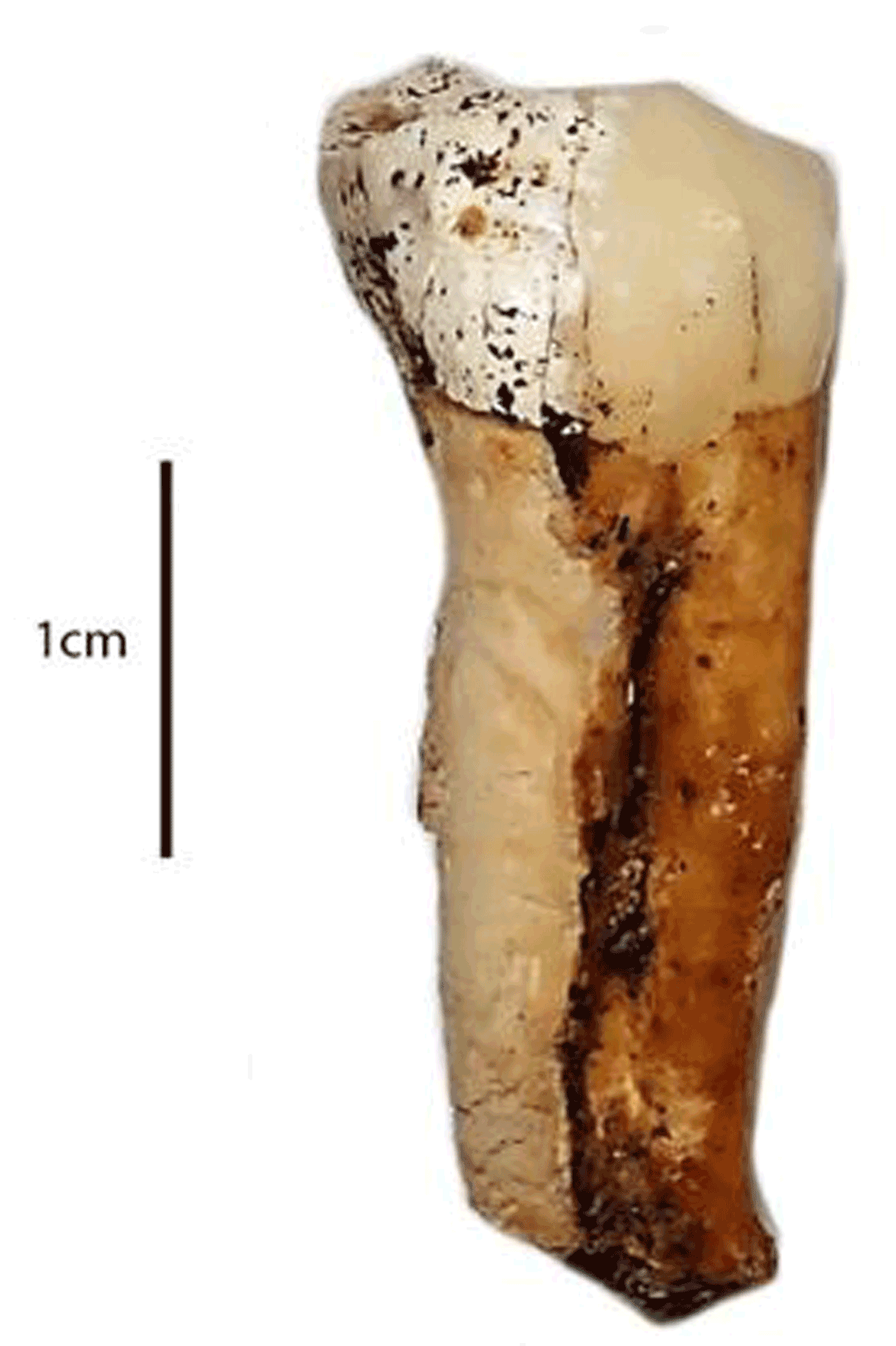
Figure 3
A Pongo molar with distinctive weathering on the mesial side, with a distinctive divide down the midline where the tooth was partially buried in the sediments of Ngalau Gupin B, Sumatra.
One example of using micromorphology to identify the processes that can cause this deterioration can be seen in micrograph MM3B, LSU-B from Con Moong cave, North Vietnam. This singular photomicrograph reveals a heavily phosphatised carbonate sand grain (Figure 4). This feature is strong indication of considerable microbial action. The characteristics in this photomicrograph are evidence of depositional and erosional processes in a Southeast Asian cave prior to 42 ka. Observing phosphatisation is significant in revealing animal roosting locations, erosion, stabilisation of surfaces and gaps in the stratigraphic record (Morley et al., 2017). Morley et al. (2017, p. 32) also state that phosphatisation may also “signify regions of locally enhanced or reduced radioactivity, which could influence the radionuclide concentrations in sediments and faunal remains sampled for luminescence, electron-spin resonance and uranium-series dating”.
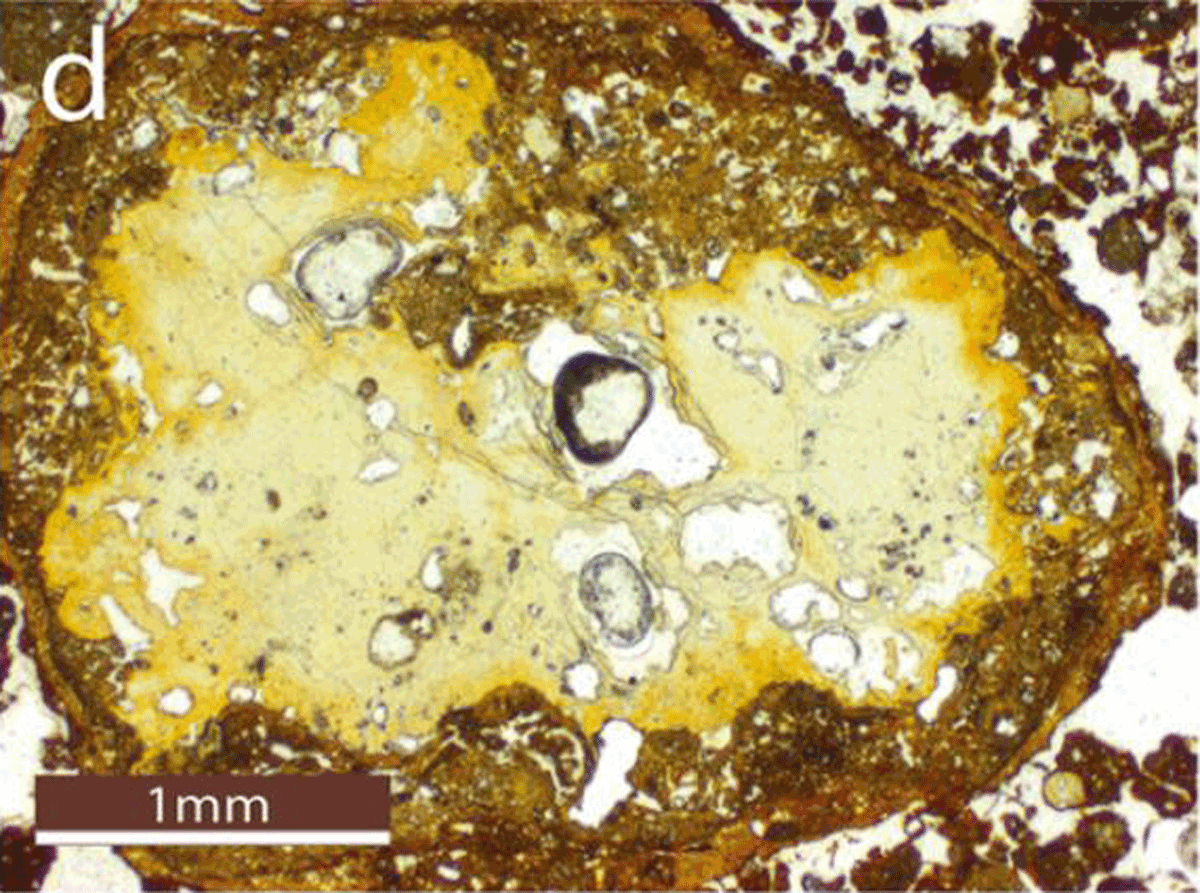
Figure 4
A single photomicrograph (database reference: MM3B, LSU-B) of a heavily phosphatised carbonate grain from Con Moong cave, North Vietnam viewed in plane polarised light McAdams et al.
In thin section, several signatures indicate post-depositional alterations of fossil-bearing sediments. Channels and chamber voids allude to bioturbation (Kooistra & Pulleman, 2010; Karkanas & Goldberg, 2010; Estévez et al., 2014), compaction and planar voids represent trampling episodes (Gé et al., 1993; Goldberg & Berna, 2010; Miller et al., 2010), mineral replacement in skeletal tissues or precipitation of phosphates in sediment suggests the dissolution of bone (White & Hannus, 1983; Hedges, 2002; Stoops et al., 2010; Morley et al., 2017), and microscopic destruction highlights microbial attacks (Jones, 2000). This methodology has the potential of providing important new insights into site formation processes if applied directly to breccia deposits.
5. Summary
The primary concern of researchers originally studying fossil deposits in Southeast Asia was on the composition of the vertebrate remains. Making faunal comparisons between similar cave sites, museum specimens and common literatures remained the standard approach throughout the 1990s. Other than a few notable exceptions (e.g. Glover, 1979) there was little consideration of the sedimentary context of breccia assemblages until the early 2000s. Understanding the cave fossil deposits suffered due to the biased preservation and excavation strategies, and significant taphonomic alterations. A shift in analyses from just the vertebrate remains to include associated sediments occurred parallel with a shift from faunal analyses to direct dating. The most widely used method of direct dating in cave sites of Southeast Asia began with radiocarbon dating, which continues to be used today where appropriate. For example, O’Connor et al. (2005a) assigned an age to the cultural material in the cave deposits of Pulau Kobroor and Liang Nabulei Lisa in the Aru Islands using radiocarbon dating. While this dating method is the conventional means to determine ages for organic samples from the last 50 ka, the value of radiocarbon dating is often limited in tropical climates due to the increased temperatures and moisture that degrades the bone collagen and plant material (Wood, 2015; Morley, 2017; Becerra-Valdivia et al., 2020).
Throughout the mid- to late 2000s, there was a significant diversification in direct dating approaches made to better constrain the age estimates of the cave sediments and vertebrate remains. At present, common practices include uranium-series dating, ESR, TL and OSL dating. As the use of these methods has become mainstream, paralleling efforts to refine biochronological schemes, the limitations of direct dating also have become more apparent. All direct dating methods are susceptible to significant risk of time- or habitat-averaging due to natural ‘mixing’ processes in complex depositional environments such as tropical caves as well as limitation of the techniques themselves. Thus, the standard practice has become to combine several methods to give greater confidence to the results. However, recent research has also highlighted the importance of understanding the modes of accumulation and concentration of the deposits. Nevertheless, while the need to better understand taphonomic processes operating in Southeast Asian caves is recognised, such studies remain comparatively rare.
Part of the problem is that studying indurated breccia deposits is difficult. Nevertheless, comprehensive studies of breccia formation are needed to better understand faunal, archaeological, and palaeoenvironmental histories of complex depositional sites. The progression of the studies considered here has shown a holistic approach to analysing breccia deposits is essential. However, current spatial distribution data collected from cave breccia of Southeast Asia is often limited to two-dimensional assessments, often restricted to the surface of the deposit in the field. Three-dimensional analyses of spatial distribution data using reconstructed volume data can be analysed to assess the spatial location and temporal sequence of sediment layers and inclusions within the breccia laid down during formation, significant evidence in the study of site depositional history and palaeoenvironment. These can be refined with microscopic analyses of the breccia deposits themselves. Such detailed spatial associations of faunal remains and sedimentary structures may provide preliminary evidence of the agents of concentration that have influenced faunal assemblages incorporated into the breccia.
Additional File
The additional file for this article can be found as follows:
Supplementary Information Database
Method evolution used in the taphonomic analyses of Southeast Asian cave sites. DOI: https://doi.org/10.5334/oq.75.s1
Acknowledgements
Sincere thanks to Connor McAdams, Wollongong University for the photomicrographs from the research database for McAdams et al (2019). Thank you to Dr Mike Morley’s, Associate Professor, Australian Research Council Future Fellowship FT180100309 & Dr Julien Louys’ Australian Research Council Future Fellowship FT160100450. Thank you to the Australian Research Centre for Human Evolution, Griffith University, Brisbane for Ms Holly Smith’s Postgraduate & Research Scholarships. Thank you to Kim Newman for your assistance. Thank you to our reviewers for your valuable input.
Competing Interests
The authors have no competing interests to declare.
Authors Contributions
H.E.S. contributed towards the authorship of this review.
J.L. & M.W.M. contributed to the editing of this review.