
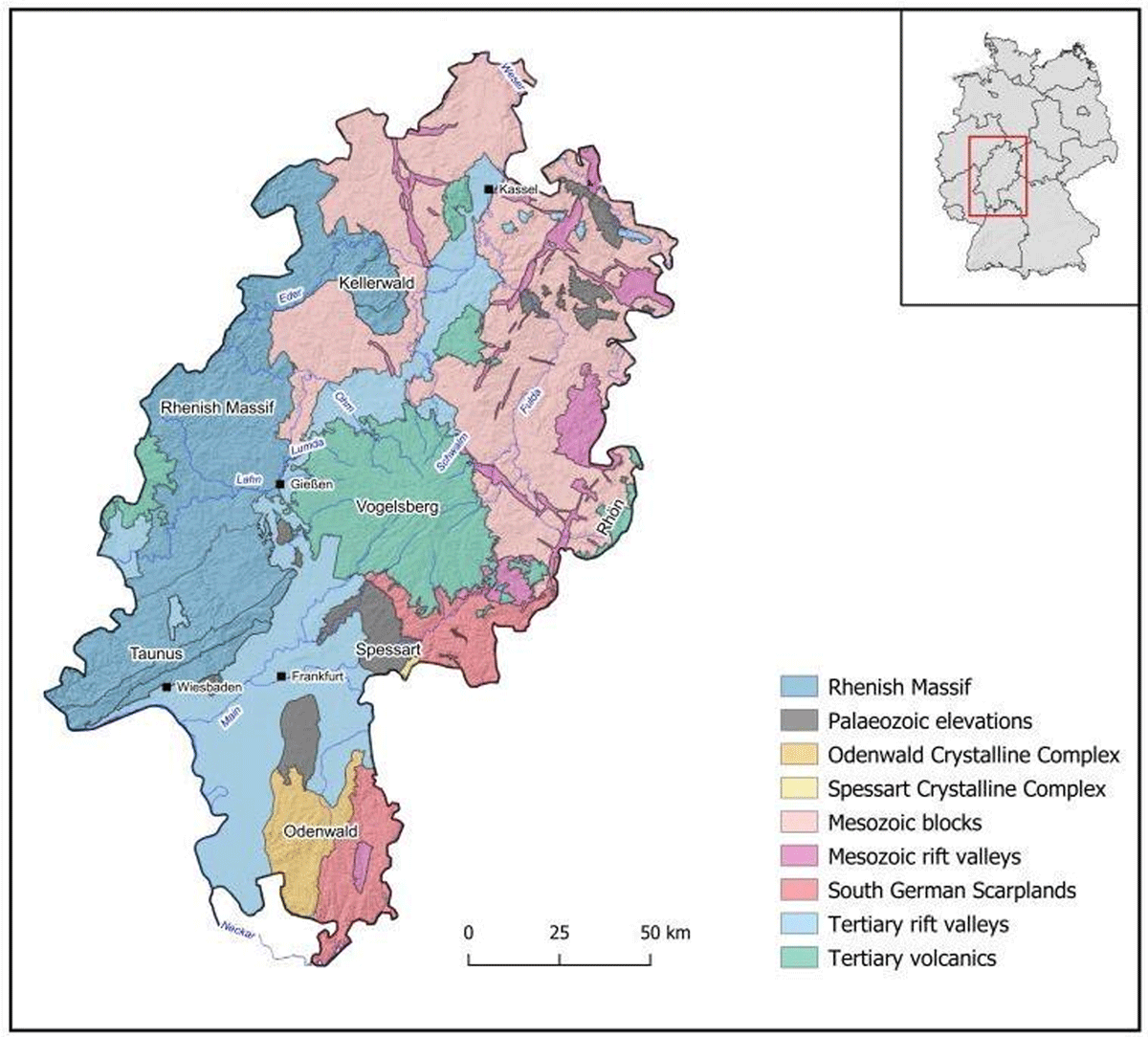
Figure 1
Geological map of the study area. Source: HLNUG (Figure: T. Hess).
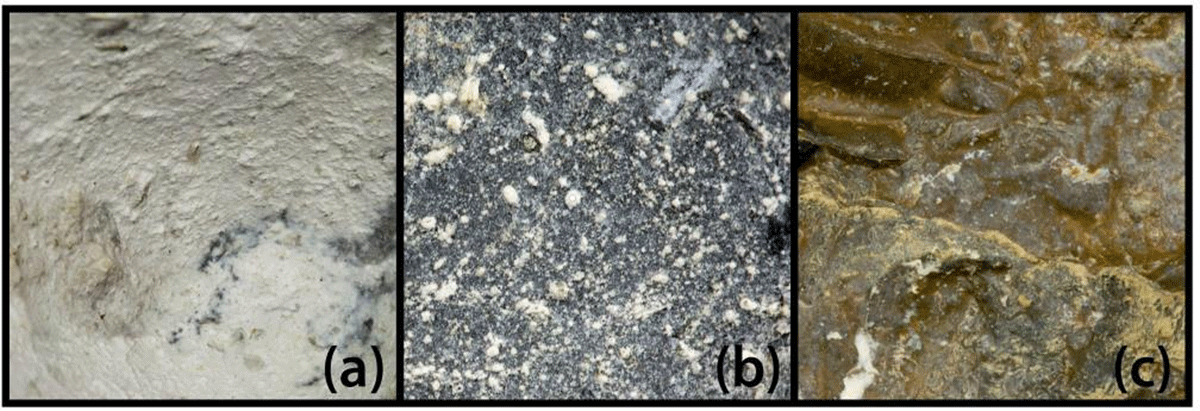
Figure 2
Different types of cortex. (a) Primary cortex. (b) Battered due to the transport by water. (c) Altered by chemical weathering. (Figure: T. Hess).
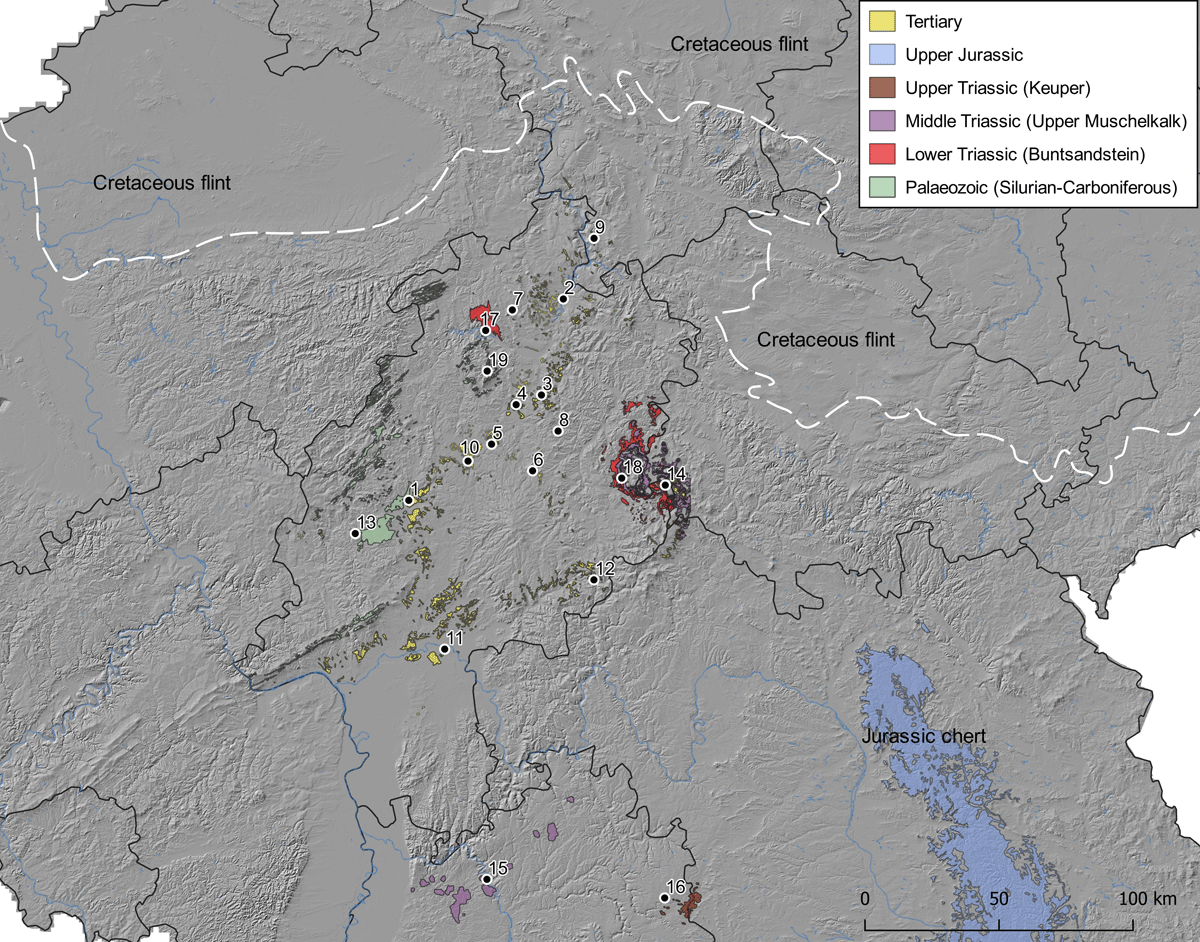
Figure 3
Occurrence of lithic raw materials in Central Germany. 1. Siliceous shale, river Lahn (HE). 2. Siliceous shale, Kassel (HE). 3. Silicified sandstone, Lenderscheid (HE). 4. Silicified sandstone, Rörshain (HE). 5. Silicified sandstone, Wahlen (HE). 6. Silicified sandstone, Rainrod (HE). 7. Silicified sandstone, Balhorn (HE). 8. Silicified sandstone, Hausen (HE). 9. Silicified sandstone, Dransfeld (NI). 10. Chalcedony, Homberg (HE). 11. Chalcedony, Lämmerspiel (HE). 12. Chalcedony, Schlüchtern (HE). 13. Chalcedony, Braunfels a. d. Lahn (HE). 14. Triassic chert (Muschelkalk), Theobaldshof (HE). 15. Triassic chert (Muschelkalk), river Neckar (BW). 16. Triassic chert (Keuper), Hohenlohe (BW). 17. Triassic chert (Buntsandstein), Buhlen (HE). 18. Triassic chert (Buntsandstein), Hünfeld (HE). 19. Jasper, Kellerwald region (HE). White line: Maximum extent of ice during the Pleistocene glaciation. Source: DGM 200, © GeoBasis-DE/BKG 2019, HLNUG, LBEG, LfU Bayern, LGRB-BW (Figure: T. Hess).
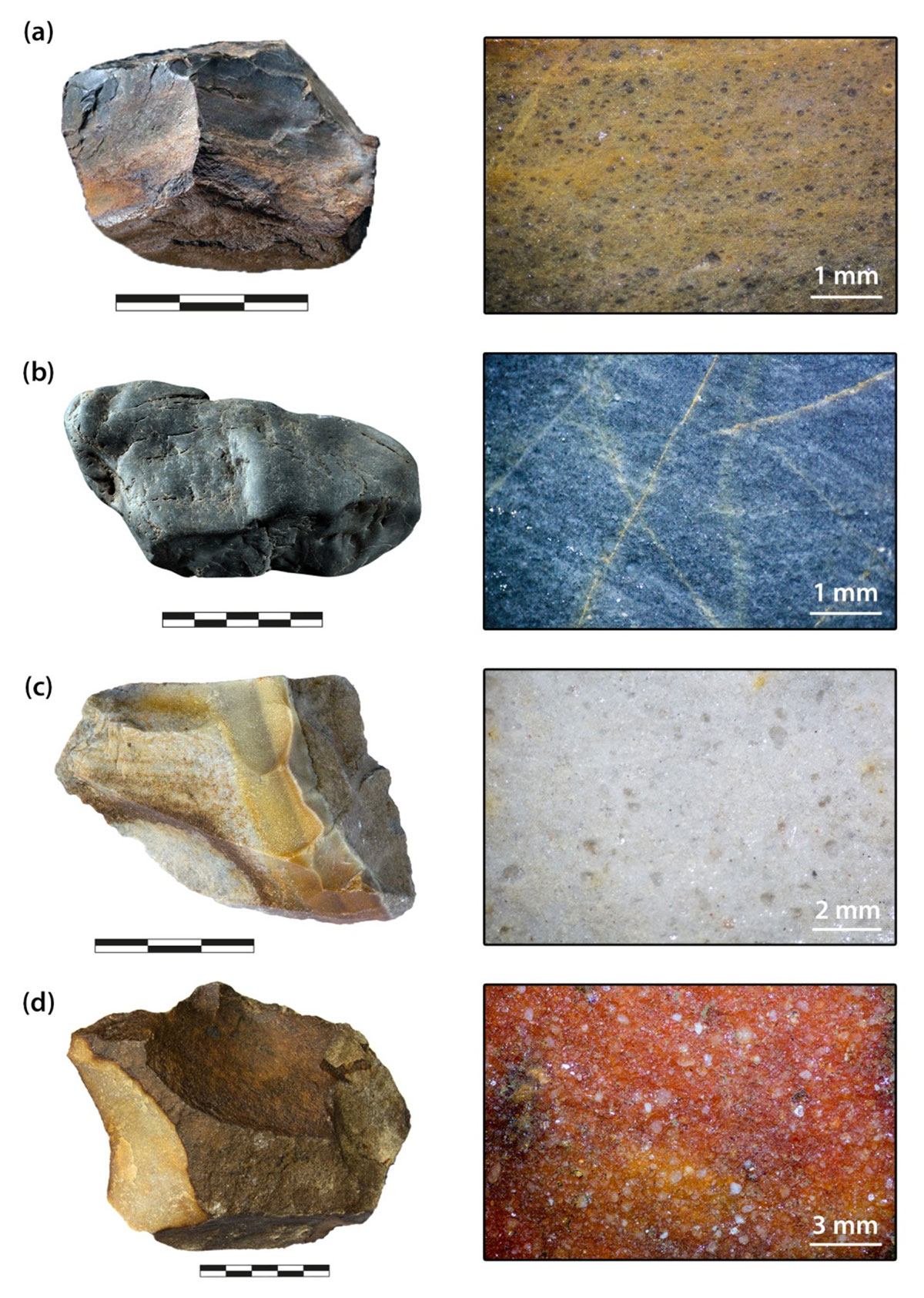
Figure 4
Raw material samples: (a)–(b) Siliceous shale. (c) Silicified sandstone, Lenderscheid. (d) Silicified sandstone, Rörshain. (Figure: T. Hess).
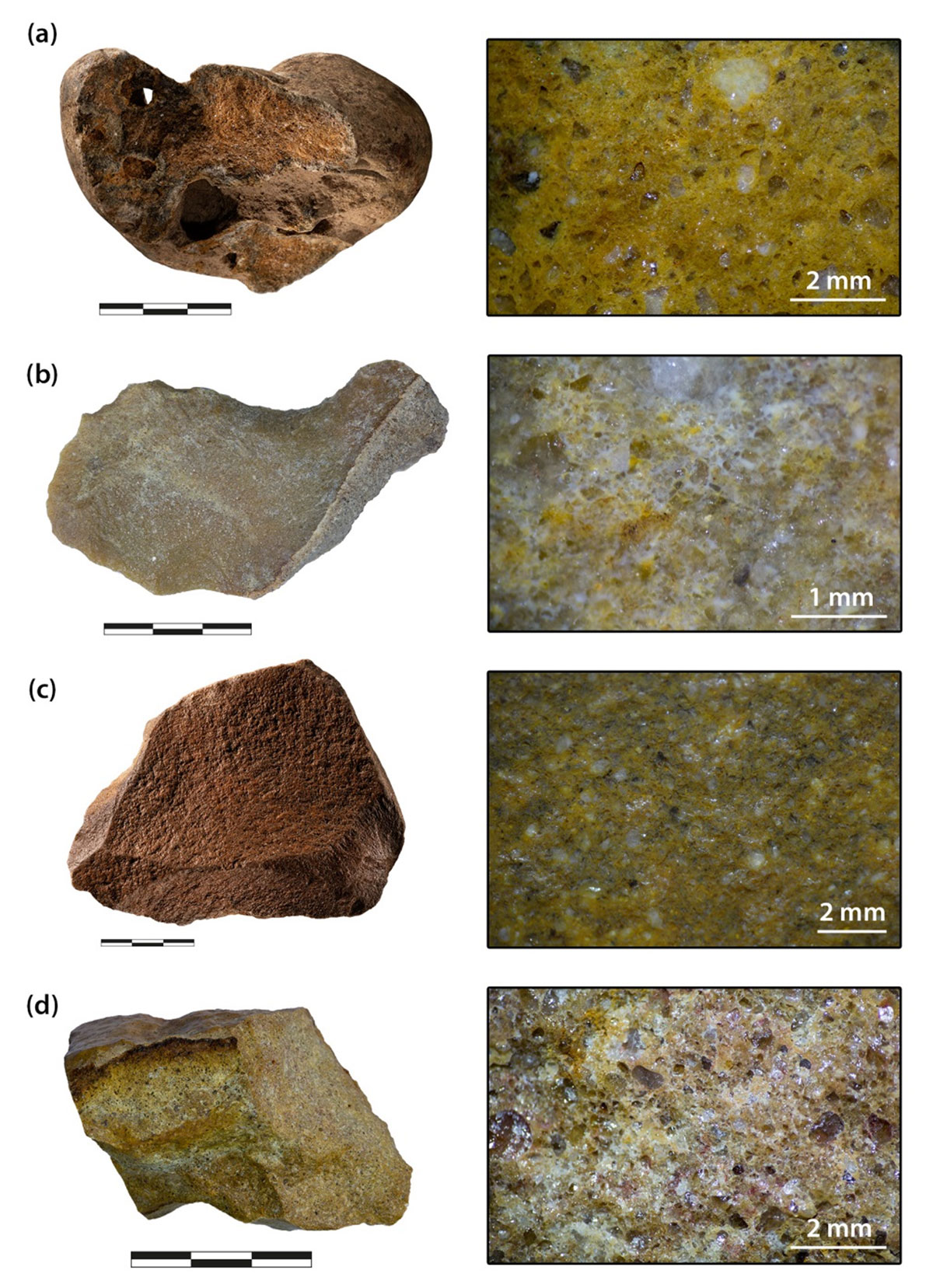
Figure 5
Raw material samples. (a) Silicified sandstone, Rörshain. (b) Silicified sandstone, Wahlen. (c) Silicified sandstone, Rainrod. (d) Silicified sandstone, Balhorn. (Figure: T. Hess).
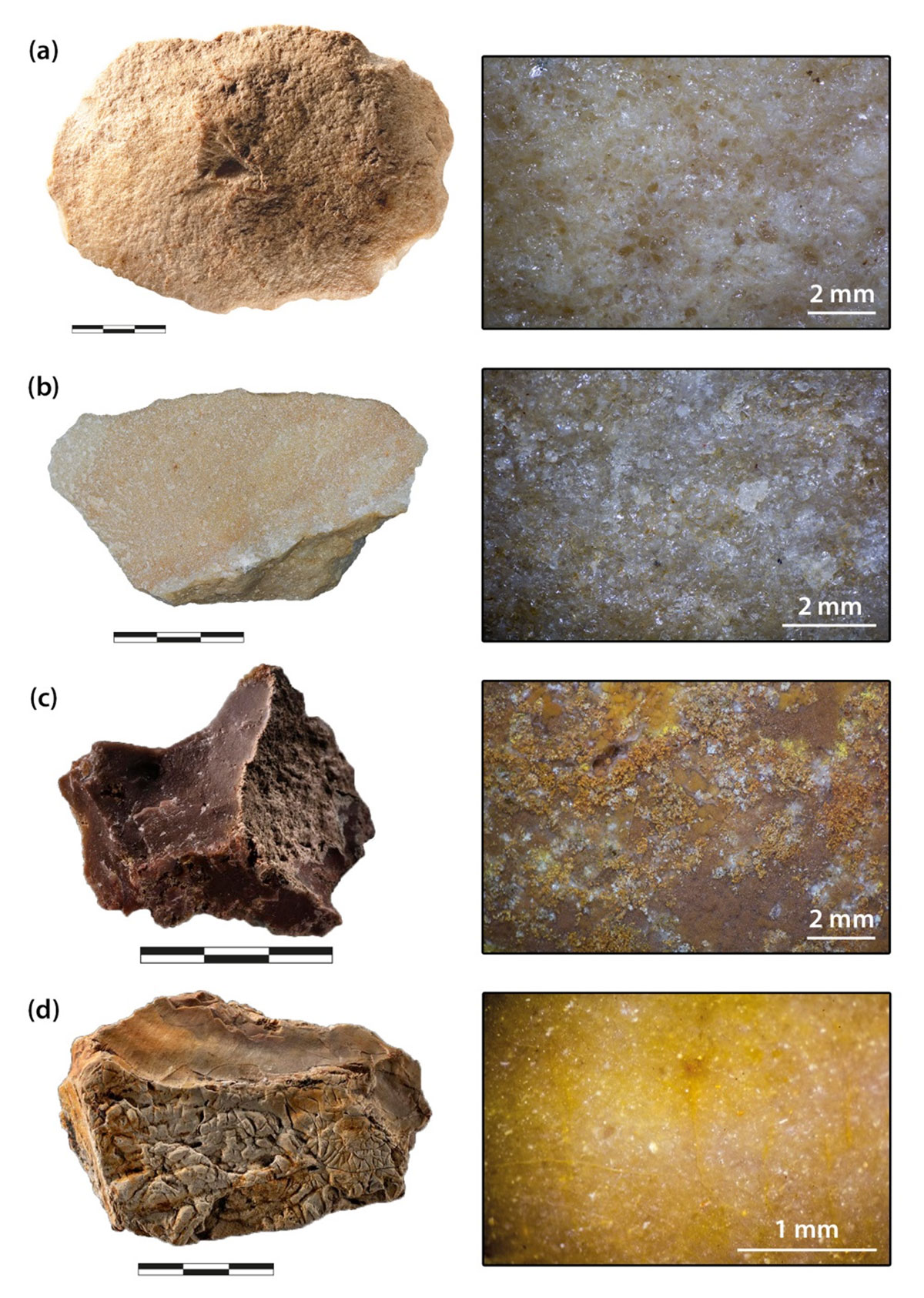
Figure 6
Raw material samples. (a) Silicified sandstone, Hausen. (b) Silicified sandstone, Dransfeld. (c) Chalcedony, Rörshain. (d) Chalcedony, Homberg a. d. Ohm. (Figure: T. Hess).
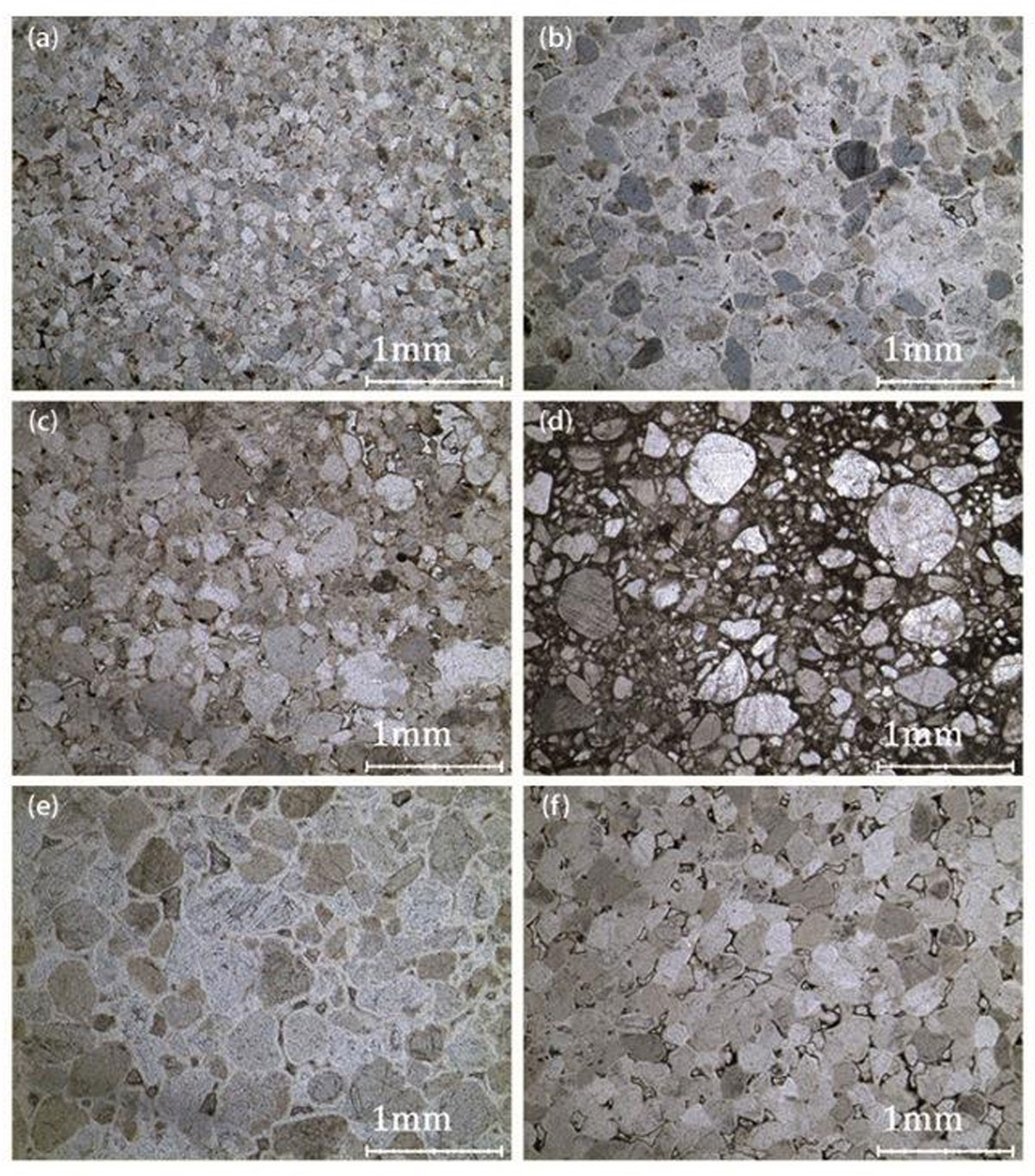
Figure 7
Thin sections of lithic raw materials. (a) Silicified sandstone, Lenderscheid. (b) Silicified sandstone, Rörshain. (c) Silicified sandstone, Rainrod. (d) Silicified sandstone, Balhorn. (e) Silicified sandstone, Hausen. (f) Silicified sandstone, Dransfeld. (Figure: T. Hess).
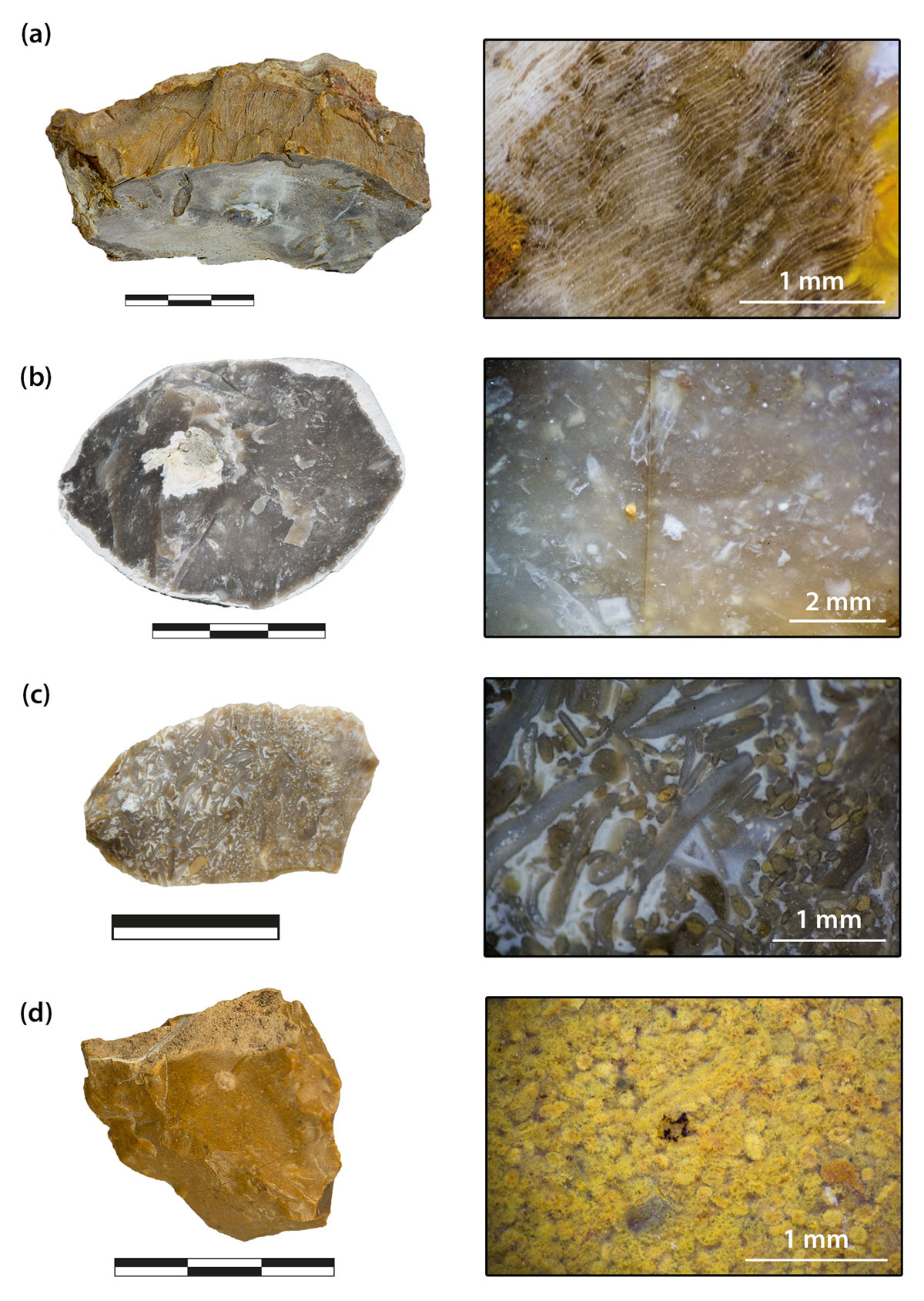
Figure 8
Raw material samples. (a) Silicified wood, Braunfels a. d. Lahn. (b) Cretaceous flint. (c)–(d) Triassic chert (Muschelkalk), Theobaldshof. (Figure: T. Hess).
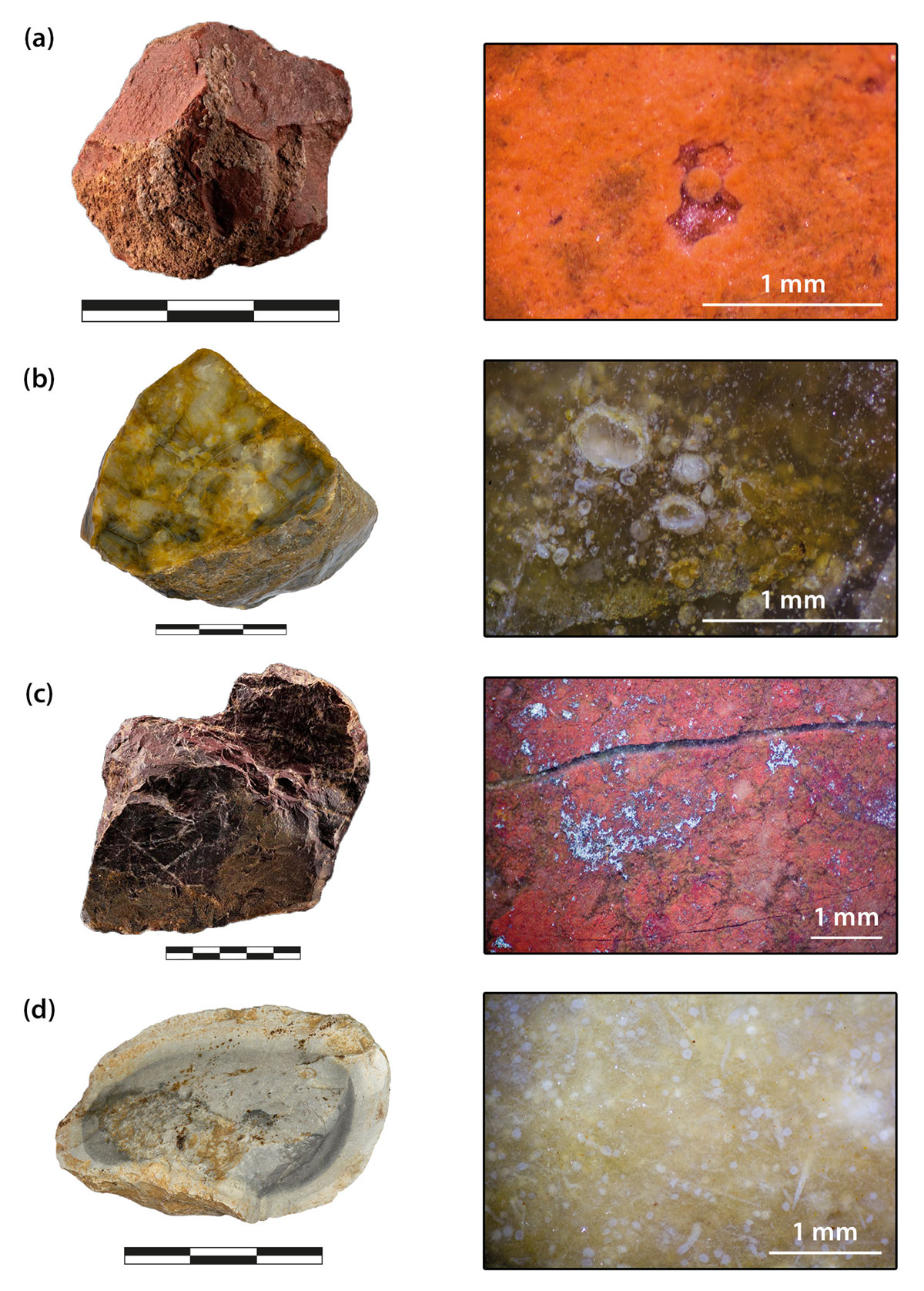
Figure 9
Raw material samples. (a) Triassic chert (Keuper), Hohenlohe. (b) Triassic chert (Buntsandstein), Buhlen. (c) Jasper, Kellerwald region. (d) Jurassic chert. (Figure: T. Hess).
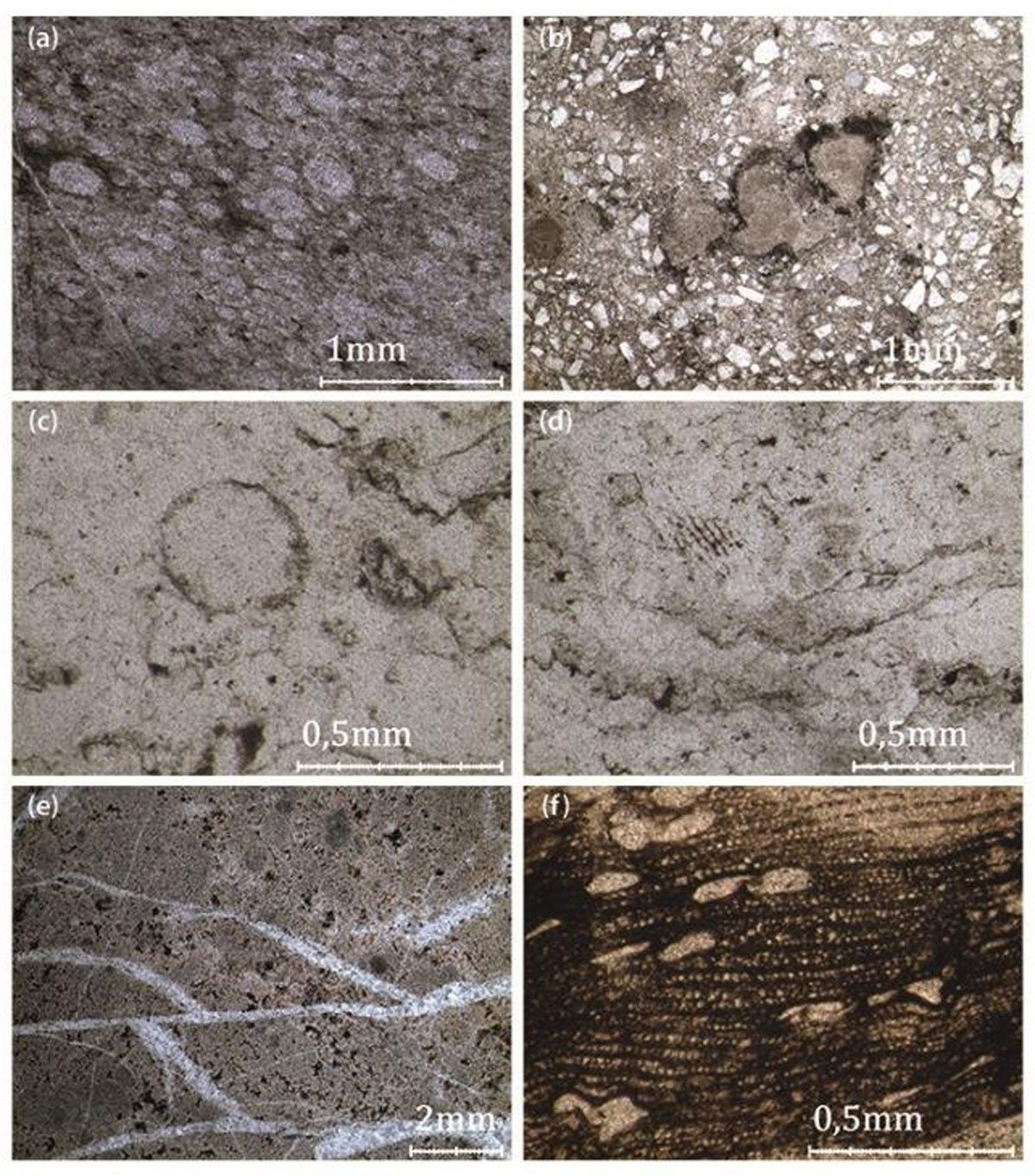
Figure 10
Thin sections of lithic raw materials. (a) Siliceous shale. (b)–(d) Chalcedony. (e) Jasper, Kellerwald region. (f) Silicified wood. (Figure: T. Hess).