
Introduction
The origin of the public museum is complex to grasp, with several museums worldwide claiming theirs to be the first public museum. One clear aspect, however, is that museums as open and accessible public institutions is a concept that was conceived and developed in, and by, Western countries, which then gradually became applied to the rest of the world. The foundational steps that led to the opening of the public museum was the act of ‘collecting and preserving’ rare objects. The ancient Greeks, for example, are recorded to have collected and preserved rare objects for debate, scientific study and commemoration. ‘Collecting and preserving’ rare objects continued for many centuries, and this act of intentional collecting reached its height in the 14th through to the 18th centuries, namely in Europe. The collected artefacts from the past were referred to as antiquities and the collectors of antiquities were then referred to as antiquarians. With this foundation, the next significant movement during the 17th and 18th centuries were to ‘house and display’ the collected and preserved objects for members of the public. This movement became possible when a few antiquarians donated their collections to be displayed for the members of the public. It led to the opening of several public museums in the West, namely the Ashmolean Museum in England, the Kunstmuseum Basel, the Capitoline Museum in Rome, and the Musée des Beaux-Arts et d’Archéologie in Besançon, to name a few. These early public museums, in terms of their motivations and methods, were arguably inspired and framed by the ideals and values of the time. This was broadly the period when the Western world endeavoured to form a better understanding of the universe through critical scrutiny of all assumption and scientific research. Progressively, more public museums opened worldwide, and how objects were displayed saw various shifts in paradigms throughout the different ages, the significant ones being from ‘housing and displaying’ to ‘loaning and sharing’ to ‘a more sensory experience of the past.’ This movement, driven by the West, has been applied worldwide.
This article examines how Western display trends of using various sensory methods were applied in The National Museum of Korea’s 2021 special exhibition entitled: Homo Sapiens: Evolution, Relationship & Future? The rationale for selecting this museum is that The National Museum of Korea is South Korea’s main and representative national museum, and the reason for selecting this exhibition is because it effectively showcases how South Korea is proactively applying museum display trends, practiced in the West, of providing a more sensory experience of the past rather than the more traditional method of ‘observing.’ The origins of this museum can be traced back to the early years of Japanese colonial rule. Following liberation from Japanese colonial rule, the museum was renamed The National Museum of Korea in 1945. Thus, the history of museums in Korea can be understood to have formerly begun with this museum in 1945. The museum’s aims in 1945 were to restore the nation’s damaged cultural pride, correct false historical images of Korea and become a national repository of material culture and the state’s premier exhibition facility (Jang 2015, 2). It is clear that the first museum in South Korea was formed with nationalistic endeavours and to symbolise independence. Such endeavours were presented using the Western model of a ‘national museum.’ Since its establishment, the museum can be evaluated to have used the more conventional methods of display with objects behind glass aided by text information. However, through its special exhibition in 2021, The National Museum of Korea showcased its understanding of Western display trends by applying more sensory methods. The National Museum of Korea remains at the core of museums on the whole in South Korea, and such applications of more sensory methods will likely be applied to other regional museums around the country in the near future. Thus, it is worth examining the contents of this special exhibition.
This article is structured in three sections. The first examines a few paradigms shifts of museum displays methods, starting from the foundational act of ‘collecting and preserving’ to ‘housing and displaying,’ loaning and sharing, providing a more sensory experience of the past. The second reviews The National Museum of Korea’s application of the sensory and participatory methods of display in their special exhibition. The final section concludes by reflecting on how the shifting paradigm of museum displays is a product of the Western world and its trends, circumstances, and interests and how such shifting paradigms have been and remain to be shaped primarily in the West and then applied to other parts of the world.
1. The paradigm shifts of museum display methods
This first section explores how the act of ‘collecting and preserving’ rare objects for various purposes became the foundational steps for the opening of the public museum and how methods of display underwent a few paradigm shifts. An important point to note about the foundational steps and the paradigm shifts is that they all derived in, and were driven by, the Western world. There is a need to emphasise that by no means does this section cover all the paradigms of museum display methods, nor does it provide a comprehensive analysis; it would simply be impossible to condense the history and paradigms of such a complex institution into a few pages. Thus, the aim is to sketch out how one paradigm led to the next to trace the broad evolution.
Collecting and preserving
The foundation of public museums and any type of museum is the collection of objects. Collecting and preserving objects deemed rare, meaningful, and sentimental can be seen to be almost instinctive for humans. The act of collecting itself has a much longer history than museums. Archaeological evidence has been found to show that hominids began collecting shortly after they became bipedal (Simmons 2016, 2), casting light on how the act of collecting is a deeply ingrained human trait and that it is related to the way humans use objects to navigate their world. Indeed, the concept of collecting and preserving are closely related, because for the collection to be meaningful, their survival into the future is an important asset (Simmons 2016, 10).
Historical records indicate that the ancient Greeks were keen to collect and preserve selected objects. The origin of the word ‘museum’ is known to derive from the ancient Greek word ‘Mouseion’. This word was used to refer to and describe a temple/shrine of the muses, particularly the philosophical institution that existed in the 3rd century BCE in ancient Alexandria (Simmons 2016: 1). Alexander the Great’s general, Ptolemy son of Lagus established the Mouseion, and Alexandria, as a research centre for literature and the sciences, including a library. The overarching purpose of the Mouseion was for teaching and debate, and classical Greece was distinguished by a tradition of support and care for public treasuries supported by the donations of objects to treasuries at public sanctuaries, also known as temple sites, by private citizens (Simmons 2016: 29).
Temple treasuries had several purposes, among them being the display of the spoils of war, the commemoration of military victories, the demonstration of a city’s prosperity, evidence of piety on the part of the citizens of a city, sites for the celebration of community wealth, and manifestations of civic pride. Although there are no direct links in terms of the successively modified institutions evolving from the Temple of the Muses into modern museums, the concept of gaining knowledge from objects can be found in ancient Alexandria, specifically the Temple of the Muses (Simmons 2016: 31). As such, in ancient times, collections were kept in temples. In the city of Carthage, for example, the temple for the goddess Astarte was said to house many strange things for people to observe, including the skin of a chimpanzee (Grice 2015, 1).
The act of collecting and preserving continued for many centuries thereafter. It was during the Renaissance (1400–1600 CE) that collecting objects became culturally fashionable. It was, moreover, an intellectual pursuit for some individuals (Simmons 2016, 59). Collecting became even more fashionable when numerous Europeans began sailing to other places in the world, such as Africa, Asia, Australia, the Pacific Islands, and the Americas. This was when ‘cabinets’ started becoming popular (Grice 2015, 1). From their travels, Europeans brought back valuable things and some collected rare finds and built cabinets to hold them with the motivation to not only catalogue the wonders of the world, but to learn about the earth and to present to others what they had learned (Grice 2015, 1). New models of knowledge were constructed and the focus was on organising and classifying the influx of strange objects (Simmons 2016, 59). According to Miller (2017, 29), the aim of antiquarian scholarship was reconstruction. Antiquarianism became the basis of the modern public museum. As Simmons notes, museums did not suddenly appear as institutions as we know today – they were gradually developed ‘from private collections to public collections’ and also ‘from treasure troves to objects preserved for the public good’ (Simmons 2016, 10). This gradual development occurred in the West with antiquarians at the forefront of collecting and preserving.
Housing and displaying
With the collected and preserved objects, the following step was to house and display the collections for members of the public. This movement became cemented from around the 17th and 18th centuries. Those who drove the shift in paradigm from ‘collecting and preserving’ to ‘housing and displaying’ were a select few antiquarians who decided to donate their collections for members of the public to come and learn about the universe. The history of antiquarianism, and the transition from private collection to public goods, is extensive and comprehensive, but this section will briefly look at two figures who participated in paving the way in housing and displaying private collections.
The first is Elias Ashmole (1617–1692) who was a leading intellectual of his day and a true Enlightenment polymath. Ashmole was one of many antiquarians at the time and he managed to acquire a great collection of manuscripts and other curiosities. His collection grew substantially when two-generations worth of collections from the Tradescant family (father and son) were bequeathed to him in 1677 (Potter 2006). With this added collection, Ashmole moved the collection to the University of Oxford, England, to a building that was especially built for it. The next step was to open the Ashmolean Museum in 1683 as a public museum. Ashmole’s vision was to create a centre for practical research and to preserve and display the collections for enjoyment and the advancement of knowledge (MacGregor 2001, 125). With the opening of the Ashmolean Museum, members of the public were invited to come and see what were initially private collections, collected and preserved for individuals.
The second is Sir Hans Sloane, a physician and antiquarian, who was a key figure behind the opening of the British Museum in London, England. The British Museum has been claimed as Britain’s most famous public museum (River 2018), and remains one of the most iconic public museums in the world. The history of the British Museum starts with Sir Hans Sloane. Sloane’s collection was by far the largest and most diverse of all his contemporaries (Singer 1954, 179). In his spare time, Sloane accumulated, arranged, and catalogued his collection, which over the course of time, became extensive (Singer 1954, 180). Upon his death, he gifted his collection to parliament and the collection was used to found the British Museum in 1753, which opened its doors in 1759. It was the first national museum to cover all fields of knowledge, open to all visitors from around the world. The British Museum was framed by the Enlightenment ideals of the time. It became driven by an insatiable curiosity for the world, a deep belief in objects as reliable witnesses and documents of human history, sound research, as well as the desire to expand and share knowledge. The British Museum explains its founding as ‘somewhat of an answer or outcome of this era.’
As such, private collectors and collections became the basis for the public museum. The objects that were collected and preserved by individuals and initially housed in cabinets or rooms became housed in spaces designed specifically for the purpose of display for all members of the public. The process of the formation of the public museum was indeed a transformative one from the practices of earlier collecting to the creative adaptation of a new institution (Bennett 1995, 19). This process was driven by the West, with the motivations and interests reflecting Western ideals of the time.
Loaning and sharing
The next notable paradigm shift in museum display methods was from ‘housing and displaying’ to ‘loaning and sharing.’ When private collections were donated to public museums, this initially meant that the objects were housed to be stored there permanently. However, this changed when the loaning of objects and large collections became feasible in the 1970s, due to improved packing and cheap air transport, which meant that the international circulation of objects from museum collections took off (MacGregor and Williams 2005, 58). The British Museum, for example, implemented this in the early 1970s. A significant exhibition was “the Treasures of Tutankhamun” in 1972, which commemorated the 50th anniversary of the discovery of Tutankhamun’s tomb at Luxor by Howard Carter and Lord Carnarvon (Zaki 2017, 79). This exhibition was monumental, in that it was the most comprehensive and valuable display of Tutankhamun objects ever to leave Egypt; fifty items from the collection of Tutankhamun were flown to London for a six-month display (Zaki 2017, 79). Although smaller exhibits were shown in Tokyo in 1965 and in Paris in 1967, this was the largest exhibition from this collection with seventeen pieces displayed outside Egypt for the first time (Zaki 2017, 79).
Reports reveal that packing experts from London were flown to Cairo to pack the selected pieces into specially made cases and that these pieces were wrapped by foam and plastic sheeting packed in wooden boxes (Zaki 2017, 82). The exhibits were then transported from Egypt to London Airport by special planes (Zaki 2017, 82). This exhibition proved to be wildly successful, with visitors considering the exhibition of Tutankhamun in London much cheaper and quicker than a flight to Cairo to see these treasures at the Egyptian museum (Zaki 2017, 84). This new paradigm of loaning and sharing objects meant that objects were able to be seen in different parts of the world and, also, in different contexts alongside other objects and texts. This paradigm also began in the West and gradually became adopted by museums around the world. Today, many museums worldwide have an open loaning policy.
A sensory experience of the past
Early public museums, such as the Ashmolean, permitted visitors to handle artifacts as late as 1827, provided the visitors had the permission of the curator (Reden 2015, 27). However, in England, there was a shift from ‘observing and handling’ to just ‘observing’ between the 1780s and 1840s, which coincided with increased concern for conservation (Reden 2015, 47). This meant that for a long time since then, museums offered a visual experience more so than a sensory one. In order to protect and conserve the objects, many museums conventionally had, and some still have, diverse methods of keeping visitors away from the objects; with glass containers, simple ropes and, in some cases, sensors that beep when one comes too close to the object or art (Bacci and Pavani 2014, 17). However, in recent decades and years, there has been another shift in paradigm with numerous museums making conscious efforts to provide a more sensory experience. The understanding that ‘touching’ is an essential means of acquiring knowledge has indeed been resurrected in many museums (Reden 2015, 28). This paradigm shift can be seen to have been framed by various factors, the ones at the forefront being 1) modern neuroscience, 2) the field of sensory studies, and 3) to be more inclusive. The three are fundamentally interconnected with the idea of including other senses beyond the visual at the core of the museum experience.
First, in terms of modern neuroscience, the brain has come to be viewed as a creator of expectations and hypotheses of reality, which then get contrasted against experience. What this means is that the brain is not just a passive recipient of information through the senses, but an active seeker of information to confirm or refute predictions (Levent and Pascual-Leone 2014, xiii). With this, a few museums started to consider the combined and complex interactions between visual, auditory, olfactory, spatial and other aspects of the visitors’ experience (Levent and Pascual-Leone 2014, xiv). This led to a wider consideration of the senses in museums, with the recognition that the visual sense is just one of many. Expanding from this, domains such as neuropsychology, neurobiology and neurochemistry are producing new findings relevant to museums (Robertson 2017, 1). This has led to ‘brain science’ being integral to the museum experience. Museums such as the Peabody Essex Museum, near Boston, has reportedly collaborated with neuroscientists to meet and develop new trends (Robertson 2017, 3).
Second is the field of sensory studies which has flourished in the last two decades as a result of researchers from across the humanities and social sciences turning their attention to the sensorium and delving into the cultural life of sense (Levent and Pascual-Leone 2014, xvi). This led to numerous contemporary museum professionals taking a ‘sensory turn.’ For example, they started to rethink the multiple restrictions on the use of the senses in the museum and began to actively solicit the senses instead (Levent and Pascual-Leone 2014, xiii). Moreover, the role of ‘touch’ in the museum has been expanded significantly, supported by more studies pointing towards the social, cognitive, and even therapeutic value of handling objects (Pye, 2008; Chatterjee 2008) (Levent and Pascual-Leone 2014, xiii). Beyond ‘touch,’ there have also been other attempts to provide the visitors with a more sensory experience. One example is the Jorvik Viking Centre in York, which was completed in 1981, opening its doors to the public in 1984, and is famous for recreating the smells and sounds of a Viking Settlement (Levent and Pascual-Leone 2014, 3).1
Third is the motivation to include more groups of people. Multi-sensory solutions have been seen as the most promising for all groups of people, such as people with disabilities, the elderly and young people, among others (Harada et al 2018, 2221). This ‘solution’ acknowledges that the visual experience has limits and a multi-sensory method enables, not only a more engaging museum experience but, one that can be more inclusive for people who need it. Multi-sensory learning has been explained as an idea that learning is experienced through all the senses to help reinforce memory.
Although many museums offer the more conventional method of observing from a distance, a paradigm shift to a more sensory experience of the past can be detected worldwide. Although collection care remains a critical function in any/all museums, many are becoming much more than repositories of ancient artifacts to be preserved for the future. Gunay explains that museums have progressed from being ‘spaces where art and science products are displayed’ to being ‘informal educational areas and tools for communicating to the mass culture’ (Gunay 2012, 1250). As derived in, and driven by, the West, museums and their display methods have experienced numerous paradigm shifts, with all the paradigms having been influenced and shaped by both external and internal sources and circumstances.
2. South Korea’s application of sensory methods: The National Museum of Korea’s special exhibition <Homo Sapiens: Evolution, Relationship & Future?>
This second section reviews The National Museum of Korea’s application of sensory methods of display in their 2021 special exhibition entitled <Homo Sapiens: Evolution, Relationship & Future?>. The overarching aim of this section, through the review of this exhibition, is to showcase how Western methods of display are being applied in other parts of the world; in this case, South Korea. The central point is that museum display methods, as driven by the West, remain a globally applied phenomenon.
The National Museum of Korea is South Korea’s representative national museum, which opened in 1945 following liberation from Japanese colonial rule. The museum carries a great deal of significance as it played an important role in restoring the nation’s damaged cultural pride, as well as correcting false historical images of Korea. The museum’s permanent exhibition remains conventional in terms of display methods, with objects being placed behind glass cases for protection. It was in this museum in 2021 (between May and September), amidst the global pandemic, that the special exhibition entitled <Homo Sapiens: Evolution, Relationship & Future?> was held. This exhibition traced the seven million years of human evolution (hence the first keyword ‘evolution’), looked into the relationships that humans have forged with other life forms throughout their existence (the second keyword ‘relationship’), and then questioned the future of humans (the last keyword ‘Future?’) (Figure 1). This exhibition addressed the growing interest on ‘what are humans?’ due to the global COVID19 pandemic, and suggested the need to trace the evolution of humans in order to approach this question.
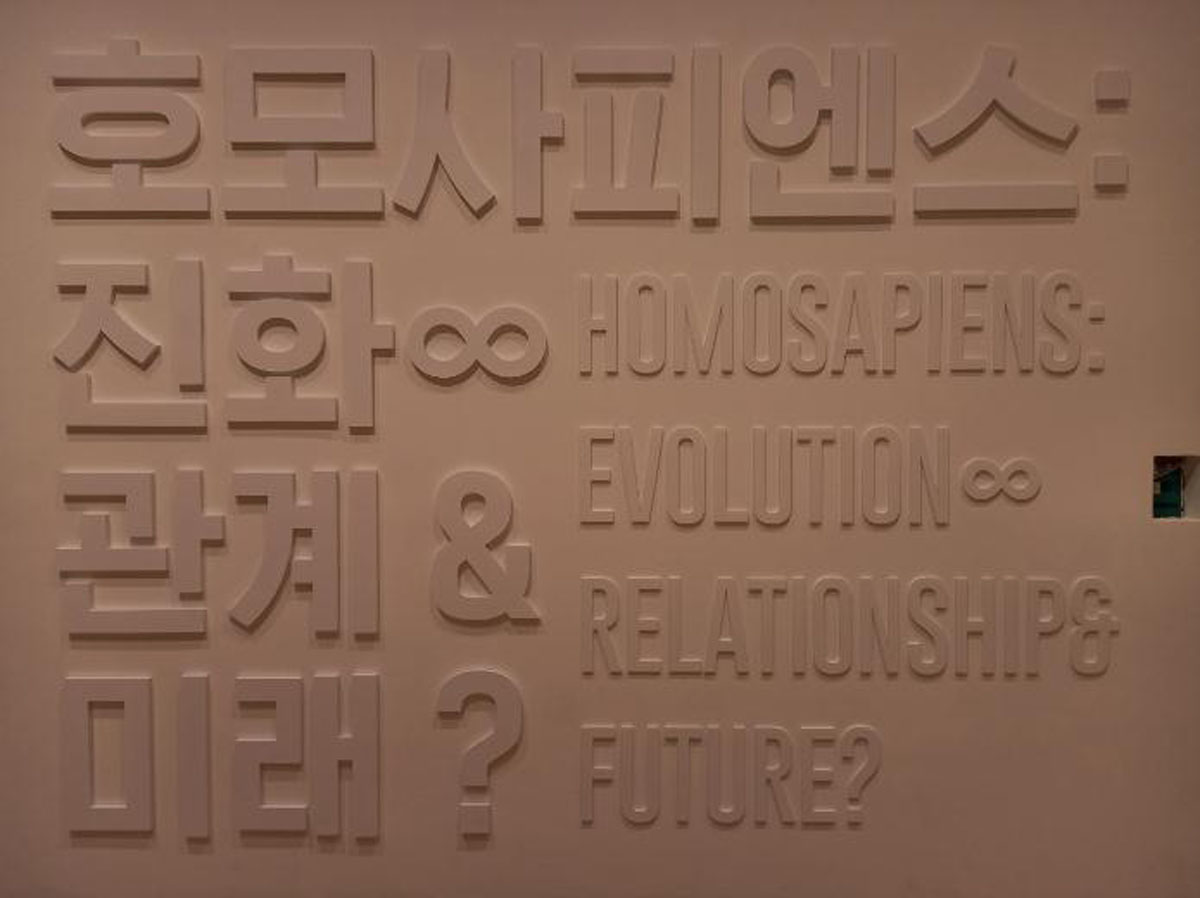
Figure 1
The title of the exhibition (Photograph taken by author).
The layout of the exhibition included a prologue, part I, part II and the epilogue. Multi-sensory methods were used across the prologue through to the epilogue. To go through the muti-sensory methods, the prologue was titled <The way of understanding evolution> and this section used four large screen panels, each telling and linking a story together. Visual, auditory, and spatial methods were used: visual in that the screen was made up of short films, auditory in that sound effects were used, and spatial in that the visitors were encouraged by members of staff present in the room to walk across and step on the sensors for the next film to start. Notable in this part was that there was no text or linguistic audio; visitors were given abstract images and sound effects to reach their own conclusions (Figure 2). This prologue can be used to shed light on how the transition of the museum from ‘spaces where art and science products are displayed’ to being ‘informal educational areas and tools for communicating to the mass culture’ (Gunay 2012, 1250) is being applied in South Korea. The sound used was subtle, simple, yet engaging, with the sound of footsteps, etching and music used to tell the story of the evolution of humans.
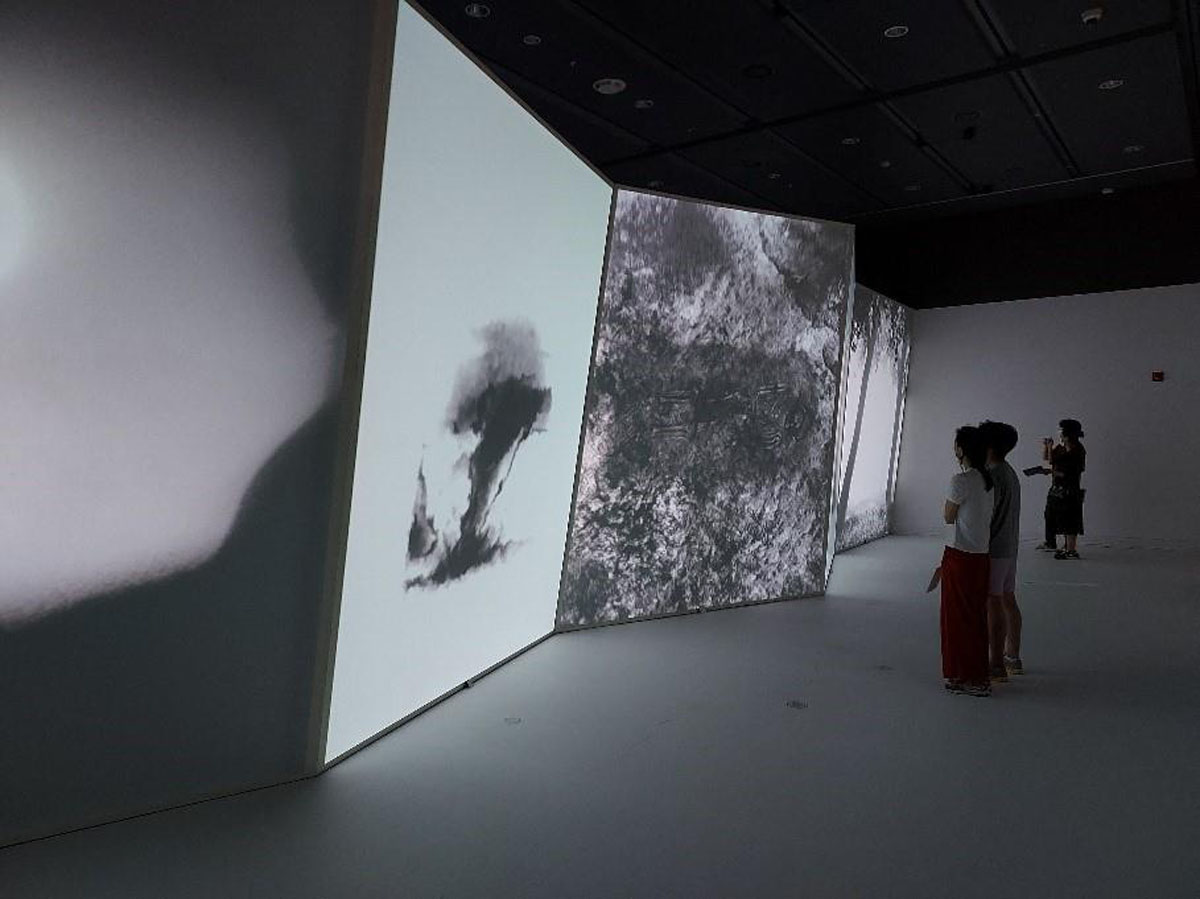
Figure 2
Prologue – The way of understanding evolution (Photograph provided by the National Museum of Korea).
Visitors were then guided to the second room, which was <part I: From Sahelanthropus tchadensis to Homo Sapiens>. This room used replicated molds of prehistoric skulls to present the stages of human evolution (Figure 3). Visitors were encouraged to ‘touch’ and literally walk through human evolution. Different heights were also used so that children and adults could get a sense of how humans went through physical evolutionary changes. Instead of placing the skull replicas behind glass containers with written descriptions, the chosen method was to encourage visitors to ‘touch,’ ‘move around,’ and ‘compare’ the heights from the different stages of evolution.
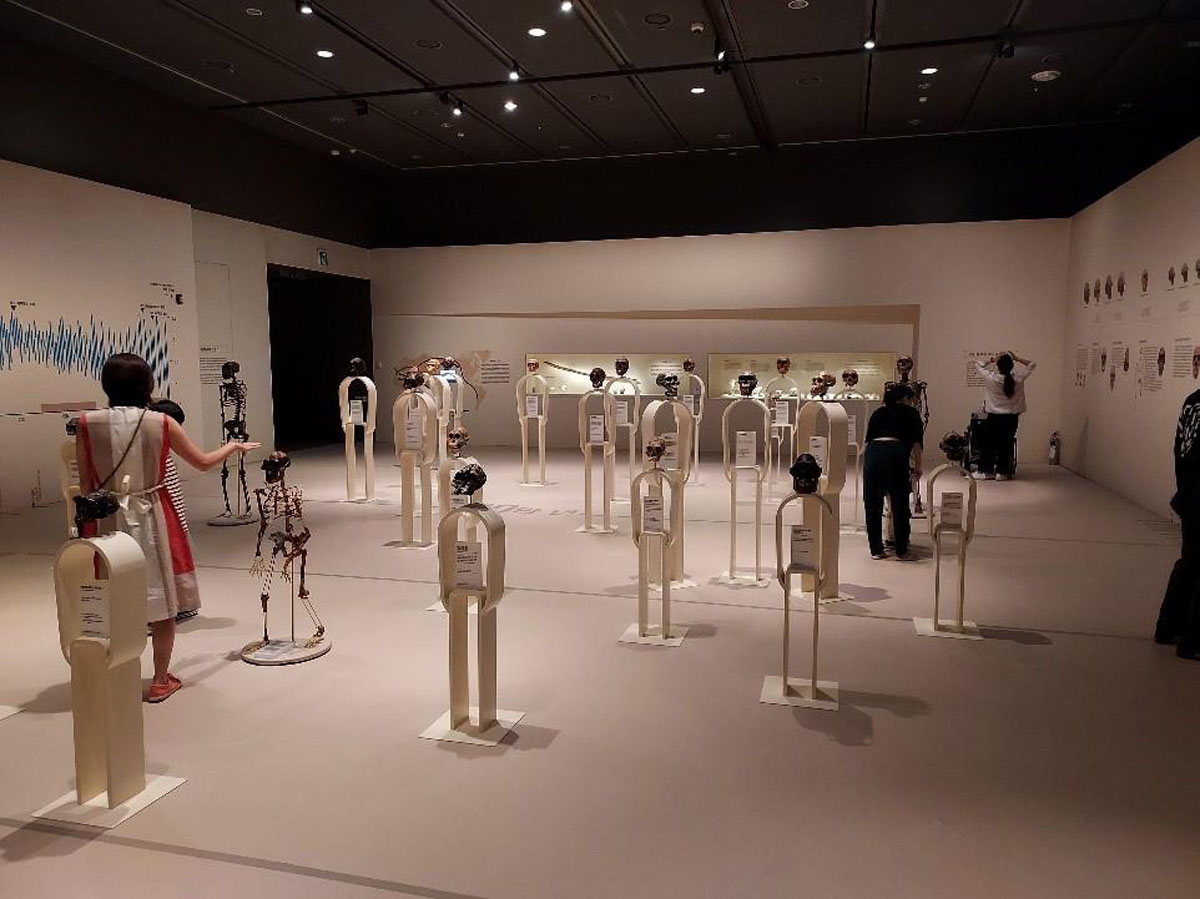
Figure 3
From Sahelanthropus tchadensis to Homo Sapiens (Photograph provided by the National Museum of Korea).
Next, visitors were guided to walk into <part II: Wise humans, Homo Sapiens: From French prehistoric cave art to lithic tool production>. This next room was essentially a reproduction of a prehistoric cave (Figure 4). A change in lighting was used from light to dark, meaning that visitors literally got the feeling of walking into a dark prehistoric cave. Images of prehistoric cave art were projected onto the walls and the projected images changed every few seconds. This was accompanied by the sound of dripping water and background music. Sound in museum exhibits have been incorporated into Western museums as early as 1904 when curators began to use audio-visual aids to provide contextual information. Pam Locker, a museum exhibition designer and consultant in Britain and Europe, described how the use of sound in museums can add another dimension to the experience with the echoing sound of dripping water making a recreated dungeon feel cold and wet, whilst the sound of seagulls and laughter is reminiscent of a day at the seaside (Reden 2015, 20). The sound of dripping water in this part of the exhibition indeed made the room feel like visitors were inside a cold prehistoric cave, and the use of dark lighting also effectively aided in the overall experience.
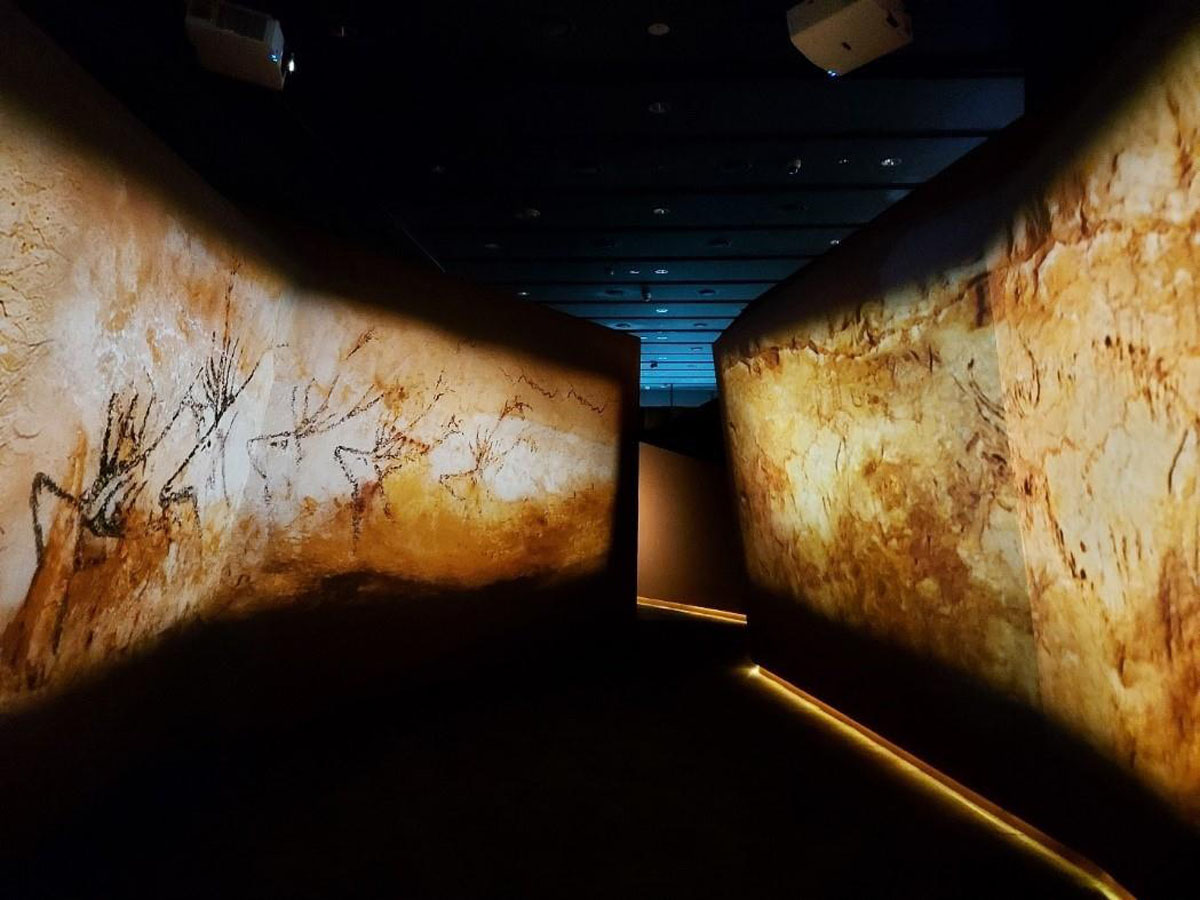
Figure 4
Wise humans, Homo Sapiens: From French prehistoric cave art to lithic tool production (Photograph provided by the National Museum of Korea).
Coming out of the prehistoric cave, visitors were next led to a display wall with prehistoric tools (Figure 5). This section was the most ‘conventional’ in terms of a museum display, compared to the other parts that used more sensory methods of engaging visitors. However, directly opposite this wall was an activity for visitors to attempt to reconstruct a prehistoric lithic tool (Figure 6). This interactive and practical activity has been used in numerous children’s museums in the West, and here, we can see how it has been applied to a general exhibition.
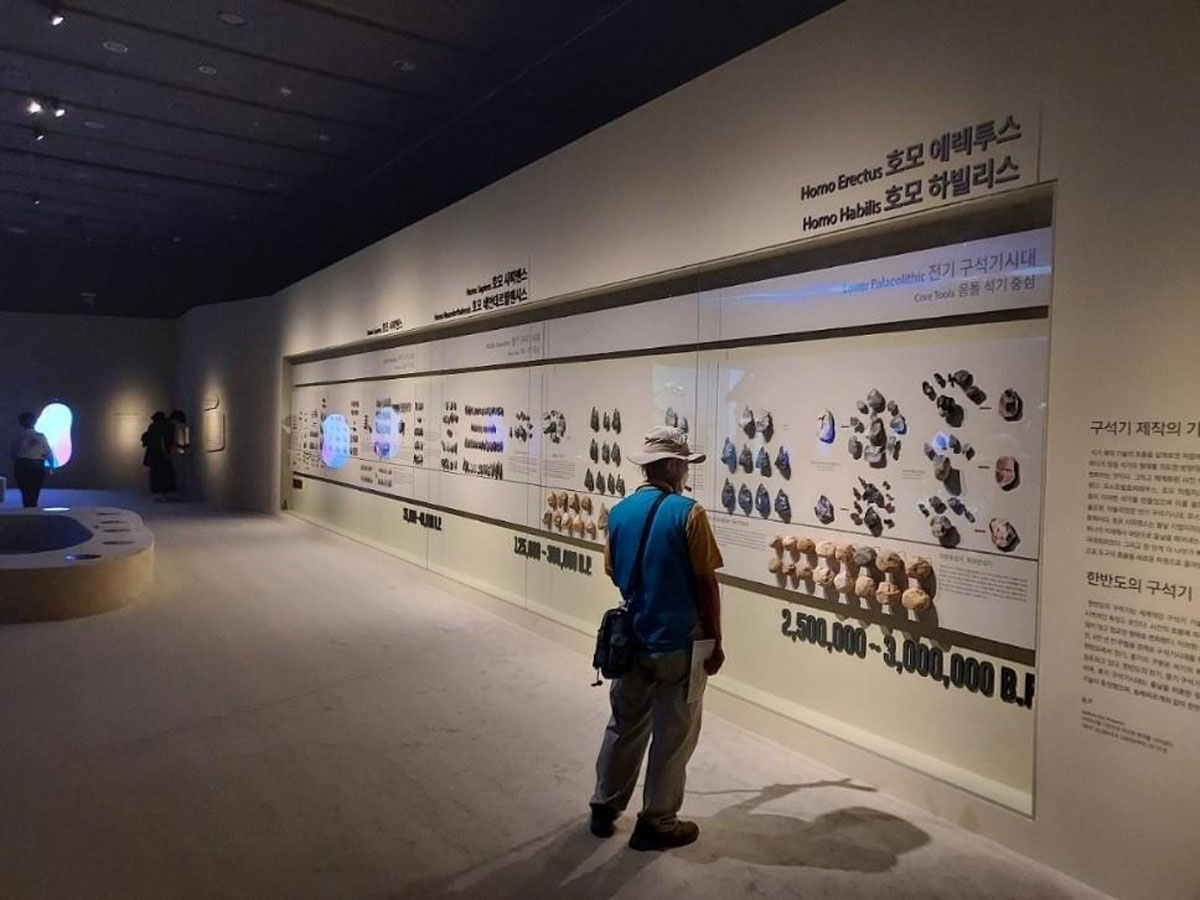
Figure 5
Prehistoric tools (Photograph provided by the National Museum of Korea).
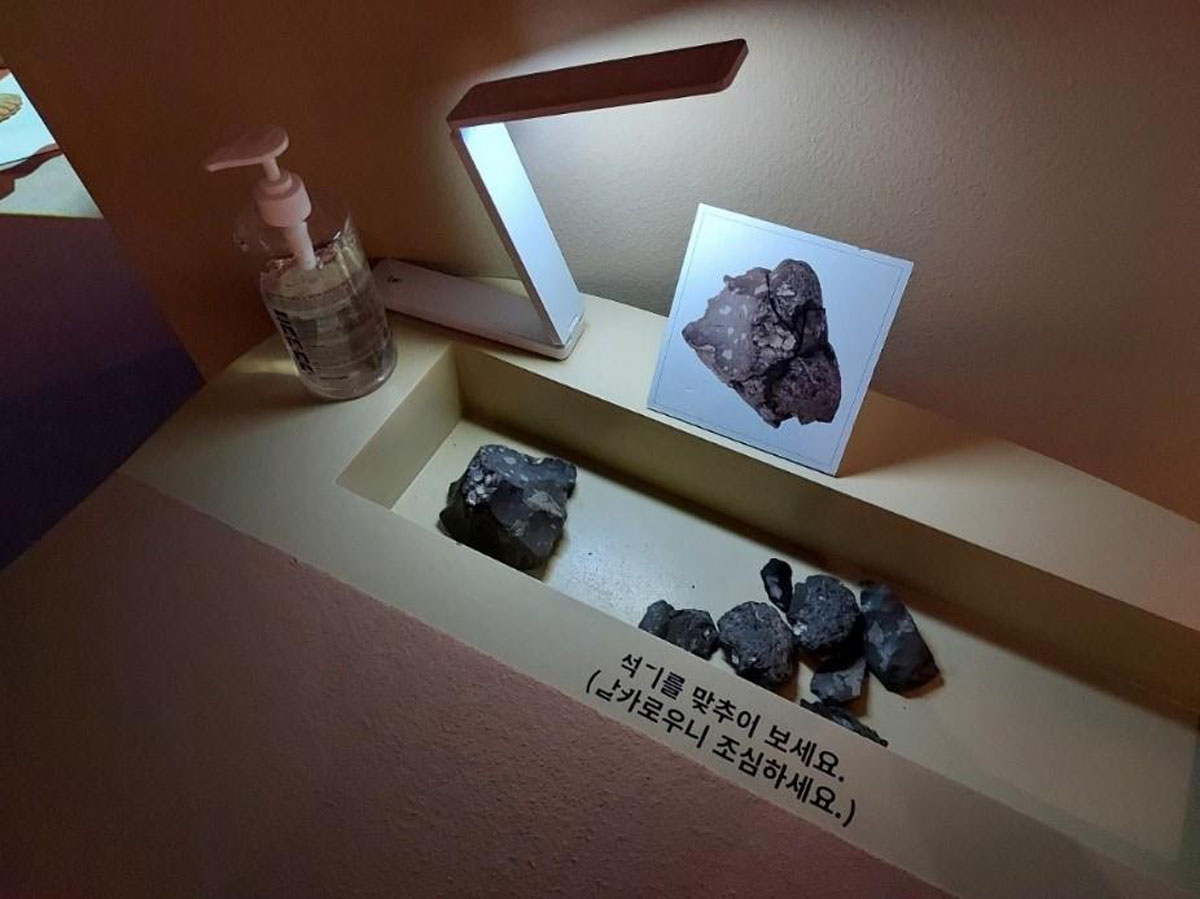
Figure 6
Reconstructing a prehistoric tool (Photograph provided by the National Museum of Korea).
Walking along, the next section of part II focused on the relationships humans have forged in the process of evolution. For this, a life-size 3D reconstructed mammoth was displayed (Figure 7). These kinds of life-size reconstructions can be found in various natural history museums in the UK, Europe and the U.S., but for South Korea, this was the first attempt. Once again, this showcases how methods are attempted and developed in the West, and then become applied gradually in other parts of the world.
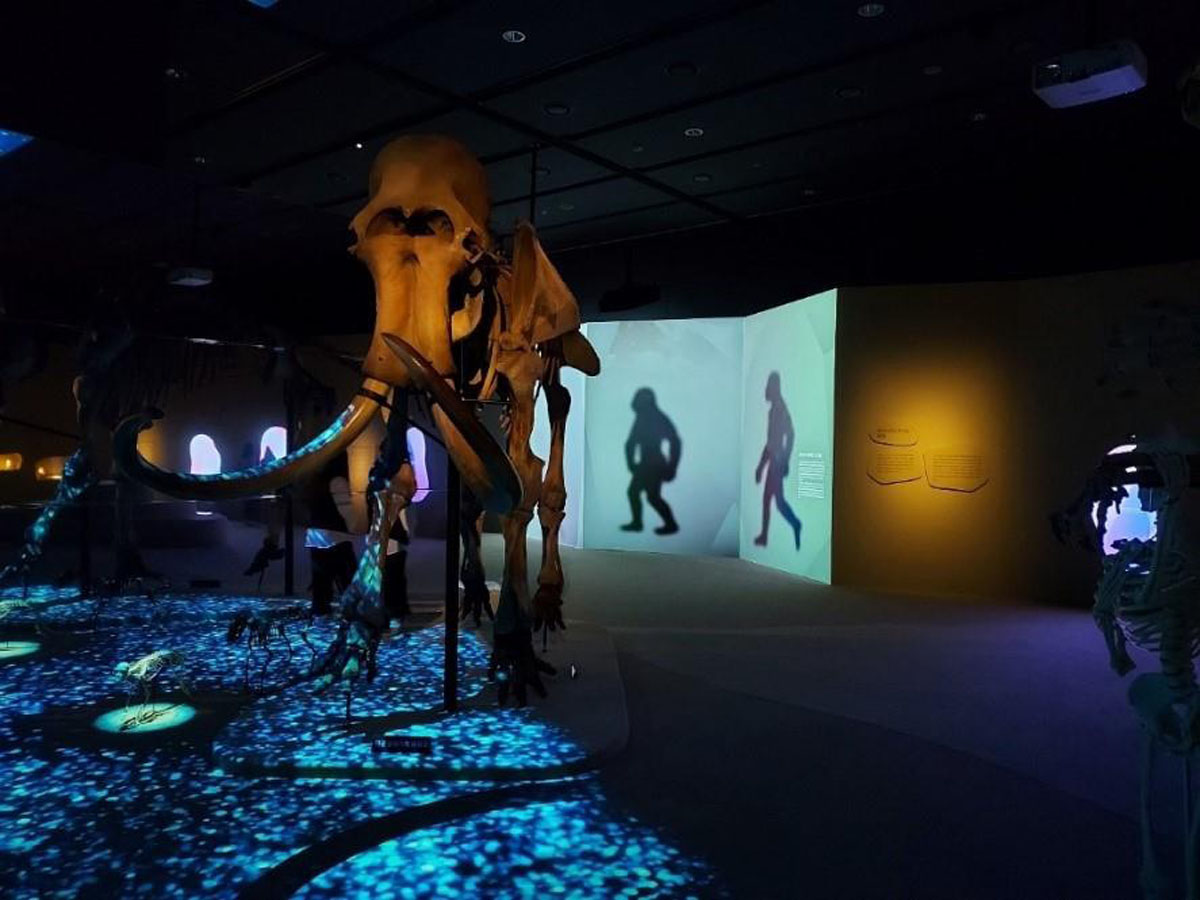
Figure 7
The 3D reconstructed mammoth (Photograph provided by the National Museum of Korea).
To visually and spatially show the relationships humans have and continue to forge, sensors were used for visitors to step on, which created spotlights that connected to other animals and life forms (Figure 8).
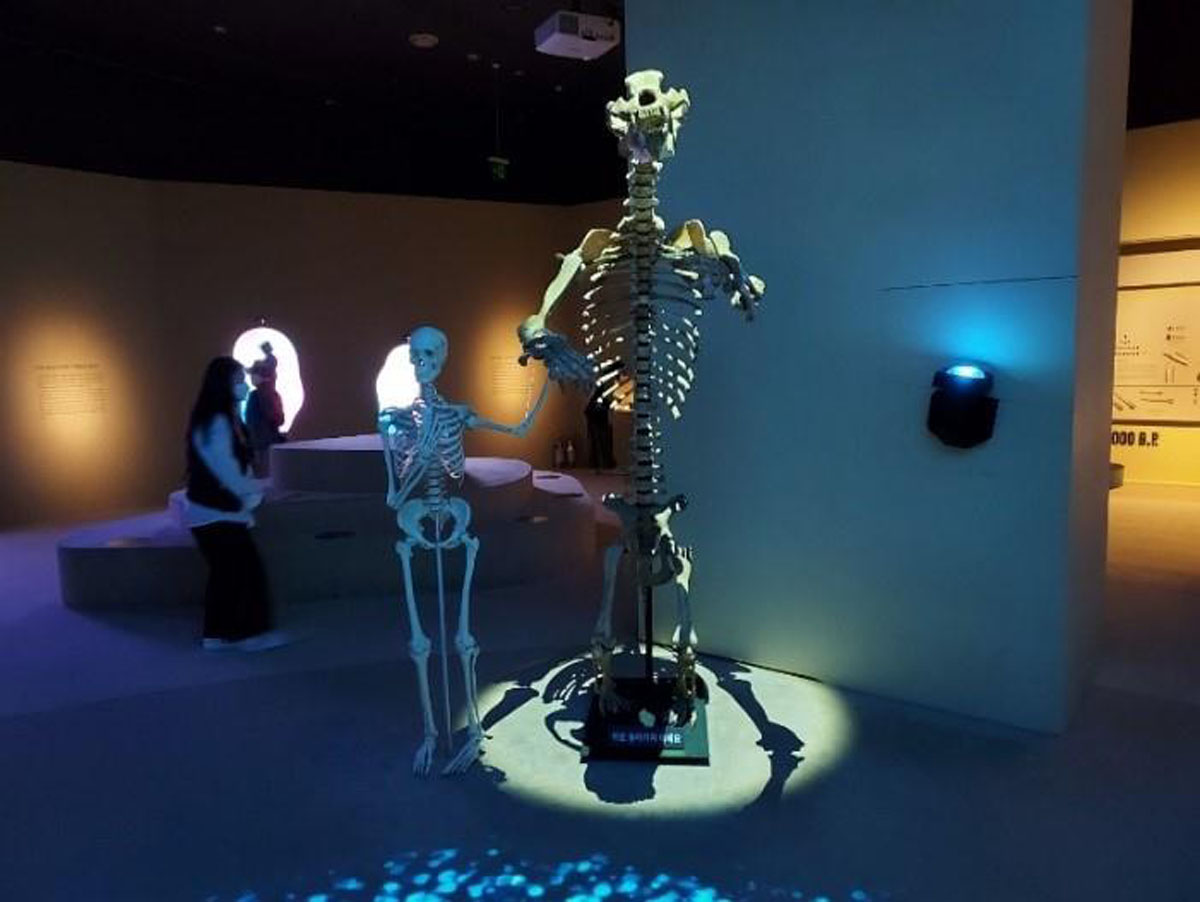
Figure 8
Relationships humans have forged in the process of evolution (Photograph provided by the National Museum of Korea).
The epilogue covered <the future of Homo Sapiens: Going to space>. The main message of the epilogue was to state that in the past through to the present, the reason humanity was able to survive was because people continuously communicated and cooperated with others during various stages of history. From cave art to tool production, this last section used large screens to depict humans going to space aided by a display with models of space ships on the opposite side. The ending note of this exhibition was that humans will have to continue to find a way to live in peace and harmony with others into the future (Figures 9 and 10).
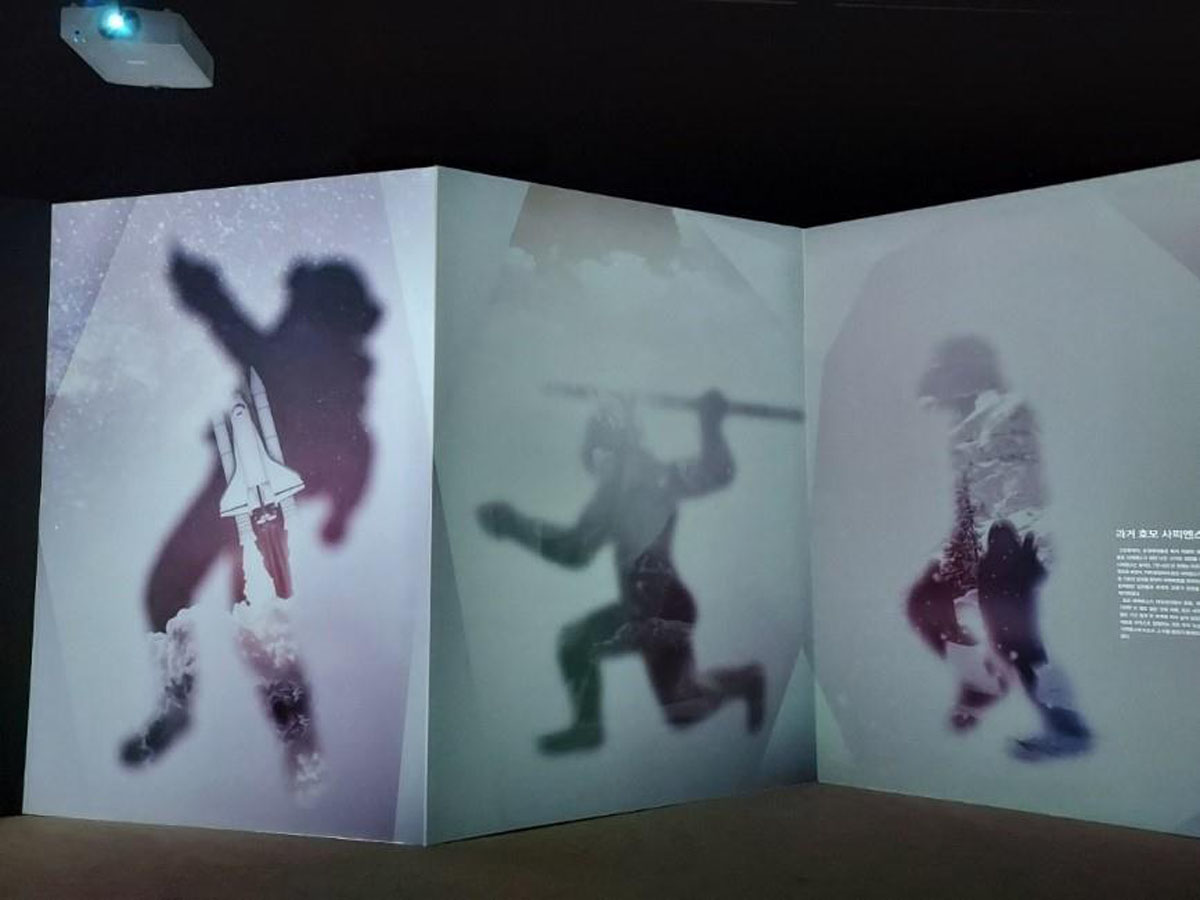
Figure 9
The future of Homo Sapiens: Going to space evolution (Photograph provided by the National Museum of Korea).
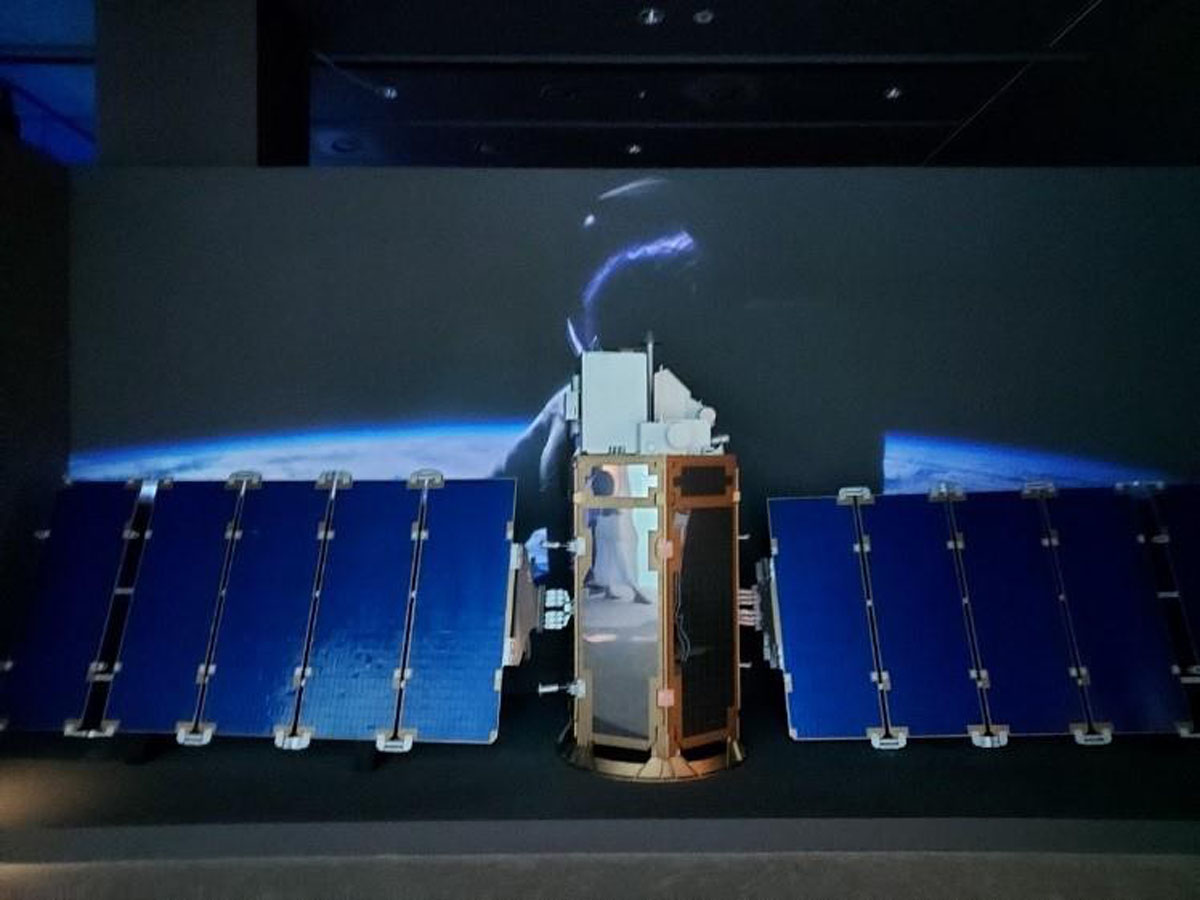
Figure 10
Humans going to space. Evolution (Photograph provided by the National Museum of Korea).
Overall, this exhibition can be used to explore how updated Western display methods have been, and are being, applied in South Korea. Although the sensory methods used in this exhibition were not ‘new’ in the sense of never-before-seen, many methods were new for South Korea.
3. Conclusion: Western paradigms and global applications
This concluding section reflects on how the shifting paradigm of museum displays is a product of the Western world and how such Western paradigms are being applied in other parts of the world as a global phenomenon. The act of collecting itself cannot be defined to be of Western origin, but it was the West (namely Europe) that made it culturally fashionable to collect, preserve, catalogue and study objects and make objects into ‘collections.’ As European travellers started to travel abroad and collect rare and ‘exotic’ objects from other parts of the globe collections began to grow and provide a way for Western people to study areas outside the West through objects. Antiquarianism, which was also conceived and developed mainly in Europe, paved the way for the opening of the public museum, born as a response to the curiosities, interests and trends of the Western world at the time, which endeavoured to gain a more scientific and systematic understanding of the universe.
With the opening of public museums in England and Europe around the 17th century, countries around the world also started to open their public museums. The concept of a museum was formed in the West, and this meant that museums outside the West naturally built their museums with the Western museums as their benchmark. The National Museum of Korea’s Homo Sapiens exhibition is one example of how updated Western methods are being applied in the East. Macdonald argued that the museum phenomenon is best seen as a product of the coming together of ‘a heady mix of partially connected motivations and concerns’ (Macdonald 2011, 5). The Homo Sapiens exhibition exemplifies how Western trends of adopting and adapting questions, techniques and approaches (Macdonald 2011, 1) was considered and applied in South Korea’s representative national museum and special exhibition. As Western museums are continuously making efforts to be relevant to today’s public, such efforts can also be seen through the Homo Sapiens exhibition as it addressed contemporary questions and concerns that arose due to the COVID-19 pandemic via the topic of human evolution.
To conclude, Western paradigms have been applied worldwide. The concept of the public museum was conceived and developed in the West, and the methods of display continuously changed according to changes and advances that occurred in the Western world. Such concepts and changes have and are evidently being applied to the rest of the world. So far, the museum paradigm has predominantly been driven and shaped by the West and Western paradigms remain a global phenomenon. It will be interesting to examine whether reverse impacts can occur in the future, with the West applying methods derived in other parts of the world.
Notes
Funding Information
This work was supported by the Ministry of Education of the Republic of Korea and the National Research Foundation of Korea (NRF-2020S1A6A3A02065553).
Competing Interests
The author has no competing interests to declare.