
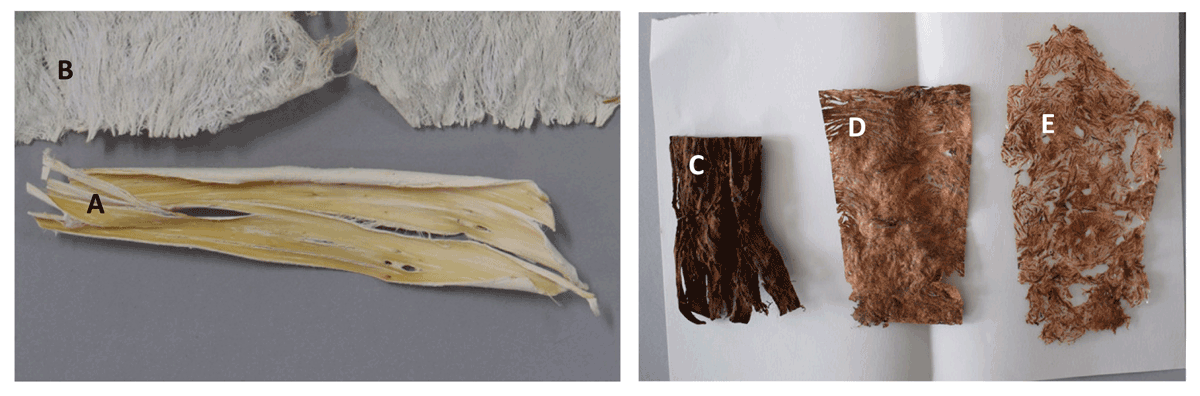
Figure 1
Paper mulberry inner bark prior (A) and post beating (B) and mamaki inner bark (C) and at two consecutive stages of beating (D) and (E).
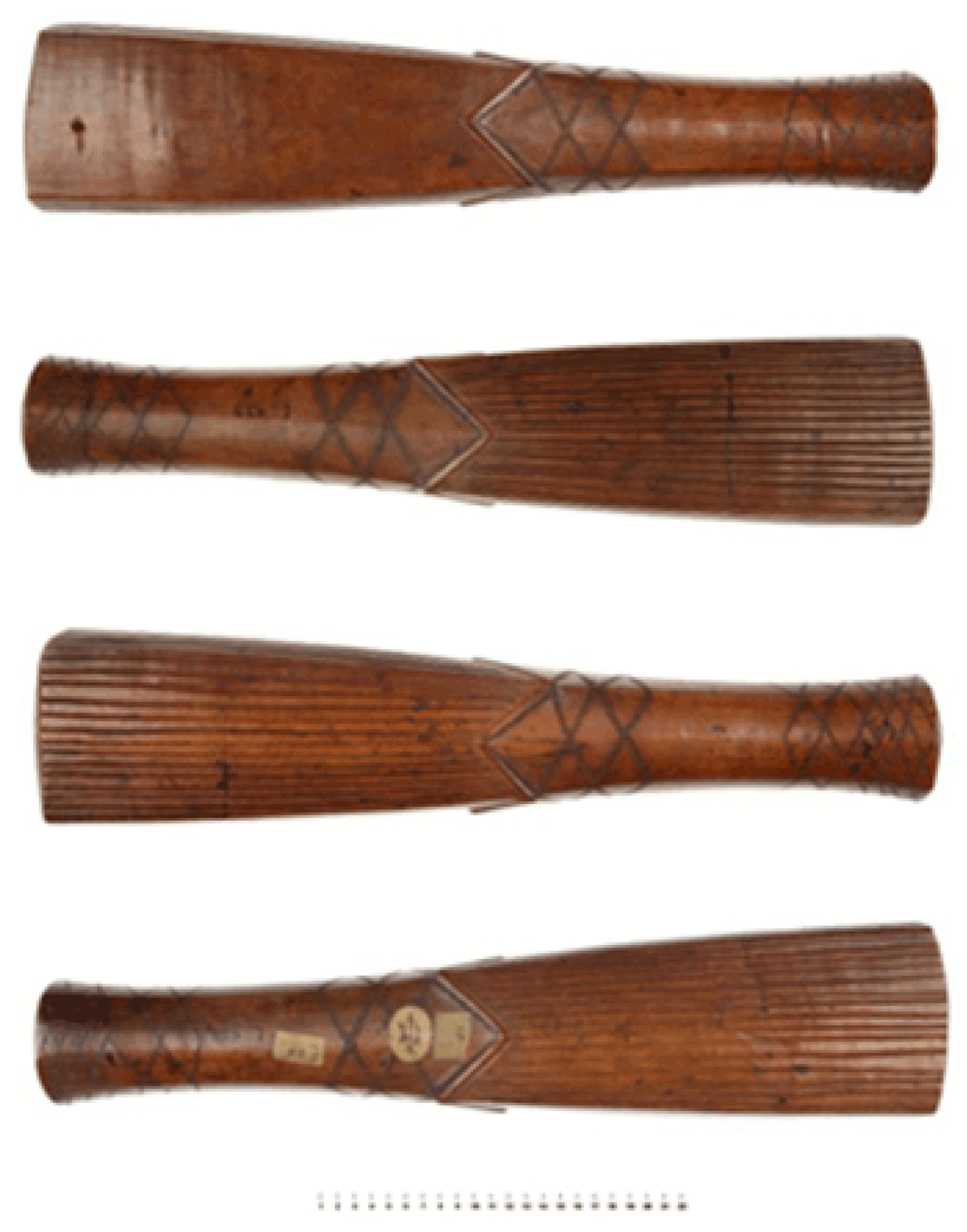
Figure 2
Beaters showing the variations in set lines. Hunterian Collection E439-2.
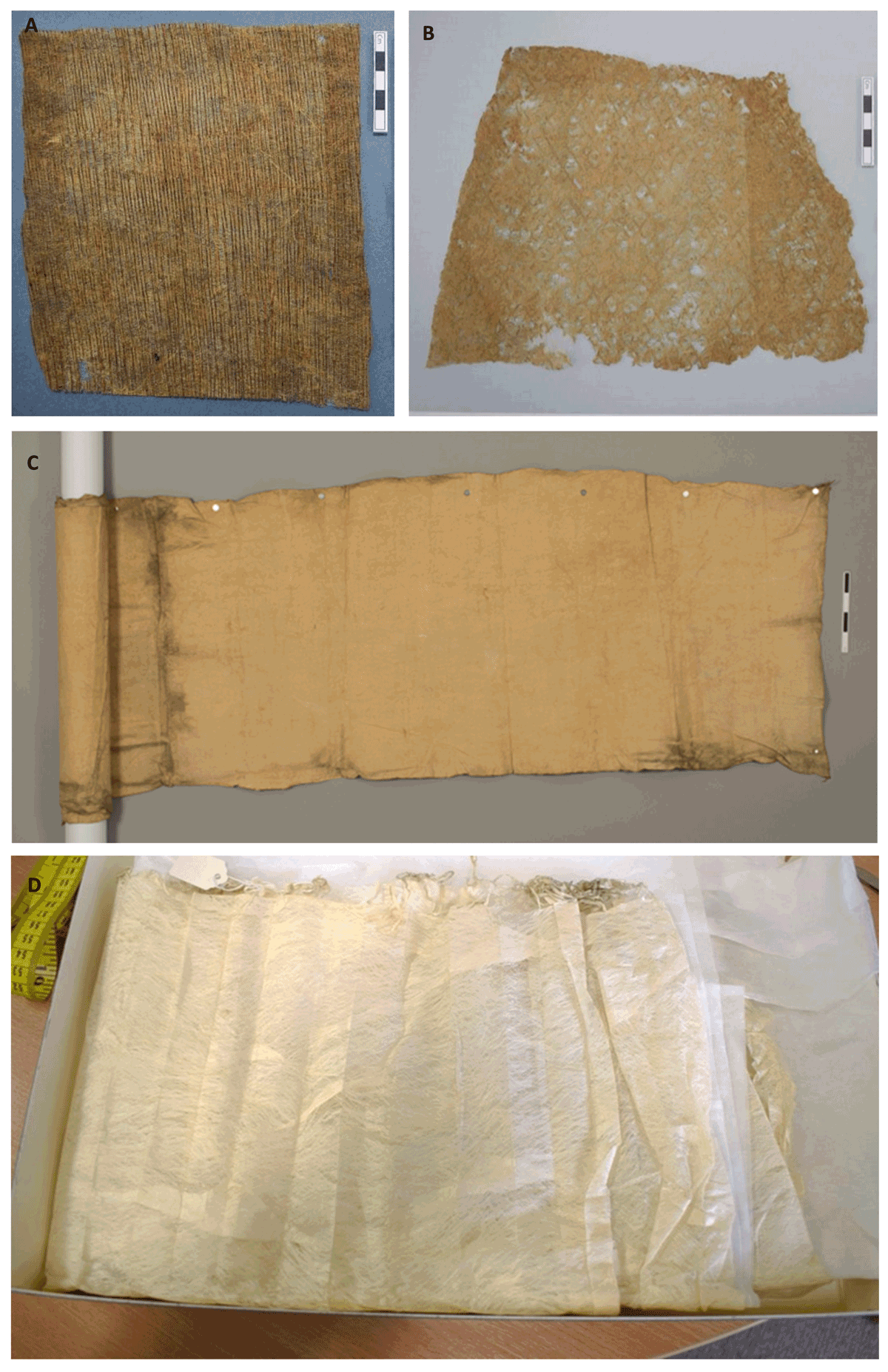
Figure 3
A range of cloths where the amount of beating and beater marks vary to create differing decorative finishes, E380-1; E380-2; E547 and 42888.
Table 1
Case studies giving their accession number, current attribution, size and description.
| Accession Number | Origin (tentative) | Length (mm) | Width (mm) | Description |
|---|---|---|---|---|
| Hunterian | ||||
| E380-1 | Hawaii | 200 | 185 | vertical stripes created by fibres |
| E417-5 | Fiji | 2200 | 590 | black with red border |
| E537 | Fiji | 710 | 1150 | black, brown and cream patterned cloth |
| E591-4 | Polynesia | 1220 | 950 | undyed cloth |
| E592 | Tonga | 800 | 500 | black and red coloured cloth |
| E596-8 | Tahiti | 173 | 153 | uncoloured cloth |
| E603 | Tahiti | 1100 | 670 | plain red-brown cloth |
| E608 | Tahiti | 530 | 510 | plain cream/yellow |
| E611-3 | Hawaii | 2100 | 1200 | mottled grey |
| Kew EBC | ||||
| 42885H | Hawaii | 560 | 230 | plain dark brown |
| 42890 | Hawaii | 2500 | 1860 | stripped brown and dark brown |
| 42947B | Hawaii | 1550 | 1340 | red stripes on yellow background |
| 42955 | Hawaii | 252 | 244 | plain cream |
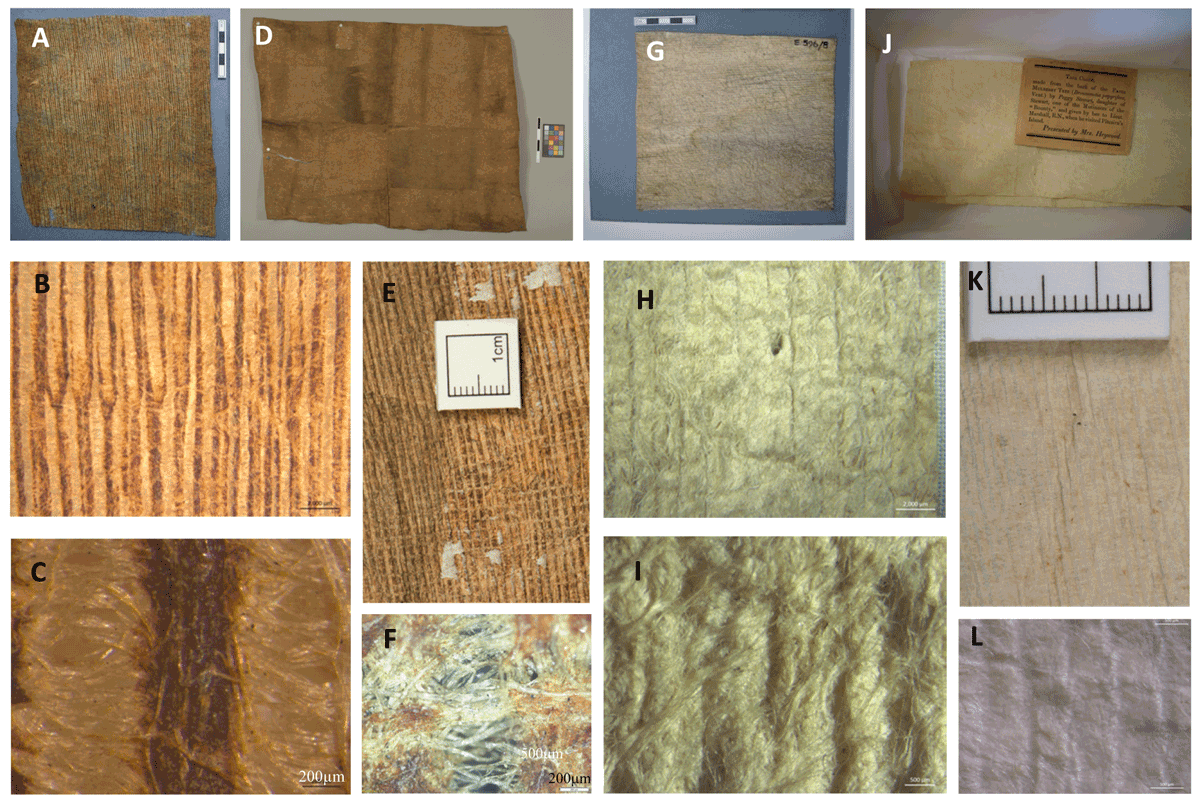
Figure 4
Shows the variations in beating and fibre type can create the appearance of stripes and checks, E380-1 (A–C), E594-1 (D–F), E596-8 (G–I) and 42955 (J–L).
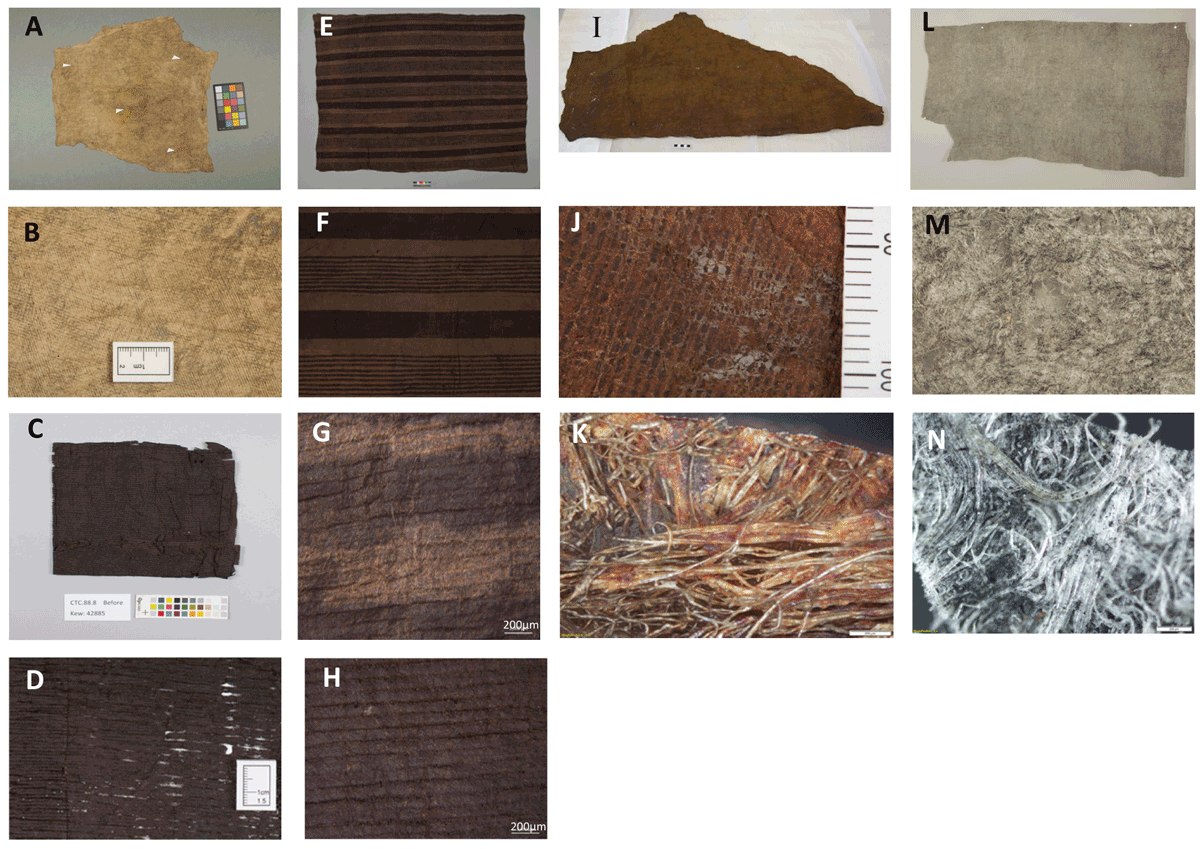
Figure 5
Shows dyed, E608 (A&B), 42885 (C&D), 42890 (E–H), E603 (I–K) and E611-3 (L–N).
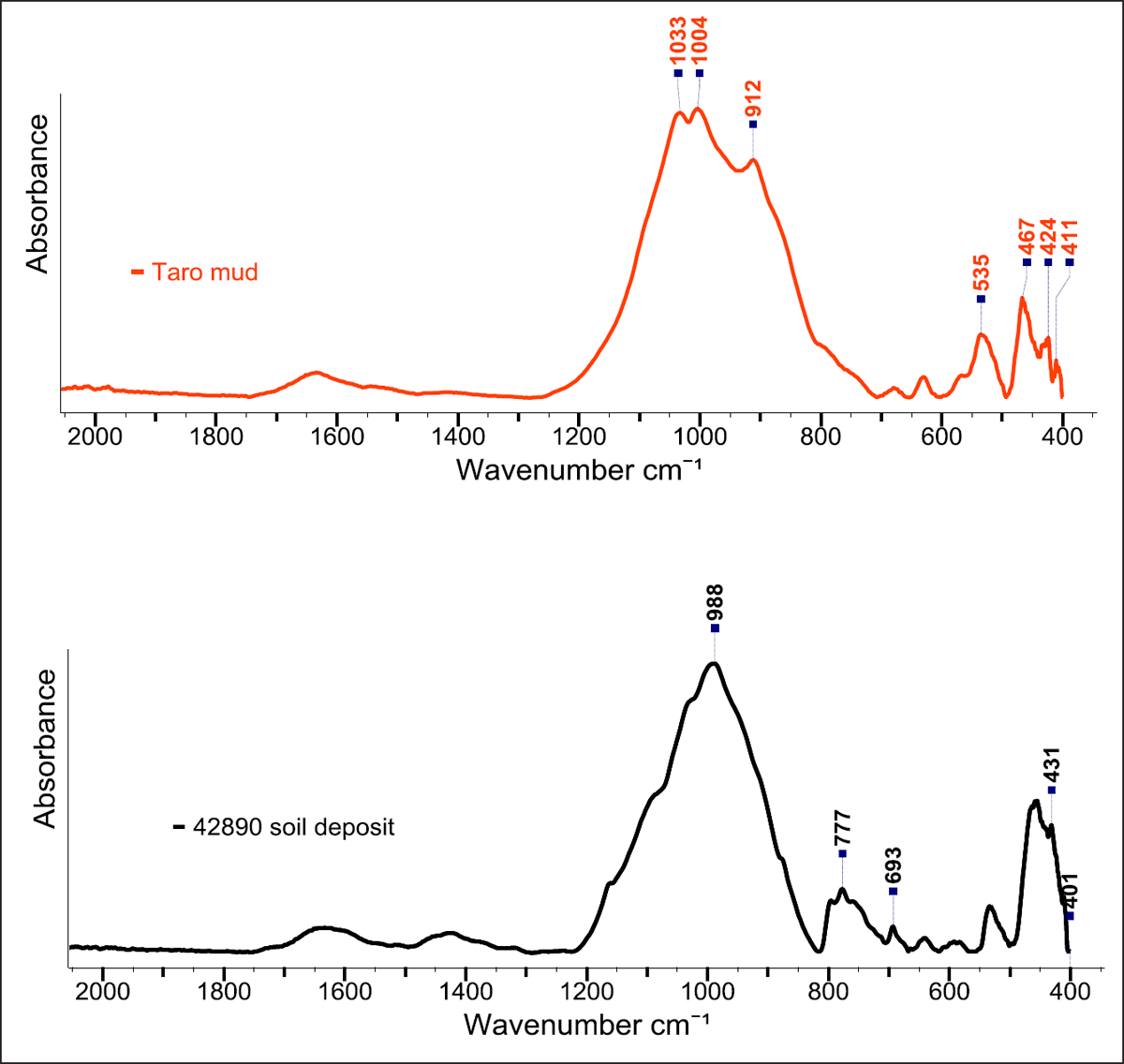
Figure 6
Shows FTIR spectra of the mud samples from the cloth compared to taro swamp mud.
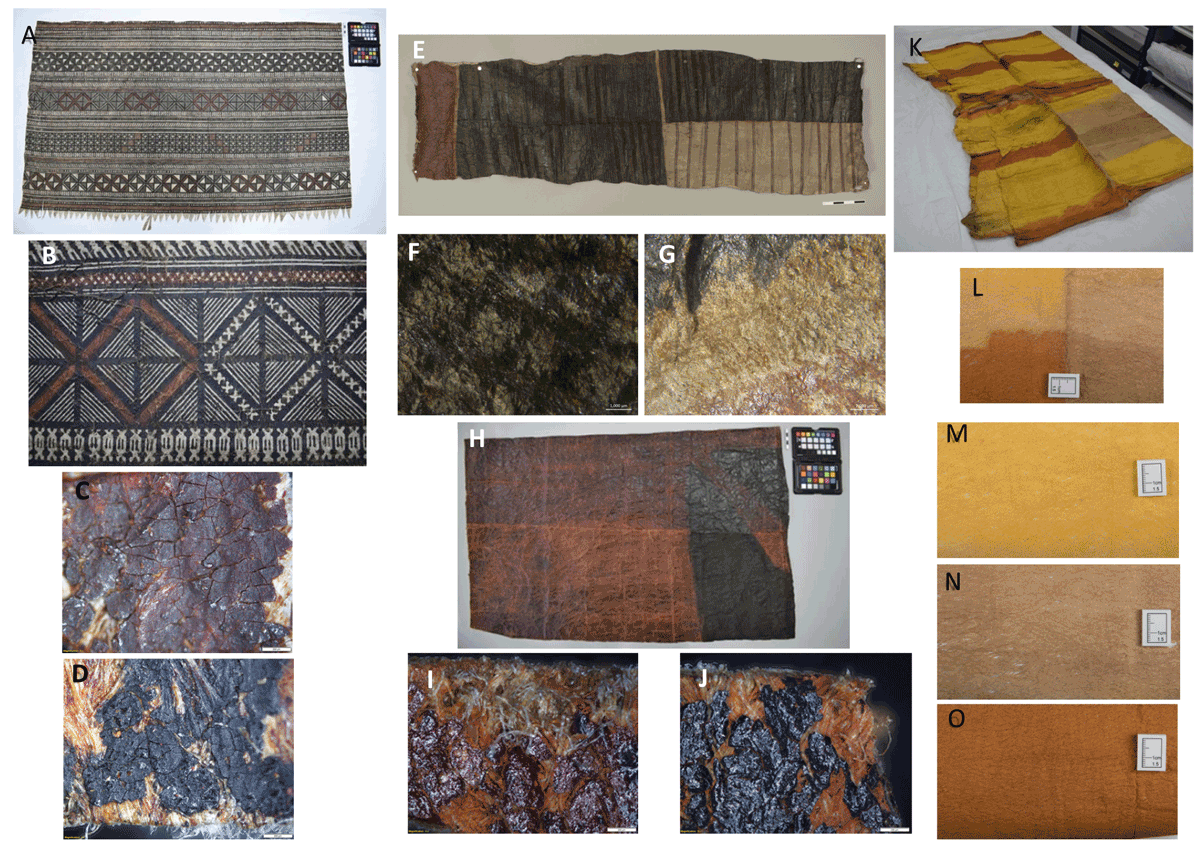
Figure 7
Shows painted and stencilled cloths, E5379 (A–D), E417-5 (E–G), E592 (H–J) and 42947B (K–O).