
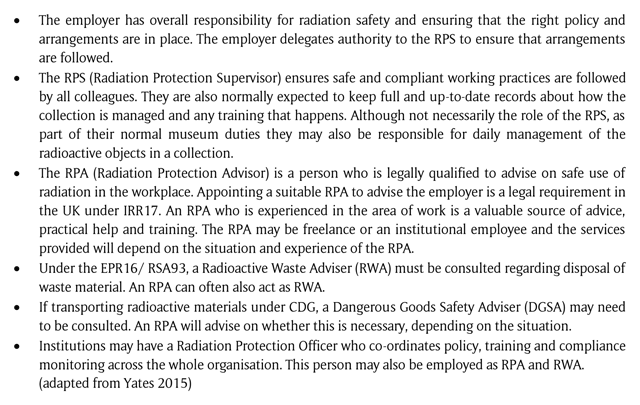
Figure 1
Who’s who in radiation protection.
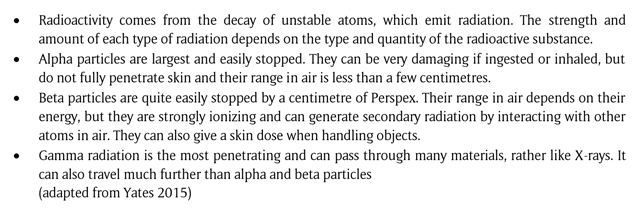
Figure 2
Types of radioactive emissions.
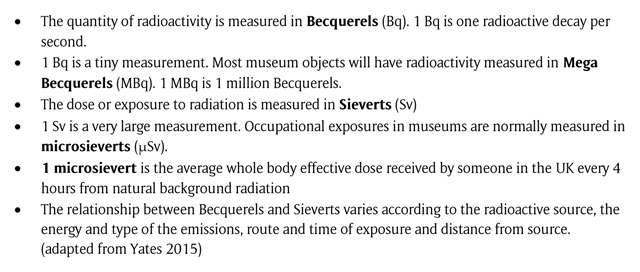
Figure 3
Units.
Table 1
Summary of permit requirements for common museum object types.
| Type of radioactive object | Exempt | Need a permit |
|---|---|---|
| Radium painted SEALED sources, each up to 4 MBq activity | ✓ A museum can have up to 45 items without a permit IF they really are sealed sources (see below) | ✓ For individual objects with more than 4 MBq activity, and if total activity of collection is over 200 MBq |
| Radium painted UNSEALED sources | ✕ | ✓ Need a permit if total activity is over 10 kBq |
| Luminised objects containing solid tritium (3H) or promethium (147Pm) | ✓ Exempt under certain thresholds, but difficult to determine activity without damaging artefact | ✓ If activity cannot be characterised easily, a permit is required (UK Environment Agencies 2011) |
| Aircraft parts or other objects containing magnesium alloy or thoriated tungsten in which the thorium concentration does not exceed 4% by mass | ✓ Unlimited number of objects | ✕ |
| Radioactive geological specimens | ✓ These are “not used for their radioactive, fissile or fertile properties” so they are “out of scope” which means completely exempt from EPR16 (but IRR17 still applies) | ✕ |
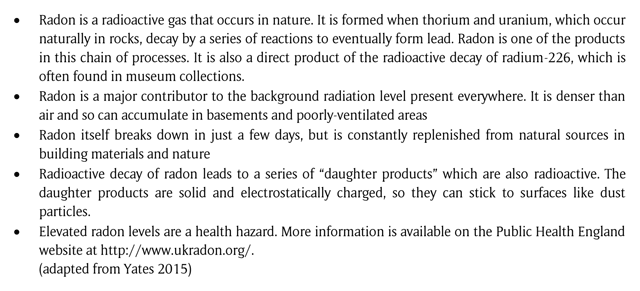
Figure 4
Radon.
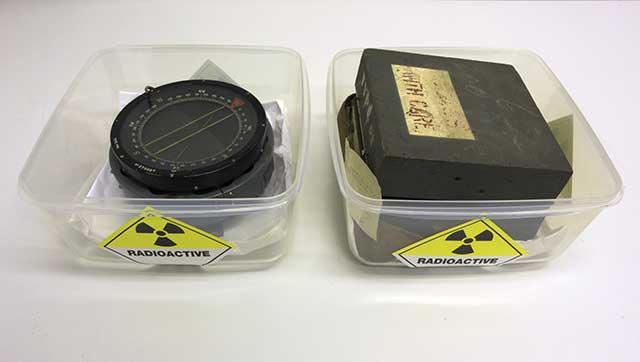
Figure 5
New packaging method in polypropylene trays lined with acid-free tissue. Each container and artefact label is marked with the trefoil sign as required under EPR16. ©Scott Polar Research Institute, University of Cambridge.
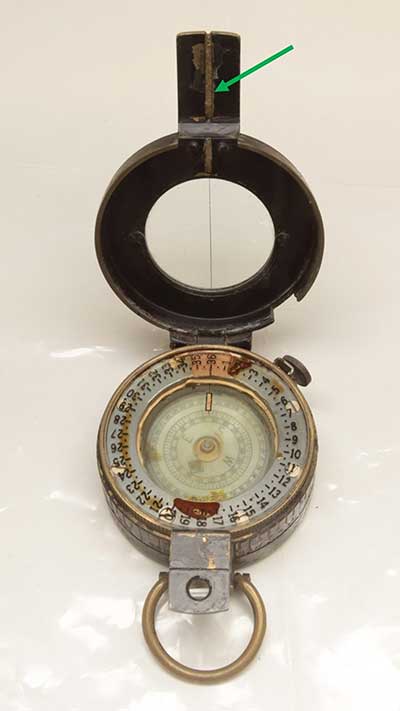
Figure 6
The deteriorating radium-painted compass before treatment. The painted area is a sight line on the inside of the lid, and contamination has spread over the glass. ©Scott Polar Research Institute, University of Cambridge.
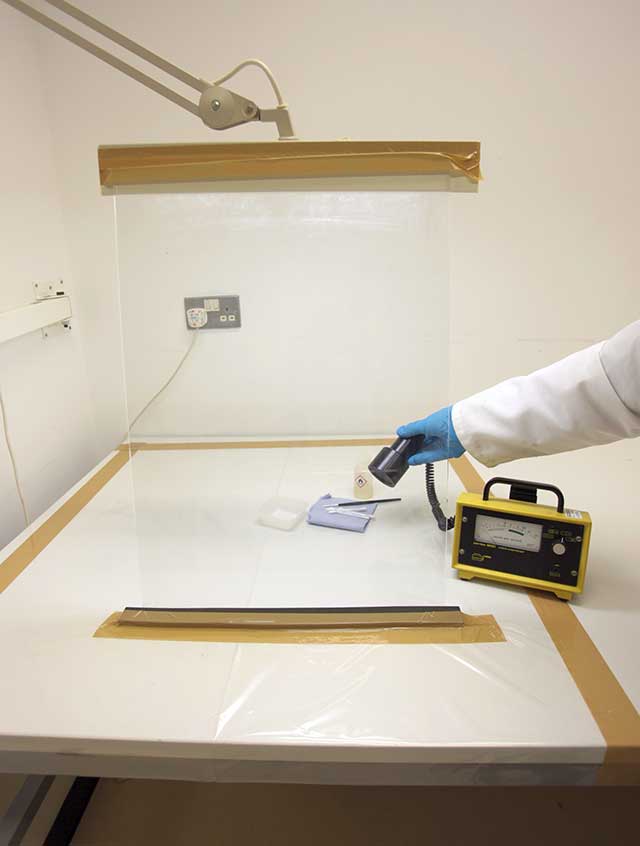
Figure 7
The treatment setup for conservation of the deteriorated radium-painted compass, showing the Perspex shield, table covering, disposable cleaning and treatment materials and radiation monitor to check for contamination. ©Scott Polar Research Institute, University of Cambridge.