
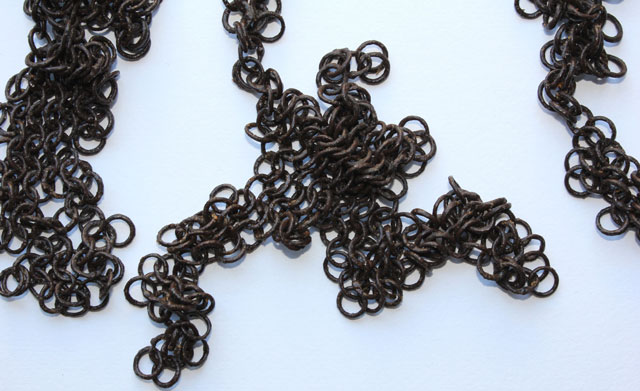
Figure 1
Flexible mail from an archaeological context that suffered extensive ring loss, giving it a ragged appearance. Photograph MA Wijnhoven.
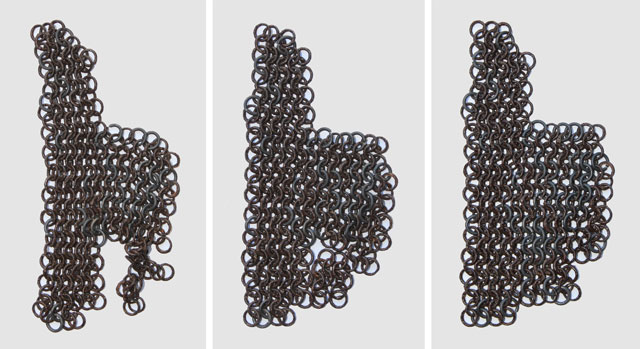
Figure 2
Process of filling in the missing rings. Left: Fragment almost entirely filled in with dummy rings, except for the section on the bottom right of the fragment. Middle: The surviving rings are put back into their original positions. Right: The missing parts are filled in with dummy rings. Photograph MA Wijnhoven.
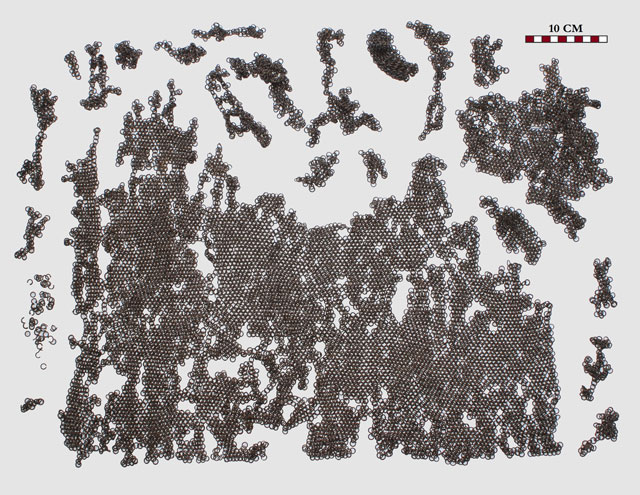
Figure 3
Original condition of the mail remains prior to filling in. Photograph MA Wijnhoven.
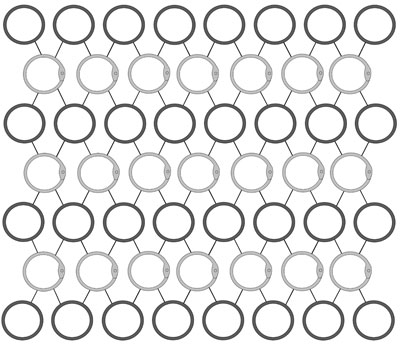
Figure 4
Representation of the 4-in-1 pattern with lines indicating which rings interconnect. The solid rings are shown in dark, and the riveted rings in light grey. Drawing MA Wijnhoven.
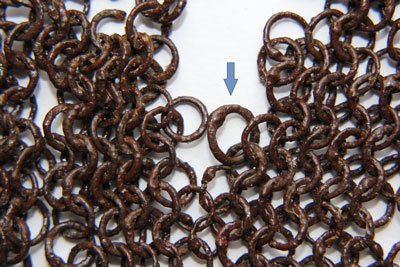
Figure 5
Larger riveted ring among regular sized ones. The larger rings are probably repairs made in antiquity. Photograph MA Wijnhoven.
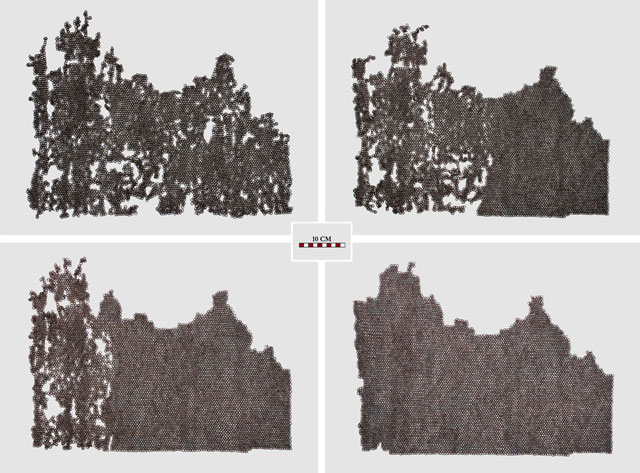
Figure 6
Filling in of the large fragment of mail at various stages. Photograph MA Wijnhoven.
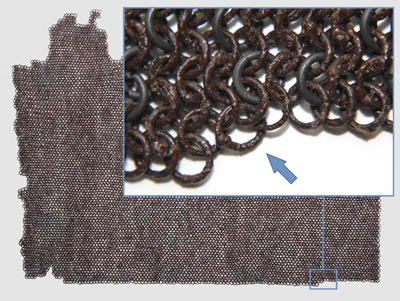
Figure 7
Close-up of the stepped hem with the ring that passes through three rings in the row above instead of the usual two. Photograph MA Wijnhoven.
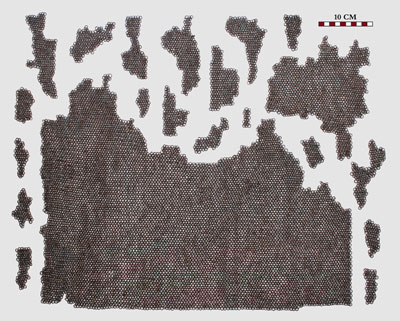
Figure 8
The fragments after filling in. Photograph MA Wijnhoven.
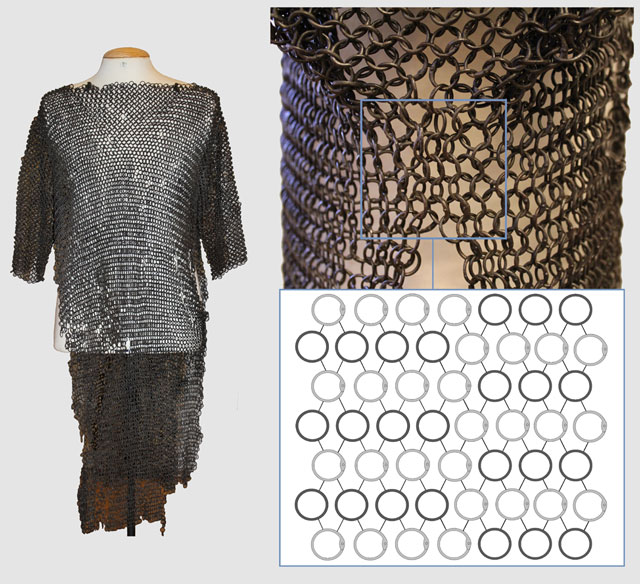
Figure 9
Left: Vimose coat of mail. Right: The rows shift from solid to riveted and vice versa underneath the armpits, downwards in a vertical line. Photograph and drawing MA Wijnhoven.
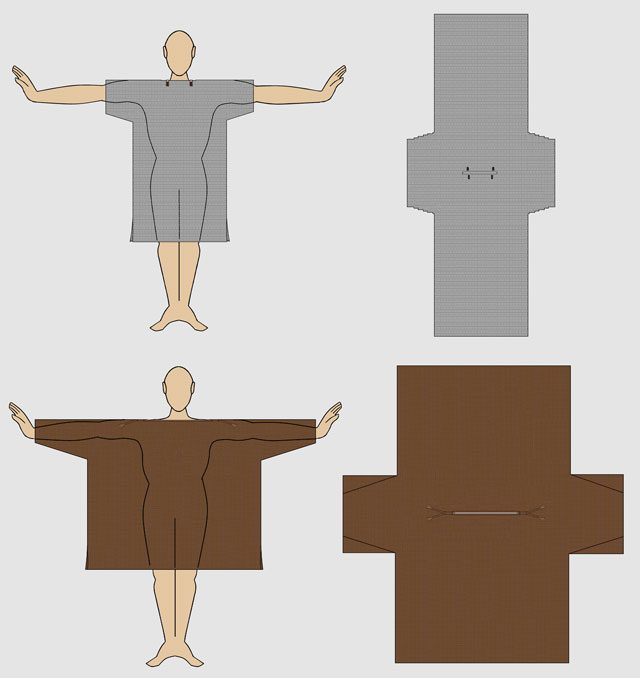
Figure 10
Top: Vimose coat when worn and its constructional lay-out. Bottom: Roman period tunic from Reepsholt, Germany, and its constructional lay-out. Note that the tunic and the coat of mail are constructed in a similar manner. Drawing MA Wijnhoven; Reepsholt tunic adapted from Schlabow 1976: Figure 158.
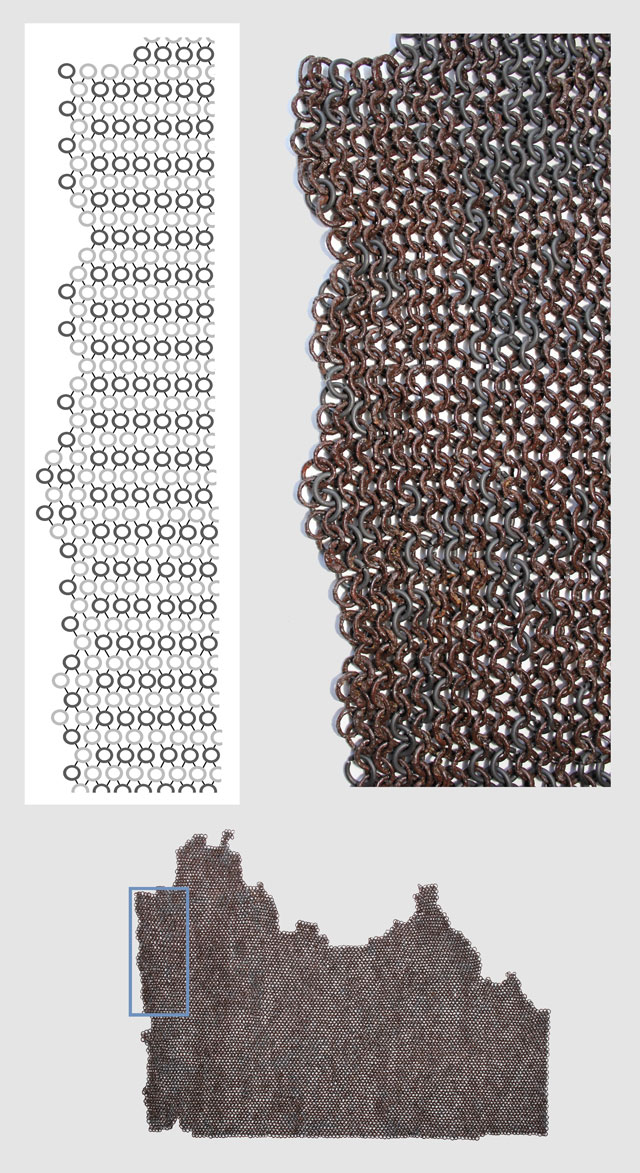
Figure 11
The shift of ring type within the same row can be traced down in a vertical line. Top left: Schematic representation of the section of mail where this shift occurs (solid rings in dark and riveted rings in light grey). Top right: Photographic representation of the same section. Bottom: Location on the larger fragment of mail. Photograph and drawing MA Wijnhoven.
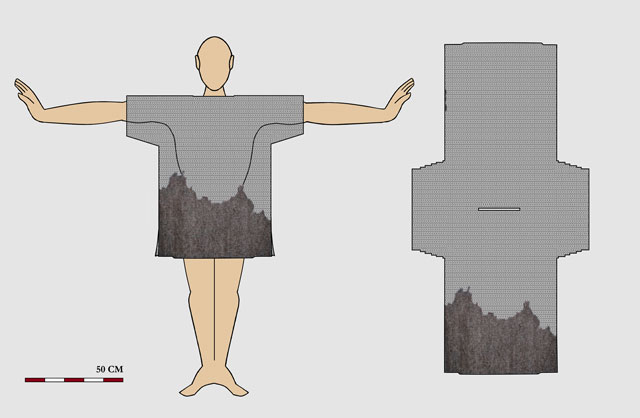
Figure 12
Left: The construction plan of the coat of mail in relation to the large fragment. Note that the majority of the fragment belongs to one side and only a small section comes from the other side. Right: Original location of the large fragment in the coat of mail (with left split and entire hem restored). Drawing MA Wijnhoven.
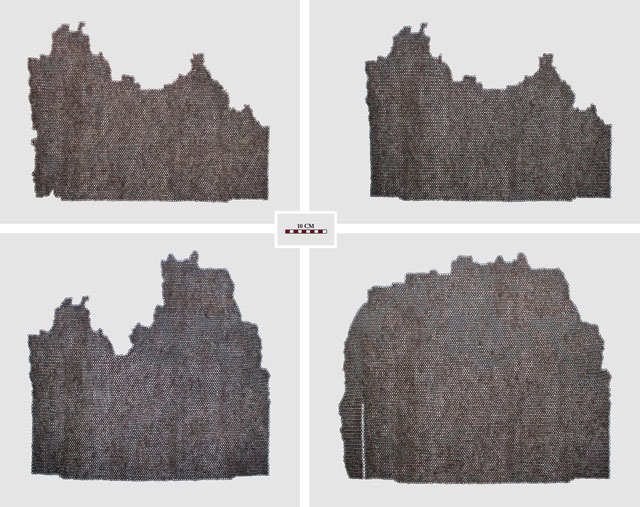
Figure 13
Various stages of the process of connecting the loose filled-in remnants into a single composite piece. Photograph MA Wijnhoven.
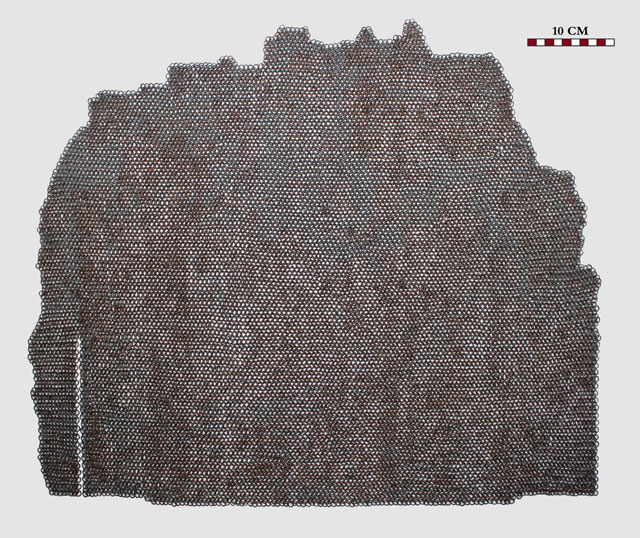
Figure 14
The final result is a single composite fragment of mail. Photograph MA Wijnhoven.
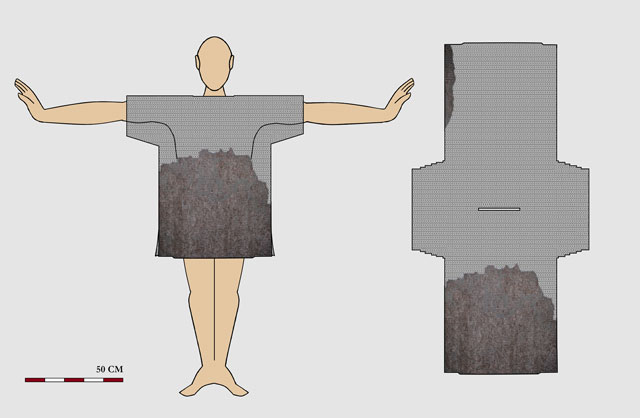
Figure 15
Left: The construction plan of the coat of mail in relation to the composite fragment. Right: Location of the composite fragment in the coat of mail. Drawing MA Wijnhoven.
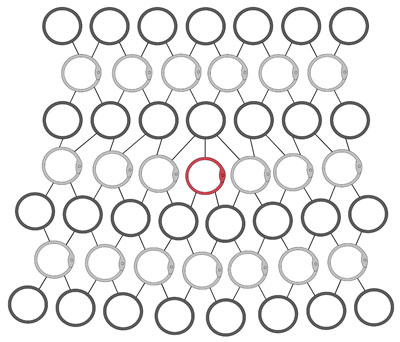
Figure 16
Representation of the use of an idle link to change the number of rings in a row. Drawing MA Wijnhoven.
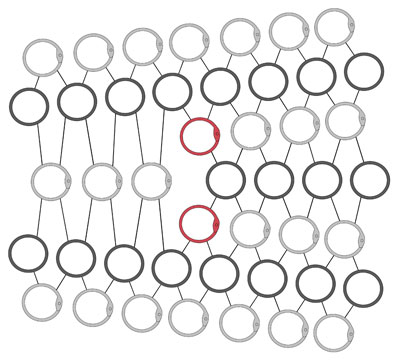
Figure 17
Representation of the use of idle links to change the number of rows. There are two manners in which idle links can be employed to this aim; one leaves a small hole, the other a knot. The former is illustrated here. Drawing MA Wijnhoven.