
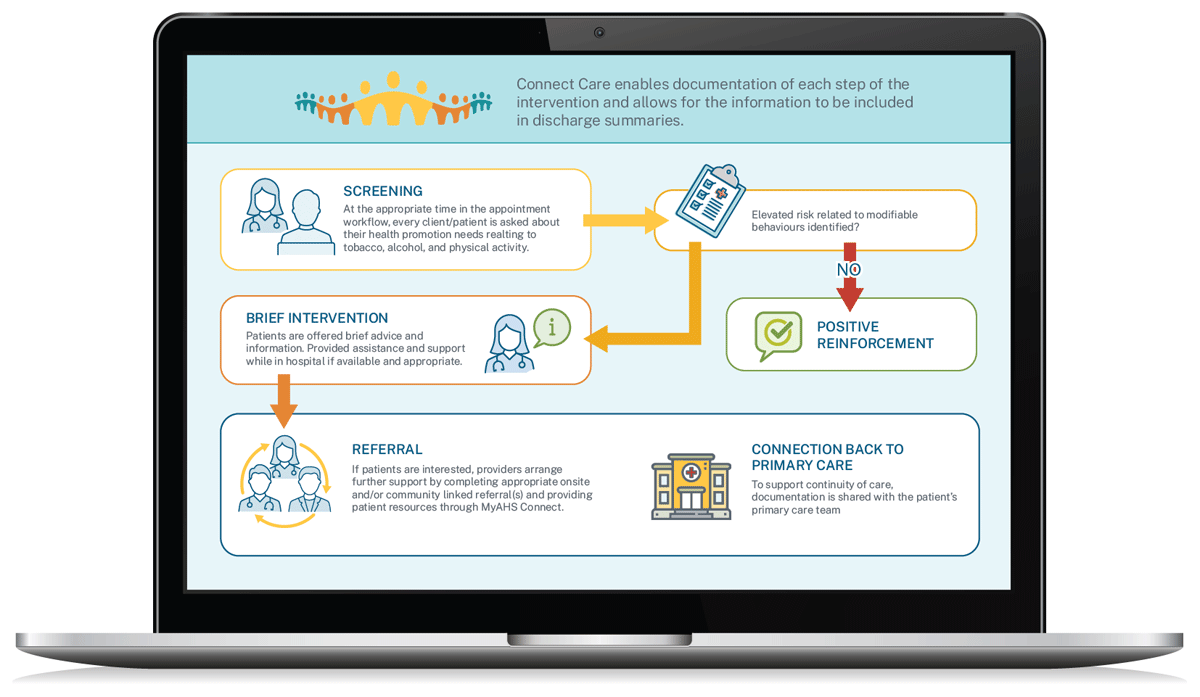
Figure 1
SBIR workflow.
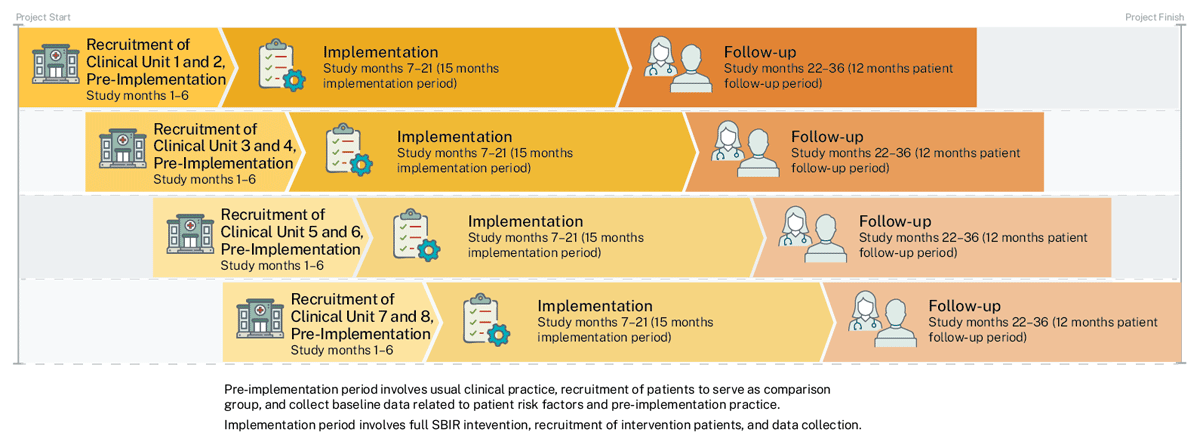
Figure 2
Overview of Intervention Implementation Design.
Table 1
Data Matrix.
| OUTCOME CATEGORY | OUTCOMES | MEASURES | DATA SOURCES | DATA COLLECTION METHODS |
|---|---|---|---|---|
| Pre-implementation Phase (6 Months Control Period) | ||||
| Baseline, for comparison of SBIR (Screening Brief Intervention, and Referral) effectiveness | Tobacco consumption, alcohol intake, and physical activity levels | Proportion of patients with tobacco consumption, alcohol misuse, and insufficient physical activity levels | Primary data collection from comparison patient group | Paper-based self-administered questionnaire |
| Pre-implementation (baseline) delivery of SBIR elements by clinical team members. | Providers’ baseline delivery of SBIR elements to patients | Proportion of patients being screened, advised, and referred for each risk factor | Connect Care documentation (electronic health records) | Connect Care data extraction, monthly time points for six months |
| Baseline | SBIR implementation readiness | Leadership engagement/support, resources for SBIR, providers’ motivation | Primary data collection from providers and organizational leaders | Self-administered questionnaire, interview, and observation |
| Implementation Phase (15 Months Intervention Period) | ||||
| Implementation | Providers’ delivery of SBIR to patients: Reach or penetration of SBIR to patients; providers, intervention adherence | Proportion of patients being screened, advised, and referred for each risk factor | Connect Care documentation (electronic health records) | Connect Care data extraction, monthly time points for 15 months |
| Implementation | Acceptability, appropriateness, and feasibility of SBIR implementation | Proportion of providers being agreed or strongly agreed that SBIR implementation is acceptable, appropriate, and feasible in clinical settings | Primary data collection from providers who implemented SBIR | Survey using a validated tool at six and 12 months of implementation initiated |
| Implementation | Adherence or adaptation to SBIR implementation and real-world practice change challenges/barriers | Whether providers achieve the goal of screening all patients for the three risk factors and offering brief advice and referral to all eligible patients and if not, why; whether any adaptations were made in implementation, what they were, and why adaptions were made. | Primary data collection from providers who implemented SBIR | Regular conversations/interactions during regular meetings between clinical and research teams using a standardized template. |
| Implementation | Factors influencing implementation | Unit- and organization-related barriers/facilitators or contextual factors to SBIR implementation | Primary data collection from clinical and administrative leadership (e.g., nurses, unit managers, implementation facilitators) | In-depth interviews at three and nine months after implementation initiated |
| Patients follow ups: Patients’ experience and perspective | Patient’s knowledge and experience (intervention patient groups) | knowledge about the impacts of the risk factors on health risks and the available services/programs for behavior change; acceptability, perceived stigma, and any challenges with SBIR process or related materials; barriers/facilitators to risk factor-related behavior change. | Primary data collection from patients | Follow up in-depth telephone interviews with a small sample at one months of index hospitalization discharge/visit (recruitment or intervention receive time). |
| Patient follow ups: Effectiveness of SBIR intervention | Patients’ behavior change status for both control and intervention patient groups | Intention to change behavior, awareness about the problem, commitment to action, uptake to referral programs, active modification of behavior (such as quit attempt, reduce/quit tobacco use, reduce/stop alcohol intake, and initiate/increase physical activity). Covariates for effectiveness outcomes: Sociodemographic/socioeconomic (such as age, sex, marital status, ethnicity, education, employment, income, rurality, immigration-related factors) and overall physical and mental health status. | Primary data collection from patients. | Follow-up telephone interview at six months of index hospitalization discharge/visit. Data collection tool will include the questionnaires guided by the Prochaska model of change process and the risk factor screening questions included in the Connect Care |
| Healthcare resource use | Hospital readmissions and emergency visits for both control and intervention patient groups | Hospital readmissions and emergency visits during the year after index hospitalization discharge /visit. Reasons/diagnosis for readmissions and emergency visits, and family physician/primary care visits within 1-year of discharge/visit and diagnoses/comorbidities at the time of recruitment to 1-year of index hospitalization discharge/visit. | Administrative health databases: Discharge Abstract Database, National Ambulatory Care Reporting System, and physician claim databases | Data from multiple databases will be accessed through Data and Analytics. and will be linked with the follow-up interviews using the personal health numbers. |
| Post-implementation (after Intervention Period) | ||||
| Data collection will continue up to one month post-implementation for patient’s knowledge and experience outcomes, up to six months post-implementation for patient’s behavior change outcomes, and up to one-year post-implementation for healthcare resource use outcomes. | ||||