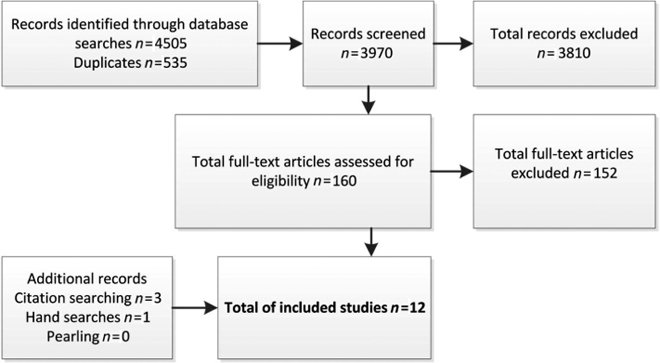
Figure 1.
Flow chart of included and excluded studies.
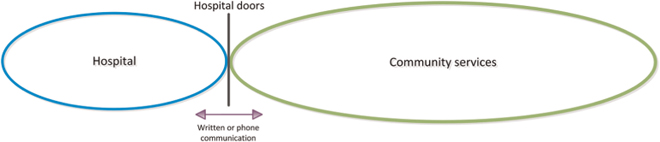
Figure 2.
Diagram of Virtual Interface Model.
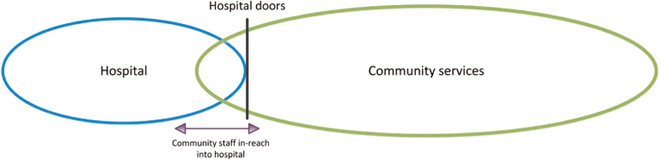
Figure 3.
Diagram of In-reach Interface Model.
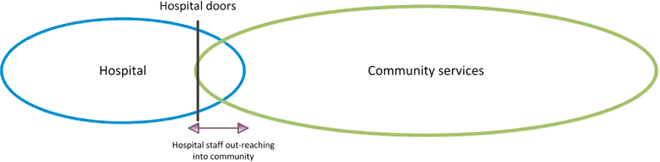
Figure 4.
Diagram of Out-reach Interface Model.
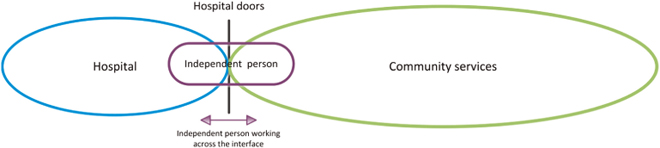
Figure 5.
Diagram of Independent Interface Model.
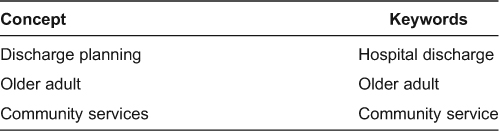
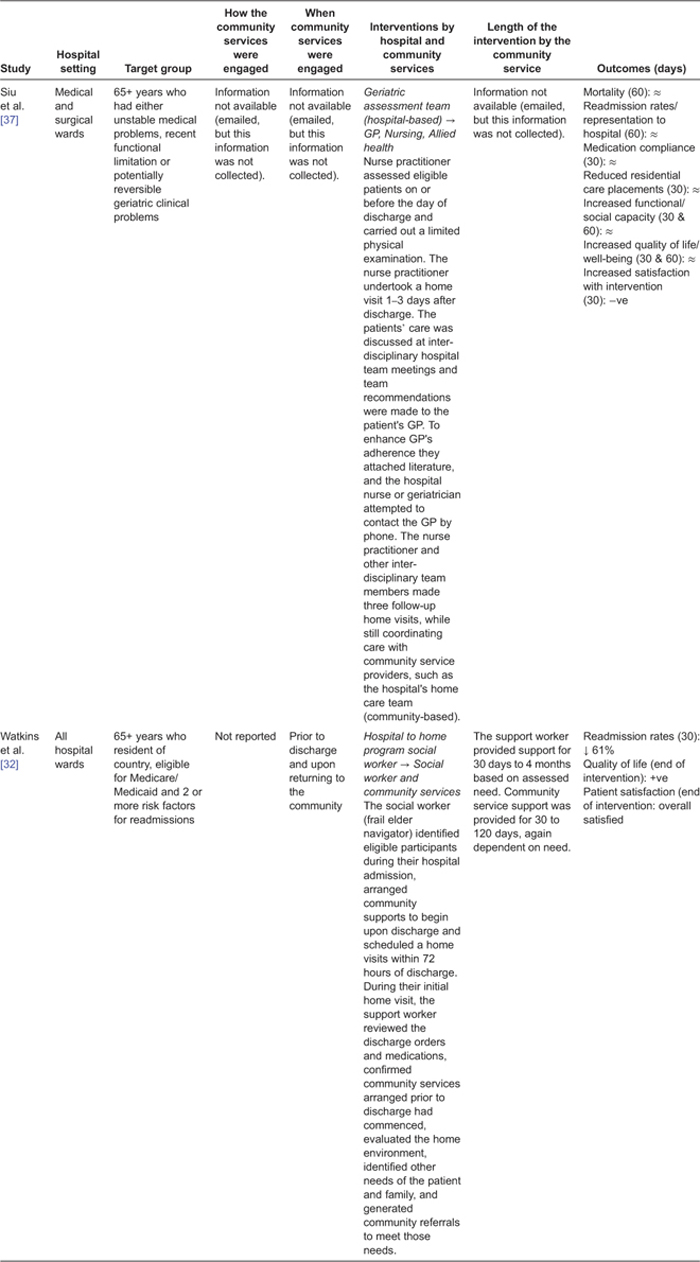
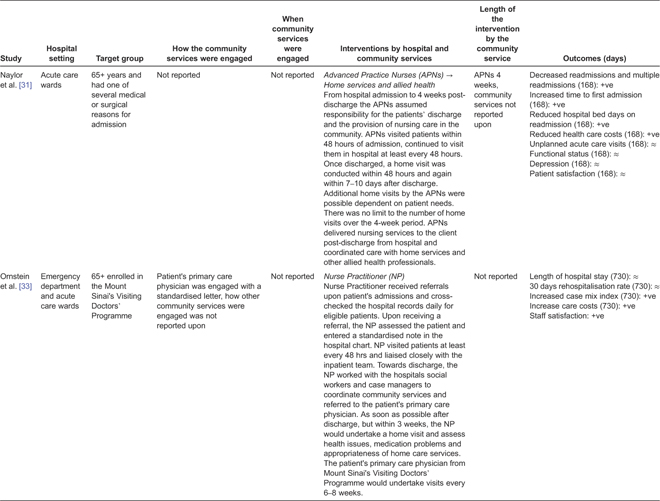
Table 3.
Characteristics of studies included in this review
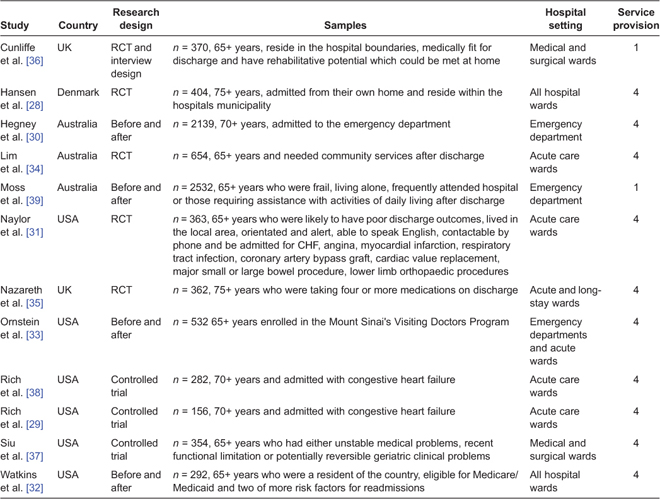
RCT, randomised controlled trial; CHF, congestive heart failure.
Key: Community service provision
1. Those that provide interventions to maintain or optimise functional capacity and independence.
2. Services that provide slow stream rehabilitation.
3. Services that provide case management role situated in the community.
4. Those that provide planned, supported transfer of patients from hospital to community.
Table 4.
Quality scores of retrieved articles

Key to scoring the McMasters quantitative critical appraisal tool: All domains, except three, were scored. 1 for yes, 0 for no or not addressed, and the item was deducted from the overall score for not applicable.
1. Was the purpose stated clearly?
2. Was the relevant background literature reviewed?
3. Design (not scored)
4. Sample
4a. Was the sample described in detail?
4b. Was the sample size justified?
5. Outcomes
5a. Were the outcome measures reliable?
5b. Were the outcome measures valid?
6. Intervention
6a. Intervention was described in detail?
6b. Contamination was avoided?
6c. Cointervention was avoided?
7. Results
7a. Results were reported in terms of statistical significance?
7b. Were the analysis method(s) appropriate?
7c. Clinical importance was reported?
7d. Drop-outs were reported?
8. Conclusion was appropriate, given the study methods and results.
Table 5.
Summary of studies within the Virtual Interface Model
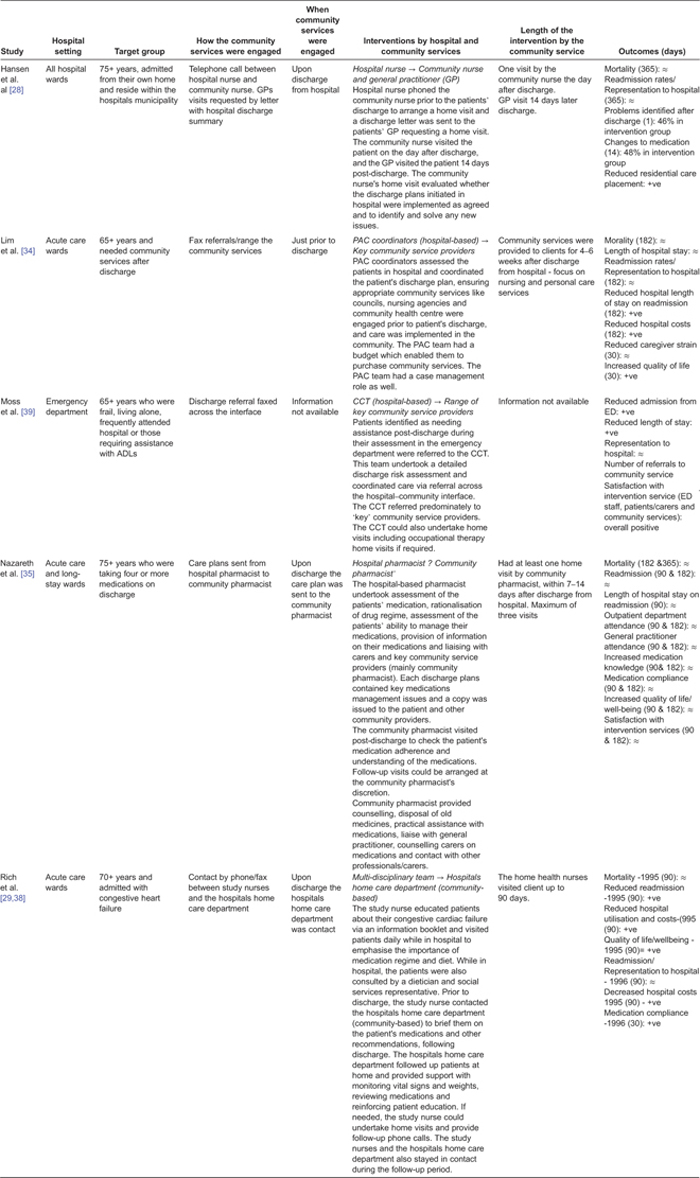
Key
Significantly positive +ve.
No significant difference≈.
Significantly negative −ve
Decreased but not analysed statistically ↓.
Table 6.
Summary of studies within the In-reach Interface Model
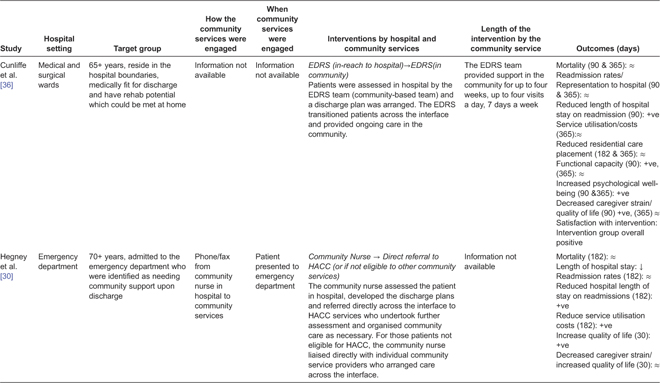
Key
Significantly positive +ve.
No significant difference≈.
Significantly negative −ve.
Decreased but not analysed statistically ↓.