
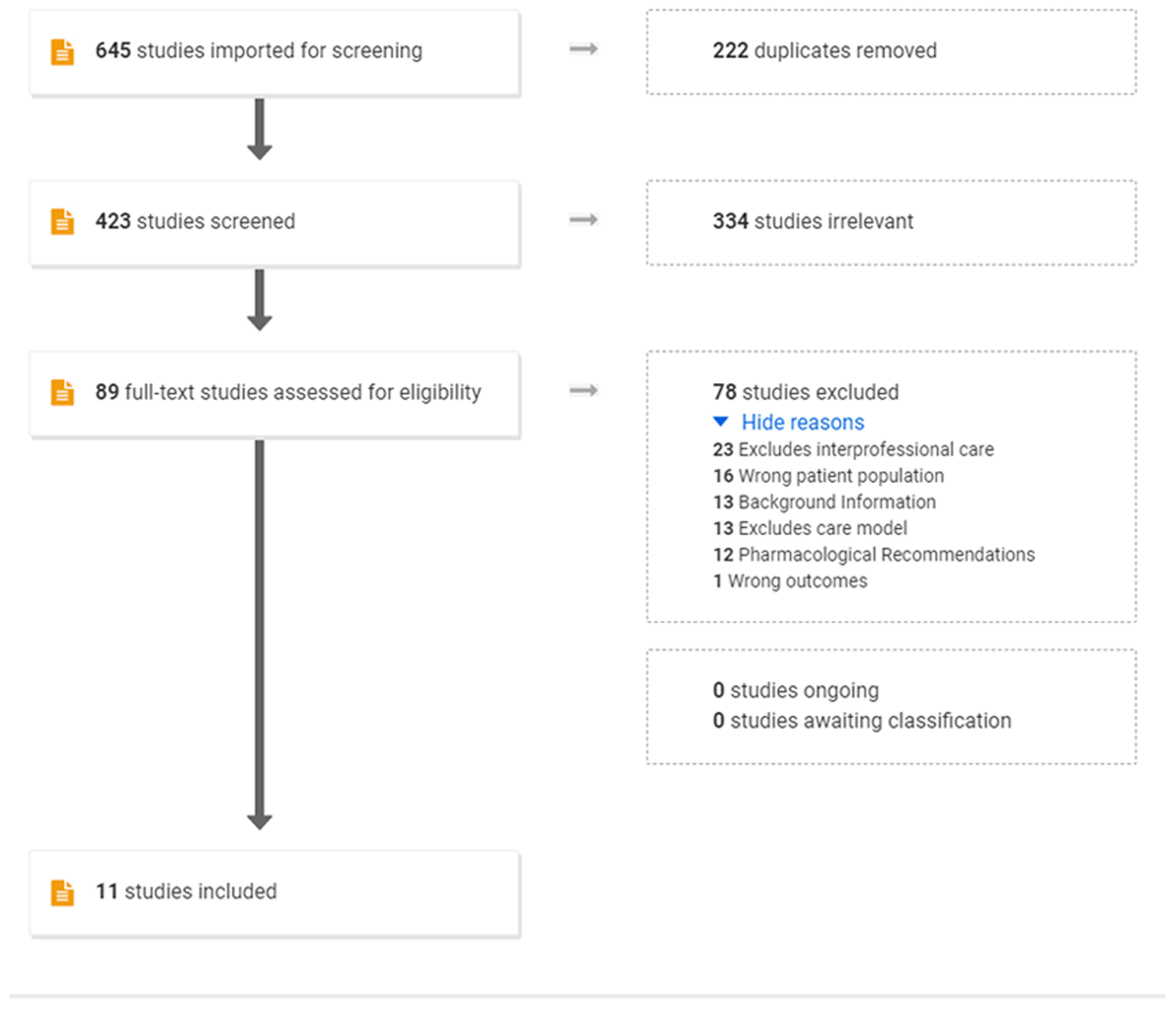
Figure 1
Preferred reporting items for systematic reviews and meta-analyses (PRISMA-ScR)–Scoping Review Extension flow diagram [32].
Table 1
Interprofessional Care Delivery Programs for pregnant through postpartum individuals who use substances.
| INTERPROFESSIONAL PROGRAM, COUNTRY, & PUBLICATION DATE | PROGRAM TEAM MEMBERS | DESCRIPTION OF STUDY & DATA COLLECTION METHOD | STUDY PARTICIPANTS | PROGRAM AND PATIENT OUTCOME FINDINGS |
|---|---|---|---|---|
| Collaborative Outreach and Adaptable Care at Hallmark Health (COACHH) program. United States 2019. [33]. | Nurse practitioner, social worker, executive director, community health worker. | Qualitative. Interviews. | COACHH program team members (n = 40). |
|
| Eight multiservice wraparound programs. Canada. 2021. [35]. | Varied among sites but included: Obstetrician, midwife, nurse, nurse practitioner, social worker, addictions counsellor, family physician, psychiatry, case manager, art therapist, music therapist, dental hygienist & cultural liaison. | Mixed Methods. Survey & Interviews. | Service partners (n = 60) and program staff (n = 108) from 8 different programs. |
|
| Center for Addiction and Pregnancy (CAP) co-location program. United States. 1996. [20]. | Obstetrician, pediatrician, midwife, addictions counsellor, lactation consultant, | Program retrospective report. Chart review. | CAP program patients (n = 100). |
|
| TIDES collaborative care program. United States. 2021. [35]. | Obstetrician, peer support, addictions counsellor, family physician, psychiatry, spiritual care. | Evaluation report. Chart review. | Patients from TIDES (n = 57 pregnant). |
|
| Comprehensive care approach model. United States. 2022. [36]. | Obstetrician, pediatrician, social worker, addictions counsellor, psychiatry, psychology, case manager, anesthesiology. | Best Practice Guideline. Commentary. | NA |
|
| Multidisciplinary clinic offering integrated, holistic care. United Kingdom. 2003. [37]. | Obstetrician, pediatrician, midwife, nurse. | Program report. Chart Review. | Patients from the integrated clinic (n = 146). |
|
| The Women and Newborn Drugs and Alcohol Services (WANDAS) program. 2016. Australia. [38]. | Obstetrician, pediatrician, midwife, social worker, addictions counsellor, psychiatry. | Program report. Chart Review. | Patients from the WANDAS program (n = 354). |
|
| Toronto Centre for Substance Use in Pregnancy (T-Cup) program. Canada. 2011. [39]. | Obstetrician, pediatrician, nurse, social worker, addictions counsellor, family physician, case manager, anesthesiologist. | Retrospective Study. Chart Review. | Patients from the T-Cup program(n = 121). |
|
| Wraparound Programs. Canada. 2020. [5]. | Varied between sites but included: Obstetrician, midwife, nurse, nurse practitioner, social worker, addictions counsellor, family physician, psychiatry, case manager, art therapist, music therapist, dental hygienist & cultural liaison. | Mixed Methods. Interview and Survey Data. | Service partners (n = 60) and program staff (n = 108) from 8 different programs. |
|
| Integrated Care Models. Canada & United States. 2018. [40]. | Varied between sites but included: Obstetrician, pediatrician, midwife, nurse, nurse practitioner, addictions counsellor, family physician, psychiatry, peer support, psychology, pharmacist, case manager, patient navigator, childcare, pharmacist, occupational therapist, nutritionist, resource coordinator. | Qualitative Phenomenological. Interviews. | Program leaders from across North America (n = 23). |
|
| Comprehensive Care Program. Canada. 1984. [41]. | Obstetrician, pediatrician, addictions counsellor, psychology, child development educators. | Evaluation report. Chart Review. | Prenatal patients (n = 219) and Pre-pregnancy obstetrical patients (n = 191). |
|
Table 2
Care Model Approaches.
| STUDY | CO-LOCATION OF SERVICES | CULTURAL CARE | TRAUMA INFORMED | HARM REDUCTION | PARTNERSHIP WITH OTHER AGENCIES | GROUP/PEER SUPPORT |
|---|---|---|---|---|---|---|
| Collaborative Outreach and Adaptable Care at Hallmark Health (COACHH) [33]. | ✓ | |||||
| Eight multiservice wraparound programs [34]. | ✓ | ✓ | ✓ | ✓ | ✓ | ✓ |
| Center for Addiction and Pregnancy (CAP) [20]. | ✓ | ✓ | ||||
| TIDES collaborative care program. [35]. | ✓ | ✓ | ✓ | |||
| Comprehensive care approach model. [36]. | ✓ | |||||
| Multidisciplinary clinic. [37] | ✓ | ✓ | ||||
| The Women and Newborn Drugs and Alcohol Services (WANDAS) program [38]. | ✓ | ✓ | ✓ | |||
| Toronto Centre for Substance Use in Pregnancy (T-Cup) [39]. | ✓ | ✓ | ✓ | |||
| Eight multiservice wraparound programs. [5]. | ✓ | ✓ | ✓ | ✓ | ✓ | ✓ |
| Integrated Care Models [40]. | ✓ | |||||
| Comprehensive Care Program [41]. | ✓ | ✓ | ✓ |
Table 3
Reported Care Provider Characteristics.
| STUDY | NON-JUDGMENTAL | TRUST | RESPECT | SHARED DECISION MAKING | RELATIONAL |
|---|---|---|---|---|---|
| Collaborative Outreach and Adaptable Care at Hallmark Health (COACHH) [33]. | ✓ | ✓ | ✓ | ✓ | ✓ |
| Eight multiservice wraparound programs [34]. | ✓ | ✓ | ✓ | ||
| Center for Addiction and Pregnancy (CAP) [20]. | None reported. | ||||
| TIDES collaborative care program [35]. | ✓ | ||||
| Comprehensive care approach model [36]. | ✓ | ||||
| Multidisciplinary clinic [37]. | ✓ | ||||
| The Women and Newborn Drugs and Alcohol Services (WANDAS) program [38]. | ✓ | ✓ | |||
| Toronto Centre for Substance Use in Pregnancy (T-Cup) [39]. | ✓ | ||||
| Eight multiservice wraparound programs. [5]. | ✓ | ✓ | ✓ | ||
| Integrated Care Models [40]. | ✓ | ✓ | |||
| Comprehensive Care Program [41]. | None reported. | ||||