
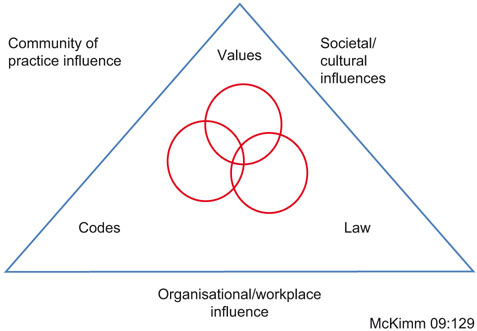
Figure 1.
McKimm’s model of professional identities.
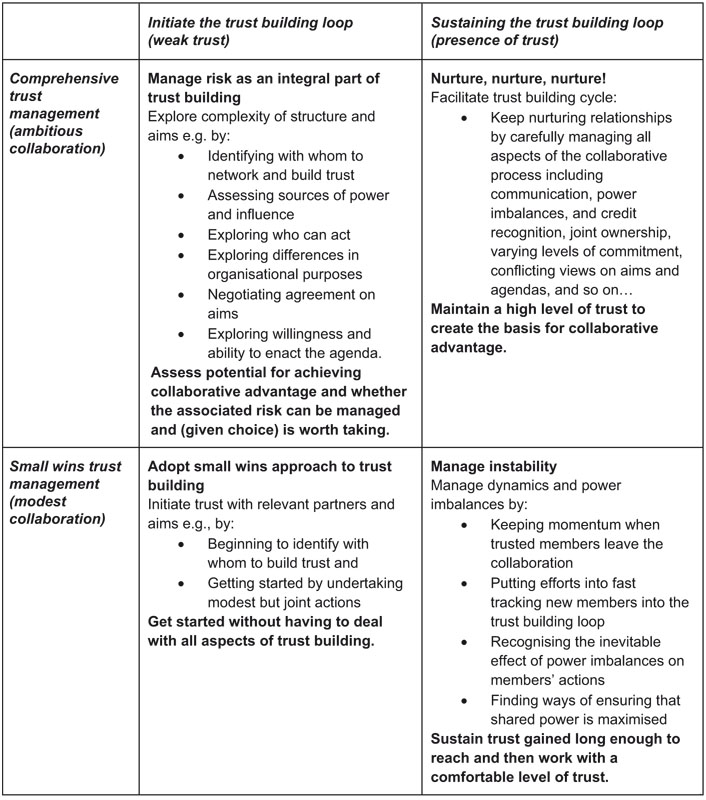
Figure 2.
Huxham’s trust quadrants [23].

Figure 3.
The conceptual framework.
Table 1.
Summary of themes that emerged from the first stage coding.
| Sayings | Doings | Relating | |
|---|---|---|---|
| Leader | Language of influence used | Multiple attempts at single communication | Broker between individuals who disagree |
| Personal legitimacy questioned | Overwhelmed | 1:1 relationships | |
| Self critique | Did tasks that others should do | Seek reassurance | |
| Overwhelmed | Rescue others through personal task orientation | Enjoy working with people similar to me | |
| Empower, value and celebrate others | Small meetings and 1:1 communication | Importance of trust | |
| Dishonest by silence | Complicit by not airing grievances | Frustration at others criticisms of one another, unable to surface it so complicit | |
| Lots of TRYING to manage process | Unable to delegate to volunteers | ||
| Group | Mixed messaged leading to confusion | Avoidance | Easy relationships when all agree |
| Contradictions in a short space of time | No power in organisations so no changes | Covert criticisms, face to face pleasantries | |
| Distancing from tasks or one another | Slow progress | Difficult email communications | |
| Covert criticisms | Apathy | Lack of trust | |
| Lengthy inclusive debates |
Table 2.
| Sayings | Doings | Relatings | |
|---|---|---|---|
| Single professional identities | Publically supportive Privately discounting | Covert behaviour that was unsupportive of others Privileged discourses from some professionals | Superficial—personally fine, professionally issues. Hierarchical |
| Multiple, boundary spanning professionals | Criticised if not able to ‘bridge’ or boundary span Questioned other people’s rights to be members Raised the lack of legitimacy or power that individuals have | People not working across organisational boundaries Used the One Workforce Tool to mediate new expertise | Duplicitous Political |
| Relationships, communication and trust | Espoused the values of trust and openess | Lack of skill Lack of relational agency Did not enact trust and openness | Lacked authenticity Surface level communications |
| Collaborative advantage | Awareness of the concept and how to achieve it | Unable to enact as blocked by lack of trust, legitimacy and boundary spanning skills | Inert relationships |