
Table 1
Research questions.
| RESEARCH QUESTIONS | |
|---|---|
| Needs & Experiences | What are the perceived health and wellbeing needs of HSC service users and the people who support them at home? |
| What are the experiences of service users and the people who support them at home, when accessing or providing HSC? | |
| Relationships | How do relationships, between service users and the people who support them at home, influence health and wellbeing and experiences of HSC? |
Table 2
Key objectives.
| RESEARCH AIM |
|---|
| To understand the health and wellbeing needs, relationships, and experiences of HSC service users and the people who support them at home (key stakeholders). |
| RESEARCH OBJECTIVES |
| 1. To explore the health and wellbeing needs of key stakeholders in HSC. |
| 2. To explore key stakeholders’ experiences of HSC. |
| 3. To investigate how health and wellbeing needs influence experiences of HSC. |
| 4. To explore relationships and connections between key stakeholders in HSC. |
| 5. To investigate the significance of key stakeholder relationships on health and wellbeing. |
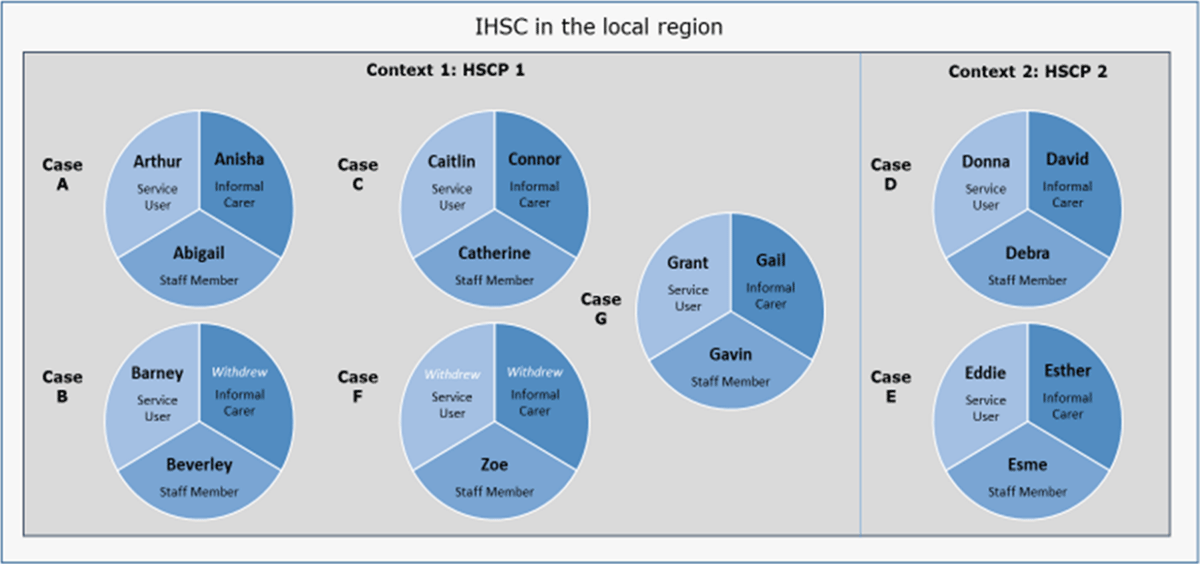
Figure 1
Contextual sample and cases.
Table 3
Relevant background information for participants and their cases.
| CASE | PARTICIPANT GROUP | PARTICIPANT | PARTICIPANT/CASE BACKGROUND INFORMATION |
|---|---|---|---|
| A | Service user | Arthur | Arthur is retired and has early-onset Dementia. Although Arthur can move around independently, he struggles with sensory overload and impairment. He often forgets to attend to some of the functional tasks that help him to maintain his health and wellbeing (e.g., taking his medication, personal hygiene, maintaining an adequate fluid intake). He lives with his wife Anisha in the family home. |
| Informal carer | Anisha (Wife) | Anisha is living with multiple long-term conditions and helps Arthur with prompting for medication, washing, dressing, meal and drink preparation and access to HSC services. They have two daughters who do not live near them and Anisha visits her daughters regularly whilst Arthur remains at home. | |
| Staff member | Abigail (NHS Outreach Worker Dementia) | Abigail supports Arthur and Anisha by offering information on his condition, helping them to access HSC services, and she reviews their needs regularly via ‘support visits’ at home, in outpatient clinics and on the telephone. | |
| B | Service user | Barney | Barney is retired and is living with multiple long-term conditions. He lives in the family home with his wife. He experiences reduced mobility because of his long-term conditions and needs help with washing and dressing and administering prescribed creams. Members of his local community support him with regular social contact visits. |
| Staff member | Beverley (Carer) | Beverley visits Barney daily to help him with washing, dressing and application of prescribed creams. She performs some housework tasks while she is there and collects prescriptions from the pharmacy for him. | |
| C | Service user | Caitlin | Caitlin lives with her husband and her two teenage sons. She works part-time and has Multiple Sclerosis. Caitlin had an operation recently (unrelated to Multiple Sclerosis) and has found that she now needs increased help with housework tasks because of increased leg pain (unrelated to her surgery). |
| Informal carer | Connor (Husband) | Connor is retired and lives with Caitlin in their family home, along with their teenage sons. He has been helping with housework tasks (Caitlin would have done these previously), and he helps her to access required HSC services (physio and General Practitioner. | |
| Staff member | Catherine (Specialist Nurse) | Catherine offers support to both Caitlin and Conner via outpatient clinics, telephone calls and home-visits. | |
| D | Service user | Donna | Donna is retired and has Multiple Sclerosis. She lives with her husband David (semi-retired) in their family home. Donna is not able to stand unaided and needs the assistance of two people to help her transfer between bed and chair (Stand Aid or full body hoist). She has an automatic wheelchair which helps her to attend various hobby and interest groups independently. She uses public transport to attend these groups and goes to the shops independently in her wheelchair. Donna organises her own care through participatory budgeting. She employs carers to attend throughout the day to help with washing, dressing, toileting and transfers. |
| Informal carer | David (Husband) | David helps his wife Donna in between carer visits (if needed) with meal preparation and empties her catheter bag. Occasionally he will help with washing and dressing if no carers are available. David has an adapted car that he and Donna use to go out together. | |
| Staff member | Debra (Occupational Therapist) | Debra has helped Donna and David, and Donna’s care staff, with monitoring health and safety, manual handling training and equipment. She maintains contact with Donna via home visits and telephone. | |
| E | Service user | Eddie | Eddie is retired and has Multiple Sclerosis. He has recently moved into a sheltered housing complex where there is a resident warden. He mobilises independently with a three-wheeled trolley. Eddie socialises with others at the sheltered housing complex regularly. He walks to his local shop for social contact with the shopkeeper and to buy occasional-use small grocery items. |
| Informal carer | Esther (Daughter) | Esther, lives in a nearby location to her father Eddie. She does not drive and takes the bus or gets a lift from friends to see Eddie every week. Esther works full time and helps Eddie with shopping, housework tasks and accessing required HSC services. | |
| Staff member | Esme (Carer) | Esme visits Eddie daily with other care staff who help him with washing and dressing, housework tasks (when required), meal and drinks preparation and catheter management. | |
| F | Staff member | Zoe(Befriender) | Zoe is a Befriender who works for a voluntary organisation. She has been a Befriender for a ‘few years’ and shared her personal and voluntary experiences of HSC. |
| G | Service user | Grant | Grant is retired and lives alone in his own home. Members of his local community support him with social contact visits regularly, sometimes providing cooked meals. He has Chronic Obstructive Pulmonary Disease but can move about independently; however, he is limited in the length of time he can mobilise, because of shortness-of-breath linked to his condition. He drives to the local shop for a small number of groceries, but Gail helps him with larger amounts of shopping, and accessing required HSC services. |
| Informal carer | Gail (Daughter) | Gail lives in a neighbouring area to her father Grant and visits him three times a week, helping with housework tasks. Gail submitted a request for a Befriender to visit Grant weekly, to ensure that someone had contact with Grant daily (Monday – Friday). A local cleaner has contact with him on the other day that Gail or the befriender does not visit. | |
| Staff member | Gavin (Befriender) | Gavin is a voluntary Befriender who has been visiting Grant once a week for two hours, for around two years. They talk about common hobbies, interests and family, and reminisce about historical events. Gavin does not help Grant with practical tasks, but he has offered to collect milk from the shops on his way to Grant’s house, on occasion. |
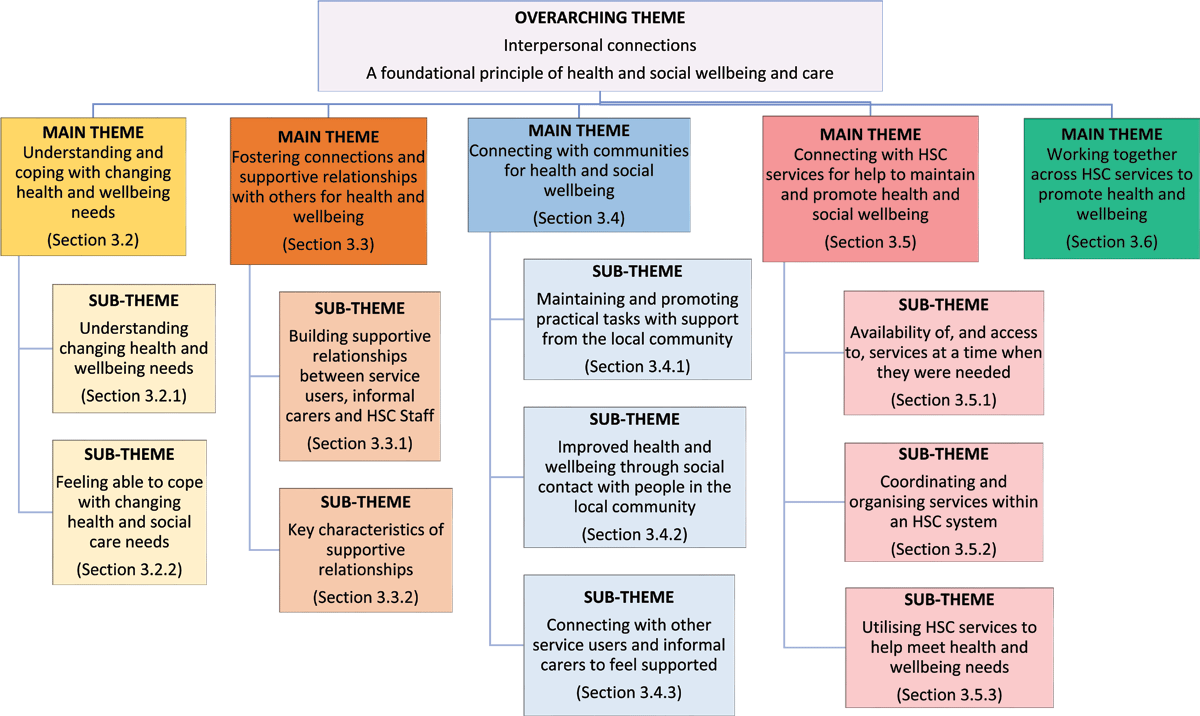
Figure 2
Overview of themes.
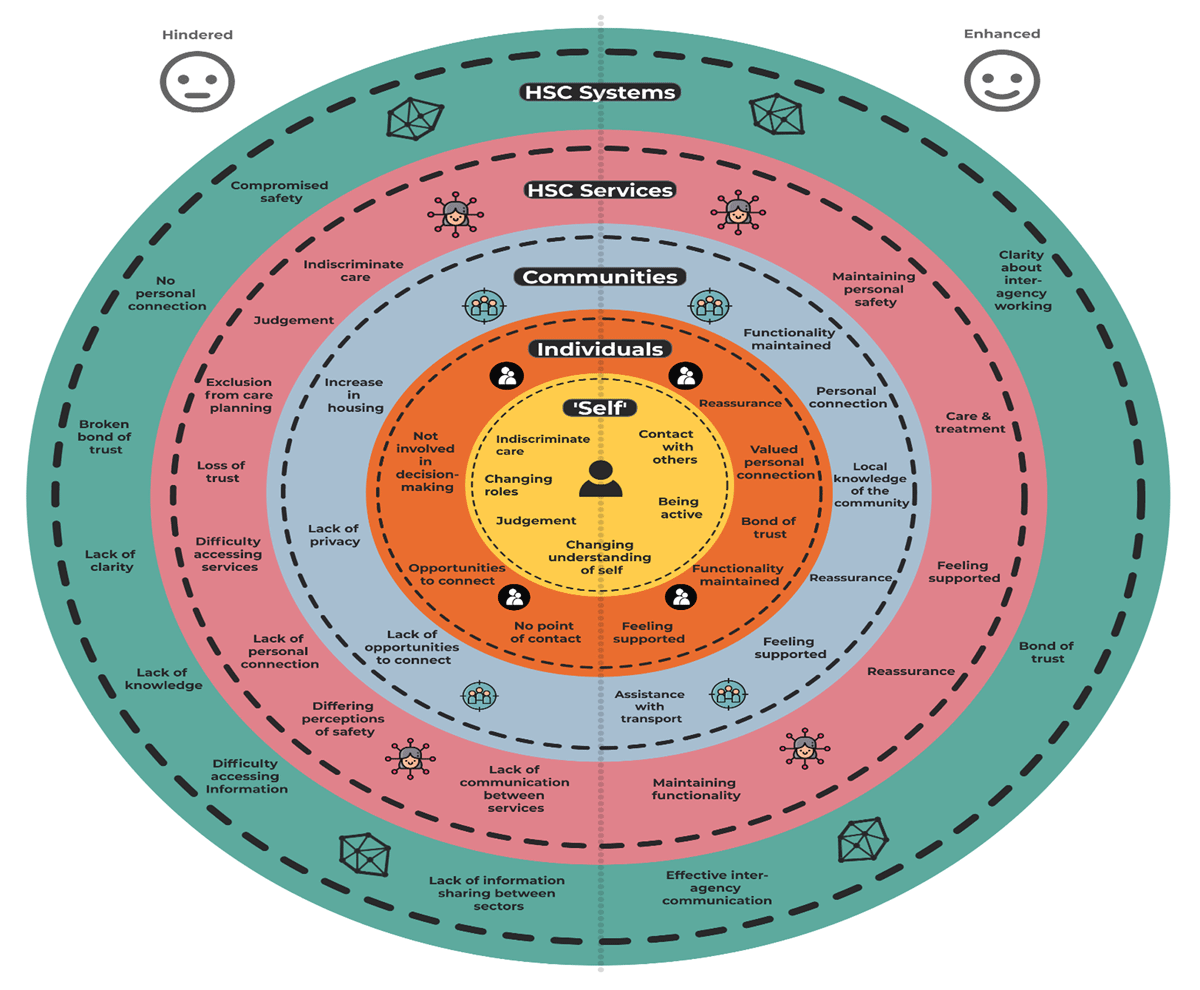
Figure 3
Factors that enhanced and hindered connections and experiences of HSC.
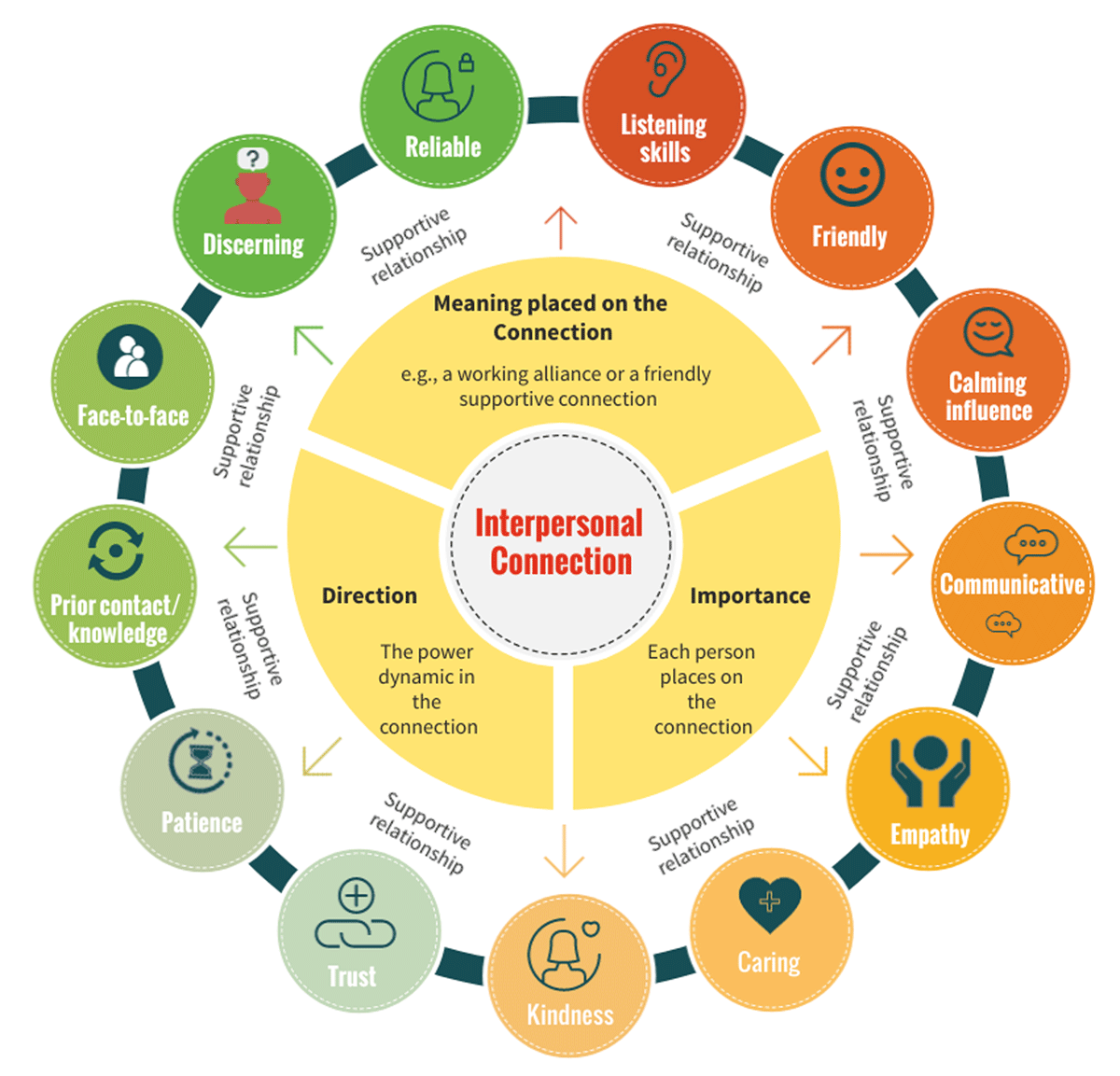
Figure 4
Typology of interpersonal connection and supportive relationships in HSC.
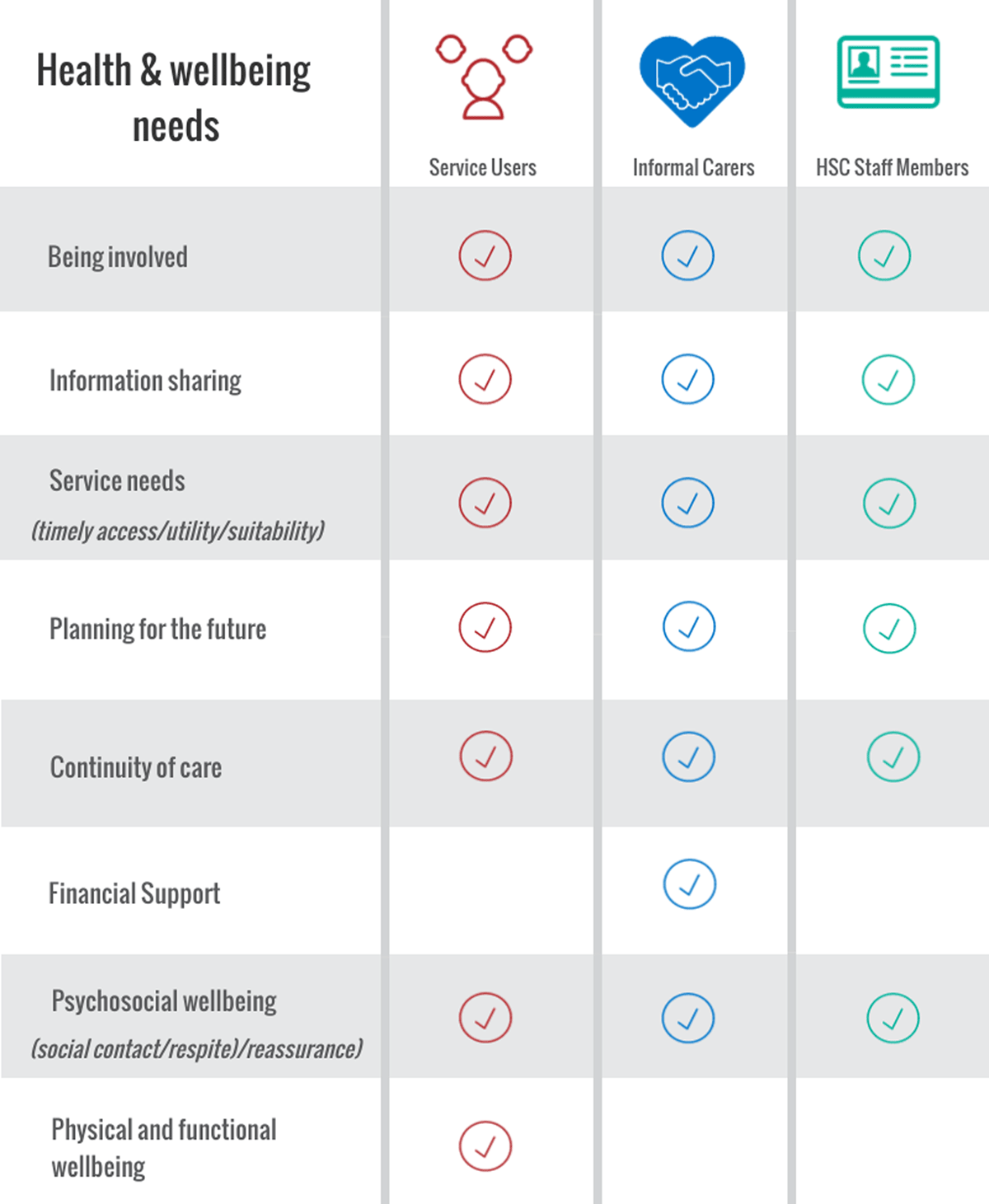
Table 4
Health and wellbeing needs in HSC.
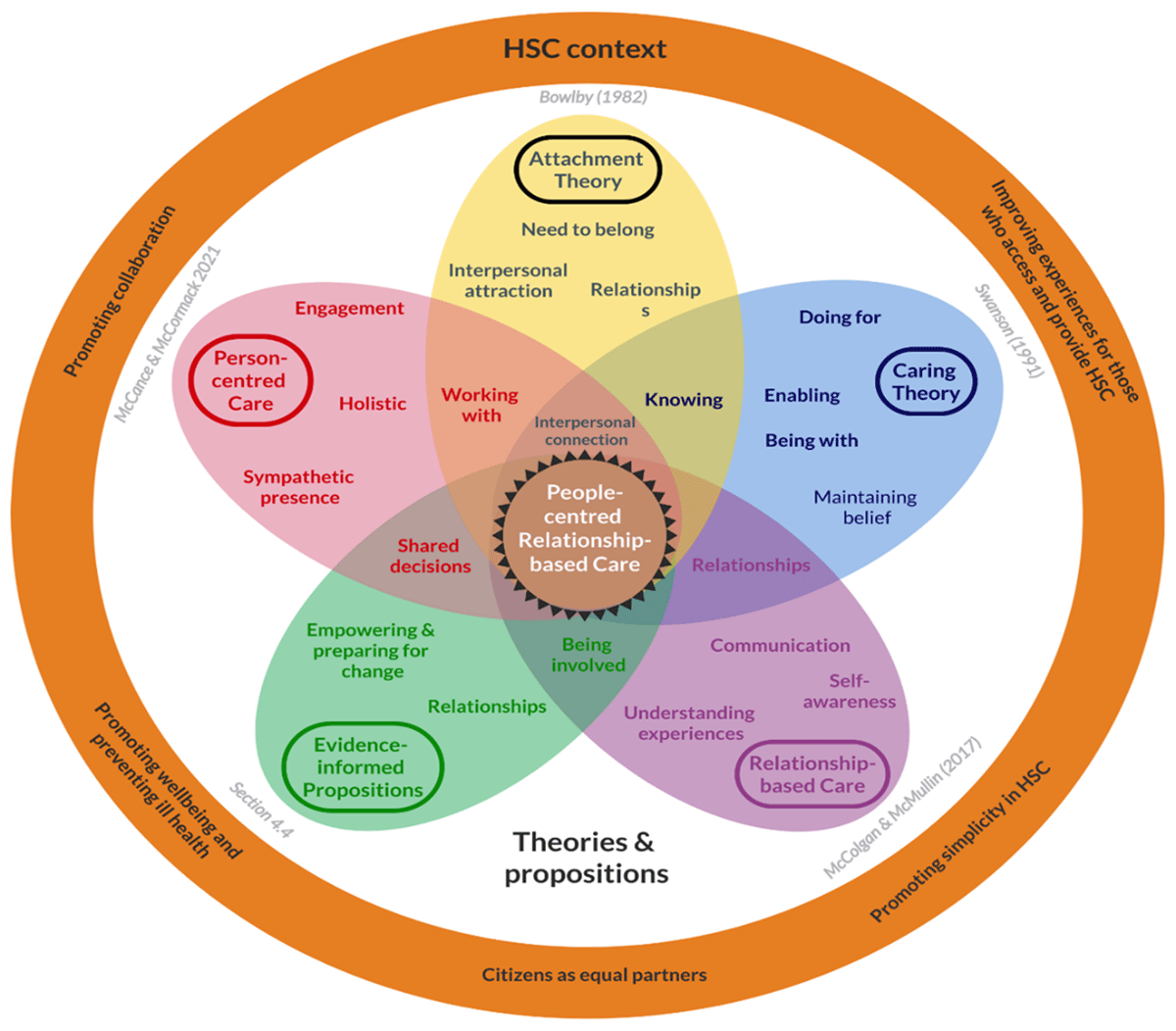
Figure 5
Theoretical and contextual influences: People-centred Relationship-based Care.
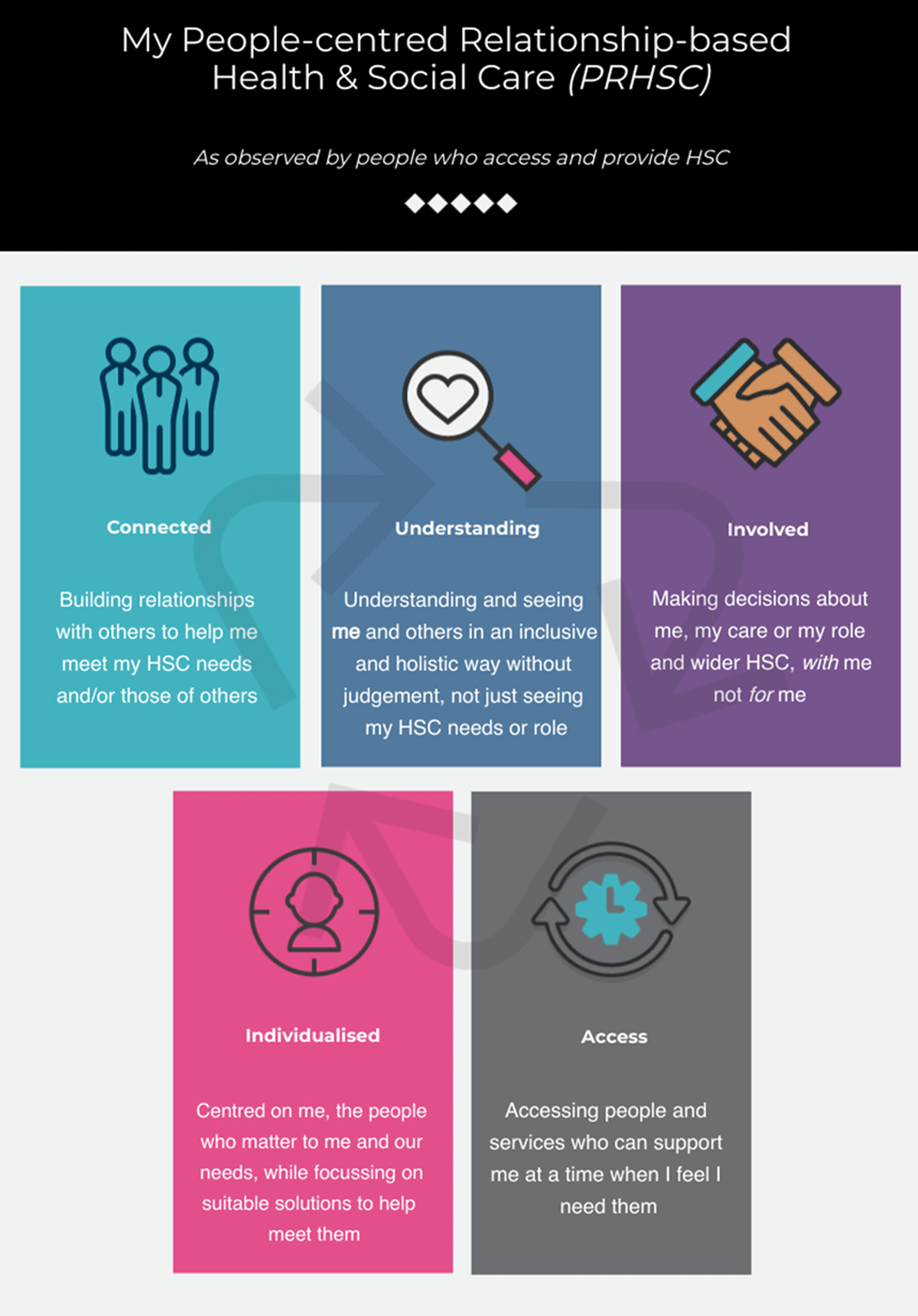
Figure 6
My People-centred Relationship-based Health and Social Care (PRHSC).