Have a personal or library account? Click to login
Formulating Initial Programme Theories of the Healthy Homes and Neighbourhoods Integrated Care Initiative Cover

Formulating Initial Programme Theories of the Healthy Homes and Neighbourhoods Integrated Care Initiative

Open Access
|Nov 2022

Figures & Tables

ijic-22-4-6421-g1.png
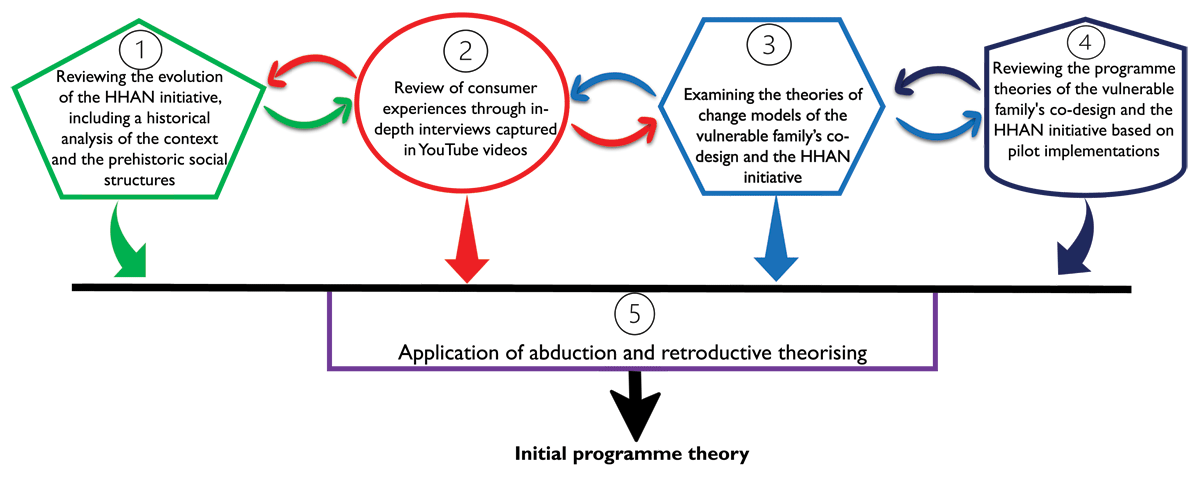
Figure 1

Iterative process toward developing the initial programme theories.
ijic-22-4-6421-g2.png
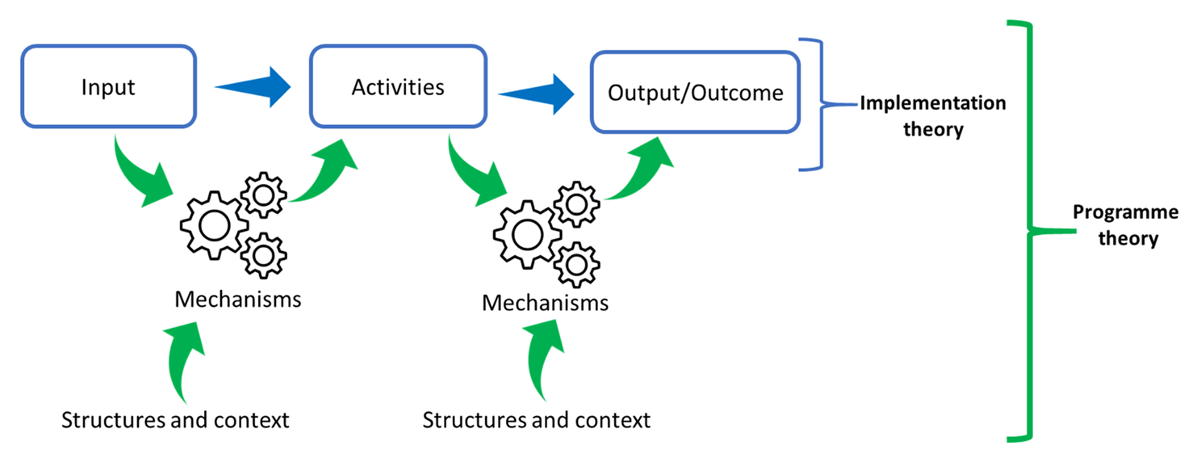
Figure 2

Potential information gleaned from exploring the theories of change (Adapted from Eastwood [7] and Kabongo et al. [23]).

ijic-22-4-6421-g7.png
Table 1

Illustrates the results of the exercises of this step.

Table 2

Consumer-level CIMO elements.

PROGRAMME MODALITYCONTEXTMECHANISMOUTCOME
AccessibilityConsumer characteristics:
  • – Vulnerability

  • – (Dis)trust in health services

Programme characteristics:
  • – Home Visiting

  • – Place-based initiatives

Health system characteristics:
  • – Inflexibility

  • – Family – peer trust

  • – Provider sharing between providers and consumers – shared responsibility

  • – Building of self-help skills – self-efficacy and motivation

  • – Consumers’ improved access to care

  • – Service engagement

Referral pathways
Early intervention and public health approaches to interrupting cycles of family disadvantage, poor health and psychological trauma
Consumer characteristics:
  • – Vulnerability: Complexity of consumer’s problem

  • – consumers’ past experiences with services and willingness to give the service provider a chance

Programme characteristics:
  • – Home Visiting

  • – Place-based initiatives

Health system characteristics:
  • – Complex

  • – Sharing of information – knowledge acquisition and encouragement

  • – Effective engagement of consumers

  • – Consumers’ improved access to care

  • – Consumer outlook improved

Accompaniment
Co-design and co-production of the initiative in partnership with families and service partners
Consumer characteristics:
  • – Vulnerability

  • – Disconnected from health services

Programme characteristics:
  • – Programme flexibility

  • – Providers taking dual roles

  • – Provider sharing between providers and consumers – shared responsibility

  • – Family–provider trust

  • – Consumer independence

  • – Effective engagement of consumers

  • – Consumers’ improved access to care

  • – Consumer outlook improved

Case-based discussions:
Encouraging families for all their health needs and supporting progress towards self-efficacy (I)
Consumer characteristics:
  • – Vulnerability

  • – Disconnected from health services

Programme characteristics:
  • – Programme flexibility

  • – Providers taking dual roles

  • – Family – peer trust

  • – Sharing between providers and consumers – shared responsibility

  • – Sharing of information – knowledge acquisition and encouragement

  • – Building of self-help skills – self-efficacy and motivation

  • – Effective engagement of consumers

  • – Consumer priorities are reflected in initial goal setting

Table 3

Service provider-level CIMO elements.

CHARACTERISTIC OF PROGRAMMECONTEXTMECHANISMOUTCOME
Family identification:
Development and implementation of shared assessment tools and referral criteria
Consumer characteristics:
  • – Level of trust between:

  • – Consumer and index caseworker

  • – Consumer’s family members and

  • – caseworker

  • – professionals involved (C)

Programme characteristics:
  • – Home Visiting

  • – Place-based initiatives

  • – Multiple modes of communication – Perceived benefits of collaboration

Service engagement
Accompaniment/intensive hand holdingConsumer characteristics:
  • – Vulnerability

  • – Disconnected from health services

Programme characteristics:
  • – Programme flexibility

  • – Providers taking dual roles

  • – Service providers share information and power – shared responsibility

  • – Shared policies, standards, protocols – buy-in

  • – Shared assessment tools – buy-in

Improved quality of service delivered
Evidence-based practiceConsumer characteristics:
  • – Vulnerability

  • – Diversity of age and social, cultural and health background

Programme characteristics:
  • – Flexibility

  • – Experienced clinicians – Leveraging pre-existing experiences

  • – knowledge of local services – Experiential learning

  • – Improved quality of service delivered

Navigation of the health systemHealth system characteristics:
  • – Complex consumer characteristics

  • – Poor health literacy

  • – Distrust of health services

Experienced clinician
  • – knowledge of local services – Experiential learning

Shared learning among professionals –Appropriate referrals
Table 4

Service organisation-level programme theory model.

CHARACTERISTIC OF PROGRAMMECONTEXTMECHANISMOUTCOME
Service CollaborationHealth system characteristics:
  • – Siloed health system

  • – Resistant to cross-service collaboration

  • – Lack of clarity about sharing consumer information

Systemic barriers:
  • – Socio-economic determinants of health

  • – historical perceptions of health services

  • – Poor health literacy

  • – Geographical isolation from services

Programme characteristics:
  • – Complexity of the HHAN initiative makes it challenging to explain to other services

Consumer characteristics:
  • – Vulnerability

  • – Shared vision at the agency level buy-in and shared responsibility

  • – Shared outcome framework – buy-in and shared responsibility

  • – Information sharing protocols – perceived cooperation and trust

  • – Resources shared – perceived cooperation and encouragement

  • – Training opportunities shared – perceived cooperation and encouragement

  • – Breakdown of silos

  • – Collaboration between services

  • – Recognition by service partners

  • – Utilising appropriate services

  • – Acknowledgement and acceptance of HHAN

  • – Foundations for integration

ijic-22-4-6421-g3.png
Figure 3

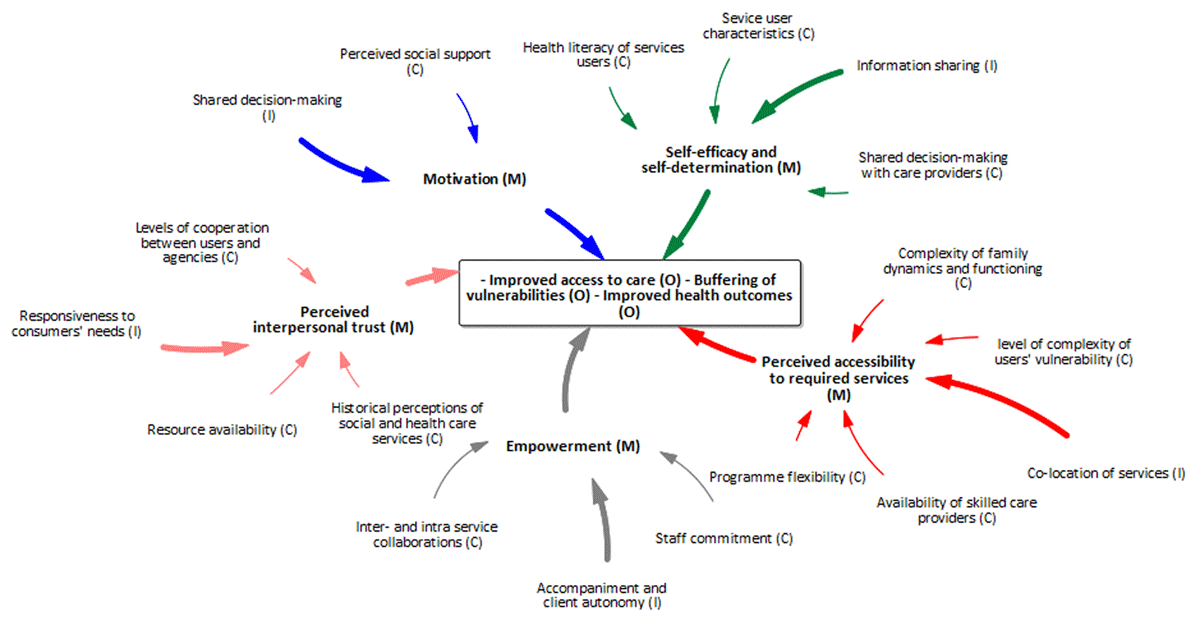
Consumer-level programme theory model.

ijic-22-4-6421-g4.png
Figure 4

Service provider-level programme theory model.
ijic-22-4-6421-g5.png
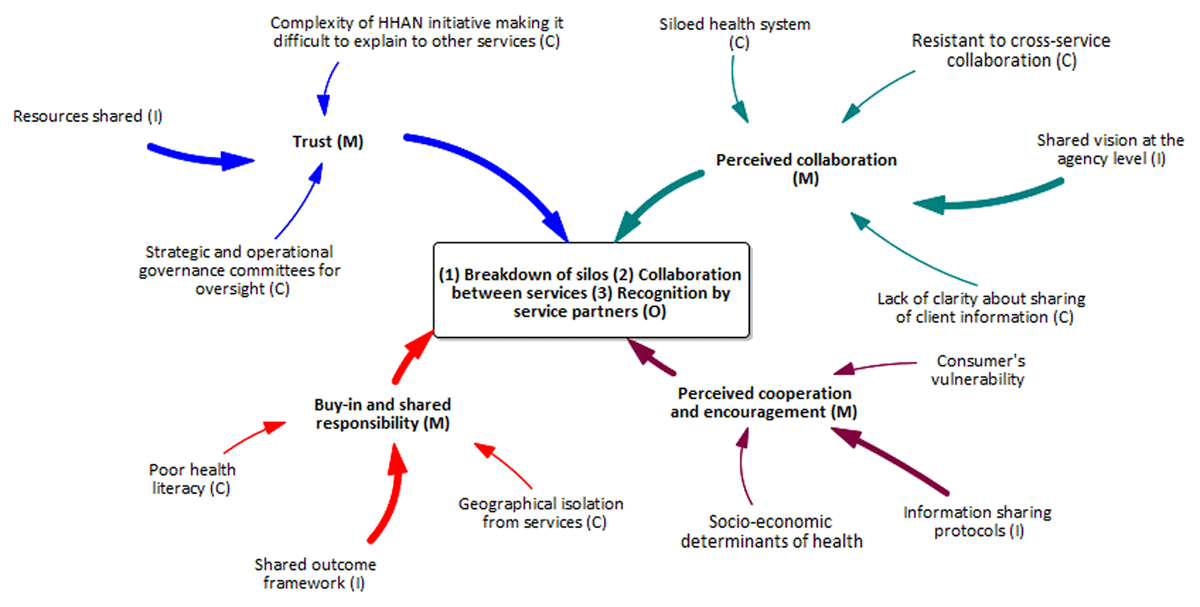
Figure 5

Service organisation-level programme theory model.
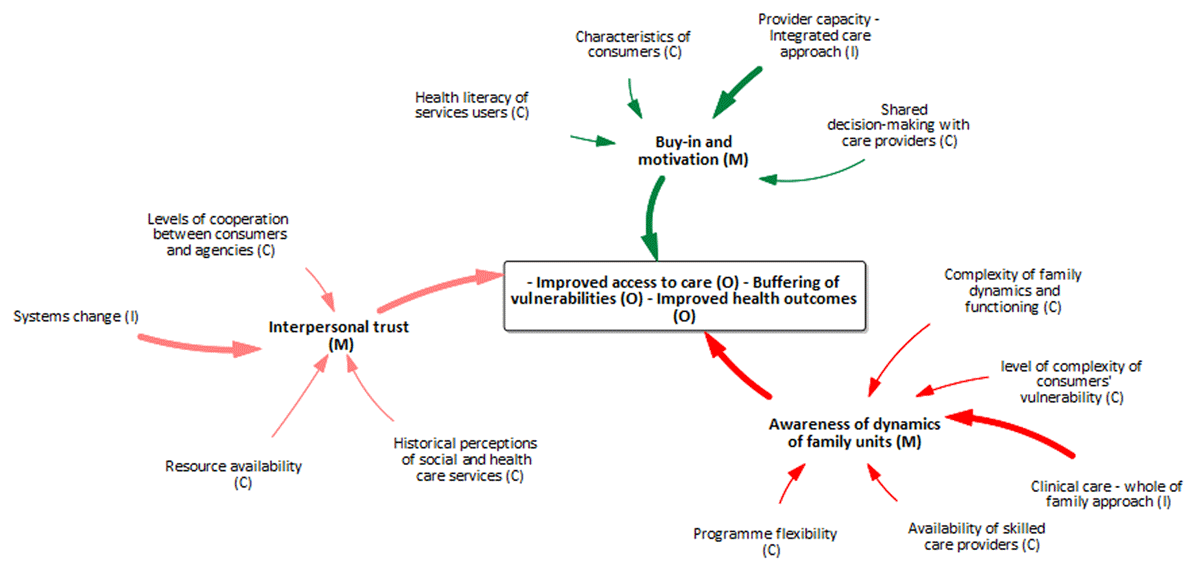
ijic-22-4-6421-g6.png
Figure 6

Overarching mechanisms present at all levels of the HHAN logic model.

CIMO:Context-Intervention-Mechanism-Outcome
SLHD:Sydney Local Health District
HHAN:Healthy Homes and Neighbourhoods
ToC:Theory of Change
DOI: https://doi.org/10.5334/ijic.6421 | Journal eISSN: 1568-4156
Language: English
Submitted on: Aug 29, 2021
Accepted on: Nov 2, 2022
Published on: Nov 21, 2022
Published by: Ubiquity Press
In partnership with: Paradigm Publishing Services
Publication frequency: 4 issues per year

© 2022 John G. Eastwood, Ferdinand C. Mukumbang, Denise De Souza, Hueiming Liu, Erin Miller, published by Ubiquity Press
This work is licensed under the Creative Commons Attribution 4.0 License.