
Table 1
Major themes organised within a frame of implementation theory.
| Theme 1: Reactions to the organisational change This theme concerns the beliefs and attitudes of FACT held by the interviewed practitioners, which involves perceptions related to the need for and potential benefits of FACT.a |
| Theme 2: The integration of two organisational cultures This theme describes the integration of ACT and CMHT to establish FACT and the organisational cultures underlying the practitioners’ behaviour.b |
| Theme 3: FACT model characteristics – implementation strategies and challenges This theme refers to characteristics of the FACT model and how applicable they were with daily practice, as seen from the perspective of the practitioners. We also identified adaptation processes to fit the practitioners’ preferences or organisational capacity.c |
[i] a Based on the concept “mental models” described by Nielsen and Randall.
b Based on the concept “organisational culture” described by Nielsen and Randall.
c Based the concept “model characteristics” and “adaptations” described by Durlak and Dupré.
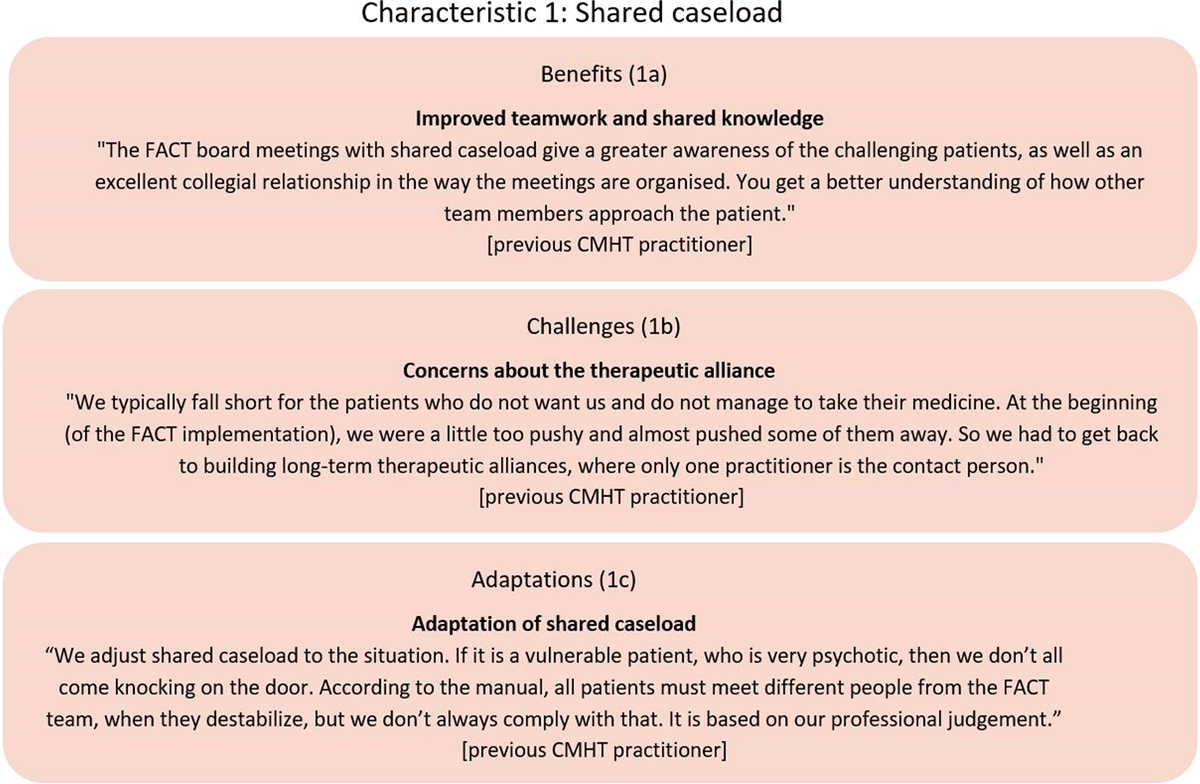
Figure 1
Example of FACT practitioners’ descriptions of benefits, challenges and adaptations of shared caseload.
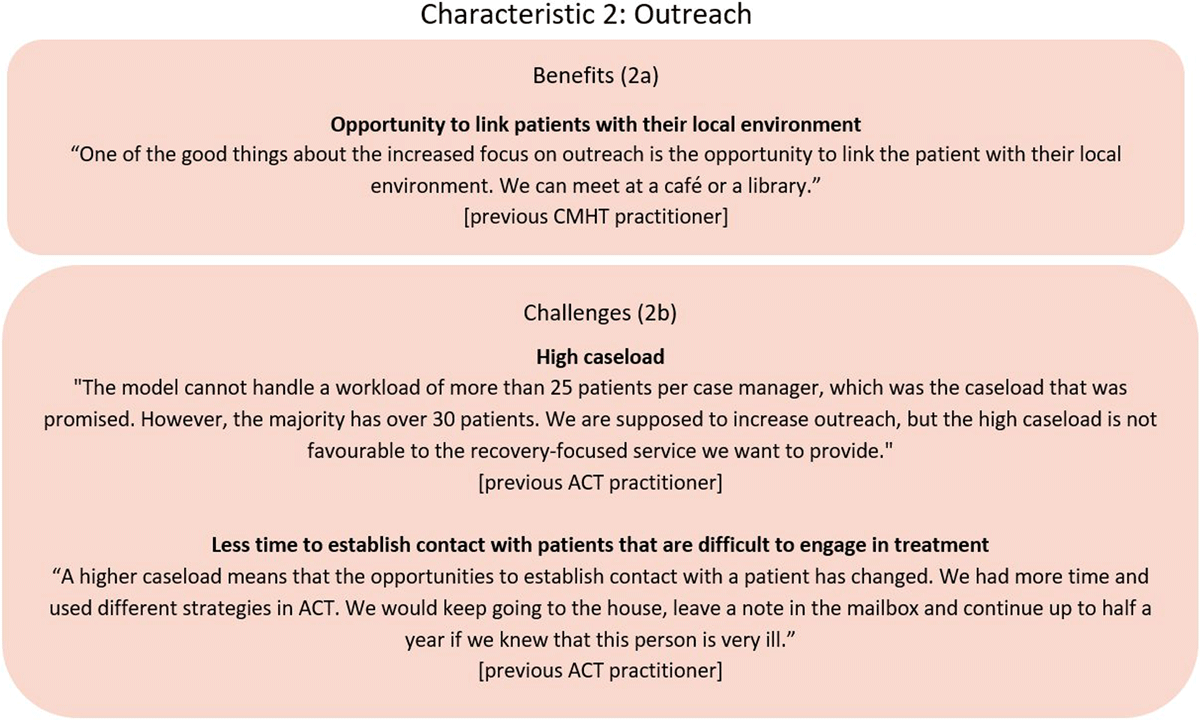
Figure 2
Example of FACT practitioners’ descriptions of benefits and challenges of outreach work.
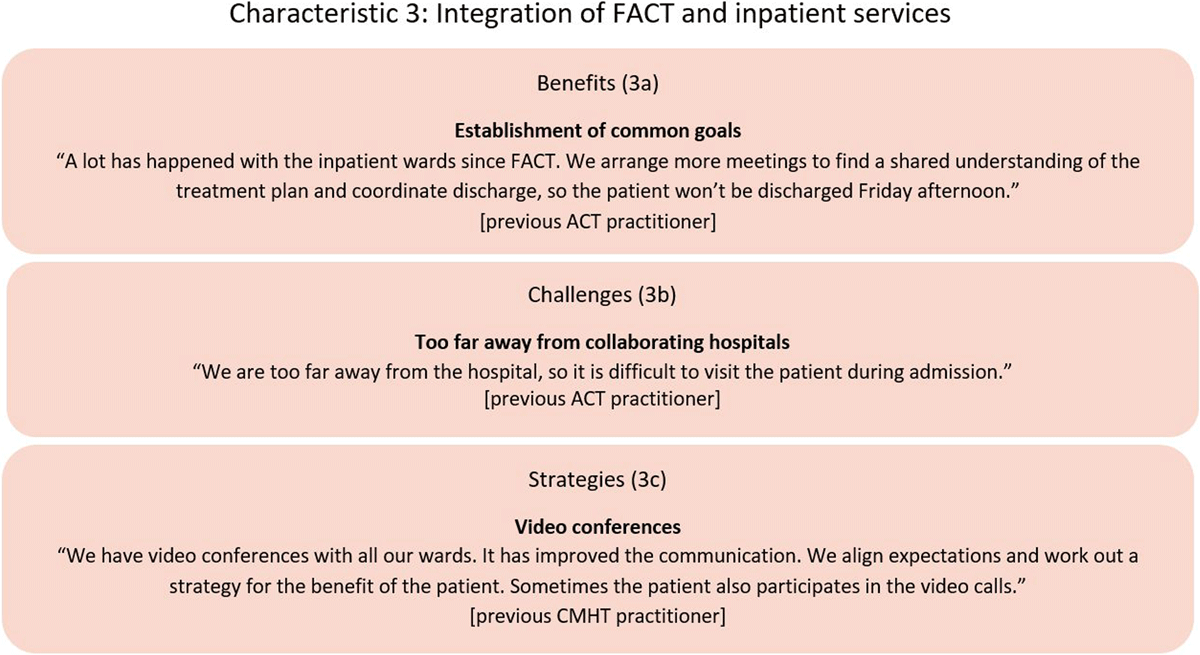
Figure 3
Example of FACT practitioners’ descriptions of perceived benefits, challenges and strategies regarding the integration of FACT and inpatient services.