
Table 1
Context, Mechanisms, Outcomes, modified from [33].
| Context | Mechanisms related to | Outcomes |
|---|---|---|
| Structure – Institutional/Organisational | roles, practices, resources, processes | (T), (I) or (R) of institutional/organisational structure |
| Culture – Institutional/Organisational | group ideas and propositional formulations about the institution/organisation | (T), (I) or (R) of institutional/organisational culture |
| Agency | individual beliefs and reasons for actions or non-action | (T), (I) or (R) of individual agency within the institution/organisation |
| Relations | maintaining, adjusting or redistributing power/duties/responsibilities | (T), (I) or (R) of institutional/organisational relations |
[i] Note:
a. Transformation (T): indicates mechanisms related to different parts of context, and activated by the social program, are producing some anticipated/desired outcomes.
b. Invariance (I): indicates that mechanisms related to different parts of context, undergo changes in attributes irrelevant to transformation or reproduction of the context (e.g. doctor-patient relation remains, though different persons may fill the roles)(cf. Sayer, 1992).
c. Reproduction (R): indicates relevant mechanisms related to different parts of context have not been adequately activated by the social program, thereby reproducing outcomes the social program aimed to change.
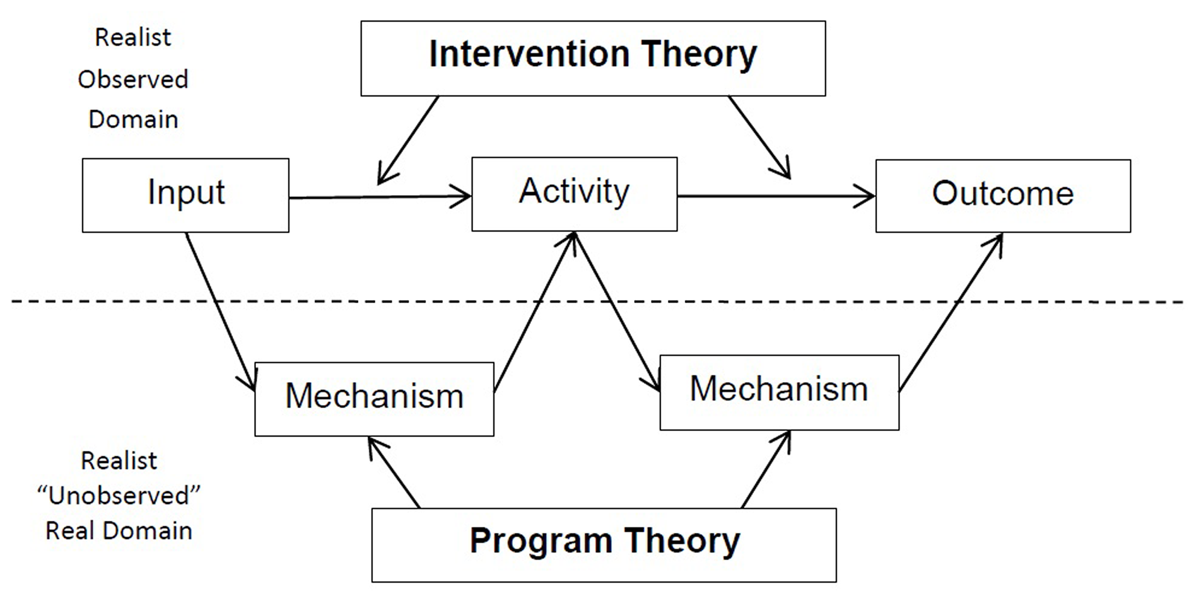
Figure 1
Intervention and Program theory.
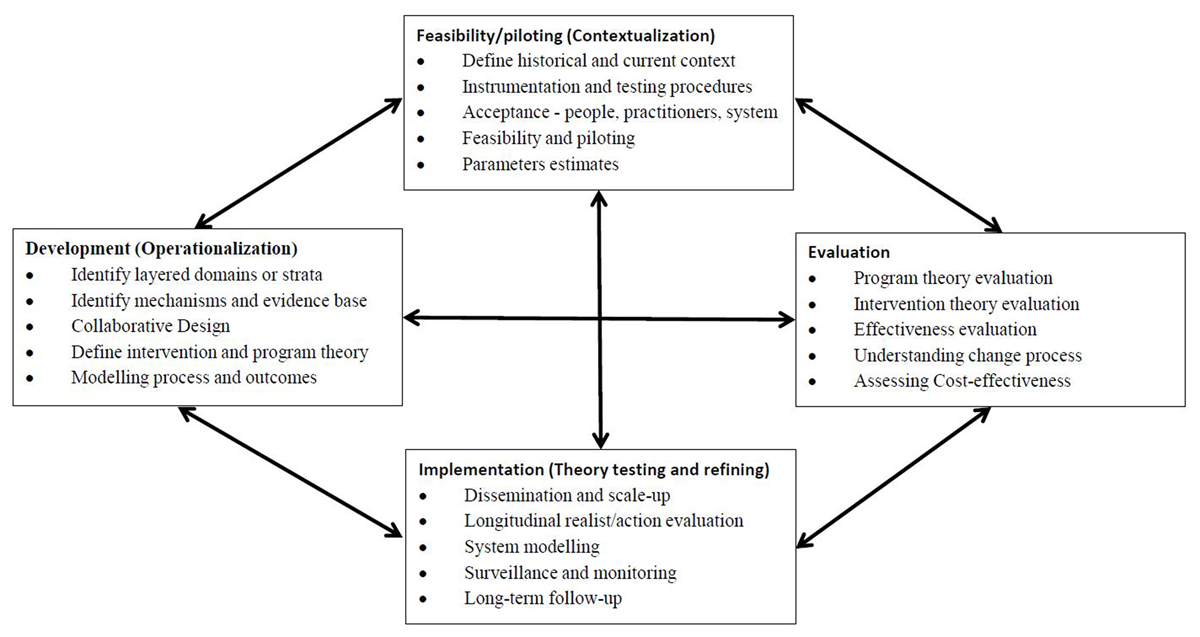
Figure 2
Key elements of the adapted development and evaluation process.
Table 2
CIMO-logic – the Components of Design Propositions [42].
| Component | Explanation |
|---|---|
| Context (C) | The surrounding (external and internal environment) factors and the nature of the human actors that influence behavioural change. They include features such as age, experience, competency, organizational politics and power, the nature of the technical system, organizational stability, uncertainty and system interdependencies. Interventions are always embedded in a social system and, as noted by Pawson and Tilley (1997), will be affected by at least four contextual layers: the individual, the interpersonal relationships, institutional setting and the wider infrastructural system. |
| Interventions (I) | The interventions managers have at their disposal to influence behaviour. For example, leadership style, planning and control systems, training, performance management. It is important to note that it is necessary to examine not just the nature of the intervention but also how it is implemented. Furthermore, interventions carry with them hypotheses, which may or may not be shared. For example, ‘financial incentives will lead to higher worker motivation’. |
| Mechanisms (M) | The mechanism that in a certain context is triggered by the intervention. For instance, empowerment offers employees the means to contribute to some activity beyond their normal tasks or outside their normal sphere of interest, which then prompts participation and responsibility, offering the potential of long-term benefits to them and/or to their organization. |
| Outcome (O) | The outcome of the intervention in its various aspects, such as performance improvement, cost reduction or low error rates. |
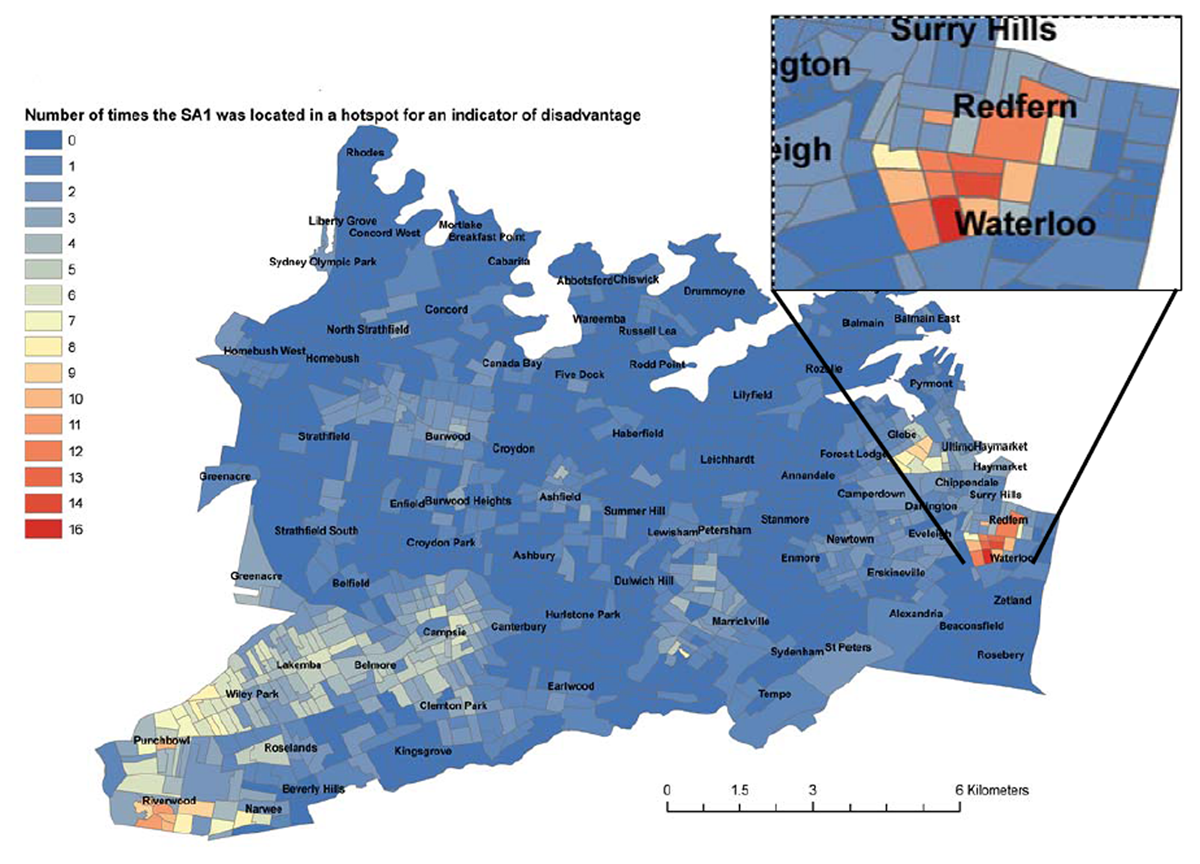
Figure 3
Geospatial analysis of perinatal family stress – SLHD, 2014.
Table 3
CIMO propositions for Whole of Family Involvement intervention.
| Present contextual mechanisms activated produce the following outcomes [CM] | Proposed Intervention Design Elements [I] | Postulated Intervention Programme Mechanisms activated at the Level of Situated Activity [MP] | Postulated psychological, motivational and behavioural Outcomes [O] |
|---|---|---|---|
|
|
|
Client outcomes:
|
Table 4
CIMO propositions for flexibility of service intervention.
| Present contextual mechanisms activated produce the following outcomes [CM] | Proposed Intervention Design Elements [I] | Postulated Intervention Programme Mechanisms activated at the Level of Situated Activity [MP] | Postulated psychological, motivational and behavioural Outcomes [O] |
|---|---|---|---|
Client characteristics:
|
Flexible programme model:
|
|
Client outcomes:
|
Table 5
CIMO propositions for Intervention focus on building trust.
| Present contextual mechanisms activated produce the following outcomes [CM] | Proposed Intervention Design Elements [I] | Postulated Intervention Programme Mechanisms activated at the Level of Situated Activity [MP] | Postulated psychological, motivational and behavioural Outcomes [O] |
|---|---|---|---|
|
| Trust |
|
Table 6
CIMO propositions for connecting services intervention.
| Present contextual mechanisms activated producing the following outcomes [CM] | Proposed Intervention Design Elements [I] | Postulated Intervention Programme Mechanisms activated at the Intermediate Level of Social and Service organisation [MP] | Postulated psychological, motivational and behavioural Outcomes [O] |
|---|---|---|---|
|
|
| Positive
outcomes: Clients:
|
| Negative
Outcomes Services:
|
Table 7
CIMO propositions for co-location of services intervention.
| Present contextual mechanisms activated [CM] | Proposed Intervention Design Elements [I] | Postulated Intervention Programme Mechanisms activated at the Macro-Level of Social and Service organisation [MP] | Postulated psychological, motivational and behavioural Outcomes [O] |
|---|---|---|---|
|
| “crossing of
paths” Increased personal interaction | Positive
outcomes Clients:
|
|
|
| Positive
outcomes: Services:
Services:
|