
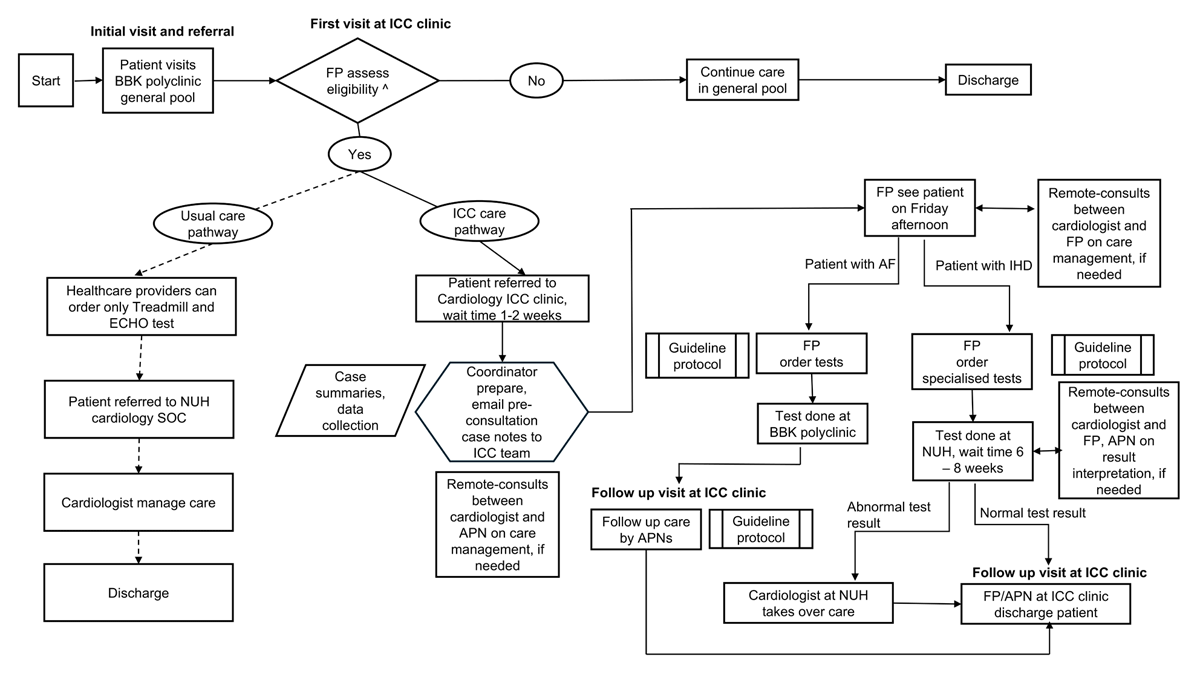
Figure 1
Workflow process of Cardiology ICC clinic.
AF = atrial fibrillation, APN = advance practice nurse, BBK = bukit batok polyclinic, FP = family physician, Cardiology ICC = integrated chronic care, IHD = ischemic heart disease, NUH = national university hospital, SOC = specialist outpatient clinic, ^Eligibility criteria includes patients with suspected IHD symptom e,g., atypical chest pain, shortness of breath and reduced effort tolerance, abnormal ECG/scan for further investigation (may not have symptom), newly diagnosed AF and existing AF for discussion switch to non-vitamin K antagonist anticoagulant.
Table 1
Integration types, summary of findings and practice recommendations.
| THEME | DESCRIPTION ACCORDING TO SINGER AND COLLEAGUES | SUMMARY OF FINDINGS (STRATEGIES THAT HELPED TO ACHIEVE CARDIOLOGY ICC CLINIC’S INTEGRATION IN BUKIT BATOK POLYCLINIC) | PRACTICE RECOMMENDATION TO ACHIEVE INTEGRATION WHEN IMPLEMENTING A CARDIOLOGY ICC CLINIC IN PRIMARY CARE |
|---|---|---|---|
| Structural Integration | “Physical, operational, financial, or legal ties among teams and organisations in a health system” (p.201) | Team members interested in managing cardiac conditions nominated by senior staff members | Involve senior staff of the primary care centre in nominating team members to ensure team’s commitment and expertise. This can include creating a selection committee and establishing clear criteria for selection to ensure a motivated and skilled team |
| Co-location of consultation rooms enhanced collaboration in case management | Co-location of consultation rooms of APNs and family physicians in primary care centre. Review and adjust the physical layout of the clinic to ensure it continues to meet the changing needs and workflows of the team | ||
| Remote case consultations by cardiologist via emails and messages facilitated by care coordinators | Team to develop standardised protocols for care coordinators’ pre-consultation case preparation and information dissemination, including templates for case descriptions and checklists to ensure all relevant information is included and communicated efficiently. Integrate these protocols into the electronic medical record system | ||
| Functional Integration | “Formal, written policies and protocols for activities that coordinate and support accountability and decision making among organisations and individuals” (p.201) | Comprehensive written protocols for AF and IHD management developed in collaboration by cardiologist, APNs and family physicians | Team to develop comprehensive written protocols for management of cardiac conditions in collaboration |
| e-learning programs and on-the-job training by cardiologist supervising family physicians at Cardiology ICC clinic and APNs and family physicians as observers in cardiology clinics at National University Hospital | Formalise e-learning programs with dedicated time and incentives, such as paid leave, professional development credits and potential salary increments upon certification completion. This investment in continuous education can significantly enhance the competency and confidence of the healthcare team | ||
| Normative Integration | “Sharing a common culture and exhibiting a culture that prioritises integrating patient care across units and organisations within a health system” (p.201) | Team shared a vision to anchor chronic disease management in primary care | To develop and sustain a shared vision that effectively anchors chronic disease management in primary care. This can include creating a clear, concise vision statement that reflects the shared goals for chronic disease management in primary care and embedding the vision into the clinic’s standard operating procedures and protocols |
| Interpersonal Integration | “Collaboration or teamwork among health care professionals, nonprofessional caregivers, and patients” (p.201) | Introducing to patients the team, communicating the clinic’s purpose, roles of team members and clinic’s operational days | Each team member to introduces themselves personally to the patient and explain how each will contribute to patient’s care. This can be done during the first consultation. Use name badges with roles clearly indicated |
| Process Integration | “Courses of organisational actions or activities intended to integrate patient care services into a single coordinated process across people, functions, and operating units over time” (p.201) | Closed-loop referrals | Develop standardised referral protocols that clearly outline the steps for initiating, managing, and closing referrals |
| Outcomes of care integration | Not applicable | Low patient numbers at Cardiology ICC clinic
| Develop a targeted communication strategy to raise awareness about the Cardiology ICC clinic among family physicians. This can include direct communication through electronic medical records reminders to encourage referrals To reevaluate and potentially adjusting the operating hours of the clinic by testing alternative days and times that might be more convenient for patients, such as midweek or evenings instead of Fridays |
Less revenue generated from the Cardiology ICC clinic
| Explore alternative revenue model such as capitated funding model instead of fee for service model (currently used in Singapore) which can better capture the value of comprehensive and integrated care provided at the Cardiology ICC clinic | ||
Provider satisfaction
| Provide access to accredited continuous medical education courses specifically targeting cardiac conditions of interest Establish mentorship programmes where experienced cardiologists mentor APNs and family physicians, offering guidance, support and feedback when in managing cardiac conditions of interest |
[i] AF: Atrial fibrillation, APN: Advanced practice nurse, Cardiology ICC: Cardiology Integrated chronic care, IHD: Ischemic heart disease.