
Introducing a Shared Space of One’s Own
Research on urban commons has primarily explained commons through collective processes of commoning. Less attention has been paid to how individuals come to experience publicly accessible space as their own while simultaneously sharing it with others in an urban common. This article contributes by conceptualising the urban commons as a shared space of one’s own. Drawing on interviews and observations from the historical urban common Enskifteshagen in Malmö, the article investigates how everyday practices of appropriation contribute to commoning in a Swedish welfare-state context. The urban commons is neither a collective project that erases individual experience nor a collection of isolated personal attachments. Rather, it is a space in which many people simultaneously experience a public place as their own while recognising it as equally shared by others. The article advances three arguments. First, historical urban commons differ from Ostromian commons because access and use are more important than ownership. Second, in urban contexts, appropriation explains dimensions of access and use that existing understandings of commoning have tended to overlook, namely how individuals, simultaneously as groups, come to experience public space as their own. Third, in the Swedish welfare-state context, publicly maintained commons are constituted not in opposition to the state but through historically embedded relations between citizens and det allmänna.
Contemporary, Historical, Urban Commons
Urban, historical commons exist in several Western cities. London is famous for its many commons, ranging from Clapham to Peckham and Wandsworth common (Cheatle, 2023; Waites, 2012). Copenhagen’s two landmark green areas Amager Faelled and Faelledparken are remnants of historical commons (Overstreet & Sørensen, 2025). Boston Common is a famous example from the U.S., along with the many Town Commons in Massachusetts (Hurwitz, 2016). What makes such urban commons interesting is their historical connotations and how rights of access and use of land has been negotiated over time in the same space; from agricultural practices of sustenance (Cheatle, 2023; Emanuelsson, Bergendorff, Billqvist, Carlsson & Lewan, 2002; Germundssson & Lewan, 2003; Kain, Chapham, & Oliver, 2004) to current-day need for recreational and biodiverse green areas in cities (Barthel, Colding, Thalén & Turunen, 2022; Brantz & Dümpelmann, 2011; Samuelsson, Barthel, Giusti & Hartig, 2021). Historical, urban commons are interesting as a public space accessible for all, as they are never enclosed or locked, and therefore to some extent more accessible than parks and public gardens that tend to have opening hours. Furthermore, as the amount of green space per capita has decreased in cities due to urban densification (Cheatle, 2023; Grundström & Rosengren, 2025), the importance of access to and use of remaining, historical, urban commons has increased.
Several scholars who identify urban commons as rooted in rights of access to and use of land have emphasized the importance of use value over property value (Lefebvre, 1974; Harvey, 2008; 2012); of spatial justice (Soja, 2010) and of the importance of distribution and equal access to highly valued, urban spaces (Mitchell, 2003). Over the past decade, the focus on urban commons and commoning, has given rise to research specifically exploring the use and access to urban commons and the specificities that arise when multiple and different groups have the right to the same urban space (Hojer Bruun, 2015; Visscher & Mezoued, 2025). In their overview of urban commons research, Feinberg, Ghorbani and Herder (2021: 14) argue that, in urban areas, ‘the conditions of use and access are more relevant than the question of ownership. Analysing these conditions with respect to the urban commons, in a context of unclear public space definition, seems to be a priority’. Even though commons are ‘open to the public’, several scholars have shown how access to and use of public spaces and urban commons is negotiated through and between different groups and communities, based on gender, race, sexuality, and/or poverty. At the same time however, other scholars have pointed out the specific communalities of urban conditions of urban commons, similar to open spaces such as streets, squares and parks, in that they are spaces where people, in spite of very different backgrounds, meet and mingle (Löfgren, 2015; Feinberg, Ghorbani and Herder, 2021; Hojer Bruun, 2015). This dimension of urban commons seems to imply multiple ways of inhabiting and making a space of ones’ own in a public space and in which ways ‘meaning making and belonging’ (Cheatle, 2023) is constructed.
The urban commons is a space of importance to support use-value in cities, and it is a space that both groups and individuals’ access and use, and in which they construct meaning-making and belonging. Yet, this dimension is seemingly lacking in the definitions following Ostrom.
Urban Commoning and Appropriation
Much of the research on commons have focused on different types of governance mechanisms, based on Ostrom’s (1990) theory of how ‘a group of principals can organise themselves voluntarily to retain the residual of their own efforts’ – in response to Hardin’s (1968) article on ‘The Tragedy of the Commons’. Both Ostrom and Hardin define the commons as a common-pool resources, based on natural resources such as groundwater, fisheries, irrigation systems and pastures. This definition is based on the idea that a commons is, firstly, a finite resource used for subtraction (it should be noted, however, that Ostrom later developed the idea of non-subtractive resources). Secondly, the resource is regulated by a group that manages the commons together, while keeping other groups out. However, these two assumptions have been criticised in recent years as research on the commons has shifted towards urban contexts (Bollier & Helfrich, 2012; Borch & Kornberger, 2015; Dellenaugh, Kip, Bienok, Müller & Schwegman, 2015; Feinberg, Ghorbani & Herder, 2021; Stavrides, 2016).
The assumption that a commons is a finite resource is criticised by researchers who instead analyse the urban realm through a relational interpretation that is created through ‘interaction between people, things and ideas’ (Borch & Kornberger, 2015: 12). From this perspective, urban commons are not a finite resource, but rather a phenomenon that is difficult to ‘overuse’ and which can grow through additional networks and interactions. This has also been emphasised by several scholars in planning and urban studies (see for example, Gehl, 2010; Jacobs 1961; Sennett, 2018). The concept of ‘commoning’ as interaction may also impact the physical environment through practices such as guerrilla gardening, graffiti and modifications of street use (Ravazzoli, 2024; Stavrides, 2016). The assumption that a commons is based on one group being inside and others outside a resource has been criticised by researchers who have analysed urban commoning. Harvey (2012), for example, argues that commoning depends on a relation between a social group and an aspect of the environment that is treated as a commons, and that this relation is both collective and non-commodified, outside market exchange. Subsequent studies have problematised the binary notion of in- and out-groups by analysing public spaces. In a study of social capital and atmosphere, Löfgren (2015) examines a train station and a beach, analysing how ‘different users co-inhabit and regulate a public space’, emphasising that urban spaces become increasingly important as the segregation and marginalisation of certain groups intensifies. In urban environments, it is also difficult to distinguish between different groups as they may use the same space for different activities at different times (Korosec-Serfaty, 1973). Another point that has been made is that changes in individual groups affect usage even for those outside a particular in-group. In addition to criticisms of these assumptions, socio-cultural and political differences also influence how urban commons are defined and used. In welfare societies such as those in Scandinavia, groups are not necessarily positioned against each other when it comes to access and use of public or shared urban spaces nor organisationally situated between the state and the market to the same extent as in other countries (Hojer Bruun, 2015).
A concept closely related to commoning, the right to the city and the rights of use and access to a space is appropriation. Similar to commoning, this concept aims to capture the right to be in and use a space alongside other people. One important difference is that appropriation can also explore the right of individuals, as well as groups, to access and use a space. One scholar who has theorised appropriation is Korosec-Serfaty (1973; 1976). Having one’s own space and being able to appropriate spaces in a city is important because it relates to meaning-making and belonging. Korosec-Serfaty points out that we often assume that what is ‘ours’ is private, and that we only feel a sense of ownership over our home or private garden. Although it is true that private property can offer a great deal of freedom of use in societies strongly centred on property rights, it is our continuous use of a space, returning to a space and engagement in meaningful activities there that establishes a sense of appropriation and belonging in public space. According to Korosec-Serfaty (1973; 1976), appropriation is a set of actions and sequences of daily spatial practices manifest through six modalities. She refers to Lefebvre’s writing on everyday life, spatial practice and appropriation (Lefebvre, 1961; 1974), further developing the concept of appropriation, to make it more concrete and relevant to research in architectural psychology. Korosec-Serfaty (1973, pp. 392–393) defines the following modalities of appropriation: 1) the delimitation of a territory in which activities defined by the user take place; 2) the remodelling of the area, and sometimes the destruction of certain elements; 3) the transgression of certain anonymous laws, and the freedom to use the area as one wishes; 4) play activities, creativity, and rhythms that allow the individual to use the area’s resources as they wish; 5) the display of objects that show social status, aesthetics, feelings, and cultural belonging; and 6) the presence of others. In addition to these modalities, knowledge of a place, its visual character, and its expression can also lead to appropriation (Korosec-Serfaty, 1976). Furthermore, appropriation can occur to different degrees. Sometimes, we simply pass through a green space, street or square, while other spaces feel more inviting. Knowledge of a space and observation of its visual characteristics may lead to shallow forms of appropriation, as few spatial practices and modalities are involved. Deeper forms of appropriation involve the use of multiple modalities in the presence of others. This enables users to influence and potentially transform the space through collective action (Korosec-Serfaty, 1976, p. 55).
In sum, commons scholarship has primarily conceptualised commons through collective practices. Appropriation complements this perspective by explaining how individual spatial practices form one important dimension of the urban commons. Based on this conceptual basis the article asks: How do people experience Enskifteshagen as their own? How can the commons be understood when many people simultaneously experience it as their own?
Methods
The empirical material combines qualitative and quantitative data, consisting of archival material, structured interviews, and participant observations conducted at Enskifteshagen, which was selected as a case.
Case Selection and Historical Context
Enskifteshagen is located on a historic common that has never been built upon (Figure 1). The selection of Enskifteshagen was based on ‘information rich selection’ (Flyvbjerg, 2006). Firstly, the transformation of a historic common into an urban park, is similar to the transformations seen in other Western cities. Historical maps and writings show that, during the Middle Ages and up until the 17th century, the land in Enskifteshagen was part of the meadows and pastures that were jointly farmed by the village of Västra Skrävlinge (Germundsson & Lewan, 2003). During the Skiftesreformerna (Ordinances or land reform initiated by landowners to merge smaller parcels into larger fields and meadows) carried out between 1786–1827, land in Västra Skrävlinge was transferred to the Sofielund and Annehem farms. For the next hundred and fifty years, the land continued to be used as a grazing common and meadow. In 1911, the City of Malmö bought the land and used it as meadowland until the 1940s, when apartment blocks were built on the land and Enskifteshagen was landscaped (Grundström, 2022; Malmö stad, 2020). The earliest map of Enskifteshagen show the long, narrow strip of land. Over time, trees have been planted and new cycling and walking paths added. Today there is also a playground, a dog park, and a community garden (Figures 2, 3 & 4). Secondly, the city of Malmö used to be called “The City of Parks” but is currently one of the least green cities in Europe. The privatisation of land, urban densification and infrastructure development, combined with population growth has led to a sharp decline in publicly accessible green areas per capita (HUGSIgreen, 2024; Malmö stad, 2023; Villanueva Gran, 2021). The decrease puts extra pressure on the use and access to green areas and raises questions of current and future planning of such spaces. Third, Enskifteshagen is located between a residential area with a median income and a ‘cultural sound zone’, which is a former industrial area that allows for higher noise levels and supports cultural activities (Malmö Stad, 2020). The neighbouring residential area to the east is a large, low-income housing estate and one of Malmö’s most vulnerable areas. This location attracts a variety of socio-economic groups and sees lots of people moving through the common, as it connects the outer and inner areas of the city. This enables finding interviewees from a range of socio-cultural backgrounds. As a case, Enskifteshagen is physically a municipal park but constituted socially as an urban commons.
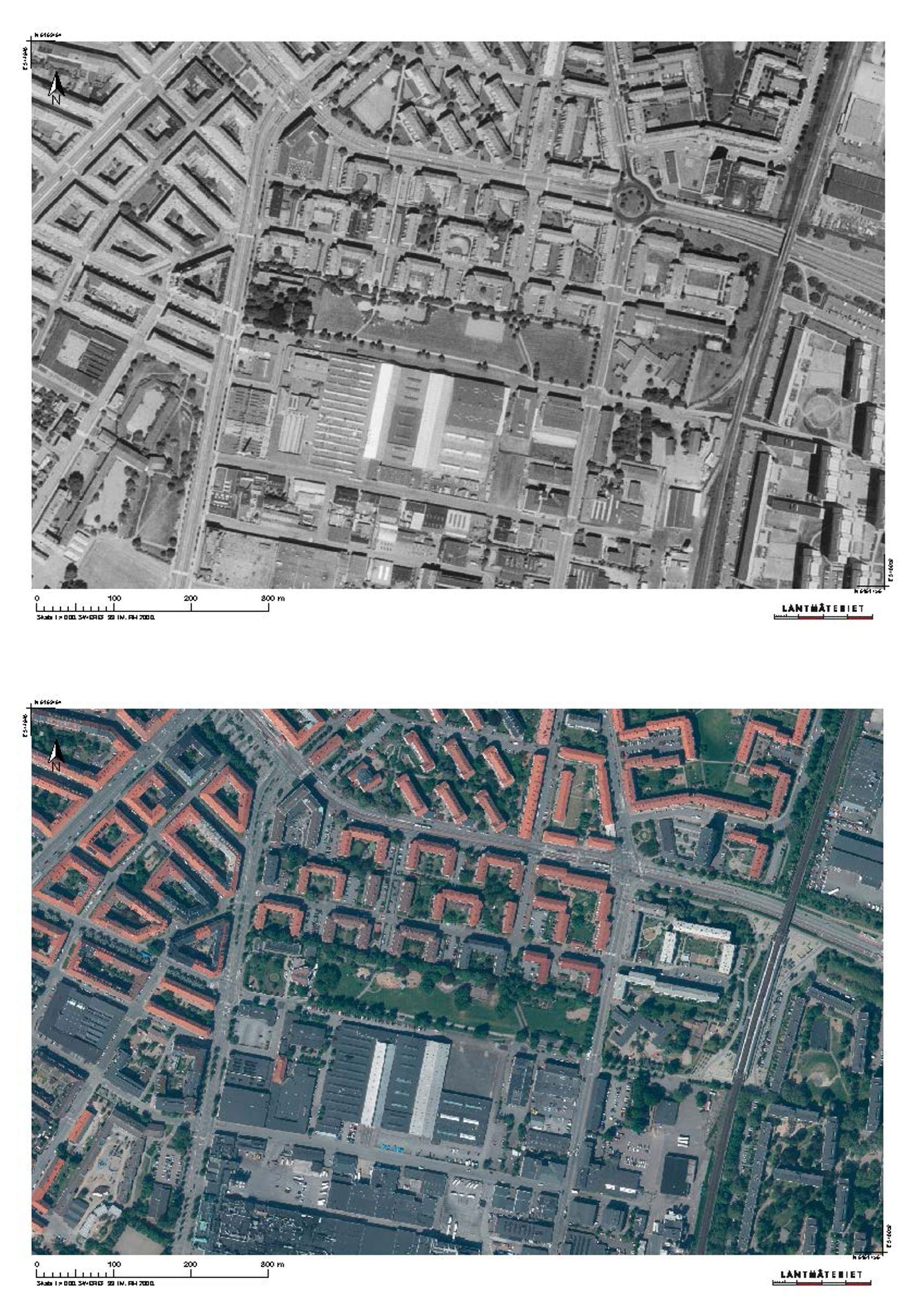
Figure 1
Maps of Enskifteshagen. Above 1975, below 2025. Published with permission from Stadsbyggnadskontoret, Malmö.
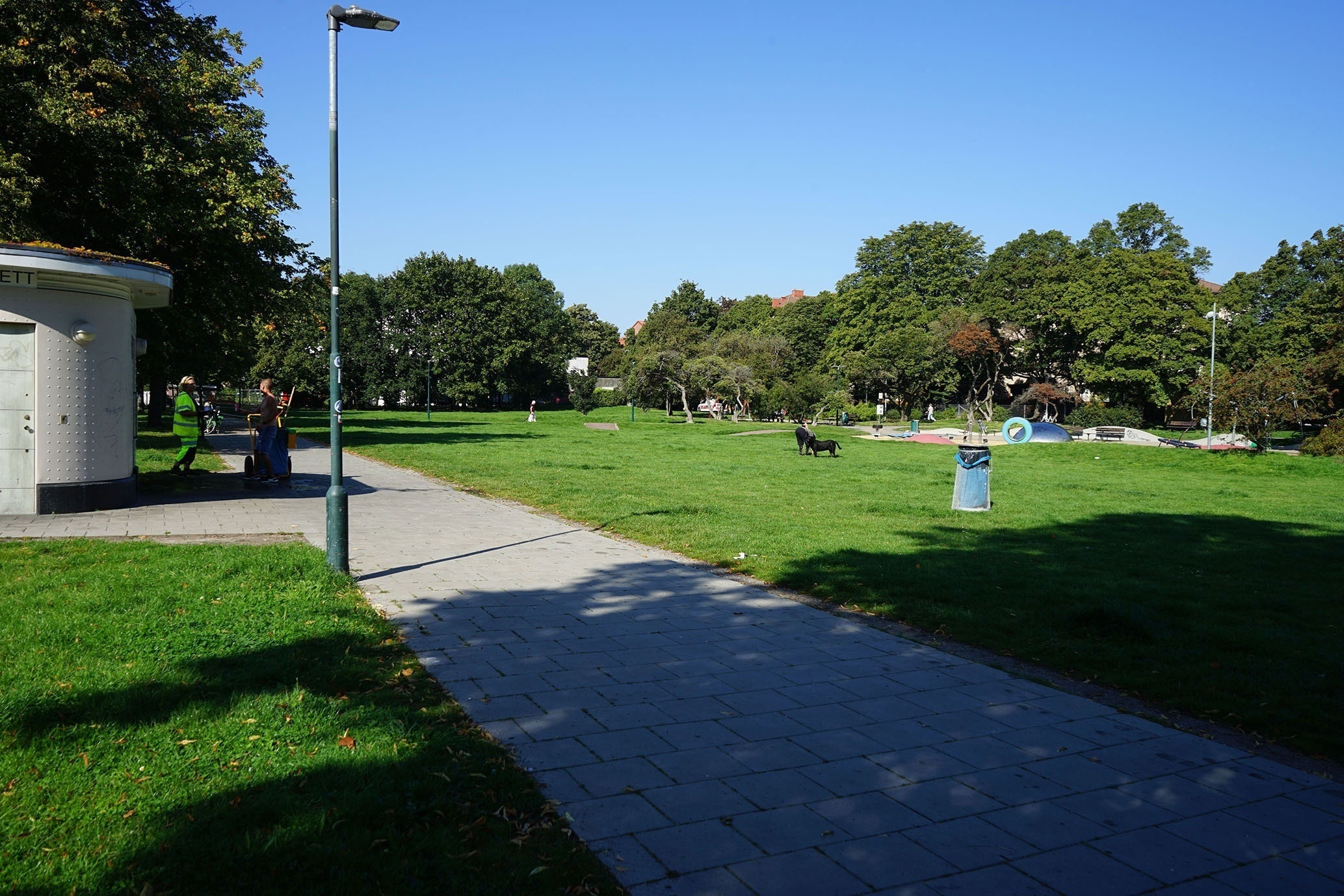
Figure 2
The main lawn of Enskifteshagen. Photo by author.
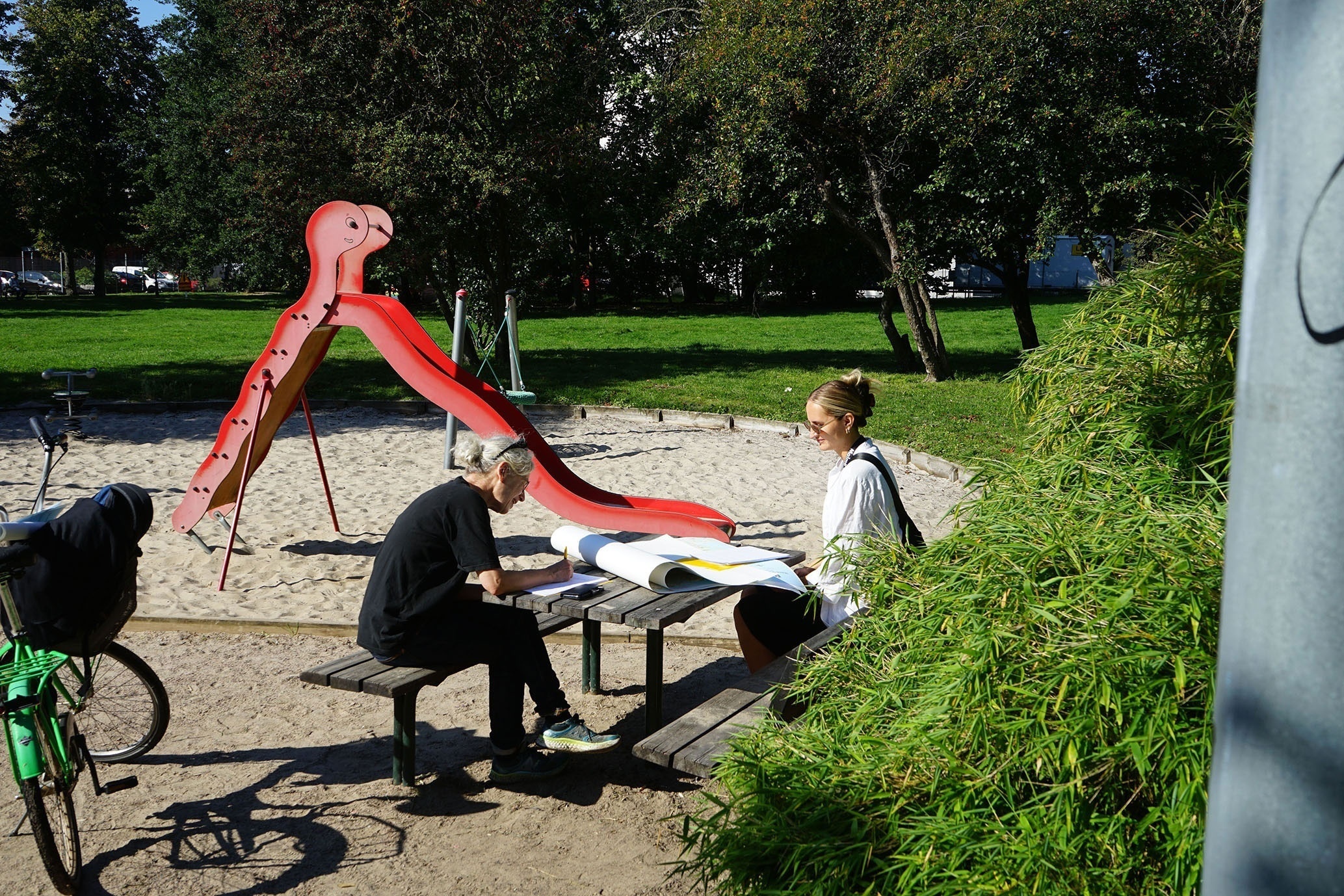
Figure 3
The playground. Photo by author, with permission.
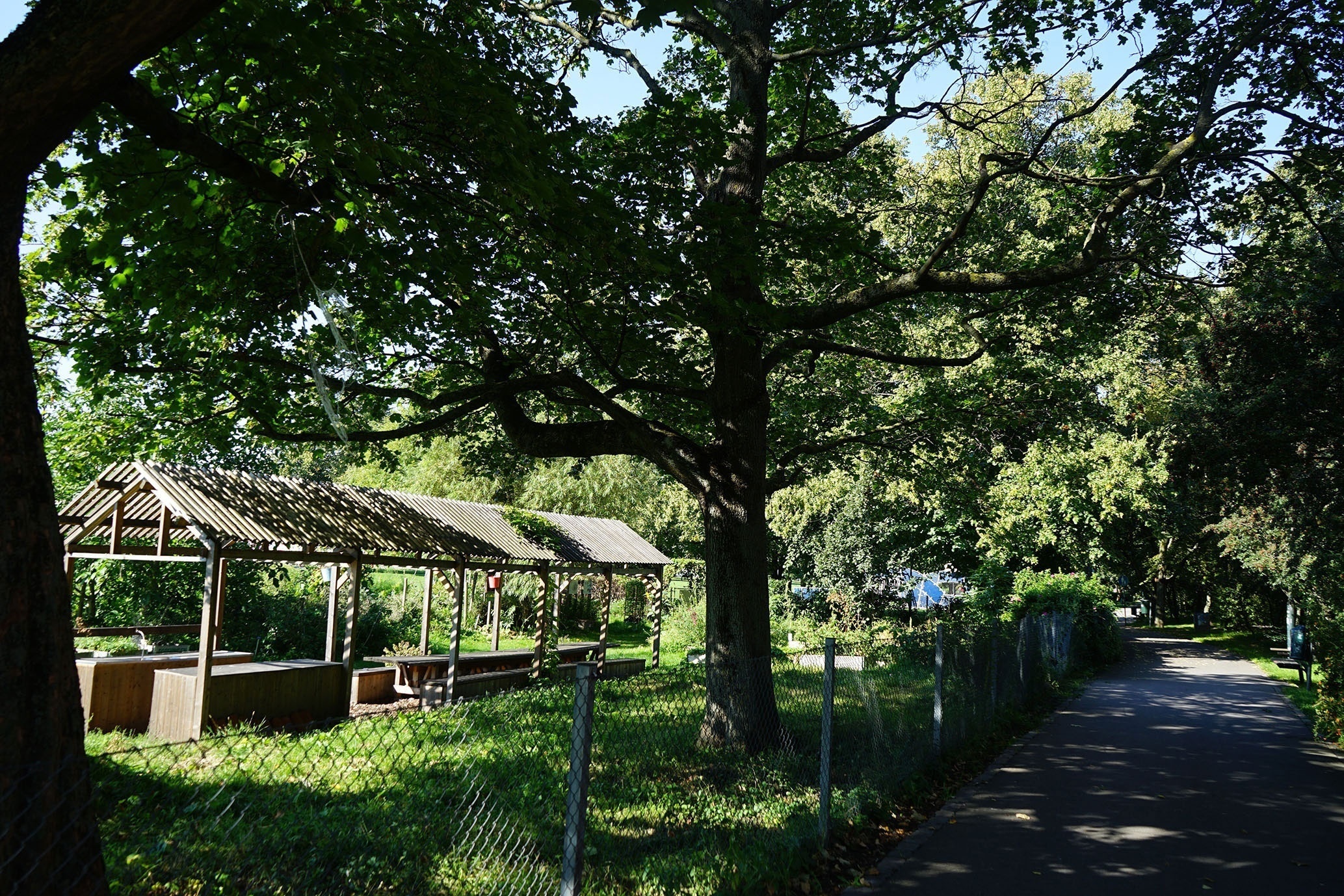
Figure 4
Seating arrangements in the community garden. Photo by author.
Interviews and participant observations
The investigation comprises 33 structured interviews. The interviewees were selected based on purposive selection, based on a theoretical sampling approach (Bryman, 2008: 458). The aim was to select a variety of groups and individuals on site, engaging in different activities at various times, in line with the modalities of appropriation (Korosec-Serfaty, 1973) and of urban commoning (Borch & Kornberger, 2015; Harvey, 2012; Ravazzoli, 2024; Stavrides, 2016). The interviewees received an oral introduction to Malmö university and the subject of the research and were given a leaflet about the research with contact information, explaining that they were welcome to ask questions and could withdraw from the study at any time. One person got in touch to provide additional information for the interview. The interviewees were primarily in the 25–35 or over-60 age group. Of the 33 people interviewed, 16 were men and 17 were women, with the aim to include a variety of ages and genders. As the research progressed, interviewees from a variety of professional backgrounds and engaged in different activities were included. Thus, after conducting 33 interviews, the range of activities and backgrounds helped to avoid bias, under coverage of issues and to reach saturation (Bryman, 2008: 416). The structured interviews comprised questions about daily activities in Enskifteshagen, meeting friends and family there, the interviewees’ favourite part of the common and the reasons for this, whether their use depends on seasonal variations, and the extent to which Enskifteshagen feels like their ‘own space’. To gain insight into the various degrees of appropriation, the interviewees were asked to rate how much the place felt like ‘their own’ on a scale of one to five, and to explain their rating. The interviews lasted between 30 and 60 minutes.
In addition to the interviews, participant observations were carried out to identify the activities of individuals and groups (Bryman, 2008: 411). During the observation period, field notes were jotted down and further elaborated on at the end of each day (Bryman, 2008: 420). The interviews and observations were conducted during the first week of September 2023 (4–15 September), on three mornings and four afternoons/early evenings, both during the week and at the weekend. The selection of days and times aimed to capture a wide range of everyday activities in the common. No sensitive information was gathered, such as names, contact details or background information. All names in the article are fictitious and age is mentioned within brackets. A qualitative analysis (Kvale, 1997) was carried out of the interviews and observations, using an inductive, data-driven approach (Gibbs, 2007).
Together, this methodological approach supports a deeper understanding of how groups as well as individuals make Enskifteshagen their own.
A Shared Space of One’s Own: Urban Commoning and Appropriation in Enskifteshagen
The findings suggest that urban commoning come into being not only through collective actions by groups, but also through everyday practices of appropriation. These practices allow individuals to experience publicly managed space as their own while simultaneously sharing it with others. While participant observations reveal how different groups and individuals share the space, the interviews show how users come to experience that shared space as their own.
On a few sunny days at the end of September, during the observations, people gather in the shade of the trees: groups practise yoga, teachers hold sports lessons on the basketball court and people sit on blankets having coffee and chatting. In the afternoon sun, a group of Spanish-speaking people arrive with portable barbecues and settle down on the lawn. There are also people jogging and working out at the outdoor gym. Despite several groups and individuals using Enskifteshagen simultaneously, there is considerable variation in usage and no tendency towards ‘overuse’ (Borch & Kornberger, 2015) or ‘subtraction’ (Ostrom, 1990). In contrast, several ‘collective, non-commodified relationships’ (Harvey, 2012) exist, whereby different groups carry out their activities in different parts of the space. The common is also a programmed space that, to some extent, prescribes how users should behave, which could reduce opportunities to influence the physical environment (Ravazzoli, 2024; Stavrides, 2016). Even so, some traces of additions to the physical environment exists. People have added stickers to lampposts and litter bins, with political slogans and advertisements for upcoming festivals.
The degree to which individuals make a space into their own differs (Korosec Serfaty, 1976). The study shows that those who rate Enskifteshagen lower, with ratings of two or three, say that they do not know the space well, do not use it as much as before, they live elsewhere, and mainly want to pass through the common. In contrast, those who gave higher ratings– three plus, three to four, four, four plus, five or five plus – said that they live nearby, pass through the common often, they have a high tolerance for other people’s activities, and they particularly enjoy specific places or experiences in Enskifteshagen. In addition to Korosec-Serfaty’s definition of appropriation, the study shows that everyday, casual use, memories, and sensory experiences are crucial for a deeper sense of a space of one’s own.
Everyday Life in the Commons
Everyday, casual use is an important prerequisite for making Enskifteshagen a space of one’s own. Everyday casual use includes bringing home to the commons, by bringing daily objects along and engaging in casual encounters with friends and neighbours (Figure 5).
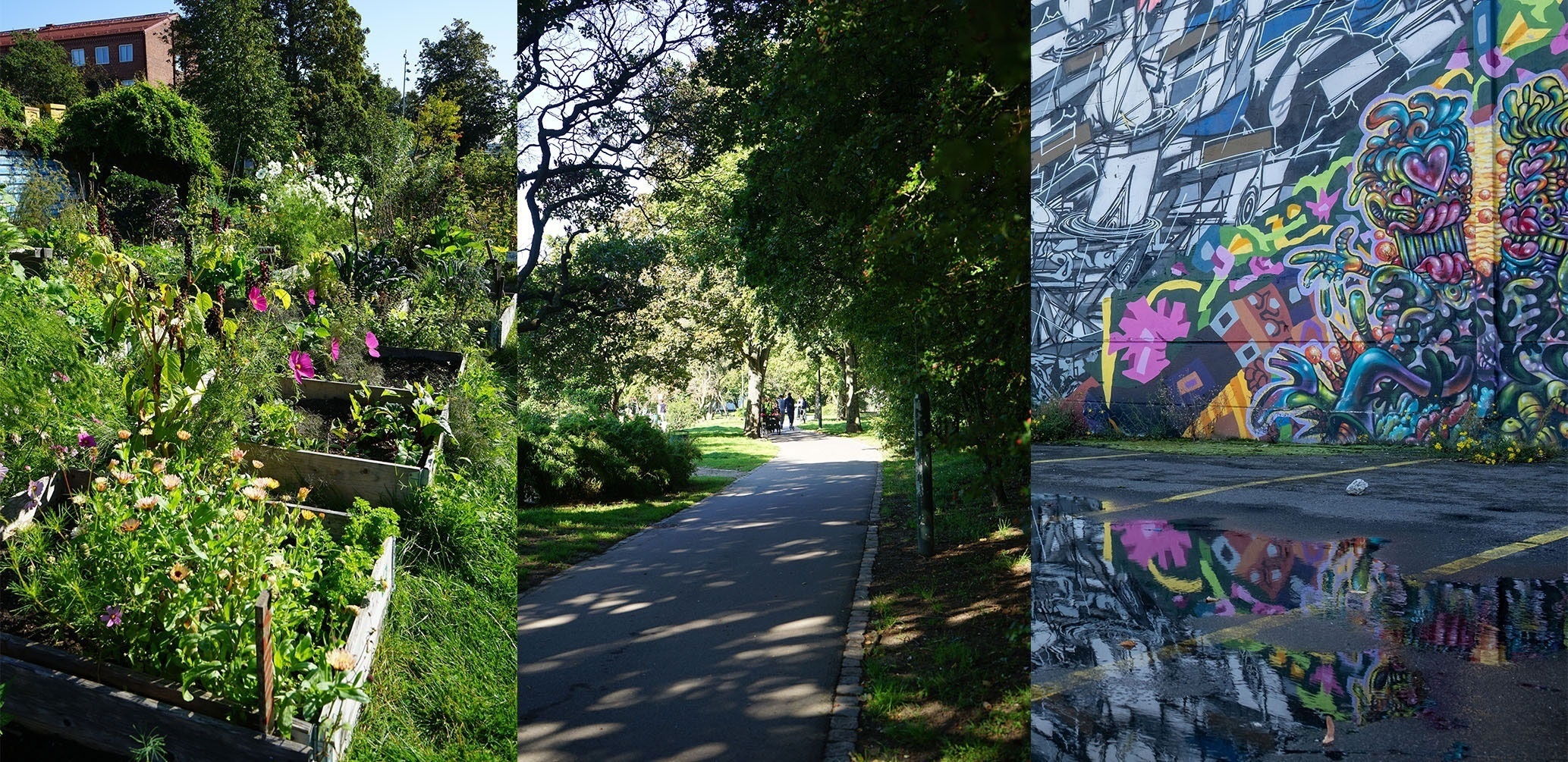
Figure 5
The community garden, pedestrian pathway and graffiti on a wall adjacent to Enskifteshagen. Photo by author.
The activities mentioned by those who claim that Enskifteshagen is their own space are often similar to the activities they perform at home. The everyday spatial practices of appropriation that users engage in (Korosec Serfaty, 1973) are transferred to the public space, but they retain their ‘home’ character. Examples include sharing a meal with friends, resting and reflecting, or sitting on a blanket knitting while listening to the radio. Interviewees describe the activities in an everyday, easily manageable way. Lisa (32) is sitting on a blanket in the sun, knitting and listening to an audiobook through her headphones. During the pandemic, she used to come here for morning coffee with friends, after which they would work out. Samir and Reza (in their 40ies) sit together on the grass drinking beer and eating crisps. They often meet here and sit and talk in the shade of some trees. Julia (35) comes here quite often, walking through the space on her way home from work. Today, she is here playing with her nieces and nephews.
Allowing oneself to occupy a space at Enskifteshagen is a way of making that space one’s own (Korosec Serfaty, 1973). As part of everyday, casual use, people bring things to physically claim the space as their own. Those who feel that Enskifteshagen is their own space often bring items with them to prepare for an activity. These objects reflect everyday life through ‘interaction between groups, things and ideas’ (Borch & Kornberger, 2015) and include items such as coffee mugs, snacks, and yoga mats for practising the week’s workout. Amanda (35) often brings lots of things to Enskifteshagen, such as picnic food, a book to read, drawing materials, and a football or basketball. ‘Yesterday’, she says, ‘I brought a blanket, a book, and falafel’. She also sometimes brings deposit bottles, which she puts in the yellow tubes on the side of the bins at the playground. Monica (79) admits that she sometimes brings a little wine. Julia (35) brings a blanket, food and a loudspeaker. Elisabeth (36) is a new mother who comes to Enskifteshagen for a walk with the pram. She sometimes brings coffee to drink when having a break, sitting on one of the benches.
Meeting up with friends and neighbours is an important part of everyday life at Enskifteshagen. One aspect of this is the repetition of spatial practices over time, practices that include meeting others and engaging in meaningful interaction. According to Korosec-Serfaty (1973; 1976), it is the continuous use of a space for meaningful activities that establishes a sense of appropriation and belonging in that space. Several of those who gave Enskifteshagen a high rating as a space of their own mentioned meeting up with neighbours and other acquaintances. Sometimes these meetings are spontaneous, while at other times people arrange to meet and do something together. When asked if she meets up acquaintances, Monica (79) replies that, having lived in the area for over forty years, she often runs into people she knows. These include neighbours, as well as acquaintances who do not live in the area and are just passing through. Samir (45) walks his neighbour’s dogs in Enskifteshagen and plays with them. He says that he meets friends and neighbours here who come for a walk or a chat. Lisa (32) works out here with her friends. There is a good, soft surface here and at the playground, which is ideal for jogging. She doesn’t want to jog on asphalt, she prefers grass, which she can find here. Then she jogs on to other places. Since Elsa (32) lives nearby, she often meets neighbours who also spend time here. When she meets friends at Enskifteshagen, it’s usually because they’ve arranged to meet there in advance.
Bringing home to the commons extends Korosec-Serfaty’s (1973) concept of appropriation since appropriation in an urban commons is sustained through repeated ordinary domestic routines rather than through territorial control. A shared space of one’s own emerges in ordinary life, as a sense of homeliness is experienced both individually and as shared.
Memories and Remembrance in the Commons
Using a place every day over a long period of time also means that memories of it are created. These individual and shared memories are included in the commons and are important for deeper forms of appropriation. In Enskifteshagen, these memories included positive experiences as well as certain disruptive elements.
An important prerequisite for developing a deeper sense of a space of one’s own is to have memories associated with it. The interviewees accumulated these memories through repeated visits over long periods of time, ranging from a few months to a lifetime. According to Borch and Kornberger (2015), memories of the commons are formed through everyday use and interaction between people and things. Furthermore, according to the interviewees, memories stem from knowledge of the space, its visual character, and its expression (Korosec-Serfaty, 1976). Filip (32), has visited Enskifteshagen since he was a child. His mother lives nearby and he now works in the neighbourhood himself. He says that he has witnessed changes over time and is especially fond of the community garden. Monica (79), has been visiting the space since she was ten years old. She says that there used to be snow back then. ‘You could ski in Enskifteshagen!’ she recalls, laughing. Nowadays, however, she is content to sit on a bench and walk around the area to get some fresh air and exercise. She says this has been especially important in recent years during the pandemic, when it has been more difficult to get around the city safely. Mohamad (21), says that he used to come here as a child to play football and that he really liked it. When he was younger, he used to play on the basketball court, and he remembers thinking the trampolines at the playground were fun. Kevin (45), used to come to Enskifteshagen when his children were young and they lived nearby. Now he is just on a break from work and sit on a bench in the shade. He points out that it’s a good space for children since it is located inside a block with vehicular traffic only along the two short sides of the space. Especially his children liked coming here.
Like other public spaces, an urban common is accessible to the public year-round and around the clock and are therefore potentially prone to violence or illegal activities. During the observations, no such activities were evident, although they were mentioned by interviewees. Interestingly, those who gave high ratings to Enskifteshagen were more tolerant of other people’s activities, despite recalling seeing drug dealing and arguments. Some interviewees mentioned the area’s ethnic diversity as a positive aspect. Julia (35) prefers being here in Enskifteshagen, where it is ‘more mixed’, rather than in Folkets Park, where it is ‘more white middle class’. She points out that the space is open and would not be nearly as pleasant if there were a fence. Emma (32) doesn’t think there are that many troublemakers. Admittedly, there is some drug dealing, but it mostly happens in the evenings and doesn’t affect her personally. Richard (28) says, ‘This is a very popular place. There’s not much else nearby’. He doesn’t think anyone is causing any trouble, though: ‘No…there’s a lot of drugs dealing by the grove of bushes, but they keep to themselves.’ Elisabeth (36) thinks there’s a welcoming community of parents in the area. She’s heard a few rumours that it’s rowdy, but she’s never seen anything. ‘Maybe Enskifteshagen is a fairly permissive place, but it doesn’t bother me.’
Developing relationships with other people and sharing memories extends Korosec-Serfaty’s (1973) definition of appropriation. Even though individuals transgress certain laws, other people still show a willingness to let them inhabit the space. Furthermore, the findings show that both individual and shared memories are included in a shared space of one’s own.
Positive Sensory Impressions in the Commons
Yet another prerequisite for deeper sense of a space of one’s own is experiencing sensory impressions. Sensory impressions from scents and visual stimuli, as well as different ways of moving around, create sensory values that contribute to a deeper connection with the commons.
Those who rate Enskifteshagen highly, comment on the beauty of the large trees, the pleasant smell of the plants, the opportunity to pick and bring home herbs, and the sense of calm in the community garden. According to Korosec Serfaty (1976) engaging in the physical environment is an important aspect of developing a sense of one’s own space. There are few possibilities to impact the physical environment of Enskifteshagen, except for the community garden. The garden is an important part of the space, and it is the part that is most closely connected to historic practices. The City of Malmö has organised the community garden in collaboration with the urban gardening organisation Odlingsnätverket Seved. An information sign reminds growers and visitors of medieval agriculture, when people would work together to cultivate and harvest crops (Malmö Stad & Odlingsnätverket Seved, 2010). It is hoped that urban gardening and beehives will promote biodiversity and allow farming to become a place for the shared use of the land by the community once again. Sensory experiences of the community garden, sowing, harvesting, scents and sounds, contribute to a deeper understanding of historical practices and are linked to contemporary ideas about reuse and sustainability. Furthermore, references are made to the historic, common land. Its long, narrow shape is reminiscent of historical fields and the history of the land is reflected in its name. ‘Enskifte’ was the name of the 1786 Ordinances, and ‘skifte’ refers to the small plots of land that characterised the agricultural landscape prior to the land reform.
Apart from herbs, there is little for visitors to harvest in Enskifteshagen. Nevertheless, two young women are searching for mulberries. They read on a map that there should be mulberry trees here, but they find neither trees nor berries. Searching for and picking edible fruits and berries is an example of foraging, a relatively new practice whereby edible plants are harvested in public parks and green spaces. (Nyman, 2019; Ziegerer, 2023). Anna (30) explains that ‘You’re allowed to take herbs’ in the community garden. She brings food, coffee and snacks here, and takes home some chives and herbs. The community garden has a ‘soothing atmosphere’ and she talks a lot about the ‘cosiness factor’. Otherwise, there is ‘a lot of concrete in Malmö’ and it is ‘oxygen-depleted’, according to Anna. Now that he’s older, Filip (30) says that the community garden is his favourite place. He likes the garden because it is ‘lovely, green, cosy and attractive’, and he thinks it is ‘really cool’. He also likes the signs by the plants and the permaculture mounds. He says that it feels like you’re out in the countryside and that it’s wild and lush. Filip says it makes him feel calm. He thinks that it’s good to grow your own food. He mentions the example of a cucumber costing 2.5 € at the supermarket, suggesting that perhaps more people will start growing their own food now that everything has become so expensive. Rebecka (28), comes to the community garden with her baby in a pram. She likes the garden and was previously engaged in gardening here. She likes the place because it’s shared and because of the recently constructed pergola with seating. Amanda (33) likes the hawthorn trees best because you can hang garlands from them. She did just that when she celebrated her birthday there. She also really appreciates the lilac trees and the chestnut tree that blooms near the nursery school. While she generally prefers the large trees along the edges, she also likes the open, sunny area.
The importance of sensory experiences is new to appropriation. The focus on sensory experiences has increased in recent years, for example through foraging in cities, research on atmospheres and similar. Sensory values that contribute to a deeper connection form experiences that are both individual and shared and take shape as a shared space of one’s own.
Commoning and Appropriation: Involving both Groups and Individuals
Urban commons emerge through the interaction of commoning and appropriation. An urban commons is simultaneously shared and appropriated for individual use. Its openness means that different groups and individuals can use it at various times throughout the day and night, which is arguably typical of an urban commons. The examples of themes and interviews above attempt to capture these simultaneous occurrences and shared experiences. Even though individuals and groups make the commons their own, they are open to sharing space and are aware of what others are doing but are not disturbed by it. Involving casual daily use, memories and sensory experiences, the spatial practices contribute to meaning-making and the creation of a deeper sense of a space of one’s own, shared by groups and individuals alike. The spatial practices of appropriation in urban commons can thus be said to constitute a form of commoning involving both groups and individuals.
A Shared Space of One’s Own: Swedish Welfare State Implications of the Commons
The differences in urban context will lead to variations of access and use between commons in different cities and countries. Additionally, the conceptual definition differs between countries. The Swedish word for ‘commons’ – ‘allmänning’ – is an Old Norse term that originally referred to all men, at a time when kings ruled over men rather than land. When allmänning was first used to define a territory (c. 800–1000), it referred to land outside villages. Such land could be used as a marketplace, a religious site or a medieval court (Emanuelsson et al., 2002; Erikson, 2021). It was a space outside ownership and outside what would later become capitalist space. A definition still in use in Sweden, in parallel to the legal definition of allmänning as property, is ‘The commons belongs to everyone because it belongs to no one’ [allmänningen är allas eftersom den är ingens]. Starting from the premise that the allmänning exists outside capitalist space and thus belongs to everyone leads to different associations than starting from the idea of the commons as based on the ‘subtraction of resources’ (Ostrom, 1990). The premise that the commons is everyone’s, is more akin to definitions that capture the use value of urban commons, such as ‘non-commodified relations’ (Harvey, 2012), and ‘interactions between people, things, and ideas’ (Borch & Kornberger, 2015; Löfgren, 2015) in daily life.
In an international comparison, Sweden has a very high level of public access to and use of land. In cities, all land that is not built on is defined as allmän plats mark [common land] to which the general public have a right of access (Boverket, 2023). Such land which comprises green areas, parks, commons, streets and squares, is largely owned as well as maintained by municipalities. In rural areas, the right of public access has been in place since the 1940s, ensuring access to 90% of all land in the country (Bengtsson, 2023). User right of access to land are thus relatively strong in Sweden. Even though the term allmänning has no legal meaning according to Swedish planning regulations there is, however, an etymological, ideological-cultural and legal relation between allmänning [commons] allmän plats (which is the planning term) and the abstract notion of det allmänna. Kerstin Jacobsson argues that ‘Swedish society is characterised by an unusually strong sense of ‘det allmänna’ (2010:16), through a strong trust in each other and in the state. Det allmänna refers to ‘a sphere for common concerns or tasks in society, a common commitment or responsibility’ (2010:19). Det allmänna is interpreted as an ideological-cultural concept closely linked to the development of Swedish society. A ‘sense of det allmänna’ includes ideas, norms and feelings that affect everyone. Responsibility for det allmänna is primarily ensured by the Swedish state, which, through the legal system, can ensure that ‘everyone’ is included. At the same time, det allmänna can refer to common concerns, such as public means of communication or common land, which are not managed by the state but by individuals, the voluntary sector or civil society.
The sense of det allmänna, of phenomena that are ‘ours’, is clearly expressed in norms and rules concerning land issues, such as allmänning and allmän plats. Given the relatively high level of right of access to and use of land, commoning in an urban commons in a welfare state, is thus not a relationship ‘between the state and the market’ (Bollier & Helfrich, 2012), but rather a relationship with the state i.e. det allmänna and the people (Grundström, 2025). This suggests that the relationship between commoning and the state may differ across welfare-state contexts. In Sweden, where access to public land and responsibility for maintenance are institutionalised through municipalities and embedded in the broader notion of det allmänna, commoning may be less about establishing alternative governance than about appropriating and inhabiting publicly maintained space. Exploring these differences comparatively lies beyond the scope of this article but represents an important direction for future research.
The Urban Commons as a Shared Space of One’s Own
The article uses both appropriation and commoning in its analysis to capture urban simultaneity in terms of access and rights of use. As an urban, contemporary phenomenon, the commons can be conceptualised as a shared space of one’s own. People express their sense of entitlement to use the space for activities they control, through varying degrees of belonging. Those who consider Enskifteshagen their own urban space accepts the coexistence of different activities. Based on a sense of right of use, they are not disturbed by other individuals or groups, and they express their connection to the space through material and social interactions. Such urban commoning is important because it contributes to meaning-making and belonging. Furthermore, The study highlights important aspects of appropriation when creating one’s own space, such as bringing home to the commons, memory formation, as well as sensory experiences. These elements are valuable, not only for meaning-making and belonging, but also for urban planning in cities affected by densification and reduced green spaces. The right to commoning and user value are important for equal access to valued urban spaces, to a shared space of one’s own. The urban commons is neither a collective project that erases individual experience nor a collection of isolated personal attachments. Rather, it is a space in which many people simultaneously experience a public place as their own while recognising it as equally shared by others.
Acknowledgements
A warm thank you to all the interviewees at Enskifteshagen. Thank you also to Mathilda Rosengren, Edith Grundström and Cecilia Wendt for participating in collecting the empirical material. Thank you to the two anonymous reviewers whose comments helped improve the article.
According to the Swedish Ethical Review Authority 2025 (https://etikprovningsmyndigheten.se/en/) no ethical approval or application was required for this study.
AI was used to improve the English language.