
Introduction
After decades of unsatisfactory conservation outcomes around the world, in recent decades policymakers and scientists have prioritized the involvement of indigenous peoples and local communities (IPLCs) in forest management and conservation efforts (Garnett, et al., 2018; Gavin, et al., 2018; Schuster, et al., 2019; Hergoualc’h, et al., 2017; Fa, et al., 2020; Fariss, et al., 2022). However, a substantial body of research demonstrates the current mixed success of community forest management (CFM) policies around the world (Di Girolami et al., 2023).
International agreements, including the 2022 Kunming-Montreal Global Biodiversity Framework (GBF) under the Convention on Biological Diversity (CBD), the 2015 Paris Agreement under the United Nations Framework Convention on Climate Change (UNFCCC), and the Agenda 2030 for Sustainable Development have set critical targets to reduce the loss of important biodiversity areas, halt the degradation of natural habitats, prevent the extinction of species, and maintain and enhance greenhouse gas sinks and reservoirs by 2030. There is a broad consensus that achieving these goals will require a concerted effort by policymakers and IPLCs to protect forests on their lands, especially since IPLC lands account for large portions of the world’s remaining tropical forests. In the Amazon basin, for example, indigenous territories make up 30 percent and contribute to one-third of the total carbon stored in the Amazon (Sze, et al., 2022; Schleicher, et al., 2017; Nolte, et al., 2013). In contrast to PNAs, which are typically managed solely for conservation purposes, IPLCs require holistic goals that encompass their economic, cultural, and spiritual relationships with the forest (Kohler & Brondizio, 2017). The conservation priorities of IPLCs often combine traditional lifestyles with modern perspectives on land and forest management. Given their dependence on the forest for their livelihoods, they face challenges in meeting basic needs, especially as they become more integrated into mainstream society and in need of cash income. Extraction and commercialization of forest resources emerge as important options for securing this income (Schulz, et al., 2019; Kohler & Brondizio, 2017). A better understanding of the complex realities of local forest communities and their intricate relationships with their ecosystems is needed to facilitate more effective policy decisions (Fa, et al., 2020; Reed, et al., 2016).
This paper examines the conditions that influence the adoption or rejection of rules for the sustainable management of their forest resources. The existence of community rules is not sufficient to ensure conservation, as this depends, among other things, on community enforcement. However, their existence is a clear indicator of a community’s commitment to maintaining its resources at sustainable levels. In addition, several studies show that the existence of community rules, coupled with community members’ awareness and understanding of them, is a necessary condition for successful enforcement (Gibson, et al., 2000; Hayes, 2006). Van der Zon et al. (2023) identify clear and legitimate community rules, along with strong local leaders and pre-existing community institutions, as predictors of strong conservation enforcement in communities. Establishing community rules is a challenging and time-consuming process, and not all communities are successful. Ostrom (1999) concluded that “forest users are more likely to devise their own rules when they use a forest that is starting to deteriorate but has not substantially disappeared, when some forest products provide early warning concerning forest conditions, when forest products are predictably available, and when the forest is sufficiently small that users can develop accurate knowledge of conditions”. Yet, in the last two decades, no additional literature has focused on a deep understanding of the adoption of conservation rules in IPLCs. Instead, scholars often take their existence for granted. The central question addressed in this study is: What factors drive rulemaking in IPLC to sustainably manage their forests? Specifically, we look at the factors: ‘commercial use of forest resources by community members’, ‘scarcity of resources’, and ‘existence of relations of trust between the community and external partners’. Although these three factors are frequently cited in the literature as influencing outcomes in community-based forest management (CFM) (Arts & de Koning, 2017; Flores-Díaz, et al., 2014; Gibson, et al., 2007; Ostrom, et al., 2002), there is limited information on whether and how they impact the adoption or rejection of restrictive rules within IPLCs.
Research on CFM has uncovered numerous biophysical, demographic, economic, institutional, and socio-political conditions that lead local groups to start managing their forest resources, aiming to ensure their sustainability for the future (Ostrom, 1999; Ostrom, 1990; Padgee, et al., 2006; Gilmour, 2016; Agrawal & Chhatre, 2006). However, a limitation of this body of research is that most studies are either single cases or meta-analyses. Case studies help develop theory, but their external validity is limited (Gilmour, 2016). Also, they may over- or underestimate the importance of certain conditions (Baynes, et al., 2015; Padgee, et al., 2006). meta-analyses combine data from different places and situations to find general trends but risk overlooking regional or contextual individual differences and complexities (Gilmour, 2016; Arts, B., 2021). Conditions identified as critical in a long list of cases may be relevant in some geographic and social contexts but not in others (Padgee, et al., 2006). In addition, there is little quantitative research at the community level that focuses on a specific geographic area, especially when it comes to remote forests (Agrawal & Chhatre, 2006).
We address this knowledge gap by presenting the results of our analysis of 57 remote indigenous and local communities located in the tropical peatlands of the Datem del Marañon Province in the Pastaza Marañon Foreland Basin (PMFB) of northeastern Peru. This region is of global importance for carbon sequestration and storage, making it one of the most important peatland areas in the world. The IPLCs in this area are engaged in harvesting of Mauritia flexuosa palm fruit, locally known as aguaje, for subsistence and commercial purposes. However, increasing market demand and the use of destructive harvesting methods have led to forest degradation with negative impacts on livelihoods and carbon stocks (Hergoualc’h, et al., 2017; Horn, et al., 2012; Manzi & Coomes, 2009; Virapongse, et al., 2017). Our fieldwork included the collection of social data through semi-structured group interviews with community leaders, open-ended interviews with local experts, and the assessment of palm swamp degradation by quantifying the sex ratio of male and female palm counts (with a baseline ratio of 0.5 in undisturbed populations (Kahn & de Granville, 1992; Freitas Alvarado, et al., 2019)), along with the analysis of satellite data. We analyzed our data using chi-squared analysis.
The paper is organized as follows: First, we present the theoretical framework, explain the notion of conservation rules and outline our rationale for selecting specific variables. We then describe the biophysical and social context of the M. flexuosa harvesting in the PMFB. The methods section details our sample selection and the application of chi-square analysis. The results section summarizes our findings and sets the stage for further analysis in the discussion and conclusion section, where we interpret our results within the broader discourse of achieving long-term conservation of pristine tropical forests through collaborative efforts with IPLCs.
Forest resource extraction and conservation rules in forest communities
Populations in remote forests, such as the Amazon, have historically remained isolated from mainstream society, and over time have developed their own systems of rules to cope with daily challenges and adapt to changing conditions (Bremner & Lu, 2006; Schlager & Ostrom, 1992; Minato, et al., 2010; Basurto, 2013; Monroy-Sais, et al., 2016). They also rely on their own enforcement mechanisms to keep outsiders out, i.e., community police (Van der Zon, 2023). Even today, while officially the national state owns all forest resources, the influence of laws, regulations, market-based standards, and requirements from trading partners or overarching organizations is limited in these areas, because enforcement is challenging for external agencies (Klooster, 2000; Hamlin, 2021; Kerekes & Williamson, 2010; Cronkleton & Larson, 2015; Gibson, et al., 2000; Van der Zon, et al., 2023). In addition, many indigenous communities in Peru now have communal land titles that grant them extensive formal autonomy in matters of organization, and land and forest resource use (SICNA, 2016).
In the northern Peruvian Amazon, most communities to traditionally prohibit outsiders from extracting resources from their territories, but occasionally lease land to outsiders or enter into resource extraction agreements with companies (Sarmiento, Begert and Guerra 2021). Internally, communities typically allocate portions of the communal territory to families for their agricultural fields and home gardens (Burns & Carson, 2002; Bremner & Lu, 2006). All community members can harvest and hunt in the remaining communal forests, sometimes with some restrictions. Whether or not restrictions are in place depends on the internal rules of each community.
Rules can be defined as authoritative, normative influences on behavior that operate across individuals, circumstances, and time (Hamlin, 2021). Within human societies and groups, including IPLCs, rules and rule systems are often considered as the basic building blocks that contribute to social order. Similar to other groups, these communities establish foundational rules that shape their organizational structure. They also implement rules to regulate specific activities, such as restrictions on harvesting and commercialization of forest resources. The internal decision-making processes for adopting new rules or changing existing ones in forest communities are complex (Gibson, et al., 2000), and involve a constant interplay between group members who seek change and those who wish to maintain the status quo (Burns & Dietz, 1992). There is little evidence on the conditions under which communities adopt or fail to adopt rules for sustainable resource management. Existing studies mainly focus on the influence of the community members’ assessment of whether the benefits of rules outweigh their costs (Monroy-Sais, et al., 2016; Manzi & Coomes, 2009; Byg & Balslev, 2006; Faysse, 2005; Poteete & Ostrom, 2002). While rules aim to secure long-term access to a forest resource, community members may be concerned about the negative short-term impacts on livelihoods and the high monitoring and control costs. There is also some evidence that forest communities are more likely to adopt rules that restrict the extraction of resources that are important to their subsistence and/or cash income (Gibson, et al., 2007; Panday, et al., 2016). In addition, Padgee et al. (2006) suggest that community members are more inclined to adopt rules for resources with an economic value, because this can offset implementation and enforcement costs. Finally, some studies have found that communities are more likely to establish rules when they perceive that a resource is becoming scarce. They may view abundant resources as less in need of protection (Gibson, et al., 2007; Ostrom, et al., 2002), and they may view degraded resources beyond recovery as not worth the investment, even if they depend on them (Monroy-Sais, et al., 2016; Gibson, et al., 2007; Poteete & Ostrom, 2002; Ostrom, 1999). However, decisions to adopt or reject restrictive rules within communities go beyond mere rational exercises aimed at optimizing financial gains. Shared cultural beliefs, community norms, religious principles, taboos, and local moral perspectives all profoundly influence decision-making processes (Wyatt, et al., 2022; Cocks, 2006; Bennett, 2002; FAO, 2022; Nerfa, et al., 2020; Schulz, et al., 2019; Klooster, 2000; Minato, et al., 2010).
Community members’ perceptions regarding the status of a forest resource depend largely on their knowledge and understanding of various aspects: its availability, regeneration potential, and possible management strategies (Gibson, et al., 2007; Castaño-Arboleda, et al., 2007). This knowledge and understanding, however, are inherently incomplete and subjective. While community members have an invaluable traditional ecological knowledge (TEK) of their forest, they often lack access to scientific insights into the broader landscape-level status of the forest and its species. The absence of sufficient biological information, such as regeneration capacity and population size and density of the forest resources, serves as a crucial factor driving unsustainable harvesting (Kor, et al., 2021). This becomes especially pertinent in situations where traditional management practices become unsustainable due to increased market integration (Marshall, et al., 2006; Kor, et al., 2021). When community members are aware of strategies for sustainable managing their forest resources, they are more likely to embrace and enforce rules aimed at protecting these resources, driven by a sense that their efforts stand a better chance of success (Flores-Diaz, et al., 2014).
In this context, several publications highlight the importance of IPLCs engaging in conservation-focused ‘communities of practice ‘ (COPs), (Arts & de Koning, 2017; Gibson et al., 2007; Gerritsen, 2010), as this can lead to positive changes in livelihoods and forest conditions. For example, Becker (1999), illustrates how a COP motivated a community in Ecuador to begin regulating harmful resource extraction. In this case, an external advocacy group shared scientific data with the community, highlighting the direct benefits of maintaining a standing forest, such as preventing soil erosion and increasing water availability through fog trapping, coupled with practical assistance. Wenger (2000, 2006) describes COPs as social learning systems or groups of people who share a concern or passion for something they do and learn how to do it better. In the context of sustainable forest management, Arts and De Koning (2017) describe COPs as networks that connect local people with external forest professionals for mutual learning. COPs can take a variety of forms, including the shape of well-structured dialogues, projects, or informal information sharing. They can include activities such as exchanging scientific and traditional knowledge, sharing best practices from other regions, analyzing fears and expectations related to the implementation of restrictive rules and strategies, and providing practical assistance (Poteete & Ostrom, 2002; Monroy-Sais, et al., 2016; Gibson, et al., 2007; Arts & de Koning, 2017; Castaño-Arboleda, et al., 2007; Schulz, et al., 2019; Kor, et al., 2021; Carlisle & Gruby, 2019). Regardless of their specific form, COPs must always be based on respect and trust (Crona & Parker, 2012). Wenger (2000) identifies three other essential characteristics for COPs to be effective. First, participating actors must share a common understanding of the purpose of the COP and hold themselves and each other accountable for contributing to that purpose (joint enterprise). Second, all participants must contribute to building the community by interacting and collectively establishing norms and reciprocal relationships. Thirdly, participating members must develop and use a common language, tools, and narratives.
M. Flexuosa harvesting in Pastaza Marañon Foreland Basin, Peru
The PMFB (43,617 km2) has received considerable attention in recent years because its peatlands store more than 4.4 PgC of below- and above-ground carbon (Bourgeau-Chavez, et al., 2021; Hastie, et al., 2022) in peat deposits up to 7.5m thick (Lähteenoja, et al., 2012), making it one of the largest peat deposits in the tropics (Draper, et al., 2014; Marcus, et al., 2024). The area contains 76% of the estimated peat stock in the Peruvian Amazon lowlands (Hastie, et al., 2022). The palm species M. flexuosa is widespread in these peatlands (Roucoux, et al., 2017; Castaño-Arboleda, et al., 2007). It is a foundation species1 that creates a stable and nutrient-rich environment for diverse plant and animal species. It also has plays an important role in carbon sequestration (Lilleskov, et al., 2019; Roucoux, et al, 2017; Virapongse, et al., 2017).
Humans have used M. flexuosa since the earliest Amazonian settlements (Rull, 1998) and (Roosevelt, et al., 1996) cited in Baker & Honorio Coronado, 2019). M. flexuosa peatlands have significant socio-economic and cultural importance to local communities. The palm is used for many things, including fruit, oil, fiber, leaves, petioles, larvae, sap, palm heart, seeds, and roots. People use these parts of the palm for food, cultural activities, construction, firewood, medicine, and domestic items (Manzi & Coomes, 2009; Castaño-Arboleda, et al., 2007; Schulz, et al., 2019).
From 1983 to 2013, the annual demand for M. flexuosa pulp in Iquitos, its main market, increased by 49% to 8,206 metric tons (Padoch, 1988; Horn, et al., 2018; Marcus, et al., 2024). Local populations make money by selling the fruit to merchants or in towns and cities in the region (Falen Horna & Honorio Coronado, 2018; Horn, et al., 2012; Manzi & Coomes, 2009; Hidalgo Pizango, et al., 2022; Gilmore, et al., 2013; Virapongse, et al., 2017). This income is about 15 to 22% of their annual income, or about US$208–227 per year (Hidalgo Pizango, et al., 2022; Manzi & Coomes, 2009). The PMFB communities along the Marañon River supply most of the M. flexuosa to Iquitos. In addition, PMFB communities are located near Saramiriza, which is important in the M. flexuosa trade because of its improved road connection (field observations, and Marcus, et al., 2024). The growing demand for M. flexuosa fruit pulp in the Peru could provide IPLCs with a reliable source of income, improving local livelihoods in the PMFB (Hidalgo Pizango, et al., 2022). M. flexuosa also indirectly helps local incomes by selling meat from animals that eat M. flexuosa fruits (Gilmore, et al., 2013; Horn, et al., 2012; Horn, et al., 2018). Furthermore, M. flexuosa helps communities as a safety net during crises (Virapongse, et al., 2017).
In addition to a notable increase in deforestation (3,030 +/– 95 ha/year during 2007–2018; representing a 140% increase from deforestation observed during 1990–2007), the PMFB is experiencing a significant and increasing amount of biodiversity degradation. Between 1990 and 2018, approximately 266,712 +/– 7,701 hectares were degraded, representing a 32% increase from 1990–2007 to 2007–2018 (Marcus, et al., 2024). This increase in degradation correlates with the increased market demand for M. flexuosa pulp during the same period. M. flexuosa is typically harvested by selective felling of female fruit-bearing palms (Holm, et al., 2008), resulting in a skewed population with a pronounced male dominance. This makes reproduction difficult (Virapongse, et al., 2017), resulting in changes in the forest vegetation structure (Quinteros, et al., 2023). These alterations negatively affect belowground carbon dynamics and ecosystem functioning, and affect wildlife species that rely on M. flexuosa as a food source (Watson, et al., 2018; Hergoualc’h, et al., 2017; Horn, et al., 2018). Palm cutting disrupts fine root productivity, mortality, and decomposition rates of M. Flexuosa, affecting associated carbon fluxes and strongly contributing to adverse effects on peat accumulation (Dezzeo, et al., 2021; van Lent, et al., 2018). Carbon emissions resulting from deforestation and degradation of palm swamps in Peru amounted to 39.3TgC over the period 1990–2018, equivalent to 77% of the carbon emissions of Peru’s fossil fuel and industrial emission in 2021. A significant proportion of these emissions come from the PMFB, where forest degradation and deforestation is increasing at an alarming rate (Marcus, et al., 2024).
Combining M. flexuosa pulp production with sustainable palm swamp forest management has the potential to create a stable regional economy, while conserving carbon stocks and biodiversity (Hidalgo Pizango, et al., 2022). A study by Quinteros, et al. (2023) shows that palm swamp forests in Alto Mayo Valley of Peru managed by local communities have twice as much the above-ground carbon as those under strong anthropic pressure. Marcus, et al. (2024) show that government imposed restrictions in the Pacaya Samiria Reserve led to less palm degradation. Climbing the palms with special harvesting equipment has been the most successful strategy for sustainably pam swamp forest management (Gilmore, et al., 2013; Manzi & Coomes, 2009; Horn, et al., 2018). People in Puerto Alegria in the PMFB started climbing palms to harvest fruit in the 1980s. Today, 52% of the palms in that community are female. A study of 93 sites in Loreto also shows that where palms are climbed for harvesting there are relatively more female palms than in other places. The authors also say that region-wide uptake of climbing could increase fruit production by 51% and increase its value to US$62 ± 28.2 million per year (Hidalgo Pizango, et al., 2022).
In 2013, a joint initiative involving IPLCs, a nongovernmental organization (NGO), and the provincial government led to the establishment of two municipal conservation areas (MCAs) in the PMFB (PROFONANPE, 2012). These conservation areas, each consisting of approximately thirty communities, share the common goal of promoting sustainable ecosystem management. MCAs are not recognized by national law. Moreover, the text of the MCA does not impose any conservation obligations on the communities, in line with the rights of IPLCs to autonomy in matters of organization and land use. Instead, the MCA functions as COP, a platform between the organizations that facilitates dialogue and cooperation, particularly with regard to sustainable M. flexuosa harvesting and the management of environmental conflicts with external parties. The creating of this COP started in the years before the MCA was established, when NGO staff started building a conservation focused network with the provincial government staff and local communities, through numerous visits. Besides information exchange and practical support, communities felt motivated to join the MCAs because of a collective desire to prevent private companies and government agencies from engaging in activities such as oil extraction and logging. This desire was also collectively identified in the years before the MCAs were created. Within each MCA, a local indigenous leader has been elected as president, responsible for coordinating exchanges and representing the MCA to external parties. The NGO and provincial government staff play a key role in facilitating the exchange of information, ideas, and experiences among the MCA parties. In addition, the NGO provides support for travel expenses and, where communities express a genuine interest in transitioning to sustainable M. flexuosa harvesting, assistance such as the provision of climbing equipment and training and the establishment of small-scale facilities in communities for the production of M. flexuosa pulp or oil (De Jongh, 2018).
Methods
Study area
Our study was conducted in Datem del Marañon (PDM), an inland province of 4.7 million hectares located in the foothills of the Andes in the Loreto region. Most of the province lies within the PMFB. It is quite isolated and has only river access (Lilleskov, 2019). It has 594,480 inhabitants, approximately half of whom identify as indigenous (Achuar, Awajún, Candoshi, Kichwa, Shapra, Shawi or Wampis), while the remaining half identify as mestizo (INEI, 2018). The population is distributed between the provincial capital and some 330 indigenous and mestizo communities along the Marañon, Pastaza, and Cahuapana rivers and their tributaries (Cornejo, 2016). Mestizo communities are composed of individuals from various indigenous tribes and a small number of migrants.
Sampling and data collection
Our study compromised social and an ecological research component. The social research component involved sampling and visits during June 2016–July 2017. Given the social and geographic complexities of conducting fieldwork in PDM, we used convenience sampling. Many of our field visits were coordinated with trips involving staff of an NGO, the provincial government, and local authorities. In total, we conducted structured group interviews with leaders from 62 communities. However, five of these were deemed unusable due to missing data, leaving us with 57 communities for data analysis (Figure 1). The tribal leaders played a crucial role as translators, introducing the researcher and explaining the purpose of the visit. Acknowledging the potential accuracy and reliability concerns associated with self-reported data (Vasco, et al., 2017; Nuno & St. John, 2015; Tourangeau & Yan, 2007), we took measures to address this by conducting all interviews with the assistance of NOG staff, tribal leaders or other persons with a relationship of trust with the community leaders In a few communities where conservation projects are ongoing, we detected a ‘social desirability bias’. This bias was much related to words such as conservation and sustainable management, which the conservation project staff often employed. To mitigate this, we explained to the respondents that we were independent researchers, not related to the government, donor agencies or NGOs. We also used the strategy of asking questions in a roundabout way, i.e. instead of asking “Do you sustainably manage your natural resources?”, use the questions “What resources do you have in the community? How do you use them? Can community members freely fell palms or are there restrictions?” to ensure a more accurate representation of community perspectives.
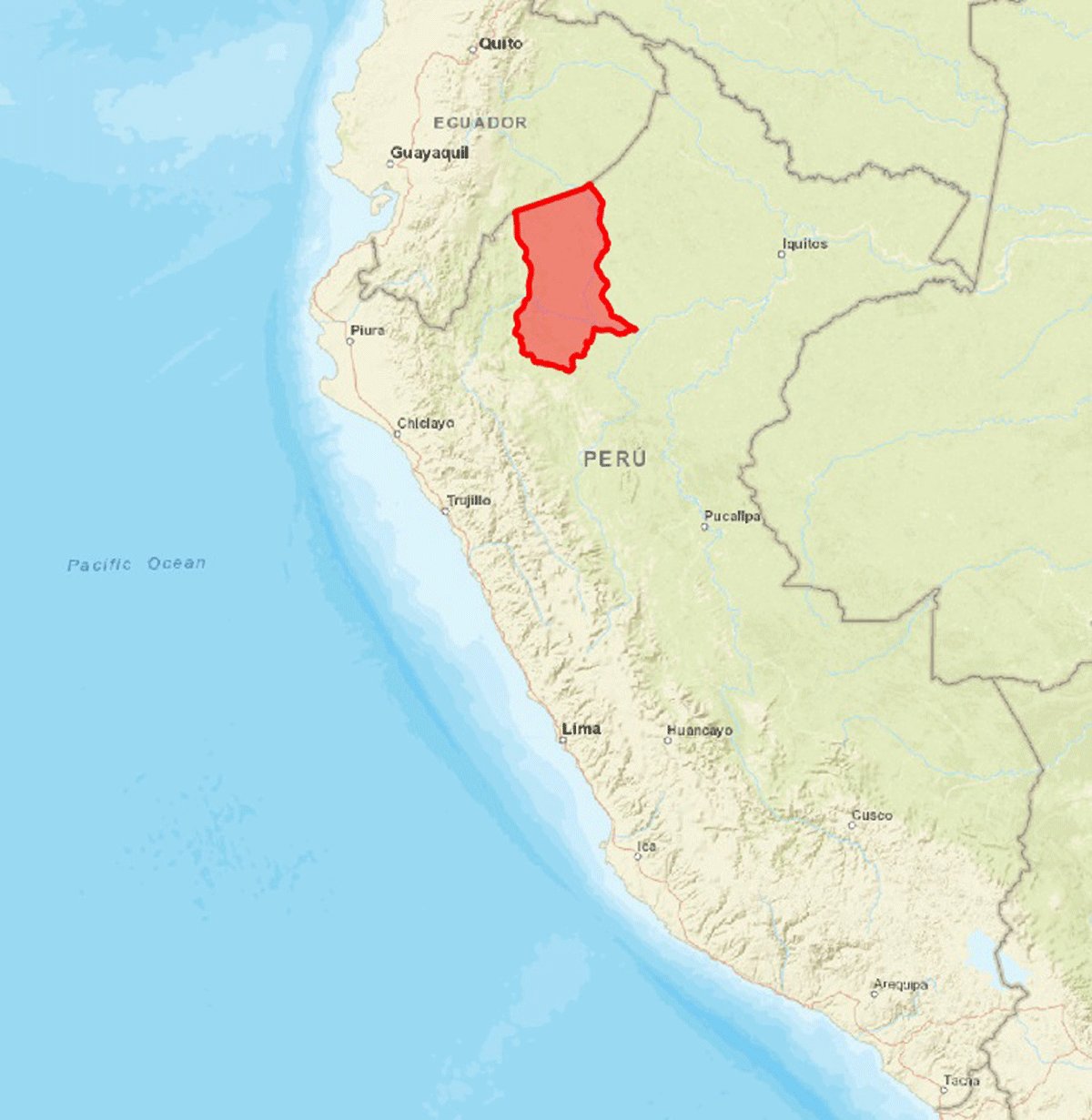
Figure 1
Location of Datem del Marañon province.
For the ecological research component, we mapped degraded and non-degraded palm swamps in the 57 sampled communities, using the RandomForest (RF) classification algorithm in R (version 3.5.1), as developed by Breiman (2001), to analyze Sentinel-2 imagery at 10 and 20 m spatial resolution in combination with Google Earth. RandomForest classification is a machine learning algorithm that uses a bootstrapping approach to iteratively construct decision trees. This method has been shown to be an accurate land cover classifier (Rodriguez-Galiano et al., 2012). In addition, we used the error matrix resulting from the RandomForest machine learning output as an assessment of accuracy. However, to correct for potential classification biases that may occur due to over- or under-sampling in certain classes (forest types, degraded/non-degraded), we applied a correction as suggested by Card (1982) and Olofsson et al. (2014). For further details see de Jong (2019).
To provide ground truth data for training and testing the satellite image classification, we collected field data on the spatial distribution of palm swamps and associated harvesting regimes in four communities in PMFB (see Figure 2). The fieldwork was conducted in August and September 2018. We selected the communities based on the presence or absence of palm swamp forests using Landsat imagery and the Global Wetland database (Draper, et al., 2014; Gumbricht et al., 2017), as well as accessibility, budget and time constraints. We conducted participatory mapping (PM, Levis, et al., 2018), which combined sketching of community areas with brief interviews about harvesting practices. Based on the PM results, we selected two to four areas per community for data collection to obtain a gradient of palm swamp degradation ranging from undisturbed to highly degraded. Furthermore, to ensure sensitivity to small-scale gradients in degradation, our data collection was conducted along transects of 450 m for each sampling area, each of which was further subdivided into nine sub-transects of 4 × 50 m (0.02 ha). To maintain spatial independence, transects were allocated parallel to each other and separated by at least 50 m. A botanist and one or two local harvesters accompanied the field data collection to differentiate palm swamp forest associations based on indicator species and forest structure.
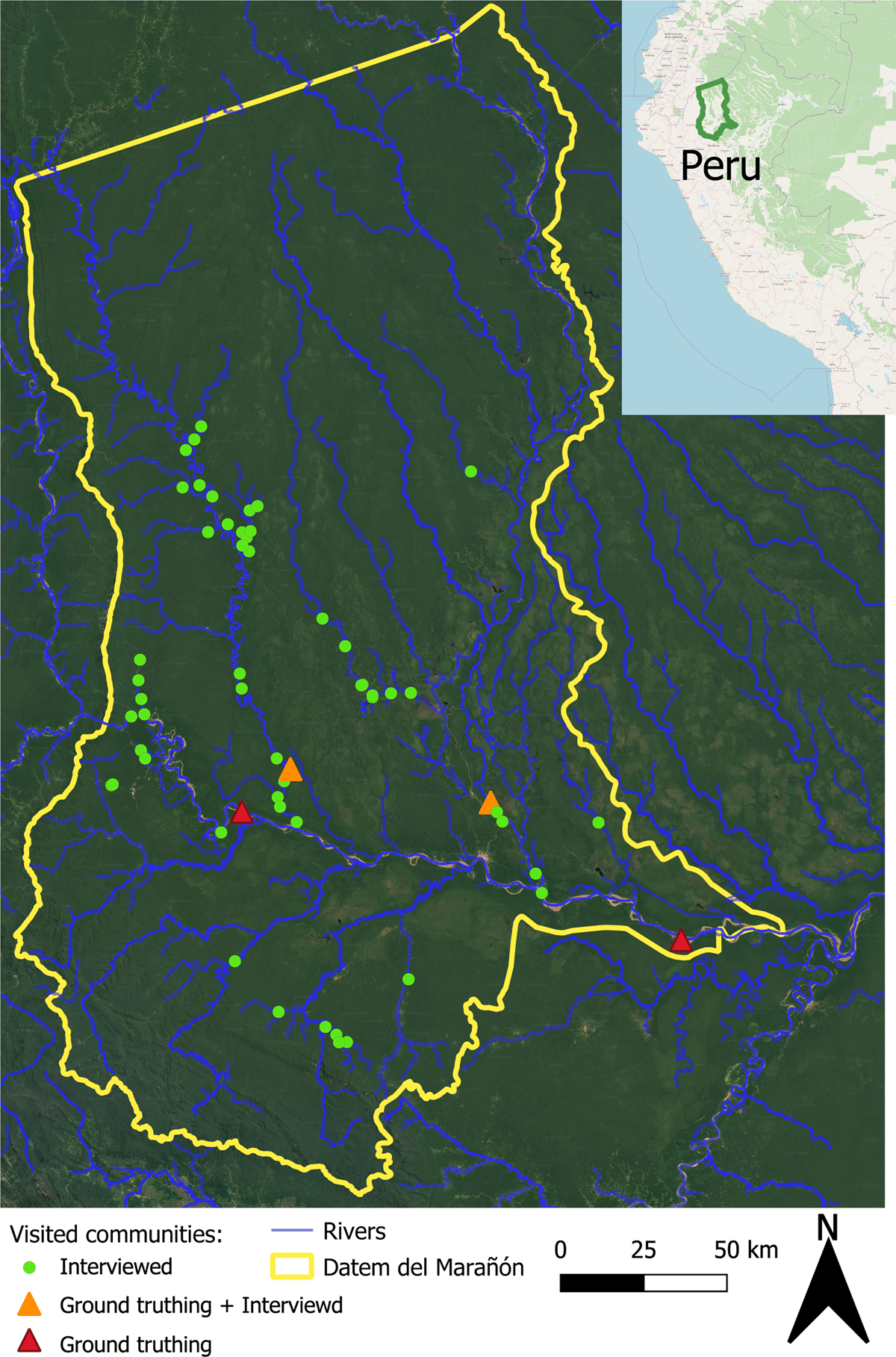
Figure 2
Location of the communities included the social and ecological sample.
To assess palm swamp degradation, we conducted a comprehensive count of male and female adult palms and calculated the sex ratio within each sub-transect (Honorio Coronado, et al., 2021). Sex determination was based on the presence of inflorescences attached to the crown or fallen at the base of a palm. Male inflorescences are typically smaller and less complex than female inflorescences, allowing for sex differentiation. We classified sub transects as degraded or non-degraded based on a sex ratio of 1.5. Classifying and estimating the extend of degraded and non-degraded palm swamp forests requires a clear definition of communal boundaries. PM showed that the communities visited did not harvest M. flexuosa fruit beyond 6 km from village centers. Although many communities in our sample have official georeferenced boundaries, the extent of these boundaries did not reflect actual land use. In addition, community boundaries sometimes overlap. Therefore, we used a six km buffer around the communities to assess palm swamp forest degradation. The data collected as part of the ecological component are described in detail in de Jong (2019).
Hypotheses and analysis
Based on preceding considerations, we advance the following hypotheses:
H1: If M. flexuosa is commercially harvested in a community, then it is likely that the community has established rules that restrict destructive harvesting practices by community members.
H2: If M. flexuosa is a scarce resource in a community, then it is likely that the community has established rules that restrict destructive harvesting practices by community members.
H3: If a community is engaged in a conservation-oriented community of practice (COP), then it is likely that the community has established rules that restrict destructive harvesting practices by community members.
We used chi-square tests with ϕ as the associated effect size index to test our hypotheses. We chose chi-squared tests rather than logistic regression for two reasons. First, our sample size (57) is borderline relative to general recommendations of 10 events per variable and even relative to outcomes of a simulation study suggesting that five events per variable could be acceptable (our sample contains 14 events, one below the minimum of 15) (Vittinghoff & McCulloch, 2007). Second, neither previous research nor logical reasoning led us to formulate hypotheses about interactions between independent variables. However, logistic regression has the advantage of simultaneously estimating the effects of several independent variables, and thereby correcting for potential covariance. For this reason, we will tentatively reflect on logistic regression in the discussion. Analyses were conducted using IBM SPSS Statistics 28. Qualitative field observations helped us to explain correlations we found during the data analysis process.
To define the values of our dependent variable, which focuses on existence of rules restricting destructive harvesting of M. flexuosa by community members (RULES), we asked community leaders whether community members were allowed cut down M. flexuosa palms to harvest the fruits. Responses were coded as 0 (no) and 1 (yes). In cases where respondents answered “no,” we sought clarification on the specific rules governing the felling of M. flexuosa palms. It is important to emphasize that all communities enforced a prohibition against outsiders harvesting M. flexuosa palm fruit within their territories.
As illustrated in Figure 3, three independent variables were examined, with the first, “commercial use of M. flexuosa” (COMMERCIAL USE), examining whether community members sell M. flexuosa. During the interviews, community leaders were questioned about the seasonal availability of M. flexuosa in their community, and about the use and commercialization of the palm fruit by community members. Responses were recorded in seven categories (no; for consumption only; for consumption and occasional sale at markets or to itinerary traders; for consumption and frequent sale at markets or to itinerary traders; for consumption and sale to an M. flexuosa pulp or oil facilities; other). We then recoded the responses into a binary format to address the question, “Do community members sell M. flexuosa commercially?” Responses were coded as 0 (no) and 1 (yes).
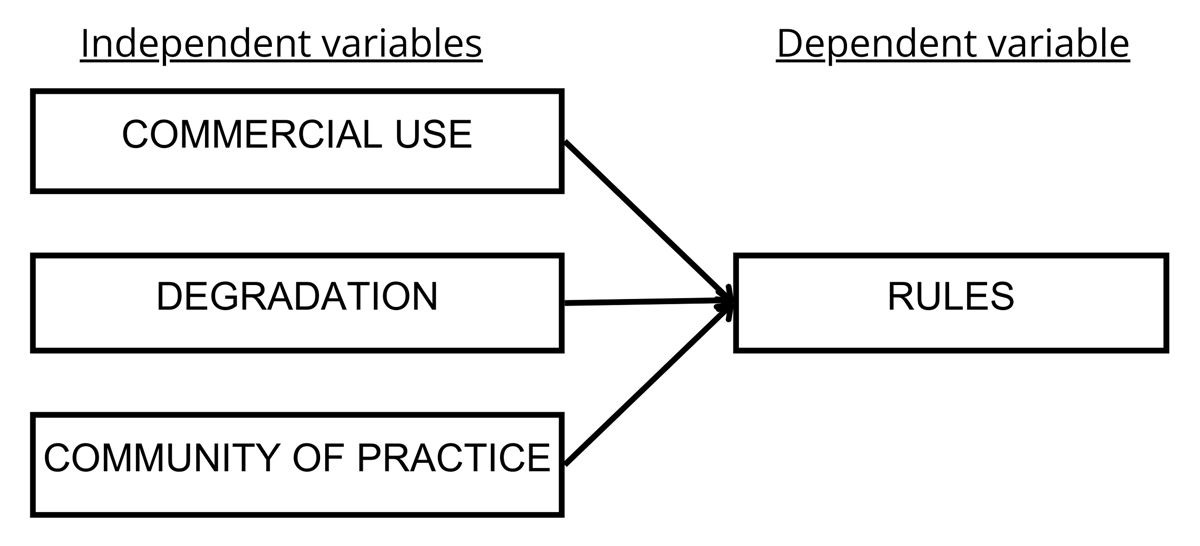
Figure 3
Independent and dependent variables.
The second independent variable examined is palm swamp degradation (DEGRADATION), which is a proxy for resource scarcity. This variable assesses the extent to which palm swamps have been degraded, particularly as a result of past harvesting activities. As described above, we analyzed Sentinel-2 imagery using a RandomForest algorithm to define palm swamp degradation. We trained the algorithm using our field data on palm sex ratios. We classified palm swamps as degraded if they had a sex ratio of 1.5, which corresponds to a female abundance of 40% or less.
The third independent variable is community of practice (COMMUNITY OF PRACTICE). In our study, the COP existed in the form of participation in a non-binding MCA. As described above, MCAs functioned as COPs, platforms between the organizations that facilitated dialogue and cooperation, particularly about sustainable harvesting of M. flexuosa and the management of environmental conflicts with external parties. We determined participation in the MCAs through examination of maps and official documentation, coding responses as 0 (no) and 1 (yes). We confirmed participation during our interviews. The variables are summarized in Table 1.
Table 1
Variables used in chi-square analysis.
| VARIABLE | VARIABLE DESCRIPTION – CHI-SQUARE ANALYSIS |
|---|---|
| Rules | Response to the question: Can community members freely fell M. flexuosa palms? Yes = 1, No = 0 |
| Commercial Use | Response to the question: Do community members sell M. flexuosa commercially? Yes = 1, No = 0 |
| Degradation | The variable is continuous (%), calculated based on relative abundance of male and female M. flexuosa palms High degradation = 1, Medium degradation = 0 |
| Community Of Practice (COP) | Response to the question: Is the community part of a municipal conservation area? Yes = 1, No = 0 |
Results
While all 57 communities included in the study recognized the need to sustainably manage their forest resources to ensure long-term benefits to local livelihood, and expressed concern about the depletion of M. flexuosa in particular, few had adopted rules to restrict destructive harvesting by community members. Specifically, as shown in Table 2, only 14 communities (24%) had implemented restrictive rules, while the remaining 43 communities (75%) had no such rules. Of the communities with rules, 13 enforced an outright ban on the cutting of M. flexuosa palms, while one community required the approval of the community leaders to cut palms. 40 communities (70%) were part of a COP in the form of a MCA, while 17 (30%) were not.
Table 2
Descriptive statistics.
| TOTAL SAMPLE (N) | COMMERCIALIZATION | DEGRADATION | COMMUNITY OF PRACTICE | RESTRICTIVE RULES IN PLACE? | |||
|---|---|---|---|---|---|---|---|
| YES | NO | MEDIUM | HIGH | YES | NO | ||
| 14 | 9 (64%) | 5 (36%) | 6 (43%) | 8 (57%) | 11 (79%) | 3 (21%) | Yes |
| 43 | 8 (19%) | 35 (81%) | 24 (56%) | 19 (44%) | 6 (14%) | 37 (86%) | No |
| 57 | 17 (30%) | 40 (70%) | 30 (53%) | 27 (47%) | 17 (30%) | 40 (70%) | |
In terms of M. flexuosa degradation rates, 30 communities experienced medium degradation (46% to 56% degraded), and 27 communities experienced high degradation (57–73%). In terms of commercial activities related to M. flexuosa, 17 communities (30%) engaged in commercial sales, while 40 communities (70%) did not. Of the 17 communities involved in commercial M. flexuosa sales, nine sold occasionally at regional markets or to itinerary traders, four sold frequently at regional markets or to itinerary traders, and four sold occasionally to small M. flexuosa pulp facilities. Notably, nine (53%) of the communities with rules were involved in commercial harvesting, compared to eight (13%) of communities without rules.
Results of the Chi-square analysis
The relationship between the commercial use of M. flexuosa and the existence of restrictive rules was statistically significant (χ2 = 10.53, p < 0.01), with an effect size (ϕ = 0.43) falling between medium and strong (using labels proposed by Cohen, 1992). Communities that engage in commercial harvesting of M. flexuosa are more likely to have restrictive rules compared to those that do not.
Conversely, the relationship between M. flexuosa degradation and the presence of rules shows no significance (χ2 = 1.01, p = 0.32). Using the median in degradation percentage as criterion to classify communities as having medium or high degradation, the proportion of communities that reported having restrictive rules in place did not differ by degradation level. In contrast, the relationship between COP and the presence of rules proved to be significant, (χ2 = 21.07, p < 0.01), with a strong effect size (ϕ =0.61).
Discussion and conclusions
In our study, our primary objective was to predict the presence of rules to restrict harmful extraction of forest resources in local communities. We considered several factors: “commercialization of resources by community members”, “scarcity of resources”, and “the existence of trust relationships between the community and external partners”. This knowledge is particularly relevant because IPLCs play a crucial role in the conservation and sustainable management of important parts of the Amazon forest, where indigenous peoples have ancestral rights over large areas. From both a normative and a practical perspective, it is imperative that policymakers work with these IPLCs to achieve biodiversity conservation and carbon sequestration goals, as set out in the CBD, UNFCCC, and Agenda 2030. For such cooperation to be effective, policymakers need a better understanding of the local reality of the IPLCs in remote forests, and of their motivations and needs for long-term conservation. Although the existence of restrictive community rules, coupled with community members’ awareness and understanding of them, is a necessary condition for successful enforcement, studies on why communities decide to adopt or not to adopt them are scarce.
Our results show a strong association between community’s adoption of restrictive rules is its participation in a COP, in our study in the form of a MCA. Due to their remote location, local forest communities have little opportunity to exchange information with outsiders. The communities in our sample that were part of an MCA benefited from frequent interaction and dialogue on sustainable palm swamp forest management strategies with other communities and indigenous leaders, as well as with staff from a conservation NGO and the provincial government. They also had access to practical support from the NGO, including climbing equipment and training for sustainable M. flexuosa harvesting and technical assistance and tools for operating M. flexuosa pulp and oil plants. COPs must be horizontal partnerships that ensure equitable participation and mutual respect. In addition, they need to share a common understanding of the purpose of the COP, established norms and reciprocal relationships, and a common language, tools, and narratives. While we did not focus on the characteristics of the COPs in our qualitative research, our field observations and open-ended interviews revealed a strong focus in the MCAs on building trust and reciprocal relationships among all parties. NGO and provincial government staff frequently visited participating communities. We observed that they respected the autonomy of the local communities, recognizing their rich and dynamic relationship with their ecosystems and their desire to improve their livelihoods and ensure a sustainable living environment for future generations. In addition to exchanging information and coordination on forest resource management, they also engaged in the community members’ livelihood or health issues. They even transported community members by boat to traditional healers or health facilities. Transportation is scarce and expensive in the remote peatlands, and these actions showed that they cared about the well-being of the communities, thereby building trust. This is consistent with Schulz, et al. (2019), who emphasize the importance of sustained engagement and gradual trust building in COPs.
According to our study, “resource scarcity” does not predict the presence of restrictive harvesting rules within communities. This is consistent with existing studies that show how communities facing depleted resources may not be easily motivated to adopt rules for sustainable M. flexuosa management, due to their current low sales of the resource and the slow regeneration process (Horn, et al., 2012; Manzi & Coomes, 2009).
The commercialization of forest resources by community members is as associated with the existence of rules in communities. Communities show a willingness to establish restrictive rules over resources that are critical to their livelihoods. This tendency is evident because the sale of forest resources is one of the few ways for local populations to secure cash income to meet basic needs and improve living conditions. This is consistent with the assumptions behind many projects promoting community forest management (CFM) and sustainable non-timber forest product (NTFPs) extraction. Despite this, the projects often fail to achieve meaningful results (Baynes, et al., 2015; Gilmore, et al., 2013; Poteete & Ostrom, 2002; Arts, B., 2021). Based on our field observations, we propose that economic dependence on a forest resource is an incentive for communities to adopt restrictive rules. However, factors such as fear of losing access to income, conflicts with cultural and traditional practices, or a lack of knowledge about sustainable management strategies may hinder the adoption of rules. Therefore, we argue that other variables, in particular COP, must be present for communities to implement restrictive rules for the forest resources they commercialize. In doing so, we emphasize the multifaceted nature of community decision-making and the need to consider external dynamics in understanding and promoting sustainable resource management practices.
Our research has certain limitations. First, as detailed in the methods section, the uneven distribution of communityes, with 25.6% having restrictions on M. flexuosa tree harvesting and 75.4% lacking such restrictive rules, hampers unproblematic use of logistic regression results. When applied tentatively using the three independent variables simultaneously, commercial use does not predict the presence of rules (odds value = 1.00), but degradation does (odds ratio = 0.18). However, consistent with chi-squared tests, COP is the most important factor (odds ratio = 3.66). Second, our reliance on convenience rather than random sampling stems from the geographic limitations of the remote forest area. To optimize the validity of our data, we corroborated our findings with empirical observations.
Despite these limitations, we believe that our study provides valuable insights into the motivations and needs that influence IPLCs in their decisions about whether or not to sustainably manage their ecosystems and forest resources, and to how policymakers and other relevant actors can effectively engage with these communities to improve conservation and livelihood outcome, mostly through including a focus on facilitating the creation of durable COPs based on respect and trust.
Notes
[1] Foundation species play a defining role in ecosystems, shaping the biological diversity of associated species, regulating crucial ecosystem processes, and frequently holding significant cultural values and significance (Ellison, 2019).
Acknowledgements
We sincerely thank all who contributed to the successful completion of this study. We extend special gratitude to Yolanda Guzman and Carlos Cornejo of PROFONANPE for their extensive logistical support and collaboration. We are deeply appreciative of the local and indigenous communities and authorities of Datem del Marañón, whose invaluable cooperation was instrumental to this work. Lastly, we extend our thanks to the three anonymous reviewers for their insightful and constructive feedback, which significantly enhanced the quality of this manuscript.
Competing Interests
The authors have no competing interests to declare.