
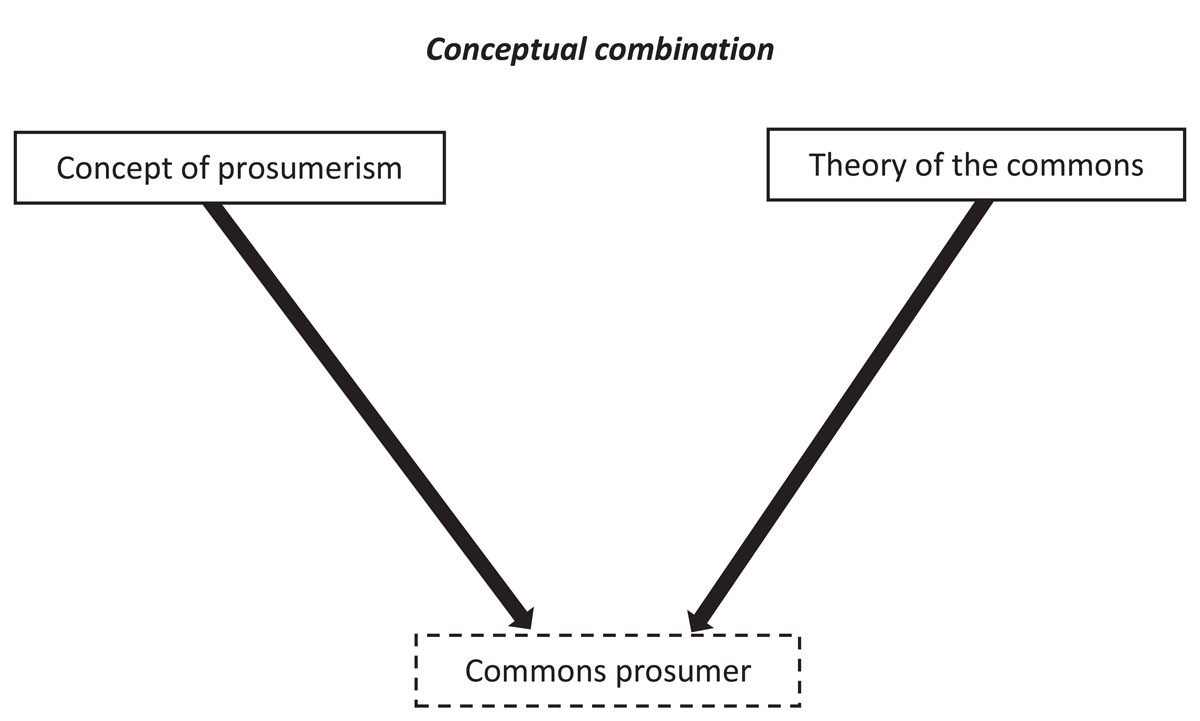
Figure 1
Combining the concept of prosumerism and the theory of the commons.
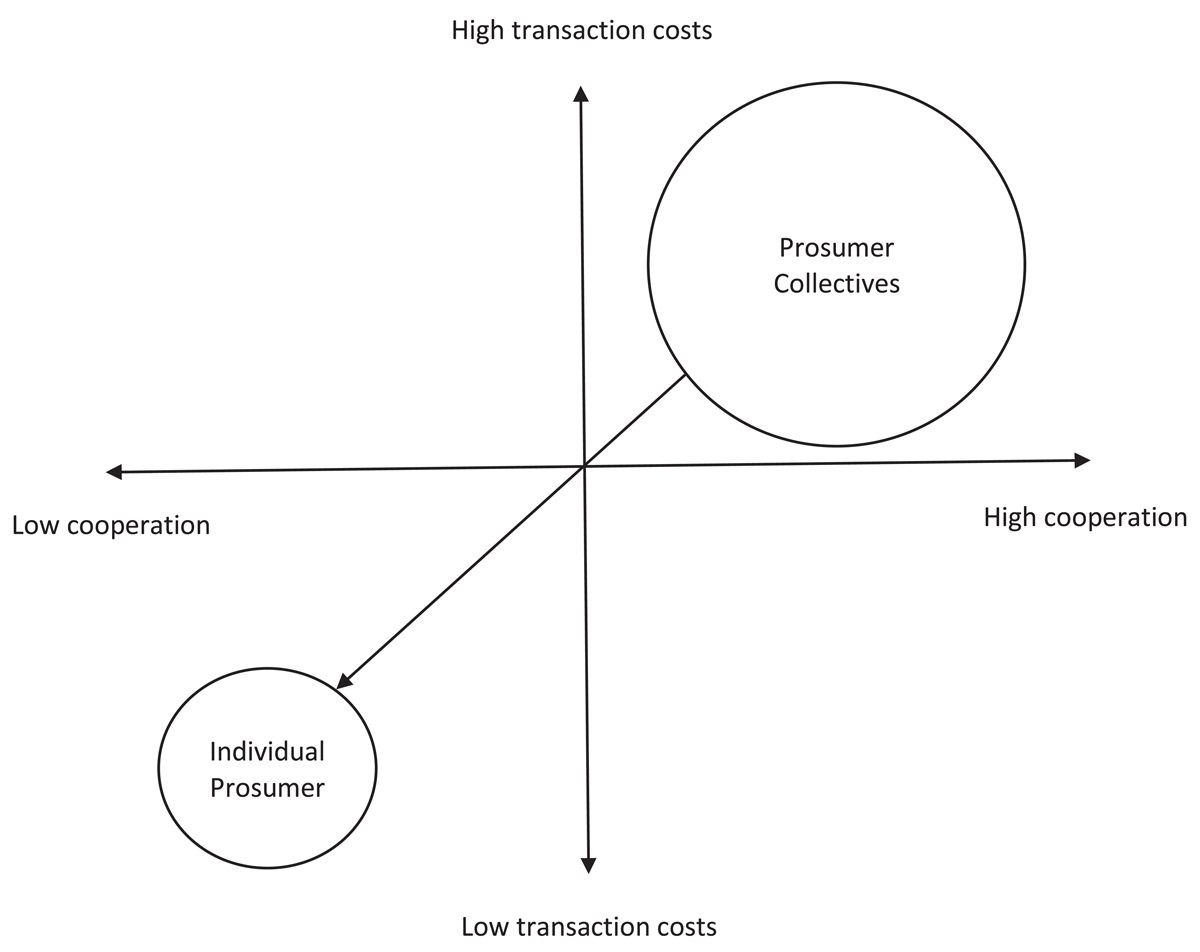
Figure 2
Stylized types of prosumption activities: between individual and collective action.
Table 1
Case studies of individual and collective prosumption.
| ORGANIZATIONAL FORM | ENERGY | AGRICULTURE |
|---|---|---|
| Individual | Home Energy Supply | Home Gardening |
| Collective | Energy Neighborhoods | Allotment Gardening |
| Virtual Power Plants | Community-supported Agriculture | |
| Stromallmende (Electric Commons) | Community Gardening |
Table 2
Synthesis of the characteristics conceptualizing the co-prosumer in comparison with the consumer and p-prosumer.
| CHARACTERISTIC | CONSUMER | INDIVIDUAL P-PROSUMER | COLLECTIVE CO-PROSUMER |
|---|---|---|---|
| Political philosophy | Neoliberalism | Green economy | Commons/De-growth Economy |
| Role | Rule-taker | Rule-taker | Rule-maker |
| Motivation | Utility maximization | Independence, autonomy | Common welfare maximization |
| Theory of action | Homo economicus | Homo economicus | Homo cooperativus |
| Focus | Individuality | Strong individuality | Community (sharing) |
| Property | Private | Between private and common | Common |
| Access to resources | Restricted Rules given by law | Restricted External law and self-generated rules | Restricted Self-generated rules |
| Transaction costs | Low | Between low and medium | High |
| Cooperation | None | Low | High |
| Functions | Consumption | Multifunctional | Multifunctional |
| Effects | Negative externalities | Positive externalities | Positive externalities |