
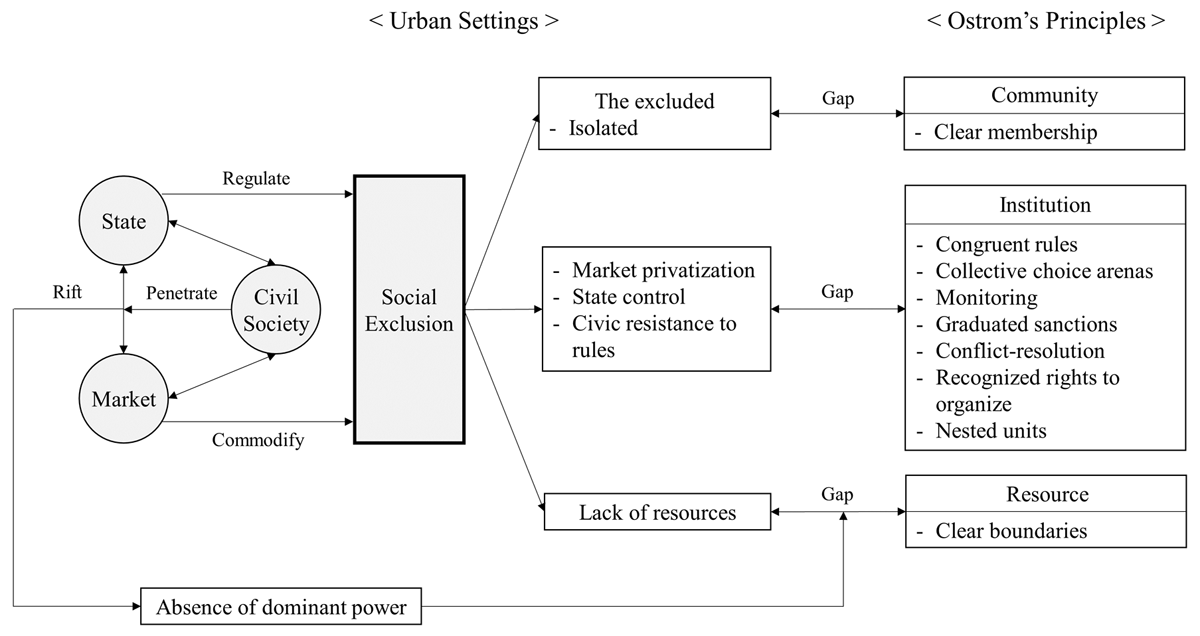
Figure 1
Research Framework.
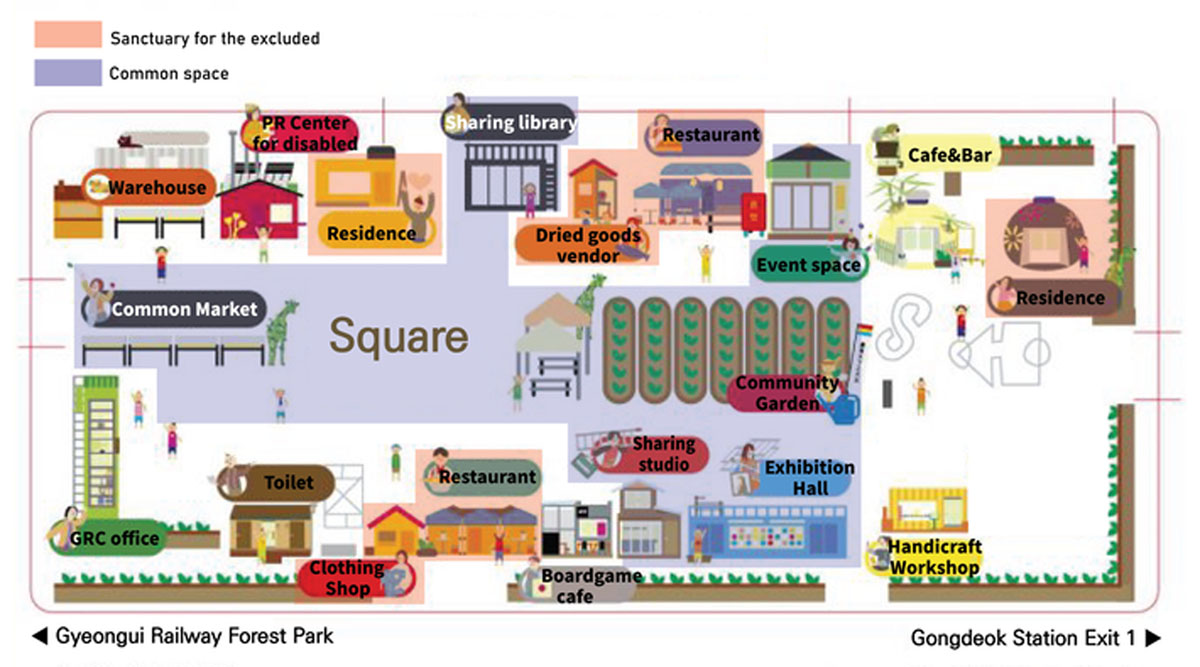
Figure 2
Map of GRC.
Note: Originally published in the CAGRC newsletter and on its website, the map of GRC has been translated and updated by the authors.
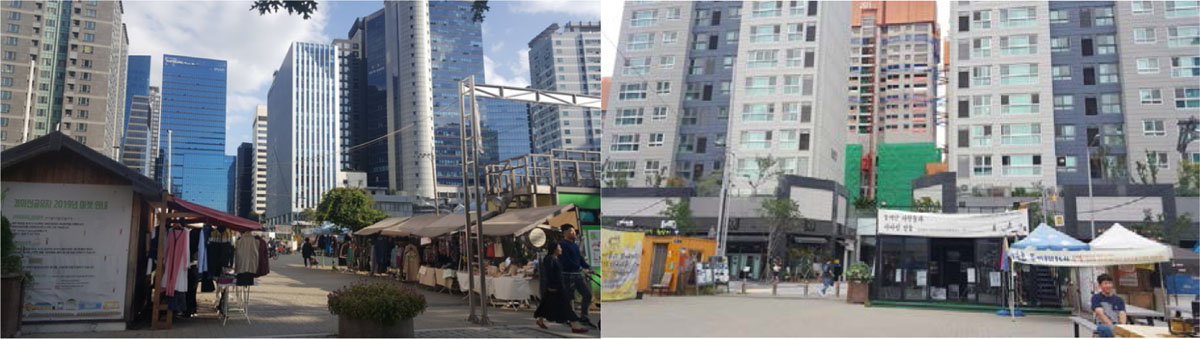
Picture 1 (1-1 & 1-2)
GRC surrounded by high-rise developments.
Table 1
List of interviewees (place-keepers and activists).
| Name | Status | Role | Gender | Age | Date of interview |
|---|---|---|---|---|---|
| A | Place-keeper | Vendor | Female | 50s | Aug. 29, 2019 |
| B | Place-keeper | Shared space operator | Male | 40s | Sep. 25, 2019 |
| C | Place-keeper | Café operator | Male | 30s | Aug. 6, 2019 |
| D | Activist | GRC manager | Female | 30s | Aug. 13, 2019 |
| E | Activist | GRC manager | Female | 30s | Jul. 12, 2019 |
| F | Activist and place-keeper | Shared space operator | Male | 30s | Sep. 9, 2019 |
| G | Place-keeper | Resident | Male | 40s | Jul. 12, 2019 |
| H | Place-keeper | Resident/youth housing activist | Male | 30s | Aug. 29, 2019 |
| I | Place-keeper | Campaigner | Male | 40s | Aug. 6, 2019 |
| J | Place-keeper | Restaurant operator | Female | 60s | Aug. 29, 2019 |
| K | Place-keeper | Vendor | Female | 40s | Oct. 12, 2019 |
Table 2
List of permanent place-keepers.
| Category | Name | Major activity | Narrative up to settlement |
|---|---|---|---|
| The excluded due to physical urban circumstances | <Commercial> | ||
| Giant Aunt’s (2016*) | Small-time casual restaurant manager | Forced evictees who operated their businesses together in Ahyeon-dong. In GRC, each of them opened their own store. | |
| Gangta’s Aunt’s (2016) | After-hours pub (Picture 2-1) | ||
| Red Aunt’s (2016) | Small street vendor | ||
| Cheongyecheon Toad (2016) | Dried goods vendor | Forced evictee (Cheonggyecheon project) | |
| <Residential> | |||
| Resident 1 (2016) | Resident and activist for affordable housing; supports management | Forced evictee (Haengdang redevelopment) | |
| Resident 2 (2018) | Resident; helps clean the area | While homeless, he stumbled upon a vacant spot in GRC and settled in. | |
| The excluded due to non-physical urban circumstances: seekers of an alternative lifestyle | <Advocate of the minority> | ||
| Gaonmaru (2017) | Campaigner of raising awareness for the disabled | Part of an NGO for the disabled who searched for a place for his cause. | |
| <Seekers of an affordable alternative place> | |||
| Norangongbang (Yellow Studio, 2016) | Manager of a handicraft workshop | Priced out of the art district, moved to GRC. | |
| Darakbang (The Attic, late 2016) | Boardgame café manager | Started as a vendor in the AM, quit his corporate job to pursue his dream. | |
| Hobak (Pumpkin, 2019) | Bar manager and mixologist | Previously part of another urban commons for shared housing (Binzip). | |
| Gongza Live (2019) | Manager of an open library and DJ artist | Formerly a bookstore owner and DJ, was priced out of a gentrifying neighborhood. | |
| Dakjang (Hen House, 2016) | Activist and operator of a shared studio | Formerly an installation artist, was in search of an affordable art studio. | |
[i] Note: * Years within the parentheses indicate when the spaces were first established. Eight of the place-keepers in this table were available for an interview for this research and are included in Table 1.
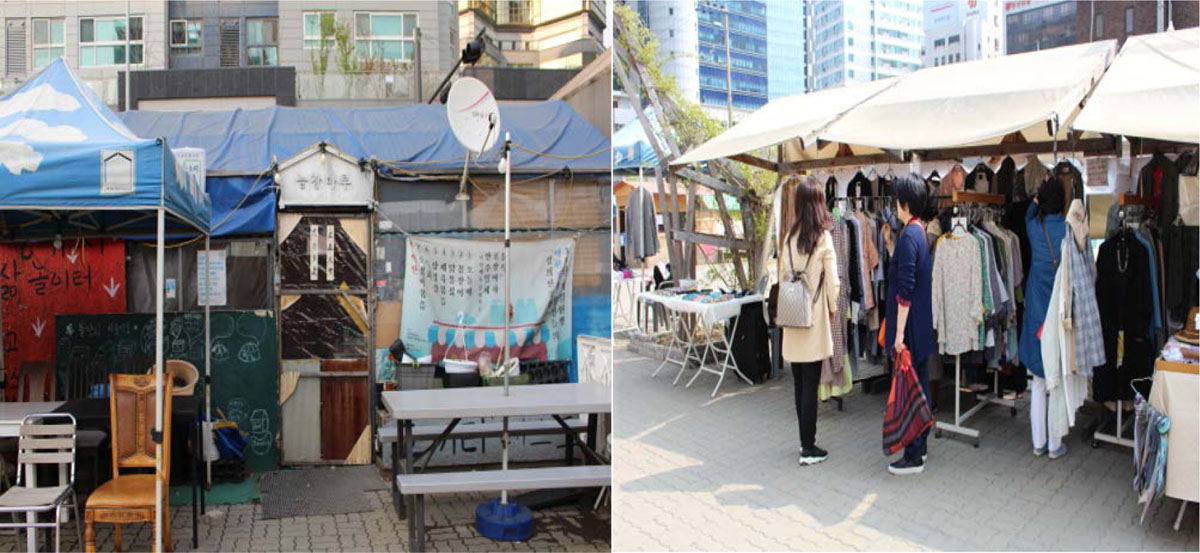
Picture 2 (2-1 & 2-2)
GRC vendors (left, a casual food vendor with tables outside; right, a clothing vendor).