Have a personal or library account? Click to login
Menopause Hormone Therapy in Women With Cardiovascular Risk Factors or Established Ischemic Heart Disease: A Joint FIGO and WHF Position Paper Cover

Menopause Hormone Therapy in Women With Cardiovascular Risk Factors or Established Ischemic Heart Disease: A Joint FIGO and WHF Position Paper

Open Access
|Sep 2026

Figures & Tables

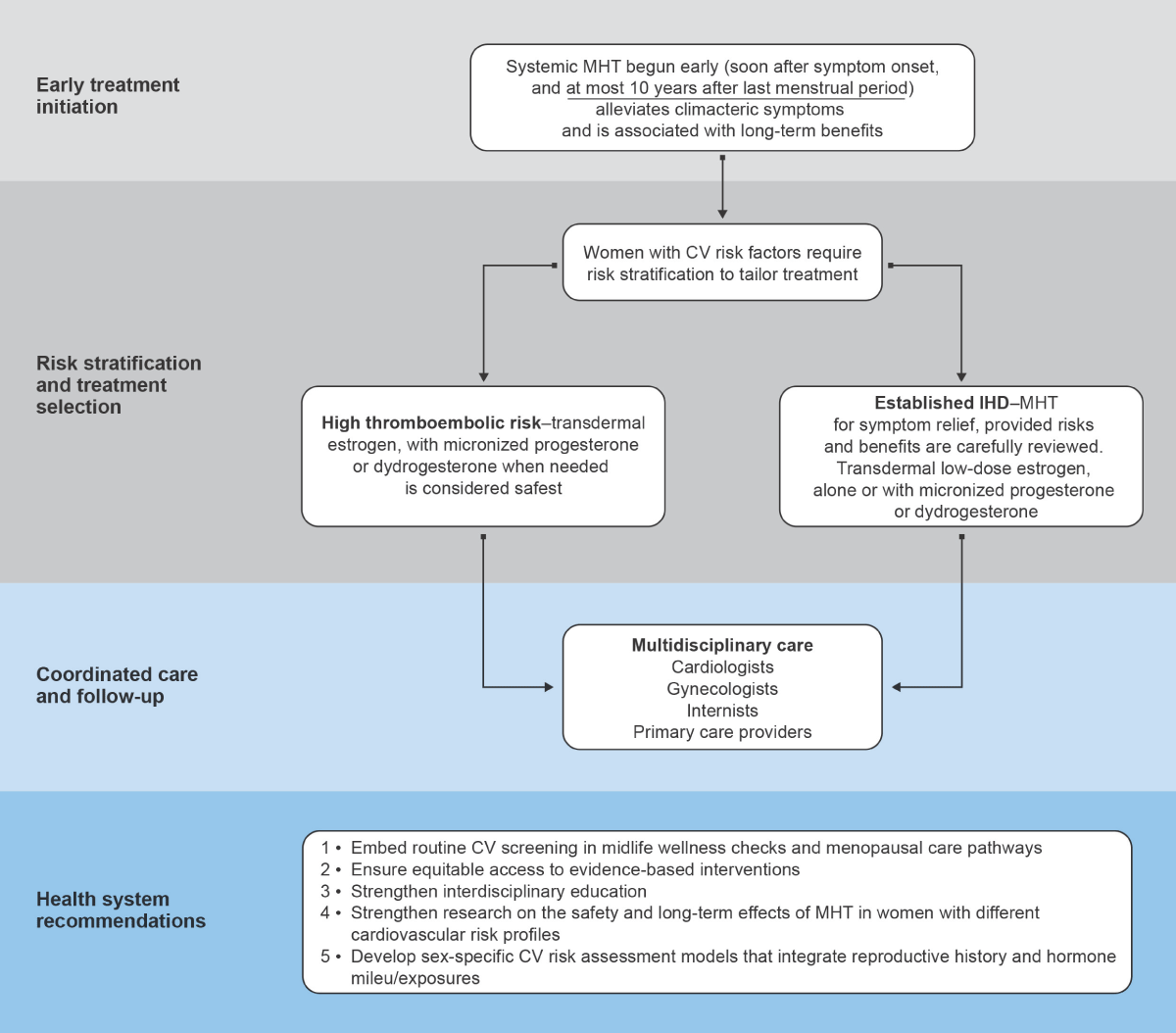
MHT timing, risk stratification, multidisciplinary care, and health-system recommendations
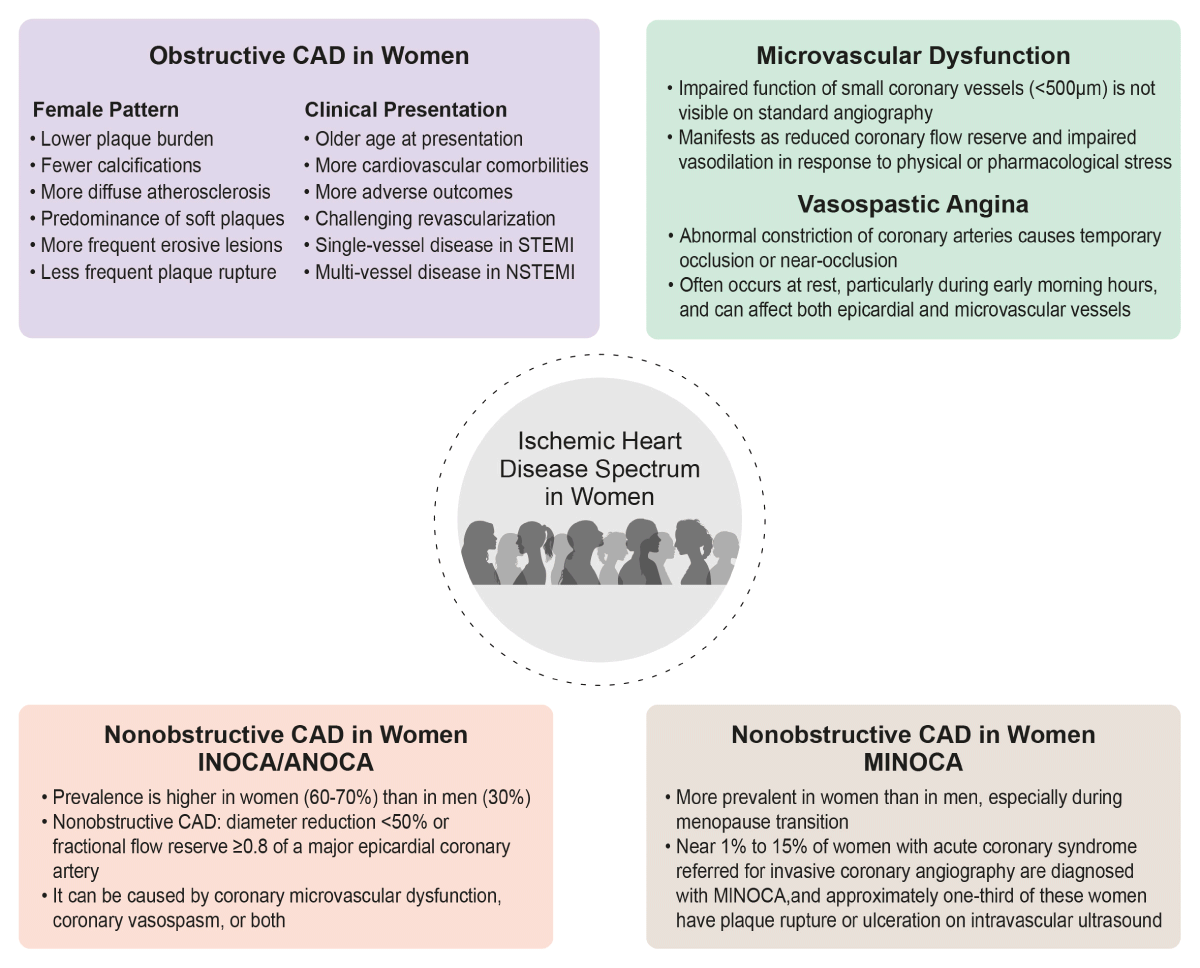
Figure 1

The spectrum of ischemic heart disease in women (22, 23, 24, 25, 26).

CAD = coronary artery disease; ANOCA = angina with nonobstructive CAD; INOCA = ischemia with nonobstructive CAD; MINOCA = myocardial infarction with nonobstructive CAD; NSTEMI = non-ST-elevation myocardial infarction; STEMI = ST-elevation myocardial infarction.

Table 1

Direct and indirect protective effects of endogenous estrogens on the cardiovascular system.

ENDOGENOUS ESTROGEN EFFECTSMECHANISM OF ACTION
VASODILATION
  • - ↑ endothelial production of prostacyclin and nitric oxide synthase activation (31, 32, 33)

  • - ↓ endothelin synthesis (31)

  • - Block of calcium channels (31)

IMPROVED LIPID PROFILE
  • - ↑ HDL-cholesterol efflux capacity (33, 34)

  • - ↓ LDL-cholesterol, ↓ triglyceride, ↓ lipoprotein Lp(a) (31, 35, 36)

ANTIOXIDANT EFFECTS
  • - Regulation of mitochondrial function, which has a pivotal role in maintaining cardiometabolic health (37, 38)

  • - ↑ sirtuin transcription through ERα, in particular SIRT3, which reduces reactive oxygen species (ROS) in the mitochondria (39, 40)

ANTI-INFLAMMATORY AND ATHEROPROTECTIVE EFFECTS
  • - ↓inflammatory molecules and cell adhesion particles (31)

  • - ↓ vascular smooth muscle cell differentiation (41)

  • - ↓ vascular calcification (42)

ANGIOGENESIS
  • - ↑ endothelial cell migration, proliferation and survival (43)

  • - ↑ vascular endothelial growth factor (VEGF) expression in endothelial cells (43)

CARDIAC FIBROSIS PREVENTION
  • - Prevention of cardiac fibrosis and detrimental myocardial extracellular matrix remodeling by modulating fibroblast proliferation and suppressing pro-fibrotic genes (32)

RENIN-ANGIOTENSIN-ALDOSTERONE SYSTEM (RAAS) DOWNREGULATION
  • - ↑ active form of bradykinin promoting nitric oxide (NO) production and vasodilation (31, 44)

CIRCADIAN RHYTHM REGULATION
  • - Modulation of circadian metabolic rhythms, influencing the expression of various circadian genes through Estrogen Response Element (ERE) (45). Circadian rhythms affect cardiovascular function and therefore CVD susceptibility (46).

[i] NO = nitric oxide; HDL = high-density lipoprotein; LDL = low-density lipoprotein; SIRT = sirtuin; ER = estrogen receptor; ROS = reactive oxygen species; VEGF = vascular endothelial growth factor; ERE = estrogen response element; CVD = cardiovascular diseases.
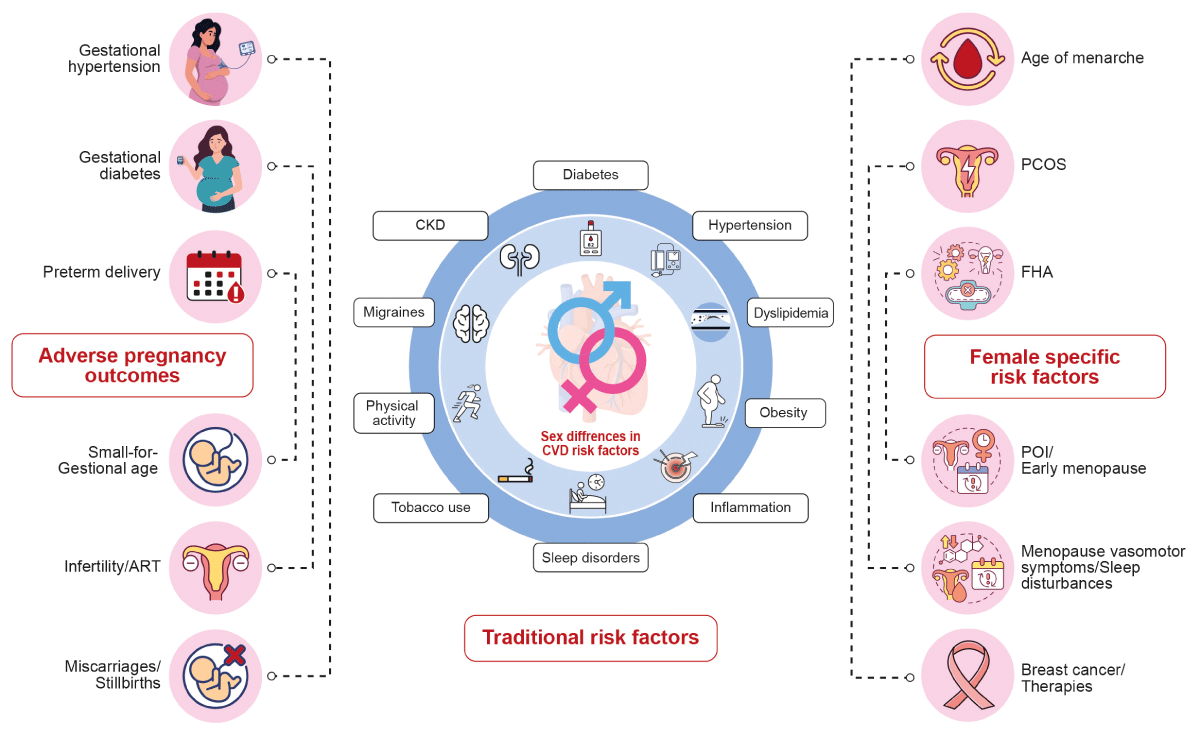
Figure 2

Risk Factors of CVD in Women.

Risk factors for CVD in women include sex differences in traditional risk factors, adverse pregnancy outcomes that are specific to women and female specific risk factors.

ART = artificial reproductive therapies; FHA = functional hypothalamic amenorrhea; PCOS = polycystic ovarian syndrome; POI = premature ovarian insufficiency; CKD = chronic kidney disease.
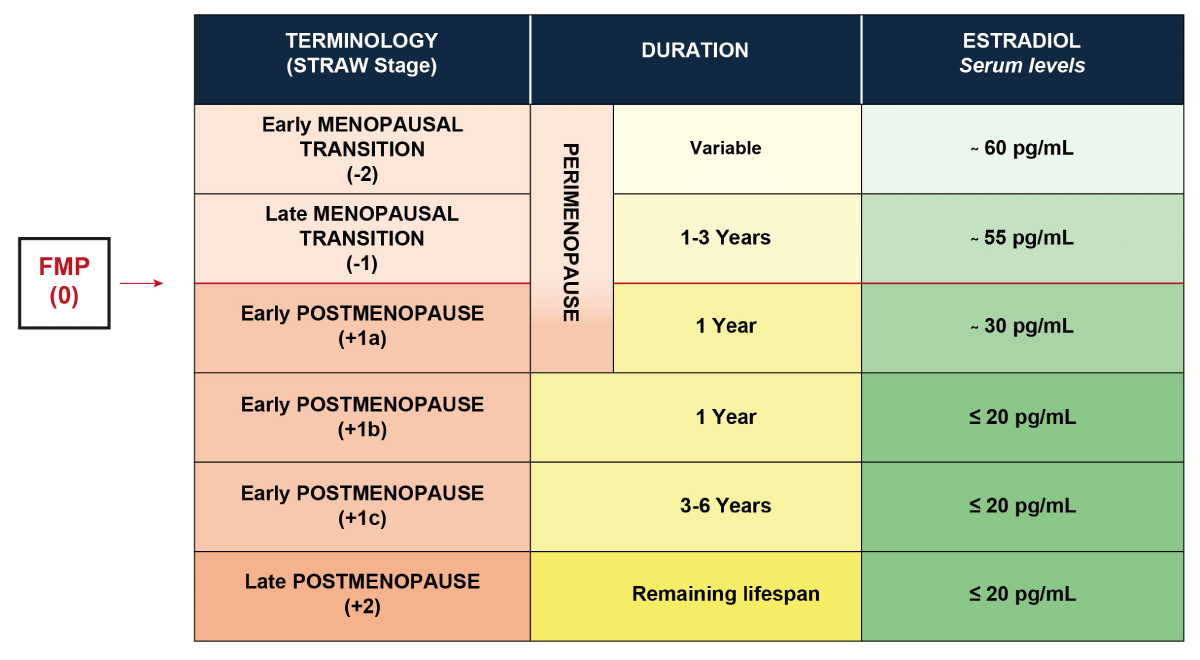
Table 2

Terminology, Stages of Reproductive Aging (STRAW+10), duration and mean levels of estradiol during the menopausal transition and post-menopause (156, 157, 158).

FMP = final menstrual period.

Table 3

Factors associated with earlier or delayed menopause onset (162, 163, 164, 165, 166, 174).

CATEGORYFACTORS ASSOCIATED WITH EARLIER MENOPAUSE ONSETFACTORS ASSOCIATED WITH DELAYED MENOPAUSE ONSET
Lifestyle
  • - Cigarette smoking

  • - Too vigorous physical exercise

  • - Low lifelong sun exposure

  • - Moderate alcohol consumption

  • - Regular tea consumption

  • - Moderate physical activity

Dietary
  • - Vegetarian diet

  • - High polyunsaturated fat intake

  • - Caloric restriction particularly in childhood

  • - High total caloric intake

  • - High fruit and vegetables intake

  • - High protein and carbohydrate intake

Socioeconomic
  • - Lower education level

  • - Unemployment

  • - Higher educational attainment

  • - Being employed

Reproductive History
  • - Nulliparity

  • - Parity

Genetic/Demographic
  • - BRCA mutations

  • - Japanese ethnicity

Other
  • - History of heart disease

  • - Cardiac risk factors

  • - Increased epigenetic age

  • - Higher BMI in early adulthood

  • - Prior oral contraceptive use

[i] BRCA = BReast CAncer gene.

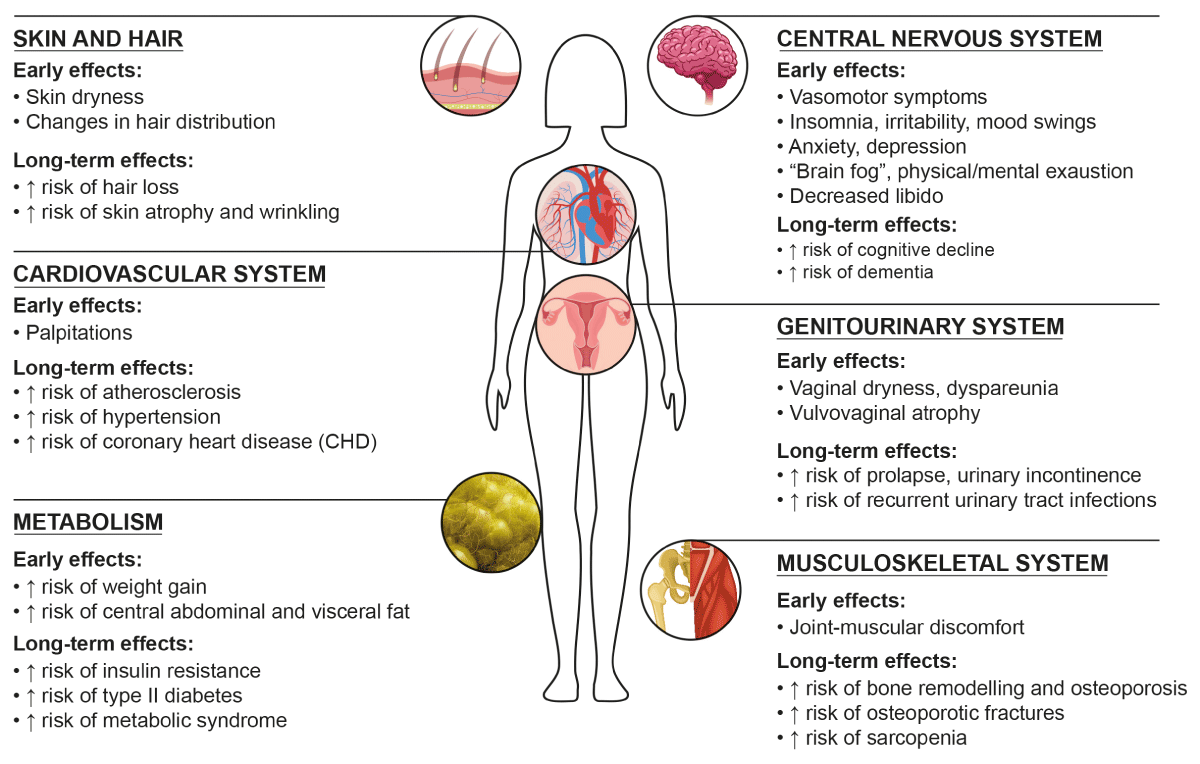
Figure 3

Early and long-term effects of menopause along with aging on body systems and organs (183, 184, 185, 186, 187, 190, 191, 192, 193, 194, 195, 198, 199, 200, 206, 210, 212, 215).

Table 4

Potential benefits associated with systemic MHT.

SYSTEMIC MHT: POTENTIAL BENEFITS
  • ↓ vasomotor symptoms (219, 224)

  • ↑ sleep quality, especially in patients suffering from concomitant vasomotor symptoms (225)

  • ↓ depressive symptoms, when MHT is used alone or in combination with antidepressants (226, 227)

  • ↓ genitourinary symptoms (228)

  • ↓ urinary tract infections (229)

  • ↓ biological aging (174, 232)

  • ↓ all-cause mortality when MHT is started <10 years after menopause or in women <60 years old (221, 222, 233, 234, 235)

  • ↓ composite of death from cardiovascular causes and non-fatal myocardial infarction when MHT is started <10 years after menopause or in women <60 years old (221)

  • ↑ high density lipoprotein (10)

  • ↓ insulin resistance and the incidence of diabetes (10)

  • ↓ osteoporosis, bone loss and fracture risk at all sites (236)

  • ↓ sarcopenia risk in physically active women (237)

  • ↓ colorectal cancer risk, especially in women with a high polygenic risk score (238, 239)

  • ↓ endometrial cancer risk with continuous use of combined estrogen-progestin, particularly in obese women (240, 241)

  • ↓ breast cancer risk with estrogen-alone therapy, especially with CEE (242)

  • ↑ cognitive performance when MHT, with the exception of CEE-MPA (243), is started in the peri-menopausal or early post-menopausal period (244, 245)

  • ↓ Alzheimer’s Disease risk, particularly in APOE4 carriers (246) when MHT is started <10 years after menopause (247)

[i] CEE = conjugated equine estrogens; MPA = medroxyprogesterone acetate.

Table 5

Potential risks associated with systemic MHT.

SYSTEMIC MHT: POTENTIAL RISKS
  • ↑ VTE risk only with specific types of MHT i.e. oral estrogen alone or combined; transdermal estradiol combined with norpregnane, pregnane or nortestosterone derivatives (248, 249, 250) whenever it is started (221)

  • ↑ ischemic stroke risk with specific types of MHT, i.e. oral estradiol, especially at high doses; CEE, especially at intermediate-high doses or when initiated >10 years after menopause; norpregnane derivatives; tibolone (221, 222, 251, 252, 253, 254)

  • ↑ hemorrhagic stroke risk with specific types of MHT, i.e. tibolone (253)

  • ↑ urinary incontinence and pre-existing pelvic organ prolapse (255, 256)

  • ↑ breast cancer risk with specific types of MHT, i.e. estrogens combined with levonorgestrel/norethisterone acetate/medroxyprogesterone acetate, especially for long-term (257) or tibolone if taken for >5 years (10)

  • ↑ endometrial cancer risk if systemic estrogen-alone therapy is given to women with an intact uterus (258)

  • ↑ serous and endometrioid ovarian cancer risk with specific types of MHT, i.e. estrogen-alone or estrogen-progestogen preparations (259, 260)

  • ↑ serous and all epithelial ovarian cancer risk with tibolone used for >10 years (261)

  • ↓ cognitive function when MHT is started in older postmenopausal women (243)

[i] VTE = venous thromboembolism; CEE = conjugated equine estrogens.

Table 6

Neutral effects of systemic MHT.

SYSTEMIC MHT: NEUTRAL EFFECTS
  • = VTE risk with transdermal estradiol alone or transdermal estradiol + progesterone (250)

  • = or even ↓ ischemic stroke risk with transdermal estradiol (251, 253, 254)

  • = hemorrhagic stroke risk with transdermal estradiol (253)

  • = or even ↓ hemorrhagic stroke risk with oral estradiol and CEE (253, 262)

  • = breast cancer risk with estradiol + progesterone or dydrogesterone (263)

  • = mammographic breast density and breast cancer incidence risk with BZA/CE (264)

  • = breast cancer risk with Tibolone used for <5 years (263)

  • = survival from overall breast cancer with MHT (265)

  • = triglyceride levels with transdermal MHT, including estrogen alone and estrogen + progestogen (266)

  • = mucinous and clear cell ovarian cancers with estrogen only and estrogen-progestogen therapy (259, 260)

  • = lung cancer incidence risk and survival with MHT (220)

[i] VTE = venous thromboembolism; CEE = conjugated equine estrogens; BZA/CE = Bazedoxifene/Conjugated Estrogens.
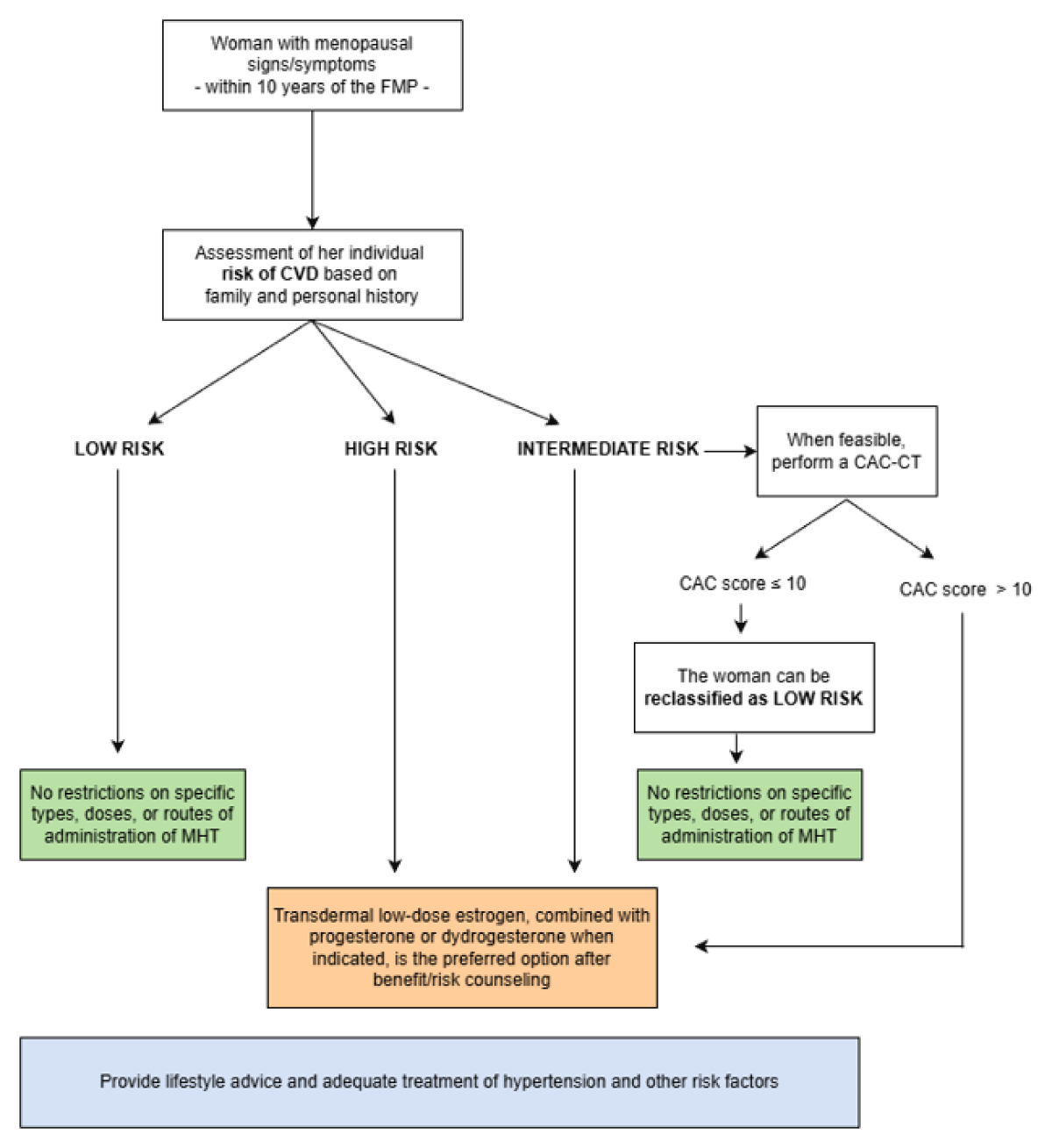
Figure 4

Algorithm for Menopausal Symptom Management and Cardiovascular Risk–Based Decision-Making.

FMP = final menstrual period; CVD = cardiovascular disease; CAC = coronary artery calcium; CT = computed tomography; MHT = menopause hormone therapy.
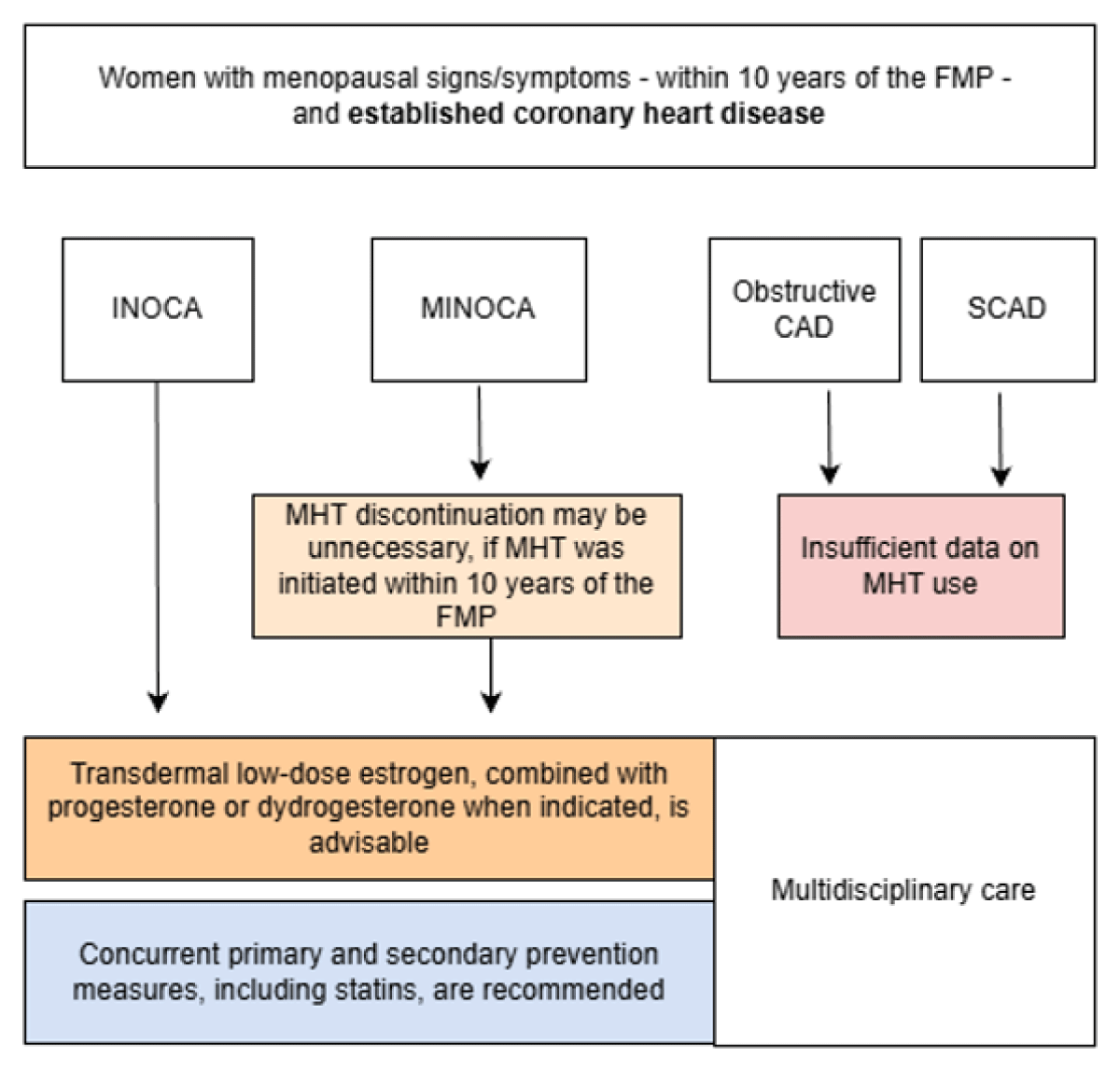
Figure 5

Algorithm for Menopausal Symptom Management in patients with established Ischemic Heart Disease.

FMP = final menstrual period; CAD = coronary artery disease; INOCA = ischemia with nonobstructive CAD; MINOCA = myocardial infarction with nonobstructive CAD; SCAD = spontaneous coronary artery dissections.

DOI: https://doi.org/10.5334/gh.1576 | Journal eISSN: 2211-8179
Language: English
Page range: 67 - 67
Submitted on: Jul 15, 2026
Accepted on: Jul 17, 2026
Published on: Sep 22, 2026
Published by: Ubiquity Press
In partnership with: Paradigm Publishing Services

© 2026 Chiara Benedetto, Martha Gulati, Suvarna S. Khadilkar, Angela H. E. M. Maas, Federica Frezet, Gláucia Maria Moraes de Oliveira, Andrea R. Genazzani, Hema Divakar, Athena Poppas, on behalf of the International Federation of Gynecology and Obstetrics (FIGO) and World Heart Federation (WHF), published by Ubiquity Press
This work is licensed under the Creative Commons Attribution-NonCommercial-NoDerivatives 4.0 License.