
Table 1
Summary of the common features of the output format of the FAIR assessment tools examined.
| ASSESSMENT OUTPUT PROPERTIES | O’FAIRe | F-UJI | FAIR EVALUATOR | FAIR EVA | FOOPS | FAIR CHECKER |
|---|---|---|---|---|---|---|
| Metric URI/ID | X | X | X | X | X | X |
| Metric description | X | X | X | |||
| Ordinal score (e.g. pass/fail) | X | X | X | X | ||
| Numerical score | X | X | X | X | ||
| Percentage score | X | X | X | |||
| Scale information (e.g. total score) | X | X | X | X | ||
| Verbose results/logger | X | X | X | X | X |
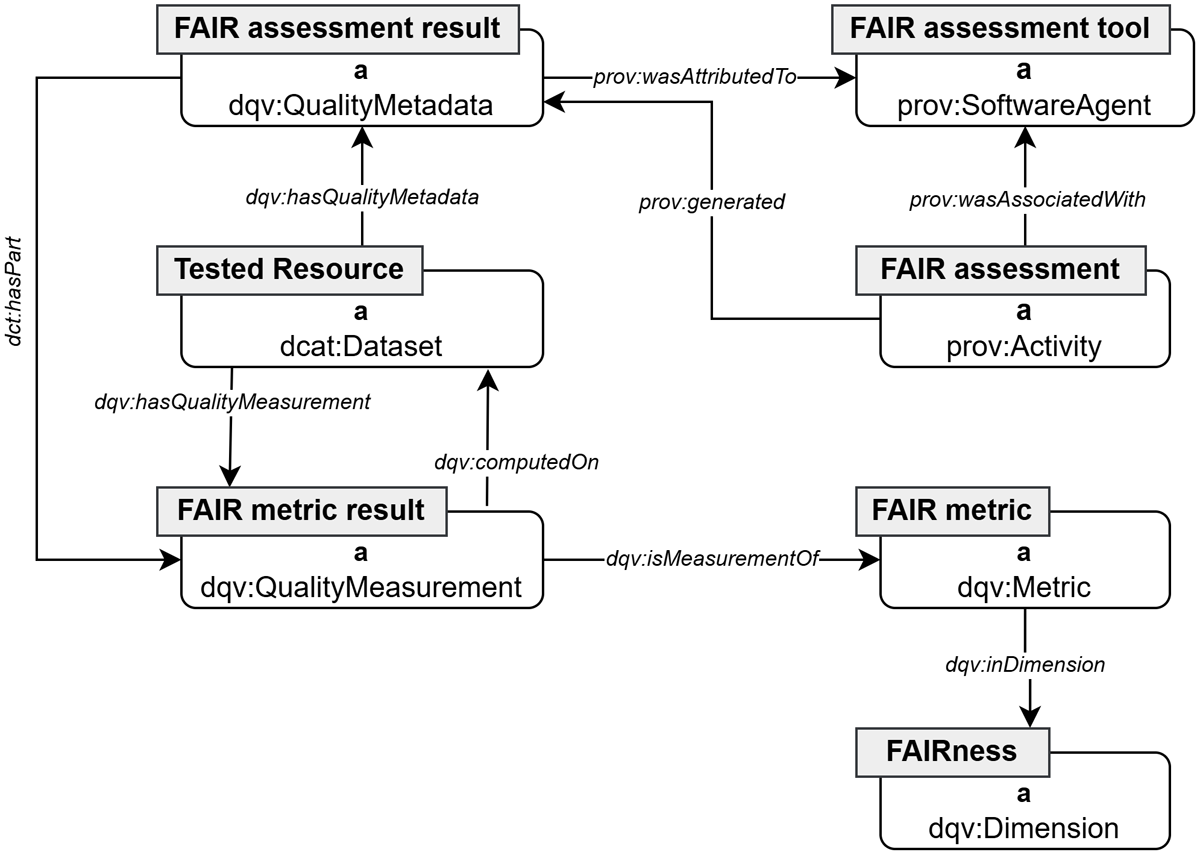
Figure 1
The core model to express a FAIR assessment process of a given resource and associated FAIR metrics and results based on DQV.
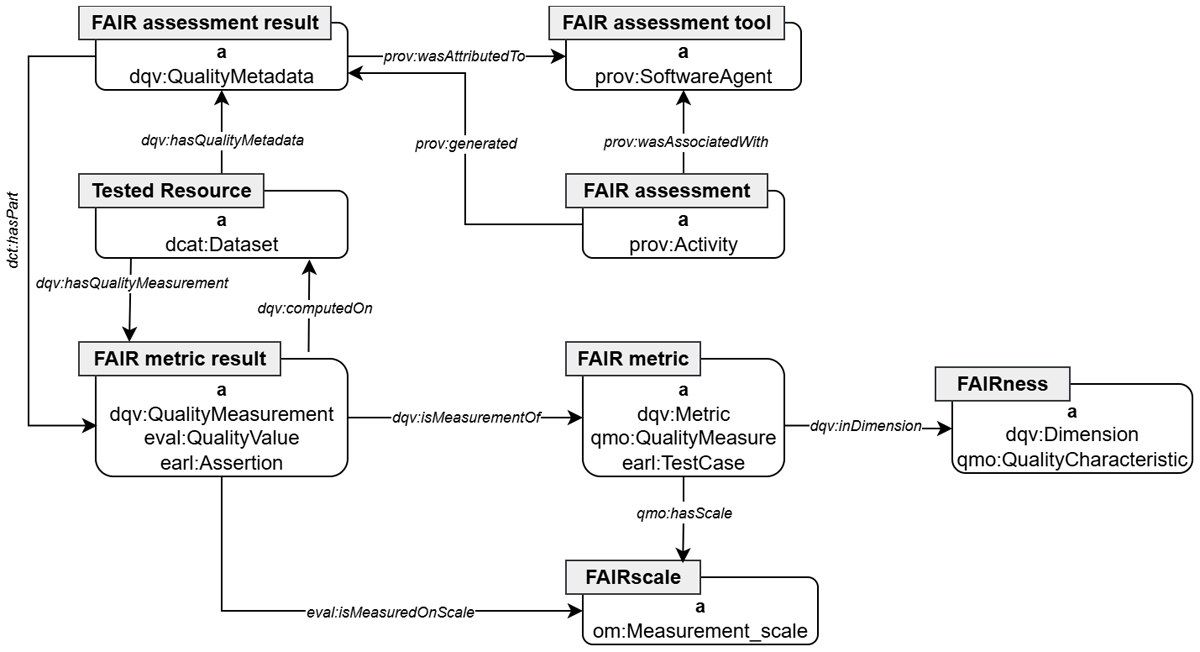
Figure 2
The extended model, including scale information, which requires the use of two additional vocabularies (QMO and OM), EARL provides a controlled vocabulary for test status (pass/fail).
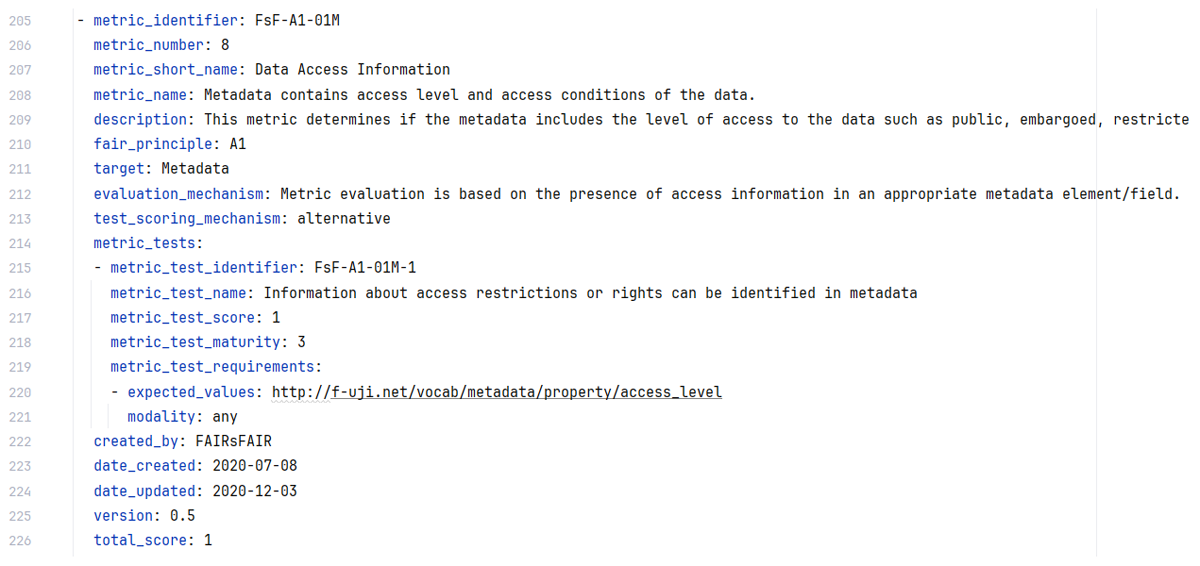
Figure 3
An excerpt from the YAML file that specifies the F-UJI FAIR metrics. Shown is the definition of a specific test (FsFA1-01M-1) for the metric FsFA1-01M, which checks whether the metadata contains information about the access level.
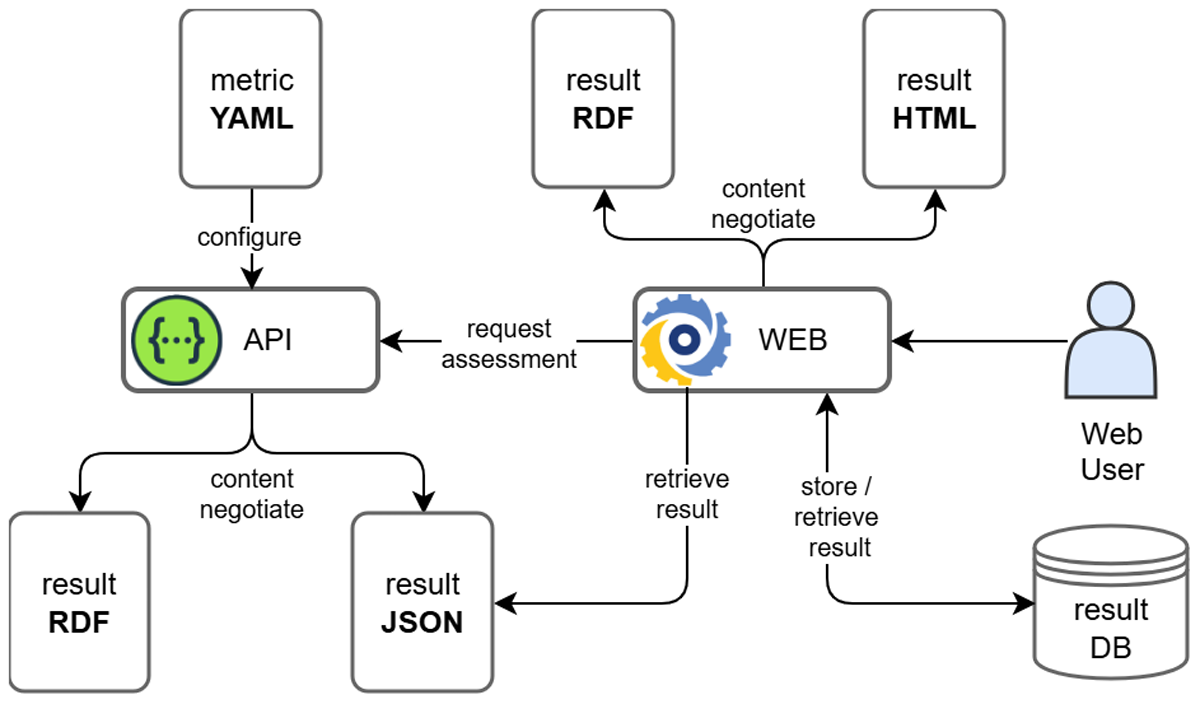
Figure 4
Output delivery in F-UJI for the ‘evaluate’ action of the API. The figure illustrates how FAIR assessment results are serialized as RDF, with content negotiation enabling access to both human-readable (HTML) and machine-readable (RDF) representations. The F-UJI API is configurable via a YAML file defining FAIR metrics and tests.