
1 Introduction
1.1 Overview of DS-I Africa
The Harnessing Data Science for Health Discovery and Innovation in Africa (DS-I Africa) initiative is funded by the US National Institutes of Health (NIH) through the NIH Common Fund and 12 NIH Institutes and Centers (https://commonfund.nih.gov/AfricaData) (2025a). DS-I Africa is a consortium led by African investigators with a Coordinating Center based at the University of Cape Town in South Africa. The DS-I Africa initiative aims to leverage data science technologies to transform biomedical and behavioural research and develop solutions to Africa’s most pressing public health problems through a robust ecosystem of new partners from the academic, government, and private sectors.
The DS-I Africa consortium began with 19 projects in 2021 and grew to a total of 38 projects (2025b) in 2023, each of which is funded through an NIH cooperative agreement. Almost all projects are led by African researchers working in collaboration with groups of researchers within and outside Africa. The projects form a unique continental network of researchers, data scientists, ethicists, health professionals, and engineers that bring together existing expertise to develop tools and applications that can be implemented in Africa and also shared, adapted, and harmonized globally. Specifically, there is the eLwazi Open Data Science Platform (ODSP) and Coordinating Center (CC), seven research hubs, seven research training programs, four ethical legal and social implications (ELSI) research projects, thirteen partnership for innovation (PFI) research projects, and six research education projects. The ODSP develops and maintains a data-sharing gateway for existing resources and new data generated by the DS-I Africa research hubs. The CC provides the organizational framework for the direction and management of the initiative’s common activities. The research hubs are intended to be recognized centers of excellence in data science fields and are advancing population-relevant, affordable, acceptable, and scalable data science solutions to improve health in Africa. The research training programs train the next generation of African data scientists, provide support for faculty development, and implement new master’s and PhD curricula in African institutions. The ELSI projects conduct research into key ELSI issues that present challenges in the field of data science in Africa such as data privacy and ownership, cross-border data sharing, intellectual property, and sensitivities concerning the use of geospatial information for research or public health surveillance (Adebamowo et al., 2023). The research projects support additional innovative data science projects and early career or new investigators. The research education projects focus on strengthening capacity through short-term courses, workshops, and hackathon training intended to fill gaps in the DS-I Africa consortium. The consortium is governed by the DS-I Africa Steering Committee, which consists of representatives from each project and the NIH.
The DS-I Africa consortium focuses on applying advanced data science technologies to address pressing public health challenges across the African continent. Data leveraged within the consortium including but not limited to omics, geospatial, demographics and health, and imaging data are catalogued in the eLwazi Open Data Science Catalogue (https://catalog.elwazi.org/#/datasets) as a way of adhering to the FAIR principles. The kinds of data science involved include: (1) biomedical and public health research: using data science to improve diagnostics, treatment, and health outcomes, (2) artificial intelligence (AI) and machine learning (ML): Applied in areas like cancer, tuberculosis, malaria diagnosis, congenital heart defect detection, antimicrobial resistance, air pollution and heat waves, (3) developing context-specific algorithms and tools for African health systems, (4) genomic and genetic data analysis: For disease prediction and gene discovery, (5) Big data analytics: Leveraging large-scale health data to inform policy and improve healthcare delivery, (6) ELSI research: Exploring responsible data use, data sharing and governance, and (7) Training and capacity building: Developing a new generation of interdisciplinary African data scientists.
DS-I Africa contributes to the development of expertise among African scientists and establishes networks of African investigators working synergistically towards ambitious health goals (Figure 1). The vision of DS-I Africa is to create and support a robust pan-continental network of data scientists and technologies that will be equipped to apply advanced data science skills to transform health, thus enhancing the impact of data science on health in Africa and spurring innovation through support of new African and global partnerships.
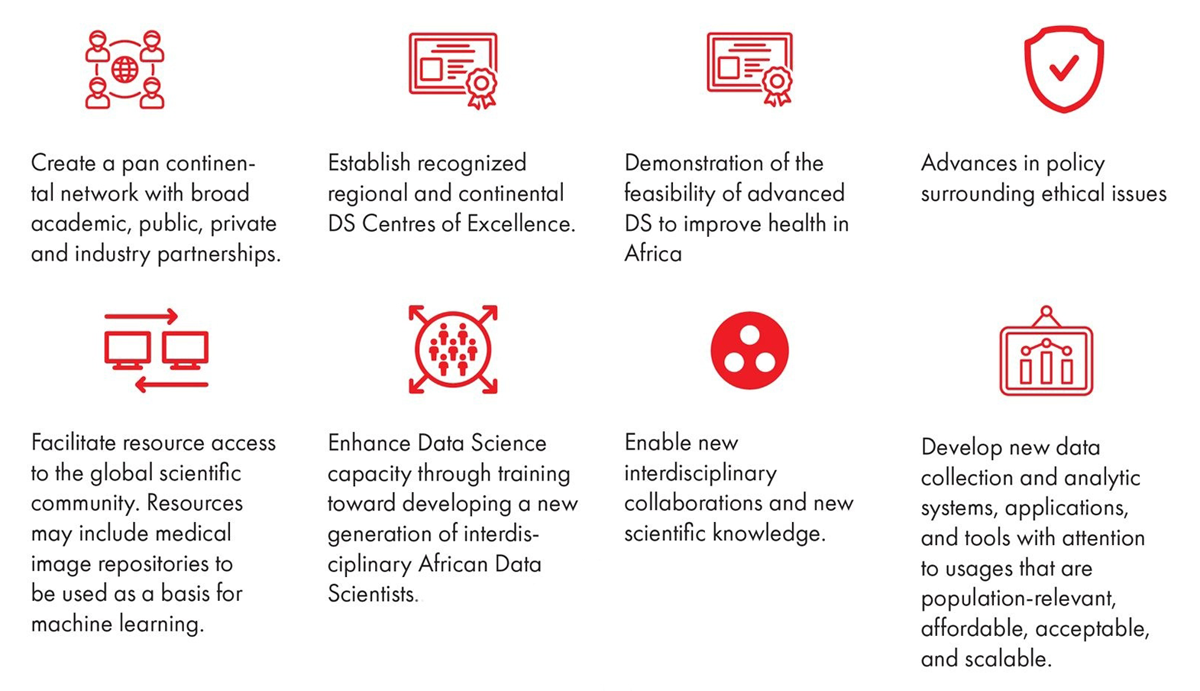
Figure 1
DS-I Africa program goals.
1.2 Overview of DS-I Africa’s focus on partnerships
The DS-I Africa program’s premise is that to make progress on ambitious health goals, partnerships are required that bring scientists together across disciplines and engage with government, private sector, non-governmental organizations (NGOs), and local communities. Each DS-I Africa project (https://dsi-africa.org/projects) involves multiple partners, including academic and non-academic organizations. Since the program began in 2021, the DS-I Africa consortium expanded as organizations within the consortium have engaged with new partners and connected with other data science activities across the continent. These partnerships are strengthening data science networks and contributing to the sustainability of African data science programs.
1.3 Overview of the Partnerships and Outreach Working Group
The DS-I Africa Partnerships and Outreach Working Group (POWG) was formed in 2022 to create networking opportunities with potential partners outside the consortium. The POWG (https://dsi-africa.org/partnerships-outreach) provides a forum for consortium members to informally meet potential collaborators, strengthen existing partnerships, and share strategies for effective collaboration. The CC works together with the POWG to contribute to the vision of DS-I Africa by fostering a network of data science organizations that includes start-ups, government actors, non-profit organizations, and academic organizations working at the nexus of data science and health.
1.4 Partnerships within DS-I Africa
While each of the 38 projects is led by a principal investigator at an academic institution, each project involves multiple investigators, core partners, and collaborators. Moreover, each research hub and PFI research project includes at least one non-academic partner. For example, we show in Figure 2 an illustration of the partnerships within the consortium and with external partners. DS-I Africa projects also collaborate across working groups related to training, data governance, data management, and the POWG described earlier. Furthermore, each ELSI project works in partnership with at least one research hub, and other collaborations across the consortium have developed organically. All projects liaise with the eLwazi ODSP through their data management and analysis cores (DMAC) team or data stewards.
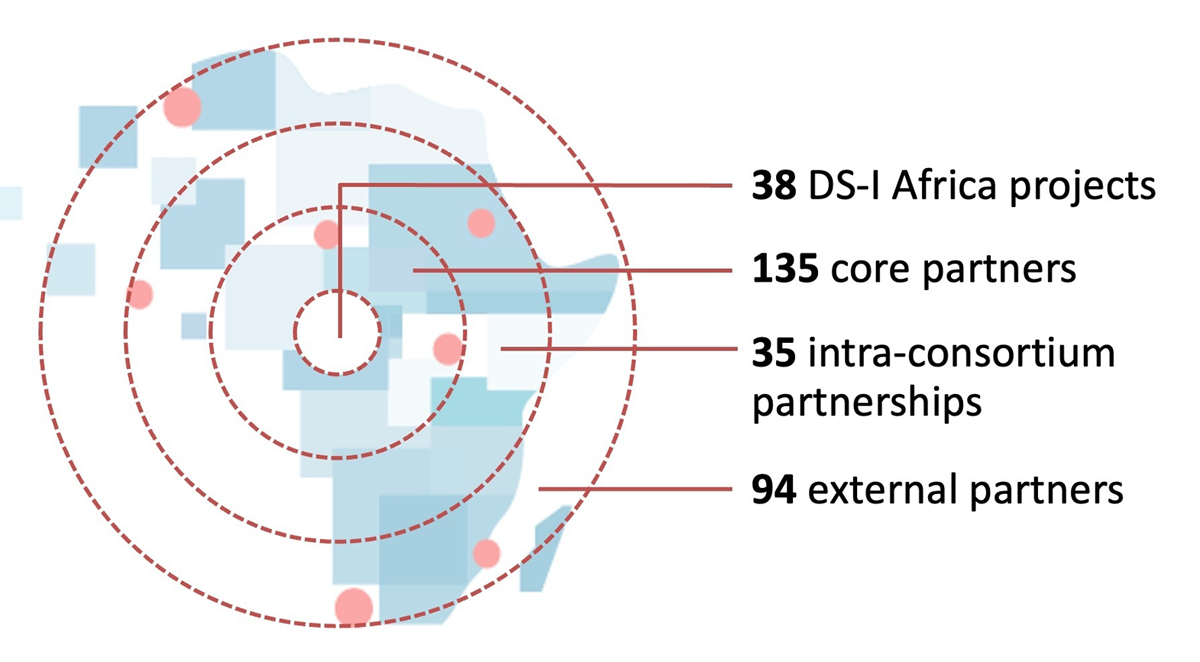
Figure 2
Types of partnerships across the DS-I Africa consortium as of 2024.
2 Outreach Strategies
The CC leads outreach and communication activities on behalf of the initiative, in coordination with NIH and individual DS-I Africa projects. This involves monitoring the data science landscape in Africa, reviewing literature, meeting potential partner organizations, and maintaining an email listserv with more than two thousand individuals interested in data science and health in Africa. The CC organizes a variety of webinars with key organizations outside the consortium and regularly invites leading data science organizations to present their work to the DS-I Africa Steering Committee, which includes representatives from all DS-I Africa projects.
The CC also tracks regional, continental, and global conferences and meetings of relevance to data science and health. These events are viewed as important opportunities to share research findings from DS-I Africa investigators, engage with different scientific communities, and learn from others working in the field.
Additionally, the CC distributes information about funding opportunities, events, and other announcements from a wide variety of organizations. Organizations providing information include NIH, the Bill & Melinda Gates Foundation, the Wellcome Trust, and the Science for Africa Foundation. Information is disseminated across the DS-I Africa email listserv through a monthly DS-I Africa News Flash.
2.1 Networking Exchange
Recognizing that DS-I Africa can only reach a small portion of the rich and diverse data science and health landscape in Africa, the CC and NIH designed a mechanism to bring communities together and encourage collaboration. The Networking Exchange is an informal event that has now been held on nine occasions—six virtual events and three in-person meetings—with plans for more events in the future. The virtual events take place on the Zoom platform, featuring short presentations and facilitated breakout rooms over approximately three hours. The in-person events coincided with the DS-I Africa Consortium Meetings held in November 2022 in South Africa, November 2023 in Rwanda, and November 2024 in Mauritius. The event run parallel with the DS-I Africa trainees poster session, The concept of a Networking Exchange is to mimic a scientific poster session or science fair with the objective of (1) learning about data science, AI, ML, and health activities in Africa, (2) networking with potential partners and collaborators, and (3) showcasing data science, AI, and ML research and products. However, instead of describing a research project, presenters talk about their organization and what they do within the data science and health landscape with the goal of identifying potential partners. Each Networking Exchange includes unstructured time for questions and discussion, giving participants plenty of time to meet with different people, learn about their work, and explore collaborations. The Networking Exchange has so far brought together about 2500 data science enthusiasts (Figure 3A) across six continents (Figure 3B) since it began.
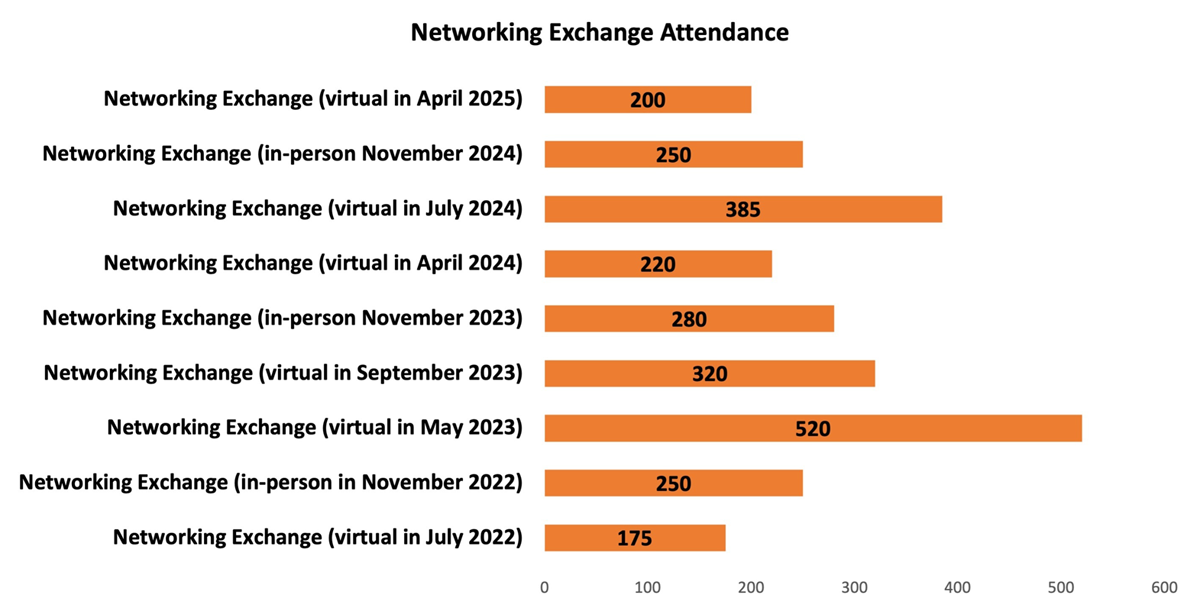
Figure 3A
Attendance at DS-I Africa Networking Exchange representing ~70% of registered participants that showed interest to attend.
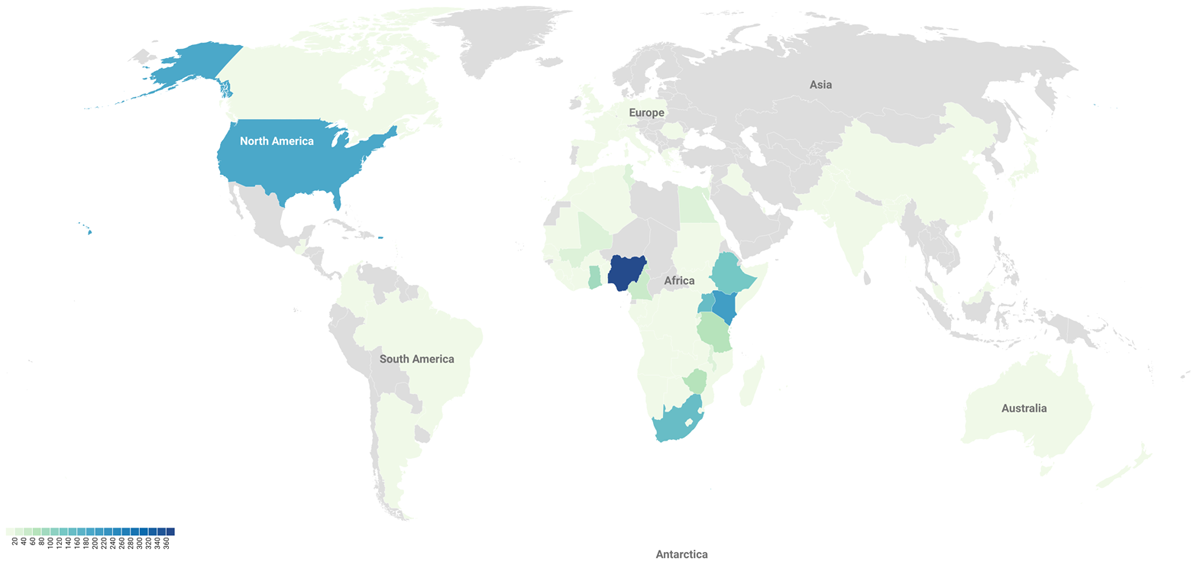
Figure 3B
Representation of delegates across six continents for the Networking Exchange events.
The first Networking Exchange, a virtual event, was held in July 2022 and featured short presentations by DS-I Africa projects. Participants were able to learn about each project’s activities, ask questions, and explore partnerships related to several new DS-I Africa funding opportunities that were open for application at the time. The interactive event included dedicated time for questions and interactive polls such as the Mentimeter poll described in Figure 4. More than 170 people attended and, based on a post-event survey, 89% of respondents thought the event was a good use of their time and 84% felt it was an effective way to learn about the DS-I Africa projects.
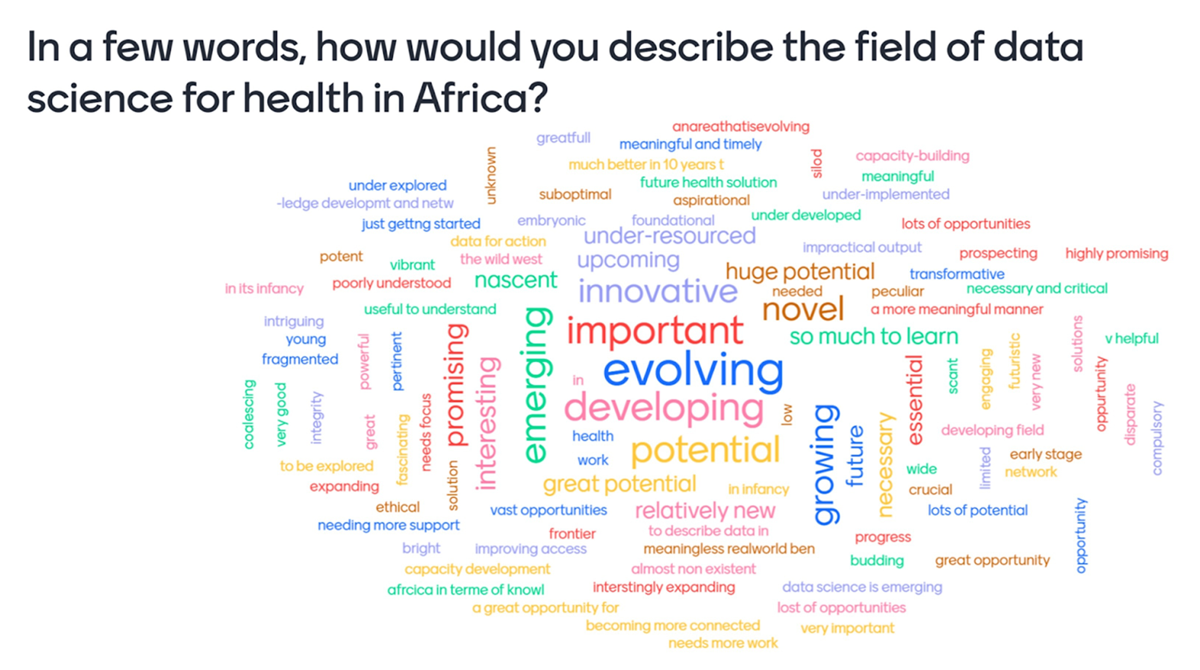
Figure 4
Interactive poll question from the first Virtual Networking Exchange, on Wednesday, July 27 2022 between 2:00pm–5:00pm CAT.
The second Networking Exchange was held in person as a part of the DS-I Africa Consortium Meeting at Cape Town, South Africa, in November 2022. Each DS-I Africa project presented a poster about their work alongside 17 research posters from early-career trainees affiliated with DS-I Africa projects. Additionally, 14 organizations outside the consortium participated with a poster or a booth—the latter provided a table for demonstrations of a technology or software application. Participating organizations included the Wellcome Trust, IBM Research, Instadeep, Roche Pharmaceuticals, UK BioBank, and the Makerere AI Lab. More than 200 individuals participated in the event which was very well received and considered a highlight of the consortium meeting by many attendees.
The third Networking Exchange was virtual and held in May 2023. The event featured short presentations by organizations outside of academia and outside of the DS-I Africa consortium. More than 50 organizations expressed interest in the event, and 32 organizations were included on the final agenda (https://t.ly/hTKDL). These organizations included start-ups, global networks, consulting firms, multilateral organizations, and private sector companies. More than 500 individuals attended some portion of the three-hour event, which concluded with a panel featuring seven research funding agencies. Attendees were very diverse, coming from many different countries in Africa, Europe, USA and Middle East and a wide variety of disciplines.
The fourth Networking Exchange event was virtual and held in September 2023 with approximately 300 participants. The event featured both DS-I Africa projects and academic institutions with data science research component (https://t.ly/5rKmW). Additionally, the event had a plenary session for funders to share new and relevant grant opportunities that participants could apply for.
The fifth Networking Exchange event was in-person as part of the third DS-I Africa Consortium Meeting held at Rwanda in November 2023. The event feature mostly DS-I Africa projects and data science-related organizations based in Rwanda. The sixth Networking Exchange was also virtual and held in April 2024. This event also featured short presentations by organizations outside academia and outside of the DS-I Africa consortium. More than 50 organizations expressed interest in the event, and 26 organizations including health research centers, funding agencies, NGO/non-profit, open science networks, private sectors, and global networks were included in the final agenda (https://t.ly/CKifW).
The seventh Networking Exchange event was virtual and held in September 2024 with over 450 registrants and 385 attendees. The event featured 35 DS-I Africa projects including pilot projects which were featured for the first time as part of the Networking Exchange (https://t.ly/xLNtD). Similar to the fifth Networking Exchange, the eighth Networking Exchange formed part of the 4th DS-I Africa Consortium Meeting in Mauritius.
The ninth event was virtual and held in April 2025. This event focused on sustainable partnerships for research and featured data science communities, research hubs, AI labs, private sectors, non-profit organizations, and funding organizations (https://t.ly/5ZDg8).
Overall, the DS-I Africa Networking Exchange event has generated significant interest from researchers in Africa, Europe, North America, South America, Australia, and the Middle East (Figure 3B). Based on post-event survey reports (Figure 5A), on average, over 85% of participants per event felt it was an effective way to learn about organizations working on data science and health in Africa. Survey respondents also shared that they appreciated the opportunity to hear from diverse organizations and identify potential collaborators in a format that allowed them to move around in breakout rooms. Several respondents also valued the opportunity to share knowledge and engage with research funding agencies. In response to the question, ‘Did you meet anyone that you would like to work with in the future?’, on average, about 60% replied ‘Yes’ and 30% replied ‘Maybe’ (as seen in Figure 5B). Based on these findings, the Networking Exchange achieved its goals of bringing diverse communities together in support of collaboration and networking. There are ongoing discussions to have some of the sessions in French in order to reach people from Francophone countries.
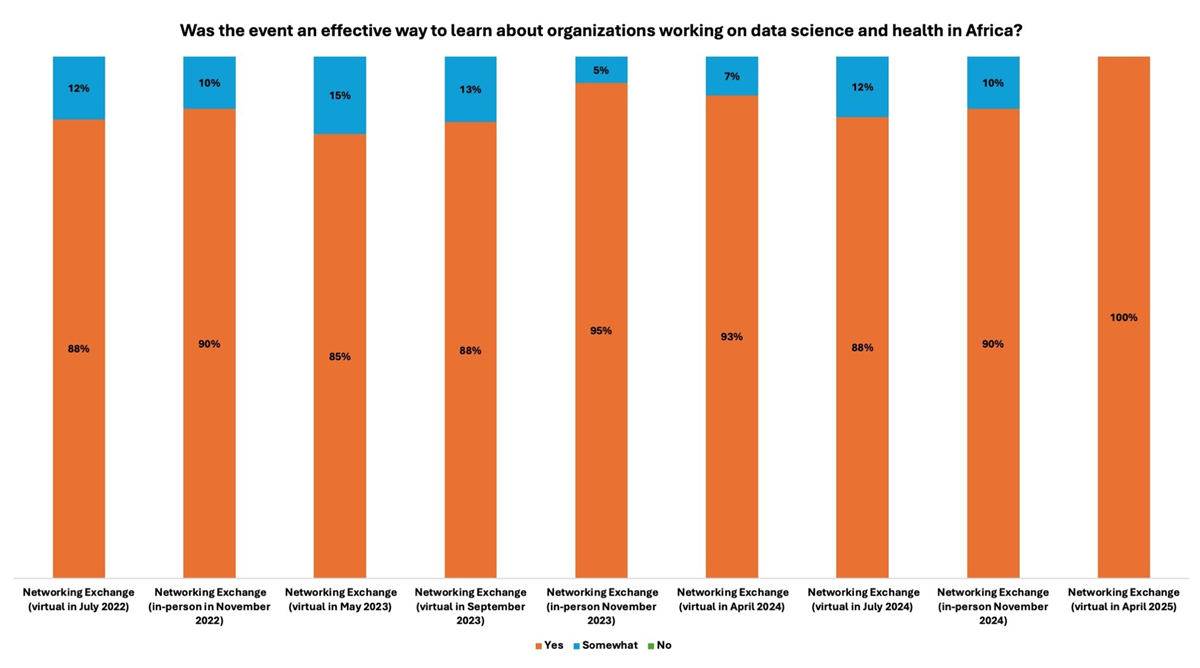
Figure 5A
Post-event feedback from Networking Exchange delegates on the question ‘was the event an effective way to learn about organizations working on data science and health in Africa?’
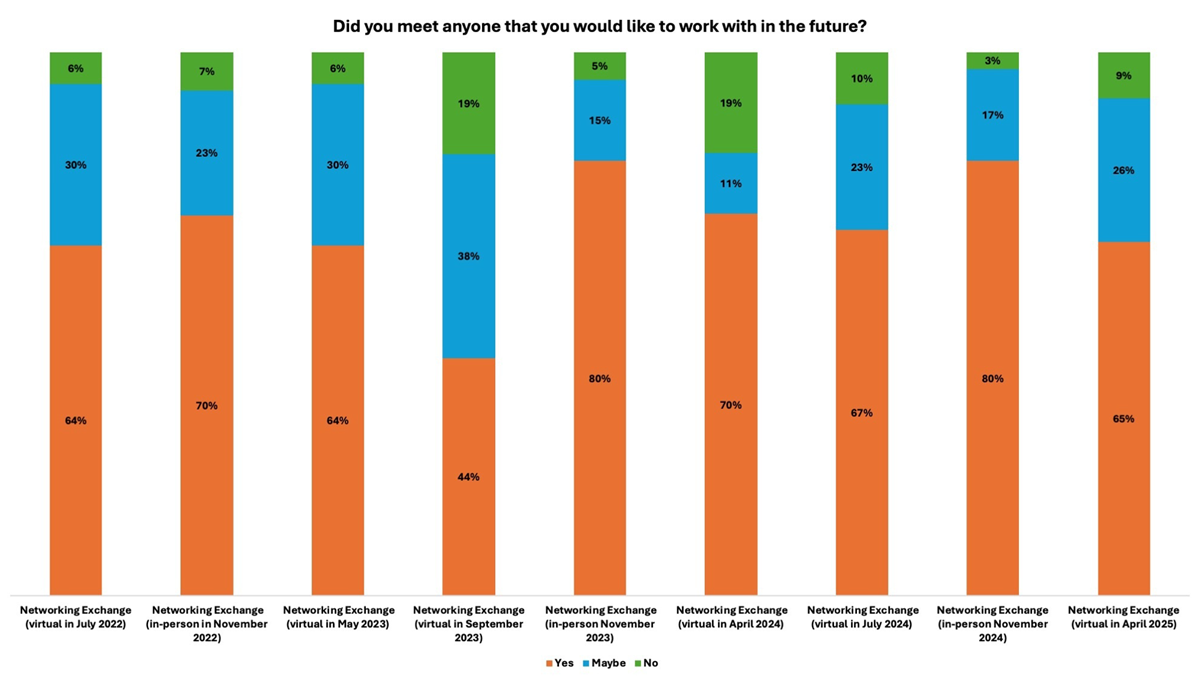
Figure 5B
Post-event survey from Networking Exchange delegates on the question ‘Did you meet anyone that you would like to work with in the future?’
2.2 Webinars
As part of the DS-I Africa outreach strategy, the POWG and CC have been organizing a webinar series that is open to the public. The webinar series brings together participants from the data science/ML/AI field and health/medicine/biological sciences field. For instance, the group organized a webinar on ‘Experiences with Partnerships from IBM Research and DS-I Africa’ in July 2023, which featured IBM Research’s approach to partnerships, their experience working with academic institutions, and perspectives on DS-I Africa as well as the collaborative relationship between DS-I Africa and IBM Research Africa, which is a partner in two research hubs. More than 150 people attended the webinar, and informal feedback was very positive.
The POWG group began the webinar series to highlight the issue of translating research findings into policies in Africa. The interest of the group is to engage researchers and people in government positions from various African countries to explore the topic. The group recently organized webinars on ‘Engaging Policymakers in Health Research’ in March 2024 and August 2024, which recorded over 1000 registrants and had speakers from Botswana, Tanzania, Nigeria, Mauritius and Kenya who provided perspectives and case studies on how policymakers have been successfully engaged in their countries. The webinar helped the audience to: (1) uncover effective strategies for communicating research findings to policymakers, (2) learn from experts with experience in bridging the research-policy gap, (3) gain valuable insights on how to advocate for evidence-based health policies, and (4) connect with like-minded professionals and share experiences. The recordings from the webinars are available to the public on the DS-I Africa YouTube channel (https://t.ly/5pkyR). There have been interesting discussions among the POWG to develop training resources from this webinar series as well as develop research articles detailing a framework for engaging policymakers in Africa. The POWG in July 2025 began a webinar series on public-private partnerships, highlighting the challenges and opportunities of public-private partnerships for scaling data science.
2.3 Engagement with data science communities
To date, DS-I Africa has participated and engaged with various data science communities within Africa and beyond (Table 1). Additionally, DS-I Africa has partnered with grassroots data science communities such as Sisonkebiotik, Ro’ya, and Deep Learning IndabaX South Africa to organize workshops and trainings on AI/data science for healthcare. These engagements promote cross-community activities and sharing of useful resources. The CC invited a wide variety of organizations outside of the consortium to attend the annual DS-I Africa Consortium Meetings (specifically, the Second DS-I Africa Consortium Meeting in November 2022 in South Africa, the Third DS-I Africa Consortium Meeting in November 2023 in Rwanda, the Fourth DS-I Africa Consortium Meeting in November 2024 in Mauritius, and the Data for Health in Africa and the Fifth DS-I Africa Consortium Meeting in August 2025 in Ghana). We show in Figure 6 the key timelines of DS-I Africa’s activities from 2021–2025.
Table 1
Overview of DS-I Africa’s engagement with Data Science Communities.
| DATA SCIENCE COMMUNITY | YEAR | LOCATION | TYPE OF ENGAGEMENT |
|---|---|---|---|
| Data Science Africa | 2025 | Ibadan, Nigeria | Conference Participation, collaboration, workshop and training |
| Data Science Africa | 2024 | Kenya | Conference Participation and collaboration |
| Data Science Africa | 2023 | Rwanda | Conference Participation and collaboration |
| Deep Learning IndabaX South Africa | 2023 | South Africa | AI Fest, Workshops and training on AI/Data Science for Healthcare |
| Deep Learning IndabaX | 2024 | South Africa | AI Fest, Workshops and training on AI/Data Science for Healthcare |
| Deep Learning IndabaX South Africa | 2025 | South Africa | AI Fest, Workshops and training on AI/Data Science for Healthcare |
| Deep Learning Indaba | 2023 | Ghana | Participation and collaboration |
| Deep Learning Indaba | 2024 | Senegal | Participation and collaboration |
| Ro’ya | Ongoing | Various | Workshops and training on AI/Data Science for Healthcare |
| Sisonkebiotik | Ongoing | Various | Workshops and training on AI/Data Science for Healthcare |
| CODATA | 2024–2025 | Virtual | Workshops |
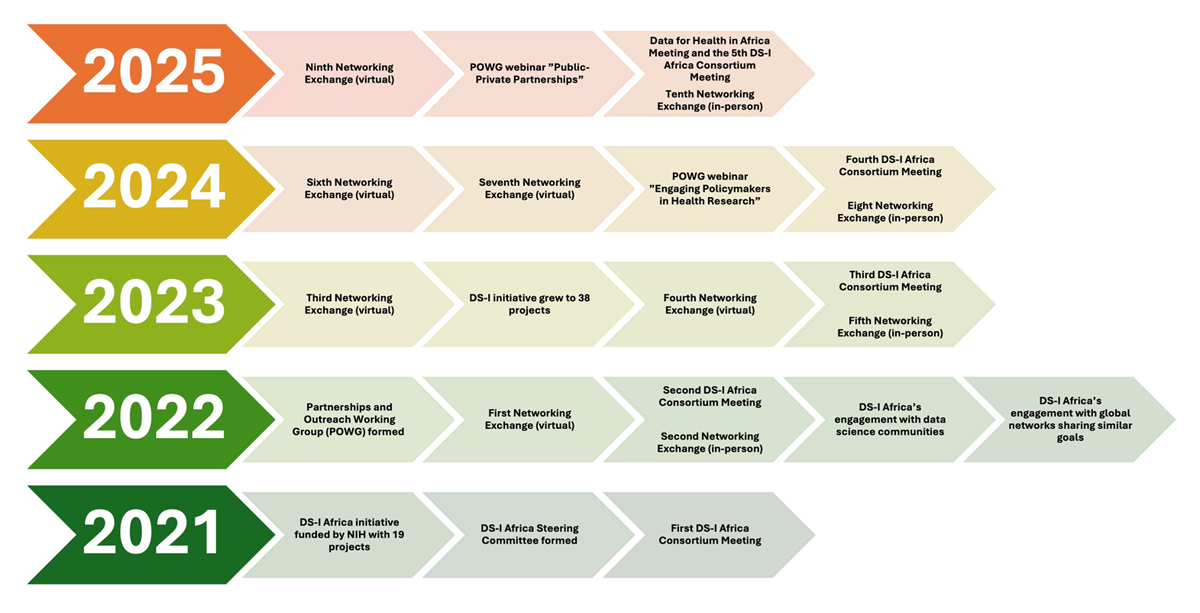
Figure 6
Overview of key timelines of DS-I Africa’s activities from 2021–2025.
3 Discussion
Before the launch of the DS-I Africa initiative, NIH conducted an extensive scoping exercise involving consultations, focus group discussions, literature review, and desktop research to identify gaps and opportunities for data science to impact health in Africa. This scoping revealed tremendous opportunities based on increases in the availability of data, advances in technology for analysis, and a diverse community of highly motivated scientists from across the continent. The potential for the field was further supported by the successes of previous initiatives, including the Human Heredity and Health in Africa (H3Africa) Initiative (Adoga et al., 2014) and the Medical Education Partnership Initiative (Mullan et al., 2012).
However, a key gap was the lack of connectivity between the data science and health communities and expertise scattered across the continent. The importance of partnerships—especially across disciplines such as data science and health—was a common theme throughout consultations with African leaders in the field. These discussions also made clear the need to think broadly about partnerships, including policymakers, practitioners, and the private sector. The impact and utility of partnerships and investment in science were clearly demonstrated during the COVID-19 pandemic which allowed African scientists to harness their networks to contribute to the surveillance and support effective vaccine development (Poongavanan et al., 2023).
Accordingly, a culture of partnerships and collaboration is integrated throughout DS-I Africa. The CC supports this culture through program-wide working groups, participation in key scientific conferences such as Deep Learning Indaba, and unique virtual and in-person opportunities for networking that extend beyond the current consortium. Through these activities, several key lessons have emerged:
3.1 Diverse partnerships foster creativity and strengthen projects
The incredible potential of data science to improve health cannot be realized unless data scientists work closely and collaboratively with health experts (Moodley and Rennie, 2023; Poongavanan et al., 2023). Complex health challenges require creative problem-solving, which is best achieved through diverse partnerships (Figure 2). DS-I Africa projects include partners working from different countries, disciplines, and sectors. As these projects advance, their partnerships continue to grow as they add different expertise and unique perspectives to their problem-solving approaches. The CC and the POWG serve this goal by continually creating opportunities for networking across silos and building bridges across disciplines and scientific communities.
3.2 Creating opportunities for networking is preferable to matchmaking
DS-I Africa’s approach to partnerships is to support opportunities for investigators to meet and interact with a wide variety of organizations. The goal is to create networking opportunities and foster a culture of collaboration that allows project leads to identify the most appropriate partners to achieve their goals. This ‘hands-off’ approach is preferable to pushing individuals to work with each other or recommending partners through matchmaking. Partnerships that develop organically among like-minded groups with shared goals result in teams that work well together and are more likely to achieve their shared objectives (Ajiferuke et al., 2021; Puljak and Vari, 2014; Shaw, 2019; Varshney et al., 2016). Furthermore, partnerships can only be effective if they are equitable and are led by individuals and organizations who are embedded in the local context.
3.3 Rapid changes in the field require constant scoping for opportunities
The field of data science is rapidly evolving as more and more datasets become available, infrastructure and capacity grows, and computational capacity increases. From the time that DS-I Africa began hosting Networking Exchanges, interest has increased much faster than expected (as seen in Figure 3). Likewise, the number of publications, webinars, and conferences in the field is quickly growing. This requires the CC and POWG to constantly scope for new opportunities, activities, and potential partners. Data science is a fast-paced field and staying abreast of the latest developments is a necessity to harness this momentum.
4 Conclusion
Partnerships and networks are critical to improving health in Africa through data science. Towards this goal, the DS-I Africa program has integrated a culture of partnership throughout its projects, actively engaged with other data science activities in Africa, and created opportunities for networking that extend beyond the current consortium. We will continue our outreach, work to break down silos, and explore new and creative ways of strengthening connectivity across the continent. Building a vast network that is grounded in equitable and transparent partnerships allows us to respond expediently to real-world problems.
We hope to continue improving the Networking Exchange model, while trying new approaches to engage with partners. One such idea could be a data science festival event that brings researchers, practitioners, and policymakers from across Africa to share research, explore collaborations, and advance the field.
As the DS-I Africa initiative approaches the conclusion of its initial funding phase in 2026, sustainability has emerged as a critical priority for its long-term success. The consortium, the Steering Committee, and the ODSP are actively engaged in developing a strategic sustainability plan aimed at ensuring continuity of operations, research outputs, and regional capacity-building efforts beyond the current funding cycle.
Acknowledgements
We acknowledge support from DS-I Africa Coordinating Center staff, NIH, and DS-I Africa consortium members.
Competing Interests
The findings and conclusions in this paper are those of the authors and do not necessarily represent the official position of the US National Institutes of Health or Department of Health and Human Services.