
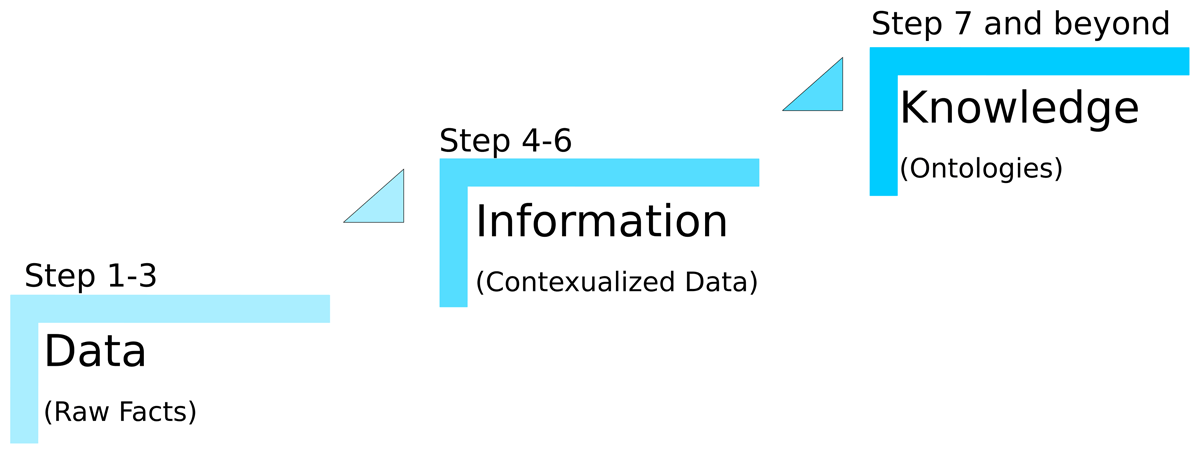
Figure 1
The DIK hierarchy as it aligns with the ontological data management process. The color-coded stair-step model maps data management actions (steps 1–7) onto the levels of data and information, ultimately leading to the knowledge and ontologies.
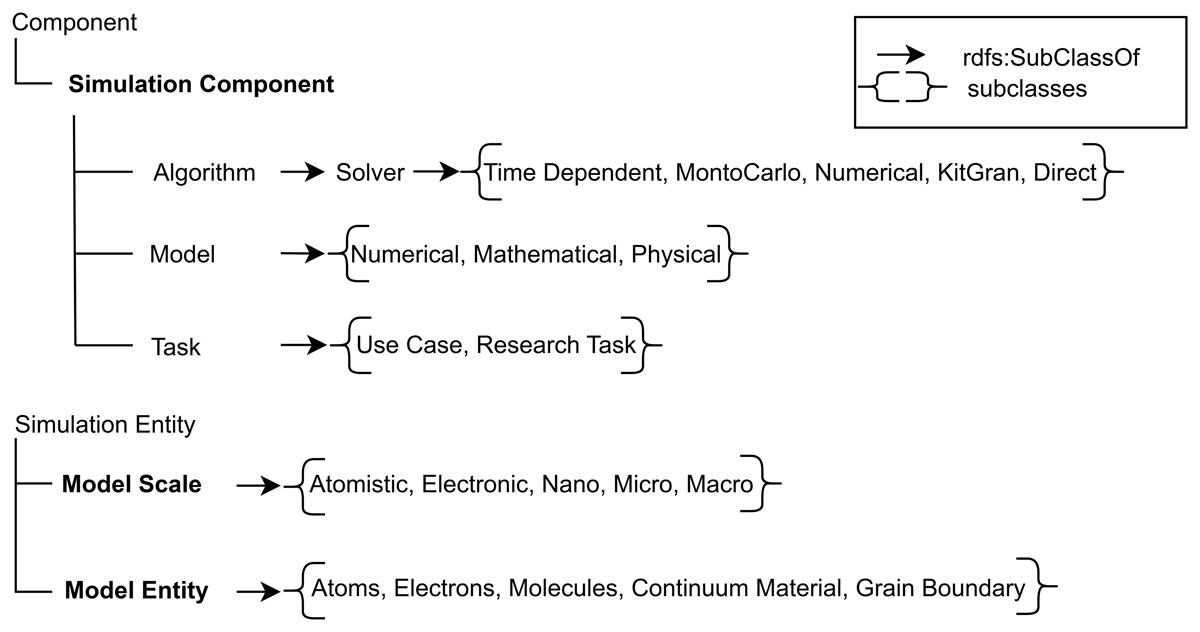
Figure 2
Selected class hierarchies in Onto-MS. The upper part illustrates the Simulation Component class and its subclasses. The lower part depicts the Model Entity and Model Scale classes with their subclasses.
Table 1
External ontologies and their concepts reused or extended in Onto-MS, along with the rationale for their inclusion. (C) denotes class and (SC) denotes subclass.
| ONTOLOGY NAME | CONCEPT REUSED | ONTO-MS EXTENSION | RATIONALE |
|---|---|---|---|
| EMMO | Component (C) | Simulation Component (SC) | To represent constituents of simulation systems |
| EMMO | Parameter (C) | Parameter for Solver (SC) | Solver-specific needs |
| EMMO+PROV-O | Participant (C) Agent (SC) | - | Aligned with PROV Agent to represent responsible participant in processes |
| PROV-O | Organization (SC) | Research Group SC | To represent research teams within institutions |
| OSMO | Granularity level (C) | Used as Model Scale C | To represent multiscale simulation methods |
| SIO | Objective (C) | Task Objective (SC) | To specify the objectives of simulation tasks |
| Metadata4Ing | Method (C) | Method (C) | To describe the method used in simulation |
| Schema.org | Research Project (C) | POLIS (SC) | To support interoperability at the project level |
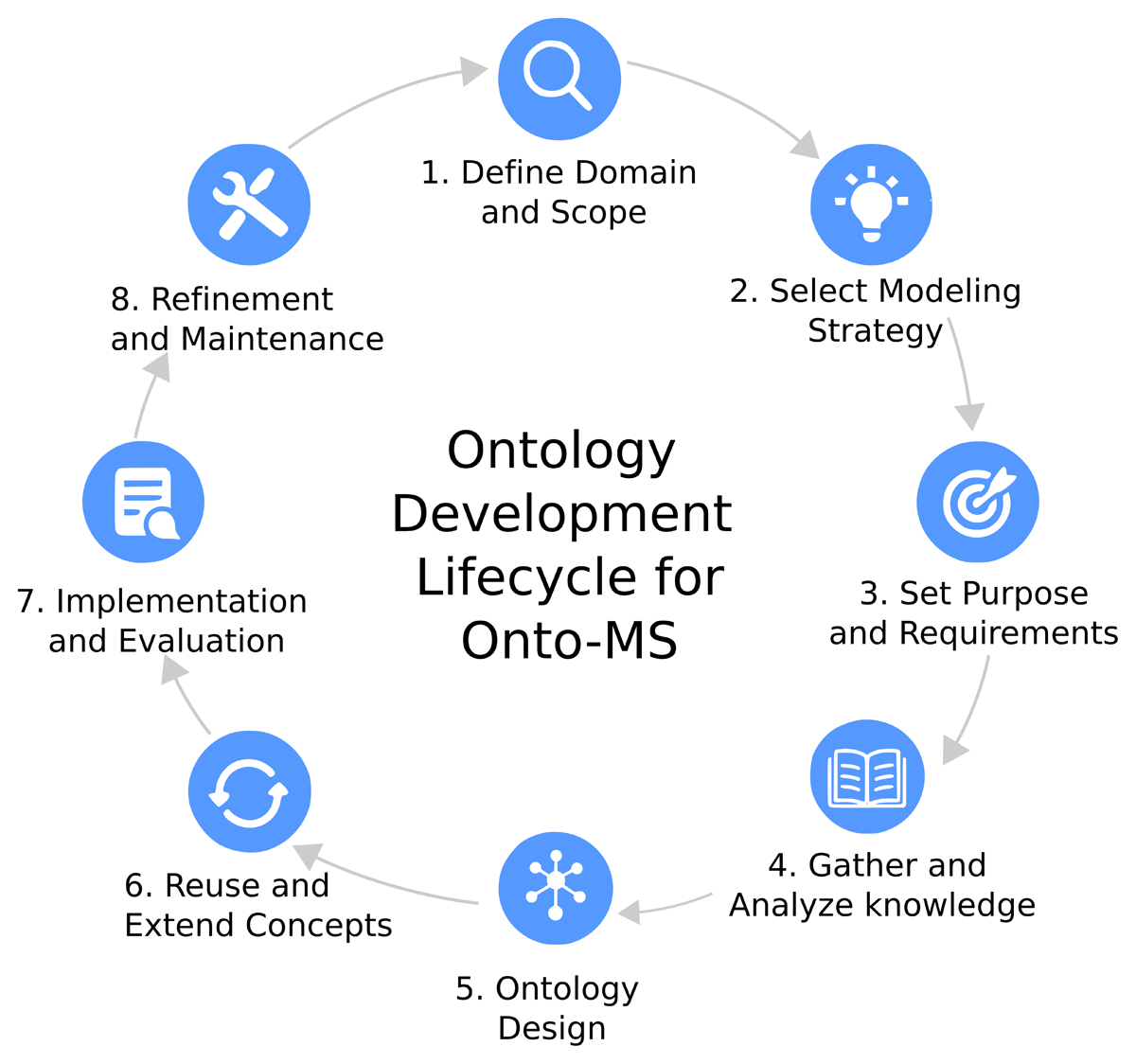
Figure 3
Ontology development lifecycle followed in Onto-MS, highlighting key stages such as domain definition, modeling strategy, implementation, evaluation, and refinement.
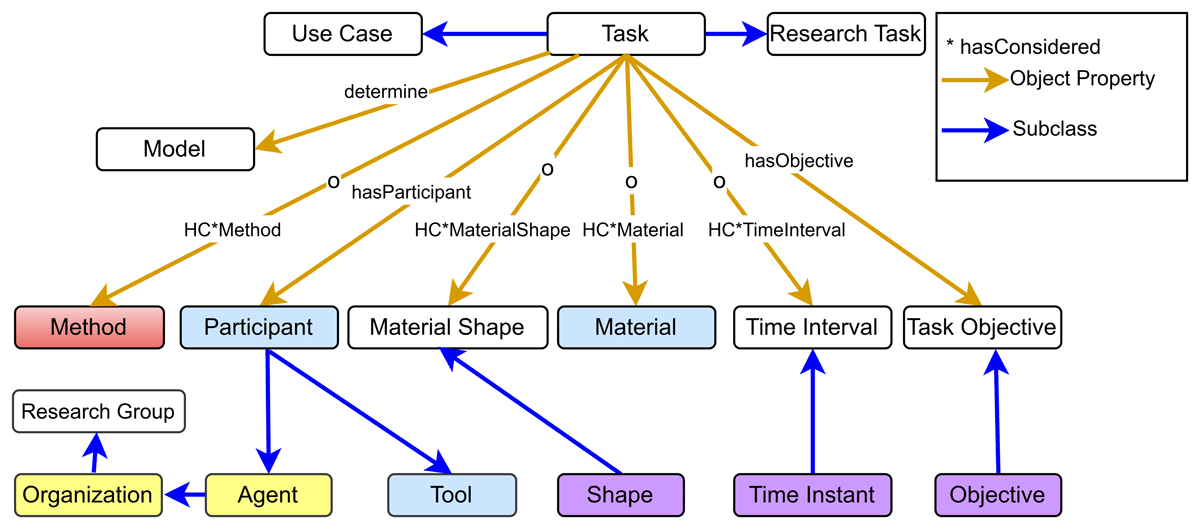
Figure 4
Task view: Shows the different concepts in the Onto-MS. Colored boxes represent the concepts imported from other ontologies, while uncolored boxes are native to Onto-MS.  EMMO
EMMO  PROV-O
  Metadata4Ing
  SIO
SIO  Onto-MS. The color of the arrow signifies object properties or subclass relationships.
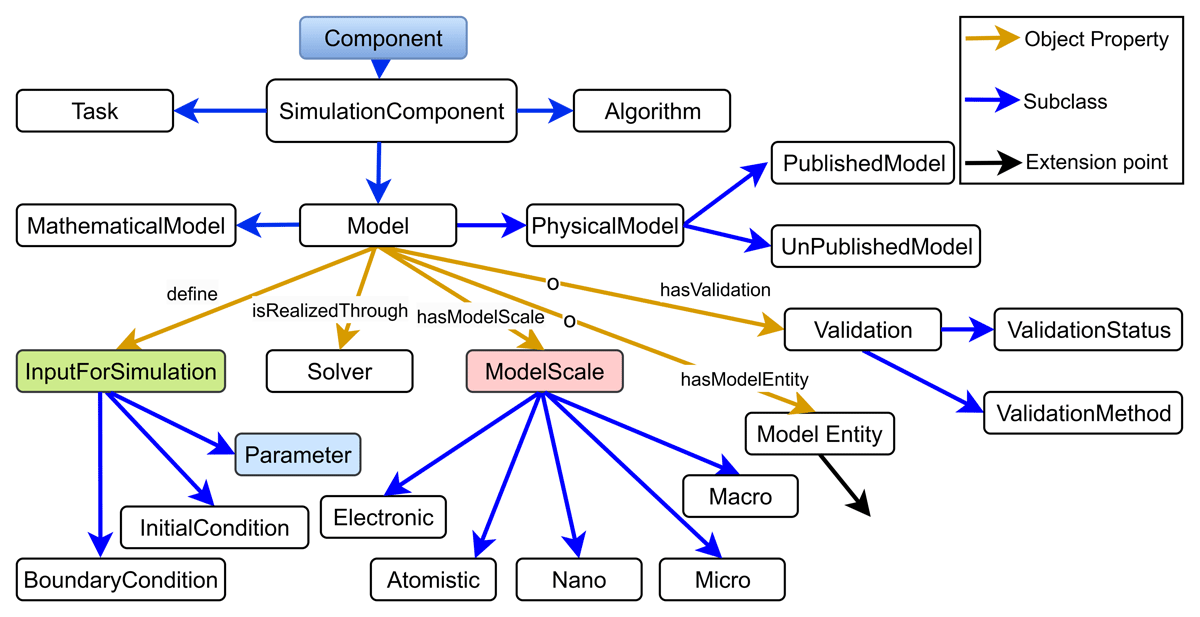
Figure 5
Model view: Shows the different concepts in the Onto-MS. Colored boxes represent the concepts imported from other ontologies, while uncolored boxes are native to Onto-MS. EMMO  OSMO/MODA.
  MUSICODE Onto-MS. While the color of the arrow signifies object property or subclass relationship.
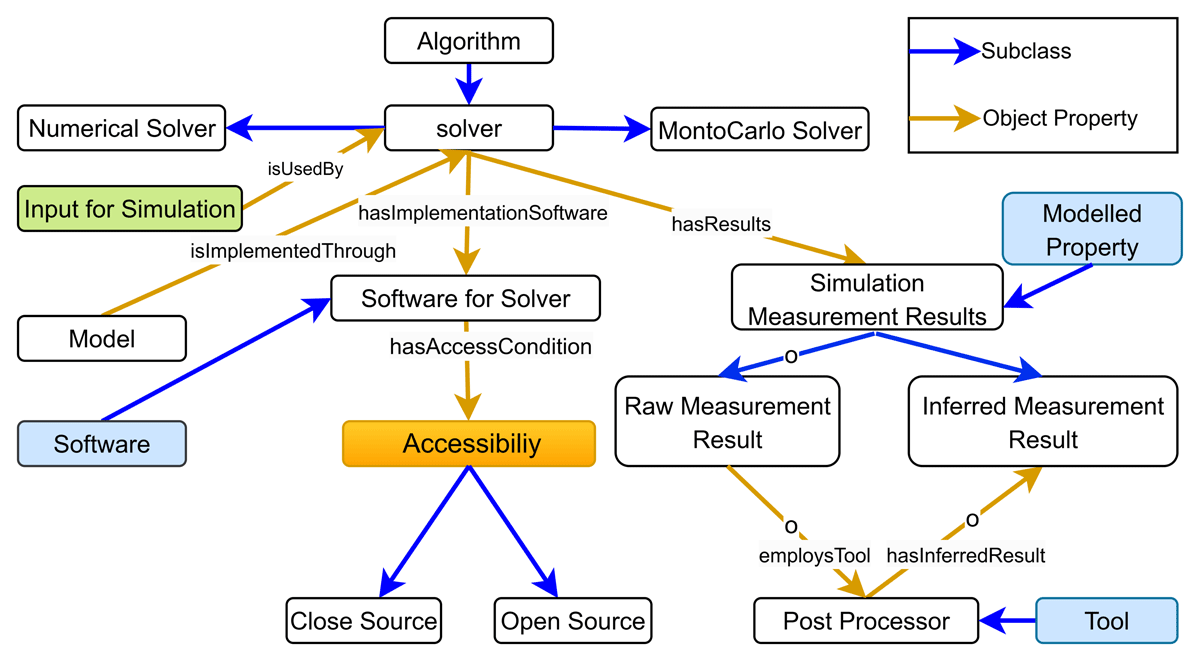
Figure 6
Solver view: Shows the different concepts in the Onto-MS. Colored boxes represent the concepts imported from other ontologies, while uncolored boxes are native to Onto-MS. EMMO TEMA Onto-MS. The arrow’s color signifies object property or subclass relationship.
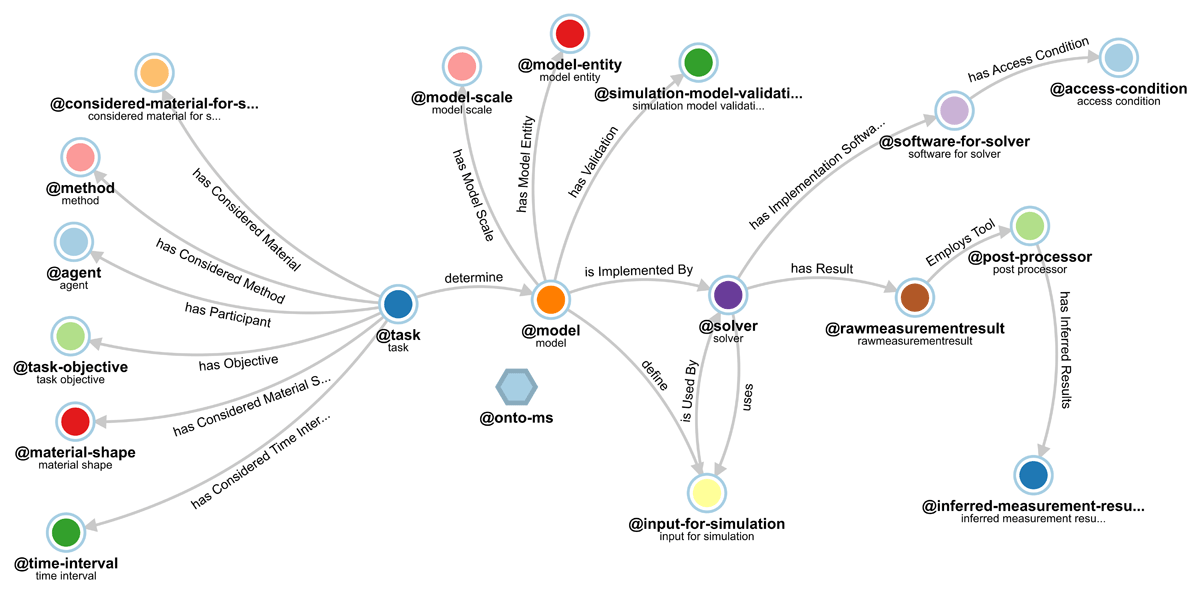
Figure 7
Onto-MS as ‘onto-ms’ collection in Kadi4Mat, where specific ontology classes are represented in records (shown in colored circles), and object properties are links between records in this collection.
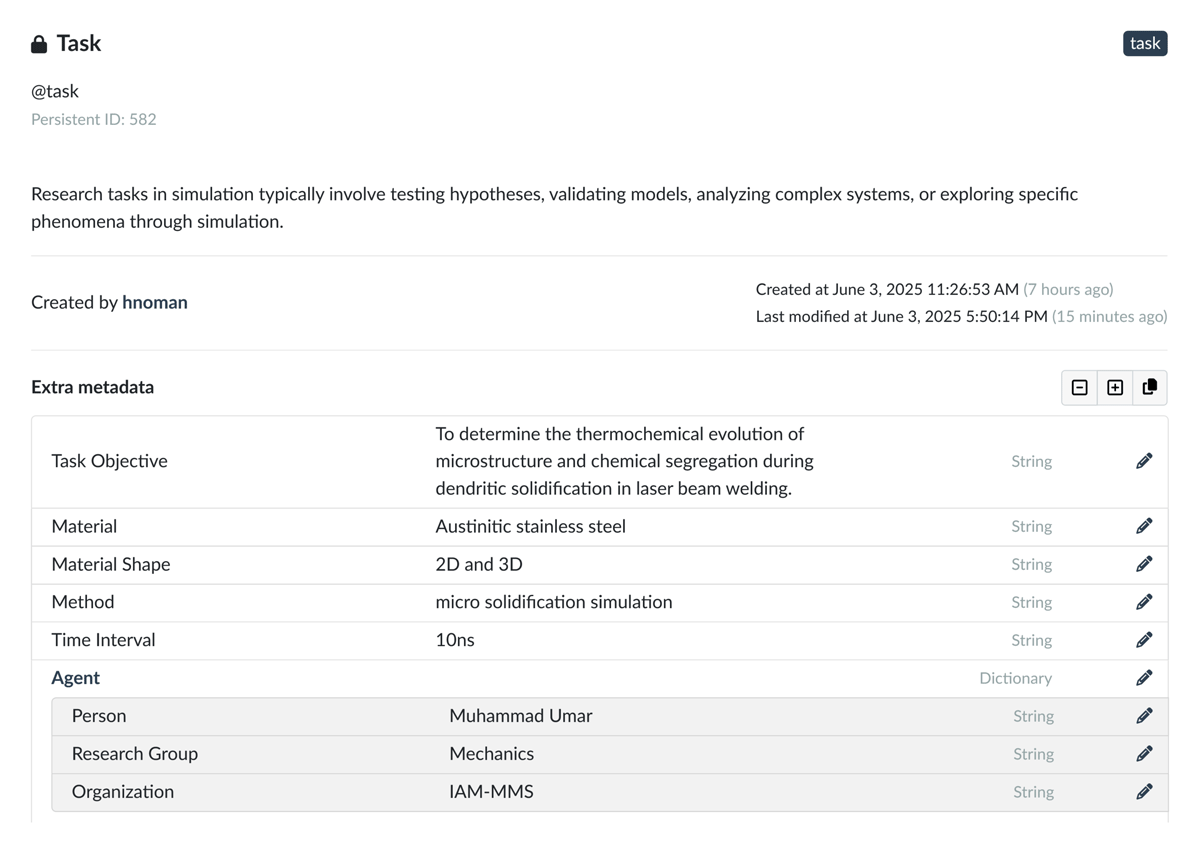
Figure 8
Representation of a Task record from the Onto-MS ontology collection, where classes such as Method, Material Shape, and Geometry have been consolidated into a single record for demonstration purposes.
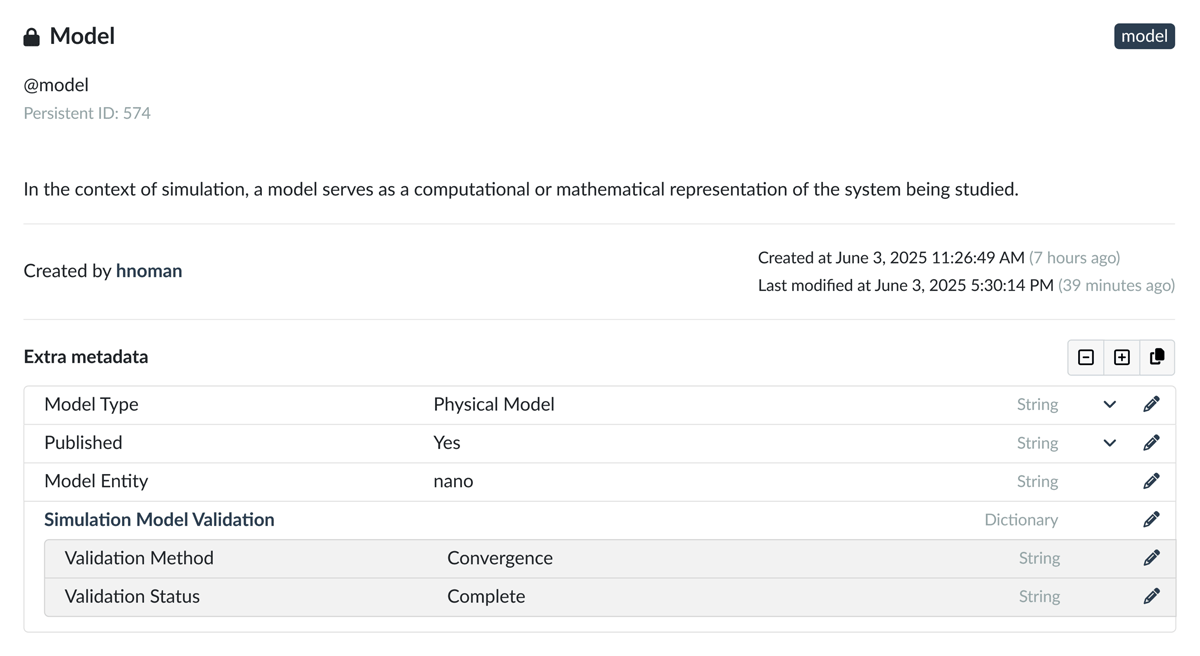
Figure 9
Representation of the Model record from the Onto-MS ontology collection in Kadi4Mat, which consolidates related classes or records such as Model Type, Model Entity, Simulation Model Validation, and others.
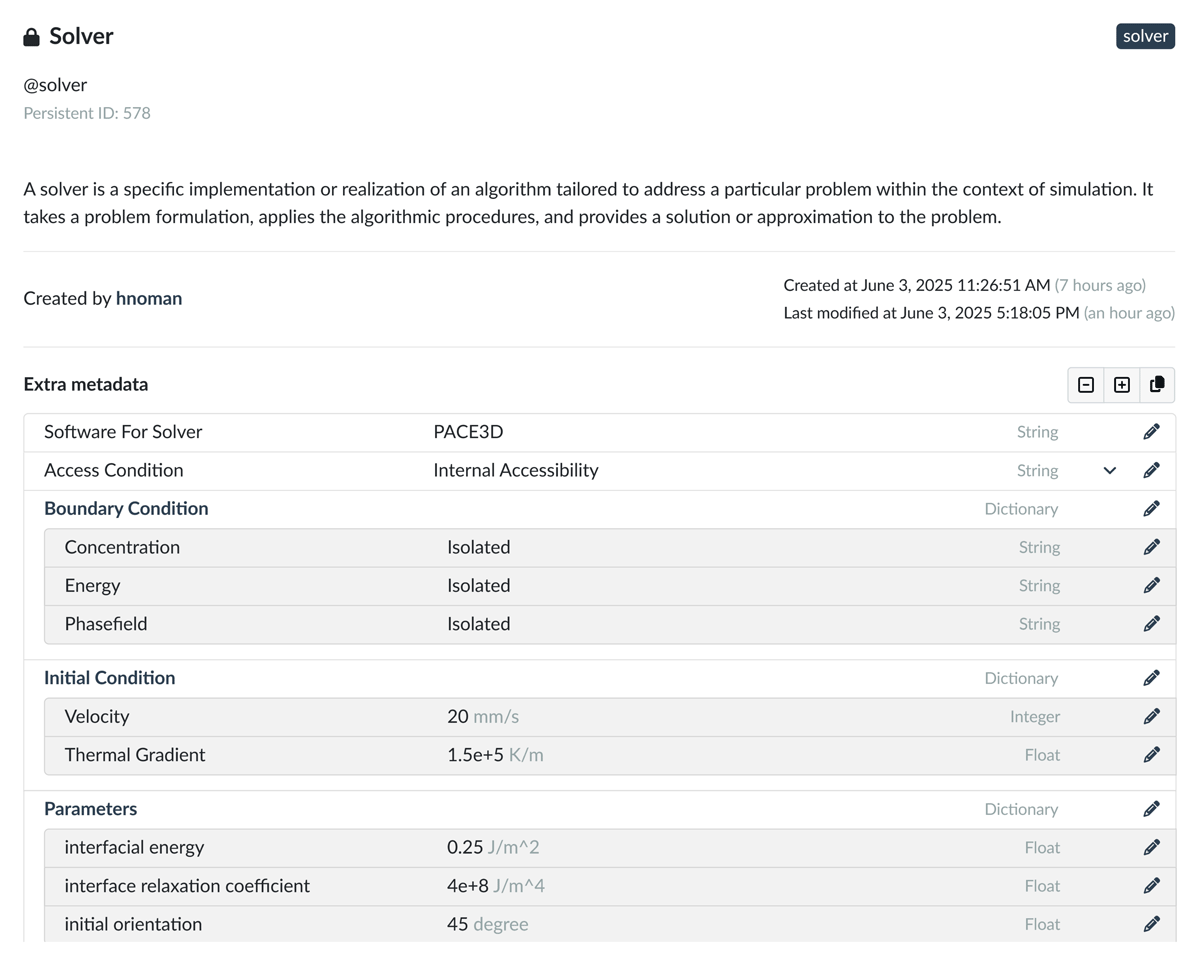
Figure 10
Representation of the Solver record from the Onto-MS ontology collection in Kadi4Mat, encompassing related classes or records such as Input for Simulation (e.g., Boundary Condition), Software, and Access Condition.
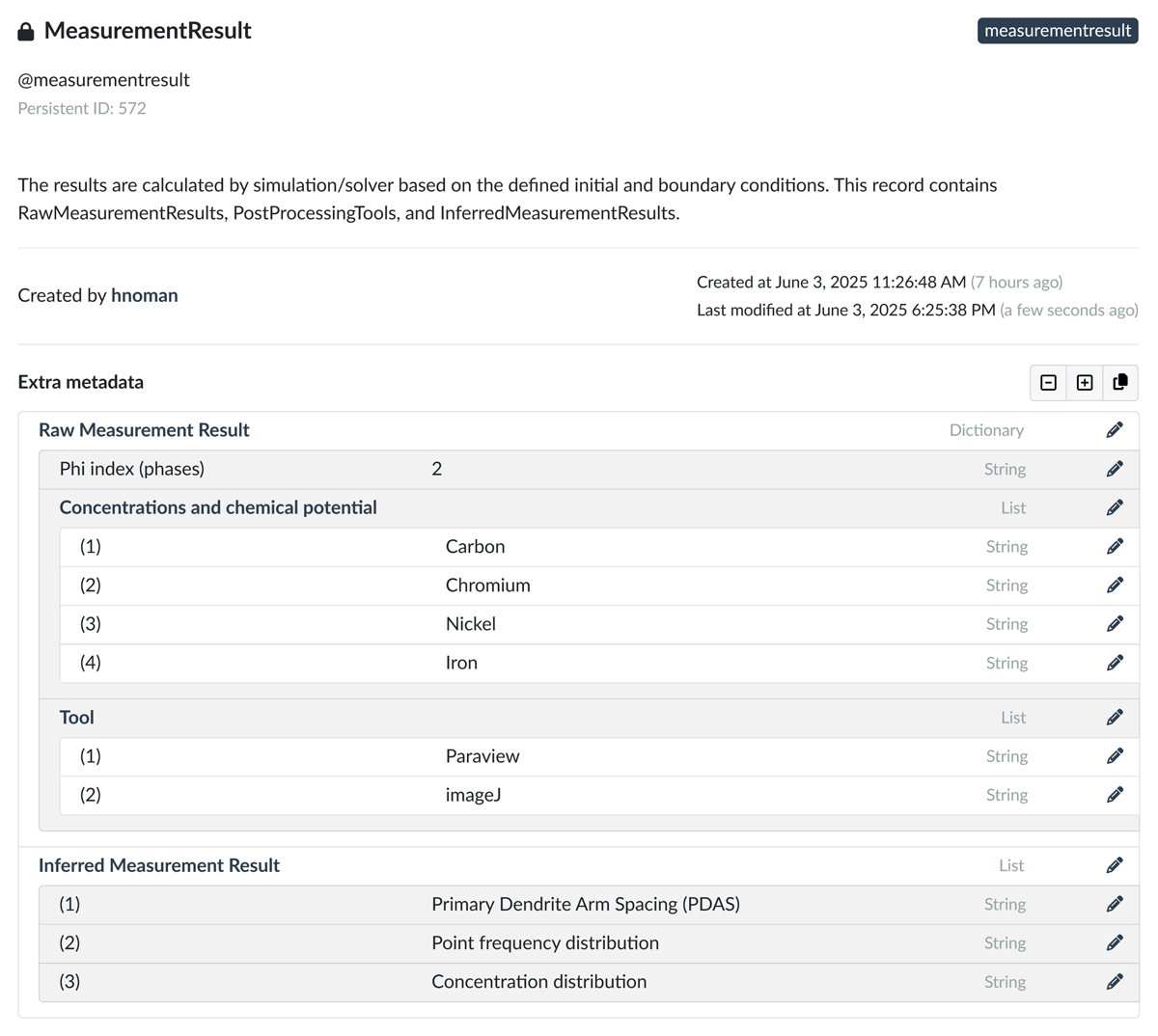
Figure 11
Represents a Measurement Result record from the Onto-MS ontology collection in Kadi4Mat, which consolidates ontology classes or records such as Raw Measurement Results, Tool for Post-Processing, and Inferred Measurement Results.
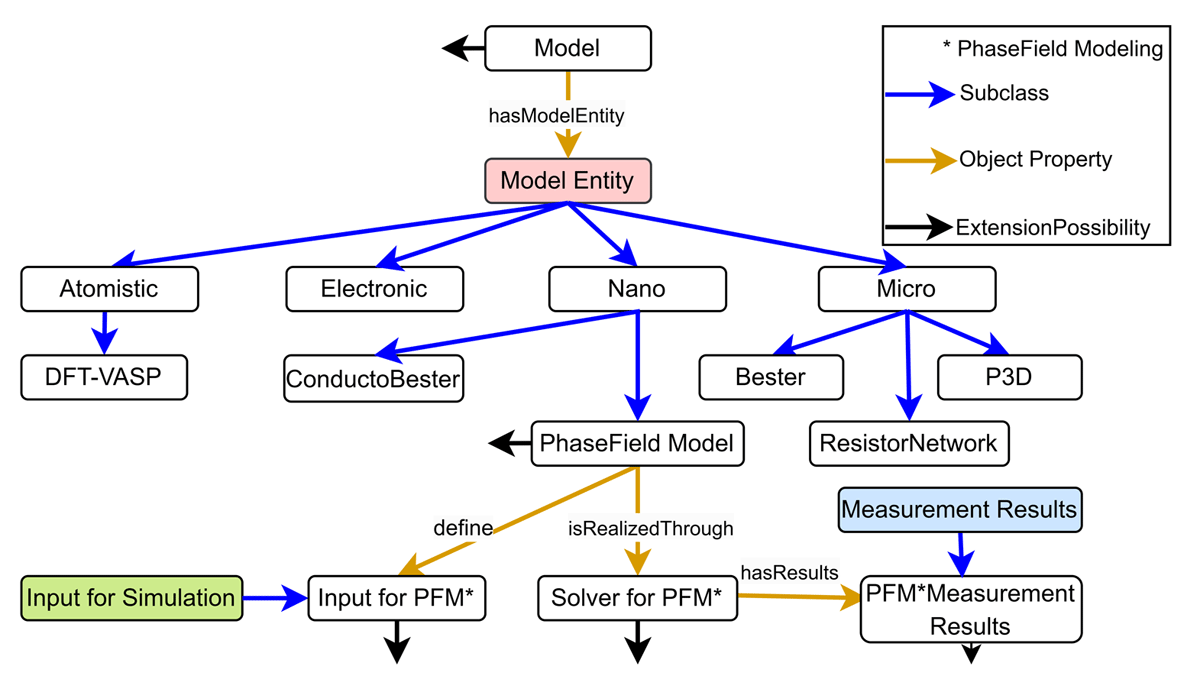
Figure 12
Representation of Onto-MS multiscale capabilities by integrating various length-scale simulation methods for the NVPC project.