
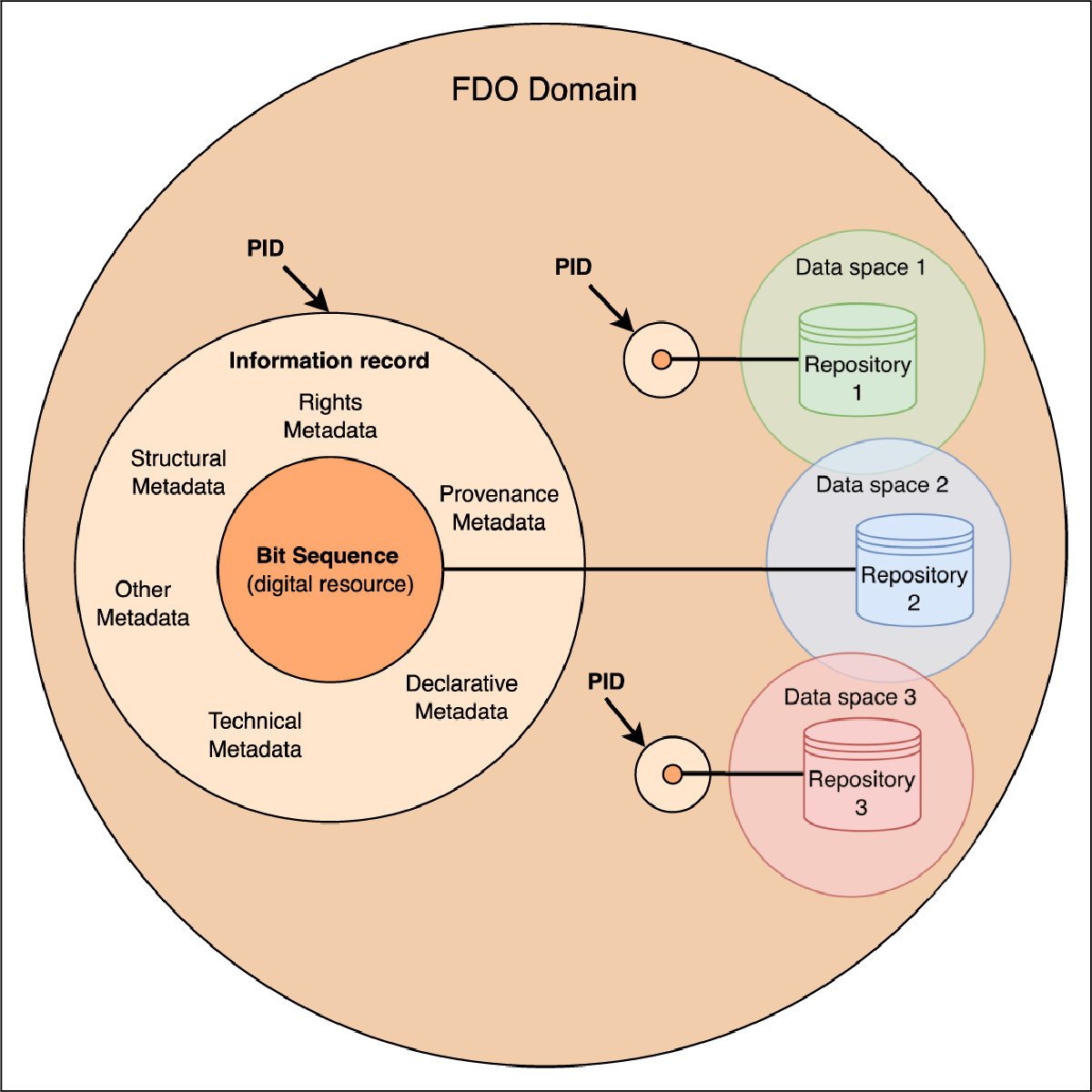
Figure 1
The conceptual FDO core model.
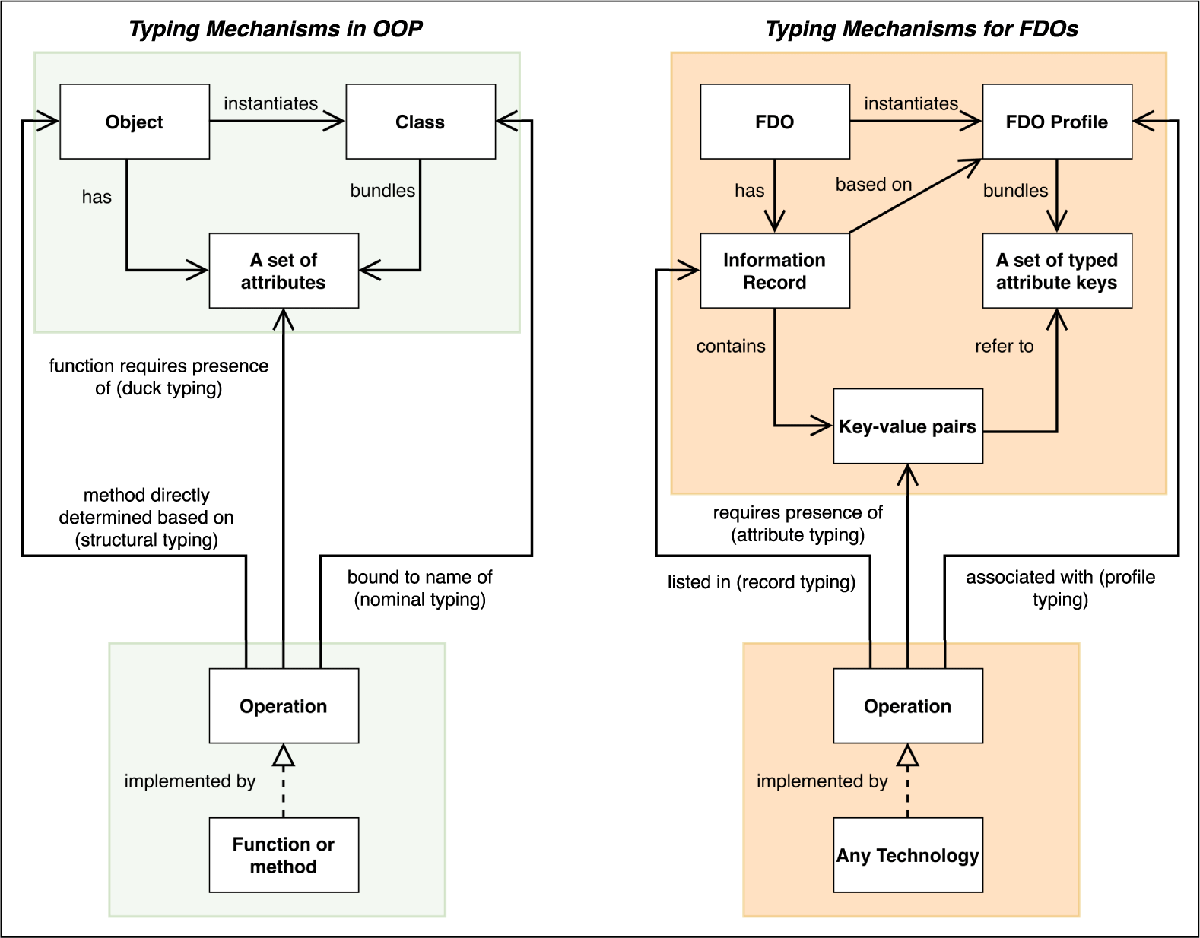
Figure 2
Typing Mechanisms. The conceptual typing mechanism to associate FDOs and their operations in analogy to OOP.
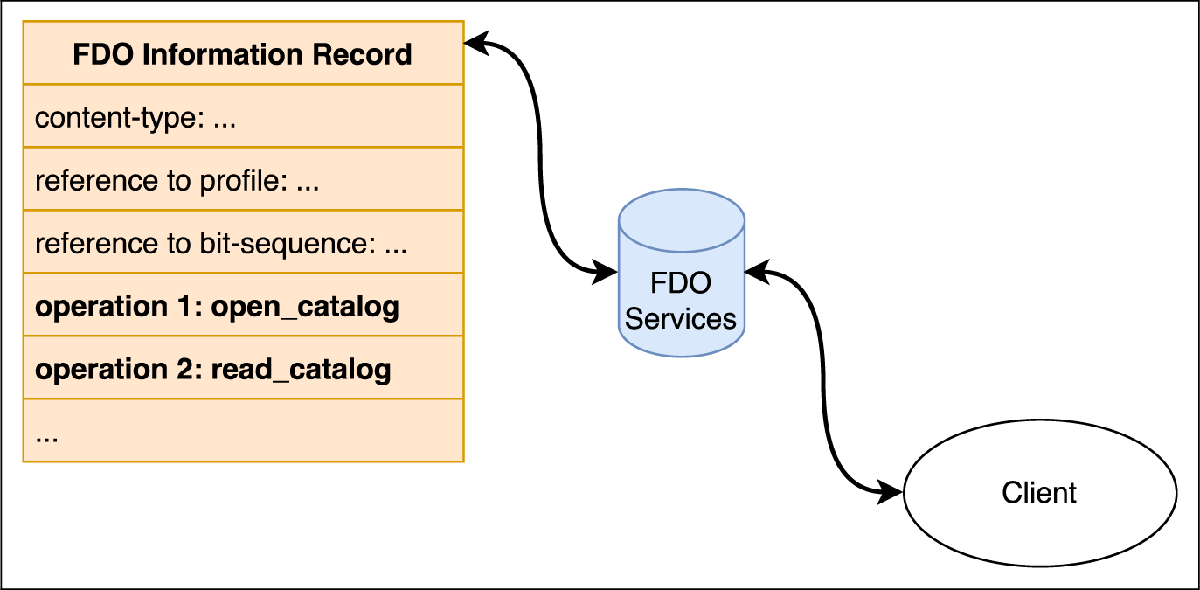
Figure 3
Record typing example. The conceptual workflow for interacting with an FDO based on record typing.
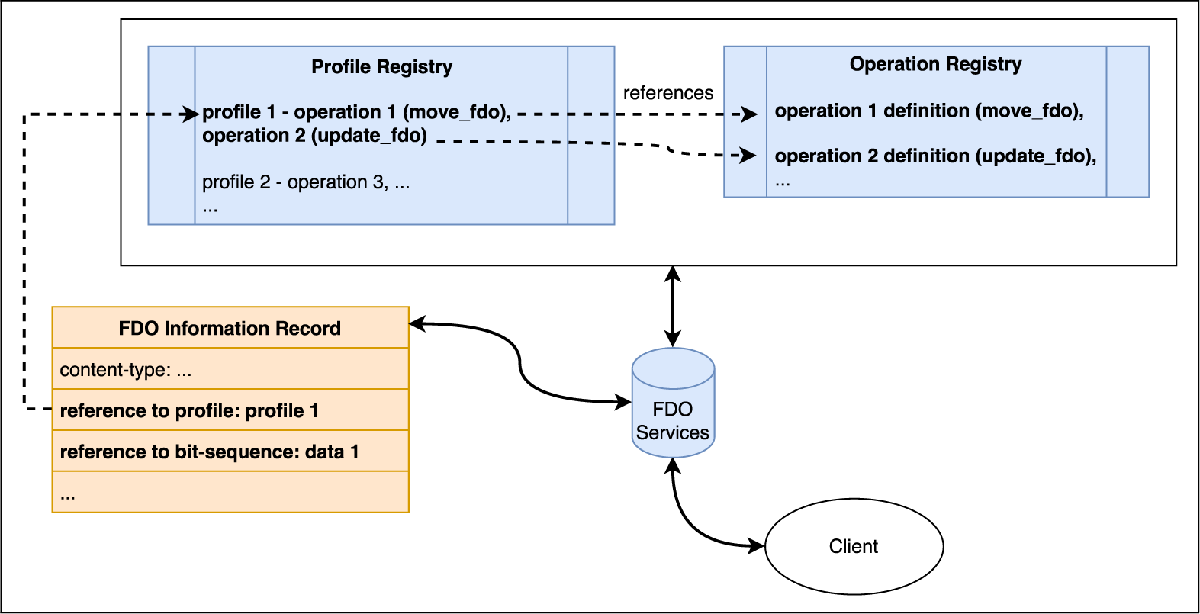
Figure 4
Profile typing example. The conceptual workflow for interacting with an FDO based on profile typing. Irrespective of the service architecture that is used to implement and execute operations, such as the three registries in this example, the FDO service must infer the association between the profile of an FDO and its set of operations.
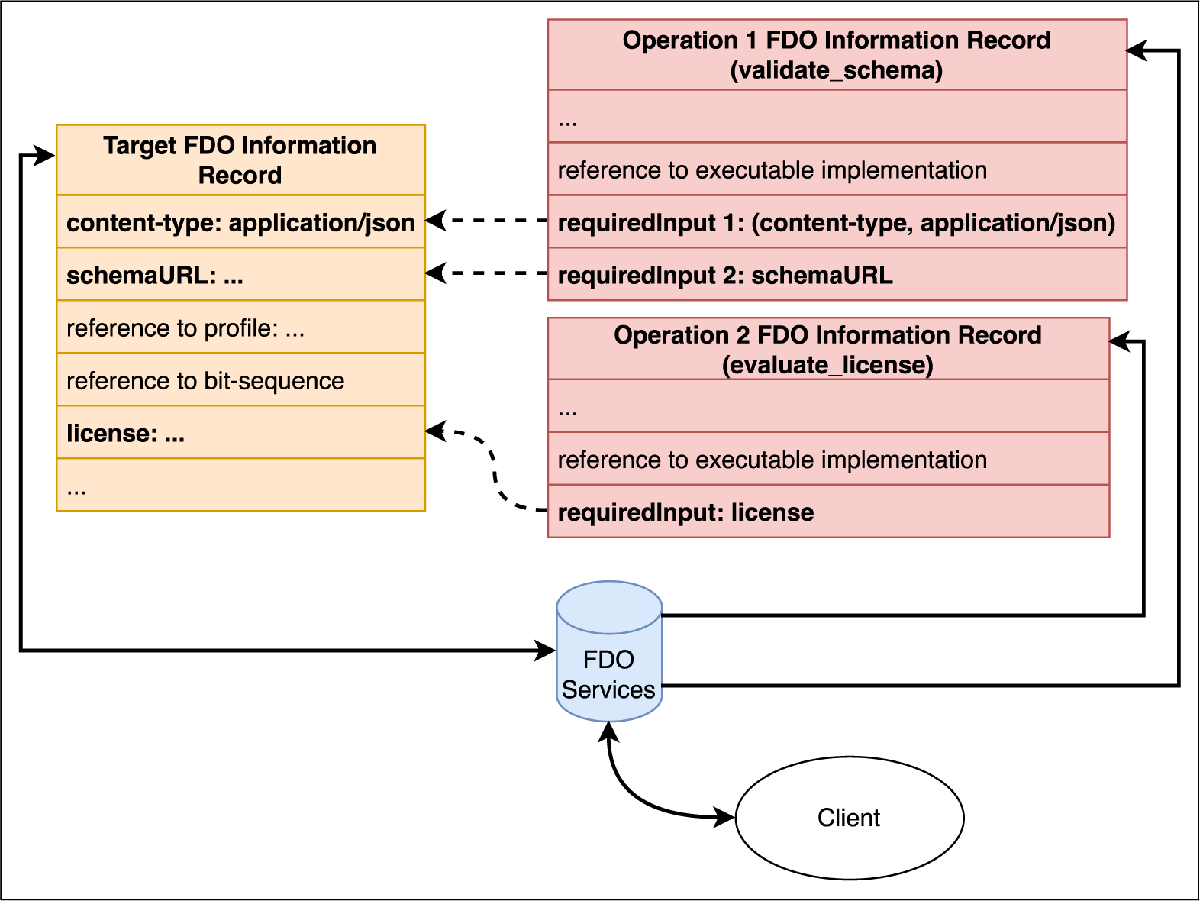
Figure 5
The conceptual workflow for interacting with an FDO based on attribute typing. Irrespective of how the operation is ultimately performed (requested by the service in this example), the FDO service must infer the association based on the information record contents and references of the target- and operation FDOs.
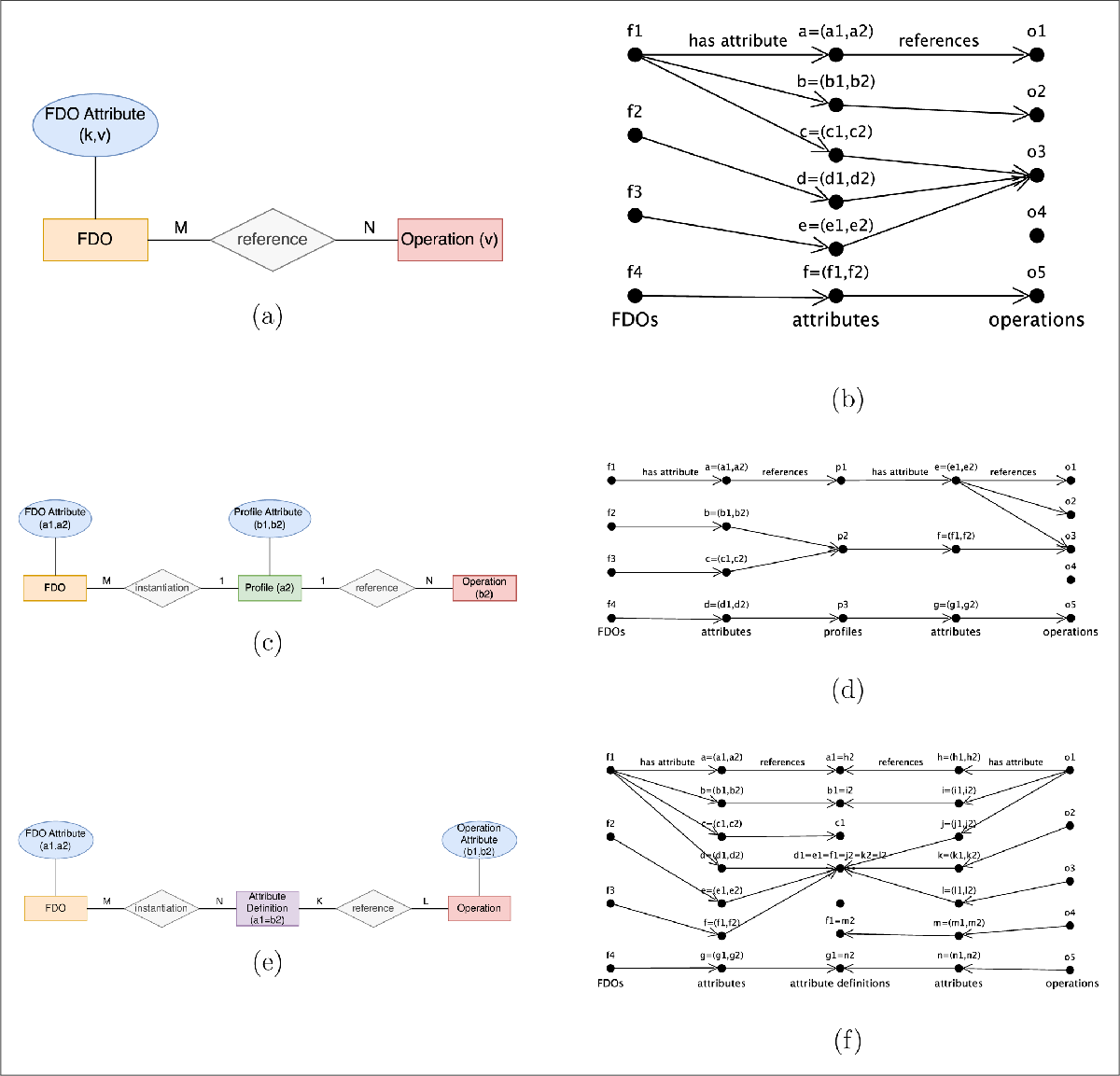
Figure 6
Entity Relationship (a-c) and corresponding exemplary graph representations (d-f), modeling the three association approaches based on the typing mechanisms.
Table 1
Overview of measures between Record, Profile, and Attribute Typing approaches and corresponding metrics.
| MEASURES | RECORD TYPING (i=1) | PROFILE TYPING (i=2) | ATTRIBUTE TYPING (i=3) | METRIC OVERVIEW |
|---|---|---|---|---|
| Simplicity | high | moderate | low-moderate | , and, in general, , in most cases, for few attributes |
| Efficiency | high | moderate | low | and for few operations in ’s profile or ; and for few operations being associated with FDOs or ; |
| Flexibility | low | moderate | high | , |
| Versatility | low | moderate | moderate–high | None |
| Granularity and Required Client Knowledge | high | low | low–moderate | None |