
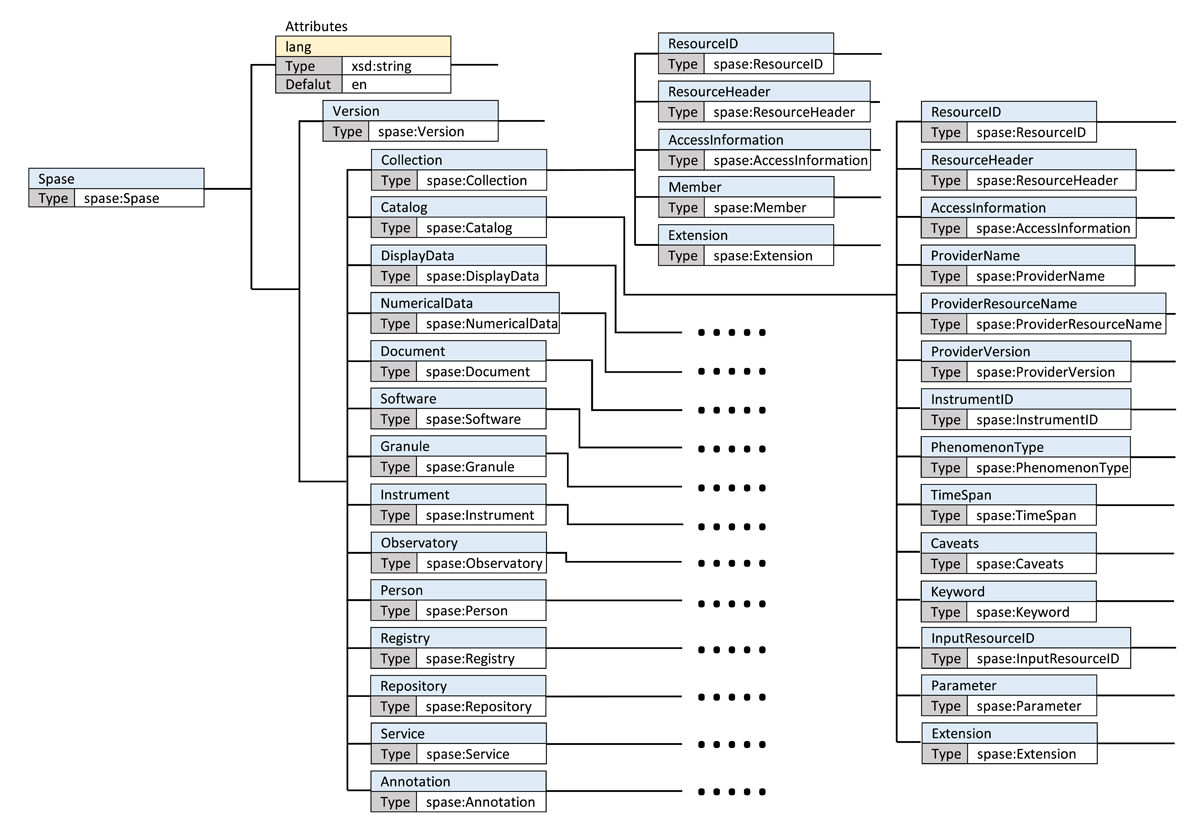
Figure 1
The highest layer of the namespace diagram of the SPASE metadata schema version 2.6.0.
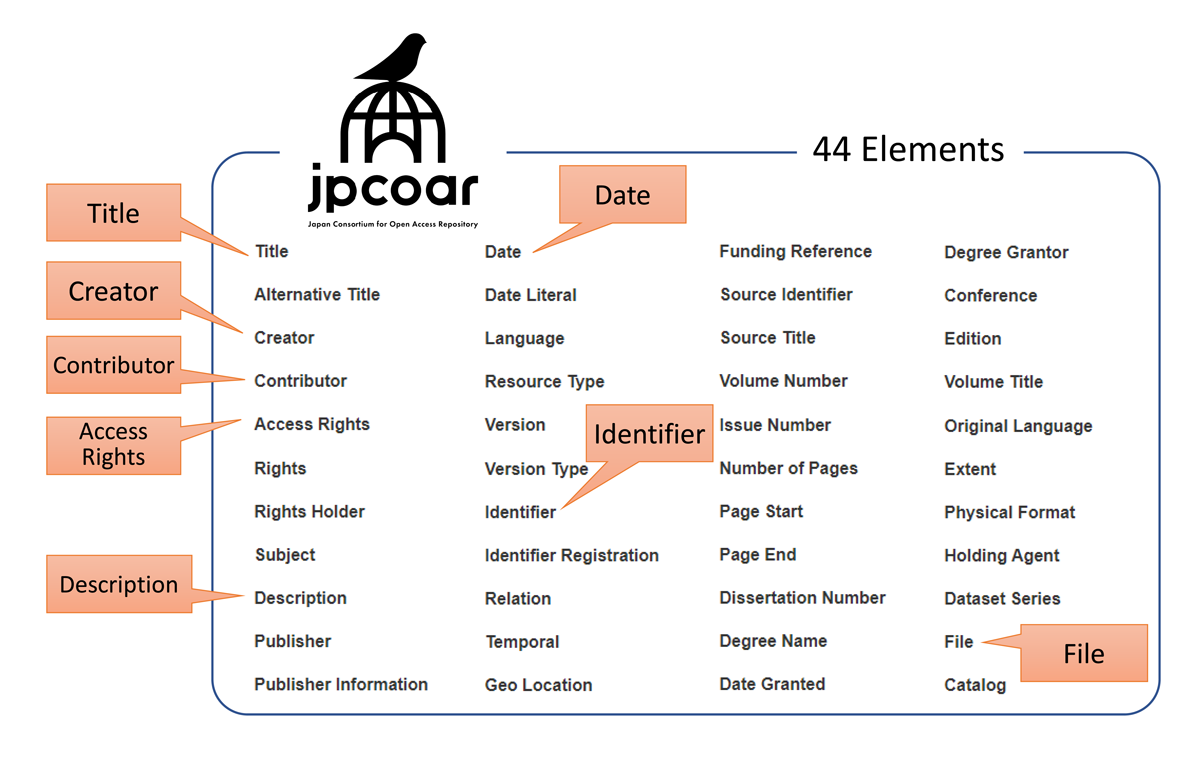
Figure 2
Forty-four elements for JPCOAR metadata schema version 2.0.
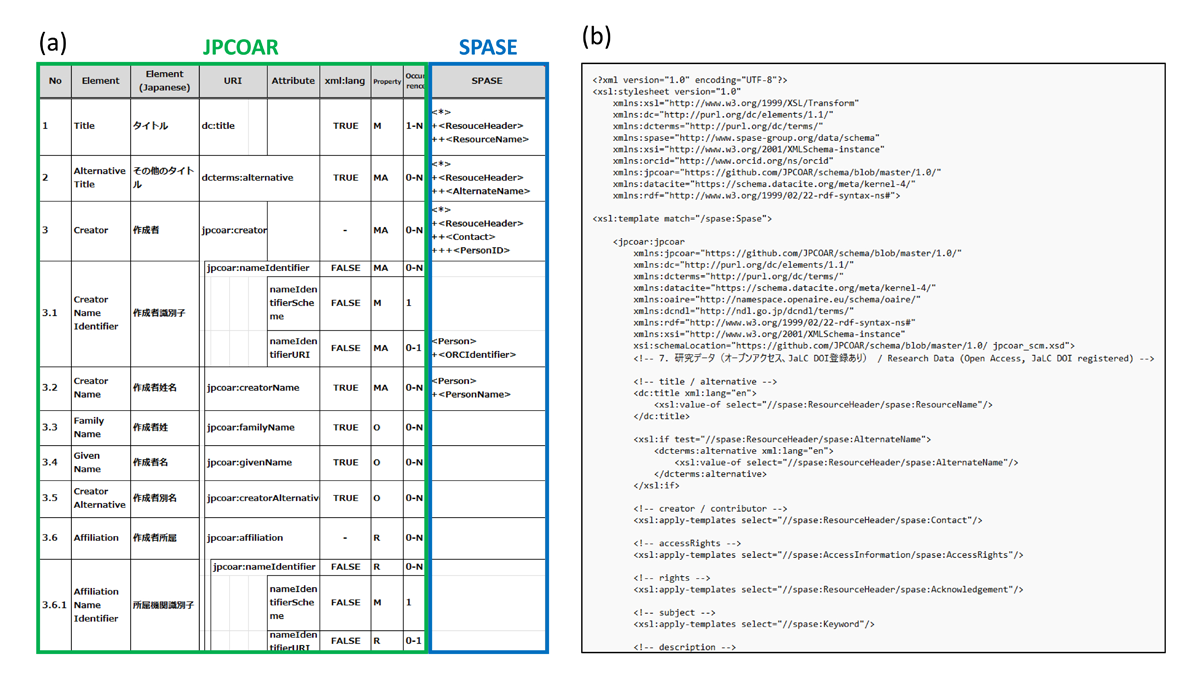
Figure 3
(a) A part of the mapping table between items in the JPCOAR metadata schema (green boxes) and items in the SPASE metadata schema (blue boxes). (b) An initial part of XSLT program implementing the mapping table of Figure 3a.
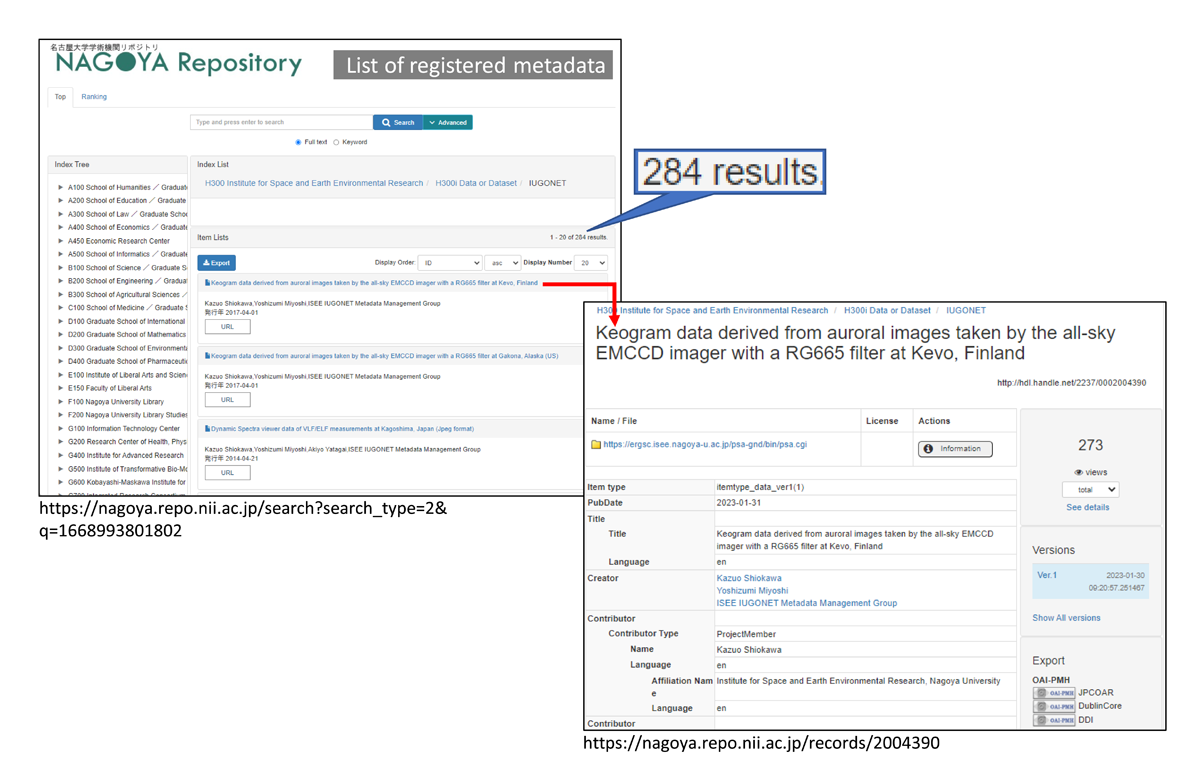
Figure 4
Screenshots of a NAGOYA Repository site showing a list of the 284 registered metadata (upper-left) and a NAGOYA Repository site showing general information on a specific dataset that is accessed from the list (lower-right).
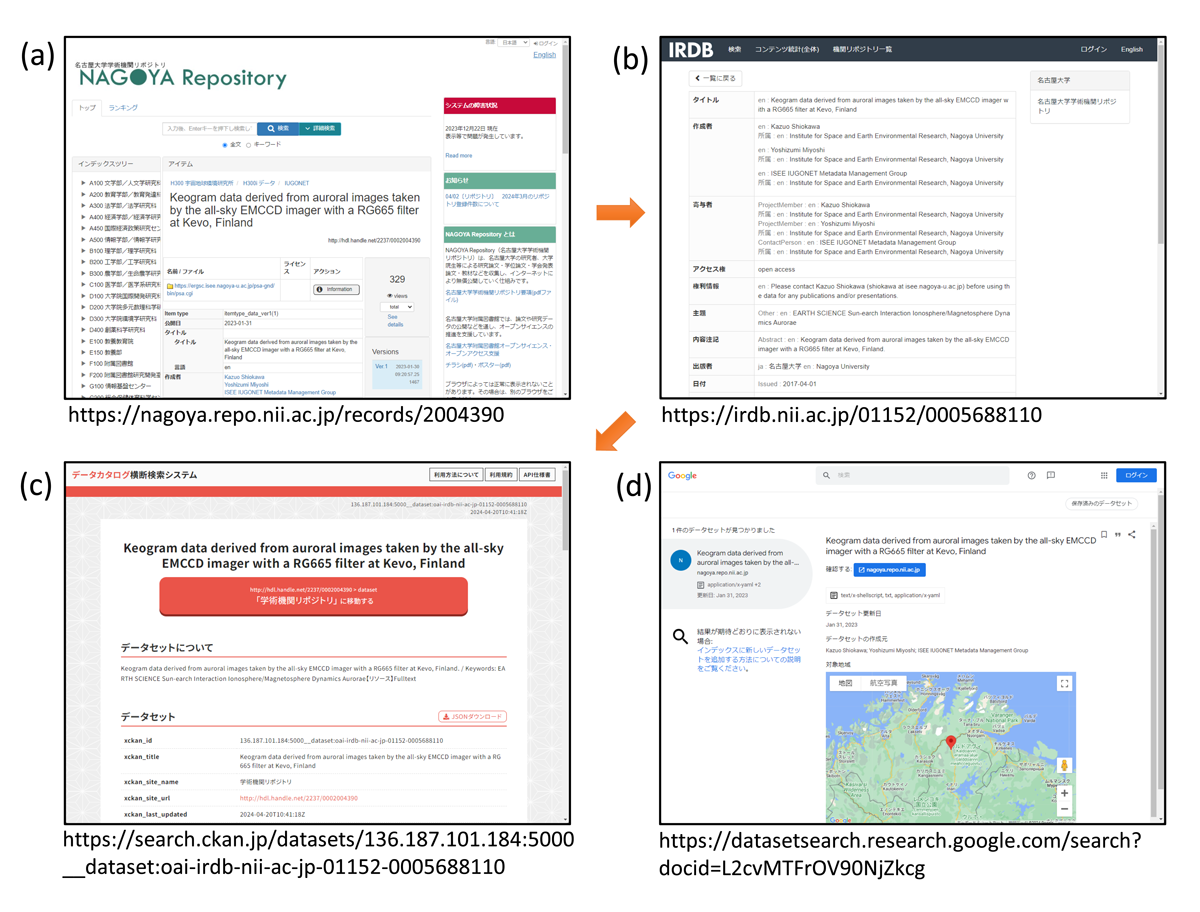
Figure 5
Examples of metadata information found in various metadata databases that are regularly and automatically collecting metadata from each other. (a) A web page of the NAGOYA Repository showing the information on aurora image data in Finland managed by the IUGONET project. (b) Metadata information on the aurora image data in Finland that is available from IRDB. (c) The same as Figure 5b, but available from the Data Catalog Cross-Search System. (d) The same as Figure 5b, but available from Google’s Dataset Search.
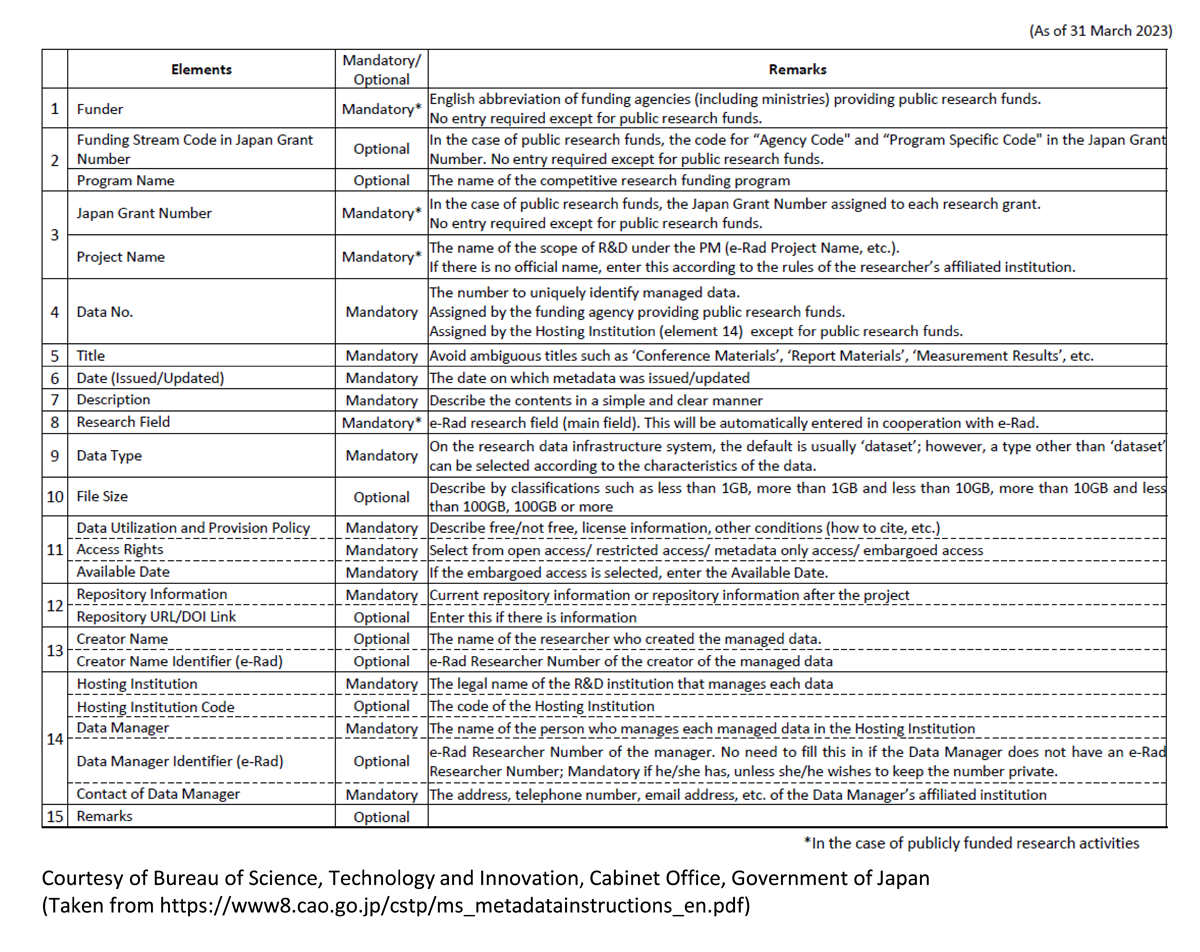
Figure 6
“Common Metadata Items” metadata schema that is defined by the information infrastructure called “NII Research Data Cloud”.
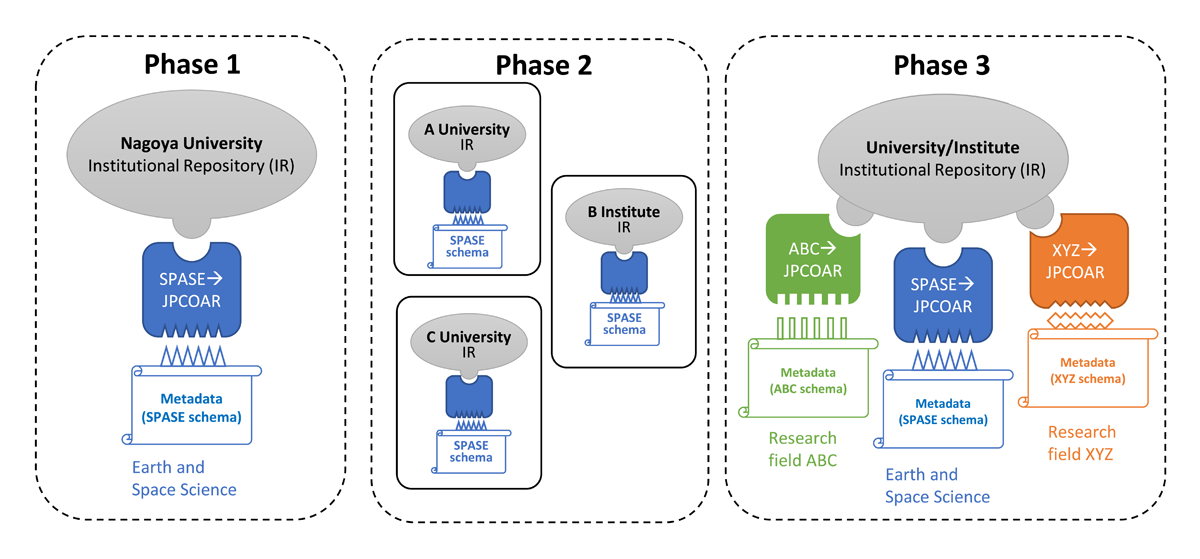
Figure 7
A schematic diagram of this practice and future plans. At the present time, we have converted the metadata schemas for the 284 metadata files that have been created and managed at Nagoya University, and registered them in institutional repositories (Phase 1). This conversion and registration procedure will be applied to other universities and research institutes where the SPASE metadata files and institutional repositories are available (Phase 2). The same procedure will be applied to the research fields other than earth and space physics, where metadata are created according to a domain-specific metadata schema (Phase 3).