Have a personal or library account? Click to login
On the Application of Principal Component Analysis to Classification Problems Cover

On the Application of Principal Component Analysis to Classification Problems

By: Jianwei Zheng and  Cyril Rakovski  
Open Access
|Aug 2021

Figures & Tables

dsj-20-1302-g1.png
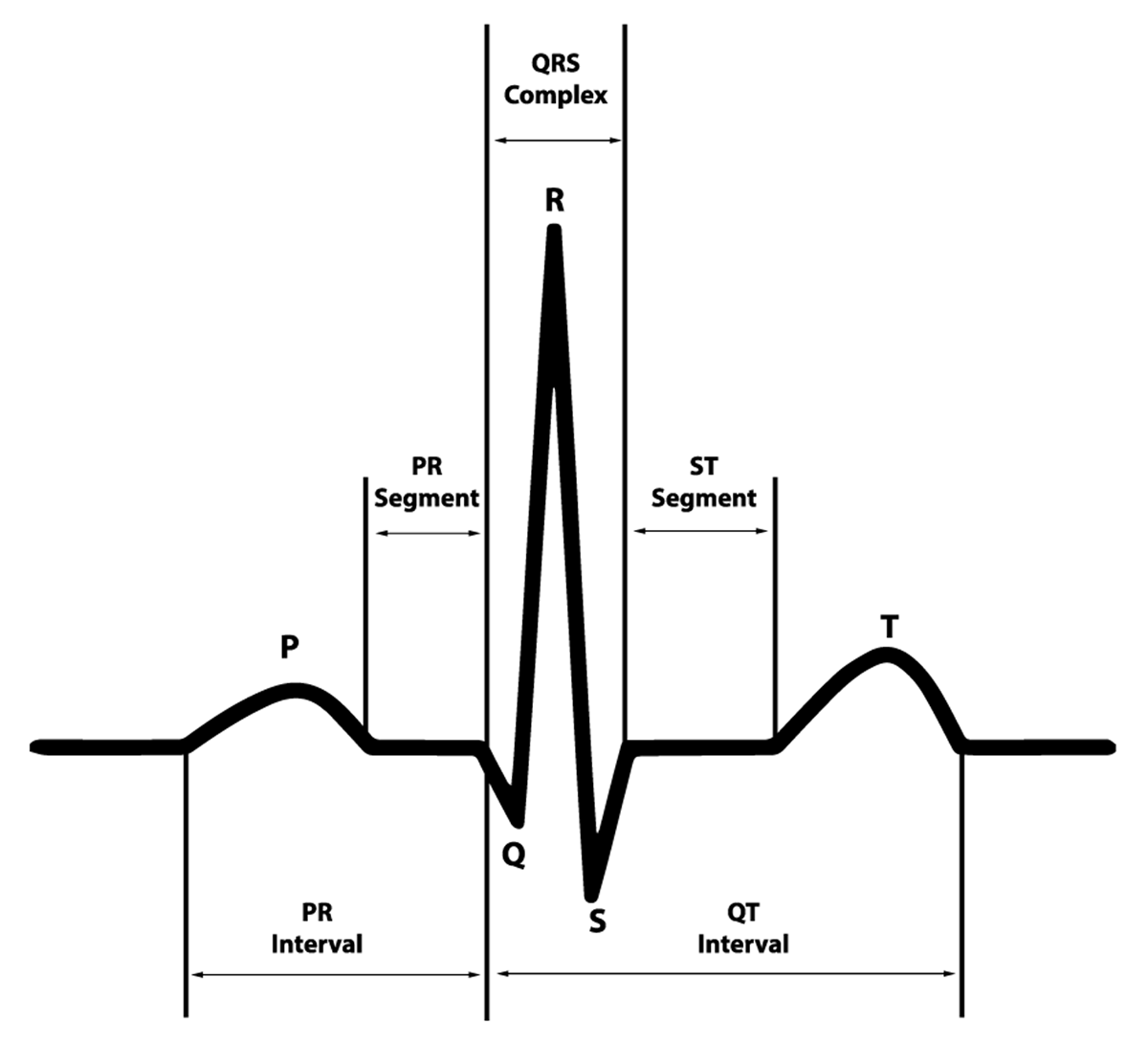
Figure 1

The ECG waveform and segments in lead II that presents a normal cardiac cycle.
dsj-20-1302-g2.png
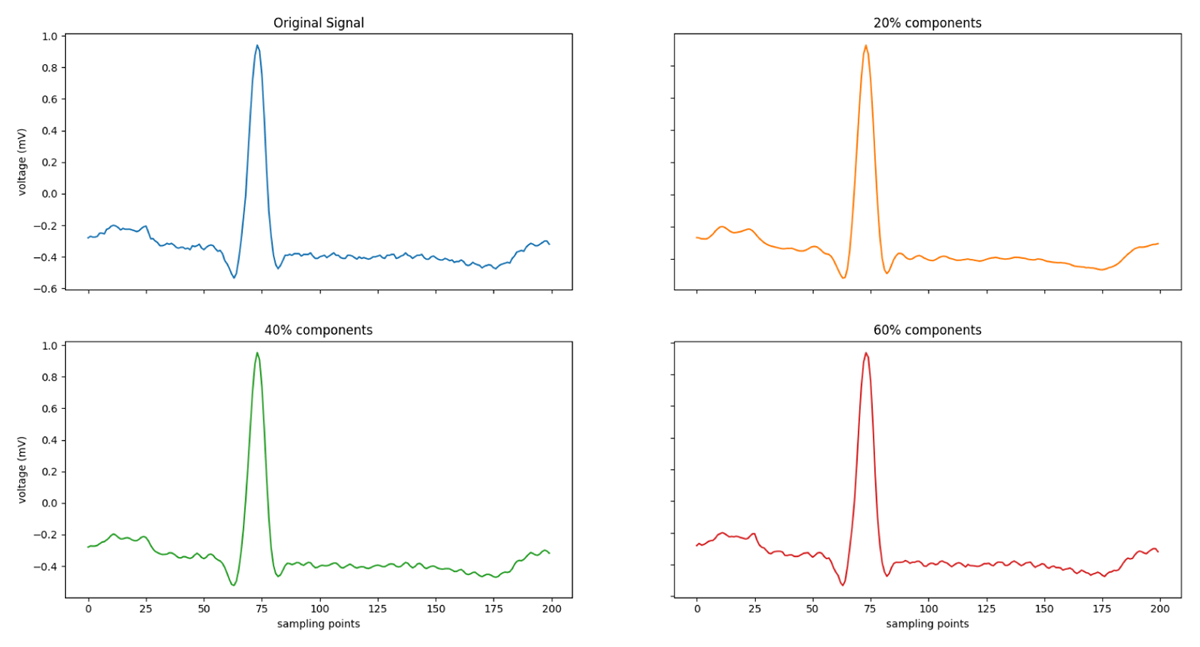
Figure 2

One heartbeat ECG presented by 100%, 20%, 40%, and 60% respectively.

Table 1

Accuracy* comparison between classification models using original variables and principal components**.

CLASSIFIER NAMENON PCAPCA**THE DIFFERENCE
Random Forest0.960.92–0.04
Conditional Random Forest0.960.90–0.06
Naive Bayes0.920.87–0.05
Multinomial Logistic Regression0.940.94–0.001
Quadratic Discriminant Analysis0.930.90–0.02

[i] * Accuracy is the average of 10 stratified folds.

** Principal components accounting for 99% of the variance used.

Table 2

Areas under the ROC curve for both models.

β1AUC – PC1, PC2*AUC – PC3*
log(2)/80.530.64
log(2)/40.530.76
log(2)/20.540.88
log(2)0.540.95
20.550.99

[i] * Empirically estimated via 10,000 datasets.

Language: English
Submitted on: Dec 13, 2020
|
Accepted on: Aug 9, 2021
|
Published on: Aug 18, 2021
Published by: Ubiquity Press
In partnership with: Paradigm Publishing Services
Publication frequency: 1 issue per year

© 2021 Jianwei Zheng, Cyril Rakovski, published by Ubiquity Press
This work is licensed under the Creative Commons Attribution 4.0 License.