
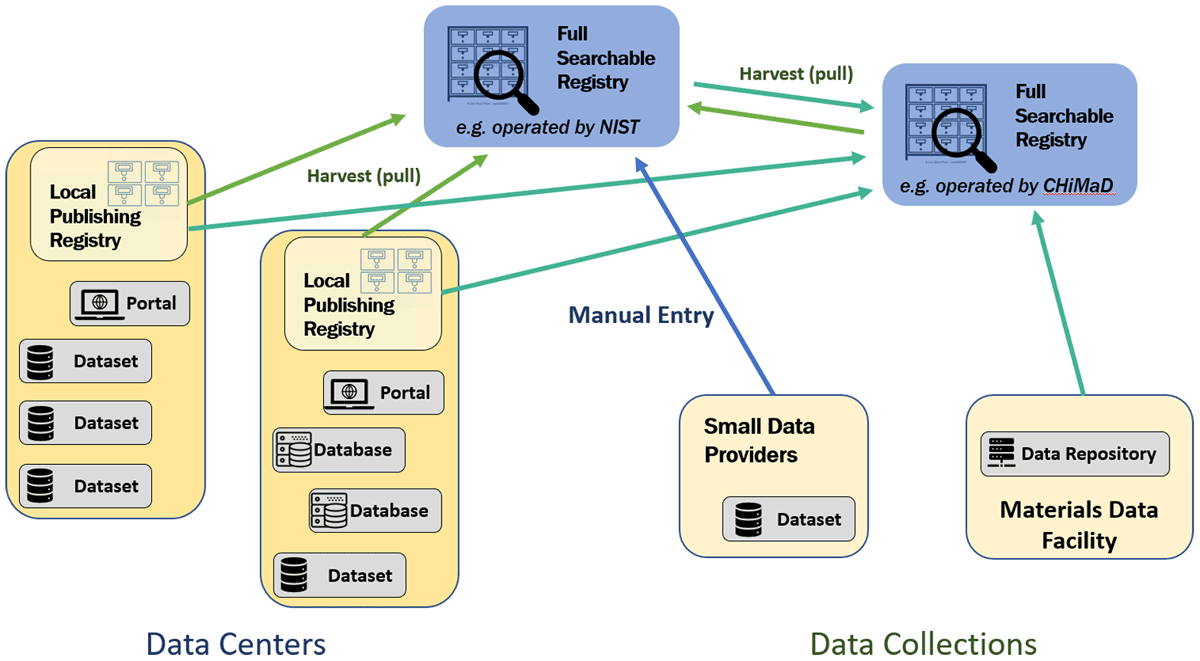
Figure 1
Record interchange within the registry federation. Searchable registries harvest resource descriptions from all publishing registries via a standard protocol. Some registries, like the one operated by CHiMaD, can manage records for a particular sub-community, possibly pulling in records through customized APIs. Other registries, like the one operated at NIST, can serve the at-large community where providers can create and maintain records through a GUI interface.
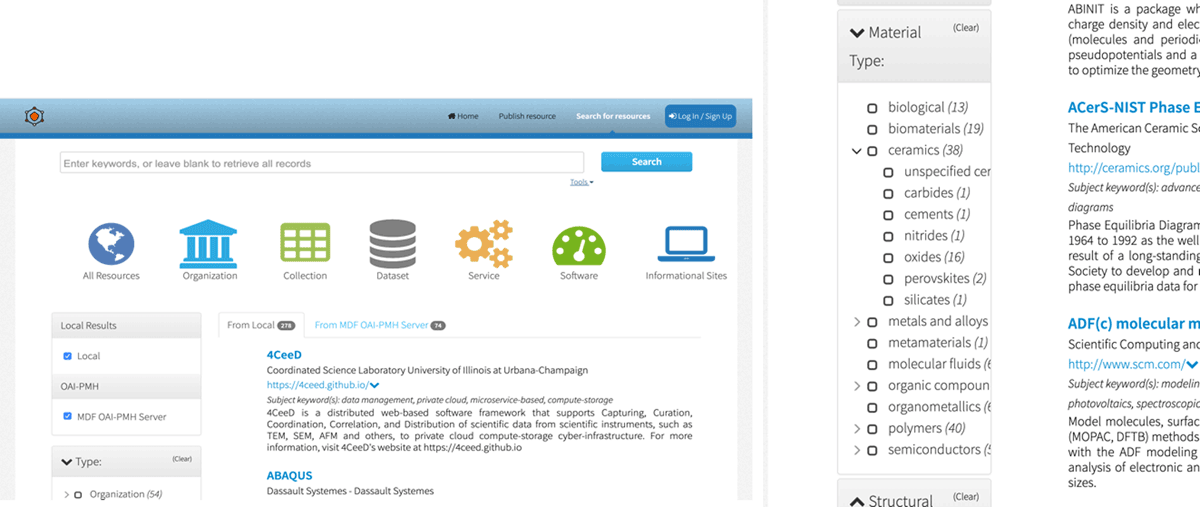
Figure 2
Registry search results. (left) Example of the search results page with faceted browsing filters to the left. (right) A zoomed view of the Material Type filters showing how general type, “ceramics”, can be clarified with more specific types of ceramics.
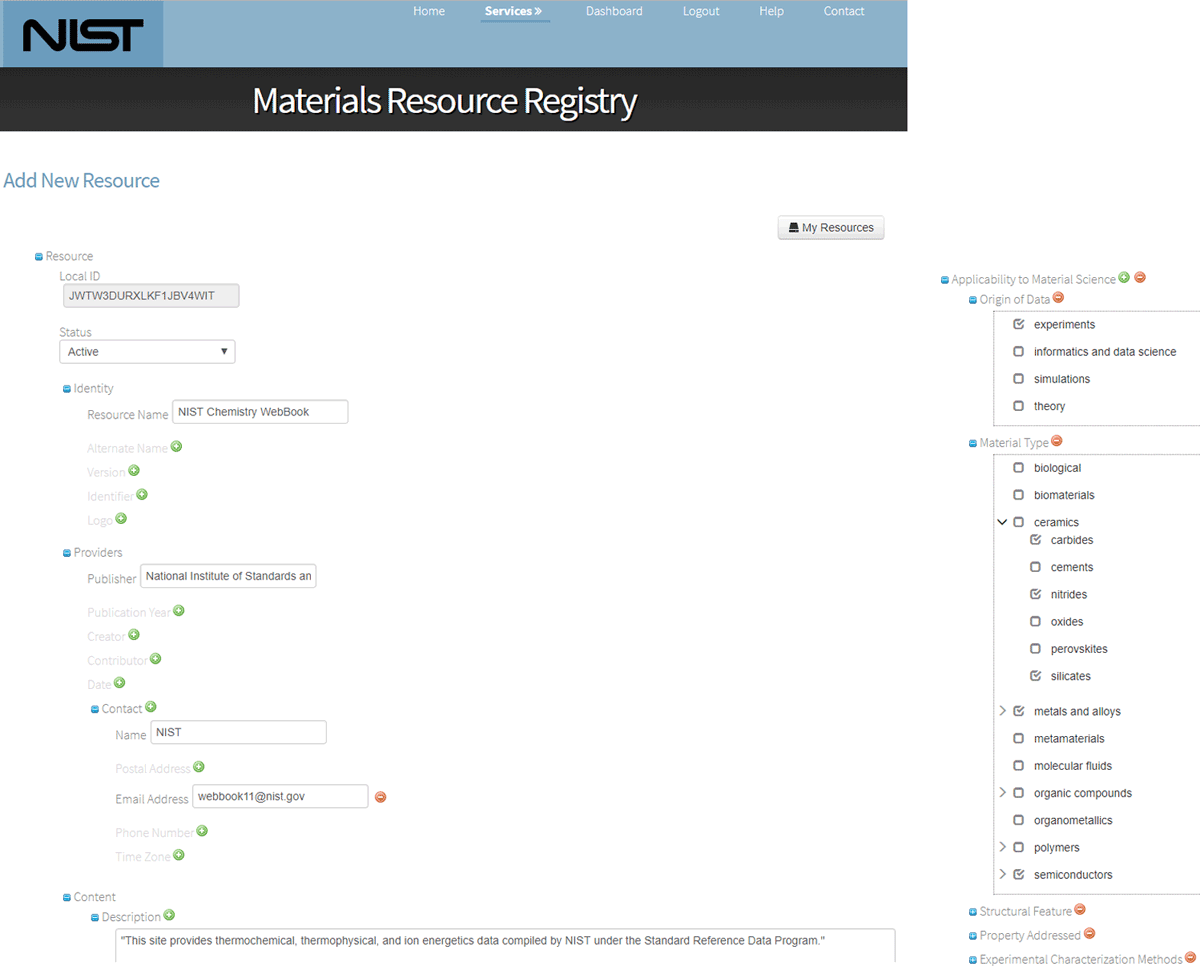
Figure 3
Resource Registration Form. (left) A portion of the form used to create a resource description and which is automatically generated from the schema. (right) Detail of the portion of the form where Material Science attributes can be selected; these terms come from the Materials Vocabulary.