
Table 1
Overview of persistent identifiers for physical research components, such as samples, resources, instruments, funding and research institutes and researchers.
| Persistent identifier | Full name | Object | Webpage | Starting year |
|---|---|---|---|---|
| IGSN | International Geo Sample Number | Physical samples | https://www.igsn.org/ | 2007 |
| ORCID | Open Researcher and Contributor IDentifier | Researchers | https://orcid.org/ | 2009 |
| RRID | Research Resource Identifiers | Resources (antibodies, model organisms and software projects) | https://www.rrids.org/ | 2014 |
| FundRef | Open Funder Registry | Funder | https://gitlab.com/crossref/open_funder_registry | 2016 |
| RAiD | Research Activity Identifier | Research activities | https://www.raid.org.au/ | 2017 |
| RoR | Research Organization Registry | Research organisations | https://ror.org/ | 2019 |
| PIDINST | Instruments | Persistent Identification of Instruments | https://www.rd-alliance.org/groups/persistent-identification-instruments-wg | 2020 |
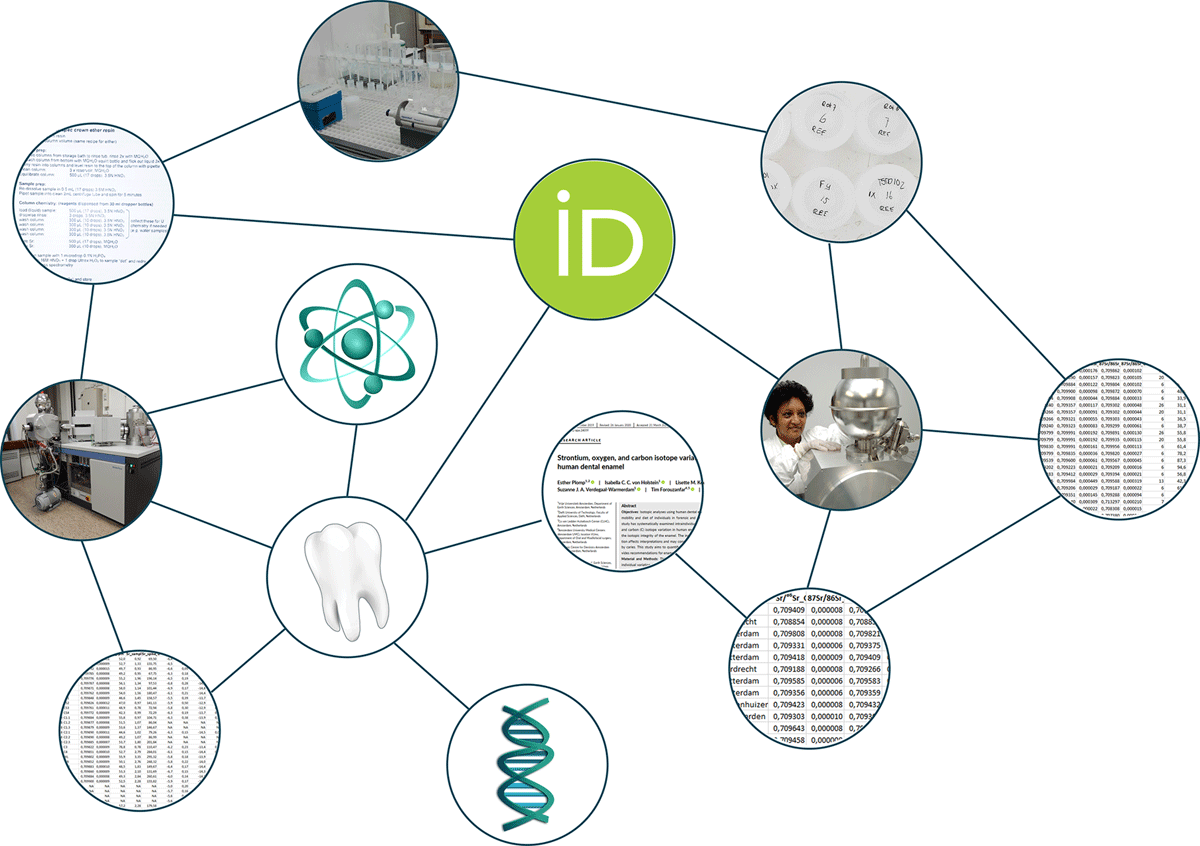
Figure 1
Linking different aspects of research, including physical samples, artefacts, instruments and reagents (after the PID Graph (Fenner and Aryani, 2019)). Photo credit: Esther Plomp/Dean Calma – IAEA3.
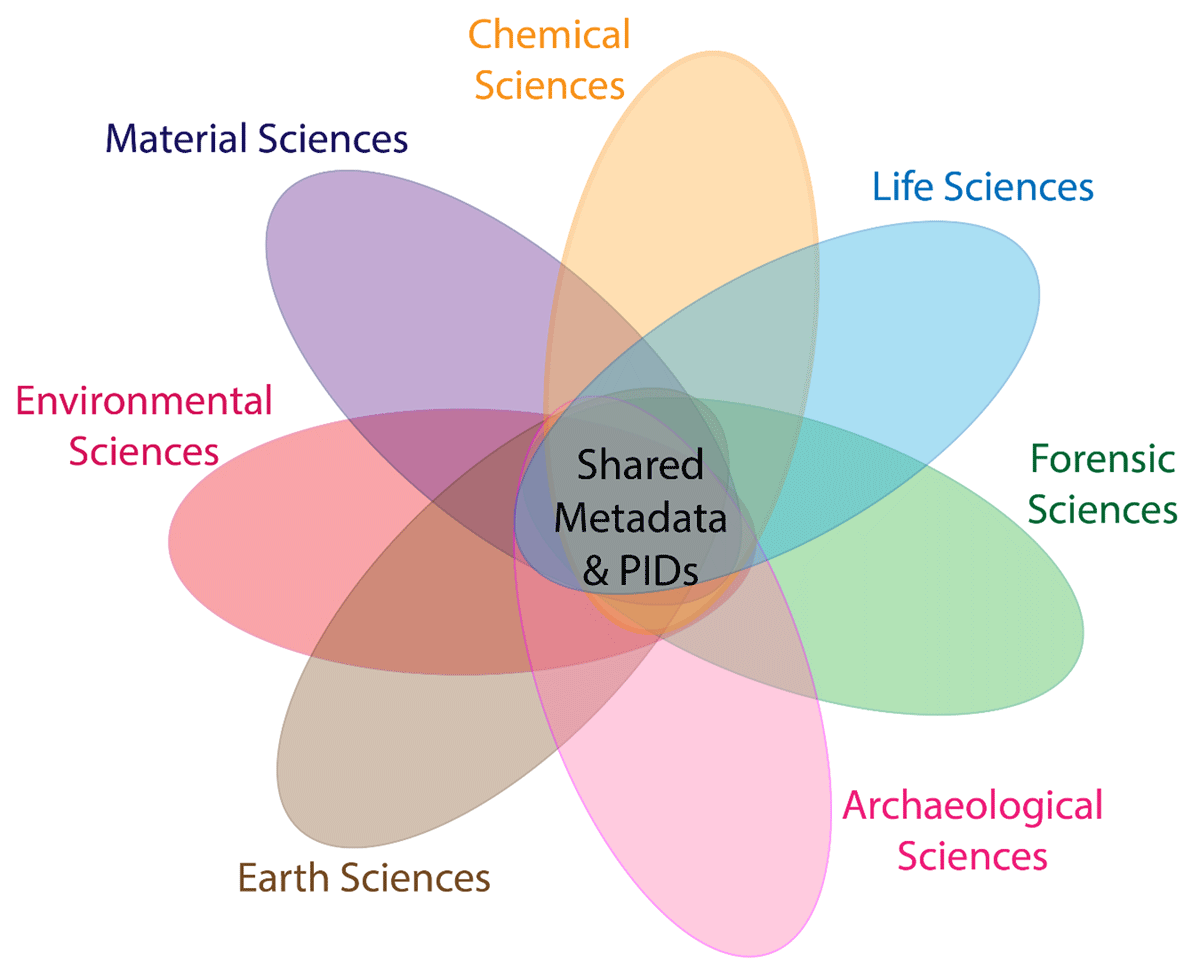
Figure 2
To ensure interoperability across disciplinary boundaries (e.g., Archaeological Sciences, Material Sciences, Earth Sciences, Environmental Sciences, Life Sciences, Forensic Sciences, Chemical Sciences), it is important to have a degree of shared metadata and PIDs. Next to the shared metadata, discipline specific information and documentation can be made available.