
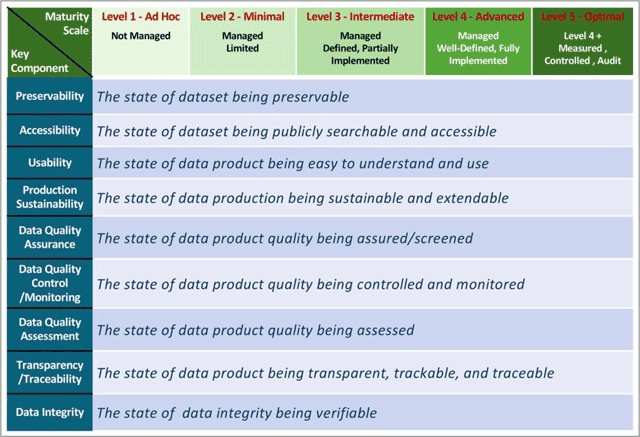
Figure 1
A conceptual model of the scientific data stewardship maturity matrix (DSMM) of National Centers for Environmental Information (NCEI) and the Cooperative Institute for Climate and Satellites–North Carolina (CICS-NC).
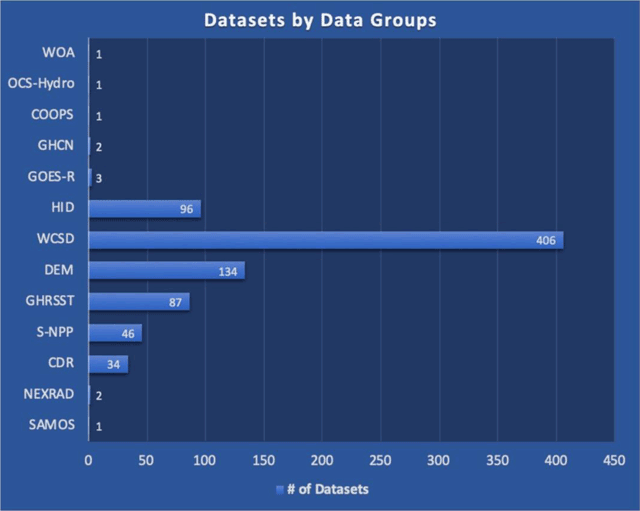
Figure 2
Datasets by data groups whose stewardship maturity has been assessed as of 6/30/2018. OCS-Hydro: NOAA’s Office of Coast Survey-Hydrographic Survey Level-2 product; COOPS: CO-OPS National Water Level Observation Network (NWLON) and Physical Oceanographic Real-Time System (PORTS) data; GHCN: daily and monthly Global Historical Climatology Network (GHCN) products; HID: Hazard Images Database; SAMOS: Shipboard Automated Meteorological and Oceanographic System Quality-Controlled Underway Oceanographic and Meteorological Data. See other acronyms in Introduction.
Table 1
OneStop-Readiness Requirements (Based on Delk and Milan 2018).
| Category | Requirements |
|---|---|
| Collection* Level Metadata |
|
| Granule** Metadata | OneStop ISO-Lite compliant metadata records (Li et al. 2017) |
| Data Formats | Data are in a standardized, non-proprietary machine-readable format |
| Data Stewardship Maturity Matrix (DSMM) Assessment |
|
| Data Access | Data are online with direct access options |
[i] * A collection is a grouping of environmental data or products that share common characteristics, is represented by a single metadata record, and consists of one or more granules. In this paper, a data collection refers to a minimum citable unit of data (Li et al. 2017), which often time refers to a dataset. We may use a data product and a dataset interchangeably.
** A granule is the smallest aggregation of data that can be independently managed (described, inventoried, and retrieved) in the OneStop system.
Table 2
Description of fields in the data stewardship maturity report (DSMR) naming convention.
| Field ID | Description |
|---|---|
| DatasetShortName | A short name that is descriptive of the data product which, preferably, is 30 or less characters containing letters, numbers, hyphen(s) and/or underscore(s) without any space or special characters. This short dataset name could include organization(s), data product abbreviation, and product type and/or version. |
| vnnrmm | The version and revision number of current maturity assessment. Two-digit integers are used for the version and revision numbers. For example, v01r00 will be used for the first baselined version. The version number only changes when the maturity ratings are modified. Changes to the revision number reflect other modifications to the assessment document, including update to justifications and/or error corrections. |
| yyyymmdd | Year, month, and day of the current maturity assessment version. For example, 20160408 for April 8, 2016. |
Table 3
DSMM scale definition and RGB color scheme for representing DSMM ratings.
| Maturity Scale | Definition | Color Code | R | G | B | Color |
|---|---|---|---|---|---|---|
| Level 1 | Ad Hoc/Unknown; Not managed | Lighter green | 229 | 244 | 224 |  |
| Level 2 | Minimal; Managed; Not or limited defined | Light green | 203 | 224 | 192 | |
| Level 3 | Intermediate; Managed; Defined, partially implemented | Green | 176 | 223 | 161 | |
| Level 4 | Advanced; Managed; Well-defined, fully implemented | Dark green | 85 | 168 | 57 | |
| Level 5 | Optimal; Level 4 + measured, controlled, audit | Darker green | 56 | 112 | 38 |
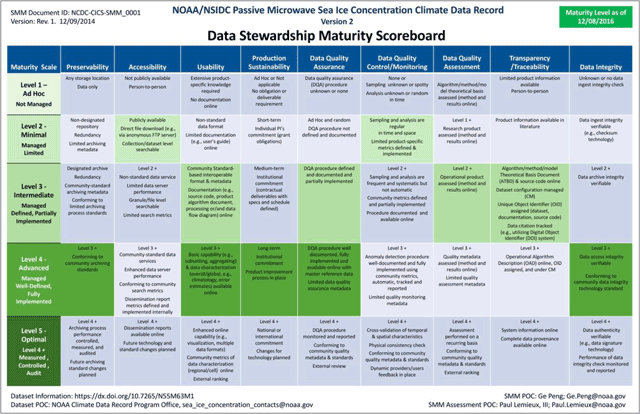
Figure 3
Data stewardship maturity scoreboard for NOAA-NSIDC_PMSIC_CDR-v2 as of December 8, 2016. If two vertical cells are shaded by greens, it is an indication that only a partial rating at the higher level is satisfied. From Lemieux et al. (2017).
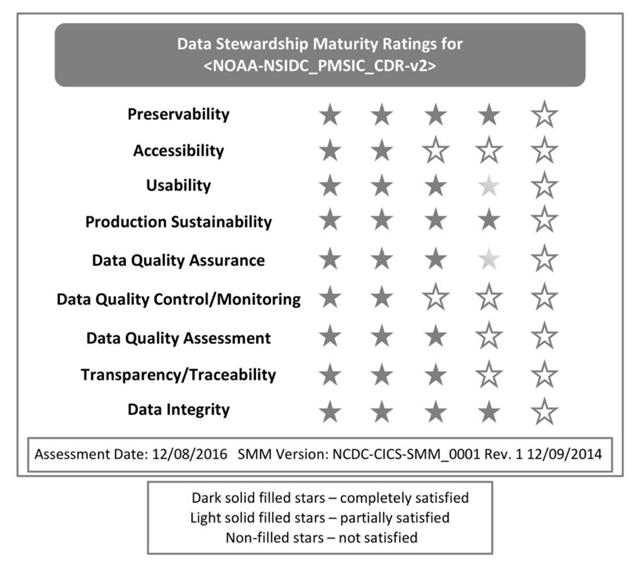
Figure 4
Data stewardship maturity rating diagram for NOAA-NSIDC_PMSIC_CDR-v2 as of December 8, 2016. Dark/light/none solid filled stars denote the criteria are completely/partially/not satisfied. From Lemieux et al. (2017).
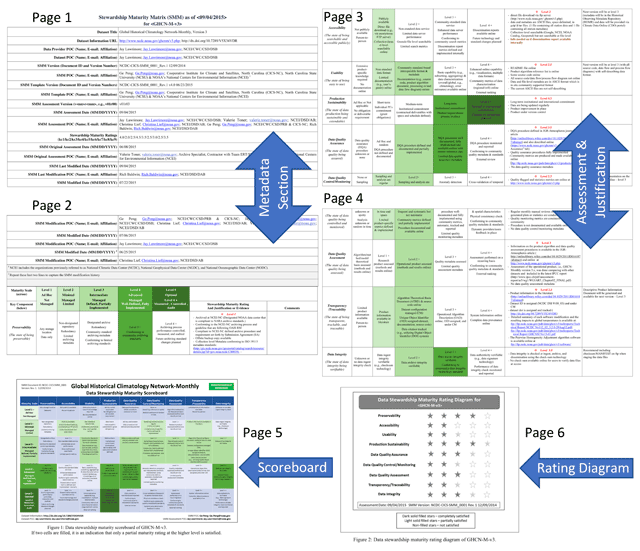
Figure 5
Page view of the stewardship maturity assessment document (Lawrimore et al. 2015; 6 pages in total) for NCEI GHCN-Monthly v3 data product to show the general layout of the document. GHCN is the acronyms for Global Historical Climatology Network. This image is not intended to display the content of the document (see Lawrimore et al. 2015 for the content). The maturity ratings and lessons learned from the DSMM GHCN-Monthly use case study can be found in Peng et al. (2016).
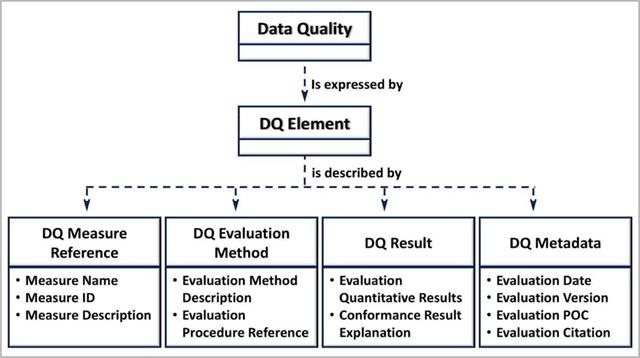
Figure 6
Implementation best practices for adopting ISO data quality metadata standards.
Table 4
The Conceptual Framework for Implementing DSMM ratings into ISO Data Quality Metadata. Examples of DSMM assessment ratings and a maturity report are highlighted in bold in the second column.
| Measure Name | Data Stewardship Maturity Assessment |
| Measure ID | MM-Stew |
| Measure Description | The Data Stewardship Maturity Matrix (DSMM) is a unified framework that defines criteria for each of nine components based on measurable practices, which can be used to apply a progressive, 6-level rating to an individual dataset, representing stewardship maturity stages rated as Not Assessed or Not Available (Level 0), Ad Hoc (Level 1), Minimum (Level 2), Intermediate (Level 3), Advanced (Level 4), and Optimal (Level 5). |
| Evaluation Description | Data Stewardship Maturity Assessment was evaluated by the metadata content editor for the NOAA OneStop project using the Scientific Data Stewardship Maturity Assessment Model Template v4.0. |
| Procedure Reference | Peng, Ge. The Scientific Data Stewardship Maturity Assessment Model Template. 2015-06-23. doi:10.6084/m9.figshare.1211954 |
| Date of Measurement | 2016-12-08 |
| Quantitative Results | |
| Preservability | advanced |
| Accessibility | minimum |
| Usability | advanced |
| Production Sustainability | advanced |
| Data Quality Assurance | advanced |
| Data Quality Control/Monitoring | minimal |
| Data Quality Assessment | intermediate |
| Transparency/Traceability | intermediate |
| Data Integrity | advanced |
| Conformance Results Explanation | Data stewardship maturity assessment was carried out by NOAA OneStop metadata content editor, in collaboration with subject matter experts of the product and the maturity matrix. |
| Reference | Lemieux, P., G. Peng, and D.J. Scott, 2017: Data Stewardship Maturity Report for NOAA Climate Data Record (CDR) of Passive Microwave Sea Ice Concentration, Version 2. figshare, doi:10.6084/m9.figshare.5279932 |
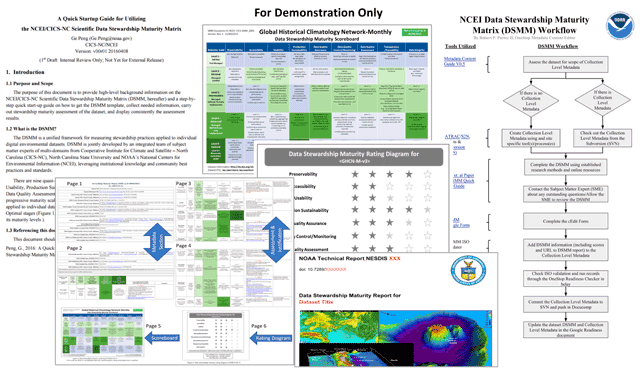
Figure 7
Example DSMM guidance, workflow, templates, and tools developed to facilitate data stewardship maturity assessments. From Ritchey et al. (2016).
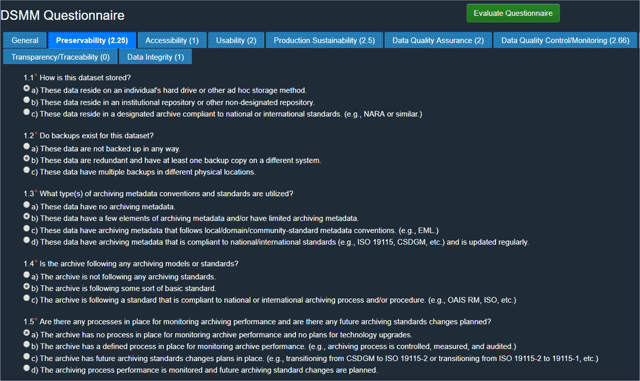
Figure 8
A screenshot of Data Stewardship Maturity Questionnaire (DSMQ) highlighting the questions and possible answers for the Preservability component of the DSMM. Note, the numbers following the component names in the tabs are scores updated in real time as a user proceeds through the survey.
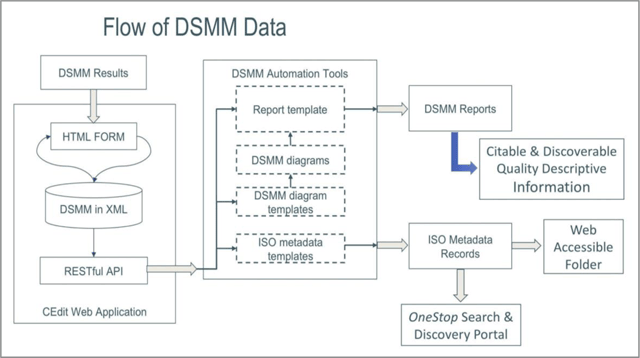
Figure 9
DSMM data flow chart with CEdit implementation diagram (left box area). Adapted from Zinn et al. (2017).
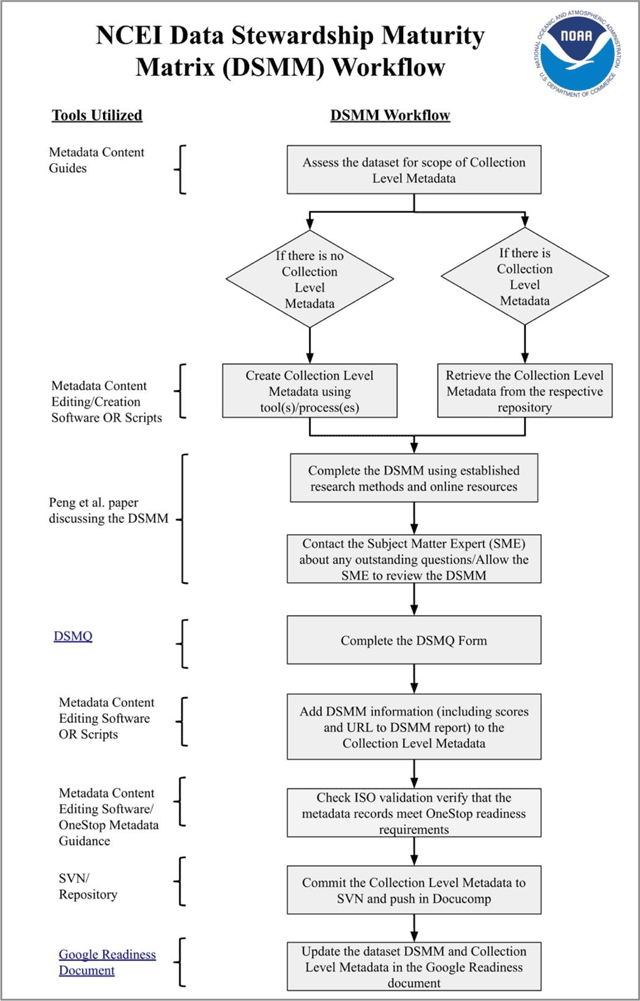
Figure 10
DSMM assessment integration workflow.
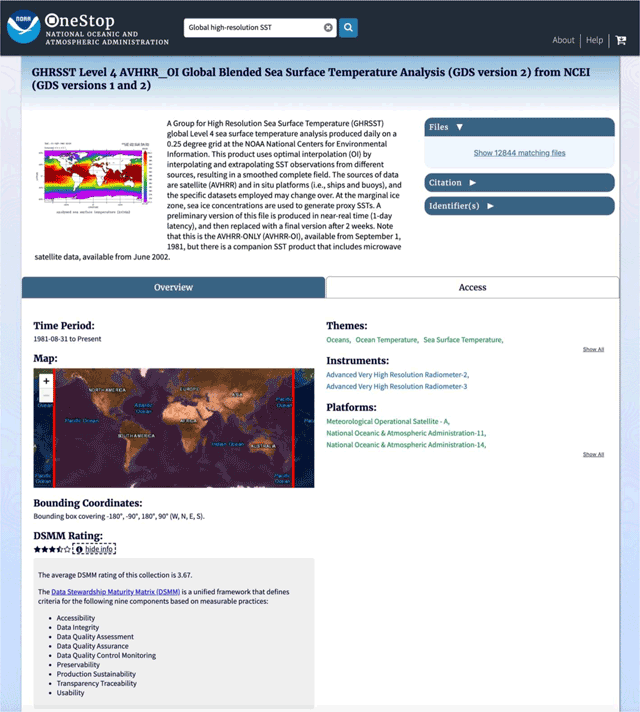
Figure 11
An example of displaying DSMM rating on the OneStop portal.