
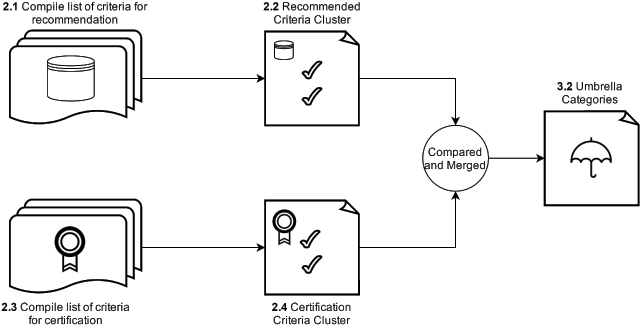
Figure 1
Flowchart of the methodology used to create the umbrella categories.
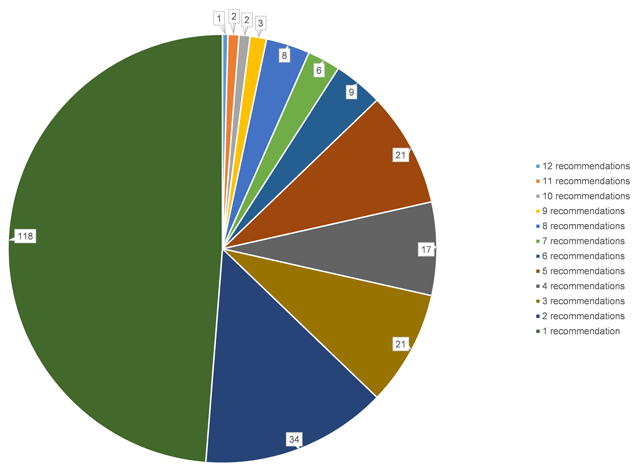
Figure 2
Pie-chart showing the number of repositories that are recommended by 1 to 17 organisations. The highest number of recommendations received is 12.
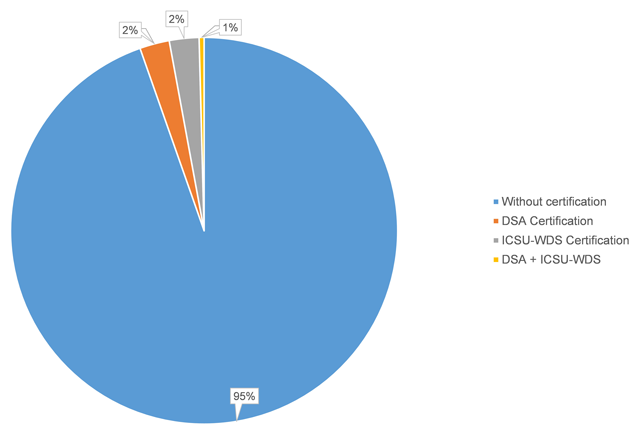
Figure 3
Pie-chart showing the percentage of recommended repositories that have obtained one of the following certifications: DSA, ICSU-WDS, and both DSA and ICSU-WDS.
Table 1
Table listing 7 common terms, referred to as “umbrella categories”, based on a comparison between the Recommended Criteria Cluster and the Certification Criteria Cluster. The second column describes the shared meaning of the umbrella category, followed by differences in characteristics of recommended repository criteria and repository certification scheme criteria.
| Umbrella Categories | Shared | Recommended Repository Criteria | Repository Certification Scheme Criteria |
|---|---|---|---|
| Mission | Explicit mission statement in providing long-term responsibility, persistence, and management of data(sets) | ||
| Community/Recognition | Evidence of use by downloads or citations from an identifiable and active user community | Understand and meet the needs of the designated and defined target community | |
| Legal and Contractual Compliance | Repository operates within a legal framework/Ensures compliance with legal regulations | When applicable, have contractual regulations governing the protection of human subjects | Contracts and agreements maintained with relevant parties on relevant subjects |
| Access/Accessibility | Public access to the scientific/repository designated community | Anonymous referees (including peer-reviewers) have access to the data before public release as indicated by policies | |
| Technical Structure/Interface | The software system supports data organisation and searchability by both humans and computers. The interface is intuitive and mobile user-friendly | The technical (infra)structure is appropriate, protective, and secure | |
| Retrievability | Data need to have enough metadata. All data receive a persistent identifier | ||
| Preservation | Long-term and formal preservation/succession plan for the data, even if the repository ceases to exist | If the data are retracted, the persistent identifier needs to be maintained | Preservation of data information properties and metadata |