
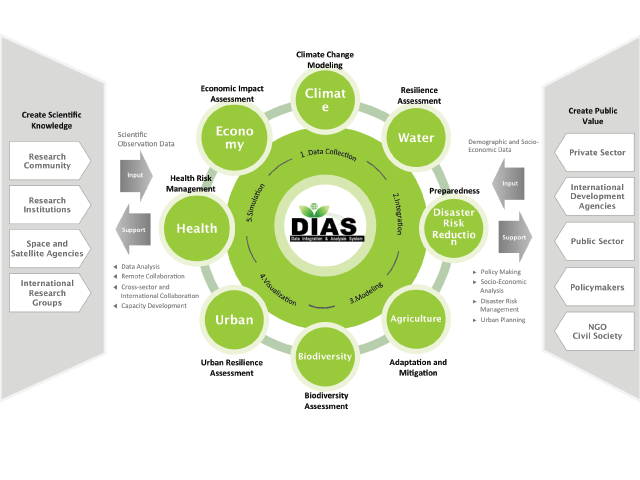
Figure 1
DIAS framework.
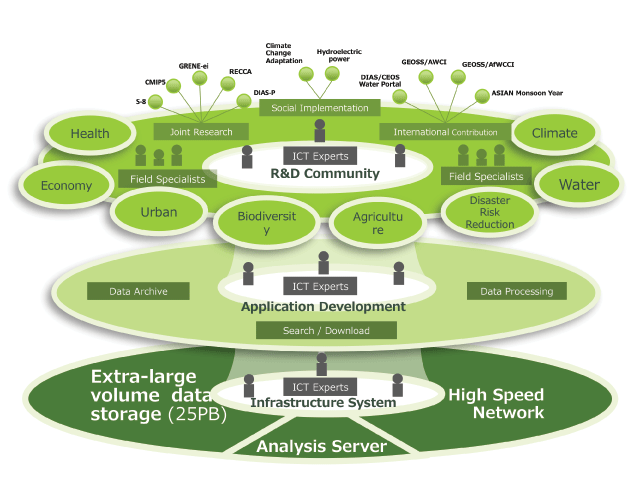
Figure 2
Three components of DIAS.
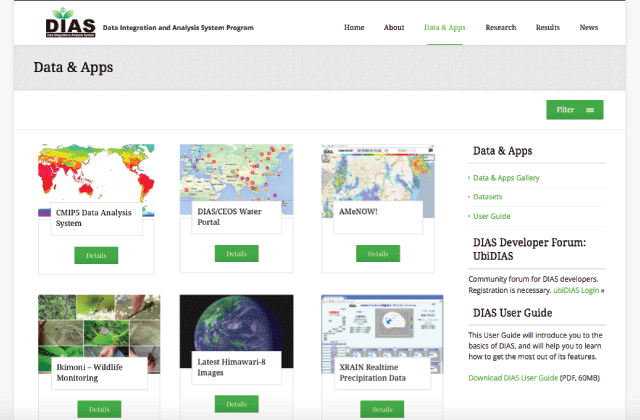
Figure 3
DIAS applications and tools available to the public.
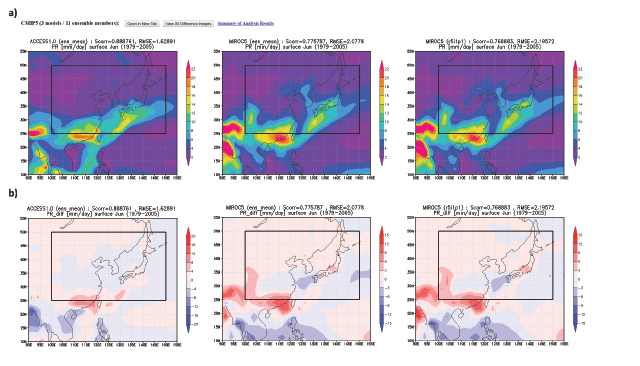
Figure 4
Example of results provided by the 2-D intercomparison function of the DIAS CMIP5 tool. (a) 2-D plots of precipitation output of selected ensemble runs of selected GCM(s) for the selected analysis area (black box). The variable is the average daily precipitation in June for the period 1979–2005 (historical simulation experiment of CMIP5). The display area (whole plot) can be defined by the user. The tool also provides analysis results by comparisons of model output against reference data over the selected analysis area: the root mean square error (RMSE) and spatial correlation coefficient (Scorr) values. In the case of precipitation, reference data come from the observation-based Global Precipitation Climatology Project (GPCP). Climatological parameters are compared with reference data to evaluate model performance. (b) 2-D images showing differences between selected model output and reference data for the same precipitation variable as a).
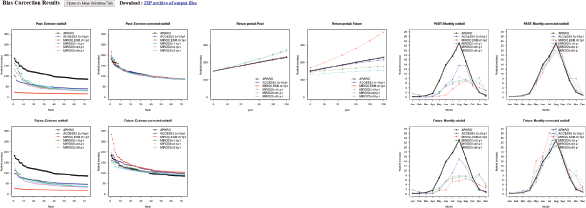
Figure 5
Example of results provided by the precipitation bias correction function of the DIAS CMIP5 tool. The bias-corrected data are downloadable as a ZIP archive. The comparison plots provide an instantaneous look at raw and corrected data (historical simulation and future projection) against observation data used as reference for the bias correction (bold black line on the plots). This example shows results for three selected models, including the available ensembles for each model.
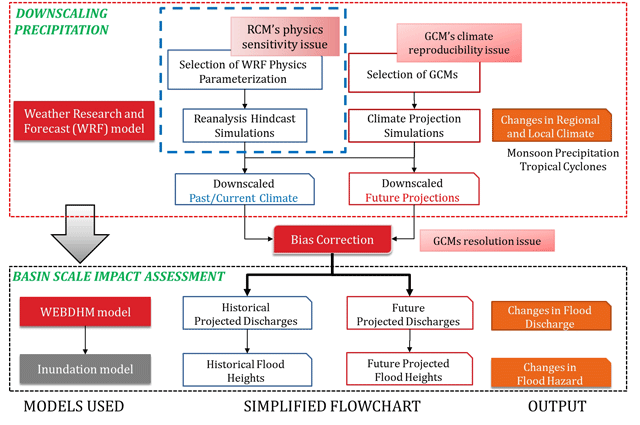
Figure 6
Research framework for climate change analysis relevant to water-related disasters.
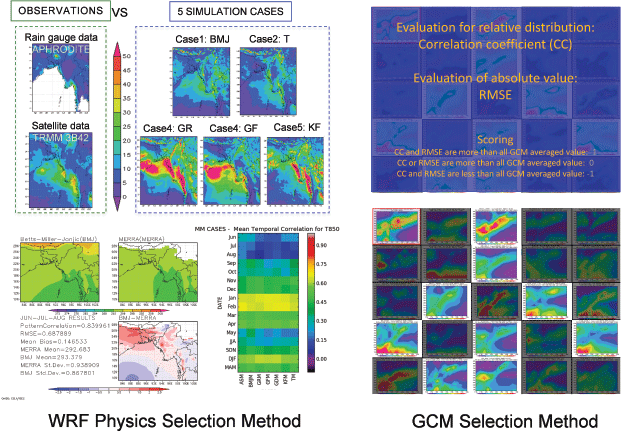
Figure 7
Components of climate change analysis that use the DIAS environment (cluster analysis, data storage, some archived datasets).