
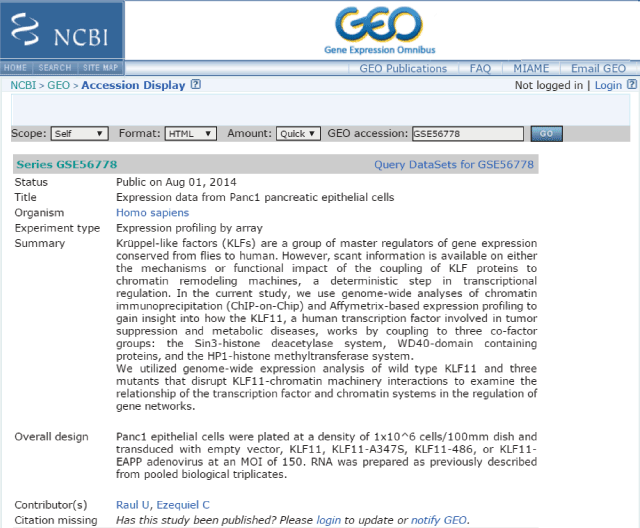
Figure 1
“Orphaned” dataset in GEO. GEO relies upon users for retrospective annotation of records that are not mapped to a corresponding published study.
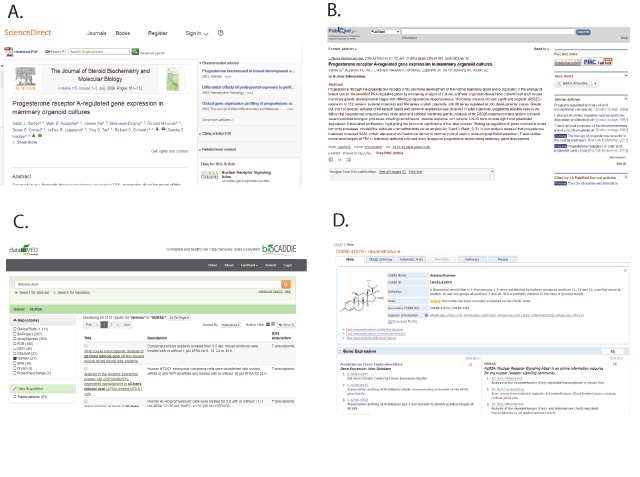
Figure 2
Findability: enhanced exposure of NURSA datasets across the biomedical research enterprise. Automated processed embed links to NURSA datasets from (A) journal articles of publisher collaborators who support journal-database linkage, (B) PubMed records, (C) dataset search engines such as DataMed and (D) records in small molecule knowledgebases such as ChEBI.
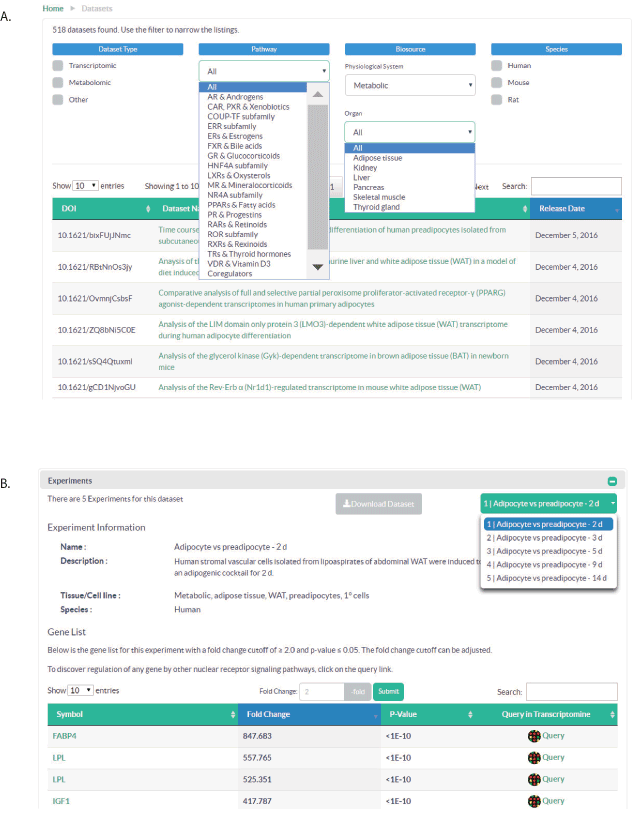
Figure 3
Accessibility: web development usability principles support dataset filtering and knowledge extraction. (A) The dataset directory is filterable by intuitive drop-down menus for nuclear receptor signaling pathway or biosample physiological system class and organ subclass. (B) Drop down menus on dataset landing pages provide for toggling between gene lists to identify significant data points in each experimental contrast.
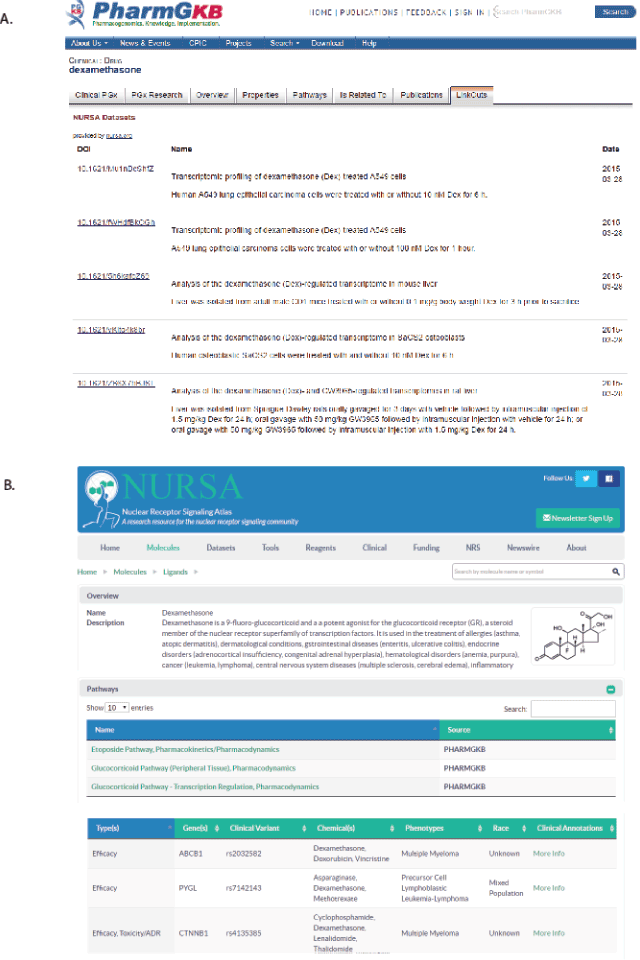
Figure 4
Interoperability and re-usability: persistent API-supported, DOI-driven connections between NURSA and the Pharmacogenomics Knowledgebase connect disparate research communities. (A) PharmGKB drug reports list NURSA datasets in which these drugs are regulatory molecules. (B) NURSA Molecules Pages for ligands that are prescription drugs display links to PharmGKB-curated pathway and pharmacogenomic drug-variant interactions.
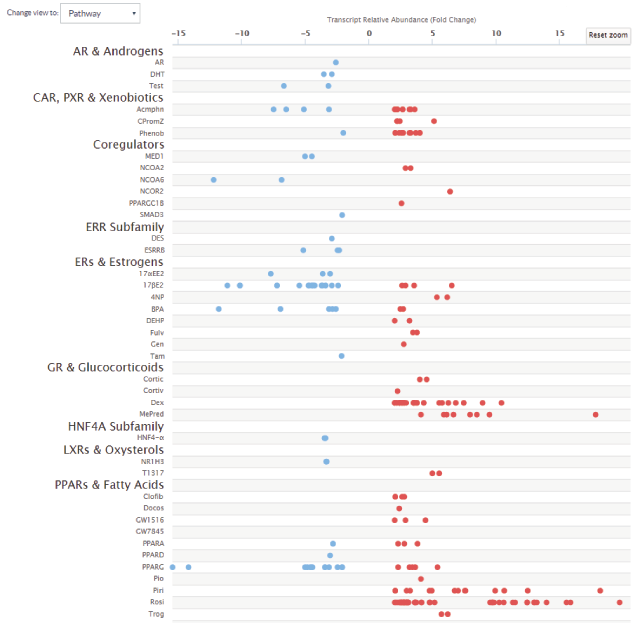
Figure 5
Re-usability: biocuration mapping provides for intuitive visualization of both known and previously uncharacterized gene regulatory paradigms. The grouping of experiments into hierarchical pathway categories in the Pathway View Transcriptomine FABP4 Regulation Report (Pathway View) makes immediately evident the key signaling pathways that modulate expression levels of this gene.